
News
US urged not to proceed with resolution based on unverified ‘desk-reviewed’ info, etc.

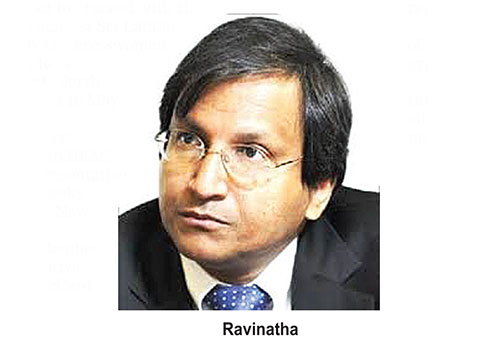
Amb. Aryasinha cites Gash, Smith:
Following Gen. Chagie Gallage’s strong condemnation of what he called a sininster US move to harass Sri Lanka further, as reported by The Island recently, the Sri Lankan government has formally requested the US House Foreign Affairs Committee (HFAC) not to proceed with H. RES. 413 against Sri Lanka moved by Congresswoman Deborah Ross (Democrat/North Carolina) on 18 May 2021.
In a letter addressed to HFAC Chair Representative Gregory Meeks (Democrat/New York) and Ranking Member Representative Michael McCaul (Republican/Texas), Sri Lanka’s Ambassador to the USA Ravinatha Aryasinha said, “Sri Lanka vehemently opposes the contents of the resolution which contains allegations relating to Sri Lanka that are inaccurate, biased and unsubstantiated, raising grave suspicion regarding the intention of the resolution”.
The letter was accompanied by a detailed analysis of the resolution, which laid out paragraph by paragraph, its prejudicial nature.
The Ambassador observed that the proposed resolution which equates the LTTE – proscribed by the US since 1997 and named by the FBI in 2008 as “among the most dangerous and deadly extremists in the world” – to an ‘armed independence organization’, exposes the resolution’s origins and purpose.
The Resolution encourages separatism and questions even the nature of the Sri Lanka State, by references to ‘Traditional Tamil Homelands’. This not only misrepresents established historical facts, and present-day realities, but also contributes to supporting the dismemberment of Sri Lanka, which is the ultimate goal of the LTTE and its supporters.
Ambassador Aryasinha said the resolution’s willful ignorance of the USA’s own security concerns about the LTTE and its front organizations and efforts at glorification of terrorism, will give inspiration to rump elements of the LTTE and its numerous front organizations within the US and across the world, as well as to other terrorist organizations.
Observing that the USA had been “a consistent defense partner of Sri Lanka, including in Sri Lanka’s war against terror”, the Ambassador said “the resolution which is at significant variance with stated U.S. policy, across Administrations – both Democratic and Republican, may lead to an erroneous conclusion that the House supports armed acts to achieve political goals. This would undermine the US Administration’s own foreign policy foundation of being rooted in democratic values, and negatively impact the warm bilateral relations between Sri Lanka and the USA”.
It asserts that the Sri Lanka Government, having struggled for nearly 30 years to defeat LTTE terrorism, consistent with its constitutional duties to protect its citizens regardless of race, religion, language, caste, sex, political opinion or place of birth, launched a humanitarian operation to protect and liberate all Sri Lankans. It also outlined the measures taken by the Government since the defeat of terrorism in May 2009, to address the needs of 300,000 internally displaced who had been used as human shields by the retreating LTTE, to rebuild and develop infrastructure in the conflict affected areas and to restore livelihood opportunities to many, including to over 12,000 ex-LTTE combatants – also comprising 596 child soldiers, who were rehabilitated and reintegrated into the society.
Ambassador Aryasinha recalled that following the ending of the conflict, the then government in 2013 conducted Northern Provincial Council elections, ensuring democratic freedoms and rights to the people of the North. He noted that since 2017, all minority parties in Parliament, including the TNA, supported the deferral of elections, through a ruling that required electoral reform prior to holding PC elections, which never materialized. For nearly 3 years, the HRC or Western countries having not taken issue with the delay of elections to Provincial Councils, including that of the Northern Province, however, presently have projected it as a major issue, at a time the current government has taken the initiative to appoint a Parliamentary Committee to make recommendations on this matter.
Noting that reports on Sri Lanka cited in the Resolution, including the OISL Report of 2015, constituted a mere subjective narrative of events including “desk-reviewed” information, the Ambassador said that these documents failed to reveal sources and were not verifiable. On the contrary, there was an abundance of verifiable evidence that has been ignored, contained in, interalia, the Lessons Learnt Reconciliation Commission (LLRC), the ‘Paranagama Commission’, reports from the UN and international agencies including the UNDP, UNICEF and the ICRC, as well as information presented before the UK House of Lords by Lord Naseby challenging among other things the vastly exaggerated civilian casualty figures. Expert opinions including by international legal luminaries, as well as dispatches in real time by Colonel Anton Gash, Military
Attaché of the British High Commission in Colombo and statements by Lt. Col. Lawrence Smith who had served as Defense Attaché of the US Embassy during the last phase of the conflict, also contested this narrative.
Ambassador Aryasinha also observed that, having had Sri Lanka co-sponsor UN Resolution 30/1 in October 2015 and extracted a commitment that Sri Lanka will initiate an accountability mechanism which would include foreign judges and lawyers, which was unconstitutional, for 5 years neither the UN bodies nor the US and other proponents of this resolution, pressed the previous government to carry out its promises.
He said, calling for an “international mechanism” at this juncture is sinister, at a time the present Government has provided a credible transparent domestic process to address the concerns raised, by in January 2021 instituting a Presidential Commission of Inquiry (PCOI), which had on 4 March 2021 “invited any person, persons or organizations to submit written representations or information or any other material which relates to the above for the Commission to inquire”. The Commission has been conducting hearings since April and heard testimony from witnesses.


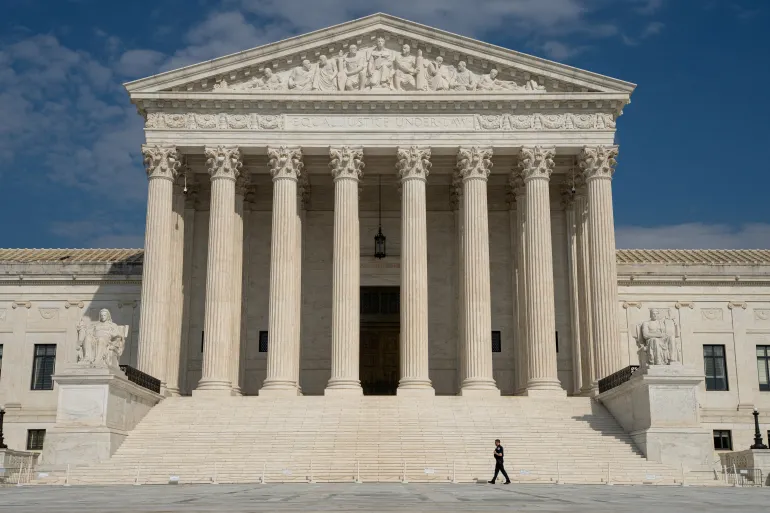
The US Supreme Court has rejected President Donald Trump’s bid to allow the US Postal Service to enforce a rule targeting mail-in ballots.
On Monday, the conservative-majority court refused to lift an order by US District Judge Indira Talwani that blocked the measure, dealing a blow to Trump’s efforts to restrict voting by mail before the November midterm elections.
The postal agency adopted the rule after Trump signed an executive order in March seeking to tighten rules around mail-in voting. Under this measure, states were required to send the Postal Service a list of recipients and use ballot mail envelopes previously approved by the agency.
The Postal Service was allowed to deny ballots if they failed to comply with the new standards or were not associated with registered voters on the lists.
Talwani imposed an injunction blocking the rule, saying that it likely violated the US Constitution and would be impossible to apply given the nearing midterms.
Shortly after, the Trump administration issued an emergency request to the Supreme Court urging it to allow an “important federal policy to protect the mails from being used to commit voter fraud”.
In late August, the Supreme Court had temporarily allowed Trump to move ahead with his executive order on procedural grounds, but did not rule on the legality of the plan.
In the latest decision, the court said in an unsigned order that the administration was “unlikely to succeed on the merits” of its challenge. Justice Samuel Alito and Justice Clarence Thomas dissented, with Alito writing that some plaintiffs lacked standing while the rest were pursuing a claim the court had recently called a “Hail Mary pass”.
[Aljaeera]
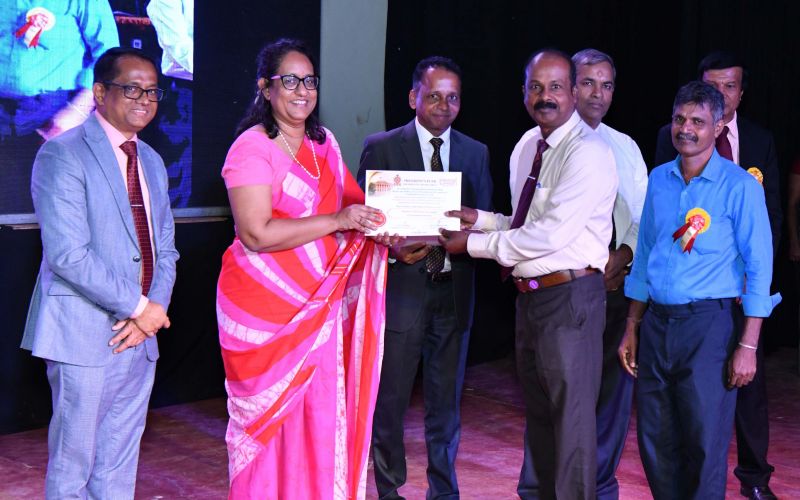
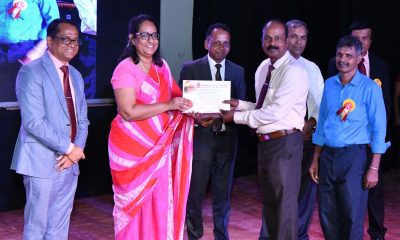
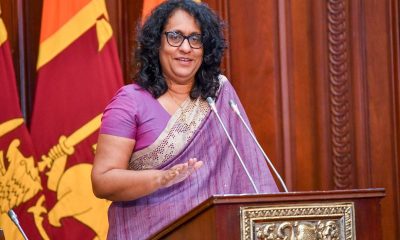
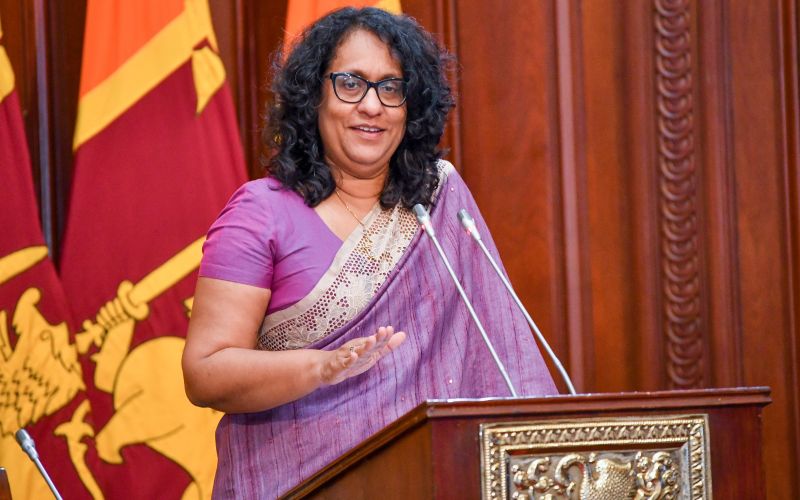
The “Mehewara Pasasum” programme to recognise Divisional Secretariats in the Eastern Province that demonstrated the highest level of performance in 2025 was held recently at the Swami Vipulananda Institute of Aesthetic Studies of the Eastern University, under the patronage of Prime Minister Dr Harini Amarasuriya. The programme was held as part of the initiative to decentralise President’s Fund services to the Divisional Secretariat level, with the aim of providing the public with a more efficient and prompt service.
Of the Divisional Secretariats in the three districts of Ampara, Batticaloa and Trincomalee, nine Divisional Secretariats, three from each district, were selected for recognition based on their efficiency in receiving President’s Fund applications and responding to them promptly.
Accordingly, the Sammanthurai Divisional Secretariat secured first place in the Ampara District, while the Addalachchenai Divisional Secretariat secured second place and the Kalmunai Divisional Secretariat third place.
In the Batticaloa District, first place was secured by the Kattankudy Divisional Secretariat, second place by the Manmunai North Divisional Secretariat and third place by the Koralaipattu Central Divisional Secretariat.
In the Trincomalee District, first place was secured by the Trincomalee Town and Gravets Divisional Secretariat, second place by the Kinniya Divisional Secretariat and third place by the Muttur Divisional Secretariat.
The first “Mehewara Pasasum” programme was held in Colombo, the second in Batticaloa, and this was the third programme.
Speaker Dr Jagath Wickramaratne, Minister of Industry and Entrepreneurship Development Sunil Handunnetti, Senior Additional Secretary to the President and Secretary to the President’s Fund Roshan Gamage, and a number of government officials and others were present at the occasion.
(PMD)
News
Students of Rahmaniya Maha Vidyalaya Eravur visit Presidential Secretariat and President’s House

A group of students from Rahmaniya Maha Vidyalaya, Eravur, Batticaloa visited the Presidential Secretariat and President’s House on Monday (14) afternoon .
The students were given this opportunity as part of the “Vision” programme series, jointly implemented by the Presidential Secretariat, the Ministry of Education and the Communication Division of the Parliament of Sri Lanka for schoolchildren.
Prime Minister Dr Harini Amarasuriya stated that nurturing a future generation capable of providing leadership to society and committed to bringing about positive change in the world was an urgent need of the present day. She further stated that the Government’s objective in introducing the new education reforms was to prepare children to acquire knowledge from around the world while nurturing a confident and empowered generation capable of making a meaningful contribution to the country.
Following a visit to the former Parliament building at the Presidential Secretariat, the students were briefed on the history of Parliament.
Senior Additional Secretary to the President Roshan Gamage briefed the students on the role of the President’s Fund and the benefits available to schoolchildren through the Fund.
As part of the programme, valuable plants were also presented to the school as a symbolic gesture highlighting the importance of environmental conservation.
The Director and Assistant Director of the Tri-Forces Security Coordination Unit, the Principal and teachers of Rahmaniya Maha Vidyalaya Eravur and several others were present on the occasion.
(PMD)

Nairobi and Munich to host 2029 and 2031 World Athletics Championships

Pakistan fined, docked 11 points in Edgbaston Test for slow over rate

England look to continue domineering T20 form

US Supreme Court rejects Trump mail ballot restrictions ahead of midterms

Eastern Province Divisional Secretariats recognized for outstanding performance

Students of Rahmaniya Maha Vidyalaya Eravur visit Presidential Secretariat and President’s House

‘Dates have the highest sugar content to fight Coronavirus’

Sunday Island 27 December – Headlines

#SundayIsland 17th December – Headlines

Sunday Island – 28th March

Sunday Island Headlines – 21 March

Sunday Island – 21st February – Headlines
-

 Sports5 days ago
DDS set to lose Test captaincy
-

 News4 days ago
Sri Lanka faces new grid challenge as rooftop solar surges: former CEB GM
-

 Latest News4 days ago
Shafali, Deepti power India into sixth T20 Asia Cup final
-

 Opinion6 days ago
Navigating Sri Lanka’s Israeli Dilemma
-

 Latest News4 days ago
Sri Lanka thwart Fatima Sana challenge to secure Asia Cup final spot
-

 Features5 days ago
Lost for 90 years: Rare Goby resurfaces in Jaffna
-

 News2 days ago
Gnanasara Thero absconding after SC ruling
-

 News4 days ago
Ammunition cache found in old Kandy bungalow