
News
AG urged to set up new mechanism to monitor HR violations

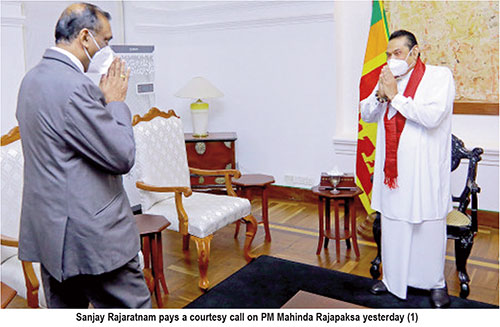
Sanjay Rajaratnam pays a courtesy call on PM Mahinda Rajapaksa yesterday (1)
The newly appointed Attorney General Sanjay Rajaratnam, PC, assumes duties at a critical time with the United Nations High Commissioner for Human Rights (UN-HCHR) having got the special mandate of the 46th session of the United Nations Human Rights Council (UN-HRC) in March this year to set up a special mechanism to monitor Sri Lanka’s alleged human rights violations and alleged war crimes during the final phase of the separatist war that ended in 2009, former PA National List MP M.M. Zuhair, PC says.
Zuhair, who served the AG’s department as a State Counsel and later as Senior State Counsel at a time it was comparatively smaller, said so in response to The Island query regarding the growing challenge on the human rights front.
Zuhair has sent us the following response to our queries: “The office of the Attorney General of Sri Lanka has a 137 year history, beginning from Sir Francis Fleming on 1st January 1884. The Attorney General carries with him unique responsibilities though the world outside sees him as exercising exclusive powers. He is the principal law officer of the State, legal adviser to the President of the Republic, the Speaker of Parliament and the executive, having specific Constitutional powers, duties and functions, advocate of the supremacy of the Constitution and the rule of law, having powers to initiate criminal proceedings and present indictments, the leader of the Bar with specified rights to be heard in all courts and defender of the State in civil proceedings. He is a member of the executive but functions independently of the executive in all legal matters, subject however to the jurisdiction of the Courts in specified issues.
The report of the High Commissioner for Human Rights has drawn special attention of the UN HRC to several significant matters relating to Sri Lanka. They include inter alia ‘reversal of Constitutional safeguards’, ‘majoritarian and exclusionary rhetoric, ‘new and exacerbated human rights concerns’, ‘impunity in emblematic cases’, etc. The UN HCHR has in the report taken a further step by requesting Member States, in addition to taking steps of referral of Sri Lanka to the International Criminal Court (ICC) to actively pursue “investigations and prosecution of international crimes committed by all parties in Sri Lanka before their own national courts, including under accepted principles of extraterritorial or universal jurisdiction” (emphasis mine).
The report also points out that “Member States can also apply targeted sanctions, such as asset freezes and travel bans against State officials and other actors credibly alleged to have committed or be responsible for grave human rights violations or abuses…” The addition of the two special procedures may be due to, the referral to ICC very likely being vetoed in the Security Council!
Another critical development is that a resolution is already before the United States Congress recommending the US to explore investigations and prosecutions pursuant to the recommendations of the UN HCHR. The proposed resolution is wide enough to pursue inter alia the two courses of actions referred to earlier at the Member State level of the US government. This would also encourage other traditional allies of the US to join hands with similar Member State level approvals, without recourse to any further UN HRC approval!
So the time has come for the new Attorney General Sanjay Rajaratnam PC to set up a special high level unit in the department to handle the man-made tsunami that will very likely rattle the country on the legal and economic fronts much sooner than the HRC process.
Amongst the matters in the UN HCHR’s list are the alleged “erosion of the judiciary and key institutions responsible for the promotion and protection of human rights; … policies that adversely affect the right to freedom of religion or belief; increased marginalization of persons belonging to the Tamil and Muslim communities; surveillance and intimidation of civil society; … arbitrary detentions”, etc.
Another matter is the need to address the undertaking given to repeal the Prevention of Terrorism (Temporary Provisions) Act (PTA) enacted in 1979 and replace same with a new law in line with accepted human rights norms. The controversial law itself provides for a maximum detention of 18 months, whereas a large number of persons arrested under the PTA over the Mawanella Buddha statue damaging case as well as over the Easter Sunday attacks have been kept in remand for over two years, in violation of the PTA’s maximum period of one and a half years, through a process arguably violative of the human rights of the suspects.
There are many persons in remand who could have been enlarged on bail with the consent of the Attorney General and against whom the alleged material is weak and insufficient for prosecution. There are still others who ought to have been discharged because they have had nothing to do with 21/4 attacks. The PTA provides in section 19, that the bail provisions of other written laws (excluding the Bail Act as provided in the Bail Act) will not be applicable only to persons convicted under the PTA. But suspects are not granted bail by Magistrates Court, in violation of the bail provisions in the Code of Criminal Procedure Act read with section 19 of the PTA itself, with Courts insisting on AG’s consent as required by another provision in the PTA, which is in conflict with section 19.
The UN HCHR could review likely human rights violations by the alleged unreasonable refusal of the Attorney General and the Courts to consent to bail in weak cases. These are areas that must be addressed forthwith by the Attorney General’s special unit to prevent officers and their families being adversely affected by Member States’ targeted actions, particularly because indictments are delayed, largely because of incomplete investigations!
Another matter that will require the immediate attention of the new Attorney General who counts over 34 years in the department is the continuing arrests of persons with alleged links to one suicide bomber or the other without any evidence of their being party to or in any way conspired, prepared, aided and/or abetted in the 21/4 attacks. Suicide bombers may have had links with persons of all communities for years before the Easter attacks. Those numbers can run into several thousands. But they do not become suspects in the 21/4 attacks by any legal yardstick merely because they had at some point crossed the future bombers. These arrests may be perceived as illegal arrests targeting the minorities.
The 48th Attorney General will certainly address the matters that come before him from the national interest perspective and not from any minoritarian angle! My interest is limited to securing justice within the rule of law for the country and for all its people.” (SF)


A person has died after jumping an airport perimeter fence in the US state of Colorado and being struck by a Frontier Airlines plane, according to authorities.
Denver International Airport said the unusual incident occurred late Friday, after the unidentified individual gained access to the tarmac.
It said the “pedestrian jumped the perimeter fence and was hit just two minutes later while crossing the runway”.
A brief engine fire followed the collision, which was put out by emergency responders, according to the airport.
It said that 12 of the 231 people on board suffered minor injuries, with five hospitalised.
The airport said investigators had examined the fence line where the individual entered and “found it to be intact”.
It added that the struck individual “is not believed to be an employee of the airport”.
“We are extremely saddened by this incident and express our sympathies to those involved,” the airport said.
Both local authorities and the National Transportation Safety Board (NTSB) were investigating the incident.
Airport safety in the US came under renewed scrutiny earlier this year amid a prolonged shutdown of the Department of Homeland Security (DHS), which temporarily left both Transportation Security Agents (TSA) and air traffic controllers working without pay.
While instances of people being killed on airport tarmacs are rare, Friday’s incident came a day after a Delta employee was killed after an airport vehicle struck an airbridge at Orlando International Airport.
In March, two pilots were killed after an Air Canada Express plane crashed into a fire-rescue vehicle at LaGuardia Airport in New York.
About 225,000 people travel through Denver International Airport a day.
[Aljazeera]
Latest News
Showers above 100 mm are likely at some places in the Western, Sabaragamuwa, Central, Southern, Uva, North-western and Northern provinces and in Anuradhapura district.


WEATHER FORECAST FOR 10 MAY 2026
Issued at 05.30 a.m. on 10 May 2026 by the Department of Meteorology
The low-level atmospheric disturbance in the vicinity of Sri Lanka is likely to develop into a low-pressure area around 11th of May. Therefore, the prevailing showery conditions over the island are expected to continue during the next few days.
Showers or thundershowers will occur at most places over the island, and cloudy skies are expected over the island. Heavy showers above 100 mm are likely at some places in the Western, Sabaragamuwa, Central, Southern, Uva, North-western and Northern provinces and in Anuradhapura district.
The general public is kindly requested to take adequate precautions to minimize damage caused by temporary localized strong winds and lightning during thundershowers.

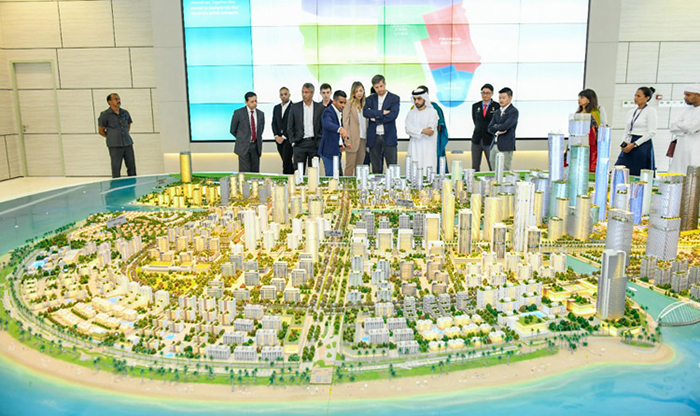
ECONOMYNEXT –Colombo Port City (CPC) officials will head to Dubai to meet with investors on June 11, as Sri Lanka’s most ambitious economic zone looks for further foreign investments.
“We are meeting people in Dubai and the Middle East in order to demonstrate that Colombo Port City can be a supplementary zone of investment,” Harsha Amarasekara, Chairman, Colombo Port City Economic Commission (CPCEC), told Economynext.
The meeting will be organised by CPCEC, China Harbour Engineering Company, Consulate General of Sri Lanka – Dubai, and the Embassy of Sri Lanka – Abu Dhabi.
Foreign investor meetings have been a consistent factor in marketing CPC, and identifying potential markets has been a priority for CHEC and CPCEC.
“We have shortlisted and identified primary markets and we have combed the globe in that to say have a rationale behind why you would want to do certain things, a road show in a particular country,” Thulci Aluwihare, Deputy Managing Director, CHEC Port City Colombo, told Echelon Media.
“Once we kind of shortlist on that, then we aggressively go and market Port City, first Sri Lanka I should say, then Port City.”
“Sri Lanka is known in the world as a tourist destination, not essentially for a doing business capital. That is the narrative that we are trying to change,” he added.

One dead in US after being struck by taking off Frontier Airlines plane

Gill, Sai Sudharsan, Rashid power Gujarat Titans to second spot with fourth straight win

Showers above 100 mm are likely at some places in the Western, Sabaragamuwa, Central, Southern, Uva, North-western and Northern provinces and in Anuradhapura district.

Lanka Port City officials to meet investors in Dubai

Research Vessel Dr. Fridtjof Nansen Completes Marine Scientific Survey in Sri Lankan Waters and Departs Colombo

Lanka sends over one fourth of donated corneas abroad

‘Dates have the highest sugar content to fight Coronavirus’

Sunday Island 27 December – Headlines

#SundayIsland 17th December – Headlines

Sunday Island – 28th March

Sunday Island Headlines – 21 March

Sunday Island – 21st February – Headlines
-

 News3 days ago
MIT expert warns of catastrophic consequences of USD 2.5 mn Treasury heist
-
 News5 days ago
CJ urged to inquire into AKD’s remarks on May 25 court verdict
-

 News6 days ago
USD 3.7 bn H’tota refinery: China won’t launch project without bigger local market share
-

 Editorial3 days ago
Clean Sri Lanka and dirty politics
-

 Editorial6 days ago
Deliver or perish
-
 Opinion5 days ago
Security, perception, and trust: Sri Lanka’s delicate balancing act
-

 Editorial2 days ago
The Vijay factor
-
 News6 days ago
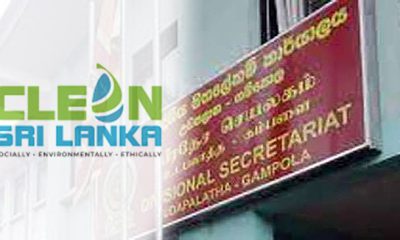
Administrators oppose govt. move to deploy Clean Sri Lanka agents in District and Divisional Secretariats