
News
As deadly surge of COVID-19 sweeps across South Asia, UNICEF calls for $164 million to help save lives


KATHMANDU – UNICEF urgently requires $164 million to procure oxygen and testing supplies, medical equipment, personal protective equipment and infection prevention and control material to help save lives amid a deadly wave of COVID-19 across South Asia.
The region, home to almost two billion people, accounts for half of known new infections globally. Over three new COVID-19 infections are being recorded every second. Mortality in the region is rising sharply, with more than three people dying every minute due to COVID-19.
“The sheer scale and speed of this new surge of COVID-19 is outstripping countries’ abilities to provide life-saving treatment,” said George Laryea-Adjei, UNICEF Regional Director for South Asia.
“Hospitals are overwhelmed, there is an acute lack of oxygen and other critical medical supplies, and there is a real risk of fragile health systems collapsing.”
During the first wave of the pandemic, an estimated 228,000 children and 11,000 mothers across South Asia died due to severe disruptions in essential health services. “We’re now looking at a surge that is four times the size of the first. We need to do everything within our power to prevent and treat COVID-19, while keeping the critical health care services that children and mothers so heavily depend on running,” Laryea-Adjei said.
On May 18, India recorded the highest number of daily deaths ever in the history of the COVID-19 pandemic: 4,529. Neighboring Nepal has experienced case positivity rates as high as 47 per cent; Sri Lanka and the Maldives are recording new highs in COVID-19 cases and deaths on a daily basis; and hospitals in the capital of the Maldives are reaching full capacity.
Bangladesh, Pakistan, Afghanistan, and Bhutan could all face similar devastating surges. In almost all countries in the region, with the exception of the Maldives and Bhutan, fewer than 1 in 10 people have been vaccinated against COVID-19.
The funding requirement includes:
• $32 million for oxygen equipment including on-site oxygen-generating plants for hospitals, portable oxygen concentrators and cylinders
• $40 million for medical and diagnostic equipment including RT-PCR and RNA extraction machines
• $60 million for masks, face shields, gloves, gowns, visors, and other personal protective equipment needed to keep health & frontline workers safe
• $28 million for infection prevention and control including handwashing stations, sanitizer, autoclaves, laundry machines and hygiene supplies required to deliver essential health care safely
• $3.7 million for therapeutics and medical supplies, including nutrition support and consumables.
The critical health supplies will not only save lives, but also help build stronger health-care systems across South Asia ahead of potential future waves of the pandemic. In addition, the supplies will also be used to strengthen healthcare services for women and children: improving access to oxygen therapy can directly contribute to fighting childhood pneumonia in the region, and RT-PCR test machines that identify COVID-19 can also help detect TB, HIV, HPV and streptococcus.
“This deadly surge in South Asia threatens to reverse global gains against the COVID-19 pandemic and roll back hard-earned progress on child and maternal survival,” Laryea-Adjei said. “We’re asking for support to help make sure this doesn’t happen.”
In addition to delivering life-saving COVID-19 supplies, UNICEF’s COVID-19 response in South Asia also includes:
• reaching families with information and resources to prevent infection and building vaccine confidence;
• increasing access to safe water and sanitation;
• cash assistance for the most vulnerable families;
• supporting efforts to keep children learning, including through engaging the public and private sectors; and
• providing mental health and protection support for children and young people directly affected by the pandemic.


The new Public Library Building of the Batticaloa Municipal Council was ceremonially vested in the public on Wednesday (20) morning in the presence of President Anura Kumara Dissanayake, with former Member of Parliament M.A. Sumanthiran officially declaring the building open.
In parallel with the opening ceremony, the official website of the library was launched by the President.
Addressing the gathering, President Anura Kumara Dissanayake stated that he was pleased to witness the successful completion of the library project, which had previously remained stalled midway.
A notable feature of the newly opened library building is the establishment of a separate unit dedicated to providing children with scientific and technological knowledge.
The President further stated that, at a time when the culture of reading is gradually declining in the country, the continued enthusiasm shown by the Tamil community towards reading should be appreciated. He remarked that opening a library is akin to eliminating the need for a prison and expressed confidence that the opening of the new Batticaloa Public Library Building would help sustain and encourage the reading culture among the people.
The President also joined an inspection tour of the new library building and engaged in a cordial discussion with the staff of the Municipal Council. During the occasion, the Mayor of the Batticaloa Municipal Council, K. Sivam Packiyanathan, presented a commemorative memento to the President.
Marking the occasion, the President also planted a sapling within the library premises.
Minister of Industry and Entrepreneurship Development Sunil Handunnetti, Eastern Province Governor Professor Jayantha Lal Ratnasekera, Kandasamy Prabhu, G. Srineshan, S. Rasamanickam and M.L.A.M. Hizbullah, along with government and opposition Members of Parliament, members of the Batticaloa Municipal Council and several state officials, were present at the event.
(PMD)

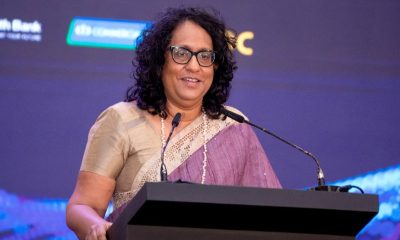
Prime Minister Dr. Harini Amarasuriya attended the 2026 OSGA Annual Lecture held at the University of Oxford on May 19, where she delivered a lecture titled “The Politics of Development: Sri Lanka and Beyond.”
The lecture was held at the St Antony’s College, University of Oxford, and organized by the Oxford School of Global and Area Studies (OSGA), the department’s flagship annual event that brings together leading academics, policymakers, and practitioners to discuss contemporary global challenges.
Addressing an audience comprising students, academics, and researchers from across the University, the Prime Minister reflected on the intersections of development, governance, and politics in Sri Lanka while discussing the broader realities faced by countries attempting to achieve meaningful social and economic reform.
During her lecture, Dr. Harini Amarasuriya emphasized that development cannot be understood only through policies, statistics, and economic models, but must also be viewed through the everyday experiences of people. She highlighted that governance often requires balancing ideals with practical realities, particularly in countries recovering from economic crises, institutional challenges, and long-standing inequalities.
The Prime Minister also spoke extensively on women’s political participation and representation in Sri Lanka, noting the growing involvement of women in grassroots political movements and leadership spaces. She reflected on the efforts taken to create greater political opportunities for women and the continuing challenges faced in transforming deeply rooted social and political structures.
Speaking on economic recovery and social policy, Dr. Amarasuriya highlighted the importance of recognizing both paid and unpaid care work, stressing that the contribution of women to families, communities, and the economy has often remained invisible in traditional economic systems. She noted that sustainable development must ensure economic progress while also protecting dignity, fairness, and social well-being.
The Prime Minister further reflected on the relationship between governments, international development agencies, and local institutions, emphasizing the importance of ensuring that development priorities remain grounded in local realities and accountable to the people they are intended to serve.
Drawing from her experiences as a social anthropologist, activist, academic, and political leader, Dr. Amarasuriya also discussed the challenges of translating activism and public movements into long-term policy reforms and institutional change. She noted that meaningful transformation requires patience, negotiation, and sustained public engagement.
The lecture was followed by an interactive question-and-answer session with the audience, during which discussions focused on governance, institutional independence, political reform, economic recovery, and the challenges of balancing democratic accountability with policy implementation.
Professor Diego Sanchez-Ancochea, Head of the Oxford School of Global and Area Studies, commended the Prime Minister’s lecture, describing it as an important and timely reflection on the relationship between politics and development, informed by both scholarly insight and practical political experience.

Prime Minister’s Media Division
News
Politics is not something separate from development. It shapes every choice we make in governance – PM

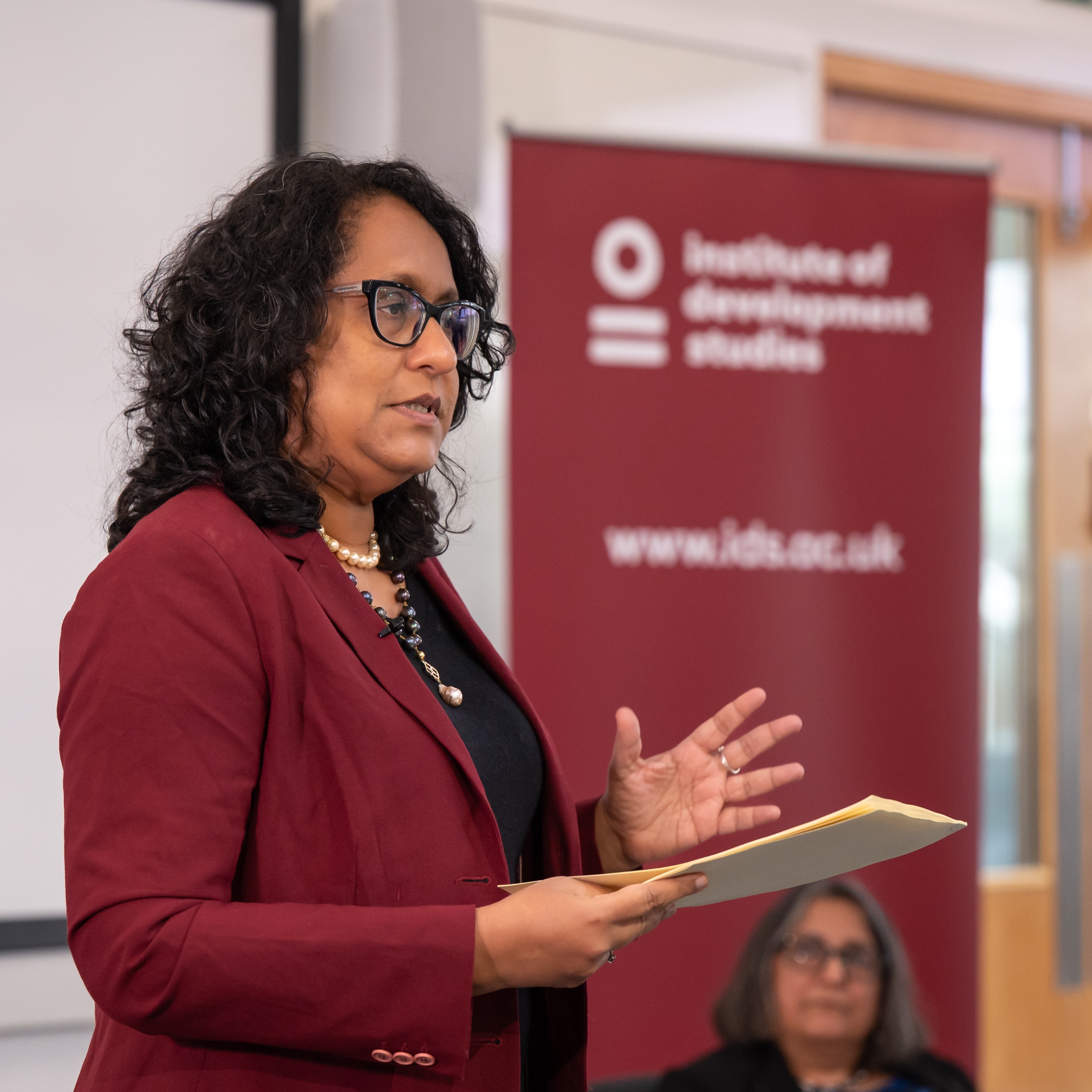
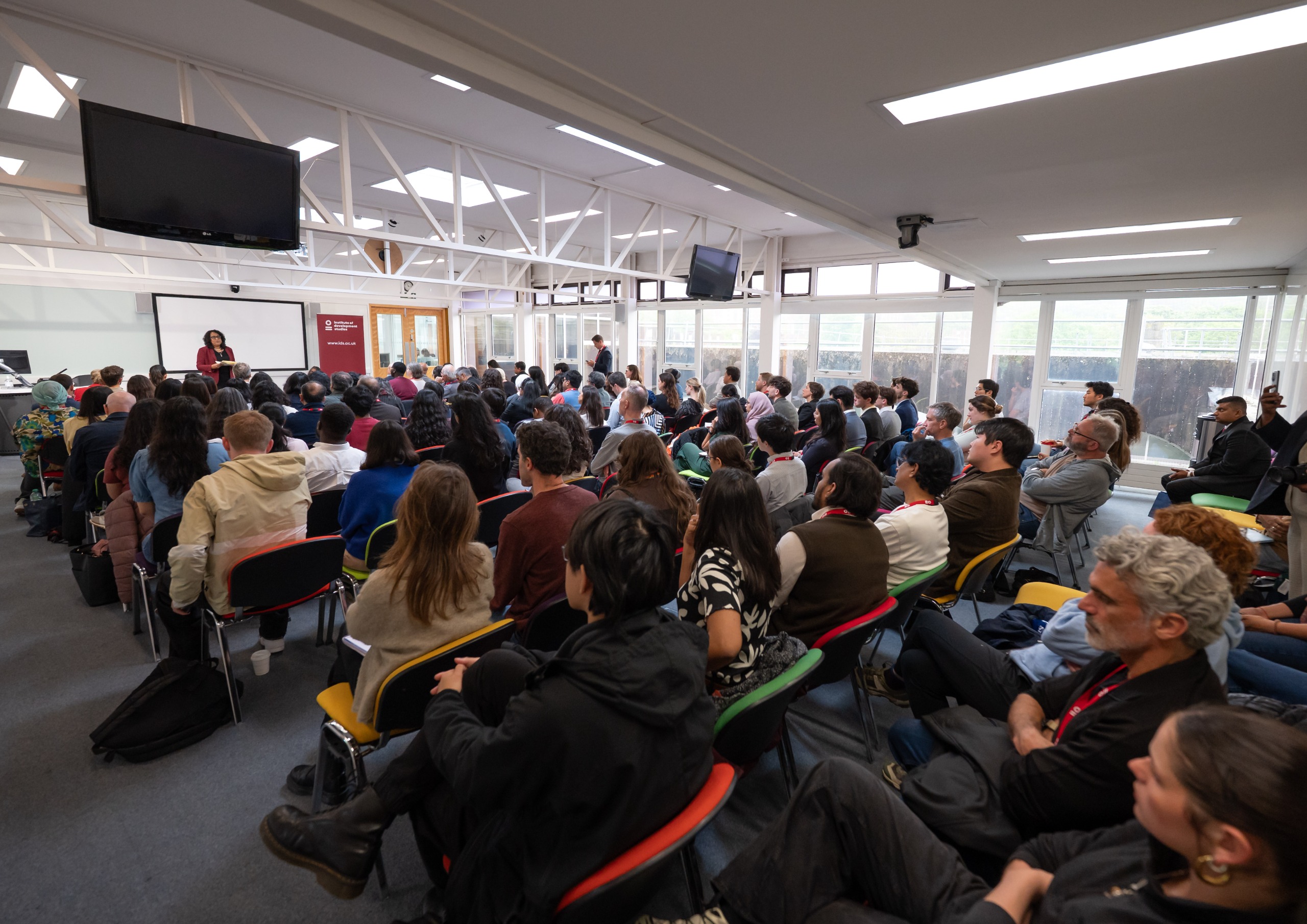
Prime Minister Dr. Harini Amarasuriya stated that politics is not something separate from development and it shapes every choice we make in governance, while addressing the 60th anniversary commemoration of the Institute of Development Studies (IDS), University of Sussex, Brighton. during her official visit to the United Kingdom.
The Prime Minister and the accompanying delegation arrived at London’s Heathrow Airport at 8.00 p.m. Sri Lanka time on Monday [18 May], commencing the official visit to the United Kingdom.
The delegation was warmly received at Heathrow Airport by Sri Lanka’s High Commissioner to the United Kingdom, Nimal Senadheera, together with the Special Representative to the Secretary of State for Foreign, Commonwealth and Development Affairs of the United Kingdom and former British High Commissioner to Sri Lanka, Richard Wildash, along with other diplomatic officials.
On the following morning, the Prime Minister arrived at the University of Sussex in Brighton, where she was received by Professor Anu Joshi, Director of the Institute of Development Studies, Professor Mick Moore, and senior representatives of the University of Sussex.
Addressing the public event, the Prime Minister reflected on the relationship between politics, governance, and development, drawing from Sri Lanka’s recent political and economic experiences. She emphasized the challenges of balancing governance, economic recovery, social protection, and institutional reform while responding to public expectations and maintaining democratic accountability.
The Prime Minister also highlighted the government’s ongoing policy focus on recognizing paid and unpaid care work as a central component of the national economy, particularly the contribution and challenges faced by women within the care sector.
During the visit, Prime Minister Dr. Harini Amarasuriya is also expected to address a session at the Oxford School of Global and Area Studies at the University of Oxford, followed by an interactive discussion with scholars and students.
During the visit, the Prime Minister is also expected to meet senior representatives of the United Kingdom government, including Yvette Cooper, the Foreign Secretary of the United Kingdom, and Bridget Phillipson, the Secretary of State for Education of the United Kingdom. She is also expected to meet Shirley Ayorkor Botchwey, Secretary-General of the Commonwealth.
[Prime Minister’s Media Division]

New Batticaloa Public Library vested in the public

PM delivers lecture at the University of Oxford

China’s Xi Jinping, Russian President Vladimir Putin hold talks in Beijing

Politics is not something separate from development. It shapes every choice we make in governance – PM

Taijul takes six as Bangladesh complete 2-0 sweep

At least 10 dead as huge floods sweep southern and central China

‘Dates have the highest sugar content to fight Coronavirus’

Sunday Island 27 December – Headlines

#SundayIsland 17th December – Headlines

Sunday Island – 28th March

Sunday Island Headlines – 21 March

Sunday Island – 21st February – Headlines
-

 Features4 days ago
Sri Lankan Airlines Airbus Scandal and the Death of Kapila Chandrasena and my Brother Rajeewa
-
 News5 days ago
Lanka’s eligibility to draw next IMF tranche of USD 700 mn hinges on ‘restoration of cost-recovery pricing for electricity and fuel’
-

 News4 days ago
Kapila Chandrasena case: GN phone records under court scrutiny
-

 News4 days ago
Rupee slide rekindles 2022 crisis fears as inflation risks mount
-
 Opinion7 days ago
Electricity tariffs have skyrocketed: Can further increases be prevented?
-
 Business4 days ago
Expansion of PayPal services in Sri Lanka officially announced
-

 Features6 days ago
Mysterious Death of United Nations Secretary General Hammarskjöld
-

 News4 days ago
Court orders further arrests in alleged USD 42 Mn NDB fraud case