
News
Medical specialists denounce political interference with vaccination programme


Recent actions of groups or individuals with political or trade union backing have caused immense damage to the country’s “vaccination fame” internationally and Sri Lanka’s ability to purchase needy vaccines in the near future, the Association of Medical Specialists (AMS) says.
AMS President, Consultant Paediatrician Dr. Lakkumar Fernando, has in a media statement, said that those groups are trying to meddle with the vaccination process and the government has to introduce a clear and strict vaccine rollout plan to streamline the vaccination programme and restore public confidence therein.
Given below is the AMS statement: “We have witnessed the COVID-19 vaccination programme taking another dramatic turn today to display the thuggery of the Mayor of the Moratuwa Urban Council.
“While saluting the Medical officer of Health (MOH) for her courage and forthrightness, we blame law enforcement authorities who failed to exercise their power to protect and defend a high ranking public servant on duty in Moratuwa.
“We have come to know about several such ugly acts of politicians in Kurunegala and Galle as well during this vaccine roll out. We have already protested against certain high handed actions of powerful health sector trade union in relation to the administration of the second dose of AstraZeneca vaccine. We condemn such interference by any groups or individuals with political or trade union’s backing.
“We as a professional trade union have very clearly predicted the chaotic situation which could arise as a result of authorities losing the grip of the vaccination programme against
Covid-19 at this critical juncture. Any rational individual with common sense would know it’s detrimental effect on the success of the whole programme and hence on our economic recovery.
“We urge authorities to introduce a clear and strict vaccine roll out plan even at this late stage as this is the final rescue mission to put our programme on track to win the confidence of the general public while successfully beating the pandemic. In the absence of such a firm, organized plan we are bound to fail in achieving our goal.
“Further, this kind of ad hoc interferences by various groups violating scientific prioritization of vaccination roll out has already caused immense damage to our “vaccination fame” internationally and our ability to purchase needy vaccines in the near future.
Therefore, we would like to warn relevant authorities that this would be the last opportunity to intervene at the highest level to clear this mess to enable our front line workers and the general public to get this important vaccine in a scientifically organized manner.”






The NPP government has not taken a final decision regarding filling of the vacancies in the judiciary.
A group of Opposition MPs, led by SJB leader Sajith Premadasa, on 12 June, requested Speaker Dr. Jagath Wickremeratne to take up the issue of judicial vacancies with President Dissanayake. Opposition sources said that there were four vacancies, each in the Court of Appeal and the Supreme Court, and the inordinate delay had adversely affected the judiciary.
Government sources indicated that there was no change in the status quo as regards filling of vacancies. Referring to the government proposal to extend the retirement age of judges, authoritative sources said that no final decision had been taken yet.
SJB lawmaker Dayasiri Jayasekera told The Island that they would raise the issue in Parliament this week.
He said that the deliberate delay in making appointments to superior courts and the move to extend the retirement age couldn’t be taken separately.
The MP noted that the Bar Association of Sri Lanka, the Lawyers’ Collective, the Colombo High Court Lawyers’ Association, Colombo Magistrate’s Court Lawyers’ Association and the Bar Association of Badulla had opposed the government move.
There hadn’t been any public statements in support of the government move, MP Jayasekera said, urging the government to end uncertainty in the judiciary.
by Shamindra Ferdinando
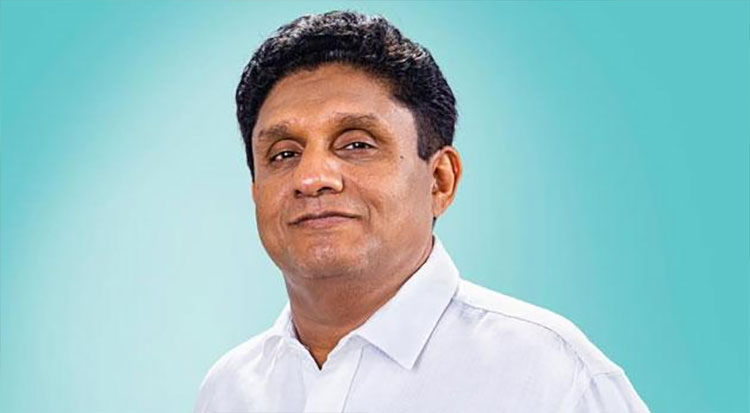
SJB leader Sajith Premadasa has invited the UNP and other political parties to join his party. Premadasa, who is also the leader of the Opposition, has emphasised that the UNP and the SJB could reach a consensus on policies but his party wouldn’t, under any circumstances, accept whatever formula to share positions. Premadasa said so, speaking to the media over the weekend, after meeting the Mahanayaka Thera of the Malwatta Chapter of the Siyam Nikaya Most Venerable Thibbatuwawe Sri Siddhartha Sumangala Thera.
A statement issued by the Opposition Leader’s Office quoted MP Premadasa as having extended an invitation to all political parties to give up extremist policies and join the SJB.
The SJB leader alleged that the NPP government feared facing elections and that was the reason for the inordinate delay in holding Provincial Council polls. PC polls were last held in 2012, 2013 and 2014, on a staggered basis. Premadasa said that if PC polls were held his party would definitely win the majority of PCs.Premadasa also urged the government to reduce electricity tariffs and fuel prices.
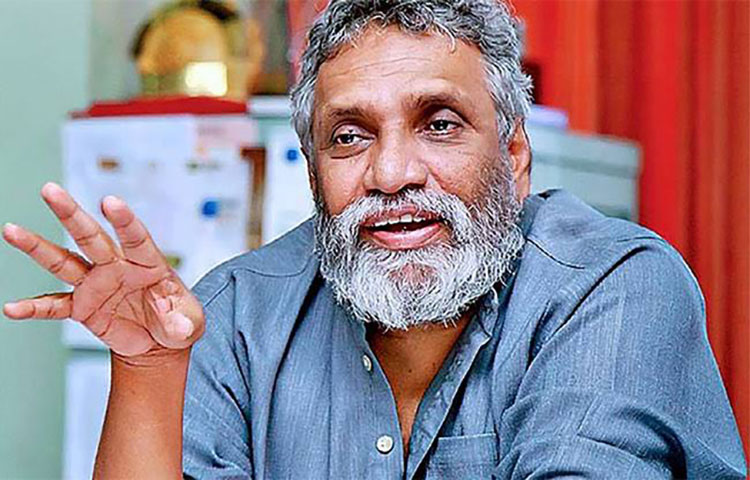
Former Chairman of the Election Commission, Mahinda Deshapriya, on Saturday, strongly criticised the continued postponement of local government elections, declaring that every day without elections constitutes a violation of both the Constitution and democratic principles.
Speaking during an interview with journalist Bhanuka Rajapaksa, on Hiru TV, on Saturday, Deshapriya described the current administration of local government institutions by unelected officials as fundamentally undemocratic and contrary to the spirit of representative governance.
Deshapriya said local authorities, across the country, are presently being managed by secretaries and bureaucrats rather than elected representatives, depriving citizens of their democratic right to be governed by individuals, chosen through the electoral process.
“If the Constitution recognises and provides for local government institutions, then it is the responsibility of the State to ensure that elections are held and that these bodies are administered by representatives, elected by the people,” he said.
Deshapriya rejected attempts to justify the prolonged delay, arguing that responsibility for the situation rests with the government.
He noted that while various political parties have publicly stated their readiness to face elections, the ruling administration possesses the authority to resolve any issues relating to the electoral system.
The former Election Commission chief pointed out that the government enjoyed a two-thirds majority in Parliament, enabling it to enact any legislative amendments required to facilitate the conduct of elections. Instead, he said, successive committees and review processes had been used to postpone a final decision.
He also referred to efforts by opposition legislators who have moved motions seeking to address concerns relating to the electoral framework and expedite the holding of local government polls.
Deshapriya warned that any attempt to appoint a fresh delimitation committee could further delay the electoral process, making it unlikely that local government elections would be held within the current year.
He also dismissed claims that financial constraints have prevented the conduct of elections. Expressing surprise at such assertions, he questioned how funding shortages could be cited as a reason for postponement while expenditure continues in other sectors.
According to Deshapriya, the existence of laws establishing local government institutions imposes an obligation on the State to ensure that those institutions are populated through democratic means.
“The legal framework exists. If elected representatives are not appointed through elections and institutions continue to function under unelected administrators, that is a failure of the State,” he said.

Largest ever cocaine bust in Australia after police raid underground bunker

Mohamed Salah scores as Egypt beat New Zealand for first World Cup win

Lamine Yamal scores first World Cup goal as Spain thrash Saudi Arabia

Shahidi sanctioned for running on the pitch during Chennai ODI

Kapp’s 81* seals South Africa’s come-from-behind win against India

Belgium see red in goalless World Cup draw with Iran in Los Angeles

‘Dates have the highest sugar content to fight Coronavirus’

Sunday Island 27 December – Headlines

#SundayIsland 17th December – Headlines

Sunday Island – 28th March

Sunday Island Headlines – 21 March

Sunday Island – 21st February – Headlines
-

 News7 days ago
Beijing Capital Airlines to resume flights to Colombo signalling boost to tourism
-
 Features6 days ago
Killing of Colombo’s ancient trees — a warning on UN’s World Desertification Day – 17 June
-

 News4 days ago
Creditor receives USD 2.5 mn as Lankan public bears loss from theft of Treasury funds
-

 News3 days ago
Creditor not yet paid
-
 News3 days ago
Consumers bearing 22% tax burden despite 18% VAT claim: Dr. Harsha de Silva
-

 Opinion5 days ago
Beyond diagnosis: A strategic design for 7% growth by 2029 (Part I)
-

 Opinion7 days ago
Fifty years after Soweto uprising
-
 News6 days ago
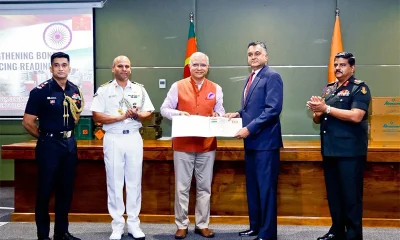
India provides military stores worth USD 5.5 mn to SL