
Business
A holistic approach to People Management

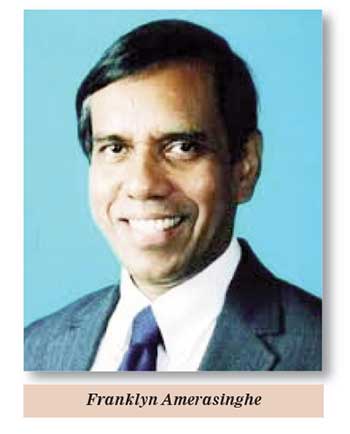
Business Oriented People Management by Franklyn Amerasinghe which is to be launched soon, validates that people management is about understanding that the people employed are more than a resource to earn profits and they are as valuable as the investor himself…
by Randima Attygalle
‘Thousands of students are now looking at entering the field of ‘People Management’ and one drawback for them is that usually they study Human Resource Management as part of a curriculum for certification, but they often have no exposure to a holistic analysis of how the ‘People Management’ function is integrated into the functioning of the business.’
The preface to Franklyn Amerasinghe’s latest compilation, ‘Business Oriented People Management’, which is to be launched soon, underlines the fundamental objective the author seeks through his work. The author who alludes to the Human Resource or the HR function as ‘People Management’ further qualifies: “the term ‘Human Resources’ leaves an ugly taste in the mouth. It seems to look at the human element as just another resource like money. People management is about understanding that the people employed are more than a resource to earn profits and they are as valuable as the investor himself.”
The book which deals with the evolution of human resource management, the corporate sector and its rules for governance, people management and performance management, globalization and international obligations, labour legislation, collective bargaining, leadership, dispute management and much more, enables the ‘People Manager’ insights into how decisions are taken and also indicates the benefits for Boards of Companies to have a people-centric focus in their business policies. The sustainability of the corporate and the social aspects of the business are also given attention.
The book, Amerasinghe explains, provides a basic picture of how a private sector organization complies with its multitude of obligations relative to all stakeholders. A publication by the Employers’ Federation of Ceylon (EFC), Business Oriented People Management’ , as its one time Director General/CEO, Amerasinghe notes, is “conceived as a supplementary aid to all those responsible for managing people whether they be designated as HR Personnel or not.”
 Amerasinghe who was also a Senior Specialist at the ILO for Employers’ Organizations in East Asia, translates his wealth of experience in his scholarly pursuits. A prolific writer credited for many functional compilations on mediation and cooperation at workplace, conflict management and social dialogue, he has also served on many prestigious Boards and Committees in the public and private sectors.
His latest work provides insights to the executives managing people and how they should fit into the overall achievement of business plans. An unfortunate trend the author notes, is for such executives to look very exclusively at their immediate tasks and targets neglecting the larger picture of the organization. “The fact that each executive contributes to fulfill a corporate plan is sometimes forgotten in pursuit of personal goals. Moreover, many think that following blindly, and without question, policies handed down by higher management is loyalty and is sufficient. Every employee at whatever level should be encouraged to contribute to the development of the company and its policies. Some areas of activity mentioned are for the purpose of identifying the People Manager as vital in the business interests of a private sector organization which is dynamic and looking for sustainable growth,” notes the author adding that the People Manager has two distinct functions: his personal performance and to encourage others with whom he interacts to play their part in corporate performance.
Current management structures, the author observes, reflect that increased responsibility for handling people rests outside the traditional HR Department, although laying down policy and monitoring what is done at departmental level would still remain with it. “Thus the book is meant to assist all managers who participate in managing people,” he says. The advent of digitization and new forms of work arrangements have shifted the ‘circumstances’ of the HR Manager to another level thus changing gears in his/her performance role, says Amerasinghe. “The traditional role of the HR Manager, however, remains the same which is to make the employee contented and motivated to contribute to the organization.”
Paying significant attention to the skills needed on a day to day basis such as dispute handling, negotiation and communication, the book also focuses on industrial relations, an area which the author feels is now quite overlooked, as the HR function looks more and more towards isolating people at work and dealing with them individually. “This does not usually work in the Sri Lankan setting as there is a cultural desire to indulge in collective thinking, especially in rural areas.” The era when production and service centres were in Colombo has been replaced by a policy of moving to rural and suburban centres, with a large number being in Industrial Zones which attract a large number of rural workers.
“The rural worker is conditioned by peer pressure and a strong resistance to change from their traditions. The COVID pandemic which has seen mass loss of jobs especially at lower levels will probably bring back industrial relations to merit more consideration again,” observes the writer.
Amerasinghe’s latest compilation also enables a window to the past in which corporates tackled issues of their employees. Originally the intention was to have an employee who dealt with ‘fire-fighting issues’. The development of HR strategies as a means of keeping employees in line with business requirements was aided by circumstances such as the debacle of the unions in July 1980 and the disillusion which followed. “There has been a remarkable change in the culture of blue collar workers by the movement of collective power to the workplace as opposed to the earlier reality of workers being made to follow the dictates of political parties and their interests,” says Amerasinghe whose latest book balances the advantages of collective agreements against the desire of employers to make employees more focused on their individual terms and earnings which as he says is the key component in the strategy to motivate employees to be more productive.
The COVID situation as the author further observes, brings out a new dimension, which is the futility of legislation to guarantee terms and conditions of employment in the face of employers not having the capacity to meet their legal obligations “The law cannot force employees to stand up for their rights when confronted by a situation when they must either accept what is offered or starve.” The book deals with the legal situation and the need for employers to think of their social responsibility towards employees. “Moreover, in the long term they may have look for new employees when they need to think of ramping up their production or services again.”
The author in his work refers to the Personnel Managers of the past who grew into managing people by long association with the organization. “The more experience one has at the lowest levels of an organization, the more effective one could be. HR personnel should have compulsory internships. Through my book I try to focus on the need to fully comprehend what the organization is about and its responsibility which in turn devolves on the management.” He also goes onto note that there is an onus placed on the management to afford opportunities for the HR personnel to constantly upgrade themselves and be innovative.

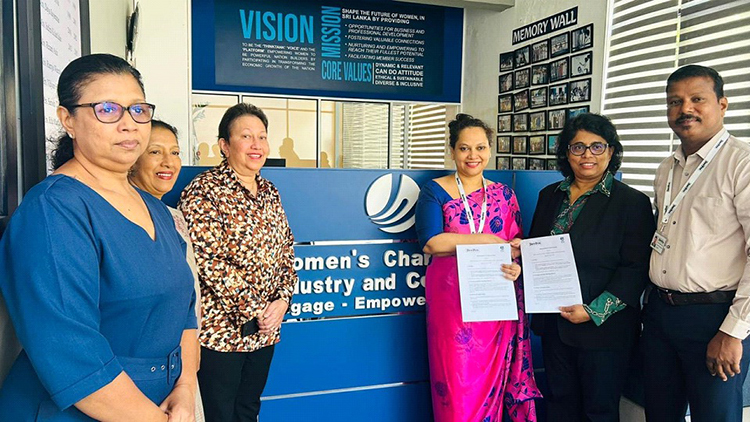
DevPro and Women’s Chamber of Industry and Commerce (WCIC) signed a formal partnership on Wednesday, 28th January to collaborate in promoting women’s economic empowerment and inclusion in Sri Lanka.
DevPro builds on 30 years of OXFAMs legacy in Sri Lanka and works towards Inclusive Economic Development leveraging expertise in inclusive and climate-resilient market systems and enterprise development and innovation. DevPro’s work is guided by the core values of gender justice, inclusivity and community-led development. Through its recent projects, DevPro has supported over 270 women-led MSMEs, across agriculture, handloom, and tourism-related value chains in five provinces in Sri Lanka through a mix of interventions combining skills development, enterprise strengthening, market linkages, and gender-sensitive community engagement to improve income, resilience, and economic participation.
WCIC is the first women-only trade chamber in the world, dedicated to empowering women entrepreneurs and women-led MSMEs in Sri Lanka through skills-building, business advisory services, networking etc. Among its many initiatives, WCIC’s flagship annual event, “Prathibhabhisheka” – Women’s Entrepreneurs Awards has empowered many women owned and women-led businesses in Sri Lanka to enhance their business resilience and competitiveness through improved governance processes, financial health, market recognition and global expansion.
Through this partnership, both DevPro and WCIC, will leverage their collective expertise, networks and resources to advance women’s economic empowerment and inclusion through projects, capacity building, research and policy advocacy focused on women entrepreneurship development, innovative business models, sustainability certification and credentials, export readiness and market integration and financial literacy and inclusion.
The MoU was signed by Gayani de Alwis, Chairperson of WCIC and Chamindry Saparamadu, Executive Director of DevPro in the presence of senior members of both teams.
Business
Writer Business Services enters Sri Lanka to partner with institutions to provide information management and payments solutions


Writer Corporation, one of India’s leading business groups, announced the launch of its subsidiary, Writer Business Services Pvt. Ltd., and the commencement of its operations in Sri Lanka. The expansion reflects Sri Lanka’s strategic importance in Writer’s regional growth plans and its role in supporting a highly regulated digital and financial services market which is currently undergoing digital transformation.
Sri Lanka’s continued focus on strengthening regulatory frameworks, digital platforms, and financial systems is shaping how institutions across banking, government, and enterprise sectors approach their business operations. There is a clear emphasis on secure, compliant, and resilient information and transaction environments that can scale with regulatory and business needs. Writer’s entry into Sri Lanka aligns with this direction, bringing global experience and a partnership-led approach to the market.
As part of its launch, Writer will establish a secure records and information storage facility in Seeduwa, Colombo. Designed to meet global standards for security, compliance, and disaster resilience, the facility will support banks, financial institutions, government bodies, and large enterprises in managing physical and digital information across its lifecycle.
Alongside information management, Writer brings established expertise in integrated payment services to support the modernization of transaction infrastructure across the banking and financial services sector. Its payments capabilities focus on strengthening availability, transaction continuity, and transparency across critical payment channels that underpin institutional reliability and customer confidence.
Writer’s digital payments offerings in Sri Lanka include end-to-end ATM and self-service terminal outsourcing, integrated channel ownership and managed services, field management applications, payment and reconciliation platforms, and remote monitoring with near real-time reporting. These solutions support financial institutions in improving uptime, strengthening governance, and enhancing operational efficiency across payment networks, in line with the continued evolution of electronic and automated payment systems.
Across information management and payments, Writer operates with an integrated portfolio spanning records and information management, business process outsourcing, cloud and digital services, data privacy, cybersecurity and enterprise payments infrastructure. These capabilities support institutions in addressing evolving regulatory requirements, digitization of legacy environments, and rising operational and cyber risks.
Writer’s local presence enables closer collaboration with clients and on-ground delivery, while supporting the development of Centres of Excellence across cybersecurity operations, SOC and NOC services, AI-led solutions, and payments operations and monitoring.
Writer’s Sri Lanka operations will be built, led, and run by Sri Lankan professionals, reflecting a long-term commitment to local talent growth and development.
Commenting on this development, Satyamohan Yanambaka, CEO, Writer Global Services Pvt. Ltd., assured Writer’s long-term commitment to the country’s digital ambitions. He said, “Writer’s entry into Sri Lanka reflects our belief that digital ambition in regulated environments must be supported by trust, sound governance, and strong execution. As institutions scale digital services, the reliability of information and payment systems, channel operations, and governance frameworks becomes increasingly important to public and institutional confidence. Our experience across information management, digital transformation, and enterprise payments enables us to support secure, large-scale financial ecosystems, with a clear commitment to building and leading these capabilities locally.”
Sri Lanka’s Digital Personal Data Protection framework raises expectations around how personal and sensitive information is secured and governed.

Altair Residences have, over the past six months, seen more than 100 individual title deeds being executed by apartment owners, providing owners with a clear, registered, legal title to their apartments in accordance with Sri Lankan property law. This has been a key initiative by the new owners and management of Altair to improve governance and will continue in an orderly manner in the coming months.
With the transition of ownership to Blackstone India, Altair’s Management Council has also been formally constituted, enabling owners to play an active and proactive role in the management of the Altair building. In addition, the management council has appointed Realty Management Services (RMS), a subsidiary of Overseas Realty Ceylon PLC, as the new facility manager of Altair.
Commenting on these milestones, Thilan Wijesinghe, Chairman of TWC Holdings, who, together with a team from TWC, represents Blackstone’s interests in Sri Lanka, said, “The issuance of individual title deeds is a critical step in any professionally developed residential asset. Over the past six months, this process at Altair has moved forward in a structured and transparent manner, alongside the formal establishment of owner-led governance. This, combined with the appointment of experienced facility managers are fundamental building block for long-term value-creation for apartment owners and proper asset stewardship.”
With ongoing improvements to the building being undertaken by Indocean Developers Pvt Ltd (IDPL), the owning company of Altair, the issuance of deeds to owners is expected to accelerate over the coming months.

USA pick former Sri Lanka allrounder Shehan Jayasuriya in T20 World Cup squad

Jofra Archer back as England and Sri Lanka begin World Cup countdown

Showers will occur at times in the Eastern, Northern, North-Central and Uva provinces and in Matale and Nuwara-Eliya districts

DevPro and WCIC come together to accelerate women’s economic empowerment in Sri Lanka

Tobacco and alcohol claim 22,000 lives annually

Development Officers hunger strike drags on for fourth day

‘Dates have the highest sugar content to fight Coronavirus’

Sunday Island 27 December – Headlines

#SundayIsland 17th December – Headlines

Sunday Island – 28th March

Sunday Island Headlines – 21 March

Sunday Island – 21st February – Headlines
-
 Business5 days ago
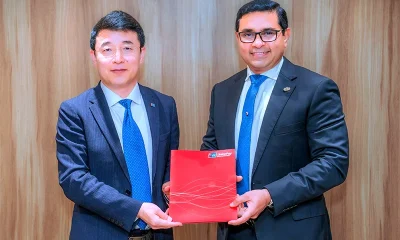
ComBank, UnionPay launch SplendorPlus Card for travelers to China
-
 Business6 days ago
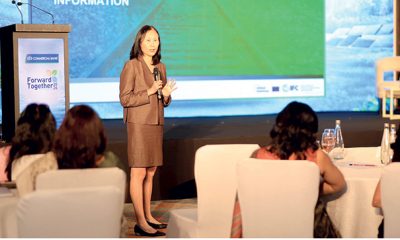
ComBank advances ForwardTogether agenda with event on sustainable business transformation
-
 Opinion6 days ago
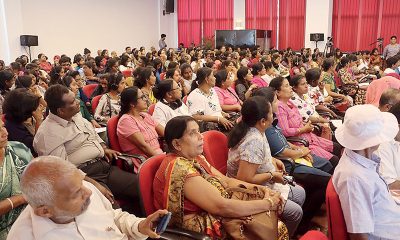
Conference “Microfinance and Credit Regulatory Authority Bill: Neither Here, Nor There”
-
 Business2 days ago
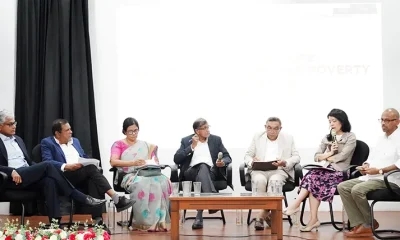
Climate risks, poverty, and recovery financing in focus at CEPA policy panel
-
 Opinion19 hours ago
Sri Lanka, the Stars,and statesmen
-

 Opinion5 days ago
Luck knocks at your door every day
-

 Business7 days ago
Dialog Brings the ICC Men’s T20 Cricket World Cup 2026 Closer to Sri Lankans
-
 News6 days ago
Rising climate risks and poverty in focus at CEPA policy panel tomorrow at Open University