
Midweek Review
Whitewashing Ltte & Multiple Narratives Of Genocide In Canada

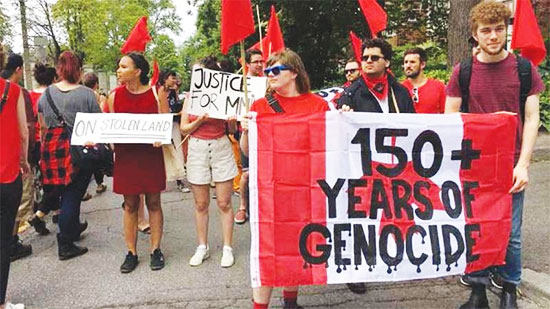
“Canada has this image internationally of a great defender of human rights violations, the protector of human rights throughout the world, but in its own backyard it’s violated the rights of the First Peoples indiscriminately for years and years. And the greatest human rights violation has been the imposition of the residential school experience.”
Phil Fontaine, Aboriginal Canadian leader
By Sudharshan Seneviratne
A recent announcement featuring the news, Tamil Genocide Education Week by Scarborough MPP Vijay Thanigasalam’s Bill 104, received third reading at Queen’s Park on May 6th. Let us look at the “messenger” first and his credibility and secondly, the nature of the Canadian State i.e. hidden political agenda Canada has for the dependent diaspora as a cat’s paw. The man himself has a dubious history and was a one-time LTTE sympathizer even after the Elam war ended in 2009 (CDN 14th May 2021 Sugeeswara Senadhira).
Quite naturally Thanigasalam’s antics immediately sparked off a debate within Canada and the overseas resident Sri Lankan community. The mindset of the pro-LTTE diaspora is inevitable. It is another step in the long march consolidating its racial identity and legitimacy within a white-dominated country and the West. It also needs a bogy to legitimize the very existence in the eyes of its host country, the international community, and funding agencies, mostly, to the next generation and generations yet born. Mythifying the heroic struggle opposing this evil is an instrument unifying the larger Tamil community and a convenient “oppressed people’s theory”. On the other hand, it is an essential ingredient imaging the “enemy” i.e. the Sri Lankan state, Sinhala speaking community, and Buddhists.
There is a certain dialectic in this process. While projecting the “Evil” Sri Lankan state, Sinhala people and Buddhists, simultaneously whitewashes the genocide carried out by the LTTE. It will be an education to learn to what extent this “education” will list the human and cultural genocide and the carnage carried out by the LTTE. The abduction of children transforming them into killer machines and feeding them with cyanide pills; physical liquidation of opposing Tamil political parties and their leadership; the killing of Sri Lankan leaders, civilians (Tamil, Muslim and Sinhalese), Buddhist monks and the destruction of cultural property is an unending list of scalps that need to be listed as ‘genocide’ even by UN standards. Huge funds they amassed by robberies, intimidation carried out on the helpless Tamil-speaking diaspora by pro-LTTE thugs will not feature in the awareness programme. They also will not speak of the untold racial discrimination they themselves faced in White Canada. This will provide a comfort zone to the Canadian State to whitewash and present itself to the international community as the “moral state”, which ironically emerged by default as a champion of the oppressed when President Trump was doing his number in the neighbourhood. Ironically, Canada’s own track record on human rights needs a new chapter on the history of genocide.
Will the learning material highlight the genocide carried out by the LTTE and unfold the genocide track record of the masters of the Pro-LTTE diaspora – Canada? These are the antecedents of rewriting history to be introduced to the school system perpetuating a mythical story of the birth of a new “Nation” to the next generation. This is the long-term plan of laying the foundation of its own future Eelam State which will be the next step towards demanding or carving out a Province within the State of Canada. It may be too late when Canada wakes up to a replay of the “Quebec Syndrome”! It will dilute Canada’s banal excuse of inclusivity is nothing but empty rhetoric. Only a week back it was reported that the highest number of racial attacks on Asians is in Vancouver. With almost 1 out of every 2 residents of Asian descent in British Columbia experienced a hate incident as it was reported in the past year (Bloomberg Equality + Businessweek May 7th 2021). Of course, this is happening in Canada, in case the pro-LTTE diaspora forgot the map! It will be interesting to document the nature of discrimination the newly arriving Tamil-speaking immigrants faced in Toronto and other cities. Either they are silent or consciously hide such facts without causing embarrassment to the Canadian White Master.
Conversely, the pro LTTE diaspora will never educate their children on how the LTTE gunned down their own people while escaping along the eastern beach front; they will never speak of Tamil-speaking people who were fleeing not so much from the Sri Lankan military but from the LTTE and how many of them were also hunted down overseas. It is unlikely that the humanitarian aid given by the Sri Lankan Army to the public in the North and the East as the war ended; social development carried out in the north and the east, where inclusivity programmes and systems were placed on track and among other people-friendly measures. Will they educate the children that in almost all metropolitan centres such as Colombo, Kandy, Jaffna, Batticaloa, Galle Trincomalee and Nuwara-Eliya the Sinhala and Buddhist population is less than 50% of the resident population and there is coexistence among language, religious and ethnic groups? Will they be educated on the quantum of investments made by the diaspora in such places during the post-war period and the rich harvest they reap from such investments?
There is another important factor we often tend to forget. This is conscious support and the nurturing of pro-LTTE elements and lovingly embraced by the Canadian State. The great saviour and knight in the shining armour crying and lamenting on Heroes Memorial Day who actually shed tears and how their voices break down at such events. Full marks to the Canadian political leadership for the Oscar-winning performances. Seeing this, Niccolo Machiavelli may have added another volume to his thesis on The Prince pleased that the pro-LTTE diaspora followed his famous dictum, “the end justifies the means”! Of course, Canada will not shed any tears for its own indigenous people nor will it take the state of Israel to task for the current massacres carried on the Palestinian people!
Hero worshipping Prabakaran is a God-given excuse to sweep under the carpet Canada’s own miserable history of slavery, racial discrimination, exploitation of indigenous people and brutally putting down its own French origin white citizen’s aspirations and silent support for multinationals that undermine environment protection within Canada and overseas. This is the diaspora’s His Masters Voice that was screaming on Sri Lanka’s genocide record at the UNHRC this March! A press release from the Scarborough-Rouge Park MPP, however, said the Conservative government, bypassing the bill, “demonstrated its commitment to fighting injustices and standing up for the Tamil people who call Canada home”. (MAY 11, 2021 BY MIKE ADLER. SCARBOROUGH MIRROR). Amen!
The thread of history: Multiple narratives
The study of history and its dynamics needs to be seen in the motion of events and people. This dynamic is seen in cyclical and spiral movements. However, if the circle or spiral is stretched, it becomes linear. There is linearity representing the History of Canada as multiple narratives connecting it from the past to the present. Canada’s ruling cabal may wish to hide behind the sympathetic engagements of the pro-LTTE diaspora and presenting itself as the greatest exponent of human rights (bleating from the UNHCR pulpit). But it cannot wash away the sins of the past, its double standards, and crimes against humanity which is yet a living reality in its sub- stratum culture and psyche.
 The Tamil diaspora is not monolithic; it is differentiated by class, excludes certain castes and is gendered in its exploitation. The mobilisation of the diverse Tamil diaspora abroad and the rhetoric used have become the rationale for reinforcing the security establishment in Sri Lanka. A democratic Tamil leadership from within the country should challenge the larger Tamil diaspora to change course and work constructively towards building a plural and democratic society out of the ravages of war.
Ahilan Kadirgamar ” Tamil Diaspora: Classes, State and politics”
Economic & Political Weekly. July 31, 2010 vol. xlv no 31
Narrative 1: Colonialism
As in the case of most countries “discovered” by the West, Canada was founded under Colonialism with a history of discrimination and cruelty to humanity. Colonialism commenced as early as 1600 though Canada became a nation in 1867. Formalizing genocide as a policy of the state then commenced with state patronage and blessings. Controlling land and resources was imperative. Indigenous people had to be physically liquidated that provided the space to appropriate their land (mainly resource areas) by force. They were expelled to unproductive land unworthy of good soil, water resources, and game including sacred spaces. The most successful system of liquidating the indigenous people was: the forced sterilization and disenfranchising them of their indigenousness thus mentally and physically deculturalizing those communities. The most damaging strategy was by culturally absorbing them to the Western ethos introducing by force the damning colonial school system and the creation of stolen generations. This was practiced in the USA, Australia and Africa with great success and Canada fine-tuned this system by establishing the Resident or Industrial School system. Since the Pro LTTE Diaspora is targeting the school system, let us look at the roots of the Canadian school system under Colonialism and how subordinate people were educated, and its tragic consequences.
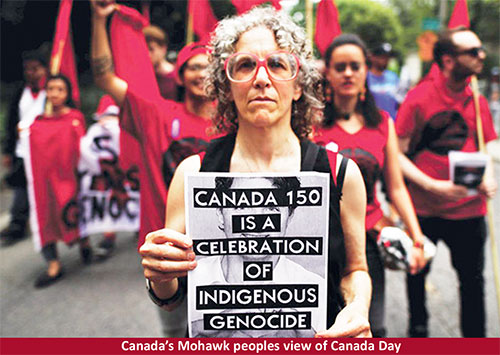
The Truth and Reconciliation Commission of Canada (TRC) in 2015, released its final report, documenting the tragic experience of at least 150,000 residential school students. Residential Schools “were part of a coherent policy to eliminate Aboriginal people as distinct peoples and to assimilate them into the Canadian mainstream against their will.” (“Genocide and Indigenous people in Canada”. The Canadian Encyclopedia). Policy on indigenous education was primarily based on assimilation and colonization. Assimilation was carried out by removing children from their parents and families to “educate” and to be deculturalized and isolate them where “children had to be caught young” (1879 Devin Report). Residential School (RS) system run by the Federal Government and the Church totally removed children from parents, who were not permitted to visit their children. They in fact never saw their children again. Between1890-1970 over 100,000 children were forced to attend 139 RS. Half the day they had no education but menial work in school, barns, and farms. It was slave labour and hardly any time for education. Girls were taught to cook, sew, and household work to become maids. Eventually, when they left school after 10 years, their level of knowledge and education was at the level of a Grade 2 child. In the final count over 70% of children were tortured, sexually abused by school teachers, priests, and nuns. This is cultural genocide at its best!
These children were unable to adjust to an alien space and society nor were they able to receive higher education or skills. They often resorted to larceny, drug and alcohol addiction, ending up as urban poor and plantation workers and often without livelihood as urban poor. The memory of their cultural past was obliterated and abuse blocked out the indigenousness. School leaving children who lacked family love, parental guidance, and poor family life and pauperized in turn also resorted to child abuse of their own children. Five generations of children went through this school system and the next generation of indigenous people was diluted & devastated and had no identity. Only in 2008 did the Prime Minister of Canada, Steven Harper, apologized to the indigenous people, again too late.
Similarly, the Australian Prime Minister too apologized for the wrong done to the indigenous people only in 2008.
“It has been very trying for Indigenous populations to have their existence annulled—that’s what the last 150 years have been. The 150th anniversary has to be marked by the fact that things have to change. We must confront our colonial thinking and attitudes and redefine what Canadian-ness means. We must move beyond the false notion that Canada was founded by the French and the English, recognizing that we started off with the First Nations, Métis, and Inuit, and have become a society that thrives on diversity and knows how to share resources fairly among everyone.” – Karla Jessen Williamson (Inuk), June 2017. Canada’s Dark Side. Origins Vol. 11 June 2018)
Will the pro-LTTE diaspora convey this dark history to their children by instructing them on Sri Lanka’s imagined genocide and sweep under the carpet the history of their White Master’s ugly history? They are only perpetuating the White Man’s history and not looking at their own history taught in the school system (Justice Murray Sinclair).
Narrative 2: French separatist Movement.
 The Quebec Sovereignty Movement (Mouvement souverainiste du Québec) emerged in the 1960s as a political movement and presented its ideology advocating an independent movement for the province of Quebec. Its antecedents ran to a much earlier period. The 1837 Patriotes Rebellion was the first attempt by French Canadians to overthrow British dominance since 1760 conquest. An entire literature has grown up around the theme of the exploitation of the French-Canadian people. Until the II World War, the French-Canadians, who constituted more than two-sevenths of the population, disposed of only one-seventh of the wealth.
Of the 31 richest mines, 12 were owned by Anglo-Canadians and nineteen by Americans. The 497 mining companies listed employed a grand total of seven French-Canadian engineers (“French Canada and the war”. TE Wood. VQR.1940). It is their ethnic and language identity that propelled the French-speaking Canadians to move towards separation.
In 1969 the FLQ stepped up its campaign of violence with the October Crisis. The group claimed responsibility for the bombing of the Montreal Stock Exchange, and in 1970 the FLQ kidnapped British Trade Commissioner James Cross and Quebec Labour Minister Pierre Laporte was later murdered. The silent repression that followed is not popularly recoded.
Many of Quebec’s francophones felt that the 1982 constitution significantly eroded their status and powers and threatened their survival as a people. The Canadian Charter of Rights and Freedoms specifically acknowledges the multicultural character of Canada. The tension between the bi-communal and emerging multicultural aspects of Canadian society and politics is at the root of the current threat to Canada’s survival as a country. (Vol. XVII No. 2, Fall 1997 Ethnic Structure, Conflict Processes and the Potential for Violence and Accommodation in Canada. by David E. Schmitt).
Here is another thread in history the Pro-LTTE school book may wish to include. They may well borrow Charles de Gaulle’s famous slogan expressed in Montreal during a state visit to Canada, “Vive le Québec libre!” only with a slight twist, “Vive le Scarborough libre!”
Narrative 3: Environment and genocide
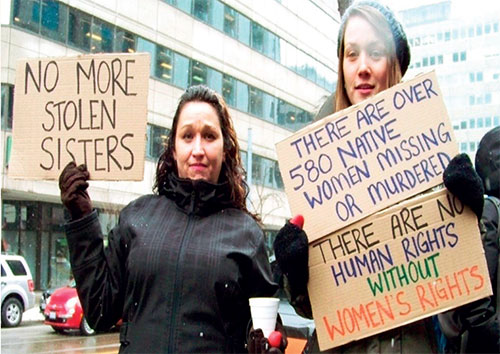
One of the focus areas of colonialism was its predatory expansion into land held by indigenous people that had resources of water, precious metal and minerals, supply of fish, animal skins and furs, and by the mid19th Century striking crude oil. The height of eviction of indigenous people, massacres, forced sterilization, enhanced expansion of Industrial (Residential) schools coincided with this period. They were placed in reservations and had little ownership over their traditional land.
The First Nation or indigenous people are yet alienated from their land and resources and are on a relentless confrontation with the Federal government of Canada. To cite some case studies. The Aamjiwnaang First Nation community has expressed concern regarding its proximity to chemical plants over a falling birth rate. This is due to the adverse effects of maternal and exposure to the effluent and emissions of the nearby chemical plants.
Protests broke out in many parts of Canada including Wet’suwet’en community, triggered off by arrests of dozens of protesters on traditional indigenous land along a route for TC Energy Corp’s TRP.TO planned Coastal GasLink pipeline. The flashpoint was police arrests that started in northern British Columbia of protesters who opposed the pipeline’s construction on the traditional land of the Wet’suwet’en indigenous people. Some 28% of the pipeline route runs through Wet’suwet’en lands. “Alberta Premier Jason Kenney, whose province depends on oil and gas revenue, called for police to step up enforcement, saying the protests are about ideology that is opposed to fossil fuels, not indigenous issues”. (Reuters Feb. 13th 2020).
In addition to pipelines, coal deposits salmon fishing zones and timber growing areas are on or adjacent to indigenous residential areas. There is a constant conflict between these communities and investors who are covertly supported by authorities.
The worst of it comes from the conduct of Canadian companies outside Canada (see Report to UN Committee in Mining Companies Pervasive abuse against women Oct. 4th, 2016. The Mining watch/Canada) Human rights advocates’ report shows that the government has actively supported abusive companies, rather than holding them accountable (Ottawa/Washington, D.C.) “A majority of the world’s mining companies, operating at over 8000 sites in over 100 countries, are headquartered in Canada. Many of these mines are also sites of serious human rights violations, including direct violence against local women and environmental degradation. One recent study found that Canada’s mining companies are involved in such abuses and conflict more than any other country. The report, submitted to the UN Committee on the Elimination of Discrimination against Women (CEDAW), charges that Canada has been supporting and financing mining companies involved in discrimination, rape, and violence against women in their operations abroad, when it should be holding those companies accountable for the abuse”.
I hope this part of environmental and human degradation will be taught to the diaspora school programme enlightening the students on the violence and abuses supported by the magnanimous state of Canada while it sheds tears of genocide against Sri Lanka over the fallen heroes of LTTE!
Epilogue
The greatest hope and asset to the Tamil-speaking diaspora is their children, the next generation. Let their minds open up to the world, inquire, question, and think for themselves. This is all about education and not something that is poured into one’s head tainted with biases and prejudices. Let them be exposed to their parents’ and grandparents’ place of origin and learn for themselves what Sri Lanka is and its inclusive history and heritage.
This account does not point the finger at all resident individuals of the Tamil-speaking diaspora. I personally know of high-end professionals, intellectuals, and friends who are very close and dear to me. Some of them cannot voice their sentiments in an invisible draconian social environment that has taken root over 40 odd years making them a potential “voice of the voiceless”. This is in some ways is dedicated to such individuals who one day will rise up and question the residue of a fascist rule controlling their thoughts and mind. Please reach out to your brothers and sisters across the ocean in Sri Lanka.

Ulugetenne
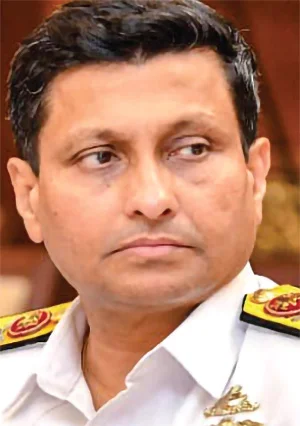
The Sri Lanka Navy, on 04 June, commissioned SLNS Samudravijaya, formerly United States Coast Guard Cutter Decisive. It is the fourth mothballed US Coast Guard cutter transferred to the SLN through the US Excess Defence Articles Programme. President Anura Kumara Dissanayake attended the ceremony at the Colombo Port. The US Embassy in Colombo, in a statement issued on the same day, quoted Defence Attaché Lieutenant Colonel Matthew House as having said: “Few partners have demonstrated the commitment to maintaining and operating these vessels as successfully as the Sri Lanka Navy. The outstanding condition and operational performance of SLNS Samudura, SLNS Gajabahu, and SLNS Vijayabahu are a testament to the professionalism and technical expertise of Sri Lankan sailors. Their stewardship of these vessels helped build the confidence that made this fourth transfer possible.” The first of the four vessels SLNS Samudura was commissioned on 19 February, 2005, during Chandrika Bandaranaike Kumaratunga’s tenure as the President. Milinda Moragoda, Economic Reforms and Science and Technology Minister of the previous UNP-led UNF government, played a significant role in acquiring that vessel. SLNS Samudura boosted SLN and participated in numerous operations, including the high profile hunt for LTTE floating warehouses, during the Eelam War IV. But, the US refrained from transferring any more big ships during the war though on the then Navy Commander Vice Admiral Wsantha Karannagoda’s request to provide intelligence and Washington obliging, made the successful hunt for LTTE floating arsenals in the last stages of the war possible. The transfer of the second vessel took place 19 years after the end of the war. Ex USCG Sherman was commissioned 06 June, 2019, as SLNS Gajabahu (P626). The third vessel was transferred to the Sri Lanka Navy on October 26, 2021, as the country was heading towards an unprecedented economic crisis. That vessel was commissioned as SLNS Vijayabahu at the Colombo Port with the participation of President Ranil Wickramasinghe and US Ambassador to Sri Lanka Julie Chung on November 20, 2022. Ironically SLNS Gajabahu, one of the ex-US vessels prominently figured in the contingency plan to save President Gotabaya Rajapaksa, but whose downfall was engineered by the US.
By Shamindra Ferdinando
The moment President Gotabaya Rajapaksa decided to take up residence at the President’s House (Janadhipathi Mandiraya), Fort, in the first week of April, 2022, the Navy had no option but to prepare a thorough contingency plan, in case the regime change project posed a realistic threat to the life of the President.
The President, in consultation with senior military officers, made his move within 48 hours after violence erupted outside his private residence at Pangiriwatte, Mirihana, on the night of 31 March, 2022. That decision seemed realistic and sensible at that time.
But, in the wake of the disastrous overall armed forces response to the coordinated violence unleashed by the regime change project on 09 May, 2022, in the aftermath of the Temple Trees ordered attack on Galle Face protesters, the top brass must have recognised the urgent need for total overhauling of security strategy. But, unfortunately, that hadn’t been the case. With violent crowds overwhelming the armed forces, deployed to block them, rapidly approaching the President’s House, those who had been at the makeshift Operations Room there were stunned.
In hindsight, the President’s decision to remain at the President’s House, regardless of the near failure on the part of the armed forces to repulse the raid on Temple Trees, on 09 May, seemed unwise. The rescue operation could have gone wrong and the war-winning President Mahinda Rajapaksa could have ended up in the hands of an angry mob.
Perhaps, the conspirators envisaged the President’s move, from Pangiriwatte to the President’s House, situated walking distance away from the Galle Face protest site, where they could draw additional strength.
The failure on the part of the government to take tangible measures, in the wake of the President’s House becoming the sole target on that fateful day, is a contentious issue that needs to be properly investigated. Don’t forget that the court case filed over the 09 May attacks on the residences and properties belonging to SLPP politicians, and some supporters ,was later withdrawn. The Wickremesinghe-Rajapaksa government never investigated the 09 May incidents.
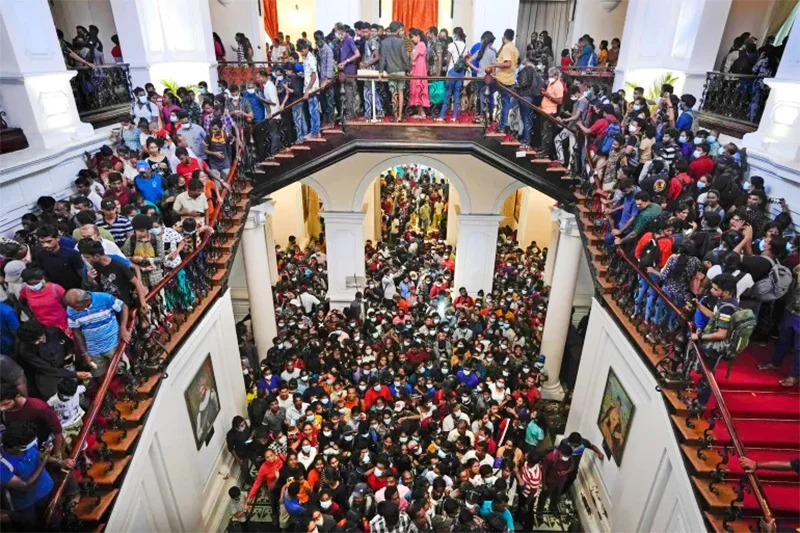
Exactly two months after the mobs almost succeeded in breaking through defences at Temple Trees, on the night of 09 May/10, where Prime Minister Mahinda Rajapaksa was residing, they mounted the assault on the President’s House.
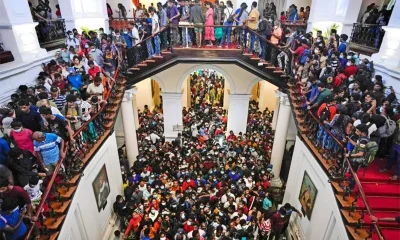
In the wake of the 09 May mayhem, President Gotabaya Rajapaksa named Lt. Gen. Vikum Liyanage as the Commander of the Army. He succeeded General Shavendra Silva who served as the CDS but was out of the country when all-out mayhem was unleashed by the Aragalaya mobs on 09 July, 2022, to oust the sitting government.
In spite of a direct and growing threat to the President’s House, on 09 July, 2022, the President felt confident in meeting the challenge. The President issued a directive to the Secretary, Ministry of Defence, General (retd.) Kamal Gunaratne, to shift the Operations Room from the Defence Force Headquarters, at Akuregoda, to the President’s House. Having shifted the Operations Room on 08 July, 2022, to the President’s House, as directed by the President, the top brass prepared to face the challenge.
Maj. General K.B. Egodawela, who served as an Additional Secretary (Administration) to the President, from the day the President moved to the President’s House, till he vacated on 09 July, 2022, in his memoirs ‘Aragalaya: Adarayen Prachandathwayata’ (From Love to Violence) revealed that though the top brass opposed the shifting of the Operations Room they carried out the directive. While the President felt that the top brass could collectively work at the President’s House to bring the situation under control, Gen Gunaratne proposed that the President should move to Akuregoda Defence Forces Headquarters, according to Egodawela. In fact, Gunaratne, who had been with Gotabaya Rajapaksa from the very beginning of the sinister campaign, strongly opposed the President’s decision to remain there.
Obviously, the President’s House pathetically failed to ascertain the scale of the protest and the rapidity with which protesters overwhelmed troops deployed outside the President’s House stunned the top brass. Had they swiftly reached consensus on Gen. Gunaratne’s suggestion, perhaps the 09 July regime change operation could have been thwarted. The armed forces could have resorted to tougher measures to prevent a march on Akuregoda Defence Forces Headquarters had the President agreed to move there.
Within two hours after the protest, targeting the President’s House began, video footage provided by drones indicated that troops couldn’t hold the rampaging mobs any longer. According to Egodawela, the top brass had been prepared to remove the President, even without his consent, by landing a helicopter in the Colombo harbor or by ship. Finally, they resorted to the second option. As the President and First Lady Ayoma got into a vehicle and took the rear exit into the adjoining former Navy Headquarters, mobs entered the President’s House. Another vehicle carrying several other persons followed.
The then Navy Commander Vice Admiral Nishantha Ulugetenne who had been with the President at the President’s House got into the vehicle carrying the President. Had they stayed at the President’s House for 10 more minutes, the consequences could have been devastating. https://island.lk/gotabayas-escape-from-aragalaya-mob-in-rti-spotlight/
Egodawela, who had been with the President from the very beginning of the presidential term, alleged that the raiders planned to kill the President and several others and display their bodies. The author quoted an unidentified intelligence officer as having told him that the raiders wanted to display the bodies the way LTTE leader Velupillai Prabhakaran’s body was shown.
Perhaps shifting the Operations Room from Akuregoda Defence Force Headquarters to the President’s House had been a risky move that, in a way, facilitated the regime change operation. The rationale in bringing those who had been tasked with countering the impending threat to one place (President’s House) to be with the target (Gotabaya Rajapaksa) seems unbelievably a dicey move. The President had been influenced by what he described as inordinate and unforgivable delay on the part of the Akuregoda Operations Room to carry out timely evacuation of Prime Minister Mahinda Rajapaksa on the night of 09 May from Temple Trees. Most probably, the President wanted to oversee the 09 July counter operation personally. But, in hindsight, the decision to shift the Operations Room from Akuregoda to the President’s House obviously hadn’t been a clever move.
SLN preparations
When mobs threatened to overwhelm the President’s security at Pangiriwattta, on 31 March, additional police and STF contingents were brought in. They were followed by the Navy and Air Force. The Army arrived at the scene, subsequently.
As pointed out by the President himself, the situation at Temple Trees, on 09 May, had been far worse and the combined police and armed forces response revealed that they hadn’t taken precautionary/counter measures, even after the Pangiriwatta fiasco.
At the time of the incidents, the overall Temple Trees security deployment included about 60 elite Special Boat Squadron (SBS) personnel deployed within the premises and were supplemented by seven SLN platoons. The Army also moved in to strengthen Temple Trees defences but the mobs pressed on till troops fired blank ammunition.
The top brass, directing counter measures from Akuregoda Defence Force Headquarters, had to act swiftly and decisively to evacuate those at the Temple Trees or face the consequences. As there hadn’t been any other alternative place of living proposed, Prime Minister Mahinda Rajapaksa, wife Shiranthi and their eldest son Namal were escorted to nearby former Air Force Headquarters and from there flown to the Trincomalee Navy base. VA Ulugetenne, over the phone, issued instructions to the relevant officer in Trincomalee to make arrangements as two helicopters carrying the group took off from the helipad on the top of the former Air Force Headquarters. The helicopters departed around 04 in the morning.
They had stayed at Trincomalee Navy House for about a week and, as requested by the Navy, paid for their stay because by then Mahinda Rajapaksa had resigned. Perhaps, they could have taken refuge at the Panagoda Army cantonment or at Saliyapura, home to the Gajaba Regiment, but, at the end, sought the protection at the Trincomalee Navy base.
Ironically, President Gotabaya Rajapaksa, too, had to take refuge at the Trincomalee Navy base, exactly two months later. Ever since the President moved into the President’s House, Fort, the Navy had been on their toes to meet any eventuality. The daunting task of arranging evacuation by sea fell on the shoulders of VA Ulugetenne, who, meticulously, planned the operation with his staff.
Having informed the President of the contingency plans, VA Ulugetenne stationed two Advanced Offshore Patrol Vessels (AOPVs), namely SLNS Sindurala and SLNS Gajabahu and four Fast Attack Craft (FACs), at the Colombo Port. It would be pertinent to mention that SLNS Sindurala, built at the Goa shipyard, in terms of an agreement signed at the tail end of the Mahinda Rajapaksa government, was adjudged the best vessel in the SLN fleet in 2022.
Additional SBS personnel and snipers, too, had been brought in to Colombo though none of them knew exactly what their task would be. The OPV and FAC crews most probably felt that they were awaiting orders for a major anti-drug operation in the high seas.
As the decision was made to evacuate the President and the First Lady, the Chief alerted the vessels and quickly deployed tugboats to pull SLNS Sindurala and, shortly thereafter, SLNS Gajabahu, formerly of the US Coast Guard, carrying the President and the First Lady. By the time the two AOPVs moved in different directions, on the instructions of VA Ulugetenne, the hand phones of SLNS Gajabahu crew were collected to prevent them from revealing what was happening. Along with the AOPVs, two pairs of FACs had moved out to sea. (https://island.lk/ranil-reveals-bid-to-get-rid-of-him-while-gr-was-fleeing-to-trinco-on-board-slns-gajabahu/)
Nearly 12-hour journey to Trinco
The SLNS Gajabahu, formerly of the US Coast Guard, had a crew consisting of over 100 officers and men. Someone, most probably a port employee, posted a short clip of some unidentified persons taking large travelling bags into the ship but the President, First Lady and VA Ulugetenne going in were never captured on a camera.
As the vessel began its journey towards Trincomalee, it remained approximately 12 nautical miles from land and the President received many calls, some of which weren’t answered. VA Ulugetenne, too, received quite a number of calls. Those familiar with the developments at that time said that some felt that SLNS Gajabahu should move out of Sri Lankan waters. There had been suggestions that the destination should be the Maldives, India or Singapore. Regardless of such suggestions, SLNS Gajabahu proceeded towards Trincomalee where the Navy made necessary arrangements to host them.
Captain Marlon Perera, who still serves the Navy, had been the Commanding Officer of the vessel. Perera now holds the Commodore rank.
During the journey precautions were taken to ensure the safety and security of the President and the First Lady. Although the crew hadn’t been aware that they would be entrusted with such a sensitive task at a time the country was in crossroads against the backdrop of an economic collapse and sovereign default, there were fears of the crew being affected by propaganda in support of regime change operation.
The attempt made by sailor Wijemuni Vijitha Rohana de Silva to cause harm to Indian Prime Minister Rajiv Gandhi, way back in July, 1987, underscored the necessity to take precautions during the Colombo-Trincomalee journey as the possibility of anti-Gotabaya campaign having an impact on at least some members of the ship crew couldn’t be ruled out.
On July 30, 1987, during a guard of honor in Colombo, the 21-year-old naval rating struck Gandhi on the shoulder and back with the butt of his rifle. Gandhi narrowly avoided the full impact of the blow by evasive ducking.
On the invitation of VA Ulugetenne, Gotabaya Rajapaksa attended all the formalities in respect of a visit undertaken by the President to the Trincomalee Navy base. The President participated in those formalities knowing that he couldn’t attend the commissioning parade that was scheduled to be held on 15 July, 2022. The Navy was not in a position to put off the commissioning parade hence the decision to invite Defence Secretary Gunaratne as the Chief Guest.
Ulugetenne retired from active naval service on 18 December, 2022, following a distinguished career, spanning over 37 years. He received the appointment as the 24th Commander of the Navy in July, 2020, just a couple of months after Gotabaya Rajapaksa’s election as the President.
Wickremesinghe, in his capacity as Gotabaya Rajapaksa’s successor, appointed Ulugetenne as Sri Lanka’s Ambassador to Cuba. The appointment was made in late 2023 and the retired Navy Chief presented his credentials to Cuban President Miguel Díaz-Canel on 13 February, 2024 (https://island.lk/from-fonseka-convictions-to-arrest-of-ulugetenne/)
However, within weeks after the last presidential election held in late November, 2024, the NPP government recalled over a dozen top envoys appointed by the previous administration. Admiral Ulugetenne was among them. The government deprived a decorated officer, who had served the country for nearly four decades, from completing his term in Havana. Within months after his return, he became the target of a murder investigation.
Then out of the blue the retired Navy Chief became the focus of a murder investigation, that, too, post-war. The Criminal Investigation Department (CID) arrested him on 28 July, 2025, over the disappearance of a person reported in July, 2020.
Kurunegala High Court Judge Tikiri Jayatilleke, on 14 October, 2025, granted him bail. Jayatilleke declared that the CID acted in an illegal manner in respect of the former Navy Commander. His counsel Kalinga Indatissa, PC, alleged in court that his client had been apprehended only on the basis of an ex-LTTE cadre’s allegation in the absence of any evidence
The next hearing is scheduled for 08 July, 2026. Ulugetenne was held at the Kegalle Prison for four days and then transferred to the Dumbara (Pallekale) Prison. Altogether, he was in prison for 80 days, like a common criminal, despite him being a former Navy Commander with an unblemished career record.
Wartime Chief of Naval Intelligence, Rear Admiral (retd) Sarath Mohotti, who had been also arrested in connection with the same investigation, was also granted bail, a few weeks later.
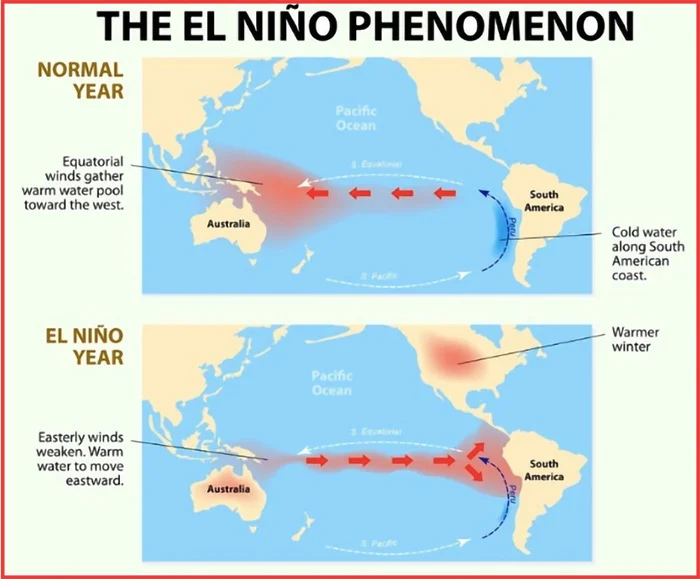
El Niño events have historically been associated with weaker monsoons in South Asia, erratic rainfall patterns, and increased risks of droughts and floods.
The coming months could bring South Asia and the wider Indian Ocean region a dangerous mix of climate shocks, economic strain, and geopolitical instability. At the centre of this looming challenge is the anticipated El Niño event, which is likely to disrupt monsoon patterns, intensify weather extremes, and place additional pressure on already fragile food, water, and energy systems.
But El Niño will not arrive in isolation. It will intersect with continuing global disruptions—from the war in Ukraine to instability in the Middle East—each of which continues to reverberate through energy markets, food supply chains, and shipping routes. The combined effect is likely to be cumulative, not linear.
This is, therefore, a moment that calls for anticipatory regional coordination rather than fragmented national responses.
A record of regional first response
There is already a clear precedent for such coordination in the region.During the COVID-19 pandemic, India emerged as a key first responder, supplying vaccines, medicines, and logistical support across the neighbourhood under its “Neighbourhood First” policy. This helped establish a practical framework for regional cooperation in times of systemic stress.
More recently, India played a similar role during the economic crisis in Sri Lanka, providing critical financial assistance, fuel, and essential supplies at a moment of acute vulnerability. India has also been among the first responders during major climate-related disasters, including cyclone events such as Cyclone Ditwa, delivering rapid humanitarian assistance.
These are not isolated gestures. They reflect an emerging pattern in which India increasingly functions as a stabilising force in the wider region.
This trajectory is reflected in India’s evolving regional frameworks—from Neighbourhood First, to SAGAR (Security and Growth for All in the Region), and now the broader MAHASAGAR vision, which signals an expanded maritime and regional engagement architecture.
Why El Niño is different this time
El Niño events have historically been associated with weaker monsoons in South Asia, erratic rainfall patterns, and increased risks of droughts and floods. In a region where agriculture remains highly climate-sensitive, even modest deviations can translate into inflation, rural distress, and fiscal pressure.
This year, however, the risks are compounded by global fragilities:
* Persistent food and fertilizer price volatility
* Elevated energy costs linked to geopolitical tensions
* Supply chain disruptions in key commodities
* High debt burdens in several neighbouring economies
Together, these factors reduce the resilience of national systems and increase the risk of cascading shocks across borders.It is also important to recognise that social instability in some fragile countries in the region should be kept in mind, as climate shocks and economic pressures can quickly reinforce each other and create wider humanitarian and political consequences.
The case for a Delhi-based regional initiative
Against this backdrop, there is a strong case for India to convene a regional El Niño preparedness dialogue in Delhi, bringing together neighbouring countries, key development partners, and multilateral institutions.
This should not be limited to South Asia alone. The impacts of El Niño extend across the wider Indo-Pacific and Indian Ocean region. Participation could include:
* Neighbouring states in South and Southeast Asia
* The United Nations system
* The World Bank and Asian Development Bank
* Key bilateral partners such as Japan and others active in regional resilience
Given its geographic position, institutional capacity, and experience as a first responder, it is both natural and appropriate for India to chair such an initiative.
What the initiative should focus on
The objective should be practical coordination rather than declaratory statements. Three areas stand out:
1. Shared forecasting and early warning systems
Strengthening real-time exchange of climate data, monsoon projections, and sectoral risk mapping, particularly for agriculture, water, and fisheries.
2. Contingency planning for essential supplies
Coordinating regional approaches to food reserves, fertilizer availability, and energy supply buffers during climatic disruptions.
3. Disaster response and financing coordination
Improving interoperability among disaster management systems, and exploring rapid-response financing through multilateral development banks for climate-related shocks.
From Neighbourhood First to MAHASAGAR
India’s regional doctrine has steadily evolved—from Neighbourhood First to SAGAR, and now MAHASAGAR—reflecting a broader conception of responsibility in the Indian Ocean region.Each stage has expanded the scope of engagement: from immediate neighbourhood assistance, to maritime cooperation and growth, to a wider vision of regional interconnectedness.
A structured El Niño preparedness initiative would be a natural continuation of this trajectory, embedding climate resilience into the region’s evolving strategic architecture.
Climate as regional security
The distinction between climate events and security outcomes is increasingly blurred. A failed monsoon in one country can trigger food inflation in another; a cyclone can disrupt trade routes; droughts can accelerate migration pressures and fiscal instability.
El Niño should therefore be seen not only as a meteorological phenomenon but as a systemic stress test for regional resilience.
India is already widely seen in the region as a first responder in times of crisis. The experiences of COVID-19, the Sri Lankan economic emergency, and climate-related disasters have reinforced this role in practical terms.
The next step is to move from reactive response to anticipatory coordination.
A Delhi-based regional El Niño preparedness meeting—anchored by India and supported by multilateral institutions and key bilateral partners—would be a timely and pragmatic initiative. In an era of compounding global risks, regional cooperation is no longer optional; it is essential.
 (Milinda Moragoda is the Founder of the Pathfinder Foundation. Can be contacted via email@milinda.org, courtesy wionews.com.
by Milinda Moragoda
“A demagogue is one who preaches doctrines he knows to be untrue to men he knows to be idiots.” — H.L. Mencken
Summary
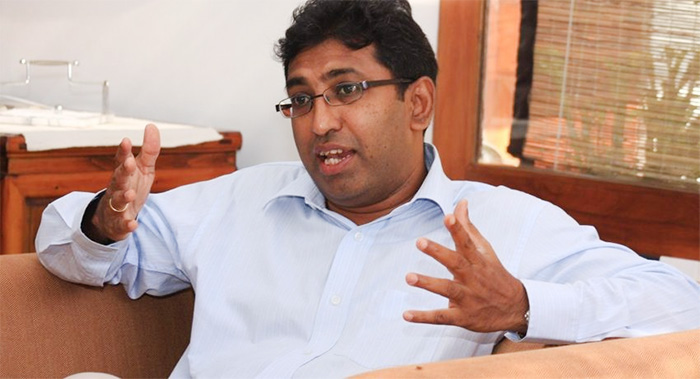
During a recent television appearance (https://www.youtube.com/watch?v=s0QWfenCFlk) , opposition MP and Committee on Public Finance (COPF) Chair Dr. Harsha de Silva dramatically brandished the latest IMF Letter of Intent (LoI, 13 May 2026), pointing to the signatures of President Anura Kumara Dissanayake and Central Bank Governor Dr. Nandalal Weerasinghe as proof of a “secret” alignment with austerity and cost-reflective utility pricing. However, for serious students of Sri Lankan macroeconomics, this “revelation” contained no new information. The legal, structural, and institutional mandate for cost-reflective pricing was codified long before the current administration took office—embedded in the IMF Extended Fund Facility (EFF) of 2023, the 2023 IMF Governance Diagnostic, and the Economic Transformation Act of 2024. This article argues that veteran economists in parliament must move beyond theatrical “gotcha” moments designed for political popularity and instead fulfill their true duty: educating the public on the non-negotiable continuity of structural adjustment programmess.
Anatomy of a Non-Revelation
The recent spectacle of Dr. Harsha de Silva presenting the IMF Letter of Intent on live television was framed as a grand exposure of the current administration’s hidden fiscal policy. With theatrical emphasis, Dr. de Silva pointed to the signatures of President Anura Kumara Dissanayake (AKD) and the Central Bank Governor, declaring that the government had bound the public to the bitter pill of cost-reflective electricity and fuel pricing.
Yet, to anyone who understands the mechanics of central banking and sovereign debt restructuring, this performance revealed nothing that was not already part of (i) the public, (ii) legal, and (iii) institutional reality. A Letter of Intent is a standard operational requirement of the IMF review process; it is not a newly minted policy conceived in secret. By treating a routine administrative continuity as a shocking disclosure, Dr. de Silva engaged in political showmanship rather than economic education.
Legacy of Cost-Reflective Pricing
The narrative that cost-reflective utility pricing is a novel concession by the AKD administration is factually incorrect. The institutional architecture to eliminate non-commercial losses within the Ceylon Electricity Board (CEB) and Ceylon Petroleum Corporation (CPC) was firmly established under the previous administration of Ranil Wickremesinghe.
The structural benchmarks were explicitly laid out in (i) the March 2023 IMF EFF Agreement and (ii) re-emphasized in the September 2023 IMF Governance Diagnostic Report. This framework was further consolidated by the legislature through (i) the Economic Transformation Act of 2024 and (ii) the new Sri Lanka Electricity Act. When the current administration assumed office, the fiscal tracks had already been laid. President AKD is merely operating the machinery of state within the legal and economic boundaries inherited from his predecessor Ranil Wickremesinghe to prevent a secondary default.
The Myth of the Solitary Saviour
There is a troubling tendency among Sri Lanka’s technocratic elite to engage in a saviour complex—positioning themselves on television screens as the singular authorities capable of managing public finance or navigating international waters. Dr. de Silva’s presentation was less about unveiling unknown data and more about projecting an image of unrivaled smartness in public finance.
When veteran economists resort to these manoeuvers, they diminish their own professional standing. Sri Lanka’s economic recovery does not hinge on the brilliant insights of a single individual or party; it depends on (i) institutional discipline, (ii) data-driven planning, and (iii) structural continuity. Pretending that routine compliance documents are exclusive intelligence updates serves only to feed personal political popularity at the expense of public intellectual growth.
Real Politics behind the Screen
Why, then, did Dr. de Silva choose to make a mountain out of an administrative molehill? The answer lies in pure political strategy. The National People’s Power (NPP) platform ascended to governance on strong anti-austerity rhetoric, promising relief from the heavy tax and tariff burdens imposed by the previous regime.
By holding up the signed LoI, Dr. de Silva sought a political checkmate. His objective was to expose the contradiction between the NPP’s populist election promises and its executive actions. While highlighting this policy convergence is fair game in partisan politics, framing it as a “new discovery” misleads the electorate into believing that the IMF programme is an optional, arbitrarily signed document rather than a legally binding national framework that leaves any sitting President with zero alternative manoeuvers.
True Mandate of Parliament’s Financial Oversight
During the broadcast, the fundamental boundary of the Committee on Public Finance (COPF) was brought into question. Dr. de Silva correctly noted that COPF does not formulate state policy—that remains the strict prerogative of the Executive and its chosen advisors. COPF’s true mandate is oversight: ensuring transparency, accountability, and the efficient monitoring of state revenues and expenditures.
If the head of our public finance oversight body wishes to protect the national interest, that energy should be (ii) directed toward evaluating the actual performance scorecards of state institutions, (ii) tracking structural benchmarks, and (iii) monitoring the real-time efficiency of economic programs. Using the platform of technical oversight to score quick points on a talk show blurs the vital line between a state auditor and a political campaigner.
Conclusion: The Need for Institutional Candour
Sri Lanka has paid a catastrophic price for populist rhetoric and the manipulation of economic facts for electoral gain. What the public requires from veteran economists and seasoned politicians today is not more political theater but radical candor.
The truth is simple: Sri Lanka is locked into a long-term, institutional structural adjustment programme that transcends whoever sits in the presidential secretariat. President AKD is executing pre-existing state commitments because the alternative is immediate economic isolation. Rather than trying to convince the public that they alone possess the secret key to salvation, opposition technocrats owe it to the nation to elevate the discourse. It is time to replace television showmanship with (i) honest, (ii) evidence-based planning, (iii) acknowledging that while politicians change, the arithmetic of national survival remains exactly the same.
(The writer, among many, served as the Special Advisor to the Office of the President of Namibia from 2006 to 2012 and was a Senior Consultant with the UNDP for 20 years. He was a Senior Economist with the Central Bank of Sri Lanka (1972-1993). He can be reached via asoka.seneviratne@gmail.com)
By Prof. Asoka S. Seneviratne

Special Dengue Prevention Week declared in Colombo District from June 15 to 21

The leader of the indigenous Vedda community Uru Warige Wannila Aththo Meets Prime Minister Dr. Harini Amarasuriya

SpaceX IPO debuts in US markets, Musk becomes world’s first trillionaire

Fans on concourses instead of in seats, claims FIFA

Co-hosts Canada begin 2026 World Cup campaign with a draw against Bosnia-Herzegovina.

Showers will occur at times in the Western, Sabaragamuwa and North-western provinces and in Galle, Matara, Kandy and Nuwara-Eliya districts

‘Dates have the highest sugar content to fight Coronavirus’

Sunday Island 27 December – Headlines

#SundayIsland 17th December – Headlines

Sunday Island – 28th March

Sunday Island Headlines – 21 March

Sunday Island – 21st February – Headlines
-

 News6 days ago
Women’s T20 World Cup 2026 warm-up: Chamari Athapaththu’s 94 helps Sri Lanka beat Pakistan
-

 News6 days ago
Lankan-Canadian inducted to Toronto Sports Hall of Fame
-

 Editorial5 days ago
Probe Sallay’s complaint
-
 News3 days ago
Local firms move millions of dollars overseas for phantom imports: Govt.
-

 Editorial6 days ago
Prez in the dock
-

 Features6 days ago
Entering MIT for my Ph.D program, coping with harsh Boston winter and breasting the tape
-
 Midweek Review3 days ago
July 09: An inexcusable overall security failure and exceptional contingency plan
-
 News1 day ago
CIABOC summons Yoshitha over his participation in British Navy training programme