
News
The UK and Sri Lanka lead on ‘Nitrogen for Climate and Green Recovery’

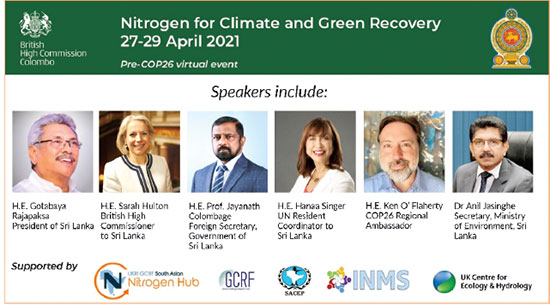
The British High Commission in Colombo and the Government of Sri Lanka held a virtual event “Nitrogen for Climate and Green Recovery” on April 27 – 29 in Colombo.
The event launched the #Nitrogen4NetZero initiative, to widen engagement on sustainable nitrogen management in this crucial year for climate action.
#Nitrogen4NetZero is an initiative launched in partnership between the British High Commission, Colombo and the Government of Sri Lanka, championed by the President of Sri Lanka. The two key messages are that Net Zero will be impossible to achieve without action on nitrogen, and that action on nitrogen will offer multiple co-benefits for health, nature and economy.
Delivering a statement to the event, on behalf of President Gotabaya Rajapaksa, Foreign Minister Dinesh Gunawardena emphasised that: “…Climate scientists have been studying and grappling with the impact of increased carbon dioxide emissions in the atmosphere for decades. I believe it is important to address the issue of nitrogen waste in a similarly urgent way, and to broaden the ongoing discourse on climate change accordingly.”
Speaking last year, COP26 President-Designate Alok Sharma had underlined the importance of joint action on climate change this year: “Tackling climate change is the one of the most urgent shared endeavours of our lifetimes, demanding bold action from every nation to prevent catastrophic global warming’……2021 is absolutely going to be a critical year for climate. I want to see the golden thread of climate action woven through every international event on the road to Glasgow.”
The United Kingdom will host COP26 in Glasgow later this year, and as the incoming Presidency are committed to working with Sri Lanka to accelerate climate ambition in 2020 and 2021.
At COP26, the United Kingdom will demonstrate the urgency and the opportunities of the journey towards a zero carbon economy and the power of international cooperation to address the gravest challenges the world faces. To ensure success countries need to commit to reaching net zero carbon emissions as soon as possible.
However, the transition to net zero emissions will also require action on nitrogen to reduce nitrous oxide, a greenhouse gas with a global warming potential around 300 times that of carbon dioxide.
A focus on reducing nitrogen pollution offers multiple win-wins across sustainable development for air, water, biodiversity, stratospheric ozone depletion, soils, food and the economy. These issues have been recognized by the UN Environment Assembly Resolution on ‘Sustainable Nitrogen Management’ (UNEP/EA.4/Res.14), led by India, and the Colombo Declaration led by Sri Lanka, which agreed an ambition to halve nitrogen waste from all sources by 2030, offering the potential to save $100 billion annually.
The #Nitrogen4NetZero initiative with member countries of the South Asian Cooperative Environment Program (SACEP) prepares the way to widen engagement in this crucial year for climate action. The initiative is being prepared with science support from the “GCRF South Asian Nitrogen Hub”, supported by UK Research and Innovation through its Global Challenges Research Fund.
The hub forms part of a global effort working in partnership with the UN Environment Program and the Global Environment Facility through the International Nitrogen Management System, led by the UK Centre for Ecology & Hydrology.


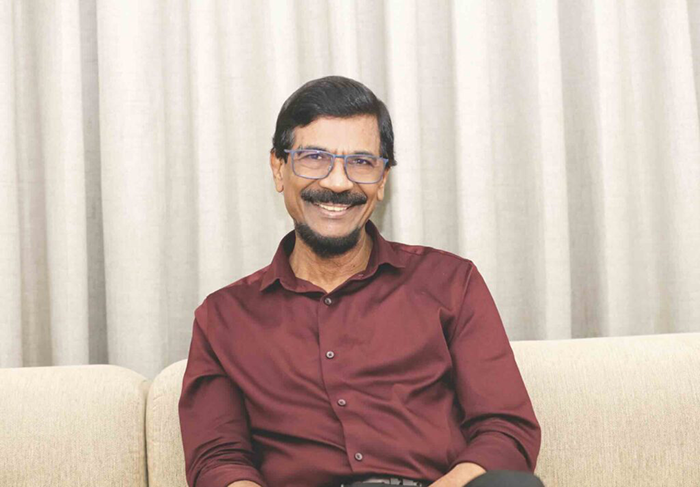
The much-delayed Provincial Council (PC) elections cannot be held this year due to financial and legal constraints, JVP General Secretary Tilvin Silva has said in Jaffna.Silva said so, fielding questions from journalists after the opening of the NPP coordination office in the Jaffna District on Saturday.
When asked whether the government was under Indian pressure to conduct the Provincial Council elections soon, Silva answered in the negative, claiming that Sri Lankan and Indian governments maintained close and friendly relations with a strong level of understanding.
He said budgetary allocations had been made for the PC elections, but the government had been compelled to divert resources for disaster relief following the impact of Cyclone Ditwah. According to Silva, nearly Rs. 500 billion had to be allocated for relief measures, making it difficult to hold the elections this year. He further said legal complications in the electoral reform process had also contributed to the delay in holding the PC elections, noting that a parliamentary committee had been appointed to determine the electoral systems under which the PC polls should be conducted. Once the committee submitted its report and if no further issues arose, the elections could possibly be held next year, he said.
Silva also said the government had taken measures to strengthen reconciliation and development in the North by releasing lands previously occupied by military camps and improving road infrastructure.He added that empowerment initiatives were being implemented under the Praja Shakthi programme and that both Sri Lanka and India were continuing to work in close cooperation.
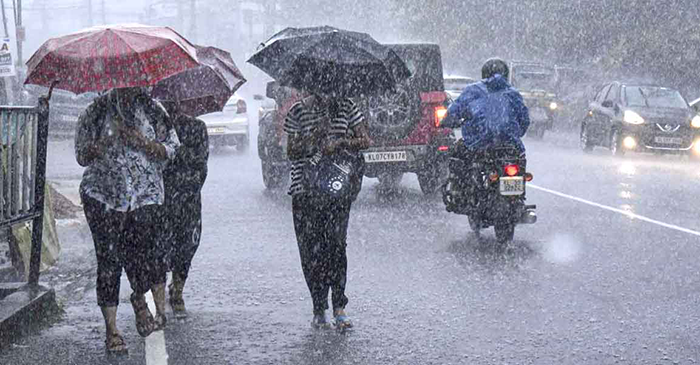
More than 31,000 people across Sri Lanka have been affected by worsening weather conditions, as the southwest monsoon intensifies ahead of its full establishment, raising fears of renewed flooding in vulnerable low-lying areas, the Disaster Management Centre (DMC) has warned.
The DMC has said 31,072 individuals from 7,983 families have already been impacted by persistent rain, strong winds and rising water levels across multiple districts, with the situation most severe in the Gampaha District where 15,313 people from 3,950 families have been affected and one death reported.
Officials have cautioned that the scale of disruption could worsen as the southwest monsoon is expected to fully establish over the island around May 26–27, bringing heavier and more sustained rainfall to the southwestern region.
At present, 18 safety centres are in operation, sheltering 1,724 displaced persons from 446 families. One person has been injured and 859 houses have been partially damaged. Two houses have been destroyed.
The Department of Meteorology has forecast increased rainfall over the coming days, warning that conditions are likely to deteriorate further as monsoon activity strengthens.
Flood-hit areas remain widespread, with river systems still under pressure despite a brief easing in rainfall on Saturday. The Kelani River has returned to normal levels, but minor flooding persists along the Kalu River basin, particularly in the Millakanda area, where tributary water levels remain elevated.
Low-lying areas in Bellapitiya, Horana, continue to be inundated, while traffic on the Bulathsinhala–Kalutara road remains disrupted due to flooding in Diyakaduwa. Authorities have also flagged continued risk in Putupawula and Ellagawa along the Kalu River.
The Attanagalu Oya basin is also slowly receding, though residents in Dunamale have been urged to remain on alert. Several homes in Ja-Ela remain underwater, with residents alleging that delayed repairs to a damaged canal embankment worsened the flooding.
In a fresh blow to infrastructure, the Swarna Hansa Podi Ela bridge in Ja-Ela collapsed on Saturday evening, further disrupting local transport links, while the main Ja-Ela–Gampaha bus route remains submerged in parts of Yakkaduwa.
Meteorologists have warned that rainfall is expected to intensify again from May 26 to 28, when the southwest monsoon is likely to be formally declared over Sri Lanka, raising the risk of further flooding and landslides in already saturated areas.
by Norman Palihawadane and Chaminda Silva

Police said a suspect wanted in connection with the murder of an elderly couple inside a shop in Dickoya town, Hatton, had been arrested on Saturday evening (23).
The arrest was made in the Bogawantalawa police area. Acting on a tip-off, the police arrested him while he was hiding in a house on a tea estate.
Police said stolen gold jewellery had been recovered.
Preliminary investigations revealed that the suspect, originally from Badulla, had been residing in Dickoya after his marriage.
Earlier on Saturday, Hatton Police released CCTV footage of the suspect and sought public assistance to trace and arrest him.
According to police, the suspect allegedly slit the throat of the elderly woman and killed her husband using a sharp weapon on Thursday (21) before fleeing with gold jewellery valued at around 18 sovereigns, including a necklace and earrings.
Investigations further revealed that the suspect had arrived in Dickoya town on the morning of May 21 and visited several jewellery shops claiming he intended to purchase a gold necklace, while loitering in the area.
Police said that around 1.15 pm, he entered the couple’s shop and remained concealed inside the premises before allegedly carrying out the attack.
Hatton Police added that the suspect is believed to have committed the murders and left the shop around 5.30 pm the same day before going into hiding.
by Norman Palihawadane

Attacks on Ebola centres intensify in eastern DRC amid outbreak fears

Oil prices fall amid mixed signals on US-Iran peace deal

Kuldeep and Rahul help Delhi Capitals sign off with big win

Trump tells US negotiators ‘not to rush’ into deal with Iran

Showers will occur at times in the Western, Sabaragamuwa and North-western provinces and in Galle, Matara, Kandy and Nuwara-Eliya districts

No PC polls this year, says Tilvin

‘Dates have the highest sugar content to fight Coronavirus’

Sunday Island 27 December – Headlines

#SundayIsland 17th December – Headlines

Sunday Island – 28th March

Sunday Island Headlines – 21 March

Sunday Island – 21st February – Headlines
-

 Features5 days ago
Octopus, Leech, and Snake: How Sri Lanka’s banks feast while the nation starves
-
 Opinion4 days ago
Murder of Ehelepola family, Bogambara Wewa and Sightings of Wangediya
-
 News4 days ago
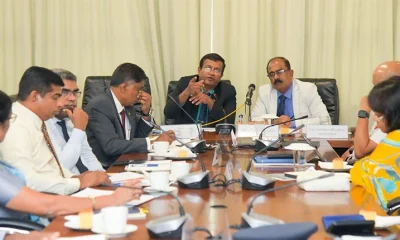
Steps underway to safeguard Sri Lanka’s maritime heritage
-
 Sports5 days ago
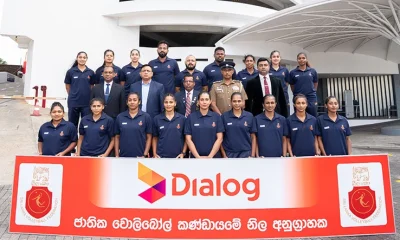
Sri Lanka women’s volleyball team ready for Central Asian challenge
-

 Editorial4 days ago
A play without its protagonist
-
 Features1 day ago
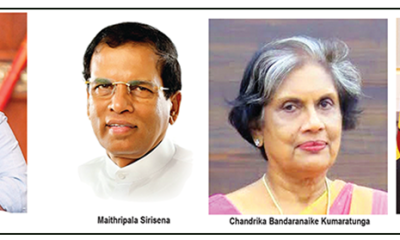
The NPP’s pivot to the past
-
 Midweek Review5 days ago
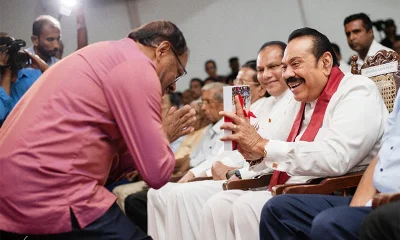
Overall SLPP failures stressed in new Aragalaya narrative
-

 Opinion3 days ago
The need to reform Buddhist ecclesiastical order