
Editorial
Vaccine nationalism and moral failure


Thursday 29th April, 2021
The US has at last decided to send emergency supplies of vaccine raw materials, ventilators, personal protective equipment, etc., to India, which is struggling to contain the pandemic. Curiously, when some Indian vaccine producers, unable to meet their production targets to keep the virus at bay, desperately appealed to the US to lift its export ban on raw materials needed for vaccines, Washington did not accede to their request, citing domestic needs. Its change of heart has come as a surprise.
The US says it is willing to share as many as 60 million doses of AstraZeneca vaccine with developing countries. About 10 million doses are expected to be ready within the next few weeks, according to media reports. India is seeking to secure most of them, given the severity of the current wave of infections it is faced with. Although Washington says it needs weeks to share the jabs, there are reports that it already has huge stocks of AstraZeneca vaccine. The New York Times reported, a few weeks ago, that tens of millions of doses of AstraZeneca vaccine were ‘sitting idly in US manufacturing facilities awaiting the results of clinical trials’ while the countries that had approved the jab for use were begging for access’.
The global rich are stockpiling vaccines while the poor are dying without them. We are witnessing what the World Health Organization has rightly called ‘vaccine nationalism’, which has stood in the way of a truly global vaccination drive to achieve herd immunity. One may recall that WHO Director-General Dr. Tedros Adhanom Ghebreyesus warned, in January, that the world was on the brink of a catastrophic moral failure and insisted that equitable access to vaccines was not only a moral imperative but also an economic and strategic imperative, and failure to ensure it would only lead to the prolongation of the pandemic. It is time the nations that have huge stocks of vaccines idling in warehouses sent them where they are needed.
The US State Department did not use ‘diplomatese’ when it turned down India’s recent request at issue. It only curtly said the Biden administration’s first obligation was to take care of the requirements of the American people. But why has the US suddenly become amenable to what it refused to do about a week ago?
The reversal of the US decision is apparently due to several reasons; Washington must be feeling guilty that its refusal to comply with the Indian vaccine producers’ appeal has adversely affected India’s efforts to minimise deaths due to Covid-19; the WHO has frowned at Washington; Beijing has offered assistance to New Delhi, which, however, has not responded, and several other countries have already rushed emergency supplies to India.
India, to its credit, generously shared its vaccines with other nations in need, and Sri Lanka has also benefited from its munificence. It deserves unstinted assistance from the international community to curb the spread of the pandemic although its leaders are acting as irresponsibly as their Sri Lankan counterparts, giving priority to electioneering. If medical oxygen generating facilities in Asia step up their production with supplies of the life-saving gas being airlifted to India, it may be possible to save thousands of lives.
Meanwhile, going by the predicament of India, one of the leading vaccine manufacturers in the world, what is in store for the non-vaccine producing countries in the event of the current pandemic situation worsening further, or the world being plagued by a new virus is not difficult to imagine. There are lessons that need to be learnt from the current global health emergency. Every country should be equipped to produce vaccines as far as possible, for scientists have warned of the possibility of viruses far worse than coronavirus troubling humans in the future.
Sri Lanka will have to develop the Medical Research Institute (MRI), which used to produce most vaccines the country needed in the past, to meet future challenges. If the MRI had not been run down after the opening up of the economy in the late 1970s, it would have been able to partner with a foreign counterpart to produce a Covid-19 jab locally. This is something the present-day rulers who wrap themselves in the flag and bellow patriotic rhetoric, while going cap in hand begging for funds and vaccines, should give serious thought to.


Tuesday 9th June, 2026
The UNP has taken exception to a comparison made by a website (Manthri.lk) between the initial stages of the UNP-led Yahapalana government under the presidency of Maithripala Sirisena (MS) and the incumbent JVP-NPP administration led by Anura Kumara Dissanayake (AKD) in terms of legislative activity. Both governments came to power by effectively harnessing anti-incumbency sentiments and promising good governance. At the six-month mark, the MS administration led in legislative activity, Manthri.lk has pointed out. It gazetted three times the number of bills, compared to the corresponding period during AKD presidency and had twice as many passed. However, at the nine-month mark the AKD presidency overtook in terms of bills that were passed. By the 18-month mark the score changed. The AKD government passed 12 more bills than the MS administration, according to Manthri.lk.
Arguing in an accusatory tone that the aforesaid comparison, which appears in a Manthri.lk article titled, “Run Rate of Passing Laws in Parliament”, is quantitative and not qualitative, the UNP has said that a number of progressive laws were passed during the Yahapalana government during the first 18 months of the MS government. It has said they include the 19th Amendment to the Constitution, the Right to Information Act, the National Medicines Regulatory Authority Act, and the National Minimum Wage of Workers Act, but the Dissanayake administration has not delivered reforms as such; it has only scrapped some entitlements of the ex-Presidents and former MPs. The UNP has apparently manufactured a grievance to lay out some progressive laws it was instrumental in passing during the Yahapalana. However, what the UNP has left unsaid is that AKD’s JVP was a Yahapalana partner in all but name and pressured that government to honour its promises. Curiously, after being ensconced in power, the JVP has not cared to fulfil its key election pledges.
An interesting picture emerges when the comparison between the initial stages of the two governments is extended beyond the new laws and legal amendments they introduced. What matters most is not the “run rate” or the score as such, but how the game was played, so to speak. These memorable lines from Henry Newbolt’s “Vitaï Lampada” come to mind: “And it’s not for the sake of a ribboned coat / Or the selfish hope of a season’s fame / But his Captain’s hand on his shoulder smote — ‘Play up! play up! and play the game!’” Unfortunately, the spirit of duty and self-sacrifice are not virtues cherished in Sri Lanka politics.
The Yahapalana government carried out a mega racket, the Treasury bond scam, shortly after its formation in 2015, severely denting its anti-corruption credentials. The JVP-NPP administration did likewise in January 2025, a few weeks after sweeping a general election and securing a two-thirds majority. A freight container scandal ruined its reputation; that was followed by a coal procurement scam. Driven by political expediency, both governments unashamedly embraced the very rotten political culture they had vowed to upend while out of power.
MS and AKD secured the executive presidency by pledging to abolish it. But they reneged on that promise after savouring power. MS embarked on his reelection campaign and sought to gain a boost for it from his war on drugs, but the Easter Sunday terror attacks ruined his chances of contesting another presidential election. AKD remains silent on his much-advertised pledge to do away with the executive presidency. His election manifesto, A Thriving Nation: A Beautiful Life, promises to introduce a new Constitution, abolish the executive presidency and ensure that a President without executive powers will be appointed by the parliament, but several government politicians have said AKD will seek a second term. The JVP/NPP has thus demonstrated that it also acts out of expediency and not principle. It is emulating its predecessors notorious for their Machiavellian approach to promises. A common denominator among all governments since 1994 has been the unfulfilled promise to abolish the executive presidency.
Most criticisms of the UNP-led Yahapalana government under MS presidency apply, mutatis mutandis, to the incumbent administration led by the JVP.


Monday 8th June, 2026
Former Director of the State Intelligence Service Maj. Gen. (retd.) Suresh Sallay, currently being detained at the Criminal Investigation Department (CID) over the Easter Sunday terror attacks, has begun a hunger strike in protest against alleged inhumane treatment by CID officers. His wife has complained to Inspector General of Police (IGP) Priyantha Weerasuriya about the conditions of detention. She has told the media that Sallay is determined to continue his hunger strike. The police have denied mistreating Sallay.
Sallay has suffered physical and psychological abuse, at the hands of the CID, according to his lawyers. One of his counsel, Udaya Gammanpila, told the media on Saturday that Sallay was even denied proper meals, and the previous night the CID had served a small portion of rice with some gravy on a piece of newspaper placed on the floor of his cell. That had prompted Sallay to launch the hunger strike, Gammanpila said. Curiously, a notorious drug dealer, Nadun Chintaka alias Harak Kata, was allowed to consume food from the CID canteen while being detained at the CID.
Sri Lanka’s overcrowded, squalid remand prisons are hellholes, and even a brief stay there amounts to punishment, as is public knowledge. The same goes for the detention or holding cells at the CID headquarters. Degrading interrogation practices, including psychological coercion and physical abuse, aimed at breaking a suspect’s will, are antithetical to international good practices followed by modern crime investigators in civilised societies. Unfortunately, some officers of Sri Lanka police have used such cruel methods with impunity under successive governments. One may recall that a high-ranking police officer found guilty of having violated a suspect’s fundamental rights and the ban on torture was appointed IGP. Deshabandu Tennakoon is his name.
Allegations made by Sallay through his lawyers and family members against the police remind us of the horrors of the Spanish Inquisition, Nazi Straflager (punishment camps), Gestapo interrogation centres, the CIA black sites and the Batalanda torture chamber. Hence the need to do away with the draconian Prevention of Terrorism Act, which allows suspects to be detained indefinitely and made to undergo untold suffering in the name of interrogation.
A very serious allegation frequently levelled against Sri Lanka police is that they make arrests, detain suspects, and conduct investigations to support political motives rather than to establish facts impartially. Justice and public trust in the legal and judicial processes become the victims of the partiality, if not servility, of the police and some of the Attorney General’s Department personnel to the powers that be and their deplorable efforts to support popular political narratives about crimes.
The integrity of the ongoing CID investigation into the Easter Sunday terror attacks is severely compromised, for the JVP-NPP government has elevated a member of the NPP’s Retired Police Collective (NPPRPC), Shani Abeysekera, as the CID Director to probe the Easter Sunday terror attacks, which the CID itself failed to prevent while he was serving as its Director in 2019, when the current Public Security Ministry Secretary Ravi Seneviratne, also a member of the NPPRPC, was the Senior DIG in charge of the CID. All those who failed to prevent the carnage in spite of repeated warnings of the impending bomb attacks must be brought to justice. President Anura Kumara Dissanayake has caused quite a stir by making predictions about judgements to be delivered in court cases against his political opponents and drawn heavy criticism from the Bar Association of Sri Lanka and other lawyers’ associations for trying to raise the retirement ages of the superior court judges arbitrarily. How can the current dispensation be expected to uphold the rule of law, justice and fair play?
The denial of a suspect’s right to be heard, with the prosecutors, given to rehearsed, performative courtroom presentations, making various allegations designed to generate headlines and please the powers that be, violates the principle of natural justice. Justice must be served for the Easter Sunday terror victims, but without injustice to suspects in custody.

The US has acted decisively to rein in a runaway Executive, as it were. The House of Representatives has passed a resolution curbing President Donald Trump’s powers to attack Iran without congressional authorisation. Four Republicans joined Democrats to ensure the passage of the landmark bill in a vote of 215 to 208. However, the actual enforcement of this legislative measure will have to clear several hurdles, with the White House remaining determined to undermine it. But the Congress’s message to Trump is loud and clear. The War Powers resolution is bound to hang like the sword of Damocles above Trump’s head. The congressional action to keep the Executive in check is proof of institutional robustness, which helps safeguard the separation of powers, among other things, in the US.
Sadly, in Sri Lanka it is virtually impossible to restrain the Executive President, especially when his or her party has control over the legislature. The subservience of Parliament to the President largely owing to the numerical inferiority of the Opposition has created a situation where civil society organisations and professional associations have to lead a countervailing force against the Executive and help protect democracy.
The Bar Association of Sri Lanka (BASL) and the Colombo High Court Lawyers’ Association (CHCLA) have moved in to bolster the ongoing efforts to frustrate a questionable government bid to increase the retirement ages of the judges of the Superior Courts arbitrarily. They have issued well-reasoned statements opposing the proposed move.
Pointing out that the retirement ages of the judges of the Court of Appeal (CA) and the Supreme Court (SC) have been constitutionally fixed at 63 and 65, respectively, the two associations have very convincingly demolished all arguments for the proposed government move, stressing the need for the Executive to act with restraint. The Opposition has also put forth cogent arguments against the government bid at issue. Former Minister of Justice and Constitutional Affairs Prof. G. L. Peiris was perhaps the first to take up the issue and alert the public, and galvanise the lawyers’ associations, etc., into putting up stiff resistance.
The proposed move to extend the retirement ages of CA and SC judges has come as a surprise because there is no dearth of qualified judicial officers in this country. What the government ought to do urgently is to take action to fill all existing judicial vacancies, the CHCLA has said, pointing out that any attempt by the Executive or the Legislature to amend the constitutional provisions governing the retirement of judges, without a compelling rationale and without following the prescribed process, would constitute “an act of the gravest constitutional impropriety”.
It has warned that “the impact of an upward revision of the retirement ages of Judges of the Superior Courts will produce “immediate, concrete, and deeply unjust consequences for the dedicated officers of the Judicial Service of Sri Lanka, who have devoted their professional lives to the service of the administration of justice”. It goes on to argue that the proposed extension of the retirement ages of the Superior Court judges, in the absence of any transparent, constitutionally grounded, and publicly articulated justification could risk “the public perception that the Executive seeks to secure the continued service of particular Judges whose disposition may be regarded as favourable to the interests of the State in litigation before the Superior Courts”.
It is also deeply troubling that the proposed government move smacks of a sinister attempt to undermine the doctrine of the separation of powers. Having come to power, promising to abolish the executive presidency, the JVP/NPP should be ashamed of its deplorable attempts to enhance the executive powers of the President through questionable means. It has made a mockery of its commitment to upholding the independence of the judiciary and the separation of powers.
The government has chosen to remain silent on questions being raised about its deplorable move at issue. The only way President Anura Kumara Dissanayake can put the matter to rest is to do the following, as requested by the CHCLA: immediately withdraw and abandon the proposal to enhance the retirement age of the judges of the CA and the SC; direct the competent constitutional authorities to take immediate and decisive steps to fill all existing vacancies in the Superior Courts in accordance with the constitutional process and without further delay; affirm, by word and by deed, the government’s unequivocal commitment to the independence of the judiciary as guaranteed by the Constitution of Sri Lanka, and to the full and faithful observance of the constitutional provisions governing the tenure and conditions of service of the Judges of the Superior Courts, and engage the legal profession, the Judicial Service Commission, and other relevant stakeholders in any future discussion of matters affecting the judiciary, in a spirit of transparency, constitutionalism, and mutual respect for the rule of law. The BASL has also asked the President to deep-six any plan to raise the retirement ages of the judges of the Superior Courts and help preserve the integrity, independence and dignity of the judiciary and reinforce public confidence in the judicial service.
An immediate course correction, in line with the fervent appeals of legal professionals, is the least President Dissanayake can do to dispel the public perception that he too has failed to resist the autocratic tendencies embedded in the executive presidency.

Showers or thundershowers will occur at times in the Western, Sabaragamuwa and North-western provinces and in Galle, Matara, Kandy and Nuwara-Eliya districts.

Sallay refuses to end hunger strike unless probe is taken out of CID led by Shani

Lanka joins US-led Indo-Pacific Ports Forum

Vehicle imports remain steady despite surcharge – Customs

EU supports launch of Sri Lanka’s Revised National Green Reporting System Guidelines in partnership with UNIDO

Former Intelligence Colonel files petition to prevent his arrest in connection with 2019 Easter attacks

‘Dates have the highest sugar content to fight Coronavirus’

Sunday Island 27 December – Headlines

#SundayIsland 17th December – Headlines

Sunday Island – 28th March

Sunday Island Headlines – 21 March

Sunday Island – 21st February – Headlines
-

 Latest News5 days ago
Kusal Mendis, Pathum Nissanka, bowlers put Sri Lanka 1-0 up
-
 News5 days ago
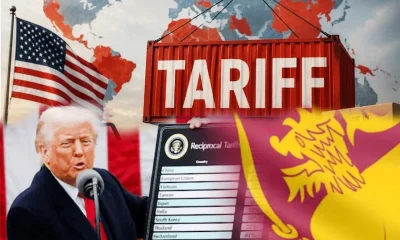
New US tariffs proposed on 60 countries, including Sri Lanka
-
 Features4 days ago
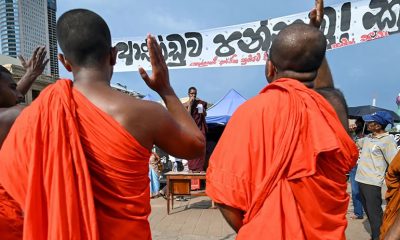
Power crept into the Sangha and is now tearing it apart
-

 Features4 days ago
Kondachchi wind farm and battery storage project to boost energy security, says Power Ministry Secretary
-
 Features4 days ago
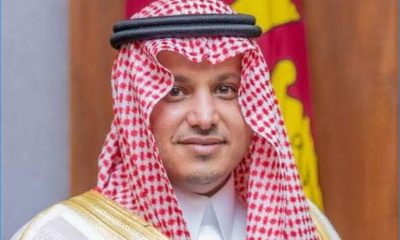
Saudi Arabia sets new benchmark in Hajj management as 1.7 million pilgrims complete sacred journey
-

 News3 days ago
Asst. Manager, security officer arrested over Rs 30 mn snatch at Horana PB branch
-

 News2 days ago
Women’s T20 World Cup 2026 warm-up: Chamari Athapaththu’s 94 helps Sri Lanka beat Pakistan
-

 Editorial1 day ago
Probe Sallay’s complaint