
Business
Beyond the crisis: Sectoral paths to durable growth

Institute of Policy Studies of Sri Lanka (IPS)
The Sri Lankan economy has faced a series of external and internal shocks in recent years that weakened its long-term growth outlook. Despite defying post-crisis growth trajectories, fresh uncertainties from oil price shocks and climate-related risks suggest that the policy context to accelerate growth will be even more challenging. In this context, select policy recommendations to strengthen Sri Lanka’s economic foundations toward higher, durable growth are set out in this article. It draws on recent research by the Institute of Policy Studies of Sri Lanka (IPS), some of which is detailed in its forthcoming annual flagship report Sri Lanka: State of the Economy 2026.
Rebuilding Economic Foundations Amid Shocks
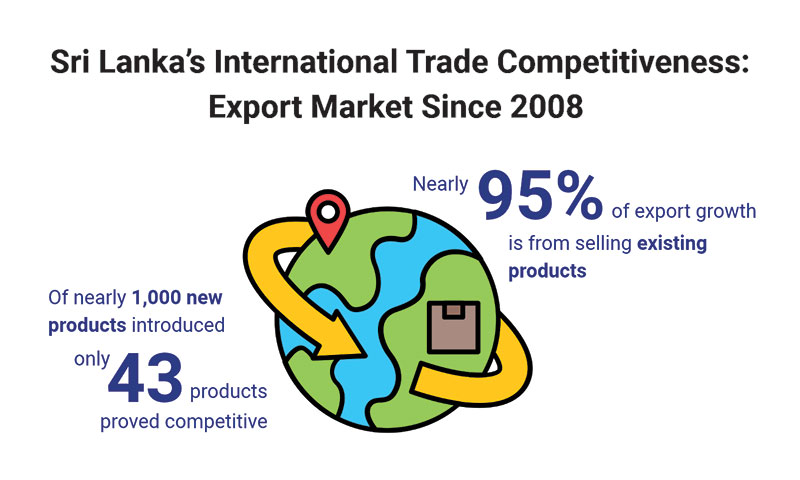
Strengthening Sri Lanka’s international trade competitiveness is crucial to boost exports and achieve its 7% medium-term growth goal. IPS research shows that nearly 95% of the export growth since 2008 has come from selling more of existing products, and of nearly a thousand new products introduced over that period, only 43 proved competitive. Exports need to be diversified, but competition remains stiff across all key export markets. Non-reciprocal preferential arrangements such as GSP+ which Sri Lanka relies on are vulnerable to withdrawal because of income status or compliance issues. However, competitors producing the same export basket, such as India and Indonesia, have reciprocal trade deals with the EU and the UK, key export destinations for Sri Lanka. Losing these preferences and non-reciprocal preferential access could reduce the competitiveness of Sri Lanka’s exports in the EU and UK. Given the uncertain US trade policy landscape, Sri Lanka has strong motivation to pursue trade agreements with the US if they secure favourable tariffs and fixed tariff rates. To lay the groundwork for reciprocal trade deals, domestic trade policy reforms, including tariff reforms, must come first. For example, the effective VAT rate on imports exceeds the 18% statutory rate because para-tariffs increase the tariff base. The priority is to simplify the tariff structure, eliminate para-tariffs, and simplify the tariff base to eliminate cascading tariff effects. The resulting revenue loss needs to be incorporated into budget estimates.
Fiscal support to establish a trade adjustment assistance package is also recommended. Tariff reforms create adjustment costs. For example, the Export-Import CESS phase-out plans to remove CESS on products which have direct import-competing industries in the domestic market. Exposing these sectors, which are dominated by micro, small, and medium firms, to import competition will generate job and income losses. A trade adjustment assistance package should be rolled out to soften the economic blow.
Fiscal strategy must protect macroeconomic stability while addressing high public debt, limited fiscal space and weak investment in productivity-enhancing sectors. Government revenue increased from 8.2% of GDP in 2022 to 16.6% in 2025, but the tax system remains consumption-tax dominant, with a direct-to-indirect tax ratio of 40:60. Public investment fell from 5% to 3% of GDP during fiscal adjustment, while debt sustainability remains a key vulnerability.
Further tax rate increases are not recommended, but tax cuts are premature because of challenges such as uneven compliance, informality, and exemptions. After the current IMF programme ends in 2027, revenue strategies should prioritise increasing the share of direct taxes over indirect taxes by broadening the tax base, reducing exemptions, improving compliance among the self-employed and high-income earners, and digitalising tax administration. Wealth taxation helps promote social welfare by ensuring those with greater ability to pay contribute more fairly. Expenditure rationalisation should focus on building technical skills across the project cycle—appraisal, readiness, implementation, monitoring, and evaluation. Public procurement policies should favour transparency and competence over established networks. A comprehensive approach reduces debt risks, enhances fiscal sustainability, and promotes sustainable, inclusive growth.
Developing Human Resources for Productivity Gains
Access to high-quality higher education that provides relevant skills aligned with labour market needs can support sustainable growth. In the context of climate change and globalisation, countries depend heavily on advanced human capital to stay competitive and strengthen systemic resilience. Skilled workers, including managers, professionals, and technical staff, are vital for fostering growth by boosting productivity and reducing economic disruptions from natural disasters. In 2023, IPS estimates based on the Labour Force Survey 2024 indicate that Sri Lanka has a larger share of knowledge workers than its regional peers. However, only 34.1% have the tertiary qualifications needed to drive innovation and improve efficiency. Although tertiary student numbers are rising, growth lags regional peers and is not aligned with labour market needs.
Public funding for higher education should prioritise identifying skills gaps and allocating resources to sectors with skills shortages. Main areas of focus include supporting short-cycle tertiary programmes for technical workers and STEM education. Investments are crucial to improving quality in these sectors and supporting students financially, allowing more people to access higher education in these areas. Additionally, incentives should be implemented to encourage skilled workers to stay in the country.
A stronger shock-responsive social protection system is needed to deal with multiple overlapping shocks, especially those driven by climate change. While the current system includes various programmes and has recently attempted to enhance effectiveness and coordination, there are gaps in policy design and implementation. Recent IPS studies note gaps in reaching impoverished households exposed to high climate risks. For instance, among the poorest fifth of households, Aswesuma coverage is actually lower for the most shock-exposed (55%) than the least (63%). As natural disasters like Cyclone Ditwah become more frequent and intense, and as climate risks associated with El Niño increase, incorporating climate-risk data into social protection policies is urgent.
Budgetary support should focus on investing in shock-responsive social protection, including strengthening the existing Integrated Welfare Management System (IWMS) and developing a comprehensive, dynamic social registry by integrating programmes outside the system. The registry must link with disaster risk management and climate data to identify at-risk households and enable timely responses. Policies should also establish pre-arranged financing linked to shock triggers and expansion protocols for swift benefit delivery during shocks.
The scale of labour informality needs to be addressed for better social protection and labour productivity. Around 66.5% of total employment is informal as of 2024 with informal wage employment highly concentrated in small-scale enterprises. Around 60% of informal wage employees work in establishments with fewer than 5 regular employees, where regulatory oversight, administrative capacity, and compliance with labour laws and social security obligations remain weak.
Reducing formalisation costs and increasing penalties for non-compliance, especially for micro and small enterprises, can cut informal work and boost social protection. Improving access to credit offers financial incentives for formal employment, encouraging workers to register with authorities for better protection and coverage. Ease of administrative and fiscal burdens through simplified taxes, digital registration, and fair contribution rules for small firms with limited capacity, will further reduce informal labour.
The silver economy demographic shift must be leveraged to keep older Sri Lankans economically active for longer, sustaining labour supply and consumption and reducing fiscal dependency. With a rapid rate of population ageing – with those aged 60 and above set to nearly double from 12.4% in 2012 to 23.1% by 2042 – Sri Lanka’s demographic shift impacts its health, economy, and social fabric. With only two dedicated geriatric care units nationwide, the health system is not yet built for this scale of change. The current focus on acute care and lack of integrated chronic and geriatric management must change. Otherwise, there will be more hospitalisations, higher out-of-pocket costs, and lower productivity among older adults.
Targeted funding should expand primary healthcare, focusing on chronic disease management, geriatrics, and rehabilitation. This includes training health workers, formalising referrals, and community-based care. Making care affordable and accessible for seniors is crucial, supported by digital health platforms, literacy programmes, and subsidies for medicines and diagnostics. This approach enhances access, continuity, and financial protection, boosting older adults’ economic participation and reducing health-related poverty.
Reducing Regional Disparities and Broadening Development Gains
Accelerating agro-processing and value-chain development is critical to tackle climate resilience and improve small farmers’ incomes. Sri Lanka’s agricultural total factor productivity has grown just 0.3% a year over the past decade, against 1.6% across South Asia. Limited land, declining productivity, rising input costs, labour shortages, post-harvest losses, climate uncertainties such as El Niño affecting yields, and infrastructure issues such as poor storage, weak market coordination, and limited access to higher-value markets are persistent challenges.
Enhancing post-harvest management and agro-processing boosts climate resilience and profits. A programme to cut losses and modernise the value chain is a priority. Supportive fiscal measures include those that promote technology, organise producers, and strengthen certification, traceability, and marketing. These may be addressed through grants, loans, guarantees, and tax incentives for investments in packing, grading, storage, refrigeration, ripening, processing, and certification facilities.
Public investments channelled towards shared resources for farmer organisations and cooperatives to consolidate produce, achieve group certification, and strengthen bargaining power will be useful. Additionally, specific actions to facilitate connections between Sri Lanka Good Agricultural Practices (SL-GAP) certified producers or groups and processors, supermarkets, exporters, and institutional buyers, will ensure that certification leads to market access. These links would directly connect certification to market opportunities and higher profits for farmers.
(To be continued)


Ceylinco Life’s Ambalantota branch agent AIP Manjula has been named one of three global finalists for the prestigious Insurance Agent of the Year award at the 11th Asia Trusted Life Agents & Advisers Awards (ATLAA) 2026.
The recognition places a Sri Lankan insurance professional among the finalists in a regional field spanning South Asia, Southeast Asia, East Asia and the wider Asia-Pacific region.
Ceylinco Life said the achievement reflected the calibre and customer-focused approach of its agency force, while recognising Manjula’s professionalism and commitment to policyholders.
The award evaluates insurance agents on criteria extending beyond sales performance, including ethical conduct, client service, policy persistency, digital adoption, innovative practices and contributions to the insurance industry and community.
The awards are organised by Asia Advisers Network and Asia Insurance Review, with LIMRA as co-organiser. An independent judging and balloting process is monitored by KPMG as the official scrutineer. The judging panel comprises senior insurance executives, association presidents and industry experts from across the Asia-Pacific region.
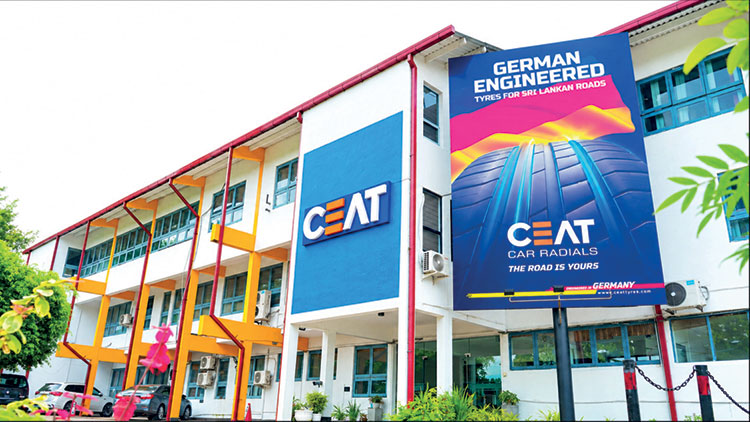
CEAT Kelani Holdings (CKH) has retained its National Long-Term Rating of ‘AA+(lka)’ with a Stable Outlook from Fitch Ratings for the sixth consecutive year, reflecting the company’s financial resilience and leading position in Sri Lanka’s pneumatic tyre market.
The ‘AA+(lka)’ rating, the second-highest on Fitch’s national scale, indicates a very strong capacity to meet financial commitments.
Fitch said CKH’s established market leadership and resilient financial profile remained key strengths, while noting its exposure to price-sensitive, cyclical and highly competitive markets.
The Stable Outlook reflects expectations that the company will maintain its market position despite rising input costs and increasing competition from imported tyres, while preserving adequate credit metrics during periods of weaker earnings and higher investment.
Fitch expects CKH’s established brand, extensive dealer network and adaptive pricing strategies to support its market position. Planned production facility upgrades are also expected to improve product quality, particularly in the radial tyre segment.
The rating agency expects near-term pressure on margins from higher raw material and energy costs but said the company’s low leverage and sound liquidity would provide a cushion.
CKH Chairman Chanaka De Silva said the rating reinforced the company’s focus on disciplined financial management, operational adaptability and long-term investment.
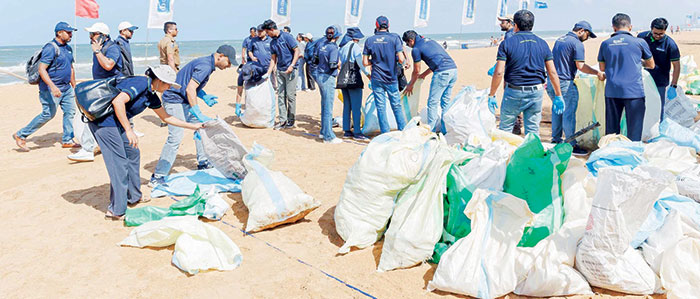
Commercial Bank of Ceylon mobilised employees, customers, volunteers and community members for a nationwide coastal and aquatic clean-up campaign across 20 locations on September 19 to mark International Coastal Cleanup Day 2026.
Conducted under the bank’s sustainability platform, themed ‘Forward Together for a Cleaner Future’, the initiative covered 16 coastal locations and four inland waterways, bringing together stakeholders for a coordinated environmental conservation effort.
The flagship programme was held at Mount Lavinia Beach, with additional activities at Wellawatte and Galle Face beaches. Similar initiatives were conducted by the bank’s regional offices at locations including Kalutara, Negombo, Trincomalee, Batticaloa, Puttalam, Jaffna, Galle, Dondra, Tangalle and along the Mahaweli River.
Employees, management, Future Force volunteers, customers and their families participated alongside the Marine Environment Protection Authority (MEPA), United Nations Global Compact Network Sri Lanka, government and local authorities, environmental organisations and community members.
The bank said the initiative reflected its commitment to water stewardship after adopting Sustainable Development Goal 6 — Clean Water and Sanitation — as a priority goal in 2025.

Buttler out of Oval decider as Lawrence earns ODI call-up

Showers will occur in the Western, Eastern, Uva and Sabaragamuwa provinces and in Galle, Matara, Kandy and Nuwara-Eliya districts.

Nor’easter brings flooding as New York and New Jersey declare emergency 2 hours ago

Trump rejects Iran deal to reopen Strait of Hormuz in seven days

Govt plans to hire 121,000 state workers, redistribute tax revenue

Parliament clears 22A amid protests

‘Dates have the highest sugar content to fight Coronavirus’

Sunday Island 27 December – Headlines

#SundayIsland 17th December – Headlines

Sunday Island – 28th March

Sunday Island Headlines – 21 March

Sunday Island – 21st February – Headlines
-

 News4 days ago
Mastermind Naufer Moulavi among 15 found guilty
-

 News6 days ago
Hatton youth protest against reported death sentence for Lankan in Saudi Arabia
-
 News6 days ago
Mahaweli rises as heavy rain triggers flood, landslide fears
-
 News5 days ago
Protest against setting up of cement factory in highly populated area near BIA
-

 Midweek Review4 days ago
Thileepan’s fast unto death: An authentic narrative that many missed
-

 Editorial5 days ago
Trouble beginning in earnest
-
 Latest News3 days ago
Showers above 100 mm are likely at some places in the Western, Sabaragamuwa, Central and North-western provinces and in Galle and Matara Districts
-
Editorial4 days ago
Big Bad Bills