
News
Asia Progress Forum backs Port City project, but points out major shortcomings


The CPCEC (Colombo Port City Economic Commission) Bill has been designed to encourage foreign currency inflows which would have a positive effect on GDP, BOP and the stability of the Sri Lankan rupee’s exchange rate, the Asia Progress Forum (APF) said yesterday.
However, the APF was concerned that the Bill did not address the risks of high volumes of outflows, which would have the counterintuitive effect of increasing volatility in the economy. The APF therefore called on policymakers to specify a cap on outflows to protect the national economy and involve the Central Bank in designing a framework for monetary stability in the Special Economic Zone ( SEZ), Prof. K. D. N. Weerasinghe (Member – Presidium, APF), Dr. Vagisha Gunasekara (Academic and Independent Researcher of Political Economy, Member – Secretariat, APF) and Percy Samarasinghe (Researcher, Member – Secretariat, APF)) stated.
The following is the full text of their statement: “APF notes the recent gazette of the Colombo Port City Economic Commission (CPCEC) Bill, which seeks to establish a SEZ in 269 hectares of land reclaimed from the sea, which in turn will be governed by a President-appointed Economic Commission and feature a Single Window Investment Facilitator to increase the ease of doing business in the Port City.
“The APF unequivocally condemns the virulent Sinophobia and claims of “Chinese colonialism” made by various public figures in the guise of critiquing the CPCEC Bill. Such statements are factually incorrect, grossly misleading to the public, and deeply insulting to one of our oldest and most steadfast allies. APF also observes the striking similarities in the anti-China rhetoric advanced by these political actors and the statement by the American Ambassador to Sri Lanka that was covered by the press prior to the gazette notice of the CPCEC Bill.
“Sri Lanka has maintained friendly relations with China since the visit of Bhikku Faxian in the year 410. The Rubber-Rice pact of 1952 was arguably the most favourable trade agreement in our country’s history, signed by a right-wing Sri Lankan government that set aside ideological differences with the People’s Republic of China (PRC) and collaborated on mutually beneficial economic grounds. Despite mounting pressure from reactionary pro-imperialist forces from both within and outside the country, the forward-thinking decision-makers of Sri Lanka at that time established partnership with the PRC. Establishing formal diplomatic relations with the PRC in 1957 was the result of decades of activism by the Left movement. The PRC has since remained a close friend and consistently stood for the sovereignty and territorial integrity of Sri Lanka, through war, natural disasters and imperialist aggression.
“Port City Colombo was initially conceptualized by Sri Lankan policymakers, and the CPCEC Bill is also the product of Sri Lankan policymakers. Land reclamation for the Port City was not debt incurring but instead came through a direct investment of 1.4 billion US dollars – the largest in Sri Lanka’s history. The land itself is an inalienable part of Sri Lanka and was officially vested with the Urban Development Authority (UDA) in 2019. The CPCEC Bill stipulates that the SEZ will be under the centralized rule of the democratically elected President of Sri Lanka, and not any foreign country, let alone China. The Bill also stipulates that land in the SEZ cannot be sold on a freehold basis.
Organic effect
“APF acknowledges that Port City Colombo is an organic effect in this age of economic globalization and integration. Sri Lanka is a small island nation that is in a deep economic crisis. With limited natural resources, under-developed human resources, low purchasing power and high national debt, our country cannot run counter to this unstoppable historical trend and “decouple” from market principles. APF views Port City Colombo as an opportunity to gain much-needed foreign investment, which in turn would stabilize the rapidly depreciating Sri Lankan Rupee. We envisage that the services-driven SEZ will provide opportunities for young Sri Lankan entrepreneurs drive innovation and reduce brain drain. In a country with a rapidly growing service sector that rarely follows international standards, the SEZ will introduce important benchmarks for the Sri Lankan service sector. The service establishments within the SEZ will also provide much-needed big data on customer preferences, which in turn could be productively used to innovate products and services offered by Sri Lankan companies.
Anti-China rhetoric
“In light of the aforementioned benefits, we emphasize that anti-China rhetoric serves little purpose except to manufacture consent for the misinformation campaign and new Cold War being waged against the PRC and its people by the US and its allies, including India. This rhetoric could be construed as an attempt by the imperialist camp headed by the US, to prevent Sri Lanka from taking its rightful place in the growing Asian economy led by China’s market socialist model. Furthermore, such rhetoric prevents rational, constructive debate on the merits and demerits of the already existing Port City to the national economy. APF is of the view that Port City Colombo is an important development intervention to stabilize the Sri Lankan economy and that further steps could be taken by the Government of Sri Lanka to complement the establishment of Port City Colombo. What follows are the APF’s observations on the weaknesses of the CPCEC and steps required to address them.
“The APF notes that Section 7 of the CPCEC Bill states that five to seven members can be appointed by the President to the Economic Commission that will form the main governing body of the SEZ. While acknowledging the need for foreign expertise to operate the SEZ up to an internationally competitive standard, we feel it is equally import to include Sri Lankan talent. We therefore call on policymakers to include a quota of majority Sri Lankan citizens in the Economic Commission.
“The APF notes that the CPCEC Bill has been designed in such a way as to encourage foreign currency inflows which will have a positive effect on GDP, BOP and the stability of the Sri Lankan rupee’s exchange rate. However, we are concerned that the Bill does not address the risks of high volumes of outflows, which will have the counterintuitive effect of increasing volatility in the economy. We therefore call on policymakers to specify a cap on outflows to protect the national economy and involve the Central Bank in designing a framework for monetary stability in the SEZ.
“While all citizens of the country will benefit from high GDP, BOP and currency stability, this alone is not enough to push the domestic economy towards agricultural revitalization and industrialization. The APF emphasizes that the Port City can only be one aspect of Sri Lanka’s economic development. A broader plan and institutional framework are needed to harness the potential short-term macroeconomic benefits of the Port City for the advancement of the real economy. We therefore call on policymakers to formulate and implement a long-term plan that specifies how the capital inflow vis-à-vis Port City Colombo will be reinvested to rejuvenate industrialization and agricultural development in Sri Lanka.
Tax exemptions
“APF recognizes that sweeping tax exemptions in the CPCEC Bill are necessary to incentivize foreign currency inflows. We also recognize that the main source of government revenue in the SEZ will be through leases, sales and license fees. Therefore, it is the APF’s position that the residents of the SEZ, should not be eligible to the same subsidized services as the mainland. We therefore call on policymakers to specify that profitable rates will be charged for state services such as water, electricity, communications and other services in the SEZ, which in turn will have a positive effect on the balance sheets of our SOEs.
“The APF appreciates provisions in the CPCEC Bill to prevent investment via Domestic Foreign Currency accounts, thereby incentivizing strictly foreign inflows. While liberal critics of CPCEC bill argue that equal opportunity should be provided for local and foreign investors, we note that local investors may abuse Port City Colombo to evade taxes that they owe to the national economy. The Sri Lankan people have enjoyed a generous welfare state since our country’s independence in 1948. The provision of free healthcare and education is our pride and a national priority. It is imperative that the income tax regime that is applicable to Sri Lankan businesses continue in order to fund the welfare state. We therefore call for stronger auditing mechanisms, including involvement of the Auditor General’s Department, and surveillance on transactions to ensure that local companies do not find loopholes and abuse CPCEC to evade taxes due in the mainland, which in turn would diminish government revenue.
“The APF notes that the CPCEC Bill makes local labour laws inapplicable in the SEZ, while workers will receive salaries in foreign currency. While recognizing this as a trade-off, APF calls for minimum standards including a minimum wage and standardized working hours in the SEZ. Moreover, we are concerned about possible loopholes which may allow manpower agencies to collect foreign currency while remunerating contract workers in rupees. Stronger safeguards are required to ensure every worker in the SEZ receives competitive salaries in foreign currency.
Employment generation
The APF notes studies which project that the Port City will generate a significant number of jobs during the construction and operation phase. However, we are concerned that the CPECEC has no provisions for ensuring that a quota of such jobs is allocated for Sri Lankan workers. Currently, the Sri Lankan labour force is in a crisis characterized by a mismatch of skills, competencies and attitudes required by the private sector and those acquired by workers from educational and/or technical training institutions. We therefore call for a comprehensive plan for human resource development which entails an urgent revision and improvement of current skills development facilities to ensure that Sri Lankan workers are able to compete against international standards by the time the Port City is functional in 20 years.”


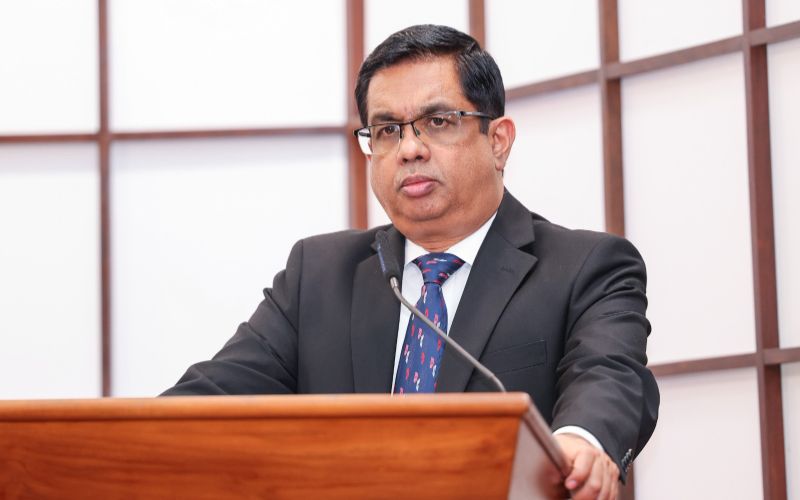
The Memorandum of Understanding (MoU) relating to the project to provide technological solutions to prevent wild elephants from being hit by trains was signed yesterday (01) afternoon at the President’s Media Centre, under the patronage of Secretary to the President Dr Nandika Sanath Kumanayake.
Coordinated through the “Clean Sri Lanka” programme, the project is being implemented as a public-private partnership, with the Railway Department, the Department of Wildlife Conservation and the Forest Conservation Department working together, with full financial support from People’s Bank.
The system consists of three-beam detection, passive infrared (PIR) sensors, automatic temperature sensors and a tamper alarm system to detect animals weighing more than 20 kilogrammes and unauthorised interference. Signal lights (red/yellow/green) installed on either side of the railway tracks, together with a special screen installed inside the locomotive cab, will alert the driver in advance to the exact location of an elephant.
A demonstration test of the system was successfully conducted at the Pinnawala Elephant Orphanage premises in the presence of the relevant officials, following which a report on the system was prepared.
The system will be implemented as a pilot project from next month at 13 locations where wild elephant accidents are frequent. A newly developed website is also scheduled to be launched to enable the progress of the project to be viewed live.
Additional General Manager of Railways P.D.S.B. Chandrasena, Director General of Wildlife Conservation M.S.L.R.P. Marasinghe, Conservator General of Forests S.C. Palamakuumbura and Chairman of People’s Bank Chandana Guniyangoda signed the relevant MoU. Officials from the Clean Sri Lanka Secretariat, including Presidential Additional Secretary (Clean Sri Lanka) Engineer S.P.C. Sugeeshwara, as well as senior officials from the Railway Department, Department of Wildlife Conservation, Forest Conservation Department and People’s Bank, were also present.
[President’s Media Division]

The Commissioner General of Examinations has announced that the results of the 2026 Grade 5 Scholarship Examination have been released online, and can be viewed on the department’s official website: www.doenets.lk

Prime Minister Dr. Harini Amarasuriya departed Sri Lanka on Monday, 31 August, to undertake an official visit to Bhutan to participate in the Global Conscious Food Systems Summit, scheduled to be held in Bhutan.
During her visit, Prime Minister Dr Amarasuriya participated in the opening plenary of the Summit on 1 September, where she delivered a keynote address under the theme “Rising to the Moment: Igniting Consciousness to Address the Polycrisis.”
The Prime Minister will also engage in discussions with international leaders and representatives on strengthening cooperation towards sustainable food systems, food security and resilient communities.

[Prime Minister’s Media Division]

MoU signed for technology to prevent wild elephant-train collisions

Grade 5 scholarship exam results released

Prime Minister participates in Global Conscious Food Systems Summit in Bhutan

Bouchier century sets England up for record 282-run chase against Ireland

Muneeba, Pakistan’s spinners knock Thailand out of Asia Cup

Showers will occur in the Western and Sabaragamuwa provinces and in Galle, Matara, Kandy and Nuwara-Eliya districts

‘Dates have the highest sugar content to fight Coronavirus’

Sunday Island 27 December – Headlines

#SundayIsland 17th December – Headlines

Sunday Island – 28th March

Sunday Island Headlines – 21 March

Sunday Island – 21st February – Headlines
-

 News6 days ago
Eight politicians in drug kingpin probe
-

 Features4 days ago
“Wrap Me Up in My Blazer”— A Gentlemanly Bradby Reminiscence
-

 Business6 days ago
Sri Lanka opens up: A new season of direct connectivity
-

 Features6 days ago
Redefining ageing in Sri Lanka
-
 Latest News6 days ago
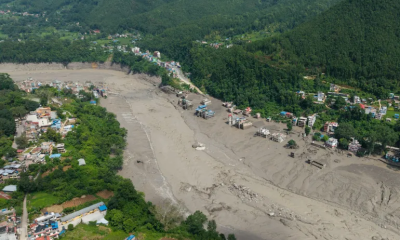
Nepal-Tibet floods: What happened, what caused them and who is missing?
-

 Features3 days ago
When Sri Lankan stories find their own voice
-

 Editorial7 days ago
Unfolding El Niño and burning issues
-

 Editorial6 days ago
The toxic legacy of two lakes