
Features
The world must help Burma overthrow the junta

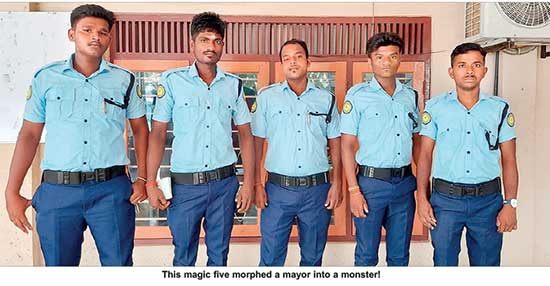
A repeat must be prevented in Sri Lanka
by Kumar David
The people of Burma are fighting a military power grab with courage, bare hands and clanging pots and pans, the traditional way to drive evil spirits away. The army responds with blazing guns killing unarmed protestors – so far about 1,000 including children. Military spokesmen when questioned promise “to investigate and take action against wrongdoers in the army”. Can you think of another place where we have become accustomed to the same refrain for 12 years? The uprising will spread, it will not be subdued; military goons have bitten off more than they can chew. The intensity of the revolt has taken the gorillas by surprise.
Protesters ask the occasional international TV crew that gets access “What is the world doing; are we to fight these armed to the teeth goons with our bare hands?” Intervention by the outside world to assist the people’s uprising is morally necessary but thus far very little has been done. What is needed are hard sanctions and the supply of practical tools that the people ask for. However, world leaders are cowards compared to the people of Burma. Non-interference when a nation is crying for support is betrayal and apathetic talk-only is treachery. China has still to learn its lesson for giving succour to that genocidal manic Pol Pot who murdered millions. Now Chinese factories in the Burmese countryside are being torched by an angry  populace as Beijing panders to the junta. After the junta is overthrown free-Burma will turn against China; how foolish the CCP! Geopolitics is taking its toll. China’s friends including Pakistan and Sri Lanka’s Buddhist will not lift a finger to help. The Islamic world does not care, but that’s understandable. Burmese Buddhists now fighting for their lives, Aung San Suu Kyi included, whitewashed the genocide of Rohingya Muslims. A Lankan cynic would ask if and when home grown autocracy puts its dagger at the throat of the Sinhala-Buddhists: “So, what did you do when the dagger was pointed at the minorities at home?”
I plead guilty to the charge that what motivates me to indulge in this harangue is to mobilise domestic unity against anything similar in Lanka and to emphasise the importance of international diplomatic and other forms of assistance if worst comes to worst. Foreign states, China, the West and India each have their own agenda and so do we. What counts is if two or more players can align their objectives sufficiently to be useful to each other. This is what the Sri Lankan state is attempting to get out of China: “Bankroll us, vote for us in world forums and in exchange we will take your side in Indian Ocean strategy”. Conversely but in like vein, if push comes to shove, if threats to democracy worsen, we the people of Lanka can demand that international verbal condemnation of the Lankan regime in Geneva must be reinforced by stronger methods.
GoSL has been weakened by domestic bungling; the regime is at sixes and sevens. It mucks up everything it touches; these crazy buggers (Editor please let this pass) have broken out of the asylum and arrested the Mayor of Jaffna. “Jesus Christ, what self-destructive demon has taken possession of these crack-pots!” my grandmother would say. Are Gota’s goons going to demand the extradition of every police force and private security outfit in innumerable countries and in the US from California to New York and Missouri because their uniforms resemble LTTE kits? Every branch of state in Lanka is at the throat of some other branch. PBJ slams GLP in public; the Cabinet can’t agree whether Provincial Council should exist and on PC elections; Colombage tells Tim Sebastian that the PTA is a disgrace but pleads that the government is unable to rectify it; Gota’s popularity has plummeted to sub-zero; Mahinda and Basil, having read Stephen Hawking, inhabit alternative universes; consumers snarl, farmers burn effigies and Muslims are livid. In its second year this government has become weak, wobbly and weary. Its enemies don’t need to do anything, only to stand and wait till a Westerly wind pushes the Double-Paksas (two Rajapaksas) aside.
US Ambassador Alaina Teplitz told a news conference that the proposed Port City Bill opens the road to money laundering and other shenanigans. The Economic Zone will be run by a cartel appointed by Gota – no doubt with lots of military sauce – with no parliamentary oversight; companies will be exempt from income tax, casino levies, exchange controls and customs duties for 40 years. In Pakistan a retired general, Asim Bajwa, has been crowned head the Sino-Pak Economic Corridor which will lever $60 billion (money which Pakistan will repay only in its next life!). In an odd reversal of roles Ms Teplitz took a stand well to the left of the Paksas and accused the government of failing to focus on reforms and put the economy on  a strong footing. Posterity will jeer Tissa, DEW and Vasu who voted for the 18th Amendment if they blacken themselves further by backing this Bill. Teplitz is more concerned about crooked commerce than our Dead Left! Ambassadors don’t go out on a limb unless something big is in the pot. Hmm interesting times, is the US planning to cook the Paksa regime?
I wish to summarise what I said a fortnight ago. People must stand firm, retreat no further and push to recover ground lost in the last 16 months. Prospects of outright presidential-despotism or a naked military grab have suffered setbacks. Counterattacks in the liberal middle class, in political spaces, the media, among the Tamils and Muslims, and in the subaltern social classes in step with ruinous increases in living costs, have been stark. The economic debacle has made the military unpopular because in the public mind Gota and his cabal are interwoven. However, the serving officer corps and men have nothing to gain and only opprobrium to earn in any Burma style grab? What does an army gain by battling its own people? An army instinctively knows the ambitions of leaders and a wise one will not let itself be exploited. Why should it pull chestnuts out of the fire for a President who has lost his way and become a liability?
It is not the active military (except Army Silva about whom the International Truth and Justice Project has compiled a 50 page indictment) but some retired brass who are ambitious; the proclivity to militarise emanates from the Executive and its buddies. It is different in Egypt or Burma where the serving military is the beneficiary and the officer corps rakes in perks and dollars while goodies are also spread across the ranks. A military takeover in Lanka, with or without a role for the Executive would be suicidal. The world and India will respond firmly; Muslims and Tamils, in the context of the anti-minority posture of the Executive will petition the diaspora and the Islamic world; the birth of LTTE-Mark 2 cannot be aborted and maybe ISIS-Lanka Mark 1 will be conceived; the junta will isolate itself from the world and from progressive Sinhalese opinion.
China will throw a few coins Gota’s way but no Chinese cockerel will fly over to fight. But what is far more important is that China, though it can fund projects, for various reasons pertaining to its of its own nature, lacks the savvy and sophistication to assist Lanka sort out its complicated skirmishes – democracy-constitution-devolution choices, Tamil/Muslim imbroglio, autocracy/militarisation threats etc. The West and India, since their polities are not one-dimensional and linearized, and since their backgrounds are liberal bourgeois, like Ceylon-Sri Lanka, have experiences useful in assisting us with our messy problems.
True Gota polled an overwhelming 72% of Sinhala-Buddhist (SB) votes and extremist and non-extremist monks rallied to his cause as did political opportunists. But I would take that election, if offered as proof that he has SB mass support, with a ton of salt. Unlike Mahinda he lacks a proven and matured mass base. He was not active in politics till 2019 and it was a fortuitous concourse of events that brought the SB mass and the Defence Secretary into alignment. But it is not secure enough to weather the gathering storm. In a tussle between Sinhala-Buddhism and militarism to which Gota is now subservient, for moral hegemony over the nation, the former will win hands down. If in addition the regime thwarts accountability, reconciliation and anti-militarism demanded by international opinion, it would be firing off its cannons on both sides and setting course for shipwreck. Lacking a secure SB base Gota is attempting to conjure up one among retired officers who served during his time as Defence Secretary and in the shallow sallow petty-bourgeoisie of Viyath Maga.
It is unnecessary to repeat in the 21st Century that the supremacy of the civilian over the military is a principle whose absolute remit should never be traduced. When it is breached – Burma, Pakistan, Thailand, Egypt and Syria for example – repression and the economic deterioration ensue. Apart from military regimes there are personal dictators in many parts of the world but these are usually easier to dislodge.



It is reported that a Trial-at-Bar is being contemplated in respect of allegations against former President Ranil Wickremesinghe regarding misuse of state resources for a visit to a British university on his return from attending sessions of the United Nations in New York and an official visit to Cuba. If this is correct, it would make legal history in our country, because there has been no previous instance of the procedure of a Trial-at- Bar being invoked against a former Head of State.
In view of the constitutional importance of the issues involved, the attempt is opportune to consider the conceptual and statutory foundations of our law relating to Trials-at-Bar, the boundaries of its application in practice, and the nature of the responsibilities attributed to the principal functionaries with regard to the conduct of these proceedings.
I. The Statutory Framework
A Trial-at-Bar is an extraordinary procedure operating over and above proceedings in regular courts exercising criminal jurisdiction at first instance. Its form is that of three judges of the High Court, sitting usually without a jury, to try an indictable offence. The main provision is contained in Section 12 of the Judicature Act, No. 2 of 1978: “Notwithstanding anything to the contrary in this Act or any other written law, a Trial-at-Bar shall be held by the High Court in accordance with law for offences punishable under the Penal Code and other laws”.
The law of Sri Lanka makes provision for Trials-at-Bar in two different contexts.
(a) Mandatory
The trial of any person for the gravest offences against the State, constituted by Sections 114, 115, and 116 of the Penal Code, must in all circumstances be held before the High Court at Bar by three judges without a jury, despite any other law. This is the effect of Section 450 of the Code of Criminal Procedure, Act No. 15 of 1979.
The gist of offences to which this provision is applicable is conspiracy or preparation to overthrow, by unlawful means, the Government of Sri Lanka. This provision was applied in the case of 24 persons alleged to have attempted a coup d’état against the Government of Prime Minister Sirimavo Bandaranaike, a year after its election in July 1960 (R v. Liyanage).
(b) Discretionary
Outside this category, where recourse to a Trial-at-Bar is compulsory, there are other situations in which, as a matter of discretion, the Chief Justice may order use of this procedure. This course of action may be resorted to “in the interest of justice and based on the nature or circumstances of the offence”.
Trials-at-Bar, which may proceed either on indictment or on an information exhibited by the Attorney-General, are required to be held as speedily as possible, and generally in the manner of a High Court trial without a jury.
The power of appointment of High Court judges conducting a Trial-at-Bar is specifically vested in the Chief Justice. The Court, once appointed, has full authority regarding summoning, custody, and bail, subject to the restriction that bail may usually be granted only with the consent of the Attorney-General.
II. Appropriate Parameters
A useful point of departure, as a means of determining the proper limits of this judicial procedure, is to examine the character of offences which have led in our country throughout the post-Independence era to the constitution of Trials-at-Bar. A classification of the decided cases during this entire span of more than seven decades is attempted here for this purpose.
(1) Murder
Several Trials-at-Bar in Sri Lanka have been concerned with charges of murder, not per se, but invariably combined with circumstances which impart to the offence the added element of exceptional public importance, in terms of grave jeopardy to established institutions, public tranquillity, or seminal values underpinning governance.
The following are examples:
(a) the murder of a High Court judge engaged in the trial of five persons accused of capital offences pertaining to trafficking in drugs (Sarath Ambepitiya);
(b) the murder of a Member of Parliament in the midst of mob violence on a street, in the throes of widespread protests aimed at bringing down the incumbent government (Amarakeerthi Athukorala);
(c) the killing of two youth while in police custody (the Angulana case);
(d) the killing of villagers by Army personnel during a public demonstration (the Rathupaswala case);
(e) the disappearance of a social activist and human rights defender (Prageeth Ekneligoda).
(2) Offences involving State security and possible contravention of International law
* charges pertaining to firearms and ammunition and their use on the high seas (the Avant Garde case).
(3) Alleged gross dereliction of duty by senior government officials, including a former Secretary to the Ministry of Defence and a former Inspector-General of Police, leading to the death of a large number of persons by explosions in public places such as churches and hotels (Easter Sunday Bombing case).
(4) Grave corruption allegations in respect of procurement or other major misdemeanours
* two Trials-at-Bar were appointed to hear cases arising from the Central Bank bond scam in 2016, alleged to involve a former Minister of Finance, a former Governor of the Central Bank, his son-in-law and others (Central Bank bond case);
* charges against a previous Minister of Health, senior officials of the Ministry, and others in connection with the procurement of substandard immunoglobulin vials, leading to deaths and grievous bodily harm (Keheliya Rambukwella);
* charges filed by the Financial Crimes Investigation Division against the Chief of Staff of a former President and a former Chairman of the Sri Lanka Insurance Corporation for alleged large-scale misappropriation of public funds (Gamini Senerath, Priyadasa Kudabalage).
(5) Sedition involving communal overtones and potential disturbance of the public peace (S.J.V. Chelvanayakam and others).
(6) Allegations relating to extra-judicial executions
* the trial of a previous Army Commander for statements made by him regarding unlawful execution of surrendering LTTE cadres (Sarath Fonseka White Flag case).
(7) Criminal defamation in volatile contexts
In 1954, in the earliest of this series of cases, allegedly defamatory remarks were published by the defendant in a newspaper known as Trine. The gist of the allegations was that Sir Oliver Goonetilleke, who had just relinquished the position of Minister of Finance to accept appointment as Governor-General, had engaged in “swindles on an international scale” (R v. Thejawathie Gunawardena).
The heinous character of the offences alleged, and the scope of their potential ramifications in all these settings, are evident at a glance. The distinguishing feature is not merely the gravity of the offence, but imputation of a wider dimension to it, typically in the form of a serious affront to the public wellbeing.
In the Thejawathie Gunawardena case, for instance, where the propriety of recourse to a Trial-at-Bar was vigorously challenged, the Supreme Court held that there was no ground for complaint because of the predominant element of public mischief apparent from the circumstances. This was due to the inflammatory content of the statements published, which could foreseeably “disturb or endanger the government” by igniting public feeling. Gravity of the allegations, from this point of view, and their probable impact on public confidence in the integrity of basic institutions of governance, were the factors relied upon to take the case out of the regular category of defamation litigation and justify use of the Trial-at-Bar procedure.
This characteristic of a high threshold of public importance, accompanied by complexity and volatility of the surrounding circumstances, is the central thread which runs through the diverse situations in which Trials-at-Bar have been constituted in Sri Lanka.
III. The Roles of Pivotal Functionaries
The principal responsibility is that of the Chief Justice and the Attorney-General. The essential nexus between their statutory functions is a salient feature of the law.
(i) The Chief Justice
In Somaratna Rajapaksa v. Attorney-General, it was clearly recognised that the repository of power to constitute a Trial-at-Bar is the Chief Justice, but subject to the requirement that an indictment or information “furnished by the Attorney-General” operates as the material basis for exercise of the Chief Justice’s authority in this regard.
An explicit trajectory is established, linking the initiative by the Attorney-General with the Chief Justice’s decision.
(ii) The Attorney-General
Action by the Attorney-General is located within the overall ambit of prosecutorial discretion vested in him in respect of a wide range of matters, including assessment of the sufficiency and probative value of evidence to warrant institution of criminal proceedings, the decision to indict, and withdrawal of a prosecution by means of the entering of a nolle prosequi. The recommendation in respect of a Trial-at-Bar falls into place within the field of this broad authority.
The crucial attribute of the Attorney-General’s functions in this area is that he acts in a quasi-judicial capacity. A basic anomaly in the role of the Attorney-General in our constitutional system is that he combines, in his office, a variety of functions and responsibilities which entail some degree of conflict with one another. Despite this lack of institutional coherence and consistency, what is beyond doubt in the present condition of the law is that, throughout the whole gamut of prosecutorial decision making, the Attorney-General is required to eschew all political and other extraneous considerations and to arrive at his decisions in a spirit of total objectivity.
This is one of the cornerstones of our system of criminal justice. Although there is a statutory choice or discretion built into the Attorney-General’s responsibility, H.N.G. Fernando C.J. has aptly commented: “Our law has conferred on the Attorney-General powers which have been commonly described as quasi-judicial and traditionally formed an integral part of the system of criminal procedure” (Attorney-General v. Don Sirisena). In similar vein, the Supreme Court, in Victor Ivan v. Sarath N. Silva, Attorney-General, observed: “The Attorney-General’s power is a discretionary power similar to other powers vested in public functionaries, held in trust for the public, and not absolute or unfettered”.
While the purview of prosecutorial discretion residing in the Attorney-General, by virtue of enacted law as well as inveterate tradition, is strikingly extensive, it is not an untrammeled power: it is not beyond the reach of the courts. In a trilogy of progressive decisions by the Court of Appeal, Sobitha Rajakaruna J., (prior to his elevation to the Supreme Court), asserted the principle that the Attorney-General’s decisions, in appropriate circumstances, are amenable to judicial review: Sandresh Ravi Karunanayake v. Attorney -General (CA/Writ/ 441/2021), Duminda Lanka Liyanage v. Attorney-General (CA/Writ/323/2022), Nadun Chinthaka Wickremaratne v. Attorney-General (CA/Writ/523/2024).
In Attorney-General v. Karunanayake, Samayawardhana J ( with the concurrence of Thurairaja and Janak de Silva JJ.) declared: “Politically motivated indictments following regime change pose a serious threat to the rule of law and public confidence in the office of the Attorney-General and the entire justice system. Judicial oversight plays a vital role in ensuring that prosecutorial discretion is exercised independently, fairly, and in compliance with the law”.
The Supreme Court of our country has shown no inhibition in directly addressing the question whether the Attorney-General has properly exercised his discretion in laying the information which served as the basis of a Trial-at-Bar.
In Thejawathie Gunawardena’s case, in proceedings before the Supreme Court, it was strenuously contended on the defendant’s behalf that the Attorney-General had acted ultra vires for a collateral or improper purpose. The submission was that the person allegedly defamed was no longer holding public office, and invocation of the extraordinary procedure associated with a Trial-at-Bar was, therefore, unjustifiable. The Supreme Court, sitting in appeal, having considered the issue in depth, rejected the submission on the ground that his tenure had been very recent, and that the proximity of his connection with the incumbent government gave rise to the likelihood of intensifying public feeling because of the volatility and range of the allegations made against him.
These trends of judicial opinion have the effect that the principle of justiciability of the Attorney-General’s initiative in this regard is firmly embedded in our law.
IV. Conclusion
Trials-at-Bar serve a salutary purpose, but within stringently circumscribed limits. The decided cases in our country, spanning more than 75 years, indicate with exemplary clarity the confines within which this extraordinary procedure has legitimacy. The essential consideration is that there should not be room for the slightest doubt that immaterial factors may have come into play in the exercise of discretion.
This far transcends the entitlement of individuals to due process and impinges upon the health and vitality of procedures central to the administration of justice. My teacher, Professor Sir William Wade, pre-eminent among exponents of administrative law in our time, who had the distinction of holding Chairs of Law successively in the Universities of Oxford and Cambridge, told me that if he were asked to identify succinctly, in one sentence, the substance of the common law tradition, he would have no hesitation in replying that it consisted of robust hostility to unbridled discretion in public functionaries. Even the appearance of neglect of this rudimentary principle places in jeopardy the fulfilment of public aspirations about the quality of criminal justice.
By Professor G. L. Peiris ✍️
D. Phil. (Oxford), Ph. D. (Sri Lanka);
Former Minister of Justice, Constitutional Affairs and National Integration;
Quondam Visiting Fellow of the Universities of Oxford, Cambridge and London;
Former Vice-Chancellor and Emeritus Professor of Law of the University of Colombo

After listening to Prof. Charitha Herath deliver his lecture at the World Philosophy Day Conference at the University of Peradeniya and then reading his excellent article, “Buddhist insights into the extended mind thesis – some observations” published in The Island (14.01.2026) I was prompted to write this brief note to comment on the Buddhist concepts he says need to be delved into in this connection. The concepts he mentioned are prapañca, viññāṇasota and ālayaviññāṇa.
Let us look at the Extended Mind Thesis in brief. “The extended mind thesis claims that the cognitive processes that make up the human mind can reach beyond the boundaries of an individual to include as proper parts aspects of the individual’s physical and sociocultural environment” … “Such claims go far beyond the important, but less challenging, assertion that human cognition leans heavily on various forms of external scaffolding and support. Instead, they paint the mind itself (or better, the physical machinery that realises some of our cognitive processes and mental states) as, under humanly attainable conditions, extending beyond the bounds of skin and skull.
Extended cognition in its most general form occurs when internal and external resources become fluently tuned and deeply integrated in such a way as to enable a cognitive agent to solve problems and accomplish their projects, goals, and interests. Consider, for instance, how technological resources such as pens, paper, and personal computers are now so deeply integrated into our everyday lives that we couldn’t accomplish many of our cognitive goals and purposes without them (Kiverstein J, Farina M, Clark A, 2013).
It may be seen from the above that the Extended Mind Thesis is mainly concerned with human cognition. It seems that the tools that humans use to help them in the cognitive process are actually components of the extended mind. This is mentioned in Prof. Herath’s article as well. Though Buddhist theory of cognition does not imply such a relationship that involves the implements utilised in the process of acquiring knowledge, it proposes an inextricable relationship between the cogniser and the cognised. For instance, the eye-consciousness does not arise unless the object of cognition is present.
Reality of the world according to Buddhism is based on the relationship between the cogniser and the cognised. This theory is supported by the way in which Buddhism analyses the complex formed by the human personality and the world, which it does in three systems, expounding the bond between the two. First is the five aggregate analysis, second is the 12 bases (ayatana), and the third is the eighteen elements (dhatu). Whether this kind of entanglement is possible without some means of extending the mind is an interesting question.
According to Buddhism, the mind is not a substance but rather a function that depends on it. There are three terms that are used to refer to mind and possibly these may indicate different functions though they are very often used as near-synonyms. The terms are mano, citta and viññāṇa. The term mano is used to refer to the aspect of mind that functions as one of the six sense-faculties. Mano is responsible for feelings and it also coordinates the functions of the other sense-faculties. Citta generally means consciousness or combinations of consciousness and the other mental-factors, vedanā, saññā, sankāra as seen in the Abhidhamma analyses.
The term Viññāṇa means basic awareness of oneself and it is also used in relation to rebirth or rebecoming. It has a special responsibility in being the condition for the arising of nama-rupa, and reciprocally nama-rupa is the condition for consciousness in the paticcasamuppada formula. Further, the term “consciousness-element” is also used together with five other items; earth-element, water-element, fire-element, air-element and space-element which seem to refer to the most basic factors of the world of experience, indicating its ability to connect with the empirical world (Karunadasa, 2015). In these functions, consciousness may assume some relevance in the Extended Mind Thesis.
Further if we examine the role of consciousness in rebirth we find that a process called the patisandhi-viññāṇa has the ability to transmit an element, perhaps some karmic-force, from the previous birth to the subsequent birth. In these functions the enabling mechanism probably is the viññāṇasota, the stream of consciousness that Prof. Herath mentions, and which apparently has the ability to flow even out of the head and establish links with the external world.
It may be relevant at this juncture to look at the contribution made by Vasubandhu, the 4th Century Indian Buddhist philosopher. Vasubandhu’s interpretation of saṃskārapratyayaṃ vijñānam (consciousness conditioned by volitional actions) treats the stream of consciousness as the mechanism of continuity between lives. He emphasises that this stream continues without a permanent entity migrating from one life to the next. The “stream” manifests as the subject (ego) and object (external world), which are both considered projections of this underlying consciousness, rather than independently existing entities. Vasubandhu also had proposed a kshnavada (theory of moments) to explain the stream of consciousness as consisting of arising and disappearing of consciousness maintaining continuity. These propositions may lend support to the Extended Mind Thesis.
Prof. Herath has mentioned the term prapañca (Pali – papañca) which generally means concepts. In the context of the extended mind thesis it needs to be examined in relation to the Buddhist theory of perception, because the former mainly pertains to cognition. As mentioned by Prof Herath, Ven. Nanananda in his book “Concept and Reality” has discussed this subject emphasising the fact that in Buddhist literature the term papañca is used mainly in the context of sense-perception. He says that “Madhupindika Sutta” (Majjima Nikaya) points to the fact that papañca is essentially connected with the process of sense perception. According to the Buddhist theory of perception the final outcome or the final stage of the process is the formation of papañca. Following the formation of concept there is proliferation of the concept depending on the past experience the individual may have in relation to what is perceived.
This process of perception, as given inthe Madhupindika Sutta, leading to conceptual proliferation is at the beginning impersonal and in the later stages it becomes personal with the involvement of the human personality with its self-ego and craving and finally leading to total bondage. And this bondage is between the human mind and the external world. Whether this entails an extended mind needs to be researched as suggested by Prof. Herath.
The third concept that Prof. Herath referred to in his lecture is the Yogacara idea of ālayaviññāṇa. Yogacara in its analysis of consciousness has added two more types of consciousnesses to the six based on the six senses, which is the classification mentioned in Early Buddhism and the two additional ones are kleshaviññāṇa and ālayaviññāṇa. The latter is called the storehouse-consciousness as it carries the seeds of karma. It is also called the approximating consciousness as it approximates at two levels; in this birth by collection of defilements and in the next birth by carrying them across in rebirth. The latter function may be relevant to the Extended Mind Thesis as it has the ability of projection beyond the body of the present birth and transmit to the body of the next birth.
If one is interested in researching into the concept of ālayaviññāṇa one must be aware that the three masters of Yogacara, i.e. Maithreyanata, Asanga and Vasubhandhu did not agree with each other on the nature of ālayaviññāṇa. While Maithreyanata was loyal to the early Yogacara idea that appeared in Sandhinirmocana Suthra, Asanga modified it to suit his thesis of idealism. Vasubandhu, however, adhered to the views of Early Buddhism and according to Kalupahana (1992) what he in his Trimsathika describes is the transformation of the consciousness and not the eight consciousnesses in the order in which they appear in Yogākāra texts. Here one is tempted to suggest that Asang’s idealism which propounds that the external world is a creation of the mind may lend support to the extended mind thesis. Idealism in Yogacara Buddhism may be another subject that needs to be researched in the context of the extended mind thesis.
Turning to recent research there is theoretical and speculative support from quantum theory for the idea of extended consciousness, but it remains a controversial area of research within physics, neuroscience, and philosophy. Several frameworks suggest that consciousness is not confined to the brain but is a fundamental, non-local phenomenon rooted in quantum processes that may connect minds to each other or the universe at large. (Wagh, M. (2024). “Your Consciousness Can Connect with the Whole Universe, Groundbreaking New Research Suggests”. Popular Mechanics. Retrieved from https://www.popularmechanics.com/scienc)
Finally, while it may not be clear whether the Extended Mind Thesis, as proposed by A. Clark and others (2013), has anything to do with consciousness it may be worthwhile to research into this matter from a Buddhist perspective, which will have to strongly bring into contention the factor of consciousness, which perhaps may have the potential to develop into an Extended Consciousness Thesis.
by Prof. N. A. de S. Amaratunga ✍️
PhD, DSc, DLitt

The world today is marked by paradox. Never before has humanity possessed such extraordinary scientific knowledge, technological capability, and research capacity. Yet never before have we faced such a dense convergence of crises—climate change, biodiversity loss, pandemics, food insecurity, widening inequality, disaster vulnerability, and social fragmentation. These challenges are not isolated events; they are deeply interconnected, mutually reinforcing, and embedded within complex social, ecological, economic, and technological systems. Addressing them effectively demands more than incremental improvements or isolated expertise. It requires a fundamental shift in how we think, research, and act.
At the heart of this shift lies transdisciplinarity: an approach that moves beyond siloed disciplines and engages society itself in the co-creation of knowledge and solutions. As Albert Einstein famously observed, “We cannot solve our problems with the same thinking we used when we created them.” The persistence of today’s global challenges suggests that our prevailing modes of problem-solving—largely mono-disciplinary and compartmentalised—are no longer adequate.
The limits of siloed knowledge
Over the past few decades, global investment in research and development has grown dramatically. Global R&D expenditure exceeded USD 3 trillion in 2022, and the worldwide scientific workforce has expanded to more than 8.8 million researchers, producing millions of academic papers annually across tens of thousands of journals. Indeed, the number of scientists has grown several times faster than the global population itself. This extraordinary expansion reflects humanity’s faith in science as a driver of progress—but it also sharpens an uncomfortable question about returns on this investment. Millions of scientists across the world produce an ever-expanding body of academic literature, filling tens of thousands of specialised journals. This disciplinary research has undoubtedly driven remarkable advances in medicine, engineering, agriculture, and information technology. The positive contributions of science to human civilisation are beyond dispute. Yet its effectiveness in addressing complex, real-world challenges has often fallen short of expectations, with impacts appearing disproportionate to the vast resources committed. Yet the translation of this vast knowledge base into tangible, scalable solutions to real-world problems remains limited.
The reason lies not in a lack of intelligence or effort, but in the way knowledge is organised. Disciplines are, after all, social constructs, each shaped by its own conceptual, theoretical, philosophical, and methodological traditions. While these traditions enable depth and rigour, they also encourage intellectual compartmentalisation when treated as ends in themselves. Modern academia is structured around disciplines—biology, economics, engineering, sociology, medicine—each with its own language, methods, reward systems, and institutional boundaries. These disciplines are powerful tools for deep analysis, but they also act as intellectual blinders. By focusing narrowly on parts of a problem, they often miss the broader system in which that problem is embedded.
Climate change, for example, is not merely an environmental issue. It is simultaneously an economic, social, political, technological, and ethical challenge. Public health crises are shaped as much by social behaviour, governance, and inequality as by pathogens and medical interventions. Poverty is not simply a matter of income, but of education, health, gender relations, environmental degradation, and political inclusion. Approaching such issues from a single disciplinary lens inevitably leads to partial diagnoses and fragmented solutions.
The systems thinker Donella Meadows captured this dilemma succinctly when she noted, “The problems are not in the world; they are in our models of the world.” When our models are fragmented, our solutions will be fragmented as well.
Wicked problems in a hyper-connected world
Many of today’s challenges fall into what scholars describe as “wicked problems”—issues that are complex, non-linear, and resistant to definitive solutions. They have multiple causes, involve many stakeholders with competing values, and evolve over time. Actions taken to address one aspect of the problem often generate unintended consequences elsewhere.
In a hyper-connected world, these dynamics are amplified. A disruption in one part of the global system—whether a pandemic, a financial shock, or a geopolitical conflict—can cascade rapidly across borders, affecting food systems, energy markets, public health, and social stability. Recent crises have starkly demonstrated how local vulnerabilities are intertwined with global forces.
Despite decades of research aimed at tackling such problems, progress remains uneven and, in many cases, distressingly slow. In some instances, well-intentioned scientific interventions have even generated new problems or unintended consequences. The Green Revolution of the 1960s, for example, dramatically increased cereal yields and reduced hunger in many developing countries, but its heavy dependence on agrochemicals has since contributed to soil degradation, water pollution, and public health concerns. Similarly, plastics—once hailed as miracle materials for their affordability and versatility—have become a pervasive environmental menace, illustrating how narrowly framed solutions can create long-term systemic risks. This gap between knowledge production and societal impact raises a critical question: are we organising our research and institutions in ways that are fit for purpose in an interconnected world?
What is transdisciplinarity?
Transdisciplinarity offers a compelling response to this question. Unlike multidisciplinary approaches, which place disciplines side by side, or interdisciplinary approaches, which integrate methods across disciplines, transdisciplinarity goes a step further. It transcends academic boundaries altogether by bringing together researchers, policymakers, practitioners, industry actors, and communities to jointly define problems and co-create solutions.
At its core, transdisciplinarity is problem-driven rather than discipline-driven. It starts with real-world challenges and asks: what knowledge, perspectives, and forms of expertise are needed to address this issue in a meaningful way? Scientific knowledge remains essential, but it is complemented by experiential, local, and indigenous knowledge—forms of understanding that are often overlooked in conventional research but are crucial for context-sensitive and socially robust solutions.
As C. P. Snow warned in his influential reflections on “The Two Cultures,” divisions within knowledge systems can themselves become barriers to progress. Transdisciplinarity seeks to bridge not only disciplines, but also the persistent gap between knowledge and action.
Learning from nature and society
Nature itself provides a powerful metaphor for transdisciplinary thinking. Ecosystems do not operate in compartments. Soil, water, plants, animals, and climate interact continuously in dynamic, adaptive systems. When one element is disturbed, the effects ripple through the whole. Human societies are no different. Economic systems shape social relations; social norms influence environmental outcomes; technological choices affect governance and equity.
Yet our institutions often behave as if these connections do not exist. Universities are organised into departments with separate budgets and promotion criteria. Research funding is allocated along disciplinary lines. Success is measured through narrow metrics such as journal impact factors and citation counts, rather than societal relevance or long-term impact.
This mismatch between the complexity of real-world problems and the fragmentation of our knowledge systems lies at the heart of many policy failures. While societal challenges have grown exponentially in scale and interdependence, organisational structures and problem-solving approaches have not evolved at the same pace. Attempting to address borderless global issues using rigid, compartmentalised, and outdated frameworks is therefore increasingly counterproductive. As former UN Secretary-General Ban Ki-moon aptly stated, “We cannot address today’s problems with yesterday’s institutions and mindsets.”
Transdisciplinarity and sustainable development
The United Nations Sustainable Development Goals (SDGs) offer a vivid illustration of why transdisciplinary approaches are essential. The 17 goals—ranging from poverty eradication and health to climate action and biodiversity—are explicitly interconnected. Progress on one goal often depends on progress in others. Climate action affects food security, health, and livelihoods. Education influences gender equality, economic growth, and environmental stewardship.
Achieving the SDGs therefore requires more than sector-by-sector interventions. It demands integrated, cross-sectoral responses that align research, policy, and practice. Transdisciplinarity provides a framework for such integration by fostering collaboration across disciplines and sectors, and by grounding global goals in local realities.
For countries like Sri Lanka, with complex socio-ecological systems and rich cultural diversity, this approach is particularly relevant. In Sri Lanka, more than 6,000 individuals are engaged in research and development, with over 60 per cent based in universities and other higher education institutions. This places a particular responsibility on academic and institutional leaders to create environments that encourage collaboration across disciplines and with society. Policies, assessment schemes, funding mechanisms, and incentive structures within universities can either reinforce silos or actively nurture a transdisciplinary culture. Sustainable development challenges here are shaped by local contexts—coastal vulnerability, agricultural livelihoods, urbanisation patterns, and social inequalities—while also being influenced by global forces. Transdisciplinary engagement can help bridge this global–local divide, ensuring that policies and innovations are both scientifically sound and socially meaningful.
Why transdisciplinarity is hard?
Despite its promise, transdisciplinarity is not easy to practice or institutionalise. Deeply entrenched disciplinary identities often shape how researchers see themselves and their work. Many academics are trained to excel within narrow fields, and career advancement systems tend to reward disciplinary publications over collaborative, problem-oriented research.
Institutional structures can further reinforce these silos. Departments operate with separate budgets and governance arrangements, making cross-boundary collaboration administratively cumbersome. Funding mechanisms often lack categories for transdisciplinary projects, leaving such initiatives struggling to find support. Time pressures also matter: genuine engagement with communities and stakeholders requires sustained interaction, yet academic workloads rarely recognise this effort.
There are also cultural and ethical challenges. Different disciplines speak different “languages” and operate with distinct assumptions about what counts as valid knowledge. Power imbalances can emerge, with certain forms of expertise dominating others, including the voices of non-academic partners. Without careful attention to trust, equity, and mutual respect, collaboration can become superficial rather than transformative.
The way forward: from aspiration to practice
If transdisciplinarity is to move from rhetoric to reality, deliberate institutional change is required. Sri Lanka, in particular, would benefit from articulating a clear national vision that positions transdisciplinary research as a core mechanism for addressing challenges such as climate resilience, public health, disaster risk, and sustainable development. National research agencies and universities can play a catalytic role by creating dedicated funding streams, establishing transdisciplinary centres, and embedding systems thinking and stakeholder engagement within curricula and research agendas. First, awareness must be built. Universities, research institutes, and funding agencies need to invest in dialogue, training, and pilot projects that demonstrate the value of transdisciplinary approaches in addressing pressing societal challenges.
Second, leadership matters. Institutional leaders play a critical role in signalling that transdisciplinary engagement is not peripheral, but central to the mission of knowledge institutions. This can be done by embedding such approaches in strategic plans, allocating seed funding for collaborative initiatives, and recognising societal impact in promotion and evaluation systems.
Third, structures must evolve. Flexible research centres, shared infrastructure, and streamlined administrative processes can lower the barriers to collaboration. Education also has a role to play. Introducing systems thinking and problem-based learning early in undergraduate and postgraduate programmes can help cultivate a new generation of researchers comfortable working across boundaries.
Finally, ethics and inclusivity must be at the forefront. Transdisciplinarity is not merely a technical methodology; it is an ethical commitment to valuing diverse forms of knowledge and engaging communities as partners rather than passive beneficiaries. In doing so, it strengthens the legitimacy, relevance, and sustainability of solutions.
A collective learning challenge
Peter Senge once observed, “The only sustainable competitive advantage is an organization’s ability to learn faster than the competition.” This insight applies not only to organisations, but to societies as a whole. Our collective ability to learn, unlearn, and relearn—across disciplines and with society—will determine how effectively we navigate the challenges of our time.
The shift from siloed disciplines to transdisciplinary engagement is therefore not a luxury or an academic trend. It is a strategic necessity. In a world of complex, interconnected problems, fragmented knowledge will no longer suffice. What is needed is a new culture of collaboration—one that sees connections rather than compartments, embraces uncertainty, and places societal well-being at the centre of scientific endeavour.
Only by breaking down the walls between disciplines, institutions, and communities can we hope to transform knowledge into action, and action into lasting, equitable change.
A final word to Sri Lankan decision-makers
For Sri Lanka, the message is clear and urgent. Policymakers, university leaders, funding agencies, and development institutions must recognise that many of the country’s most pressing challenges—climate vulnerability, public health risks, food and water security, disaster resilience, and social inequality—cannot be solved within institutional silos. Creating space for transdisciplinary engagement is not a marginal reform; it is a strategic investment in national resilience. By aligning policies, incentives, and funding mechanisms to encourage collaboration across disciplines and with society, Sri Lanka can unlock the full value of its scientific and intellectual capital. The choice before us is stark: continue to manage complexity with fragmented tools, or deliberately build institutions capable of learning, integrating, and responding as a system. The future will favour the latter.
by Emeritus Professor Ranjith Senaratne ✍️
Former Vice-Chancellor, University of Ruhuna,
Former General President, Sri Lanka Association for the Advancement of Science
Former Chairman, National Science Foundation

At least six killed in Pakistan as fire rips through Karachi shopping mall

Chile declares ‘state of catastrophe’ as deadly wildfires menace cities

At least 21 killed in Spain after crash involving high-speed trains

U – 19 World Cup: Mahboob, Sadat star for Afghanistan against West Indies

U – 19 World Cup: Rew, Mayes lead England to victory

Mitchell, Phillips centuries trump Kohli’s as New Zealand win first-ever ODI series in India

‘Dates have the highest sugar content to fight Coronavirus’

Sunday Island 27 December – Headlines

#SundayIsland 17th December – Headlines

Sunday Island – 28th March

Sunday Island Headlines – 21 March

Sunday Island – 21st February – Headlines
-

 Editorial1 day ago
Illusory rule of law
-

 News2 days ago
UNDP’s assessment confirms widespread economic fallout from Cyclone Ditwah
-

 Business4 days ago
Koaloo.Fi and Stredge forge strategic partnership to offer businesses sustainable supply chain solutions
-

 Editorial2 days ago
Crime and cops
-
 Features1 day ago
Daydreams on a winter’s day
-

 Editorial3 days ago
The Chakka Clash
-
 Features1 day ago
Surprise move of both the Minister and myself from Agriculture to Education
-
 Business4 days ago
SLT MOBITEL and Fintelex empower farmers with the launch of Yaya Agro App