
Sports
ICC plans to widen DRS supplier base

The International Cricket Council (ICC) is set to introduce a DRS certification system and explore the possibility of accrediting more vendors capable of supplying cost-effective Decision Review System (DRS) technology. The proposal is among the agenda items for the Annual Conference in Edinburgh, where the world governing body is also expected to grant Associate Membership to Mauritius. The Annual Conference is scheduled to be held from July 8 to 11.
“The ICC needs to ensure that DRS implementation undergoes a comprehensive assessment and testing process for both current DRS suppliers and potential suppliers. A DRS certification system will also be explored with a view to making cost-effective DRS options available that can serve the global game,” a source in the know explained.

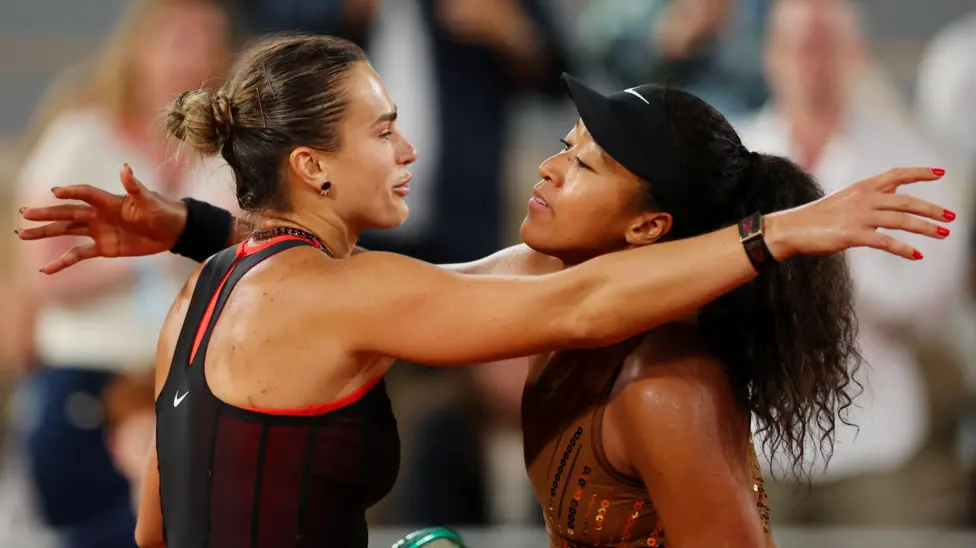
There are a lot of similarities between Aryna Sabalenka and Naomi Osaka.
Both have won four Grand Slam titles, been top of the world rankings and built their legacies on hard courts.
The big-hitting pair broke through on the WTA Tour around the same time, but their journeys have been very different.
While one peaked early, the other had a longer wait for success.
After they first met at the 2018 US Open – with Osaka going on to win her maiden major – they did not face each other again until 2026.
The pair have now faced each other three times in the space of three months – and today ( Sunday) they will go head-to-head again in a blockbuster fourth-round clash at Wimbledon.
(BBC)
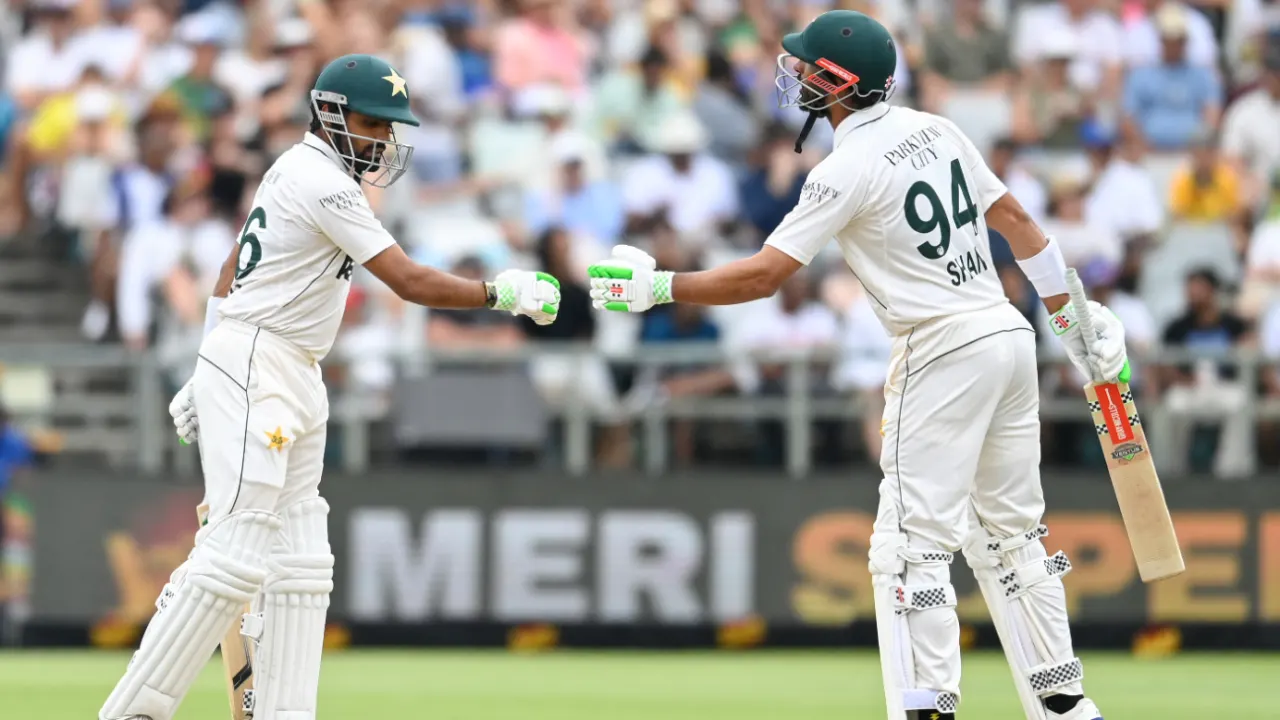
Shan Masood has been removed as Pakistan’s Test captain, with Babar Azam taking over the reins for the second time in his career. The decision came as part of Pakistan’s squad announcement ahead of their upcoming two-match Test series in the West Indies, starting later this month.
The end of Masood’s tenure brings down the curtain on a historically poor stint. Appointed nearly three years ago, Masood captained Pakistan in 16 Tests and lost 12 of them. No captain in Test history has ever lost 12 of their first 16 Tests, and despite ten men having captained Pakistan in more Tests, only Misbah-ul-Haq, who lost 19 of his 56 Tests, has overseen more defeats than Masood. They have also lost their last seven Tests, the joint-highest across Pakistan’s history.
Aaqib Javed, Pakistan’s high-performance director, said it was the repetitive nature of Pakistan’s Test defeats, and their tendency to give up losing positions, that led them to decide they needed a change at the helm.
“We saw many close Test matches [under Shan’s captaincy]. But a few things were not being addressed. Like the Centurion Test, South Africa’s two batters at No. 10 [for the tenth wicket] put on a 60-70 run partnership [51 runs]. The game was in our hands. Against the West Indies in Multan, in the second Test, the team was rolled over easily.
“Shan’s own performance during his tenure has been good, but as captain, he has not been able to bring the desired results. We wanted to look for a captain who comes in and leads the team better” – Aaqib Javed
“The captain has a responsibility of finishing games. Same with the South Africa Tests at home. Some things are the responsibility of the team, some are the responsibility of the selectors, and some are the responsibility of the captain. The captain’s responsibility also includes maintaining the team’s over rate, taking DRS decisions, making the right call at the toss.”
Masood’s tenure began with what has always proved Pakistan’s biggest challenge, an away series in Australia, which they lost 3-0. It was a bad start from which Pakistan never really recovered, going on to lose 2-0 at home to Bangladesh; the first time they lost even a Test to them. A come-from-behind win over England later that year was the high point of his time; notably, however, it was the only high point. It was the only one of seven series under his leadership Pakistan won as they lost four, leaving them at the bottom of the World Test Championship 2023-25 table.
That Masood kept his place in the side was a reflection of his personal form with the bat, which has seen an upswing with the armband on. His average as captain rose to 34.06, nearly six runs higher than the 28.51 before his appointment. It included two centuries, one in South Africa, as well as seven half-centuries, including two in a game at the MCG.
Aaqib said the change of change of captaincy was a separate decision to Masood’s place in the team. “Shan’s own performance during his tenure has been good, but as captain, he has not been able to bring the desired results,” Aaqib said. “We wanted to look for a captain who comes in and leads the team better.”
Pakistan’s decision to return to Babar, the man from whom Masood took over, perhaps reflects the dearth of attractive candidates the PCB had available. In the years since he was last captain in 2023, Babar has struggled with his form across formats, but especially in Test cricket, where he has averaged just over 27 under Masood.
His time as captain of Pakistan, however, was a markedly happier stint – Pakistan won ten of the 20 Tests Babar led in, starting off with a 2-0 home win over South Africa, and included clean sweeps away from home in Bangladesh and Sri Lanka. It was also when Babar’s form with the bat was close to its best; as captain, he averaged over 50 in Test cricket. However, there was still plenty of disappointment, too, most notably a crushing 3-0 home series whitewash at England’s hands, the only such defeat in Pakistan’s Test history.
Babar takes over at a busy time in Test cricket. The series against the West Indies is immediately followed by a three-match series in England, Pakistan’s first to the country in six years. A busy home winter season comes soon after, and includes Tests against New Zealand and Sri Lanka.
[Cricinfo]
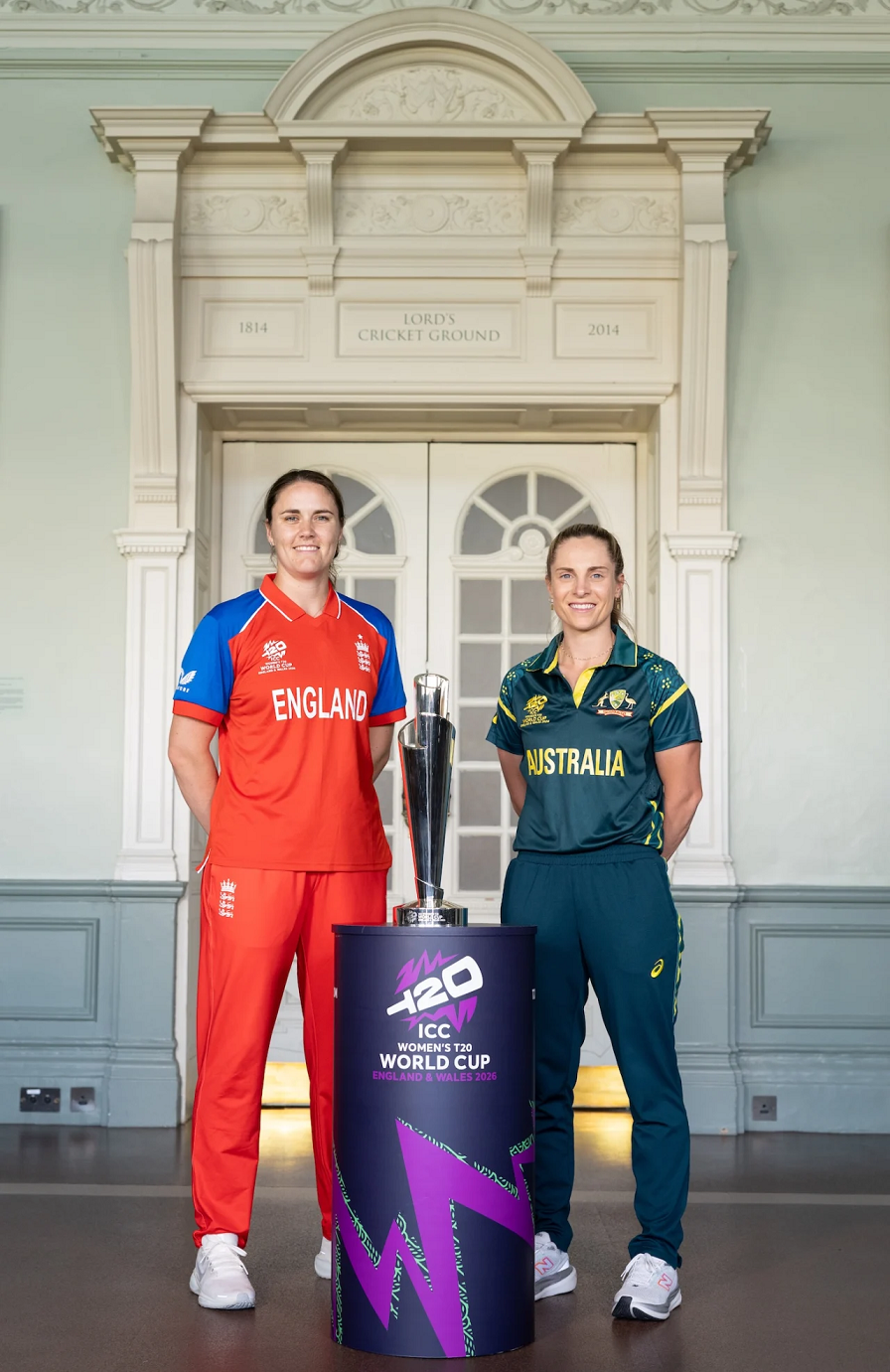
Could there have been two more deserving finalists? The tournament’s two unbeaten sides dominated the group stage, sealed their places in the final with commanding semi-final wins, their respective experienced players have defined the tournament, and now cricket’s oldest rivals return to one of the most iconic stages. At Lord’s, England will attempt to put behind them previous heartbreaks Australia have inflicted on them, while first-time T20 World Cup captains Sophie Molineux and Nat Sciver-Brunt chase what will be the biggest prize of their leadership journeys yet.
Having missed out on making the final in their last two ICC events – the 2024 T20 World Cup and the 2025 ODI World Cup – Australia arrive looking every bit like a side determined to reclaim the throne, chasing their seventh T20 World Cup title. England, meanwhile, will be eyeing their first in 17 years since lifting the inaugural crown in 2009 – also at Lord’s – with the added motivation of winning a home World Cup once again.
England have been equally dominant, but there were questions over their reliance on explosive starts from Danni Wyatt-Hodge. They answered that in the semi-final, where captain Sciver-Brunt and Heather Knight combined for a match-defining partnership that reaffirmed England’s ability to win from difficult positions.
Australia will start as favorites, well, because they almost always do so. And particularly in finals. They’ve also repeatedly ended England’s ambitions on the biggest stage, in the tournament finals in 2012, 2014 and 2018.
England’s most cherished T20 World Cup memory against Australia remains the inaugural 2009 tournament, when Charlotte Edwards’ side beat Australia in the semi-finals and went on to lift the trophy. This time, Edwards returns in a different role, as head coach, while Australia’s coach, Shelley Nitschke, was part of the side that suffered that defeat. England will hope history repeats itself, looking to that win as inspiration to outdo Australia. And also that they’ve not lost a single T20 World Cup game at home yet.
The margins are likely to be thin, but the contest may come down to Australia’s disciplined bowling against England’s powerful top three, while England’s spinners will seek to unsettle an Australian top order that’s looked formidable. The Australian side has made winning a habit, but England have home support and momentum, and after their excellent semi-final comeback, the belief that they have the match-winners to keep Australia away from the trophy.
Nat Sciver Brunt’s return from injury couldn’t have come at a better time for England. With her side reeling at 23 for 3 in the semi-final against South Africa, she combined with Knight to rescue the innings with a match-defining partnership. There was no visible sign of the calf injury that had kept her out of games in the group stage, as she pierced the field repeatedly, hitting 11 fours and a towering six over deep midwicket that underlined an innings of authority and composure. In what is her seventh T20 World Cup and first as captain, she will want to rise to the occasion again and lead England to their first T20 title in 17 years.
Beth Mooney has saved her best for when Australia have needed it most. After two low scores against South Africa and Bangladesh, she came back with a 74* against Netherlands, before scoring 0 and 22 against Pakistan and India respectively. She once again found her touch in the semi-final against West Indies, making 61 not out off 36 and looking in deft touch. Mooney averages 72.00 in T20 World Cup knockout matches and played a pivotal role in the title runs of 2020 and 2023. Come another final, Australia will once again look to their proven match-winner.
England are unlikely to make changes to their XI.
England (probable): Amy Jones (wk), Danni Wyatt-Hodge, Nat Sciver-Brunt (capt), Alice Capsey, Heather Knight, Freya Kemp, Dani Gibson, Charlie Dean, Sophie Ecclestone, Linsey Smith, Lauren Bell.
Ellyse Perry retired hurt in the semi-final chase against West Indies in what was described as a precautionary move due to “minor quad awareness”. She trained on both days leading into the final and came through a fitness test with no signs of discomfort as she batted and bowled in the nets, but her availability will be based on “how she pulls up”, according to captain Molineux. If Perry misses out, Australia may look to strengthen their bowling by bringing in legspinner Alana King, who has an excellent record against England.
Australia (probable): Georgia Voll, Beth Mooney (wk), Phoebe Litchfield, Ellyse Perry, Ashleigh Gardner, Georgia Wareham, Annabel Sutherland, Nicola Carey, Sophie Molineux (capt), Kim Garth, Lucy Hamilton.
[Cricinfo]

A rivalry renewed – Sabalenka and Osaka meet again

Iran’s China envoy vows ‘special’ Hormuz treatment for ‘friendly’ countries

ICC plans to widen DRS supplier base

Will Sri Lanka Become a ” Digital Workspace” for Chinese Cyber criminals?

Babar Azam takes charge after Shan Masood is removed as Pakistan Test captain

Can Lord’s memories inspire England to bring down mighty Australia?

‘Dates have the highest sugar content to fight Coronavirus’

Sunday Island 27 December – Headlines

#SundayIsland 17th December – Headlines

Sunday Island – 28th March

Sunday Island Headlines – 21 March

Sunday Island – 21st February – Headlines
-

 News6 days ago
LAWASIA warns against ad hoc initiative to increase judges’ retirement ages
-

 Features5 days ago
Climate action to bring South Asia together
-

 News5 days ago
Chamuditha to seek removal of injunction on Youtube programme
-

 News1 day ago
Freedom 250: US Embassy celebrates America’s 250th Independence Day through magic of American cinema
-

 News2 days ago
CIABOC to question Harak Kata on Rs. 200 mn bribery allegation
-

 News2 days ago
SLAF conducts successful rescue mission under UN command in Central African Republic
-

 Midweek Review4 days ago
H’tota port’s strategic status remains focal point of geopolitical scrutiny
-

 News5 days ago
CPRP alleges another death in custody, seeks protection for witness