
Features
A Lifetime of Academic Excellence: An Appreciation of Professor Subramaniam Sotheeswaran

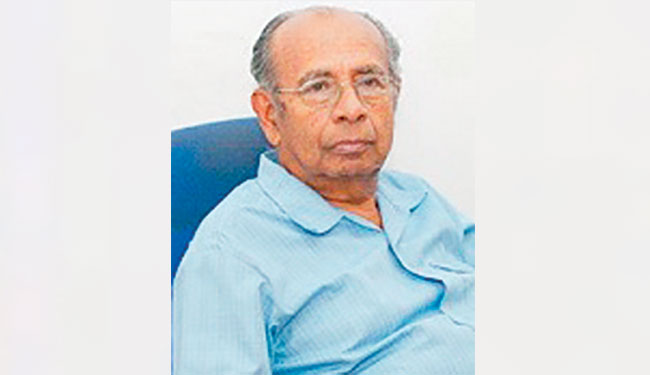
Remembering a teacher who is yet alive with affection and admiration after six decades is possible only when that educator has left a profound and enduring imprint on one’s life. Such is the legacy of Emeritus Professor Subramaniam Sotheeswaran, a visionary educator, a distinguished organic chemist, and a global researcher whose career spans more than sixty years and continues to shape generations of students and scholars around the world.
Foundations and Early Milestones
Born on April 12, 1939, in Wattegama in the Kandy district of Sri Lanka, Professor Sotheeswaran began his education at St Peter’s College, Colombo, before moving to Hartley College in Point Pedro, where he studied from 1955 to 1959. He entered the University of Ceylon in 1959 and graduated with a First-Class degree in Chemistry in 1963.
During these years, the Faculty of Science at the newly established University of Ceylon, Peradeniya, was taking shape. Under the leadership of Professor M. U. S. Sultanbawa, supported by Professor Eric Fonseka, the Chemistry Department was founded and was led by Professor Sultanbawa until 1980. Professors G. P. Wannigama, M. Selvaratnam and H. W. Dias were also relocated to Peradeniya, while Professors Ramakrishna, Ariyaratna, and Siriwardana served as visiting lecturers during the formative period. The first cohort of science students was admitted in the 1961–62 academic year.
Upon graduating in 1963, Professor Sotheeswaran joined the academic staff of the Chemistry Department along with his batchmates Drs. Bandaranaike and Nithyanandan. Professor Sotheeswaran’s early appointment places him among the pioneers of Chemistry education at Peradeniya, contributing to the foundation of what would become one of Sri Lanka’s premier centers of scientific learning and research.
Decades of Dedicated Service and Global Impact
Soon after joining Peradeniya, he pursued doctoral studies in Physical Organic Chemistry at the University of Hull in the United Kingdom, earning his Ph.D. in 1967. Upon returning to Sri Lanka, he played a pivotal role in expanding the Natural Products Chemistry program initiated by Professor Sultanbawa. Working alongside Professors Vijaya Kumar and Savitri Kumar and Dr Sinnathambi Balasubramanium of the Botany Department, he helped build a research enterprise that produced numerous postgraduate scholars who now contribute to research and teaching across the globe. This program brought international recognition to the University of Peradeniya and attracted major funding from organizations such as the World Health Organization and the United States Department of Agriculture.
His research interests extended far beyond Sri Lanka. Over the course of his career, he collaborated with or undertook sabbatical work at institutions in Canada, New Zealand, Australia, Thailand, and the United Kingdom. His work consistently focused on understanding the chemical basis of traditional plant use, whether for food, medicine, or water purification. His research explored antimicrobial and anti-implantation properties of Sri Lankan plants, the water purification potential of Fijian flora, and the nutritional and toxicological aspects of plants used in local diets. Although primarily an organic chemist, he ventured into interdisciplinary research in the early 2000s, co-authoring innovative studies on fiber-optic copper sensors for environmental monitoring and contributing significantly to the understanding of chemical reaction mechanisms.
Professor Sotheeswaran served as a senior lecturer and an Associate Professor at Peradeniya for twenty-two years before joining the University of the South Pacific in Fiji in 1985. Over the next twenty-four years, he served as Professor of Organic Chemistry and later as Dean of the College of Chemical Sciences, shaping the academic trajectory of the institution and influencing generations of Pacific-region chemists. In 2006, he returned to Sri Lanka to join the Institute of Chemistry Ceylon, where he has spent nearly two decades as a Senior Professor, continuing to inspire and mentor the next generation of South Asian chemists.
Recognitions
In recognition of his outstanding contributions to chemical research and education, the University of Hull awarded him the prestigious Doctor of Science (D.Sc.) degree in 1987. In 2018, he received the Lifetime Research Award from the Asian Symposium on Medicinal Plants during its International Symposium, an honor that reflects his global impact on natural products chemistry.
A Teacher Remembered
Professor Sotheeswaran’s legacy cannot be measured solely by the positions he held or the institutions he served. His true monument is the global network of scientists, educators, and professionals who trace their academic lineage to his classroom. As former students, the present authors remember his meticulous preparedness, his clarity of explanation, and his unwavering commitment to ensuring that students gained a deep understanding of the subject. In research supervision, he designed undergraduate projects with the explicit intention of enabling students to publish their findings. Even when students could not complete their work on time, he ensured that the gaps were filled so that the research could reach fruition.
He ensured that the international research collaborations he built created pathways for his students to pursue further studies at those institutions. Many of his students benefited from these opportunities, which opened doors to advanced training and academic growth abroad.
Equally memorable was his warmth and accessibility. He was among the most approachable teachers at Peradeniya—kind, non-judgmental, and always willing to help. It was common for a student walking along Galaha Road to be offered a ride in his Austin 1100. Professors Vijaya and Savitri Kumar shared this same spirit of generosity and approachability, creating a culture of mentorship that shaped the intellectual environment of the university.
Life Beyond Academia
His 58-year marriage to Sivamalar is itself a testament to partnership and shared purpose. Mrs. Sotheeswaran—affectionately known as Mrs. Sothees—contributed significantly to Peradeniya’s academic community as an English language instructor, helping generations of students refine their command of the “Kaduwa,” as English was colloquially known. Today, they enjoy a well-earned retirement in Brisbane, Australia, close to their two daughters.
(The authors wish to acknowledge Drs. Sunil Jayasuriya and Sunil Samaraweera for bringing back some of the memories)
By Geewananda Gunawardana and Ranjith Dharmaratne


by Jehan Perera
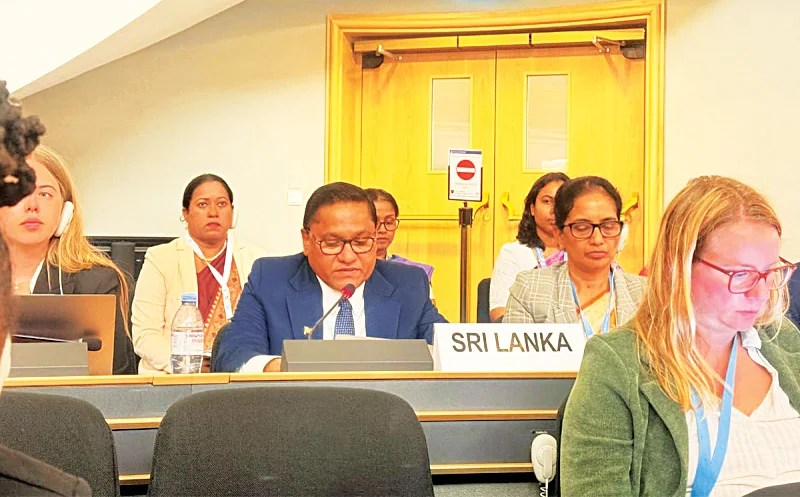
The government is preparing to meet the challenge of the UN Human Rights Council next month. A Sri Lankan delegation led by Foreign Minister Vijitha Herath is expected to attend the 63rd session of the UNHRC in Geneva, where the UN High Commissioner for Human Rights will present a written update on Sri Lanka. The government has already submitted its response to the advance version of the report prepared by the Office of the High Commissioner for Human Rights. The Foreign Minister, accompanied by officials from Colombo and Sri Lanka’s Permanent Mission in Geneva, is expected to explain the progress made on reconciliation, accountability and human rights. This is therefore an important moment for the government. It is an opportunity not merely to defend its record but to make new commitments.
The government has been criticised, as were its predecessors, for the manner in which it has dealt with past human rights violations, especially those connected with the thirty year war. The vexed issue of thousands of missing persons remains at the centre of this criticism. The government has sought to strengthen the Office on Missing Persons by providing it with additional staff and resources. It has also given support to the excavations at the Chemmani mass grave. Justice and National Integration Minister Harshana Nanayakkara has told Parliament that the government has allocated Rs. 57 million for the excavations and related legal work, though that figure has not been set against the cost of comparable forensic operations elsewhere.
The government also took the significant step of holding a national event in Jaffna to mark the International Day of the Victims of Enforced Disappearances. Minister Harshana Nanayakkara attended the event together with the Chairman of the Office on Missing Persons (OMP), Mahesh Katulanda, and other senior officials and political representatives. Their presence was meant to demonstrate the government’s commitment to addressing the issue. But on the victims’ side there is continuing dissatisfaction. The commemoration in Jaffna was met by a protest outside the District Secretariat, organised by families of the disappeared, who demanded to know what happened to relatives who, according to their accounts, surrendered to or were taken away by the military and were never heard from again.
Jaffna Protests
The protests in Jaffna are a reminder of the gap that remains between what the government is trying to do and what the victims expect. For these families, compensation and death certificates are not substitutes for knowing what actually happened to those they lost. The protests, and the police action taken against some of those who demonstrated, were reported by the international and Tamil media and by international human rights organisations, and overshadowed much of what the government had hoped to showcase at the Jaffna event. The OMP’s mandate is to establish the fate and whereabouts of missing persons, clarify the circumstances in which they went missing, and provide redress and assistance to their families. Accordingly, it has sought to verify complaints, remove duplicate entries, encourage people who have not yet made complaints to come forward, and facilitate compensation and other forms of assistance. The families of victims expect the OMP to do more to clarify the circumstances in which their loved ones went missing. An example would be the disappearance of 158 displaced Tamil persons from the Eastern University campus in Vantharumoolai, Batticaloa District, who were rounded up and forcibly removed in front of thousands of other similarly displaced persons, including the officer in charge Prof T Jayasingam.
The government has also increased the support available to families of the missing, and says it is accelerating the OMP’s investigations. But the scale of what remains undone is stark. There are around 11,000 complaints remaining to be investigated, according to the Justice Minister, while the OMP has reported that final information has been established in only 31 cases, communicated privately to the families concerned. On the government’s own figures, that puts the clearance rate for establishing fate and whereabouts at well under one percent of the outstanding caseload. There is a limit to what the OMP can do even with more resources and time. Its mandate is primarily to establish the fate and whereabouts of individual missing persons. It was not intended to produce the comprehensive, public account of the past that victims and the country as a whole require.
In 2015, the government headed by President Maithripala Sirisena and Prime Minister Ranil Wickremesinghe committed itself to establishing such a commission as part of a comprehensive approach to dealing with Sri Lanka’s past. Human Rights Council Resolution 30/1, which the government co-sponsored, specifically welcomed the proposed establishment of a “commission for truth, justice, reconciliation and non-recurrence”, together with an Office on Missing Persons and an Office for Reparations. However, the commitment to a truth-seeking mechanism was never fulfilled. The government should consider setting one up now. There is a growing feeling among Tamil people in the North and East that the government is failing to deliver on promises that are important to them. On issues important to them, they feel this is once again a Sinhala-dominated government like all the ones that came before.
Establish Truth
For the past two years the government has been concentrating on problems that it deems are important to the country as a whole such as the economy, development, poverty alleviation and corruption and criminality. However, the government needs to demonstrate that national unity means addressing the concerns of all communities, including those whose wounds from the war remain unhealed. Some of its own institutions have begun to act on this. The Office for National Unity and Reconciliation recently staged a drama entitled From Yakaweva to Nandikadal, depicting relationships between people that transcend the destruction caused by war. The drama portrayed the sufferings as well as the prejudices on both sides of the divide, from the Kebithigollewa bus bombing to the final days of the war around the Nandikadal lagoon. Its central message is that without forgiveness there cannot be reconciliation.
Particularly moving was the fact that the actors themselves came from families touched by the violence on both sides. The son of an LTTE Black Tiger leader and the daughter of an Army officer were among those who performed, alongside others who had experienced and survived some of the sites of carnage. The fact that a state institution is taking this message of reconciliation forward is itself a testament to the government’s openness to dealing with the past. A government institution can reach a population far larger than any civil society campaign could reach on its own, simply because the machinery of the state is so much more extensive. It is in this context that the government needs to give serious thought to setting up a Truth and Reconciliation Commission as the next step in the truth-seeking process. Special care will need to be taken to ensure that those who are appointed are not only politically non-partisan, but are acceptable to all the communities.
A Truth and Reconciliation Commission cannot by itself resolve all the wounds of the past. Nor can it replace criminal investigations or judicial proceedings where these are necessary. But it can provide something that existing institutions cannot provide on their own. This would be a comprehensive national process through which victims can be heard and the truth can be established. The general population needs to understand what happened, so that the country can begin to acknowledge its past without passing it on indefinitely to future generations. The government has already taken several steps. It is supporting the search for the truth at Chemmani. It has begun reaching out to families of the disappeared. Its own institutions are producing messages of reconciliation. But these are still not delivering the results that the victims and their families want. The next step should be to bring these efforts together to begin the journey from the missing to the missing truth, and from there to comprehensive justice.
A robe without recognition:
 by Anushka Kahandagamage
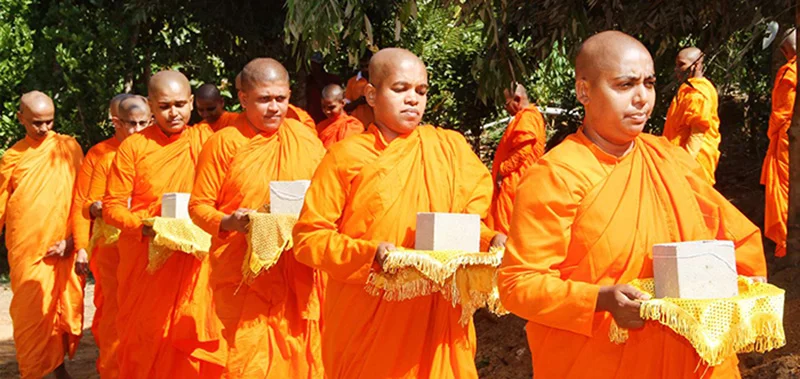
Education is the right of every child. Yet somewhere between childhood and the robe, that right becomes precarious for many Buddhist women in Sri Lanka, threatening not only their social standing, but their fundamental access to learning and the institutional discrimination they face. This piece is not about Buddhist disciplinary rules, which discriminates women, rather about how the state’s refusal to fully recognise bhikkhunis as bhikkhunis quietly determines what they are, and are not, permitted to learn.
Unlike dasasil mathas, who occupy a distinct and unofficial category within Buddhist renunciation, bhikkhunis belong to a formally ordained order recognised within Buddhist monastic tradition itself. Dasa sil mata means ‘ten-precept mother.’ They are women who observe the ten precepts (rather than the fuller Vinaya) and live a renunciant, celibate life, often in robes, but formal ordination has not translated into formal recognition by the state. Even after a Supreme Court ruling affirmed their right to be identified as bhikkhunis on their National Identity Cards, many still do not hold one. This stems from the hesitation of the male-dominated Buddhist hierarchy to recognise these women as part of the Theravada tradition, specifically refusing to validate their higher ordination. The identity card lists her title as Dasa Sil Mata. The ruling exists on paper, but they are still waiting for their identity cards. This is not a small bureaucratic oversight. It is the first link in a longer chain, one that reaches, eventually, into the classroom.
A Name Withheld
In Sri Lanka, there are 827 pirivenas, traditional monastic colleges that have, for centuries, served as the primary institutions of Buddhist education. Of these, only 12 are dedicated to female renunciants at all, and of those 12, just five serve fully ordained nuns specifically. The imbalance is stark on its face: 827 institutions for monks, five for fully ordained nuns. But the discrimination here is not only a matter of numbers, but it is also written into the very language used to name these institutions. Monks’ schools are called pirivena, a term carrying centuries of institutional weight, historical continuity, and state recognition under Sri Lanka’s education laws. Bhikkhunis’ schools, by contrast, are not called pirivenas at all. They are designated Buddha Sravika Meheni Adhyapana Ayathanaya (Institute for the Education of Buddha’s Female Disciples), a separate, parallel term that, however similar in function, withholds from bhikkhuni institutions the same legal and institutional status that the word ‘pirivena’ confers. Since there are ten-precept mothers, the institutes have not given the same name as the pirivena and lack the official as well as social recognition they deserve.
A Pattern a Century in the Making
Following the decline of the Buddhist nun (bhikkhuni) order after the Polonnaruwa period, the first woman to be robed again was ordained in 1905 as a dasasil matha. Although dasasil mathas have long served important religious and societal roles, they have historically lacked access to formal education. Unfortunately, today also, this pattern continuous to exist. Education, in this context, is never just about literacy or dhamma study. It is the currency of religious authority. A bhikkhuni denied equivalent education or educated in an institution the state refuses to name a pirivena, is denied that religious authority. She may know the Tipitaka as well as any monk yet will lack the institutional stamp that would make a lay community trust her reading of it. It was not indifference from the public; it was the accumulated effect of a system that has spent centuries teaching devotees, implicitly, that a woman’s robe does not carry the same weight as a man.
The female renunciants, both dasasil mathas and bhikkunis, although they wear robes, have not been regarded as individuals capable of comprehending or preaching dhamma, simply because they are women. This is most visible in education, the pirivena system, developed historically to train bhikkhus, offered dasasil mathas and bhikkunis no equivalent institutional pathway, no comparable curriculum, certification, or state recognition. This exclusion is notable because it runs counter to Sri Lanka’s broader educational trends, where women have historically outnumbered men in general university enrolment, the gap here is specific to monastic/religious education rather than a reflection of wider societal restrictions on women’s schooling. The country’s National Education Commission Policy has a section on Pirivena education. However, it does not address the education of Buddhist nuns, nor does it mention nuns within the policy. I recently learned that the policy was being reviewed, with a committee appointed by the Ministry of Education, scheduled to begin the review on the 1st of September. This presents an important opportunity to raise the issue of nuns’ education and advocate for its inclusion in the revised policy.
The monks and nuns’ education institutes are funded by the government, which allocates only 5,000–6,000 LKR per student for the entire year. This sum is grossly inadequate to cover even basic institutional needs, accommodation, food, learning materials, and the maintenance of the physical premises, let alone to support any meaningful expansion of the curriculum. With this level of funding, these education institutes are struggling to sustain themselves, and many are forced to rely almost entirely on external support simply to remain operational. This is where the disparity becomes most visible. As female renunciants have historically not been taken seriously, regarded neither as authoritative teachers of dhamma nor as figures worthy of the same reverence extended to their male counterparts, their education centres receive far fewer lay offerings than those for male renunciants. The result is a widening resource gap that mirrors and reinforces the very discrimination that caused it. Underfunded institutions produce fewer well-trained female scholars, which in turn reinforces the perception that female renunciants are less capable, a perception that then justifies continued underinvestment. Without deliberate intervention, either through equitable government allocation or targeted lay support, this cycle is likely to persist rather than resolve on its own.
Sitting Alone at the Bo Tree
I was at Jaya Sri Maha Bodhi in Anuradhapura, where a few monks sat preaching in the shade of the Bo Tree, each surrounded by small clusters of lay devotees. Nearby, I noticed a few female Buddhist renunciants, though I could not immediately tell whether they were bhikkhunîs or dasasil mathas, since visually, in their robes and demeanour, they appeared indistinguishable to an outside observer. Most of them sat alone, without the small crowds of devotees gathered around the monks nearby. This, too, is not incidental. Because women cannot enter the sâsana through the same pathway to ordination, available to men, many Buddhist female renunciants remain dasasil mathas, a status that carries the appearance of monastic life without its legitamised spiritual standing. They observe the 10 precepts, wear robes, and live in renunciation, yet occupy a lower, unofficial rung in the religious hierarchy, one that grants them neither the ordination lineage nor the institutional recognition given to monks. However, in June last year, the Supreme Court of Sri Lanka delivered a landmark majority ruling in SC/FR/218/2013, affirming that fully ordained Buddhist nuns have the fundamental right to use the title ‘Bhikkhuni’ on their National Identity Cards, legally recognising the de facto existence of the Bhikkhuni Sanga.
A Closed Loop
Social discrimination and educational discrimination feed each other in a closed loop. Because bhikkhunis have fewer, less recognised institutions, fewer are formally trained to a standard the public recognises. Because fewer are recognised as authoritative teachers, fewer devotees seek them out or support them. Because they attract fewer devotees, the education institutions of female renunciants remain under-resourced and easy to overlook in state budgets and in popular imagination alike. A dasasil matha or bhikkhuni without an active following also lacks the economic support that following brings, since in Sri Lanka’s monastic economy, devotees are patrons as much as students. The precarity is not only spiritual or bureaucratic; it is material, and it compounds across a lifetime spent in robes.
Until bhikkhunis’ education is named, funded, and recognised on the same terms as that of bhikkhus, this will remain a story not only about missing ID cards or under-resourced schools, but about an education system that continues to decide, quietly and continuously, which students are worth investing in. Education was supposed to be the one place where the women can speak for themselves, instead, for these women, it has become just another place where women have to ask permission to be heard.
(Anushka is a Sociologist who is working on contemporary Buddhist movements. She was formerly attached to the University of Colombo)
Kuppi is a politics and pedagogy happening on the margins of the lecture hall that parodies, subverts, and simultaneously reaffirms social hierarchies.
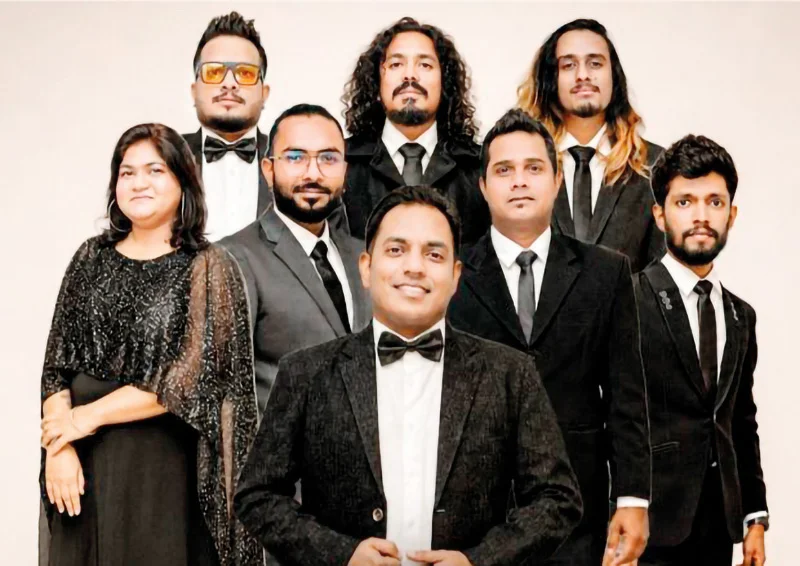
 Sri Lankan music knows no borders. Wherever our people go, our melodies follow — and our musicians make sure of it.
From Qatar’s Exit, to Melbourne’s EBONY, to Toronto’s Ceymphony, and Dubai’s Seven Notes, Sri Lankan bands abroad continue to keep the community connected to home, through song.
In July, Rajiv Sebastian set the Dubai stage alight with the band Seven Notes, creating an unforgettable night for Sri Lankans in the UAE. And the live-wire behind that magic? Niluk Uswaththa of Seven Notes.
Well, Niluk says he isn’t stopping there.
Now, Dubai is preparing for something truly special — ‘Memories of Milton – Live in Concert’, a grand musical tribute to one of Sri Lanka’s most beloved voices: Milton Mallawarachchi.
For more than a decade, Milton Mallawarachchi was a trending force in Sri Lankan music. With nearly 850 songs and over 35 albums to his name, he gave us melodies that became the soundtrack to our lives — songs of love, longing, and life itself.
On Saturday, 26th September 2026, from 8:00 PM to 3:00 AM, the Mercure Hotel, Al Barsha Heights, Dubai, will transform into a space of nostalgia.

Ranil Mallawarachchi; Carrying forward his father’s legacy / Yenuli Neriah
With the spotlight on Ranil Mallawarachchi — Milton’s eldest son, carrying forward his father’s legacy — along with Yenuli Neriah and Tharaka, the evening will certainly bring Milton’s timeless classics back to life … on one stage.
Seven Notes will do the needful, providing the live music that made Dubai dance before.
According to Niluk, this isn’t just a concert.
“It’s designed as a nostalgic musical journey — to bring cherished memories and beloved songs back to life,” he says.
And he promises: 26th September will be a night to remember.
In fact, Niluk Uswaththa has become a driving force for Sri Lankan entertainment in Dubai.
Through Seven Notes, he ensures the community always has something special to look forward to — especially when it comes to music that feels like home.
The success of these overseas shows naturally raises one big question back in Sri Lanka.
Yes, music lovers, in Sri Lanka, are keen to know whether the Seven Notes band will pop up in Colombo, sometime soon, for a live performance?
Music lovers, island-wide, will be watching … and waiting!

Cabinet aporives recruitment of Nursing Instructors for Nursing Schools under the Ministry of Health and Mass Media on Contract Basis
Signing agreement for the establishment of BIMSTEC Technology Transfer Facility in Sri Lanka
The cabinet approves agreement on mutual legal cooperation in criminal matters between the Republic of Sri Lanka and the Republic of Korea

Misbah-ul-Haq resigns as Pakistan selector after Test squad upheaval
Amendment of the Quarantine and Prevention of Diseases Ordinance No. 3 of 1897
Cabinet approves donation of USD One Million to the Government of Nepal

‘Dates have the highest sugar content to fight Coronavirus’

Sunday Island 27 December – Headlines

#SundayIsland 17th December – Headlines

Sunday Island – 28th March

Sunday Island Headlines – 21 March

Sunday Island – 21st February – Headlines
-

 News5 days ago
Eight politicians in drug kingpin probe
-

 Features3 days ago
“Wrap Me Up in My Blazer”— A Gentlemanly Bradby Reminiscence
-

 Business5 days ago
Sri Lanka opens up: A new season of direct connectivity
-
 Features7 days ago
Insights from Chieftains of Uva: Genealogy of two Kandyan Families – Part II
-

 Features5 days ago
Redefining ageing in Sri Lanka
-
 Latest News6 days ago
Nepal-Tibet floods: What happened, what caused them and who is missing?
-

 Editorial7 days ago
Warning of power cuts: El Niño and corruption
-

 Features7 days ago
Export diversification: Missing the wood for the trees – Part I