
News
Sallay’s wife appeals to Prez to cancel detention order

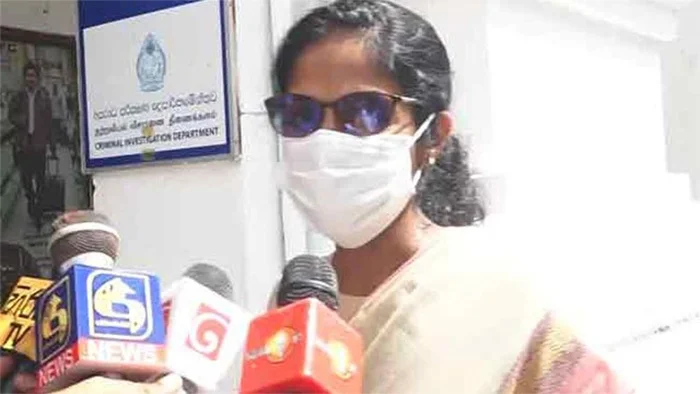
Mrs. Manori Sallay wife of Retired Major General Suresh Sallay yesterday appealed to President Dissanayake to cancel the detention order issued in respect of Sallay.
The text of her letter to the President:
I write to you today not merely as the wife of Retired Major General Suresh Sallay, but as a desperate wife, a distressed mother, and a citizen pleading for the preservation of a human life that is now hanging by a thread.
I respectfully refer to my previous communication requesting that the detention order issued against my husband not be extended. Regrettably, despite that appeal, the detention order was extended for a further period of ninety days. I now write once again, with far greater urgency, because I genuinely fear that unless immediate intervention is made, my husband may not survive his detention.
The Magistrate’s Court proceedings relating to my husband’s detention were called before the Fort Magistrate’s Court on 20 May 2026.
During those proceedings, the Learned Magistrate confirmed receipt of the Judicial Medical Officer’s report that had been prepared pursuant to the Court’s orders. Through our attorneys-at-law, we filed a motion on 21 May 2026 seeking access to the report, and the report was subsequently released to us on 29 May 2026.The findings of the Judicial Medical Officer and the recommendations of several medical consultants are deeply alarming. The report clearly states that my husband suffers from Post-Traumatic Stress Disorder (PTSD), is at a high risk of suicide, and has been subjected to torture and ill-treatment during his detention.The conclusions of the Judicial Medical Officer fundamentally corroborate what my husband has consistently maintained regarding the physical and psychological abuse he has suffered whilst in detention.
Disturbed by these findings, we immediately filed a motion before Court on 3 June 2026 with notice to the Honourable Attorney General and the Director of the Criminal Investigation Department. Despite being duly notified, neither representatives of the Attorney General’s Department nor officers from the CID appeared before Court on that date.
Given the seriousness of the circumstances, the Learned Magistrate adjourned the matter to the following day, 4 June 2026.
On that date, Counsel appearing for my husband urged the Court to immediately change his place of detention and to ensure that he be produced before a multidisciplinary panel of medical consultants in accordance with the final recommendations contained in the Judicial Medical Officer’s report.
Subsequently, on 6 June 2026, my son and my brother-in-law were permitted to visit my husband. During that visit, my husband informed them that he could no longer endure the inhuman treatment to which he had been subjected and that he had commenced a Fast Unto Death. He instructed my son to contact his lawyers to execute his last will and testament and stated his wish to donate his eyes after his death.
It was painfully evident that he was not in a proper mental state to make decisions concerning his own welfare. His mental condition had clearly deteriorated due to the prolonged abuse, isolation, and suffering he had endured.
Consequently, we immediately lodged a complaint with the Inspector General of Police detailing the circumstances and requesting urgent intervention and his transfer from the current place of detention.
Following a request made through SDIG CID Asanka Karawita, I was granted an opportunity to visit my husband. During that visit it became painfully clear that his physical condition was deteriorating rapidly.Yet officers present informed me that they had received no instructions to transfer him to a hospital despite his visible medical distress.
Alarmed by this failure to take immediate action, Counsel for my husband wrote to the Director of the Criminal Investigation Department, highlighting the State’s responsibility to safeguard the life of a detainee and requesting urgent hospitalisation and medical intervention.
Through media reports, we subsequently learned that my husband had finally been admitted to the National Hospital of Sri Lanka later that evening. We have since been informed that his blood sugar levels had fallen to alarmingly low levels at the time of admission.
Your Excellency, his condition remains extremely serious.
Today, the nutritionist attending to him informed me that the continuation of his hunger strike will inevitably affect his vital organs and may result in cardiac arrest.
However, the danger he faces extends far beyond the immediate consequences of fasting.
Following prolonged physical degradation, substandard conditions of confinement, and systemic abuse, my husband has now commenced a Fast Unto Death.
Combined with the severe conditions under which he has been detained, this places him at an acute day-to-day risk of catastrophic physiological collapse.
He is now suffering from severe malnutrition and muscle wasting. After more than one hundred days of being provided inadequate and poor-quality food, compounded by his current total fasting, his body has begun consuming its own remaining reserves. His muscles are visibly wasting away, and his overall physical strength has drastically diminished.
His vital organs—including his heart, lungs, and brain—are now at imminent risk of malfunction.
This danger has been compounded by prolonged sleep deprivation, continuous confinement in poorly ventilated conditions, and the denial of medication prescribed for his medical conditions. Family members have observed severe physical deterioration, including sunken eyes, extreme weakness, frailty, and visible physical decline.
He is further exposed to severe electrolyte imbalances and critical nutrient depletion. The complete cessation of food intake can rapidly produce dangerous disturbances in potassium, sodium, magnesium, and other essential minerals necessary for normal cardiac and neurological function.
Medical professionals have warned that these conditions place him at immediate risk of fatal cardiac arrhythmias, heart attack, stroke, acute kidney injury, and complete renal failure. Your Excellency, I write these words with a mother’s fear and a wife’s anguish.
I do not ask for special treatment.
I do not ask for immunity.
I do not ask that the law be set aside.
If my husband is alleged to have committed an offence, let him face due process before a court of law. Let the justice system determine his fate. If necessary, let him be incarcerated for the rest of his life.
But I beg of you, do not allow him to die in this manner.
No Sri Lankan citizen, irrespective of position, rank, political belief, or allegation against him, should be physically and psychologically broken to the point where death appears to him as the only remaining escape.
The Constitution, our laws, and the values of our nation place a sacred duty upon the State to preserve life and human dignity. My husband remains in the custody of the State. His safety, wellbeing, and survival are therefore matters for which the State bears ultimate responsibility. During my most recent visit, my husband informed me that the following measures would persuade him to discontinue his Fast Unto Death:
A) A formal undertaking by the Government regarding the abolition or meaningful amendment of the Prevention of Terrorism Act to strengthen safeguards and protections for suspects.
B) His transfer from CID detention to prison custody.
C)The transfer of the investigation to another arm of the Police Department over which the present Director of the CID exercises no command or control, as he genuinely believes that the investigation is being driven by a personal vendetta against him.
Your Excellency, I respectfully urge you to consider these matters not through the lens of politics, but through the lens of humanity.
I fear that every passing day may be my husband’s last. I fear that my children may lose their father whilst he remains in the custody of the State.
I fear that history may one day record that a man who served his country for decades was permitted to die not by judicial sentence, but through physical and psychological deterioration while awaiting justice.
As his wife, I am left with no greater authority than my voice and no greater weapon than my tears.
I therefore humbly and earnestly appeal to Your Excellency to intervene immediately, cancel the existing detention order, and ensure that my husband receives the urgent medical care, protection, and humane treatment that every human being is entitled to receive.
I make this appeal in the name of justice, compassion, and the sanctity of human life. Yours faithfully,






Easter Sunday carnage:
Investigations into the 2019 Easter Sunday terror attacks will not be halted due to protests, demonstrations or Satyagraha campaigns, Minister of Public Security Ananda Wijepala told Parliament yesterday (10), while alleging that investigators had gathered sufficient evidence to establish the involvement of former State Intelligence Service (SIS) Director, retired Major General Suresh Sallay, in a conspiracy linked to the attacks.
Making a special ministerial statement in the House, the Minister said that evidence uncovered during ongoing investigations indicated that Sallay had prior knowledge of the planned attacks and related extremist activities before the coordinated bombings that claimed more than 270 lives and injured hundreds of others, on April 21, 2019.
Wijepala claimed that three weeks before the attacks, Sallay had deployed four Muslim individuals to gather intelligence, including information on the number of worshippers attending mass at a church in Negombo.
According to the Minister, the principal individual among the four had been identified by witnesses to the CID as an ISIS extremist and had subsequently gone missing following the Easter Sunday attacks.
“There is evidence suggesting that Major General Sallay met the informant who had tipped off Army Intelligence regarding the attacks at a hotel in Colombo,” Wijepala said.
The Minister maintained that investigators had uncovered evidence indicating that Sallay had taken steps to prevent the disclosure of information that could have revealed crucial details relating to the attacks and the events leading up to them.
Referring to allegations that Sallay had been subjected to inhumane treatment while in custody, Wijepala rejected such claims, describing them as false and misleading.
He told Parliament that the former intelligence chief had been afforded all facilities and privileges due to a primary suspect under the law, including unrestricted access to legal counsel.
“The Magistrate personally visited Sallay to ascertain his health and wellbeing. At no stage did he complained of any inhumane treatment. Neither has he lodged complaints with any other relevant authority in that regard,” the Minister said.
Wijepala also disclosed that Sallay had thus far declined to provide investigators with the passwords to his laptop computer and mobile phone, a move he described as an attempt to obstruct the investigative process.
“He is acting in a manner that hinders the progress of investigations,” the Minister alleged.
The Public Security Minister maintained that the government remained committed to uncovering the full truth behind the Easter Sunday attacks and bringing all those responsible before the law, irrespective of their status or position.
Emphasising that the investigation would continue without interference, Wijepala said attempts to exert pressure through public protests or Satyagraha campaigns would not influence the course of the inquiry.
“The investigations into the Easter Sunday attacks will not be halted by any protests or Satyagraha,” he said.
By Saman Indrajith

A total of 267,138 children dropped out of the school system between 2018 and 2024, Prime Minister and Minister of Education Dr. Harini Amarasuriya informed Parliament yesterday (10).
Responding to a question raised by SJB Ratnapura District SJB MP Hesha Withanage, the Prime Minister said that the government did not possess definitive data on school dropouts from 2010 to the early part of 2017.
She explained that the figures for the period from 2018 to 2024 had been derived from annual school census reports using an internationally recognised methodology that takes into account student enrolment figures and dropout rates from Grade One to Grade Ten.
According to the statistics presented to Parliament, 38,839 students dropped out of school in 2018,
while the figure increased to 41,503 in 2019. In 2020, the number stood at 32,540 before declining further to 25,492 in 2021.
However, a sharp increase was recorded in 2022, when 52,596 students were identified as having left the school system. The figure remained high in 2023 at 50,345 before declining to 25,823 in 2024.
The Prime Minister cautioned that the figures did not necessarily indicate that all students classified as dropouts had completely discontinued their education.
She noted that some students may have transferred to schools in other provinces, enrolled in international schools, or migrated overseas with their families while continuing their studies.
Dr. Amarasuriya said that such cases could not be separately identified under the methodology used to compile the statistics and were, therefore, included in the overall dropout figures.
Addressing the causes of school dropouts, the Prime Minister said a range of factors contributed to students leaving the formal education system.
These included personal circumstances, school-related issues, family and economic difficulties, social influences, as well as students opting for alternative educational pathways and training opportunities, she said.
By Saman Indrajith
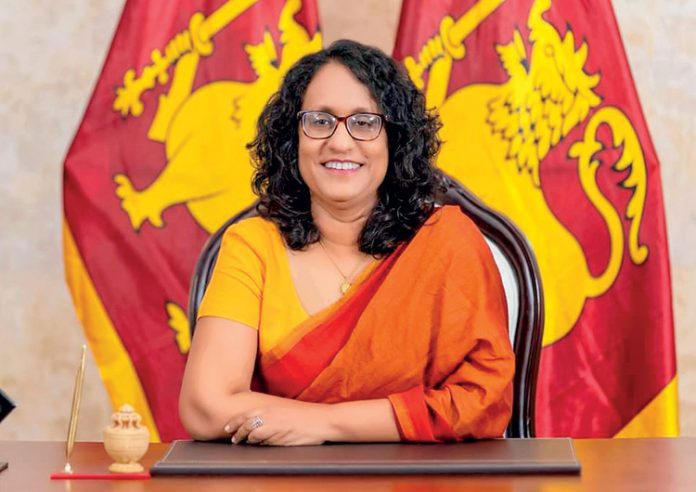
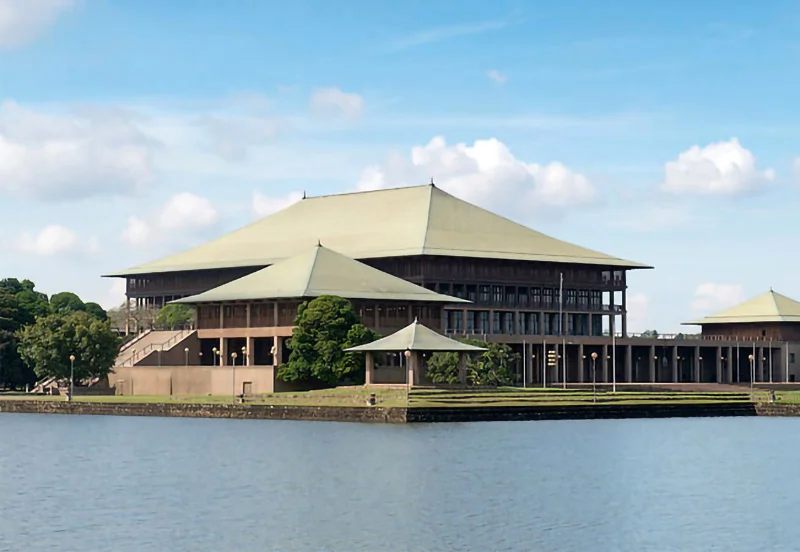
Prime Minister Harini Amarasuriya told Parliament yesterday that Provincial Council elections would not be conducted under the existing proportional representation system and would instead be held under a new electoral system.
Responding to a question raised by MP Ravi Karunanayake, the Prime Minister said there was no justification for holding elections without ensuring adequate representation for women and youth in Provincial Councils.
She said that the government’s position was to first finalise reforms to the electoral system before proceeding with polls.
The Prime Minister also provided a detailed breakdown of when the terms of Provincial Councils expired, noting that all nine councils had been without elected administrations for several years. According to her, the Sabaragamuwa Provincial Council term ended on September 29, 2017, followed by the Eastern and North Central Councils on September 30 and October 1, 2017 respectively.
The Central and North Western Provincial Councils ended their terms on October 08 and 10, 2018, while the Northern Provincial Council term ended on October 24, 2018. The Southern Provincial Council term expired on April 10, 2019, followed by the Western Provincial Council on April 21, 2019, and the Uva Provincial Council on October 8, 2019.
Amarasuriya said that under Section 10(a) of the Provincial Councils Elections Act No. 2 of 1988, the Election Commission was required to publish a notice of intention to hold an election within one week after the dissolution or expiry of a council, following a direction from the President.
However, she noted that the Election Commission had not issued such notices due to the absence of enabling legal provisions following subsequent amendments.
She further explained that under Section 3A of the Provincial Councils Elections (Amendment) Act No. 17 of 2017, the holding of elections is linked to the completion of a delimitation process. This requires the appointment of a Delimitation Committee by the President to define electorates within administrative districts and submit its report to Parliament, with elections to be held only after parliamentary approval.
The Prime Minister said the delimitation process has not yet been completed, which has prevented the conduct of Provincial Council elections under the revised framework.
Amarasuriya also informed Parliament that a parliamentary select committee had been appointed to examine and make recommendations on whether Provincial Council elections could be conducted under the previous electoral system through further amendments to existing legislation.
The committee, titled the “Select Committee of Parliament to look into and report to Parliament on the matter of selecting the Electoral System under which the Provincial Council Elections should be held and submit its proposals and recommendations in that regard,” comprises MPs Vijitha Herath (Chairman), Nizam Kariapper, Chandana Sooriyarachchi, Darmapriya Wijesinghe, Samanmali Gunasingha, Shanakiyan Rasamanickam, Lakshman Nipuna Arachchi, Mano Ganesan, Ranjith Madduma Bandara, Arun Hemachandra, Sunil Watagala and Muneer Mulaffer.
She said further decisions regarding the holding of Provincial Council elections will be taken based on the recommendations of the parliamentary select committee.

Canada introduces bill to ban social media for children under 16

Lutkenhaus, 17, upsets Olympic champion Wanyonyi in Oslo

An Everest guide’s miraculous survival raises questions for tourism industry

Whale graveyard dating back five million years discovered

Trump says US will hit Iran ‘hard’ again today

Showers will occur at times in the Western, Sabaragamuwa and North-western provinces and in Galle, Matara, Kandy and Nuwara-Eliya districts

‘Dates have the highest sugar content to fight Coronavirus’

Sunday Island 27 December – Headlines

#SundayIsland 17th December – Headlines

Sunday Island – 28th March

Sunday Island Headlines – 21 March

Sunday Island – 21st February – Headlines
-
 Features6 days ago
Power crept into the Sangha and is now tearing it apart
-

 Features6 days ago
Kondachchi wind farm and battery storage project to boost energy security, says Power Ministry Secretary
-

 News4 days ago
Women’s T20 World Cup 2026 warm-up: Chamari Athapaththu’s 94 helps Sri Lanka beat Pakistan
-
 Features6 days ago
Saudi Arabia sets new benchmark in Hajj management as 1.7 million pilgrims complete sacred journey
-

 News5 days ago
Asst. Manager, security officer arrested over Rs 30 mn snatch at Horana PB branch
-

 Editorial3 days ago
Probe Sallay’s complaint
-

 News4 days ago
Lankan-Canadian inducted to Toronto Sports Hall of Fame
-
 News1 day ago
Local firms move millions of dollars overseas for phantom imports: Govt.