
Opinion
When the decisive vote changes hands: Sri Lanka’s next electoral shift may already be underway

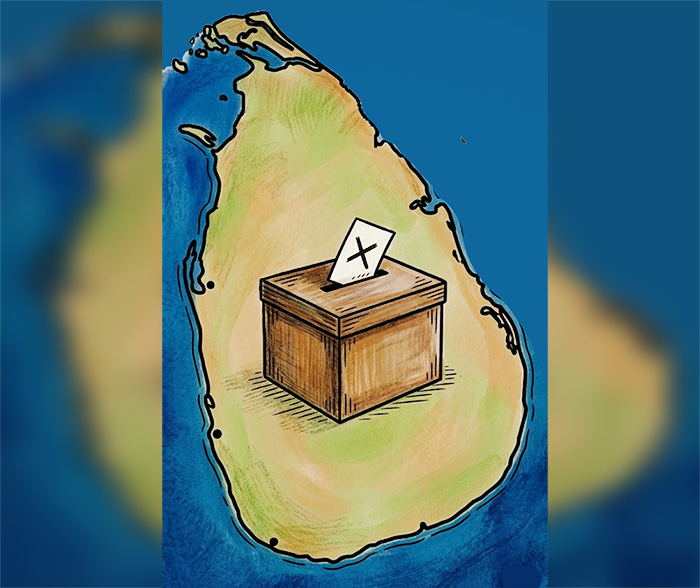
In the summer of 1789, as the French Revolution gathered momentum, delegates of the National Assembly assembled in Versailles to debate the future of France. The seating arrangement inside the chamber was not planned to shape political vocabulary for centuries to come. Yet it did. Those who favoured sweeping political change, greater equality, and the dismantling of inherited privilege gravitated to the left side of the hall. Those who defended the monarchy, established institutions, and traditional social hierarchies took their seats on the right. What began as a matter of convenience soon became a political metaphor. More than two centuries later, we still speak of the “left” and the “right” to describe competing visions of society.
Since then, the terms have evolved and acquired different meanings across countries and historical periods. Yet, the broad distinction remains remarkably durable. Ideologies associated with the left generally place greater emphasis on social, political, and economic equality, often advocating a more active role for the state in addressing disparities and expanding collective welfare. Ideologies associated with the right tend to place greater value on tradition, market mechanisms, authority, and various forms of social hierarchy, arguing that stability and prosperity emerge from preserving established institutions and incentives. Most political movements, of course, occupy positions somewhere between these poles, combining elements of both traditions in different proportions.
Few elections have altered the course of Sri Lankan politics as dramatically as the general election of 1977. Sweeping to power with an unprecedented five-sixths majority in Parliament, the United National Party ushered in a new political and economic era under the leadership of J. R. Jayewardene. He would later become the country’s first Executive President under a constitutional framework that vested extensive powers in the office. The changes that followed reflected a decisive move towards market-oriented reforms and a political outlook that leaned more to the right than anything Sri Lanka had previously experienced.
Yet even a political machine as formidable as the UNP’s could not hold power indefinitely. After nearly seventeen years of dominance, its grip on the electorate weakened. In 1994, the pendulum swung once again, bringing Chandrika Bandaranaike Kumaratunga. The victory was widely interpreted as a return to a more socially conscious and centre-left political vision.
What followed was not merely a change of government but the emergence of a recurring pattern in Sri Lankan political landscape. Since 1994, governments of varying compositions and personalities have risen to power with crucial support from parties and constituencies positioned on the left of the political spectrum. Whether through formal coalitions, strategic alliances, or ideological influence, the left has often provided the decisive electoral weight needed to secure victory. In many cases, without that support, the arithmetic of power would have looked very different.
Yet it is equally important to recognise what Sri Lanka has not become. Despite the enduring influence of left-wing thought, the country has never embraced an uncompromising far-left political project. Instead, successive governments have largely occupied a centre-left space, balancing market economics with welfare commitments, nationalism with social reform, and political pragmatism with egalitarian aspirations. The result has been a political landscape where power changes hands, parties rise and fall, and personalities dominate headlines, but the centre of gravity remains remarkably leftist. Sri Lanka’s electorate has repeatedly rewarded those who speak the language of social justice, even while stopping short of endorsing political extremes.
One possible explanation for this enduring centre-left tendency lies not in political parties themselves, but in the cultural formation of the electorate. For much of the period between the 1960s and the liberalisation of the economy in 1977–78, Russian literature occupied a prominent place in Sri Lanka’s reading culture. Affordable translations of the works of writers such as Tolstoy, Dostoevsky, Gorky, Chekhov and Pushkin circulated widely among students, teachers and ordinary readers. Alongside their literary value, these works exposed generations of Sri Lankans to questions of social justice, class inequality, collective responsibility and the moral obligations of society toward the vulnerable.
By the early 1990s, the generation that had grown up reading this literature had come of age politically. As they entered the electorate in larger numbers, they helped shape the contours of public opinion. Their voting preferences did not necessarily favour revolutionary socialism or radical left-wing politics. Rather, they appeared to support governments that combined commitments to welfare, social protection and egalitarian ideals with the practical realities of governing a developing nation. In this sense, the centre-left orientation that has characterised much of Sri Lanka’s political landscape since 1994 may owe as much to the country’s literary and intellectual culture as to the strategies of political parties themselves.
Yet there is an apparent paradox at the heart of this story. While successive governments often drew legitimacy from centre-left political ideals, their economic policies frequently moved in a different direction. Confronted by fiscal constraints, global economic pressures and shifting geopolitical realities, they operated within an international economic order largely shaped by market-oriented principles. Institutions such as the International Monetary Fund exerted considerable influence over economic policymaking, encouraging reforms associated more closely with liberalisation, fiscal discipline and market efficiency than with traditional left-wing economics.
It was thus a balancing act that defined Sri Lankan governance for decades after 1994: governments elected on promises of social justice and collective welfare, yet compelled to pursue economic strategies shaped by the imperatives of a global market economy. Politically, the country remained centre-left. Economically, it often travelled along a more market-oriented path.
Sri Lanka may have settled its political direction for the next few years, but the next truly decisive moment may arrive closer to 2030. By then, the composition of the electorate will have changed once again. A growing share of voters will belong to Generation Z and Generation Alpha, generations whose intellectual and cultural worlds differ markedly from those that came before them.
If the electorate that emerged in the 1990s was shaped, in part, by the values encountered in Russian literature and a reading culture that emphasised questions of social responsibility, collective welfare and inequality, the generations now entering political maturity have been formed by a different landscape altogether. Their influences are increasingly digital, global and instantaneous, are shaped more by algorithms and by social media feeds, content creators and transnational cultural currents. Many have grown up in a world where entrepreneurship, individual success, innovation and market-driven solutions occupy a far more visible place in public discourse.
This generational shift is unfolding alongside broader transformations in global politics. Across much of the world, including major powers such as the United Kingdom and the United States, contemporary political movements that emphasise markets, national interests, economic competitiveness, and stronger state authority have gained momentum. Whether these trends will find a lasting echo in Sri Lanka remains a question that deserves careful attention, not merely as an electoral matter, but as one intertwined with some of the defining challenges of our time.
Today, concerns of national sovereignty, security, strategic influence and even soft power are increasingly mediated through economic strength and market performance. Nations are judged not only by their political ideals but also by their ability to compete, innovate and secure their place within an interconnected global economy. Sri Lanka, still navigating the aftermath of economic crisis and charting its future development path, finds itself at the centre of these debates.
Against this backdrop, if the decisive vote is gradually passing from a generation shaped by the books that once filled the nation’s shelves to one shaped by the screens that now fill its hands, the question therefore does not simply become who will win the next election. It is whether the intellectual and cultural influences that shaped Sri Lanka’s centre-left political consensus can retain their hold on a new electorate formed by different experiences, different technologies, and different aspirations.
If every era is ultimately defined by the stories it tells itself, what story is the next generation of Sri Lankan voters already beginning to write? Will it move the centre of gravity towards a more market-oriented, centre-right vision? The answer may well determine not only the outcome of future elections, but the ideological direction of Sri Lanka itself.
By Viran Maddumage PhD (Reading), Macquarie University,
and Sanduni Rathnayake, AAL


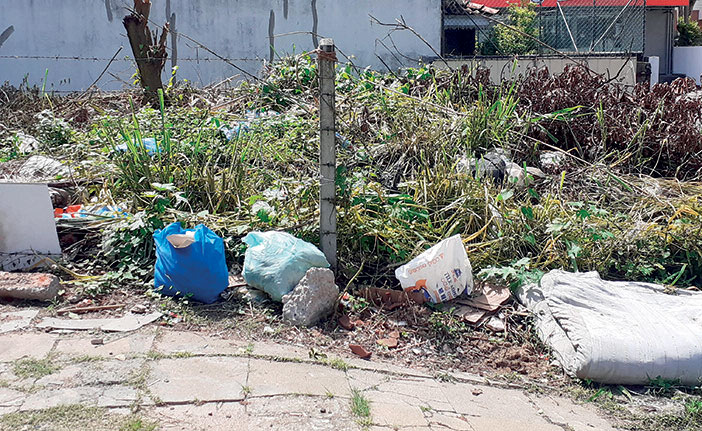
I am writing to draw public attention to a serious health hazard regarding a property located at elvitigala mawatha, belonging to the national housing development authority (NHDA)
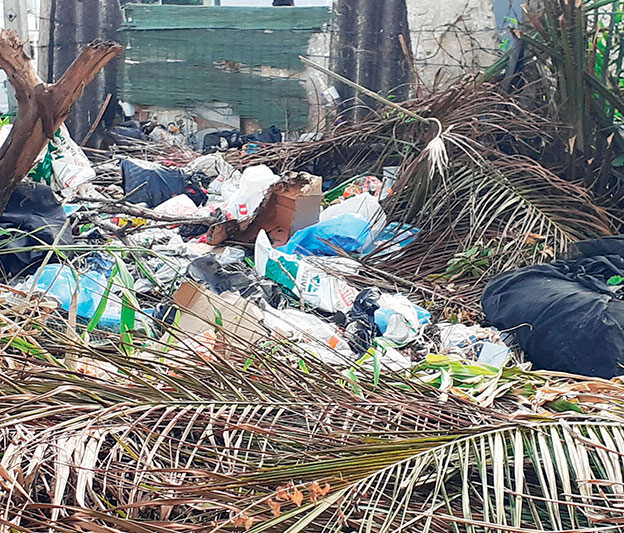
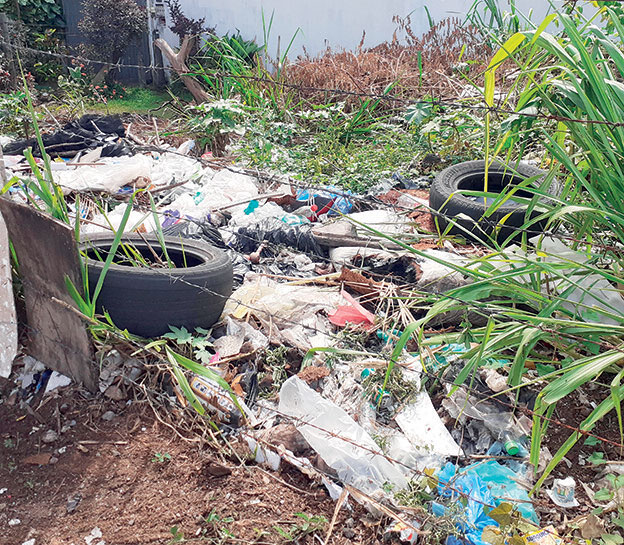
As seen in the attached photographs, the site is filled with waste that traps water and provides shelter for mosquitoes. Despite repeated complaints, no action has been taken to clean the premises.
This is extremely concerning given the current dengue situation. As of July 18, the National Dengue Control Unit reported over 73,500 dengue cases and 50 deaths nationwide this year, with Colombo being one of the worst affected districts. Residents, including children and the elderly living nearby, are now at direct risk.
PHIs have previously noted that legal action against government premises for dengue breeding is often blocked. If this continues, we are essentially allowing a government property to endanger public health.
I therefore urge the Colombo Municipal Council, the Ministry of Health, and the National Dengue Operations Centre to intervene immediately, clean this property, and hold the authorities concerned accountable before it leads to more dengue cases in our community.
Concerned Citizen
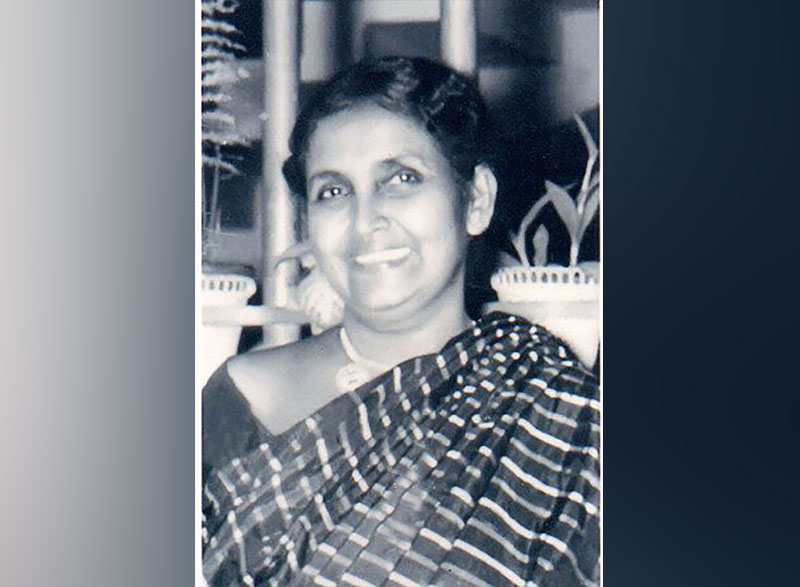
(Written by the late Lakshmi Nimalasuriya in July 1986 and published to mark Lucille’s 40th death anniversary)
She was a special friend. We first met when she was president and I was honorary secretary of a voluntary organization. We worked together in great harmony. She was a person of outstanding merit and enmeshed in dreams and goals which she pursued with unflagging zeal.
Her wealth and position made no impact of exclusiveness, nor the advantages she had as a politician’s wife make her dominating.
She was intelligent, receptive and warm hearted and an indispensable member of the All-Ceylon Buddhist Women’s Association and the All-Ceylon Buddhist Congress. She had the ability to respond to any situation and act with confidence – the criterion of leadership.
She was invited to serve on national councils sponsored by the government and was successful in redistributing the allocation of grants which had continued to be unequal and favoured. She was an active member of the Inner Wheel Club adept at fund-raising and was in great demand. She worked long hours in preparation and enlisted all she knew to make the Flag Days successful. She wooed the wives of diplomats for charity performances and the press for publicity. By her tireless efforts she enriched the ever-depleting coffers of these voluntary organizations.
The spiritual growth of young people was a subject close to her heart. She initiated the Youth Forum of the ACBC. She was indeed a happy mother at the time of her death as all her children had grown up to become good citizens.
She was a gifted and versatile person who could sing, write, draw, paint, design, sew and make lovely handicrafts with effortless ease. So, be it an important occasion like her children’s weddings, or mundane functions, fetes, annual general meetings, or at a simple pinkama in the temple or nunnery, or on a sacred day, her lovely creations which she spent hours in making in silent enjoyment would add that splash of gaiety and festivity which delighted us. She told me she learnt this love of decoration from her father who was an eminent Buddhist worker. Underlying all her work was her dedication to the Buddha Sasana.
The death of her teenage daughter early in life, and the death of her husband, who pre-deceased her by a few years, left her inconsolable and she with great difficulty reconciled herself to their loss.
She relives again in memory – Here she comes, a winsome smile on her lovely face, of graceful stature, her wavy hair drawn back, her favourite throatlet around her neck; with friendly charm, her hand out-stretched to help and bound to a generous heart, so she rightly claimed her name of endearment – she was to all Lucilla akka, sister Lucille.
May she soon attain her goal – the end of suffering – Nibbana.
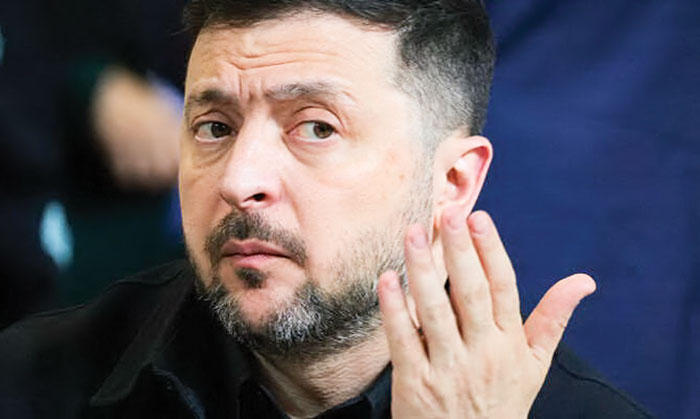
A leadership crisis that exposes the strategic fault lines of Ukraine’s war effort—and the competing imperatives of domestic command, Western pressure, and battlefield reality.
Ukrainian President Volodymyr Zelensky’s abrupt dismissal of Defence Minister Mykhailo Fedorov and his broader cabinet reshuffle have exposed a deep fracture within Ukraine’s wartime power structure. This extends far beyond personalities and into the strategic orientation of the state itself. What is unfolding is not merely a bureaucratic dispute but a crisis of command in a country prosecuting a high intensity, NATO-supported war against Russia.
On 16 July, protests broke out in Kyiv demanding the removal of Commander in Chief Oleksandr Syrskyi and the reinstatement of Fedorov. Smaller demonstrations occurred in Odessa, Lviv, Kharkiv, Lutsk, Dnipro, and other cities. These protests, which have continued for a week, signal a rupture within the prowar bloc that has sustained the Zelensky administration since 2022.
Antiwar sentiment did not drive the demonstrations, in which the “usual suspects” of US-backed “Colour Revolutions” took part. In this case, veterans, territorial defence networks, and upper middleclass “civil society” actors, who remain committed to the war’s continuation. Their demand for Fedorov’s reinstatement reflects a belief that Zelensky has lost operational coherence and strategic clarity. Placards bearing Fedorov’s name were, in effect, endorsements of escalating long range warfare against Russia, despite the catastrophic human toll already borne by both sides.
The political shock waves have reverberated through Ukraine’s Western patrons. The Mayor of Kyiv, Vitaly Klitschko, a major player in the 2014 “Maidan Coup” who is aligned with German strategic interests, condemned the firing publicly as a “big mistake,” while major Western media outlets described the move as “destabilising.” Behind the scenes, officials in Washington and Brussels viewed the sudden change with alarm. Such reactions reveal the degree to which Fedorov had become embedded in Western military technical planning, particularly in the domain of drone warfare, where Ukraine’s operations increasingly intersect with NATO intelligence and logistical support.
This conflict has emerged precisely as Ukraine intensifies drone strikes deep inside Russian territory and escalates operations against Crimea. Fedorov, appointed only six months ago, became the face of this strategy, celebrated by Western media as a “drone warfare mastermind” and criticised domestically for sidelining artillery procurement. His approach aligned closely with NATO’s interest in testing and refining asymmetric strike capabilities against Russia.
Zelensky’s subsequent hints that he may reconsider the decision underscore the precariousness of his position. His authority now rests on a fragile balance between Western expectations, domestic military factions, and a society exhausted by mobilisation. His consultations with both Syrskyi and Fedorov suggest an attempt to reassert control over a command structure that is no longer unified.
Fedorov’s postdismissal revelations sharpen the picture. His claim that Syrskyi and Chief of the General Staff Andrii Hnatov blocked reform initiatives systematically, and that Syrskyi enabled corruption, points to a structural clash between two models of warfare. The Western media has analysed the row as one in which Fedorov represents a Westernaligned, technologydriven paradigm emphasising drones, automation, and longrange strikes. It portrays Syrskyi as embodying an entrenched Sovietera command culture, reliant on artillery, mass mobilisation, and hierarchical control. Zelensky’s decision to side with Syrskyi is presented as a political calculation, preserving the loyalty of the traditional military establishment at the expense of the “reformist” faction.
However, Fedorov’s political alliances complicate this narrative. His cultivation of farright networks, including neo Nazi blogger Serhii Sternenko, reveals the darker undercurrents of Ukraine’s wartime coalition. Sternenko’s role in the 2014 Odessa massacre underscores how extremist actors continue to intersect with state structures, especially in moments of institutional fragmentation.
In actual fact, the power struggle reflects a contradiction between two elite strategies for managing subordination. Ukraine is a subaltern national state embedded in a wider hierarchy of imperialist power. Fedorov is tied to global centi-billionaires and Western technology platforms. His camp can look “more Western” because it is more integrated into transnational circuits of capital and war-tech. The apparent modernity of that model still carries dependency: it improves efficiency while deepening reliance on external monopolies. The war state becomes dependent on foreign-owned infrastructure, satellite systems, software, and elite relationships, which gives external capital leverage over military coordination and political priorities.
Syrskyi, by contrast, is closer to an older form of domestic elite power: the military-bureaucratic order linked to native oligarchic interests, procurement channels, and patronage. This is a more nationally rooted fraction of the bourgeois bloc, but not necessarily a more independent one, because Ukrainian oligarchic power has long been intertwined with Western finance, arms flows, and state restructuring.
The struggle between Syrskyi and Fedorov therefore reflects competing modes of dependency, and (although clearly the Western establishment favours the latter) not a clean split between “national” and “Western” camps. One route passes through transnational tech capital and managerial reform; the other through entrenched oligarchic-military command and domestic networks of influence. The clash is therefore not an isolated dispute but a symptom of an intra-elite struggle over how Ukraine should be governed as a dependent war economy. Neither side points beyond bourgeois rule; they are different management styles of the same subordinated state form.
Taken together, the crisis reflects a deeper geopolitical reality: Ukraine’s war effort is no longer anchored by a unified elite consensus. Instead, it is being pulled apart by competing military doctrines, Western strategic pressures, corruption scandals, and the exhaustion of a society asked to sustain indefinite mobilisation.
Vinod Moonesinghe, formerly chair of the Ceylon German Technical Training Institute and of the National Institute for Language Education and Training, serves as Convenor of the Asia Progress Forum.
By Vinod Moonesinghe ✍️

Sooryavanshi the star as India complete 3-0 sweep

US and Iran hit pause on strikes for second day

Showers will occur in the Western, Sabaragamuwa and North-western provinces and in Galle, Matara, Kandy and Nuwara-Eliya districts

Chamika, Colambage help Galle Gallants consolidate top spot

BASL challenges NPP MP to repeat false claims outside Parliament

Judges’ retirement age row: Govt.-BASL powwow on the cards

‘Dates have the highest sugar content to fight Coronavirus’

Sunday Island 27 December – Headlines

#SundayIsland 17th December – Headlines

Sunday Island – 28th March

Sunday Island Headlines – 21 March

Sunday Island – 21st February – Headlines
-
 Features1 day ago
MBS: The Man of the Last Laugh
-
 Features1 day ago
A Landmark Gathering of Minds: The Ceylon Journal Roundtable Revives the Spirit of Intellectual Dialogue
-
 Midweek Review5 days ago
Three high-profile alleged suicides shaping key investigations
-
 Latest News2 days ago
Develop a programme to allocate underutilised state land for investment by returning migrant workers – President
-
 Life style1 day ago
A proud Sri Lankan voice in Australian Parliament
-

 News2 days ago
Fort Magistrate orders arrest of MP Archchuna
-

 Editorial1 day ago
‘Cockroaches’ tame a mighty regime
-
 Editorial2 days ago
An indictment of all parties