
Opinion
Murder of Ehelepola family, Bogambara Wewa and Sightings of Wangediya

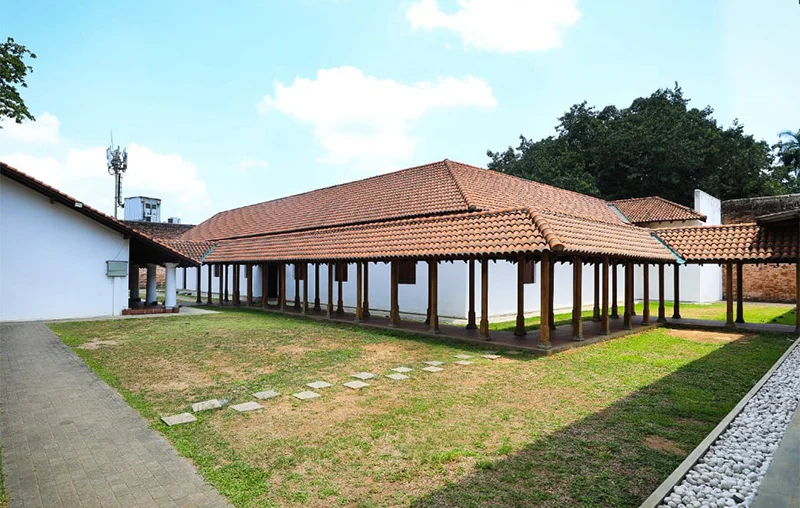
Preamble and the Accused
Ehelepola tragedy has twists and turns; I start with the African proverb, “Until lions have their own historians, the history of the hunt will always glorify the hunter.” In this story, hunters are the Kandy king, his first Adigar Ehelepola, and the British colonial government.
Within a few years of becoming king of Kandy in 1798, Sri Wickrama Rajasingha began to feel his unpopularity spread across the country and right under his nose among the Kandyan elites. He murdered captured British soldiers receiving hospital treatment in Kandy and let Major Davie die in captivity. He executed his Prime Minister, Pilima Talawa Sr., in 1812 for suspicion of colluding with the British, and, as John D’oyly revealed, was envious of the former’s alleged schemes to get his son married to the granddaughter of the late King Kirthi Sri Rajasingha (1747-1782) to establish a blood relationship to royalty.
The king then appointed Ehelepola, nephew of Pilima Talawe as the First Adigar. Continuing his wanton execution regime, he touched a nerve in Kandyans with the sacrilegious act of killing Buddhist monk Moratota Paranatala Unnanse, accused of spying for John Doyly, whom Gananath Obeyesekere called “Master Spy.” The King’s reign was an oppressive, oligarchical system consisting of himself, his family, the Chiefs, and some in the Buddhist sacerdotal fraternity in the Kandyan country.
Sri Wickrama Rajasingha was an illegitimate king, with a dubious claim to a direct royal bloodline, which weakened him as a ruler. As we know now, he was ruling the kingdom with borrowed time. Six months after the Ehelepola killings, he was deposed by the British, the empire-builder with its full power, passion, and double dealings.
The King had an irritable and short-tempered demeanour. In 1816, even as a prisoner of the British being conducted on board HMS Cornwallis, in the morning of the 26th day at sea, William Granville, the British Civil Servant heard him screaming with dreadful passion, hacking and hewing into pieces with a hatchet an extra bedstead in front of his cabin kept for him to sit occasionally. The reason for his fury was that one of his attendants had slept on it the previous night, disgracing his honour!
The Murders
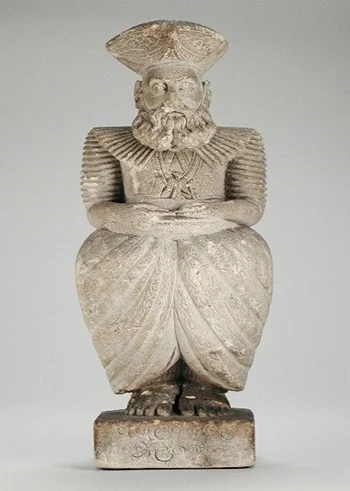
Ehelepola Nilame. Los Angeles
County Museum of Art.
The king was accused of Ehelepola murders, and Ehelepola Adigar stands as an accessory by failing to prevent the crime and willfully refusing to help the victims by abandoning the scene.
Headwinds of the crime started when Ehelepola Adigar, Dissave of Sabaragamuwa, was accused of the stabbing deaths of two koralas, under him. When the king ordered him back to Kandy for questioning, he refused. In May of 1814, the Adigar, fully aware of what the king, with his sinister bearing, would do to his family, sealed their fate by throwing away any chance of saving them, and escaped to Colombo seeking British protection.
The enraged king took hostage Adigar’s wife, Kumarihamy, and her four children, along with a few relatives, until the patriarch’s return. After hearing a rumour that the Adigar was planning to spirit away the family from the prison, the king, breaking principles of elemental justice, decided to put his family to death at a public event.
Ehelepola’s misogynist disposition is evident in an old Ola book, recently found in Padiyapelella. In his Mahanuwara Yugaye Aprakata Withthi by historian Chamikara Pilapitiya includes a statement Ehelepola made right before he returned to Kandy with the British army. He bemoaned the loss of his two children, probably the two sons. He added that they were like his two eyes, and, without them, he asked what the use of titles and a good life, referring to rumors that he was planning to get the kingship with British support. He said no word of sorrow for his wife and two daughters, who perished together with the two sons!
In Interior of Ceylon (1821), John Davy, the British Army Doctor (1816–1820), provided the most accurate description with firsthand information of the beheading of the children and the drowning of their mother. The vengeful king summoned Kumarihamy, her four children – two sons, 11 and 9 years old, a daughter, and a nursing baby, and the son of Adigar’s brother and three women to the execution stage near the Natha and Maha Vishnu devale by the palace.
After analyzing contemporary writings, including D’oyly’s Diary, Gananath Obeyesekere has determined the execution date as May 21, 1814. On this day, executioners brought implements of the crime – a wangediya (rice mortar) and a pestle. King then ordered them to decapitate the children first and place the severed heads in the wangediya. When the elder son Lokubanda dithered, his nine-year-old brother Maddumabanda stepped forward and uttered the now legendary words: “Brother, fear not. Let me show you how to die.”
The wadakayo decapitated the children and put their heads into the wangediya and handed the pestle to the agonizing mother. The king ordered her to pound the heads. If she did not, he threatened with an ultimatum – banishment in marriage to Rodiyas, the untouchables in the country, an unfathomable humiliation to her clan. Trusting it would benefit her husband, Kumarihamy declared she would do the unthinkable. With surprising courage, she began to pound the lifeless heads of her children. Some watching this catastrophe wailed, in silence, like driftwood on a deserted shore. A Chief fainted.
Henry Marshall, Surgeon of the British Forces (1808–1821), tells of the perfidious role of one Kandyan Chief who was present that day. When the king ordered the mother to pound the heads in the mortar, Kumarihamy first wavered. The Chief, who was a relative of her husband and supervised the execution, asked her to accept the king’s terms and save the family from the disgrace of living with a Rodiya clan. She did not require such encouragement. With her children slaughtered, soon to face the same fate herself, the only thing left to save was her self-serving husband and his malicious treachery for abandoning them, which she was probably not aware of at the time.
After listening to an eyewitness account, Major Forbes (1840) described the “fortitude and propriety of her conduct” by going through the “most awful scene to which any mother was ever subjected.”
Afterward, the wadakayo and slave women in the palace, carrying the remains of the children, led Kumarihamy and three women to the Bogambara Wewa, which the king could see from the palace.
Six months later, Governor Robert Brownrigg would write what happened next. The “woman herself and three more females, whose limbs being bound, and a heavy stone tied round the neck of each, they were thrown into a lake and drowned.”
King’s retributive justice regime crossed the boundaries of the 32-punishment realm under the murky and ancient Laws of Manu and Kandyan Code of Honor. Pounding heads of decapitated children in wangediya was not in those codes. For the king, it was a theater of death to warn anyone who dared to cross his path. In Discipline and Punishment: Birth of Prisons (1977, 1995), Michel Foucault wrote that such exhibitionist punishments as “the theatrical representation of pain.” But the deposed king, while aboard HMS Cornwallis, placed the blame on Kandyan laws in general, asking William Granville, “Did I make those Laws?”
Interestingly, in The Doomed King: A Requiem for Sri Wickrama Rajasingha (2017), Gananath Obeyesekere, with flimsy evidence, rules out Bogambara Wewa as the site of the drowning. He calls it a myth developed in popular stories like Purana Ehelepola Hatana, invented in the low country. He calls some informants of early writers of the Ehelepola story as “inventive mills, overloaded with falsities,” and no British account exists of Bogambara as the lake where the tragedy took place! But two decades before Purana Ehelepola Hatana, L. De Bussche wrote in Letters on Ceylon (1817) that the dead family was cast into the lower lake of Kandy. Davy was more specific. He wrote in 1821 that the women were “led to the little tank in the immediate neighborhood of Kandy called Bogambarawave [sic] and drowned.”
The alternative location Obeyesekere provides is another smaller tank north end of the city, Borawewa, near the present-day Katugastota railway tunnel. It was also closer to the Asgiriya Temple and the Royal Burial grounds, making it unlikely the king would execute prisoners and dump the bodies close to such sacred places. Obeyesekere seems to disregard Adigar himself, and Dissave of Wellassa, other Chiefs and eyewitnesses still living in Kandy who provided firsthand information to Davy and Henry Marshall.
Bogambara Wewa – The Place
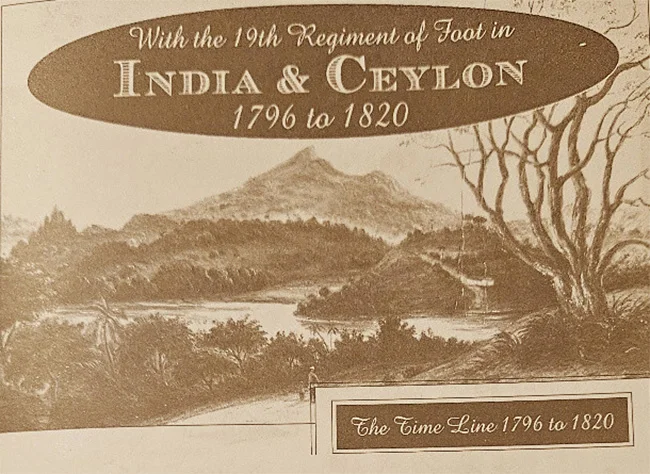
Bogambara Wewa (1796–1820). Green Howards Regimental Museum, London, reproduced in Mahanuwara Yugaye Aprakata Vitti (II) by Chamikara Pilapitiya (2018).
This Wewa, also known as Palledeniya Wewa, is believed to have been built by Rajasingha II (1635–1687). Robert Knox wrote in 1681 that the king made a bank of earth across a valley, far above a cable’s length (200m) and four fathoms high. To prevent erosion, builders made a ralapanawa (revetement) along the inner slope of the bund. He had a “banquetting house about a musket-shot from his palace” [sic] on a little hill by this pond.
In the stylish praise poem Parangi Hatana (c.1642), Bogambara Wewa is likened to the Buddhist cosmic lake Anotatta. Although Kandy Lake looks dandy, the former, with a storied past and the memory of its sepulchral encounter with the Ehelepola heartbreak, was entrenched in the public pantheon of city’s aesthetics.
When measured against the Kandy maps of Lt. Col. Henry Evatt (1768–1851) of Royal Engineers in 1816 reproduced in Nihal Karunaratna’s From Governor’s Pavilion to President’s Pavilion, and in Davy’s in 1821, this bund appears to cross the narrow valley separating Bahirawakanda range between the Police Station and a projection of the Hantana range behind the Education Office near the Railway station. Furthermore, the painting Bogambara Wewa (c. 1796–1820) shown in the image clearly shows a man and a boy walking on the bund of the wewa running in the direction where, in the distance, the distinctive summit of Hantana range is visible. The artist drew it looking towards the hospital, standing on the Pushpadana College slope of Bahirawakanda, behind the police station.
In 1817, De Bussche wrote that this Wewa covered about 6 or 8 acres. Contemporary maps show it occupied the general area bordered by sections of present-day streets named Colombo, Dalada, Yatinuwara, and the Police Station, and the elevated land where the now-decommissioned Prison Complex stands, and the Bund of the Kandy Lake. Except for a few ephemeral ponds scattered along the foot of the hills in the west of the valley, this Wewa remained the main source of water for the city until the Kandy Lake came on board in 1812.
Both lakes were fed by streams originating from Dunumadalawa forest on hills bordering the south side of the city and from Udawattakele in the North. It was unlikely the palace used water from the Bogambara Wewa since it was located uphill from the Wewa. However, as Knox wrote 135 years earlier, the king had water brought to the palace in ditches cut on mountain sides in the North and East and stored in “little ponds made with lime and stone and full of fish,” probably a well and a pond near the palace. One such pond is seen east of the Kundasale road, current Malabar Street, east of Maligawa, on the Dutch Map of 1766, reproduced in Aprakata Vitti. The 1816 map signed by Henry Evatt of the Royal Engineers shows a ditch originating from Kandy Lake to the moat in front of the palace. It then curves West, and goes North parallel to Trincomalee Street. On this map, Bogambara Wewa turns to the south and tapers off as a thin strip parallel to Old Colombo Road, the present-day Peradeniya Road.
Kandy was topographically too compact, surrounded by hills and two lakes in the middle. The area occupied by the Bogambara Wewa and fields below was the only direction the city could expand. Thus, after the British occupied it in 1815, one of their first tasks was to drain it to create more land.
The ensuing building boom in the city began soon. When Davy came to Kandy in 1817, Bogambara Wewa had already been drained. So, he wrote the city “standing on the border of an artificial lake made by the last king,” unquestionably referring to Kandy Lake (Kiri Muhuda). A few years later, Governor Edward Barnes (1824–1831) rode with Rev. Reginald Heber in 1825, proudly showing off another construction project a kilometer from the Kandy Lake – the 500-foot-long tunnel through the Aniwatta hills, a shortcut to the ferry at Halloluwa on the Mahaweli River. Building of the Pavilion (Governor’s Mansion) started around 1826 during Governor Barnes’ tenure.
Last Tango of the King and Adigar
 On January 10, 1815, Brownrigg declared war on the Kandyan kingdom. On February 11, eight months after the Ehelepola executions, the king fled Kandy. On the 12th, Major Willerman entered the city, followed by Governor Brownrigg on the 14th. Unlike later in 1819, when the Governor, as the new Lord of the land, returned to Kandy with Davy, on this inaugural day of entry, there was no pomp and pageantry with arches of white olas (gokkola) to receive him along the road from Gannoruwa. Immediately after, Ehelepola entered Kandy with Major Hook and joined Lieutenant Mylius and Ekneligoda pursuing the killer of his family. On February 18, they arrested the king and his family in a house near Medamahanuwara. The British escorted the king to Colombo, and 11 months later, banished him and his entourage to Vellore. He died there in 1832, aged 52.
To mollify the feared tempest of emotions in Kandyan people after deposing the king and ending Sinhala sovereignty, Governor Robert Brownrigg wrote in the official declaration to the Chiefs, reminding them of the king’s “bold contempt of every principle of justice, setting at nought all known grounds of punishment, dispensing with the necessity of accusation, and choosing for its victims helpless females uncharged with any offence, and infants incapable of crime.”
Two weeks after signing the Kandyan Convention, even before formal religious services for his family, Ehelepola informed the Governor that he planned to marry Pilima Talawe Jr.’s sister (widow of Migastenna Adigar) and asked for financial assistance for the wedding. Then, in April 1815, with wounded pride after being sidelined by the British, Adigar gave a mataka dana to 20 monks in memory of his family. His fantasy of becoming the “Deveni Rajjuruwo” did not materialize. Instead, the British gave him the feel-good title of “Friend of the British Government.” In 1818, the “friends” took him into custody. He was never charged but kept in confinement in Colombo. In 1825, he was banished to Mauritius and died in 1829.
Gananath Obeyesekere wrote that when Ehelepola was banished to Mauritius, Sinhala power was lost. Six decades after Adigar’s death, Lawrie wrote that the Ehelepola family line was extinct.
But the Adigar left it to history to judge what a cowardly and callous patriarch he was, having intentionally allowed his wife and children to perish at the hands of a roguish king’s executioners.
Sightings of Wangediya
After the bodies and implements used in the executions disappeared in the watery grave, the mood of the thickly knitted social, cultural, and superstition pathologies of Kandyans undoubtedly prevented any chance of naturalizing the wangediya, by saving it as a household item, or relic of the Ehelepola saga. It was a heartbreak and a cultural shock, painful, grisly, to give this object of murder a place within a residential confine.
But nine decades later, the first written account of the rice mortar used in the killings appears in A.C. Lawrie’s 1896 Gazetteer of the Central Province (Vol. I). He refers to the Kandy DC case number 30962, where a Malay named Sadim Kumba had stated to the Temple Land Commissioner that, in 1843, on land close to the new police station, he saw the stone trough used in the Ehelepola killings, and, in 1858, it was in the Kandy Pavilion.
This episode seems to have continued later with the alleged involvement in it of a T.B. Paranathala. In 1895, he was a Clerk in the Kandy District Court and was appointed as an English-speaking Special Juror (Gov. Gazette of 1895, Part II, p. 43). He probably had come across Kumba’s evidence, and, knowing its historical value, could have related it to Lawrie, who was a judge in Kandy at the time and working on the Gazetteer, which came out a year later.
When the construction of the police station began around 1843, workers moved a lot of earth in and out of the adjoining empty lake bed and its shoreline, and that it is possible to expect the chance of stumbling upon items buried in the former lake floor reappearing.
Sadim Kumba may have been privy to this information for two reasons. He was probably either part of the construction crew on the police station project or, as a boy growing up in the city, may have joined the crowd that followed the Ehelepola ladies on their last journey and saw the spot where wangediya was rolled down the bund.
If what Kumba saw is true, after the way the city cried seeing the executions, and as Brownrigg wrote then that Sinhalese are a “Superstitious Race,” it is incomprehensible that any sane person would take home a bloodied wangediya.
Thus, all physical evidence of the bloody Ehelepola episode, too, remained buried in the watery grave. Therefore, it was not until three decades after the wewa was drained that the British had any contact with what was buried in the lake floor, when wangediya surfaced perforce during grading work on the new police station site.
The British also feared that if remains of his family were to resurface, Ehelepola Adigar, remarried and living comfortably in retirement, but still a formidable character in Kandyan affairs with the title of Maha Nilame, though under a cloud of suspicion, would be upset, and create political instability by regrouping friends to take retribution against the chiefs who sided with the king.
With the scars of the 1818 revolt still in mind, following the 1843 discovery, the British would strategically remove the wangediya to the Pavilion, away from the public eye to prevent rekindling of sentiments among the Kandyans until after 1858, when it disappeared from the pavilion.
However, Chamika Pilapitiya, who inspected ola manuscripts and listened to oral histories in Kandyan country, had shared new insights into the wangediya saga with me. According to him it was found in an Ala Kola Landa (shrub land). A Muhandiram in a Malay soldier phalanx then took possession of it, washed, and used it at his home. His son Cader, who inherited it, sold it to a T. B. Paranathala Nilame. In 1929, it changed hands again, this time to Dr. J. W. Artigala, as stated by M. Malius de Silva.
If this story holds true, in three instances starting from 1843, three generations of Malay families – Kumba, Malay Muhandiram, and his son Cader in Kandy – were in contact with the wangediya in some form or another until early 20th Century, when it changed hands with Paranathala.
In conclusion, I implore scholars at the National Museum, Kandy Museum, and Ehelepola Museum to follow up on this lost trail. Because this wangediya is the only object now existing out here to have had contact with, and heard cries of, the eponymous family 211 years ago at Deva Sanhide, a stone’s throw from Ehelepola residence. If the museum can secure it, it is a solemn and endearing gesture to this family, now only admired as wax figures, standing in silence, unable to tell their story.
Only then can we write the last coda for the Ehelepola Requiem.
Lokubanda Tillakaratne writes about the Ethnography of Nuwarakalaviya.
by Lokubanda
Tillakaratne



After nearly 77 years of wildlife conservation, Sri Lanka must strengthen the institutions, professional leadership and political will needed to safeguard its natural heritage for generations to come.
By Dilum Alagiyawanna
Sri Lanka has a long and proud history of protecting its natural heritage. Generations of wildlife officers, forest officers, scientists, researchers, field staff and conservationists have worked, often under difficult circumstances, to protect our forests, wildlife and ecosystems. Their contribution deserves recognition and respect.
One important milestone in this journey came in October 1949, when the Wildlife department was established as a separate institution, following the Fauna and Flora Protection Ordinance of 1937 and the expansion of the country’s wildlife reserves. The creation of a dedicated department reflected an important recognition of the time: wildlife conservation required specialised institutional attention.
Today, nearly 77 years after its establishment, Sri Lanka has an opportunity not simply to reflect on that institutional journey, but to consider what kind of institutions and leadership we need for the next 75 years.
This is not an argument about the individuals currently holding positions in our conservation institutions. Nor is it intended to question the commitment, professionalism or sacrifices of the many public servants who have served these institutions over the years.
It is a broader institutional question.
What kind of leadership does Sri Lanka need to protect its natural heritage in the 21st century?
The issue is not who occupies a particular position today. It is whether our system of identifying, developing and appointing leaders is designed to meet the conservation challenges of tomorrow
A Changing conservation landscape
When many of our major conservation institutions were established, the principal challenges were relatively straightforward: establish protected areas, prevent poaching, enforce wildlife legislation and protect forests and wildlife from direct exploitation.
Those responsibilities remain fundamental.
But conservation today is considerably more complex.
Habitat fragmentation, expanding infrastructure, human-elephant conflict, climate change, invasive species, pollution, wildlife disease, road mortality, unplanned tourism and competing demands for land and water are placing increasing pressures on ecosystems.
Conservation can no longer be treated as an isolated environmental concern.
A highway can fragment a wildlife habitat. An irrigation project can alter an ecosystem. Poorly planned tourism can degrade a protected landscape. Agricultural expansion can affect wildlife movement. Climate change can alter species distributions, water availability and ecosystem resilience.
Conservation therefore intersects with agriculture, irrigation, energy, transport, tourism, disaster management, climate policy, land-use planning and national economic development.
It has become a multidisciplinary national policy challenge.
Beyond administration: What conservation leadership requires
There is nothing inherently wrong with a career public service.
Sri Lanka needs a professional, impartial and experienced public administration. Administrative knowledge, institutional memory and an understanding of government procedures are indispensable to the functioning of the State.
The question is whether administrative experience and seniority alone should be the principal criteria for leading institutions entrusted with complex living ecosystems and irreplaceable natural capital.
I believe they should not.
Leadership of major natural-resource institutions should combine administrative competence with scientific and technical understanding, field experience, strategic thinking, integrity, sound judgement and a demonstrated commitment to conservation outcomes.
This is not an argument for automatically replacing administrators with scientists. Nor is personal passion for nature, by itself, sufficient.
What Sri Lanka needs is mission-driven professional leadership.
A person leading a conservation institution should understand not only how to administer a government department, but also why that institution exists, what ecological outcomes it is expected to achieve and what may happen if those outcomes are not achieved.
Dr P. E. P. Deraniyagala: A legacy of scientific leadership
Sri Lanka’s own history provides a remarkable example of what can happen when scientific expertise, intellectual curiosity and institutional leadership come together.
Dr P. E. P. Deraniyagala was a zoologist, palaeontologist and naturalist whose contribution to Sri Lanka’s natural heritage extended far beyond the formal responsibilities of a government position.
He was appointed Director of the Colombo Museum in 1939 and, following the reorganisation of the museums, became the first Director of the Department of National Museums, a position he held until his retirement in 1963. His scientific work ranged from Sri Lanka’s living fauna to fossil elephants and other extinct prehistoric mammals.
It lies in what he brought to that position.
He brought scientific curiosity, intellectual independence, research capability and a lifelong commitment to understanding Sri Lanka’s natural heritage.
He did not simply administer an institution concerned with heritage. He contributed to the body of knowledge upon which our understanding of that heritage depended.
That is an important lesson for today.
Our conservation institutions must not merely administer conservation programmes. They must increasingly become knowledge-driven institutions capable of generating, interpreting and applying scientific evidence to management decisions.
From institutional continuity to institutional renewal
After nearly 77 years of experience, the appropriate response is not to criticise or dismantle the institutions that have served the country.
It is to ask how we can make them stronger, more scientifically capable, technologically advanced and better equipped for the next 75 years.
The challenges of 2026 are vastly different from those of 1949.
Satellite remote sensing, GIS, GPS telemetry, camera trapping, drones, genetic analysis, artificial intelligence and ecological modelling can transform how wildlife and ecosystems are understood and managed.
But technology alone cannot transform conservation.
Institutions need the scientific capacity to interpret information, the field capacity to collect reliable data and, above all, leadership capable of turning evidence into timely decisions.
A capable leader, however, also needs an institution with adequate resources, professional autonomy, scientific capacity and the authority to act. Leadership reform therefore cannot be reduced simply to changing individuals. It must also strengthen the institutional environment in which those individuals operate.
From species management to ecosystem stewardship
Sri Lanka must also move beyond a narrow concept of wildlife management.
An elephant is not simply an animal to be managed when it enters a village.
A leopard is not simply a species to be protected when a conflict occurs.
A forest is not simply a designated area on a map.
Each exists within a larger ecological system.
Effective conservation therefore requires landscape-level thinking: protecting habitats, maintaining ecological connectivity, securing watersheds, managing human activity and ensuring that development decisions properly account for ecological consequences.
Conservation expertise must therefore be incorporated into national development planning before decisions are made, rather than being brought into the process after environmental conflicts have already emerged.
Preventing conservation conflicts before they reach the courts
There is another reality that cannot be ignored.
For decades, conservationists, environmental organisations, researchers, professionals and concerned citizens have repeatedly found themselves having to seek administrative, political and sometimes judicial intervention when environmental concerns have not been adequately resolved through normal institutional processes.
The courts have consequently become an important safeguard for environmental protection.
But this should make us ask a deeper question.
Why should citizens repeatedly have to go to court to protect a forest, wildlife habitat, wetland or other environmentally sensitive area when the State already has institutions, laws, scientists and regulatory mechanisms designed to address these matters?
Judicial intervention is an essential component of a democratic system and an important safeguard for the public interest. But courts should not have to become the primary mechanism through which conservation policy is resolved, case by case.
A judicial determination necessarily operates within the legal and evidentiary framework before the court. It cannot substitute for a scientifically informed conservation policy or a strong institutional mechanism capable of identifying and resolving environmental risks at an early stage.
The objective should therefore be to build institutions strong enough to prevent many of these disputes from reaching the courtroom in the first place.
Conservationists and environmental organisations should ideally be able to engage with government institutions early in the decision-making process, supported by credible scientific evidence and transparent procedures, rather than being forced into the role of permanent opponents of the State.
Leadership that gets decisions right
This is precisely why Sri Lanka needs conservation leadership with the knowledge, independence, judgement and courage to make the right decisions at the right time.
Good conservation leadership is not simply about enforcing the law after a conflict has emerged.
It is about anticipating problems, understanding ecological consequences, identifying risks early and taking scientifically sound decisions before an issue becomes a political, social or legal dispute.
Sometimes the right decision may require saying no.
Sometimes it may require proposing a better alternative.
And sometimes it may require bringing scientists, communities, development agencies and political decision-makers together early enough to find a solution that protects both the public interest and the environment.
This is not about confrontation with governments or development.
It is about preventing unnecessary confrontation by getting the decision right in the first place.
The right leader can prevent a conservation problem from becoming an administrative problem, an administrative problem from becoming a political problem, and a political problem from ultimately becoming a legal dispute.
The best conservation decision is often the one that prevents the conflict from arising in the first place.
Conservation requires political will
Strong professional leadership, however, is not enough.
Conservation also requires political leadership with the vision, commitment and political will to support the right decisions, particularly when they may be difficult or politically inconvenient.
India’s Project Tiger, launched in 1973, provides a compelling example. The Government of India established the programme in response to the serious decline of tiger populations, creating a national conservation initiative that combined scientific management, protected areas and strong political commitment.
Indira Gandhi’s interest in environmental protection and her government’s support helped create the political conditions for major conservation initiatives during that period.
The lesson is not that political leaders should run conservation institutions.
It is the opposite.
Political leadership must create the space, authority and support for professional conservation institutions to do their job properly.
A scientifically sound decision made by a conservation institution can achieve little if political leadership is unwilling to stand behind it. Conversely, political will, working together with scientific and professional leadership, can turn a good conservation idea into a transformative national programme.
Sri Lanka needs both sides of this equation:
professional conservation leadership capable of making the right decisions, and political leadership with the will to support those decisions in the national interest.
The ideal relationship is not political interference in conservation.
It is political commitment to evidence-based conservation.
Natural Heritage Is National Capital
Sri Lanka’s natural resources should also be recognised as national capital.
Forests support water security.
Wetlands provide natural flood protection.
Healthy watersheds support agriculture and hydropower.
Biodiversity supports tourism.
Marine ecosystems support fisheries.
Intact landscapes provide resilience against climate-related disasters.
When these systems are degraded, the country incurs an economic cost.
The question should therefore not simply be:
How much will conservation cost?
It should also be:
How much will it cost Sri Lanka if we fail to conserve its natural capital?
This is why conservation expertise must be integrated into national development decision-making from the beginning.
Choosing the leaders for tomorrow
Sri Lanka does not lack people with knowledge, experience and commitment.
Our universities, research institutions, wildlife and forest services, professional organisations and civil society contain scientists, researchers, field practitioners and conservationists with considerable expertise.
What is needed is a system that allows this expertise to contribute more effectively to institutional leadership.
Future appointments to senior positions in natural-resource institutions should therefore consider more than administrative seniority.
They should consider:
Scientific and technical competence
Conservation and field experience
Strategic leadership
Institutional management capability
Integrity and independence
Understanding of communities and stakeholders
A demonstrated record of achieving meaningful outcomes
Such a system would not weaken the public service.
It would strengthen it by bringing administrative excellence and conservation excellence together.
The Wildlife Department is a useful lens through which to examine this broader question, but the issue extends far beyond wildlife. It concerns every institution entrusted with Sri Lanka’s forests, biodiversity, wetlands, coastal ecosystems, marine resources and other forms of natural capital.
What should Sri Lanka’s conservation institutions look like for the next 75 years?
Sri Lanka should be proud of the conservation institutions it has built since the middle of the last century.
But institutional pride should never become institutional complacency.
The establishment of the Wildlife Department in 1949 was itself an example of institutional adaptation. The country recognised that wildlife conservation had become sufficiently important and specialised to require a dedicated institution.
The same principle applies today.
The conservation challenges of 2026 are vastly different from those of 1949.
The answer is not to abandon what was built.
It is to evolve it.
We need conservation institutions that are stronger, more scientific, more innovative and better equipped to influence national development decisions.
We need leadership selection systems that recognise conservation as a specialised professional responsibility.
We need a public service in which administrative excellence is complemented by scientific expertise, field experience and a genuine commitment to conservation outcomes.
And we need political leadership with the vision and will to recognise that protecting natural capital is not an obstacle to national development, but an essential condition for sustainable national prosperity.
This is not about replacing individuals.
It is about building a better system for the future.
It is not about weakening existing institutions.
It is about strengthening them for the challenges ahead.
And it is not about choosing between development and conservation.
It is about ensuring that development does not destroy the natural capital upon which Sri Lanka’s long-term prosperity depends.
After nearly 77 years of dedicated wildlife conservation, perhaps this is the right moment to ask a fundamental question:
What should Sri Lanka’s conservation institutions look like for the next 75 years?
The answer should not reject the past.
It should be an ambitious evolution of it.
Because when the next generation looks back at our time, they will not judge us simply by how well we administered the institutions we inherited.
They will judge us by what forests remained standing, what species survived, what ecosystems remained intact, and whether we had the wisdom and courage to pass on Sri Lanka’s extraordinary natural heritage in better condition than we received it.
Author: Dilum Alagiyawanna is a telecommunications engineer turned environmental and wildlife conservationist, citizen scientist and wildlife documentary filmmaker. His work bridges science, public policy and sustainable development, with particular emphasis on the long-term conservation of Sri Lanka’s elephants and other threatened species.
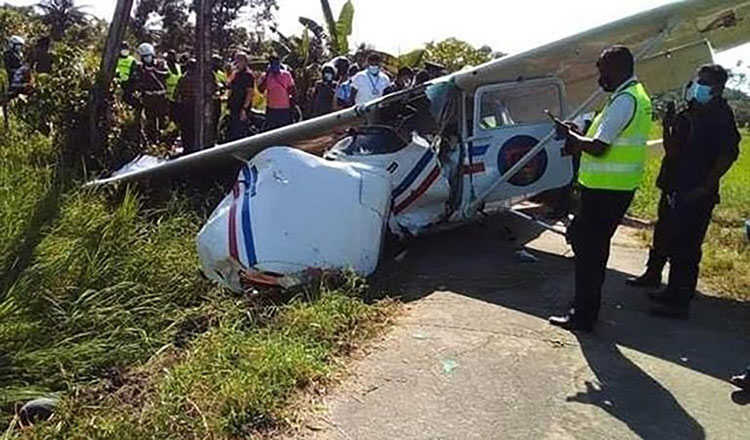
On Monday 27 December 2021, according to a Flight Safety Foundation narrative, “Cessna 172L 4R-GAF (ex 4R-HDC) of Sakurai Aviation crash landed in a paddy field in Paththayam Watta, Kimbulapitiya, Negombo in the Gampaha district close to Bandaranaike International Airport (VCBI) after the aircraft suffered an engine RPM fluctuation and subsequent engine failure. Three of the four occupants were injured. The charter flight was on its way to Koggala Airport (VCCK) from Sigiriya Airport (VCCS) when the problems started to occur. It had initially taken off from Ratmalana Airport (VCCC) and was supposed to land there after departing Koggala Airport (VCCK). The flight was going to make an emergency landing at Bandaranaike International Airport (VCBI) but while the aircraft was descending the pilot in command informed the controller that he had no control over the engine power. During the final approach to runway 22 the pilot in command then declared a “MAYDAY” call and the aircraft crash landed soon after.”
The touchdown itself at the paddy field was safe but due to a concrete road, which was not visible from to air at low level and running across the field, the nose wheel hit it and broke off creating the destruction and injury.
With the economic recovery, the present government has started reconstructing the highways and expressways that were suspended in the recent past. In countries like the United States of America (USA) there are straight stretches of expressways and highways, at regular intervals, where light to medium size aircraft could safely land in an emergency unlike the accident described above. Not only that, that particular stretch of road is maintained by the local Regulating Authority like the Federal Aviation Administration (FAA) in the case of the USA.
A Safe Landing on an Expressway in India.
The Sri Lanka National Aviation Policy of 2017 also recommends that there should be helipads at regular intervals along the expressways/ highways to facilitate medical evacuation in case of motor accidents. It should be noted that the Minister in Charge of Aviation and Highways is one and the same
Will the Government spare a thought for safer multimodal transport especially when there is a push to make Domestic Aviation available for tourism? Or will it be just another pipe dream?
Capt. G A Fernando
Former member of the Accident Investigation Team, Civil Aviation Authority, Sri Lanka.(CAASL)
Immediate past President of Aircraft Owners and Operators Association, Sri Lanka. (AOAOA)

by Geedreck Uswatte-aratchi,
B.A.(Cey.), Ph.D. (Cantab.)
In my first year at Peradeniya, I lived in Room 54 on the ground floor of the first quadrangle of Ramanathan Hall. In room 55 lived the prize-winning short story writer Somapala Wijesinghe, in his second year. On the first night, I walked a bit late to dinner to avoid the fierce raggers. As my luck would have it, there was a short man who barked out, ‘You fresher, what school do you come from?’ ‘From Kuliyapitiya Central School’, said I, meekly. The short man laughed loud derisively, ‘Where the hell is that? You have no business to come to this hallowed place. You look starved. Go and eat, I will deal with you in time.’ I was scared and hungry. So did I meet my first and long-lasting friend in Peradeniya. Haris read history under Ray Chaudhry, Sinha, G. C. Mendis and Lakshman Perera. The brilliant historians of Peradeniya were yet to come. I read Economics in the Takaran Shed School on the embankment across the road from the Arts Building.
Haris had an irresistible impish sense of humour. It did not spare friend or foe. When he came to Peradeniya, he brought his decrepit bicycle by rail. It had no bell, no lights, front or tail and no breaks but he never hurt himself or another except once and that grievously when he was very young in Panadura; he lost one eye in a road accident. The offending party was not Haris. That in no way spoiled the fun he had on his bicycle in Peradeniya or later. He was wildly popular and much admired. There was hardly any student in Peradeniya who did not know Haris. Among other things, I learnt from him to wear my shoe, making a slipper of it by beating down the heel.
There were several student’s societies in Peradeniya. It was usual for some of these societies to organise a bus tour to some place of interest. Usually, they came back late at night having shouted themselves hoarse and dead tired. One of our mutual friends joined a trip that year. In the evening, after dinner, Haris came to my room glistening with mischief. We both went in to our friend’s room and systematically dismantled his bed, put the mattress atop the closet, undid the springs and left them all over the floor. Our friend came back eager to hit the pillow but there was no bed. We came solicitously to help him re-assemble his bed and dismount the mattress. Our friend was furious with us till next morning. He bided his time. I joined a trip to Mahiyangana, mainly to go down the 18 bends. I came back dog tired fearing the worst. There might be a bucket of water ready to drench me as I opened my door. There wasn’t but my mattress was atop the closest. Never mind, mi pan rai, as I learnt to say in Bangkok, much later.
Vernugopal, who played hockey and later was a Certified Public Accountant in New Jersey, Haris and I nearly fell into serious trouble in our second year. Norman, son of Weerasuriya, QC, came to see Peradeniya, where he was scheduled to come into residence next year. I did not see him but he had come in a Mercedes Benz and had worn an expensive warm jacket that he had bought in London, earlier in the year. Vernu, for one reason or another, had lifted it and given it to Haris for safe keeping. Ever out for mischief, Haris rushed it to my room and asked me to keep it with me and, the next morning, move it out of the Campus, unobserved. He pressed me the next morning and I complied and forgot about it all. Not for long. One day the Warden knocked on my door; very unusual, I thought. ‘Do you have in your possession an expensive jacket belonging to a visitor to our Hall?’, he asked. ‘I have a jacket but I don’t know whom it belongs to. I will have to consult Haris who gave it to me a few days ago.’ ‘No matter all that. I want the jacket in my quarters before 6, this evening.’. I learnt about the episode later. Nicholas Attygalle had succeeded Ivor Jennings as Vice Chancellor. Attygalle and Weerasurya (Snr.) were pals. We all would have been in trouble if the jacket went missing. I was mighty relieved when all was settled.
Harris had a long string of cousins who lived mostly along Galle Road. They were his mother’s siblings’ children. I lived in a boarding house in Bambalpitiya to go to work. One Saturday morning Haris and I set out in his car to go to Hikkaduva (not the Hikkaduva of today) for the weekend. We visited one cousin in Moratuva, several in Panadura, another in Kalutara and so on and reached Ambalangoda about four in the afternoon. I declined the offer to ride back with him and took the 3.15 next day afternoon train to the Fort.
Haris’ hobby was carpentry. He parked his car on the lawn and the garage turned into a workshop. He had a good collection of tools. Some of the furniture in his house was made by him. He insisted on repairing his roof. One morning someone called from his home that Haris had fallen from the roof and we rushed much concerned. The turf had received him gently and he was none the worse for the accident. He kept on mending his roof.
Hema was a fitting companion to Haris: joyful and a perfect host. Mali and I spent many happy days with them, especially after the two children were born. Haris did a tremendous job bringing up the two of them by himself to be distinguished and highly productive citizens of this country. One of them lived with her family in the father’s house and Haris took great pleasure as the grandchildren went to good universities and eventually took up interesting work.
A hallmark of Haris’ life was the simplicity in which he lived it. The lives of Haris and family were almost stoic. Their home, the furniture in it, the clothes they wore and the occasions in life that they celebrated were all lessons in simplicity. One of the children, who was in a learned profession, once worked in Polonnaruva. She came to her home in Colombo, when she could, by bus. She later worked in Panadura and similarly often came back to Colombo by bus. Among a people who notoriously exhibit wealth they do not fully possess (read the ratio of household debt to household income), here was an oasis of serenity and simplicity. I respected him and his family very much.
Haris came to Peradeniya with some familiarity with research work. At Ananada Sastralaya, Kotte where Haris studied to enter university, young Amaradasa Virasinghe was a teacher. Virasinhge had been much inspired by Professor M.D.Ratnasuriya, who came from London University. The world of English literature was rocked by F.R.Leavis’ journal Scrutiny. Gananath Obeysekere had graduated from the English Department which was headed by E.F.C. Ludowyk who had graduated from Cambridge and was familiar with that work. The two young graduates decided to publish a quarterly Sinhala literary review and the first issue of Samskrti appeared in 1953. Haris had a hand in putting the first issue together in Obeysekere’s home in Lauries Road in Bambalapitiya. Virasinghe and his colleagues published Samskrti for about 20 years when Virasinghe decided to go to Pennsylvania. Amaradasa Gunewardena (Sinhala, Ramanathan, 1954) heroically carried on the journal for several years irregularly, until when it ceased publication. Virasinghe came back in 2000 or so and wanted to revive samskrti. With time, much had changed. The original enthusiasts all had moved, except two: Susil Siriwardena from Oxford and Usvatte-aratchi, who had come back after 25 years overseas.. They revived the journal to survive till 2015. Although the university population had multiplied several-fold and the Sinhala readding public even more, publishable material was scarce. And the journal spurted on for a year or two and died.
When Haris joined the Department of Government Archives under Amaravamsa Devaraja, the Department was in Nuvara Eliya. It had been moved from Colombo when there was a risk that Japanese might bomb the capital and the archives might be lost. Further, the cooler and slightly drier climate in Nuvara Eliya was likely to preserve the documents at lower cost. Peradeniya which turned out to be a major user of Archives was in the neighbourhood. However, Colombo had many users who could not afford the delays and the cost of driving to Nuvara Eliya. As time went on three universities had sprung up in and near Colombo and there emerged many users. President Jayewardene himself was a keen reader of Sri Lanka’s history. And there was an excellent site in Independence Square. It fell to Haris who was Deputy Director then to take care of the project to put up the new building and equip it. They could not have found a better person, had they searched the world for years. His integrity in the management of funds was rock solid. He had the cheque ready the day before payment was due and the builder had his first day of surprise when he was so informed. With many young students of history, law, economics and anthropology, there was a heightened interest in Archives and they found an excellent archivist in Haris.
Haris himself enjoyed the work immensely. As time permitted, he wrote two well-researched and data rich valuable works, as I recollect. He never lost interest in history and archives and we regularly chatted about what we were reading, thinking or writing. I dared not make a mistake in history. Haris’ red pen would find employment.
Haris was the first friend I made in Peradeniya and he is the last to whom I bid adieu. You made history and history will treat you splendidly.

Sri Lanka lose Women’s Champions Trophy hosting rights

Iran attacks US bases in Jordan after US strikes Larak Island

Showers will occur in the Western, North-western and Sabaragamuwa provinces and in Galle, Matara, Kandy and Nuwara-Eliya districts.

Sun directly overhead Neriyakulam, Punewa, Kebithigollewa, Pankulam and Sinhapura at about 12.10 noon today (31)

BASL takes exception to Justice Ganepola being denied a place in SC

Sajith challenges govt. to hold PC polls

‘Dates have the highest sugar content to fight Coronavirus’

Sunday Island 27 December – Headlines

#SundayIsland 17th December – Headlines

Sunday Island – 28th March

Sunday Island Headlines – 21 March

Sunday Island – 21st February – Headlines
-

 News7 days ago
Missing doctor’s body found in Mahiyanganaya
-
 News6 days ago
Australia declines to release Finance Secy Suriyapperuma’s citizenship details
-

 News3 days ago
Eight politicians in drug kingpin probe
-
 News6 days ago
22A: BASL suggests CJ recuse himself from hearing petitions
-

 Features2 days ago
“Wrap Me Up in My Blazer”— A Gentlemanly Bradby Reminiscence
-

 Business4 days ago
Sri Lanka opens up: A new season of direct connectivity
-

 Features4 days ago
Redefining ageing in Sri Lanka
-
 Features6 days ago
Insights from Chieftains of Uva: Genealogy of two Kandyan Families – Part II