
Latest News
Gujarat Titans go No.1 after Rabada and Holder rout Sunrisers Hyderabad

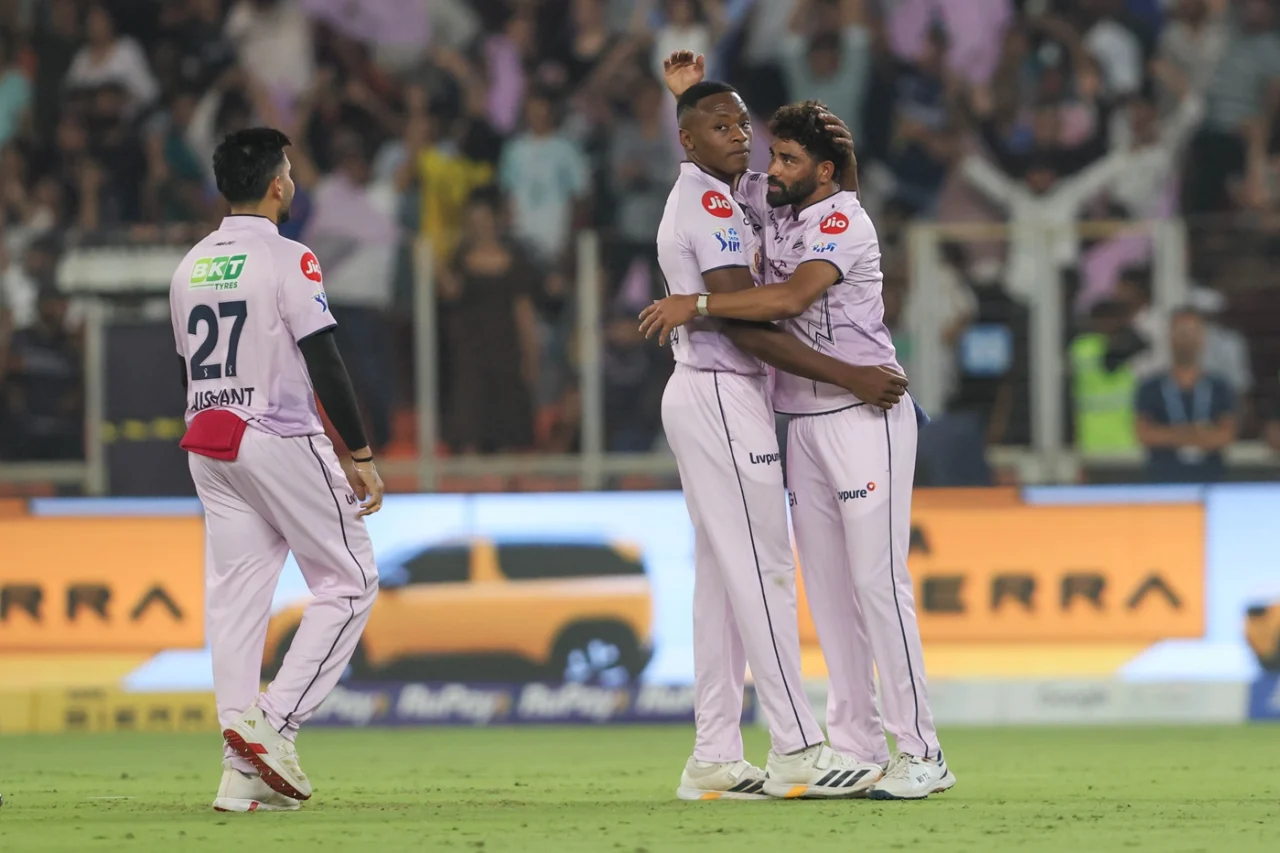
Kagiso Rabada and Mohommed Siraj could have been wearing their Test whites. By the end of the powerplay, they had bowled three overs each, and Sunrisers Hyderabad were reduced to 34 for 4. Somehow, they had outdone the Gujarat Titans batting line-up from the first innings – they had been reduced to 34 for 2 themselves. Wickets in hand allowed B Sai Sudarsan (61 off 44) and Washington Sundar (50 off 33) to mount a comeback for GT. On the other hand, SRH let a tricky chase of 168 slip from their grasp, folding for 86 in 14.5 overs.
At the toss, GT captain Shubman Gill said that the pitch in Ahmedabad looked like “a better wicket than we have had in the past couple of matches.” He was dismissed in the third over, off a rare mistimed swipe across the line. He had misjudged a pitch that turned out to be one of this IPL’s most treacherous ones: deliveries stuck in the surface, the new ball jagged both ways, and scoring options were hard to find square of the wicket.
An endless battery of tall GT fast bowlers – rounded out by Jason Holder and Impact Player Prasidh Krishna in the middle overs – kept striking in the chase. At the end of it, GT rose to the top of the table with 16 points.
Pat Cummins unlocked the secret to bowling on this surface early: he pushed it in on a hard length, and kept swinging the new ball away from both Sudharsan and Gill. But the first two wickets for SRH came from elsewhere. Praful Hinge found himself back in the SRH side, in place of Harsh Dubey to give them an extra pace option.
Hinge mimicked the Cummins line-and-length early on, and tempted Gill into a misjudged on-drive. In the final over of the powerplay, Jos Buttler realised he could not go big in the ‘V’, so he tried to scoop Hinge behind the wicket instead. All he managed was an edge to the keeper.
Hinge’s twin strikes consigned GT to 34 for 2, their lowest powerplay score this season.
If ever there was a pitch suited to Sudharsan’s brand of T20 batting, it was this. He kept pouncing on the deliveries that erroneously landed in the slot, and pushed the others around to turn over the strike. Nishant Sindhu, who made 22 off 14, kept him company at the other end through the middle overs. Sindhu stayed deep in his crease and played drives and cuts, both batters biding their time.
Sensing a breakthrough, Cummins brought himself back into the attack in the 10th over to bowl his third. He rifled in a delivery outside off, full but rearing off the pitch at Sindhu. He could only mistime a lofted drive to long-off.
Cummins ended with figures of 1 for 20 in the 16th. Just an over later, Sai Sudharsan – who had brought up his sixth half-century of the season – opted for another scoop off Sakib Hussain. The full delivery took off the bottom of his bat, and Hinge gobbled it up at short third.
Washington starred in the final overs of the GT innings. He jumped on top of deliveries too high for most others to cut, and sent them off to the ropes by rolling his wrists over them late. He saved his best shots for the end of the 19th over, off Eshan Malinga, who had a rare off-day and gave away 46 runs. He fell down on successive deliveries, first scooping a yorker down over short fine, then attacking a full toss by rolling his wrists, once more, for a shovel over deep square leg.
At the midway mark, GT’s total was the Schrodinger’s par score – neither quite par but also just, with Sudharsan hesitating to call it enough for their bowlers between innings. Siraj and Rabada then bowled through the powerplay for the fifth match in a row. Nineteen balls into the innings, they had dismissed Travis Head, Abhishek Sharma and Ishan Kishan.
Rabada, in particular, kept hitting the hard length close to 150kph, slanting deliveries away from the left-handers to have Kishan driving at one away from his body, Abhishek chopping one into his stumps, and No. 4 R Smaran mistiming one to Gill in covers. He finished his spell in one go, returning 3 for 28.
Holder’s entry to the GT side has given them another tall, accurate bowler to go to in the middle overs. In their previous game, against Rajasthan Royals, he had plucked out the final three wickets in the space of five balls. Here, he took 3 for 20 as he mopped up SRH’s lower order.
The wicket had worn down as the evening went on, so Holder resorted to slower balls in the back-half of the innings. First, he effectively finished the contest by taking out Heinrich Klaasen, who swiped at a ball lacking in pace over his head, to keeper Buttler running to his left. Nitish Kumar Reddy was his next victim, courtesy an edge from the extra bounce Holder kept extracting from the surface, while Shivang Kumar was the final batter to fall off a misadventurous scoop.
Our final tall bowler of the day – in the cohort of Cummins, Holder, Rabada and Siraj – also had the highest release point of all: Prasidh Krishna. He went back-of-a-length in his spell to finish with figures of 2 for 23 of his own.
At the end of a fast-bowling buffet, GT marched to their biggest victory in the IPL. Their W in the last match – a 77-run win against RR – had been their previous best. They finished this night on top of the table, suddenly the team to beat this season.
Brief scores:
Gujarat Titans 168 for 5 in 20 overs (Sai Sudharsan 61, Nishant Sindhu 22, Washington Sundar 50, Jason Holder 11*; Pat Cummins 1-20, Praful Hinge 2-17, Sakib Hussain 2-37) beat Sunrisers Hyderabad 86 in 14.5 overs (Ishan Kishan 11, Heinrich Klassen 14, Salil Arora 16, Pat Cummins 19; Mohammed Siraj 1-11, Jason Holder 3-20, Kagiso Rabada 3-28, Prasidh Krishna 2-23, Rashid Khan 1-03) by 82 runs
[Cricinfo]


The Italian Naval Vessel ‘ITS Giuseppe Garibaldi’ arrived in Sri Lanka today, 9 September 2026, on a replenishment visit.
The Sri Lanka Navy welcomed the visiting ship in accordance with naval traditions at the port of Colombo.
‘ITS Giuseppe Garibaldi’ is a 180m long Landing Helicopter Aircraft Vessel commanded by Captain Marco GUERRIERO.
During the ship’s stay in Sri Lanka, the Commanding Officer of ‘ITS Giuseppe Garibaldi’ is scheduled to call on the Commander Western Naval Area.
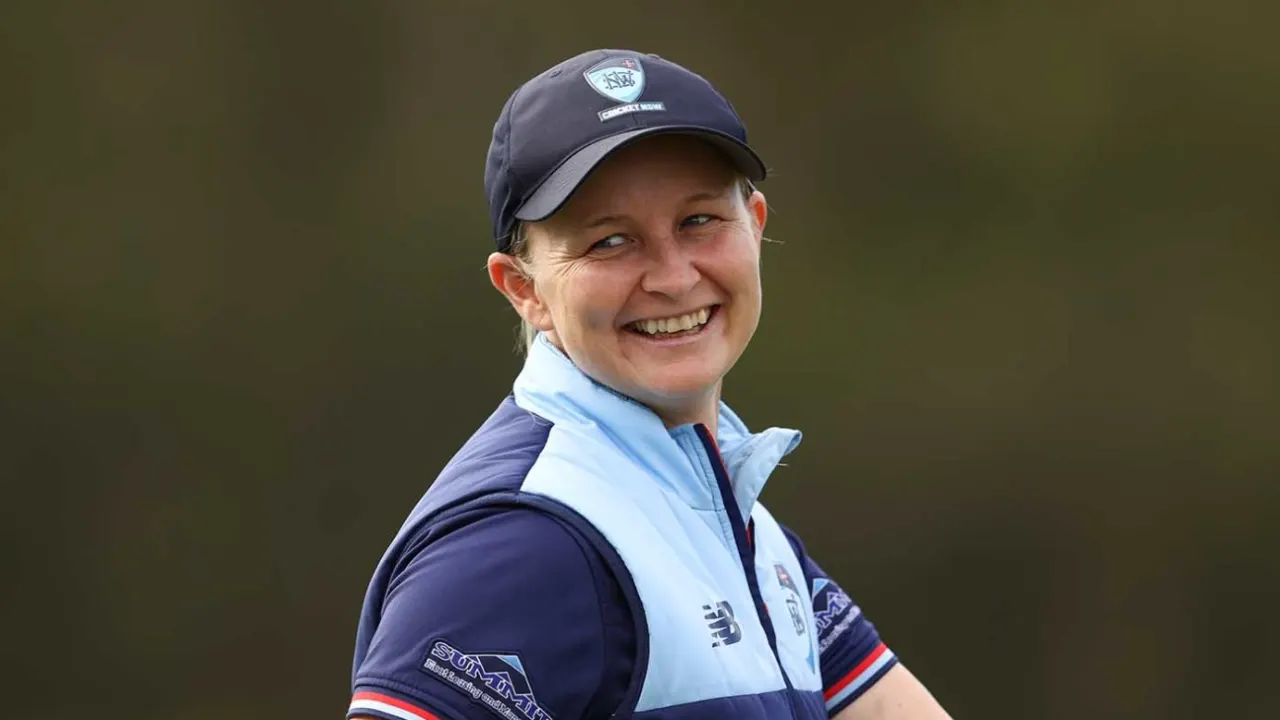
Leah Poulton the former Australia batter turned coach and administrator, will join England Women as managing director, succeeding Clare Connor.
Poulton will be charged with overseeing the success of the international team and pathways after the ECB cited her “impressive track record driving women’s cricket forward in Australia”.
Poulton earned 90 caps for Australia before retiring in 2015 and has spent the past six years as head of elite female cricket at Cricket New South Wales. There, she oversees cricket performance operations across two WBBL franchises, women’s state cricket and one of the world’s largest women’s cricket talent pathways.
Before that, she spent three years at Cricket Australia as a High Performance Coach, where she was instrumental in setting up Australia’s enviable women’s high-performance pathway, which included developing the Australia A and Under-19s women’s teams.
In her new role, she will be accountable for the performances of England Women, England Women A, England Women Under-19s and the overall women’s high-performance system.
Poulton will start in her new role in November with England set to host the Women’s Ashes next summer. She fills the role vacated by Connor, who announced earlier this year that she would be leaving the ECB after a career spanning 18 years, and will work closely with England Women’s head coach Charlotte Edwards and captain Nat Sciver-Brunt.
“I’m incredibly excited and honoured to be joining England, and to have the opportunity to help shape our programmes and, most importantly, invest in our people,” Poulton said. “I’m looking forward to working with Charlotte, Nat and the wider team, building on the strong foundations already in place and taking the programme forward.
“I know how vital strong pathways and a healthy domestic game are to sustained success, so I’m looking forward to connecting with people across the game and helping give the next generation of English players every opportunity to thrive. It’s a huge privilege to be part of England Women, and I can’t wait to get started.”
Richard Gould, the ECB’s CEO, said that with the senior women’s team had made under Edwards, appointed last year, and having reached the final of their recent home T20 World Cup, England Women were well placed for a successful era.
“I’m delighted to welcome Leah on board to help us build on this and take us to the next level,” Gould said. “She has a deep understanding of international cricket from her playing career and has built an impressive reputation in her time in administration.
“I believe she and Lottie will be a formidable combination, and will continue the team’s progress and development as we compete for the ICC Women’s Champions Trophy and Women’s Ashes in 2027.”
[Cricinfo]
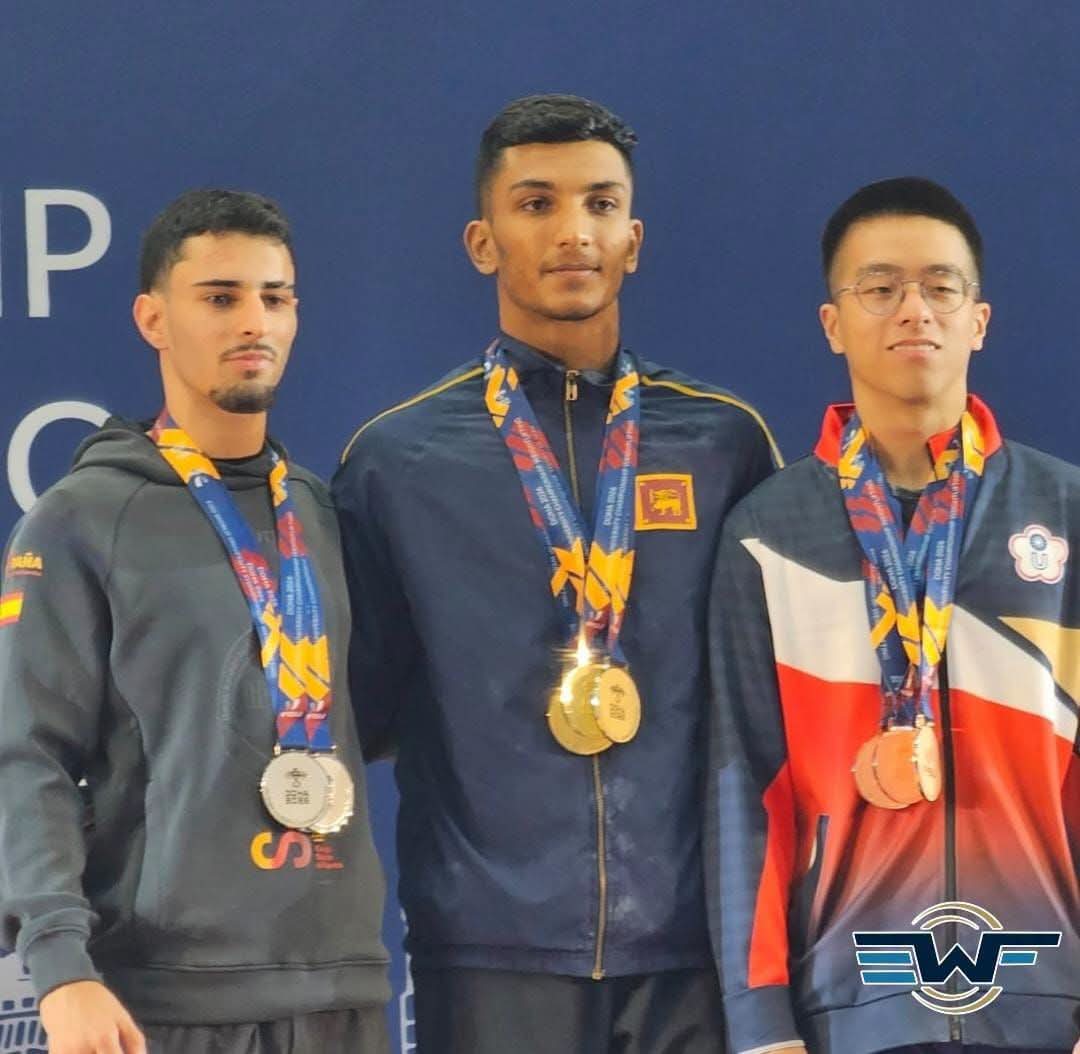
University of Sri Jayewardenepura weightlifter Avindu Liyanagedara made history yesterday by becoming the first Sri Lankan university student to win a gold medal at a World University sports event, as Sri Lanka made a spectacular start to the 2026 World University Weightlifting Championship in Doha, Qatar.
Liyanagedara won the men’s 60kg title, while Sabaragamuwa University’s Nipun Dissanayake added a bronze medal in the 65kg category on the opening day of the championship.
Liyanagedara lifted 105kg in the snatch and 132kg in the clean and jerk for an impressive combined total of 237kg.
Spain’s Gomez Martinez took the silver with 228kg, while Chun-Yen Tang of Chinese Taipei won bronze with 227kg.
Dissanayake also secured a podium finish in the 65kg class with a total of 220kg, comprising a 100kg snatch and a 120kg clean and jerk.
Iran’s Mohhadov Tehran won the gold with 289kg, with Moldova’s Ion Badanev taking silver with 288kg.
Liyanagedara’s achievement represents a landmark breakthrough for Sri Lankan university sport. His gold is the first gold medal won by a Sri Lankan university student at a World University sports event, while Dissanayake’s bronze further strengthened the country’s historic opening-day showing.
The Sri Lanka University Sports Association has entered five male and two female athletes for the championship, with University of Colombo’s Sujan Walgampaya serving as team manager and coach.
The championship continues in Doha until September 12, with Sri Lanka already assured of a memorable place in the history of World University sport through Liyanagedara’s historic gold medal.

Showers will occur in the Western and Sabaragamuwa provinces and in Kandy, Nuwara-Eliya, Galle and Matara districts.


Sri Lanka reiterates its territory won’t be used against India

UK-led Core Group calls Jaffna mass graves a ‘stark reminder’ but stops short of calling for international accountability

India underscores security and defence in overall partnership with SL

If Sri Lanka wants ‘real’ stability, only one way to achieve it, in a short time

‘Dates have the highest sugar content to fight Coronavirus’

Sunday Island 27 December – Headlines

#SundayIsland 17th December – Headlines

Sunday Island – 28th March

Sunday Island Headlines – 21 March

Sunday Island – 21st February – Headlines
-
 News5 days ago
Namal remanded until Sept. 18 over Airbus deal investigation
-

 Latest News4 days ago
Tharanga creates history with Diamond League crown in Brussels
-

 News4 days ago
Dispute which triggered listed company director being detained at BIA resolved
-

 Features3 days ago
After the parade: What a traffic OIC’s walk-out tells us
-
 Opinion6 days ago
In Memory of Dr Upatissa Pethiyagoda
-

 Editorial5 days ago
Power vs Equality
-
 Latest News6 days ago
SLPP MP Namal Rajapaksa arrested by CIABOC
-
Editorial3 days ago
Arrests as theatre