
Opinion
Rising electricity tariffs: A national economic crisis beyond monthly bill

Tariff Increase: Visible and Real Impact
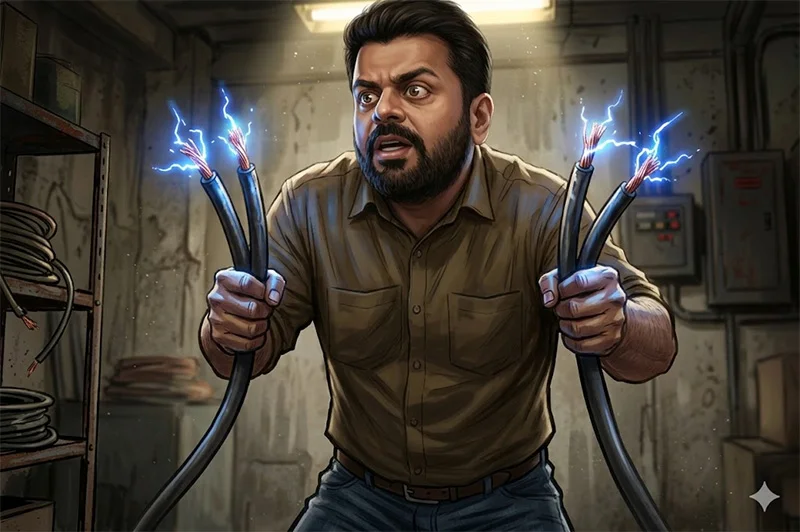
The recent increase in electricity tariffs in Sri Lanka has created serious social and economic concerns. The increase applies especially to consumers who use more than 180 units of electricity. Their bills may rise by more than 18%.
At first, this may look like a decision that affects only “high electricity users.” But in reality, the impact is much wider. It affects households, businesses, industries, services, inflation, investment, and national competitiveness.
Sri Lanka is now facing a situation where electricity bills continue to rise again and again. This should not be seen as a one-time tariff revision. If the price of one unit of electricity keeps increasing, the deeper problem is not only household consumption. The real problem is the high cost of electricity generation. Therefore, the unit price of electricity cannot be reduced in a sustainable way unless the cost of generation is reduced first.
The main concern is that Sri Lanka still does not seem to have a clear, practical, and measurable long-term plan to reduce generation costs. What we often hear are political explanations, temporary promises, and hopeful statements. But hope alone cannot reduce electricity tariffs. What the country needs is a realistic national plan. It must focus on low-cost power generation, efficient management, renewable energy investment, and serious reforms in the electricity sector.
Electricity is a basic foundation of a modern economy. When its price increases, it affects the cost of living, business costs, production, and national competitiveness. According to the Public Utilities Commission of Sri Lanka (PUCSL) announcements, the May 2026 revision applies especially to domestic consumers above 180 units, government institutions, large industries, and several GP2 and GP3 categories.
Direct Impact: Pressure on the Middle Class
The tariff increase directly affects middle-class and upper-middle-class families that use more than 180 units of electricity. In urban and semi-urban life, many electrical appliances are now part of daily life. These include refrigerators, water pumps, computers, internet devices, washing machines, fans, rice cookers, and other household equipment.
Many families exceed 180 units not because they live luxuriously, but because modern life requires electricity. Therefore, it is not realistic to say that this decision affects only the rich. Children’s education, online learning, work from home, small home-based businesses, water supply, communication, and basic household safety all depend on electricity.
According to PUCSL examples, a household using 210 units may see its bill increase from Rs. 9,570 to Rs. 11,330. This is an increase of about Rs. 1,760 per month, or nearly Rs. 21,000 per year. For families whose incomes are not rising at the same pace, this is a serious burden. It reduces savings. It affects education, health, food, and daily consumption. When electricity bills, food prices, fuel prices, and loan costs rise together, middle-class confidence falls. Families begin to cut non-essential spending. This also reduces market demand. Therefore, the electricity tariff increase is not just another monthly bill. It is a deeper pressure on living standards, savings, and economic security.
Impact on the Business Sector
The wider impact of electricity tariff increases is seen most clearly in the business sector. Factories, hotels, restaurants, supermarkets, cold storage facilities, bakeries, printing businesses, IT firms, and small and medium enterprises all depend heavily on electricity.
When electricity costs rise, production and service costs also rise.
In 2024, the industrial sector alone used 4,622 GWh of electricity. This was 30.4% of total electricity sales. The General Purpose category used 3,472 GWh, or 22.9%. This shows that a large share of electricity consumption takes place in the production and service economy.
For large industries, electricity is essential for machinery, refrigeration, lighting, packaging, water pumping, and quality control. When the unit price of electricity rises, the cost of producing each item also rises. Businesses then have only a few choices. They can pass the cost to consumers. They can reduce their profit margins. Or they can reduce production.
For small and medium businesses, the pressure is even greater. Large companies may be able to invest in solar power, energy-efficient machinery, or special credit facilities. But small businesses have limited options. For a bakery, salon, grocery shop, or small restaurant, a higher electricity bill directly affects daily cash flow. In the end, these costs enter the prices of goods and services. The price of food at a restaurant, goods at a shop, products from a factory, and services at a hotel can all rise because of electricity costs.
In the long run, this can also affect employment, wage increases, business expansion, and overall economic activity.
Inflation and the Cost of Living
Higher electricity tariffs can create a risk of rising inflation. Electricity is not only a household bill. It is also a key cost in food production, storage, transport, industry, hotels, hospitals, schools, and many services.
When electricity costs rise, that cost gradually enters the prices of goods and services.
Sri Lanka’s recent experience shows how dangerous this can be. In September 2022, annual inflation based on the Colombo Consumer Price Index reached 69.8%. Food inflation reached 94.9%, while non-food inflation reached 57.6%. This shows how quickly living costs can rise when fuel, electricity, transport, and exchange rate pressures come together. In April 2026, CCPI-based annual inflation also increased from 2.2% in March to 5.4%. Non-food inflation rose from 2.9% to 6.8%. This is an important warning.
Under the CCPI base year 2021=100, the category “Housing, Water, Electricity, Gas and Other Fuels” carries a weight of about 31.6% in the consumer price index. Therefore, higher electricity and fuel costs can have a direct impact on inflation. The risk is that an electricity bill increase does not stop with the electricity bill. It can later spread into food prices, medicine prices, school services, hospital services, restaurant prices, and transport costs. This is known as a second-round effect.
When inflation remains high, real household income falls. Even if salaries remain the same in numbers, people can buy less with that salary. There is another danger. If people and businesses expect prices to keep rising, businesses may raise prices early. Workers may demand higher wages. Suppliers may sign contracts at higher prices. This can create a wage-price spiral. Therefore, the inflationary impact of electricity tariff increases should not be treated lightly. The country needs more than tariff increases to cover institutional losses. It needs a long-term plan to reduce the cost of electricity generation, diversify the energy mix, and protect the cost of living.
Coal, Oil, and the Cost of Power Generation
One major reason for rising electricity tariffs is the way electricity is generated. Consumers see only the final bill. But behind that bill are fuel choices, power plant efficiency, import costs, exchange rates, and weaknesses in energy planning.
A major part of Sri Lanka’s electricity generation still depends on coal and fuel oil. In 2024, total electricity generation was 16,802 GWh. Coal accounted for 32.6%. CEB oil-based generation accounted for 9.3%. IPP oil-based generation accounted for 4.6%. Together, coal and oil-based generation made up nearly 46% of total generation. This is very important for tariff decisions.
Coal power plants such as Norochcholai provide relatively low-cost base power. But when such plants face maintenance problems, technical failures, or unexpected shutdowns, the country loses low-cost electricity. It then has to use more expensive oil-based power plants.
According to CEB 2024 data, the fuel cost of one unit of electricity from Lakvijaya coal power was Rs. 17.96 per kWh. But some diesel and LAD power plants cost more than Rs. 40 to Rs. 100 per kWh. This clearly shows how the generation mix affects the unit price of electricity.
Coal and oil are also imported fuels. They depend on foreign exchange. When global fuel prices rise, when the rupee weakens, or when geopolitical risks increase, electricity generation costs also rise. Therefore, a real discussion on reducing electricity tariffs must begin with reducing generation costs. Sri Lanka needs a practical plan to move towards lower-cost, reliable, and locally available energy sources.
Inefficiency and Policy Weaknesses
Another major reason for repeated tariff increases is long-term inefficiency in the electricity sector. Old transmission systems, power losses, delayed projects, inefficient procurement, political interference, and the absence of a stable energy policy have weakened electricity planning.
An efficient electricity system needs timely investment in low-cost power plants. Existing plants must be properly maintained. Transmission and distribution systems must be modernized. Renewable energy projects must be connected to the grid without unnecessary delay. When these steps are not taken on time, the country becomes dependent on expensive emergency solutions. Sri Lanka has natural advantages in solar, wind, and small hydro power. But delays in approvals, limited grid capacity, legal uncertainty for investors, and frequent policy changes have prevented the country from using this potential fully. This is a lost economic opportunity.
Another weakness is that decisions in the electricity sector are often driven more by politics than by technical and economic logic. Tariff decisions, power plant selection, project approvals, and institutional reforms should be based on professional judgment. When decisions are made for short-term popularity, the long-term cost is paid by the public.
Therefore, a plan to reduce electricity tariffs cannot be only a tariff announcement. It must be a full reform programme. It must reduce generation costs, reduce dependence on imported fuel, strengthen the grid, speed up renewable energy, and reduce institutional inefficiency. Without such a plan, electricity bills will continue to remain a burden on the people.
Impact on National Competitiveness
High electricity costs do not affect households alone. They also affect production costs, export prices, investment decisions, tourism costs, and the service economy. Therefore, electricity tariffs are a key factor in national competitiveness.
When electricity costs rise, it becomes harder for exporters to compete on price. Sectors such as apparel, food processing, rubber, plastics, packaging, printing, and light manufacturing all depend on electricity. International buyers are highly price-sensitive. If Sri Lanka’s production costs rise, its export competitiveness weakens.
Tourism is also affected. Hotels, restaurants, guest houses, and villas need electricity for air conditioning, lighting, laundry, kitchens, water heating, and digital systems. When electricity bills rise, room rates and service charges may also rise. This can make Sri Lanka less attractive compared to regional competitors. The IT, BPO, software, and digital service sectors also need reliable and affordable electricity. Higher power costs and uncertainty about supply can reduce the confidence of foreign clients and investors.
Foreign investors consider energy costs when choosing a country. They also look at labour costs, tax policy, legal stability, market access, and infrastructure. If electricity is expensive, the system is inefficient, and policy is unstable, investors see the country as risky. In the long run, this can affect new investment, jobs, wage growth, and economic growth. Therefore, electricity tariff increases must also be seen as a national competitiveness issue. If Sri Lanka wants to expand exports, strengthen tourism, attract investment, and create jobs, it needs a reliable electricity system at a reasonable cost.
A Positive Side: An Opportunity for Energy Efficiency
This situation should not be seen only negatively. Higher electricity prices can also encourage people to think more seriously about energy efficiency.
According to CEB 2024 data, electricity exported to the grid through rooftop solar increased from 632 GWh in 2023 to 867 GWh in 2024. This is a 37% increase. The number of rooftop solar accounts increased from 39,827 to 73,050, an 83% increase. This is a positive sign. It shows that people are looking for energy alternatives. But this alone is not enough. Individual solar adoption is useful, but the country still needs a reliable, coordinated, and long-term national energy plan to reduce overall generation costs.
What Should Be Done?
Sri Lanka cannot depend only on short-term solutions. The country needs a national policy that builds long-term energy security and economic stability.
Renewable energy must be accelerated. Sri Lanka has strong natural advantages in solar, wind, and hydro power. But delays in projects, policy instability, and investment barriers have prevented the country from using this potential fully. Households and businesses should be encouraged to use solar power. This can be done through affordable loans, tax relief, and a clear legal framework. If people can produce part of their own electricity, pressure on the national grid will also reduce.
Efficiency, Transparency, and Public Responsibility
To solve this problem, inefficiency and waste in the electricity sector must be reduced. Transmission losses, delayed projects, weak management, and political interference must be addressed. Financial transparency and professional management in institutions such as the Ceylon Electricity Board are also essential. This can help rebuild public trust.
The public also has a role. People should use electricity responsibly. They should use energy-efficient appliances, reduce waste, and change consumption habits where possible. But public responsibility alone cannot solve the problem. Even if people save electricity, the unit price cannot fall if national generation costs remain high. Therefore, responsible consumption by the public and a serious government plan to reduce generation costs must go together.
Rising electricity tariffs are not only about a higher electricity bill. They affect the entire economy. They influence household living costs, business costs, inflation, investment, and national competitiveness. The long-term solution is not repeated tariff increases. It is an efficient, diversified, and sustainable energy policy. The price of one unit of electricity can be reduced only when the cost of producing that unit is reduced. Political hope is not enough. Sri Lanka needs a practical national programme with clear targets, a timeline, investment support, faster renewable energy development, and reforms to reduce inefficiency in the electricity sector. Without such a programme, promises to reduce electricity bills will sound to the public like another political explanation and another hopeful statement.
by Prof. Ranjith Bandara


Mr. R.M.Amerasekera’s recent article on how improving rural households and villages contributes to national development (Sunday Island Aug. 23) was interesting reading as I, during my long years in the public service, was privileged to be associated with projects to improve the living conditions of rural folk.
In this context, mention should be made of that down to earth politician, D.B.Wijetunga who as
Minister for Highways and Power & Energy focused much attention on uplifting the living standard of villagers with projects to improve their lot. As Minister for Highway he successfully pushed the Treasury to increase inadequate provision in the estimates to improve roads under Provincial and District Road Committees.
Having done so, he instructed area engineers to see that the full allocation was utilized giving top priority to improve minor roads. Foot paths were widened and made motorable and farmers who carried their produce to market on their heads or shoulders had tractors. School children had small vans or two-wheeled tractors to take them them to school. It should also said that the interest shown by the government inspired villagers themselves to organize shramadana activities that were guided by Area Engineers.
Then D.B.Wijetunga as Minister for Power & Energy was keen on providing electricity to villages. Finding there was no provisions in government estimates he consulted his Secretary to the Ministry, Prof. K.K.Y.W. Perera, who suggested that we approach Asian Development Bank (ADB). Thanks to Prof. Perera’s influence with the ADB a loan was arranged subject to the condition that only financially viable villages be connected.
To satisfy this condition, a survey had to be carried out. Special mention should be made of Engineer Maxie Tissera who devotedly with the assistance of Area Engineers, prepared a list of such villages and
work started with all enthusiasm. Members of Parliaments, seeing that some villages in their electorate had been not listed, provided funds from their Decentralized Budget to provide electricity to such villages. A recent news item says that almost the entire country has now been electrified.
I am happy that I was involved in these two projects during my public service career as an Assistant Secretary to the Ministries for Highways and Ministry for Power & Energy.
G.A.D.Sirimal, SLAS,
Rtd. Asst. Secretary,
Ministry for Power & Energy

by Sunil Abhayawardhana
After the economic crisis of 2022, and the IMF programme that followed, some are of the opinion that ‘stability’ was achieved, but followed by ‘not out of danger yet’. Where is the ‘stability’ then?
We know that the cause of the crisis was a lack of foreign exchange. However, the IMF programme focused on the fiscal aspects, not one that enhanced export earnings. So, we are once again in a situation, facing the same problem, with the ‘fiscal discipline’ thrust on us.
Therefore, it is clear that if we seriously want to achieve ‘real’ stability, we need to use our heads much more and get out of the ‘epistemic insularity’ that has been around for so long. (Epistemic insularity is a state where an individual or group becomes isolated from alternative perspectives, data, and frameworks of knowledge. It occurs when individuals, groups or communities construct a protective bubble around their beliefs, making them resistant to outside evidence or challenging viewpoints).
It applies also to guys who have recently got into the bubble and being taught Neo-liberal lessons.
Fixing targets for budget deficits and tax collection is ok if it is in relation to a development drive. If not, it would only increase the misery of a higher cost of living. That development drive is what is missing in Sri Lanka.
A development drive comes after formulating a development plan, which is not an instant production, takes much time and effort. Therefore, Sri Lanka needs right now an accelerated ‘urgent’ project, that would bring ‘real’ stability, in the shortest possible time. Once ‘real’ stability is achieved, the focus should shift towards a greater development plan.
The only way
The only way for Sri Lanka to achieve ‘real’ stability is by enhancing its export earnings by at least $ 20-25B. Most of the projects that are being thought of are not capable of bringing in earnings on the scale required, in the shortest possible time.
Over the years, tea, rubber and coconut was the first base of exports. Then there were many smaller products such as gems and petroleum products that were not developed, tough the potential was there, followed by garments and IT, which were small in scale.
Continuing on the same path, is not going to change the story. A radical change of stance is urgently needed. What is amazing is that it has not yet been realised.
A point to note is that a World Bank report issued a few years ago, highlighting the possibility of enhancing exports by the present exporters by as much as $10B, if provided with some assistance, was not even considered. However, this should be an ongoing programme, but conditions of the IMF programme may not be able to give the required support to these industries.
Historically, since Independence, the path chosen has not been able to bring the desired results. Should we then, not change our thinking, to be able to bring about the urgently required outcomes?
Widespread development is going to take time with the existing conditions. The governments programmes would at best, bring in an additional $5B by 2030 at best. Therefore, targeting one specific sector and industry, with total focus for about a year or two, has a better chance of success.
Even if total investment is around 10% of GDP and half of it is diverted to a single project capable of increasing export revenue by 100%, that bold decision should be taken. The shortfall in public investment for a short time should be tolerated.
Sri Lanka has never embarked on such a programme and is the only way it could achieve ‘real’ stability.
Therefore, after much research, the only single project, capable of enhancing export figures by as much as $20 -25B was identified as mentioned below.
Oil refinery in Trincomalee
This is a project that should have been started at the time of Independence in 1948, when the funds were available from the Sterling Balances Agreement. However, it did not materialise and the country paid a heavy price.
Now, to be able to generate $20-25B, a refinery with at least a 400,000 b/d refinery is urgently required to be set up in Trincomalee. India is planning to set up eight new refineries in the coming years. The world’s largest refinery is located in Jamnagar, India, with a capacity of around 1.6 million b/d, owned by Reliance Industries.
The funding of such a project has many options, Multi-lateral sources, Joint Ventures and many more. (However, for a country that could release $2-3B for vehicle imports, should be able to work that out).
An idea of the cost could be determined by the Chinese cost for a 200,000 b/d refinery, which works out to around $3.7B. Sourcing equipment from China is considerably lower, compared with other western sources.
Sourcing the correct equipment, from suppliers at a price that the project can afford becomes critical. Equipment from the west is highly inflated, while Chinese equipment is now available at a much lower price.
The shortest time a refinery has been established is one year, in South Korea, and Singapore’s first refinery, a little over a year. There are many hurdles that have to be got over and a government has the ability to do so, if it is really determined. Most of it is paperwork and environment issues, with site selection.
The Ceylon Petroleum Corporation has been in existence and operating the 50,000 b/d refinery from the late 1960s and should be able to handle such a project, if not outside help would have to be deployed.
Most governments do not see the long- term benefits of such a project, due to the normal long- time frame to commence such a project. However, this is where ‘urgency’ has to be understood. As the CPC is the only institution involved, apart from the state bureaucracy, there is no reason for delay. If there is a strong will, there would always be a way of getting it off the ground, in the shortest possible time.
The discussions already commenced regarding the UAE, India, SL project, could be beneficial. A joint venture with India, is a strong possibility. The pipeline distribution would reduce delivery costs. However, total dependence on the Indian market would not be a good strategic or business decision.
The second refinery
China offered to establish a 200,000 b/d refinery in Hambantota, three years ago. Obviously, the government is under tremendous external pressure on this. This is where diplomacy at its best is required.
Sri Lanka had this ability in the 1960s and early 70s and later in the 1990s and early 2000s. This ability does not seem to be around at present, but needs to be revived.
I remember in the early 1970s during the Bangladesh war, Pakistan requested permission to fly via Colombo to East Pakistan. No one expected Sri Lanka to grant permission. But it was granted, keeping the relationship with India intact.
The proportion to be released to the local market and tax concession, should be worked out with the best interests of the country in mind. Even though the original percentage to be released to the local market was 20%, a further 20% would reduce the export earnings, but would save importing that amount, as SL imports around 100.000 b/d of refined petroleum.
Tax concessions face obstacles with the IMF programme, which could be solved via negotiations, that convince the IMF of the greater benefits to the country, but requires skill, as mentioned earlier.
A project of this nature, which brings immediate results, has never been seen in SL and lacks the confidence needed, but has to be built up to take bold decisions. It would face many obstacles, but as mentioned earlier, if there is a will, it could be done.
The Hambantota refinery could easily add another $10-15B to the aggregate earnings from petroleum exports, which would total around $ 35-40B in total.
Would that not bring ‘real stability’ to the economy?
No other project or projects could bring in the foreign exchange on the scale that these two could. In fact, expanding the refinery capacity in Trincomalee and Hambantota, could be considered later.
Other possibilities
While aiming for ‘real’ stability, it should not be forgotten to bring ‘real’ stability to the farming community in the country.
The mistakes of the past in relation to agriculture development needs to be corrected by the farmer being the ultimate beneficiary from agriculture development. It is ridiculous in an under developed economy like Sri Lanka, where the farmer toils so hard, while the big millers get the ultimate benefit.
Therefore, the thinking should change, where the farmer sells rice, with milling by farmer coops and linking the farmer to the rice market.
Once stability has been achieved and a sizeable reserve built up via earning as against borrowings, Sri Lanka should set its sights on development and not stop at stability. Listed below are a few projects that could be initiated.
* An iron and Steel mill for export in Trincomalee- which could bring in around $10-15B.
* Develop Colombo as The Gem and Jewelry center of the World $ 5-10B.
* R+D into graphene if could be used for semiconductors
* Aircraft repair and maintenance facilities to service the huge fleet in India
* Local IT companies registered in SL, operating out of Jaffna
* R+D to be incentivised in various fields
Sovereignty, Tourism, and the Law:
by Sasanka Perera
(The writer is on X as @sasmester)
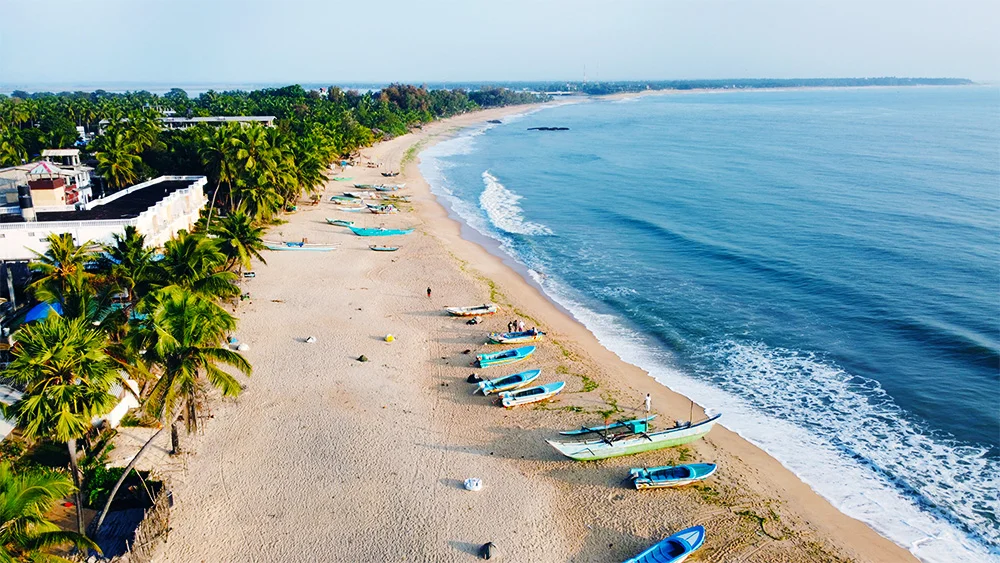
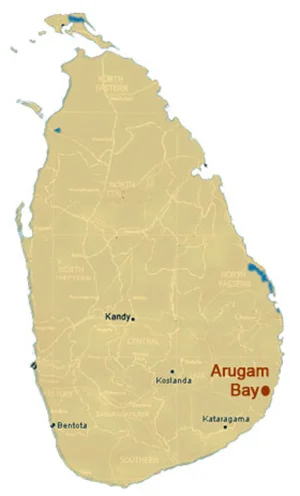
On 28 October 2024, I wrote in this column an essay, titled ‘Israelis in Sri Lanka and the Advent of a ‘Neo’ Colonialism.’ My concern then was the disruption long-term Israeli tourists, often over-staying tourist visas, were causing particularly in the Eastern Province. Government intervention was mostly visible through relative inaction. Over the past year, Sri Lanka’s pristine coastal enclaves, from Hikkaduwa and Weligama in the west to Arugam Bay in the East, have found themselves at the centre of a complex and needless geopolitically-inflected controversy. As I explained in my earlier essay, too, the rapid growth of Israeli tourism has brought to light serious concerns regarding regulatory oversight, economic fairness, and national sovereignty. The latest controversy erupted in August 2026, in Hiriketiya, near Dickwella, in the country’s south. Unlike in the east, where the protesters were mostly from Muslim communities, in Hiriketiya, the protests were led by Buddhists, including monks.
At the centre of latest public debate is the establishment of a ‘Chabad House’, essentially a Jewish community and religious centre, catering to Israeli travellers. One of the primary demands the protesters made, was to investigate if this religious entity was established legally and if the activities of Israeli residents, including running businesses, were legal. In the context of the earlier controversy, Prime Minister Harini Amarasuriya is on record for clarifying in Parliament on 8 January, 2025, that neither the Ministry of Buddhasasana, Religious and Cultural Affairs nor any other government institution had granted official permission for the establishment of Israeli religious sites. In other words, what existed was illegal.
Chabad Houses as private business entities
 Representatives of the local Chabad Houses, of which there are about six at present, claim they operate as registered private business entities. However, operating public religious and communal hubs on standard tourist or corporate permits violates local town planning and immigration guidelines. Besides, despite the claim, it is very unclear even if standard business licenses were issued in the first place. If religious entities were run under temporary business licenses, then, that itself is a clear violation of Sri Lankan law showing scant disregard to both the legal system in the country and its socio-political sensitivities.
This setup stands in stark contrast to how Sri Lanka’s own religious presence is managed in Israel. In Tel Aviv, a Sri Lankan Buddhist temple was established in 2013 to serve thousands of Sri Lankan migrant workers. The effort was facilitated by the Sri Lankan Embassy in the Israeli capital. To respect local Israeli laws and urban regulations, that temple operates discreetly inside a private apartment complex rather than as a prominent, independent public centre with an overt public religious personality as is usually the case with Buddhist temples globally. The Chief Incumbent of the temple, at the time it opened in 2013, Ven. Karavilakotuwe Dhammathilaka, is on record for stating very clearly that in keeping with the religious sensitivities in Israel, the inaugural ceremony itself was also held on a low scale without much publicity. This makes sense given the fact that Israel is one of the most religiously intolerant societies in the world as its track record amply demonstrates. This is more so in the last few years. What is important in the context of the opening of the Buddhist temple in Tel Aviv is, no laws were violated, the temple was meant for long term-residents, and respected local laws and sensitivities. It was also an effort formally facilitated by the Sri Lankan Embassy.
The comparison raises a fundamental question of parity: why should foreign nationals in Sri Lanka, including Israelis, establish public religious and cultural centres without municipal or government authorisation, while Sri Lankans abroad strictly abide by local constraints, as the nondescript Sri Lankan Buddhist temple in Tel Aviv clearly demonstrates?
The debate and anxieties around the Israeli presence in Sri Lanka occurs alongside another pressing concern. That is, the relatively precarious position of thousands of Sri Lankan workers in Israel who are mostly in the construction, agriculture and caregiving sectors. Recently, thousands of Sri Lankan migrant workers faced deportation from Israel due to job category violations, after switching from agriculture or caregiving to unauthorised sectors. The Sri Lankan Foreign Ministry reportedly actively intervened with Israeli authorities to negotiate regularisations and protect these workers. In my view, Illegality is illegality everywhere. If Sri Lankans violated Israeli law, that country had every right to deport them, and we should not have intervened. But I do understand the government’s position, too, as it relates to employment of citizens. Then, there should be a system where such regularisations are managed via the facilitation of the Sri Lankan Embassy, and if citizens do not make use of such a facility, they should clearly face the consequences of Israeli law.
Troubling double standard
Whichever way one looks at it, this highlights a very troubling double standard. That is, while Sri Lankan workers and the government have to cautiously navigate strict Israeli labour and visa laws, Israeli visitors in Sri Lanka frequently evade local visa laws without consequence. This mostly occurs as a result of the institutionalised spinelessness of our law enforcement when it comes to foreigners, and particularly seemingly ‘white’ foreigners. But surely, over 78 years after Independence, spineless meekness on our part must have clear limits. There needs to be clear reciprocity. Besides, Israelis are not here to work as the Sri Lankans in Israel are. They are supposed to be tourists. They should neither work nor establish religious edifices as they feel fit violating our laws and sensitivities as a matter of routine. This is why the ongoing Israeli activities reek of settler-colonialism.
Also, it is not only a matter of Israeli intransigence and official and public Sri Lankan apathy. The latter becomes possible when locals, who rent buildings to visa facilitate in running illegal Israeli businesses depriving their own citizens of legitimate incomes, are not even prosecuted by local law enforcement and judicial systems. As often is the case, foreign arrogance is built upon local meekness and lack of even the most basic sense of national pride. Of course, this does not apply to anyone, including Israelis who are operating a business in Sri Lanka legally, based on legitimate licenses issued by the government.
The proliferation of unlicensed, foreign-run businesses poses severe economic challenges to Sri Lanka’s local tourism industry. Many Israeli visitors enter this country on standard tourist visas but illegally set up guesthouses, surf camps, and cafes. Often operating exclusively in Hebrew, these businesses transact via informal channels or foreign accounts. When foreign visitors, including Israelis, run unregistered businesses, there are numerous local fallouts. For one thing, Sri Lanka loses substantial corporate, local government, and value-added tax revenues. Secondly, these activities severely undercut local livelihoods. Local vendors, tour guides, and small hoteliers are excluded by closed-loop and illegal Israeli operators. One of the common complaints where illegal Chabad Houses have been established is that they provide accommodation and meals to Israeli tourists, seriously disadvantaging local tourism-related businesses.
Adverse economic impact
Much of the income earned from these closed illegal operations, hardly comes to Sri Lanka in any way except for payment for supplies and rentals. Finally, since properties lease informally at inflated long-term rates to these operators, it drives up costs for Sri Lankan entrepreneurs and small business owners. But all this has become possible and so entrenched because of the established track record of relative inactivity of the Sri Lankan government in general as well as local governments and law enforcement in particular.
This brings to my mind the Israeli feature film, Arugam Bay. Directed by Marco Carmel and shot on location in Sri Lanka, including Ella and Arugam Bay. The film follows former Israeli soldiers using Sri Lanka’s coastal towns to process military combat trauma. The production received formal clearances for filming from the Sri Lanka Tourism Promotion Bureau in so far as publicly available information indicates. However, its narrative — framing Sri Lankan beach towns as retreats for Israeli military veterans — with blood in their hands and massive human rights violations to their credit, reaffirms local concerns about the island being used as a backdrop for Israeli human rights violations against Palestinians without sufficient regard for local perspectives.
It is precisely this kind of narrative, through word of mouth as well as social media, that creates an image of Sri Lanka as meek and trouble-free destination for Israelis intent on illegal activities. Do the Sri Lankan government or Sri Lankans want such a label attached to the country? I certainly don’t. It is quite shocking that the Sri Lanka Tourism Promotion Bureau gave permission for a such film to be shot locally. It shows both the Authority’s sorry view of what tourism is and scant disregard for ethical tourism.
Pushback mischaracterised as anti-Jewish sentiment
Public pushback against these illegal activities has sometimes been described by local as well as Israel supporters as anti-Jewish sentiment. But this completely mischaracterises the issue. Global condemnation of Israel’s military actions in Gaza and beyond and massive rights violations of entire Palestinian communities is rooted in international humanitarian law — not antisemitism. Differentiating between opposition towards violating state policies and hostility toward Jewish people is critical. Sri Lankans standing against Israeli military aggression or localised law-breaking are asserting human rights and national law as well as decent and legal behaviour by foreigners in our own country. This is not engaging in discrimination. That is, Israelis must be treated here as our people are treated in Israel. By law and by the book.
Sri Lanka must remain a welcoming host to international tourists. However, hospitality must not replace accountability. The government must strictly enforce visa restrictions, shut down unauthorised commercial and communal spaces, and protect local businesses. By upholding the rule of law uniformly, Sri Lanka can safeguard its economy, preserve its national sovereignty, and maintain harmony along its shores.

If we are to live fulfilling and happy lives, we need unity, mutual understanding, harmony, as well as art – PM

Dr. Roshanie Dissanayake appointed Secretary to the Ministry of Science and Technology

Death toll from Philippines ferry fire rises to 76, with more still missing

Anthropic boss Dario Amodei calls for AI development to slow down

It’s spin vs spin as India and Sri Lanka battle for Asia Cup title

Atmospheric conditions are favorable for afternoon thundershowers in most parts of the Island today [13]

‘Dates have the highest sugar content to fight Coronavirus’

Sunday Island 27 December – Headlines

#SundayIsland 17th December – Headlines

Sunday Island – 28th March

Sunday Island Headlines – 21 March

Sunday Island – 21st February – Headlines
-

 Sports3 days ago
DDS set to lose Test captaincy
-

 Features7 days ago
After the parade: What a traffic OIC’s walk-out tells us
-

 Editorial7 days ago
Arrests as theatre
-
 News6 days ago
Thailand shuts door on undesirables from Sri Lanka
-

 Latest News7 days ago
Harshitha’s composed knock seals Sri Lanka’s semi-final berth
-

 News3 days ago
Sri Lanka faces new grid challenge as rooftop solar surges: former CEB GM
-
 Business6 days ago
CEB successor company breaks into top three in competitive BESS tender
-

 Latest News3 days ago
Shafali, Deepti power India into sixth T20 Asia Cup final