
News
India pushes for direct link between Rameswaram and Talaimannar, FTA upgrade


India wants to upgrade the India-Sri Lanka Free Trade Agreement, signed in 2000 during Chandrika Bandaranaike Kumaratunga’s presidency.
Declaring that more than 65% of Sri Lankan exports use FTA benefits whereas only 5% of Indian exports use the same, Indian High Commissioner in Colombo, Santosh Jha, emphasised the urgent need to transform the FTA into a modern framework that delivers the full potential of the bilateral economic partnership.
Jha was addressing the Global Innovation & Leadership Summit “Sri Lanka & India Ties: A Civilisational Bond,” organised by Z Media & WION, in Colombo, recently.
Jha said: “We have spent too long talking about it (FTA); sometimes renaming it; but not actually moving with purpose and required political will to forge a new framework. I say this not to assign blame — but to note that every year of delay is a year of opportunity lost. Think of it, in the last six years, India has signed nine FTAs, covering trade with 38 countries.”
Jha dealt with the situation developing in West Asia where the unprovoked US-Israeli war against Iran has caused tremendous hardships all over the world.
“We are living through an extraordinary period of global turbulence. Supply chains, markets, and everything else available, as a leverage, are being weaponised, as never before. Geopolitical competition is reshaping trade, alliances and partnerships. Trust in global order is eroding; Utility of global institutions are in question. Wars and conflicts are proliferating; even if these wars are regional, nobody seems immune from its impact. Economic uncertainty in some form or another has become almost a permanent condition. And we are all struggling in different degrees to adapt, as nations.
In these circumstances, relationships built on shallow transactional foundations are the first to crack. They are the ones where a change of government, a shift in commodity prices, or a geopolitical tremor is enough to undo years of effort.”
Commenting on Indo-Lanka relations, Jha said: “Civilisational bonds are different. They are not dependent on who happens to be in office in any given year. They are not contingent on a favourable deal or a transaction. They are sustained by something far deeper and more durable: a shared sense of who we are and where we come from, and what we seek to build for ourselves.
When the world is uncertain, you turn to those you trust. And trust, real trust, is built over centuries, not decades. India and Sri Lanka have that in plenty. But we must not take it for granted. In fact, we should nurture it, build on it and use it to our mutual advantage.”
Jha underscored the need to connect India with Sri Lanka. Jha said: “Let me be direct. The distance between Colombo and Chennai by sea is roughly 300 kilometres. But the distance between Rameswaram and Talaimannar — the closest points of our two countries — is about 30 kilometres. Thirty kilometres. And yet, there is no direct road. No railway. No ferry service that runs at scale. No energy grid connection. No pipeline. It is, frankly, an anomaly. It is as if two neighbouring rooms are connected only through a corridor outside, even when there is a door that can be built between the two rooms, right in the shared wall of the two rooms. We need to open that door.”
Land connectivity via a bridge or tunnel across the Palk Strait has been discussed for decades. There are enough examples of such corridors across the world. The engineering is well understood. The economics are compelling. The benefits, wherever such bridges have been built, are unmistakable. But we continue to waver. But let me say clearly: the time for wavering is over. A fixed link between India and Sri Lanka would transform the economic geography of this entire region. It would make Sri Lanka a hub, it aspires to become, in a way that no port expansion or airport upgrade can achieve on its own.
Energy connectivity is equally transformative. India has made massive strides in renewable energy across solar, wind, nuclear and green hydrogen. Sri Lanka has its own targets. A submarine electricity interconnection between the two countries would give Sri Lanka access to affordable and clean power. It will also create a market for Sri Lanka’s energy exports and help realise its vast potential. In a power-hungry age of data centres, India’s demand for renewable energy will only increase; and Sri Lanka needs to fully understand that opportunity to forge ahead.
Beyond electricity, serious conversations must also take place about long-term energy supply arrangements, including the petroleum pipeline and the development of tank farms in a meaningful, sustainable way. It can provide Sri Lanka with price stability and energy security. Something that we know today after the West Asia crisis is at premium. These are not fantasies. They are projects that have been studied, scoped, and in some cases are ready for decision. India already has implemented similar projects with its other neighbours – Nepal, Bhutan and Bangladesh – who are benefitting not just by exporting their surplus power to Indian markets but also by enjoying a level of energy security, which would not have been possible otherwise in the current difficult global situation.






More than 108,000 complaints of child abuse had been received by the National Child Protection Authority (NCPA) between 2015 and 2025, Women and Child Affairs Minister Saroja Savithri Paulraj told Parliament yesterday.
Responding to a question raised by Opposition Leader Sajith Premadasa under Standing Order 27/2, the Minister said 4,421 child abuse cases were pending before High Courts as of April 30 this year, with indictments already filed against the accused.
She said the NCPA was working with 47 Police Child and Women Protection Bureaus under the Police Children and Women Abuse Prevention Division to expedite the hearing and conclusion of these cases.
The Minister said measures were also being taken to protect child victims during legal proceedings by introducing a system to record their evidence through video in a safe and child-friendly environment, thereby reducing the need for them to appear in court.
She said discussions were underway with the Ministries of Health and Mass Media and other relevant institutions to establish nine provincial video evidence recording units.
by Saman Indrajith ✍️
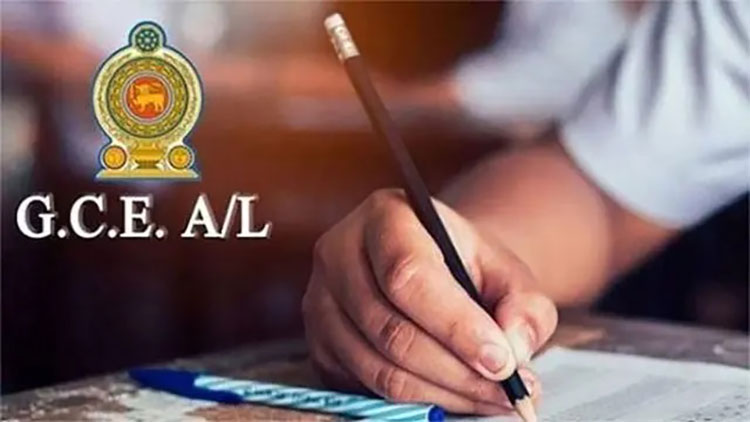
The Court of Appeal yesterday dismissed a writ petition seeking to postpone the 2026 G.C.E. A/L Examination by two months.
The petition, filed by a group of students due to sit the examination for the first and second time, sought an order delaying the examination, which is scheduled to commence next month.
The Court announced its decision after considering submissions made in support of the application and declined to grant leave to proceed with the petition.
As a result, the 2026 G.C.E. Advanced Level Examination will be held as scheduled in August.
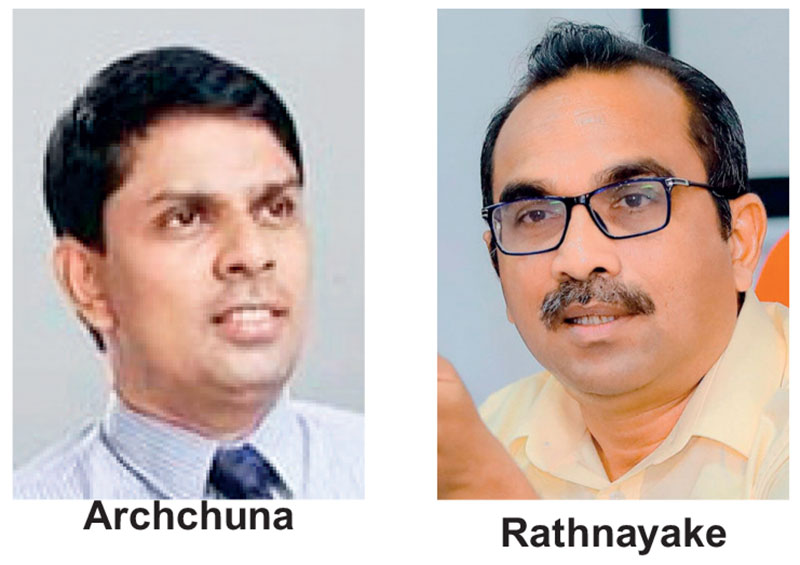
Leader of the House and Minister Bimal Rathnayake yesterday criticised the conduct of MP Archchuna Ramanathan in Parliament, describing the behaviour of certain lawmakers as “uncivilised, disgraceful and indecent”, while a heated exchange followed between government and opposition members.
Rathnayake made the remarks when Ramanathan attempted to raise a point of order during parliamentary proceedings.
“This parliament has one or two members who behave in a very uncivilised, disgraceful manner. We tolerate them because one of them is mentally ill,” Rathnayake said.
He alleged that Ramanathan had insulted even members of the Tamil community.
“The things he says may not be heard through the microphone, but the four walls of this Parliament are witnesses,” Rathnayake said, adding that Ramanathan’s conduct was not limited to Parliament.
He claimed that the Jaffna District Coordinating Committee meeting could not be held due to Ramanathan’s behaviour and said MP Gajendrakumar Ponnambalam had written to the Speaker stating that he could not sit near him.
The Speaker intervened during the exchange, warning Ramanathan not to behave in a manner that would turn Parliament into “a joke”. He also said the MP had previously addressed him in an insulting manner.
Opposition Leader Sajith Premadasa criticised the manner in which Rathnayake and the Speaker had addressed the matter, saying MPs should not be spoken to improperly and urging members to follow parliamentary Standing Orders.
Ramanathan, responding to the remarks, said: “I may be a psycho, but I am not a homosexual.”
by Saman Indrajith ✍️

Oil prices hit $100 for the first time since May

US hits dozens of trading partners with new wave of tariffs

Arachchige, Rathnayake and Malinga pump Jaffna

Hermann, Liyanage and Mujeeb steer Colombo Kaps to a 23 run win

Showers expected in the Western and North-western provinces and in Galle and Matara districts

Child abuse crisis: 108,000 complaints reported in 10 years

‘Dates have the highest sugar content to fight Coronavirus’

Sunday Island 27 December – Headlines

#SundayIsland 17th December – Headlines

Sunday Island – 28th March

Sunday Island Headlines – 21 March

Sunday Island – 21st February – Headlines
-
 Features5 days ago
Two memorable excerpts from a former SLAF commander’s memoir
-
 Business5 days ago
‘Giving up was never an option’: The fisherman who fought back after losing millions in SL
-
 Latest News6 days ago
Davis cup Asia/Oceania Group IV 2026 to be held in Colombo from 20th to 25th July
-
 Features5 days ago
Erdoğan’s New Republic
-
 Life style5 days ago
Taste of the Swiss Alps comes to Colombo
-
 Midweek Review2 days ago
Three high-profile alleged suicides shaping key investigations
-
 News6 days ago
Evidence recorded in money laundering case against Yoshitha Rajapaksa
-
 News6 days ago
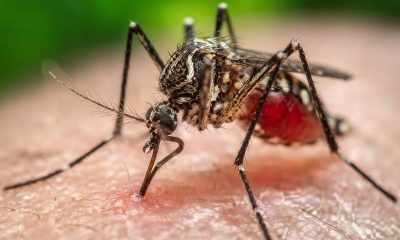
Dengue outbreak gallops ahead: Infections surpasses 73,455, leaving 50 dead