
News
Lanka faces crisis of conscience over fate of animals: Call for compassion, law reform, and ethical responsibility

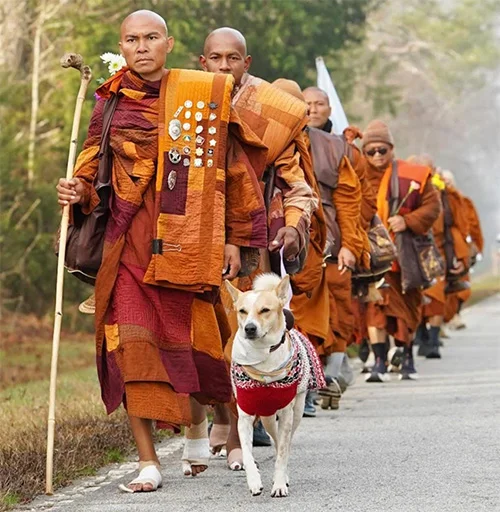
Sri Lanka’s long-standing challenges in animal welfare have once again come into sharp focus, as conservationists and activists renew calls for urgent legal reform, humane population management, and stronger habitat protection for wildlife.
In a detailed appeal addressed to Venerable Bhikkhu Pannakara of the Huong Dạo Vipassana Bhavana Centre in Fort Worth, Texas, a group of Sri Lankan animal rights activists and conservationists outlined what they describe as an escalating humanitarian and ecological crisis affecting both street animals and wildlife.
“We respectfully and warmly welcome you, together with the venerable monks and dear Aloka, to Sri Lanka,” the letter begins, acknowledging the monk’s spiritual mission and his association with compassionate initiatives for animals.
The appeal highlights Sri Lanka’s estimated street dog population—believed to be around three million—describing their widespread suffering due to inadequate sterilisation programmes, limited adoption systems, and lack of sustained national policy intervention. It notes that many animals live in conditions marked by disease, injury, starvation, and neglect, with survival largely dependent on community goodwill and under-supported volunteer networks.
The letter also draws attention to the worsening Human–Elephant Conflict, which remains one of Sri Lanka’s most pressing conservation issues.
Citing recent data, the activists note that between 2016 and recent years, more than 3,700 elephants have died due to various causes, including habitat loss, electrocution, gunshot wounds, and use of explosive bait to maim and eventually kill the majestic animals. In 2023 alone, 488 elephant deaths and 187 human fatalities were recorded, while early figures from the current year also indicate continued losses.
Forest cover, now estimated at less than 16%, has forced elephants into human settlements in search of food, intensifying the conflict and deepening ecological stress.
“These are not just statistics; they reflect a deep imbalance between development and ecological responsibility,” said Panchali Panapitiya, speaking on behalf of the group.
She emphasised that elephants, revered culturally and religiously in Sri Lanka, are increasingly becoming “internally displaced beings,” pushed out of their natural corridors and exposed to constant risk.
A central concern raised in the letter is Sri Lanka’s outdated legal structure for animal protection. The current law, the Prevention of Cruelty to Animals Ordinance of 1907, is described by activists as insufficient for modern animal welfare standards.
Despite years of discussion, a comprehensive Animal Welfare Bill has yet to be enacted, leaving what activists describe as a critical legal gap.
“The absence of updated legislation means cruelty often goes inadequately punished, and systemic protection for animals remains weak,” said Panchali Panapitiya.
The group has urged the government to prioritise the long-delayed Animal Welfare Bill, introduce nationwide sterilisation and adoption programmes for street dogs, and strengthen protection of elephant habitats and migratory corridors.
They also call for science-based wildlife management policies, stronger enforcement against cruelty, and improved coordination between wildlife authorities and local communities.
“These issues are not separate—they are interconnected aspects of how a society treats the most vulnerable forms of life,” Panapitiya noted.
The letter frames the issue not only as a policy matter but also as a moral and spiritual responsibility, invoking Buddhist principles of karuṇa (compassion) and metta (loving-kindness).
It expresses hope that with the guidance of the visiting monastic delegation, greater awareness can be built around animal welfare challenges in Sri Lanka, and that renewed attention can be directed toward ethical coexistence between humans and animals.
“We humbly seek your guidance and compassionate support in bringing attention to this suffering,” the letter states, adding that Sri Lanka has the potential to become a society that truly embodies compassion toward all living beings.
As Sri Lanka continues to grapple with environmental pressures, urban expansion, and biodiversity loss, animal rights advocates argue that the issue is no longer peripheral but central to the country’s ethical and ecological future.
For activists like Panchali Panapitiya and her colleagues, the message is clear: reform is overdue, compassion is urgent, and the responsibility is shared across both policy-makers and citizens.
Only through legal modernisation, habitat protection, and a cultural shift toward empathy, they argue, can Sri Lanka begin to address what they describe as a silent but growing crisis affecting countless sentient beings across the island.
By Ifham Nizam




News
Sun directly overhead Galle, Angulugaha, Imaduwa, Telijjawila, Yatiyana and Tangalle about 12.08 noon today (07)


The sun is going to be directly over the latitudes of Sri Lanka from 28th of August to 07th of September due to its apparent southward relative motion.
The nearest places of Sri Lanka over which the sun is overhead today (07) are Galle, Angulugaha, Imaduwa, Telijjawila, Yatiyana and Tangalle about 12.08 noon.


By Norman Palihawadane
The CID recently found that former SLPP Deputy Minister Premalal Jayasekara, better known as ‘Choka Malli’, had left for Thailand when the Supreme Court imposed an overseas travel ban on him last Friday.
The CID discovered that Jayasekara had left Sri Lanka on August 31, while authorities were taking steps to enforce the travel restriction imposed by the Supreme Court. The Department has subsequently informed the Attorney General’s Department of the development.
The Supreme Court last Friday ordered Jayasekara, and two other men, to appear before court on October 21, and imposed a ban on their overseas travel.
The orders were made as the Supreme Court considered an appeal challenging the acquittal of the three men in connection with the 2015 murder of Shantha Dodangoda, also known as D.G. Sunil Perera.
The appeal was filed by Dodangoda’s wife against a decision of the Court of Appeal to acquit and release Jayasekara and the two other accused, who had previously been convicted and sentenced to death by the Ratnapura High Court.
Dodangoda was killed in a shooting in Kahawatta town, in the early hours of January 5, 2015, while a group of people were putting up decorations for an election rally in support of then common Opposition presidential candidate Maithripala Sirisena.
Two others, Karunadasa Weerasinghe and Mohamed Ilfan, were seriously injured in the shooting.
Following the incident, the Ratnapura High Court convicted Jayasekara, former Chairman of the Kahawatta Pradeshiya Sabha Wajira Darshana de Silva, and former Sabaragamuwa Provincial Council member Nilanta Jayakody, sentencing all three to death.
The Court of Appeal subsequently acquitted the three men and ordered their release.
The victim’s wife later challenged the acquittal before the Supreme Court.
The appeal was taken up before a Supreme Court bench, comprising Justice Preethi Padman Surasena and Justices Achala Wengappuli and Gihan Kulatunga.
During the proceedings, Deputy Solicitor General Janaka Bandara requested that the court impose overseas travel restrictions on Jayasekara and the other respondents.
The Supreme Court subsequently ordered all three to appear before the court on October 21 and imposed travel bans on them.
President’s Counsel Nalin Ladduwahetty, President’s Counsel U.R. de Silva and President’s Counsel Anuja Premaratne appeared for the respondents. President’s Counsel Saliya Peiris represented the aggrieved party.
Police sources said that the discovery that Jayasekara had already left for Thailand, on August 31, has raised concerns over the timing and enforcement of the travel ban.
Sources said that the CID had notified the Attorney General’s Department and was taking further action in relation to the development.
By Pradeep Prasanna Samarakoon
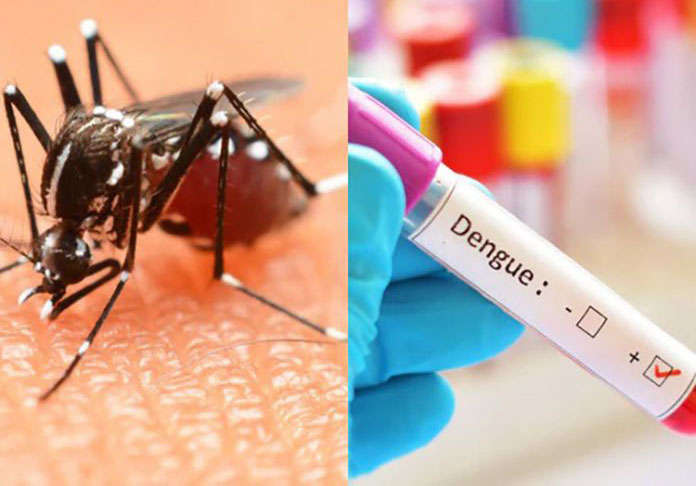
The number of deaths from dengue fever in Sri Lanka has risen to 73 this year, with 96,228 cases reported across the country so far, according to the Dengue Control Unit.
The latest figures indicate that dengue continues to pose a significant public health concern, with 737 new cases recorded during the first four days of September alone.
Dengue infections peaked in July, when 29,964 cases were reported, according to the latest data. June recorded the second-highest monthly total, with 21,533 cases, while 10,155 cases were reported in August.
Earlier in the year, 8,590 cases were recorded in May and 7,866 cases in January.The Western Province remains the worst-affected area, accounting for more than half of all dengue cases reported nationwide. A total of 50,851 cases have been recorded in the province, representing 52.84% of the country’s total.
The Southern Province has recorded 13,950 cases, followed by the Central Province with 8,818 cases and Sabaragamuwa Province with 7,925 cases.

Sun directly overhead Galle, Angulugaha, Imaduwa, Telijjawila, Yatiyana and Tangalle about 12.08 noon today (07)

Showers above 50 mm are likely at some places in the Uva and Eastern provinces.

Harshitha’s composed knock seals Sri Lanka’s semi-final berth

‘Choka Malli’ slips out of country before travel ban

Dengue death toll rises to 73

Ranil accuses govt. of undermining democracy

‘Dates have the highest sugar content to fight Coronavirus’

Sunday Island 27 December – Headlines

#SundayIsland 17th December – Headlines

Sunday Island – 28th March

Sunday Island Headlines – 21 March

Sunday Island – 21st February – Headlines
-

 News5 days ago
Denied of promotion to SC despite vacancies, justice Gurusinghe retires
-

 Latest News5 days ago
Grade 5 scholarship exam results released
-

 News5 days ago
22A: SC urged to suspend hearing, appoint full bench
-

 Midweek Review6 days ago
The local and global dynamics of Sri Lanka’s 22nd Amendment
-

 News3 days ago
Namal remanded until Sept. 18 over Airbus deal investigation
-

 News5 days ago
Govt. seeks NATO assistance
-

 Latest News2 days ago
Tharanga creates history with Diamond League crown in Brussels
-

 News6 days ago
40 professional organisations and TU oppose proposed 22A