
Business
Extreme polarization, volatility, uncertainty and pessimism since end of Cold War: Possible stratagem

Seldom has the world witnessed such polarization and volatility mixed with uncertainty even more than in the 1990s with the collapse of Berlin Wall leading to the unification of West and East Germany, dissolution of the then Soviet Union known as Perestroika, First Gulf War and rapid expansion of NATO, amongst others. During this period, the undersigned was researching these subject matters in 1990s in Graduate School in the US, but the global community, mostly, was unaware or least disturbed as the impingement did not transcend to the entire world as well as the internet and social media were only at embryonic stage.
The undersigned recollects that the only issue which perturbed the global community, including Sri Lanka, was the First Gulf War of 1990s as it impacted, yet again, the price of oil. Only other instances that the world experienced such uncertainty or polarization after WW II were the two Oil crises of 1970s, Vietnam and Korean War including the Second Indochina War of 1960s, financial crisis of 2008, September 11th Attacks in US, Arab Spring of 2010 and of course the Cuban crisis of 1962. Most of these events occurred at the peak of the Cold War but the crisis of today is totally and on a tectonically different dimension.
Strait of Hormuz and nature of War:
It is none other than Energy known as Oil and to an extent Gas of Middle East with the rupture and blockade of Strait of Hormuz by Iran due to the ongoing Iran-Israel-US conflict. Envision, the 12-day “Operation Midnight Hammer” of June 2025 of which the US bombed Iran did not make much notice or breakeven news mostly due to the swiftness and precision of the US as well as Strait of Hormuz was not strangled, thus the flow of oil was not affected. In this particular occasion, much discussed and debated subjects in geo-political and geo-economic discourse as Ukraine Conflict and Palestine-Israel Conflict were entirely eclipsed and overwhelmed not necessarily by the Iran War or its destruction of both property and human lives but due to a single word i.e. Oil, or rather “demolition” of flow of 20% of oil and gas via the seminal Strait of Hormuz.
Ironically, a scarcely visible and little-known Strait of Hormuz unlike the Suez Canal, could negatively reverberate and resonate from Seoul, Soweto to San Francisco as no other single natural endowment or commodity. This is more impactful and influential to the global economy than vital agricultural commodities such as corn, wheat or rice. The noted Australian political scientist, Geoffrey Blainey, stated quote “Wars can only occur when two nations decide that they can gain more by fighting than by negotiating. War can only begin and continue with the consent of at least two nations” unquote. If one scrutinizes the military conflicts between and amongst nations including both the World Wars as well as a number of bloody and ruthless conflicts since the Roman times, this geo-political proposition would be true in almost in all the conflicts.
Perilous nature of this Conflict both to Economy and World Order:
In this conflict, what was most terrifying or even “intimidating” to the global community was the geography, topography and geomorphology of Iran. That said, Iran has already seized and blockaded, probably, the most crucial chokepoint of Hormuz and has also threatened to block the 18-nautical mile Bab-el-Mandeb Strait, which connects Red Sea to Gulf of Aden and extends to Indian Ocean. The Strait accounts for nearly 10%-12% of total traded seaborne oil, which mostly power the economies of Asia. This could occur since the Houthi rebels of Yemen, which supports the regime of Iran, has formally involved in the hostilities and fired missiles and other attacks, thus making this particular Strait too, literally and metaphorically, unusable for vessels. The end result could be the unprecedented surge of the price of oil to well over USD 140 a barrel, which could cripple the global economy, mostly the developing countries highly depended on oil and gas such as Sri Lanka. Even the global community was ‘elated’ of the two-week ceasefire but it is by no means a durable permanent solution under any circumstances.
As Richard Hass, President emeritus of the premier geo-political institution of the world i.e. Council on Foreign Relations (CFR) and Envoy, expressed his deep concern as well as fear on CNN program titled “Global Public Square” (GPS), one of the most esteemed weekly programs on international affairs hosted by Fareed Zakaria of the current and dynamic developments in Middle East. Haas accentuated that he was most worried that the eight-decade world order, shaped, fashioned and evolved after the WWII in 1945, could be ruptured and fragmented as never before, thus provoking and engendering global instability and disequilibrium, if the conflict was not permanently resolved on an exigent manner by the global community.
Risk of Kindleberger Trap and response by Sri Lanka:
These are profound geo-political observations and conjectures as well as the undersigned is of belief that such a scenario could lead to a “Kindleberger Trap”. This thesis was popularized by much noted Dean of Harvard Kennedy School, Joseph Nye, which underlines that global volatility and fluidity could occur when a dominant power in the comity of nations declines to extend the so-called global public good and emerging power/s is not in a position to assume such a leadership role or global stewardship. This hypothesis could alarm any nation from least developed to most advanced since the genesis of the WWI and WWII as well as the Great Depression of the 1930s could be detected or sketched, directly or indirectly, to this geo-political theory or trap.
It is ironical to note that apart from the property and human lives which were, unfortunately, lost due to the six-week conflict, one of the greatest setbacks or “victims’’ was none other than the application or recognition of International Law. It was most commendable that Sri Lanka applied and upheld the international and humanitarian law, to the letter and spirit, to rescue the crew of bombed Iranian vessel named IRIS Dena on the EEZ of Sri Lanka, without jeopardizing the decidedly delicate geopolitical equilibrium.
Most efficacious Stratagem was execution of Diplomacy and Negotiations:
As the undersigned drafts this article, it is most disquieting to note that the world is involved in three major conflicts, with at least one of them of the conflict is a nuclear power, as well as a number of other interstate and intra-state conflicts, which are reported or focused by the media and political analysts infrequently if not rarely. As Croesus, who was the last King of Lydia (today known as Turkey), enunciated these judicious words vis-à-vis war, during the era Buddha was preaching Buddhism in India and military strategist, Sun Tzu, was preaching Art of War to Emperors of China. Croesus stated quote “No one is so foolish as to prefer war to peace, in which, instead of sons burying their fathers, fathers bury their sons” unquote. It is equally intriguing to note that one of the top most officials of Carter Administration, Zbigniew Brzezinski, stated that it is of the US interest to engage Iran in serious negotiations on both regional security and nuclear challenge it poses.
Concluding remarks with Observations:
These observations must have been pronounced since the late Mohammed Reza Pahlavi better known as Shah, on an interview with one of the most trusted investigative journalists of the time, Mike Wallace, on CBS “60 Minutes” in 1974, stated that Iran was a proud country with a very long and rich history and civilization, which wished to co-exist in peace, but if war was imposed on Iran, it would not hesitate to respond. He further obliquely implied that Strait of Hormuz was indispensable to the world economy. These were stated well over five decades ago.
It would be befitting and politic to conclude with the sapient and sage words of one of the greatest negotiators and statesmen ever to walk on earth in the last Century, Nelson Mandela, quote “If you want to make peace with your enemy, you have to work with your enemy. Then the enemy becomes your partner” unquote. Final parting stratagem is none other than the execution of diplomacy and negotiations as President Kennedy stated in November 1961 at the historic “University of Washington Speech” quote “Diplomacy and defense are not substitutes for one another. Either alone would fail.” unquote.
Author is a former career Ambassador, Professor and Examiner of International Economics with specialization on Geo-economics and Geo-politics, Board Member, and Strategic Advisor. He earned the MBA from San Francisco State/University of California, PhD from Indian Institute of Technology (IIT) Delhi and is a Senior Fellow at Harvard. He could be reached on mendissaj24@gmail.com
By Prof. Saj U. Mendis, PhD


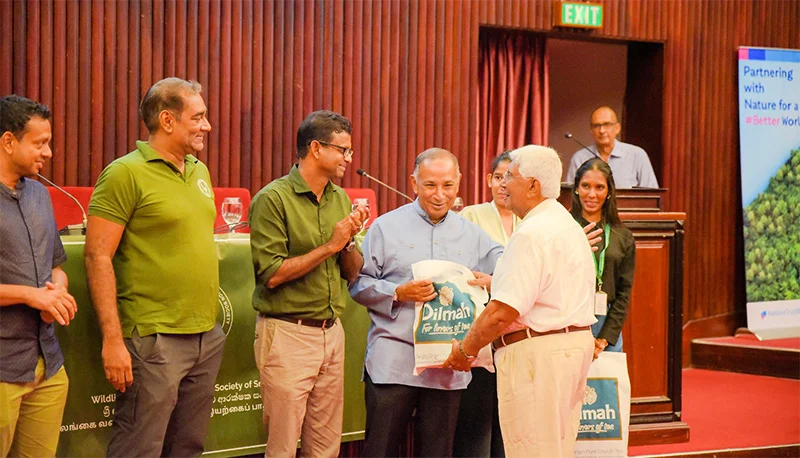
Environmental crises in Sri Lanka are no longer merely conservation issues but constitute an economic and corporate survival challenge that directly threatens the country’s water security, agriculture, exports and long-term business sustainability, speakers at the latest monthly lecture of the Wildlife and Nature Protection Society of Sri Lanka (WNPS) warned on Thursday.
At a time when climate shocks, biodiversity collapse and environmental degradation are beginning to impact supply chains, tourism, food production and investor confidence, the lecture titled “Conservation in Action: Driving Impact – Hill Country to Courtrooms: Science, Community and the Next Generation in Action” highlighted how conservation is increasingly becoming intertwined with economics, corporate governance and national resilience.
Held at the Bandaranaike Memorial International Conference Hall with support from Nations Trust Bank, the event drew leading corporate executives, conservationists, lawyers, architects, researchers and youth leaders.
Corporate leader and conservation advocate Sriyan de Silva Wijeyeratne delivered one of the strongest messages of the evening, stressing that Sri Lanka’s montane ecosystems were effectively the economic backbone of the nation.
“You block up the montane region, we lose our water, our agriculture and our exports, he said.
His remarks reflected a growing global shift where environmental protection is increasingly viewed not as philanthropy, but as a strategic investment linked directly to economic continuity and climate resilience.
Wijeyeratne explained how the WNPS-led “Plant” initiative has rapidly evolved into one of Sri Lanka’s most ambitious privately supported ecological restoration programmes, demonstrating how businesses can move beyond traditional corporate social responsibility into measurable environmental investment.
Within just five years, the initiative has begun restoring around 200 acres of degraded landscapes while establishing approximately 30 kilometres of ecological corridors in the central highlands.
Importantly, he said, the programme was designed not to centralise conservation under a single organisation but to create a scalable model for wider private-sector adoption.
“We are not trying to become the answer. Plant is meant to prove that private-sector-led restoration is possible and that businesses can actively participate in rebuilding ecosystems, he said.
The initiative already involves partnerships with multiple private-sector stakeholders investing in ecological restoration in the hill country — an area critical to tea, hydropower, water resources and downstream agriculture.
One of the clearest examples discussed during the lecture was the growing collaboration between conservationists and Sri Lanka’s architectural and urban planning sectors.
Following discussions initiated at the Geoffrey Bawa Trust, the prestigious Geoffrey Bawa architectural awards were restructured into the “Monamal Award,” recognising projects that integrate biodiversity, ecosystem restoration and environmentally sensitive design.
“This is about redefining what good development means, Wijeyeratne said.
“The future gold standard of architecture must be buildings and landscapes that embrace ecosystems rather than destroy them.”
The lecture also explored how climate change is reshaping social vulnerability and labour resilience — key concerns for businesses operating in agriculture, plantations and rural economies.
Wildlife photographer and conservationist Riaz Cader highlighted another emerging business concern — the growing interaction between wildlife and human-dominated production landscapes.
Supported by LOLC Holdings, the WNPS leopard conservation initiative has established research stations in Belihuloya and Kotagala to study leopards living within tea plantation regions.
Using community-based data collection, camera trap technology and local informer networks, researchers are mapping leopard movement, conflict zones and habitat fragmentation across estate landscapes.
Cader noted that increasing human pressure had altered leopard behaviour significantly.
“We have effectively pushed many of these leopards into nocturnal behaviour because of constant human activity, he said.
The research has major implications for plantation management, land-use planning and biodiversity compliance standards increasingly demanded by global markets and sustainability certification bodies.
Cader also pointed to encouraging signs emerging from restored habitats such as Budunwala, where camera traps recorded a mother leopard and cub moving freely during daylight hours — behaviour rarely observed in heavily disturbed environments.
Researchers have additionally documented elusive rusty-spotted cats and pangolins at restoration sites, reinforcing the ecological value of reconnecting fragmented landscapes.
Beyond biodiversity outcomes, the restoration programmes are generating direct socio-economic benefits.
The lecture further revealed how conservation organisations are increasingly engaging with law enforcement and governance systems to combat environmental crime — another growing risk area with economic implications.
WNPS recently launched a specialised police training programme at the Rodella Hill Club aimed at strengthening enforcement against illegal wildlife trade, snaring and poaching in the hill country.
Speakers warned that organised wildlife crime, habitat destruction and illegal exploitation of natural resources continue to undermine both biodiversity and sustainable economic development.
Questions from the audience also broadened the discussion into marine ecosystems and blue economy concerns, including the lingering environmental and economic fallout from the X-Press Pearl Disaster.
WNPS officials said their marine subcommittee was actively engaged in mangrove restoration, blue carbon ecosystem protection and marine conservation initiatives.
They noted that Sri Lanka’s mangrove restoration efforts had already received international recognition through UN-backed environmental awards.
Throughout the evening, speakers repeatedly stressed that conservation is no longer the exclusive responsibility of scientists or environmental activists.
By Ifham Nizam
Sri Lanka’s apparel exports recorded a softer performance in April 2026, with total exports declining by 4.72% to US$ 328.15 million, compared to US$ 344.40 million in April 2025. The decline was mainly seen across key traditional markets, with exports to the UK down 16.91%, the EU down 8.78%, and the USA down 3.46%. However, the 12.61% growth in other markets during April shows that there is still room to build momentum through greater market diversification.
For the period from January to April 2026, total apparel exports declined by 7.47% to US$ 1.53 billion, reflecting continued pressure across major export destinations. While this performance reflects challenging global demand conditions, it also reinforces the need for Sri Lanka to sharpen its competitiveness, improve cost structures, strengthen market access, and move faster into higher-value opportunities.
JAAF believes the industry’s long-term strength remains intact, but the path forward requires a more focused national effort. To move beyond current export levels and work towards breaking the US$ 5 billion barrier, Sri Lanka must support the sector with policy consistency, energy cost reforms, trade facilitation, skills development, and stronger positioning in both traditional and emerging markets. The apparel industry continues to be one of Sri Lanka’s most important foreign exchange earners, and its ability to recover and grow will be critical to the country’s broader export economy.
Recurring revenues reach 74% of total; Normalized EBITDA margin expands 17 percentage points
hSenid Business Solutions PLC (hSenidBiz) announced its financial results for the fourth quarter and full year ended 31 March 2026, delivering a significant turnaround in operational profitability, materially improving earnings quality, and achieving a key strategic milestone.
In the fourth quarter, total revenue reached LKR 522.2 million, up 5 percent year-on-year (YoY). The PeoplesHR Cloud segment delivered LKR 380 million, representing 20 percent YoY growth in LKR terms and 12 percent growth in USD constant currency terms, with subscription revenues comprising 87 percent of segment revenue. New deal closures recovered strongly to USD 843,395. The Company sustained profitability at the Profit Before Tax (PBT) level with LKR 7 million and a normalized EBITDA margin of 11 percent, while continuing to generate positive free cash flow.
For the full year, the Company delivered a substantial financial turnaround. Revenue grew 13 percent YoY to LKR 2.1 billion. Normalized EBITDA turned positive at LKR 200 million, with the margin expanding 17 percentage points to 10 percent. Profit Before Tax improved by LKR 313 million year-on-year, significantly reducing the loss from LKR 321 million in FY2025 to LKR 8 million. The Company also generated positive free cash flow for the year, a sharp reversal from negative free cash flow in the prior year and an annual improvement of over LKR 350 million. Exit Annualized Recurring Revenue (ARR) reached USD 5.5 million, growing 32 percent YoY, while recurring revenues strengthened to 77 percent of total revenue in the fourth quarter, underscoring the quality and resilience of the Company’s SaaS-led business model.
Dinesh Saparamadu, Founder and Chairman of hSenidBiz, commented: “FY2026 marks a clear inflection point for hSenidBiz. We have materially strengthened the quality and predictability of our revenue base while delivering meaningful operating leverage. These outcomes validate the scalability of our SaaS-led model and position the Company well for the next phase of disciplined, high-quality growth.”
Sampath Jayasundara, Chief Executive Officer, added: “The operational momentum achieved in FY2026 provides a strong foundation as we enter the next phase of growth. Our priorities for FY2027 are to accelerate customer acquisition in key markets, drive execution excellence across the sales organisation, and rapidly advance our AI-driven capabilities, particularly through Lexi Insights to deliver even greater value to enterprise customers across our markets.”

US military launches strikes on southern Iran amid talks in Qatar

Pope says AI must be ‘disarmed’ to prevent domination, exclusion, and death

Showers will occur at times in the Western, Sabaragamuwa and North-western provinces and in Galle, Matara, Kandy and Nuwara-Eliya districts.

Election monitors flay JVP for postponing PC polls

SL exports exceed USD 5.7 bn in first four months of 2026

Easter Sunday carnage: Court told Maulana’s statement cannot be accepted without cross-examination

‘Dates have the highest sugar content to fight Coronavirus’

Sunday Island 27 December – Headlines

#SundayIsland 17th December – Headlines

Sunday Island – 28th March

Sunday Island Headlines – 21 March

Sunday Island – 21st February – Headlines
-
 Features6 days ago
Octopus, Leech, and Snake: How Sri Lanka’s banks feast while the nation starves
-
 Sports6 days ago
Sri Lanka women’s volleyball team ready for Central Asian challenge
-
 Opinion5 days ago
Murder of Ehelepola family, Bogambara Wewa and Sightings of Wangediya
-
 News5 days ago
Steps underway to safeguard Sri Lanka’s maritime heritage
-

 Business4 days ago
Historic launch of CCWE Fashion Week & International Summit 2026
-
 Features2 days ago
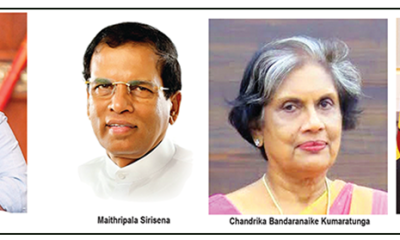
The NPP’s pivot to the past
-
 News1 day ago
Police probe underway to ascertain links between criminals deported from UAE and local politicians
-

 Editorial5 days ago
A play without its protagonist