
News
AKD admits import of substandard coal, blames technicalities and supplier

… announces temporary relief package
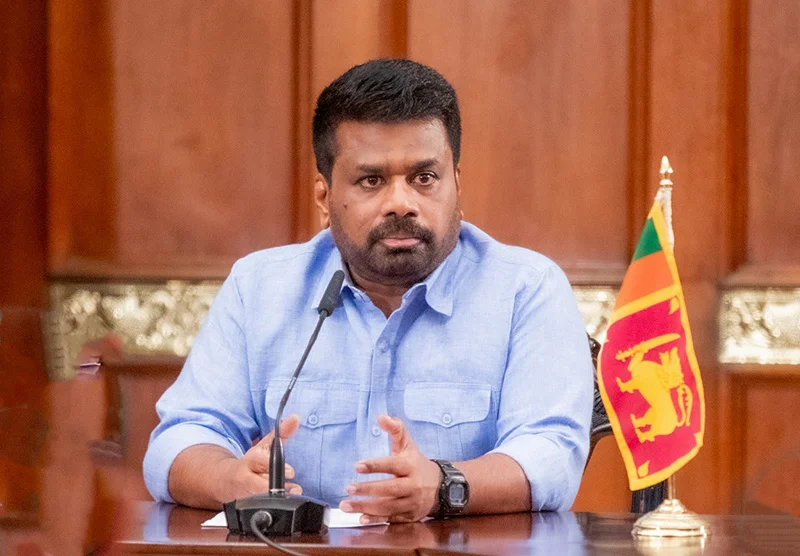
President Anura Kumara Dissanayake yesterday acknowledged in Parliament that the import of substandard coal had adversely impacted electricity generation.
“There’s an issue with the coal. That’s true,” the President said, addressing the House.
President Dissanayake maintained that the problem had not arisen from the tender process but from the failure of the supplier to deliver coal that met the required standards. “The issue did not arise from the tender process. It resulted from the supplier’s failure to deliver coal that met the required standards. I would also like to point out that coal is not tested by individuals through simple inspection or personal judgment; it is examined in certified laboratories,” he said.
The President went on to say that coal shipments are tested through certified laboratories before dispatch, and an initial payment of 80 percent was made after receiving laboratory certification confirming that the coal meets stipulated specifications.
The President said the balance 20 percent was released only after a second verification carried out by an Indian laboratory selected for the purpose in 2023. Tests had revealed that three shipments failed to meet the required specifications.
The President added that although some shipments had passed laboratory tests, operational assessments at the power plant indicated that the coal was not performing to the expected standard. As a result, the government had withheld the remaining payments for certain consignments, imposed penalties on some suppliers, and in a few instances suspended even the initial 80 percent payment.
He said the use of substandard coal would increase electricity generation costs as the shortfall would have to be compensated by alternative sources, such as diesel. However, he assured Parliament that the additional costs would be recovered from the coal suppliers and would not be passed on to consumers.
The President also said the government expected to receive the fourth and fifth tranches of financial assistance from the International Monetary Fund by the end of May. He told Parliament that Sri Lanka hoped to reach a staff-level agreement with the IMF by Thursday, which would enable the country to secure about USD 700 million in funding.
Meanwhile, the President announced a temporary increase in cash assistance under the Aswesuma welfare programme to provide relief to low-income households during the April festive season.
He said the government continued to face challenges in accurately identifying eligible beneficiaries but noted that Aswesuma remained the only available framework to determine eligibility. Under the scheme, current benefit categories include payments of Rs. 17,500, Rs. 10,000 and Rs. 5,000.
For April, the Rs. 17,500 allowance will be increased by Rs. 7,500 to Rs. 25,000, while the Rs. 10,000 payment will rise by Rs. 5,000 to Rs. 15,000. Beneficiaries in the transitional category will receive an additional Rs. 2,500. The temporary increases are expected to cost the Treasury about Rs. 8.5 billion and will apply only for the month of April.
Addressing electricity tariffs, the President said the adjustment that came into effect on April 1 had been determined earlier and was not linked to the present crisis. According to him, the increase for households consuming less than 30 units amounts to about Rs. 15 per month, while other tier increases translate to approximately Rs. 1 to Rs. 1.50 per day.
He said the government had considered three options to manage rising electricity costs: requiring the Ceylon Electricity Board to absorb the losses, transferring the burden entirely to the Treasury, or passing the cost on to consumers. Instead, the government opted for a shared approach involving the State, the public and the national power system operator.
Under this arrangement, consumers using less than 90 units of electricity will receive a subsidy during the next tariff revision. The government has allocated Rs. 5 billion per month for the programme, amounting to Rs. 15 billion over three months. The President said losses in the electricity sector during the same period were estimated at about Rs. 32 billion.
Turning to agriculture, the President outlined measures to stabilise fertiliser supply amid rising global prices. He said the Department of Agriculture currently held about 14,000 metric tonnes of urea imported at the previous price, while private companies also possessed stocks.
Following discussions with fertiliser suppliers, companies had agreed to release all remaining stocks purchased at the old price to Agrarian Service Centres. These quantities, together with government stocks, are expected to be sufficient for two paddy cultivation seasons.
However, fertiliser required for the third season would have to be imported at higher prices. The President said recent offers for urea ranged from USD 680 to USD 850 per metric tonne.
To cushion farmers from price increases, the government has decided to sell fertiliser for the third season at a fixed price of Rs. 10,200 per bag despite the estimated market price ranging between Rs. 13,500 and Rs. 14,000. The Treasury will absorb the difference, amounting to roughly Rs. 3,000 per bag, at a total estimated cost of about Rs. 1.7 billion.
The President also announced increases in fertiliser subsidies. Farmers cultivating paddy will receive Rs. 30,000 per hectare, up from Rs. 25,000, while subsidies for subsidiary crops during the Yala season will increase from Rs. 15,000 to Rs. 18,000. Small tea holders will receive a one-time additional payment of Rs. 5,000 per fertiliser bag in addition to the existing Rs. 4,000 subsidy.
He said the expanded fertiliser support programme would cost the government about Rs. 6.5 billion, with an additional Rs. 600 million allocated specifically for fertiliser subsidies.
The President also outlined plans to manage rising energy costs, particularly in the fuel sector. He said the government had considered allowing fuel prices to fully reflect market costs or introducing a subsidy mechanism.
According to current estimates, he said, diesel would exceed Rs. 600 per litre if sold strictly at cost. Instead, the government has decided to maintain the existing tax structure and provide Treasury-funded subsidies.
Under the proposed scheme, diesel will receive a subsidy of up to Rs. 100 per litre, while petrol will receive up to Rs. 20 per litre. Fuel prices will continue to be adjusted based on monthly cost calculations, with the next revision scheduled for May 1.
The subsidy programme is expected to cost around Rs. 20 billion per month and will operate for three months at an estimated total cost of Rs. 60 billion.
In addition, fishermen will receive targeted assistance. Small fishing boats will qualify for an extra Rs. 50 per litre fuel subsidy for up to 625 litres per month, credited directly to bank accounts. This will provide a monthly benefit of Rs. 31,250 per boat.
Multi-day fishing vessels will receive a fuel allowance of Rs. 150,000 per vessel during the three-month subsidy period, the President said.
By Saman Indrajith



Latest News
Heat Index at Caution Level in the Northern, North-central, North-western, Western, Sabaragamuwa, Eastern and Southern provinces and in Monaragala district


Warm Weather Advisory
Issued by the Natural Hazards Early Warning Centre
Issued at 3.30 p.m. on 15 April 2026, valid for 16 April 2026.
The Heat index, the temperature felt on human body is likely to increase up to ‘Caution level’ at some places in the Northern, North-central, North-western, Western, Sabaragamuwa, Eastern
and Southern provinces and in Monaragala district.
The Heat Index Forecast is calculated by using relative humidity and maximum temperature and this is the condition that is felt on your body. This is not the forecast of maximum temperature. It is generated by the Department of Meteorology for the next day period and prepared by using global numerical weather prediction model data.
Effect of the heat index on human body is mentioned in the above table and it is prepared on the advice of the Ministry of Health and Indigenous Medical Services.
ACTION REQUIRED
Job sites: Stay hydrated and takes breaks in the shade as often as possible.
Indoors: Check up on the elderly and the sick.
Vehicles: Never leave children unattended.
Outdoors: Limit strenuous outdoor activities, find shade and stay hydrated.
Dress: Wear lightweight and white or light-colored clothing.
Note:
In addition, please refer to advisories issued by the Disaster Preparedness & Response Division, Ministry of Health in this regard as well. For further clarifications please contact 011-7446491

The Indonesian Navy Sailing Ship KRI BIMA SUCI – 945 arrived at the Port of Colombo on a goodwill visit on 15 Apr 2026 and was welcomed by the Sri Lanka Navy (SLN) in compliance with time-honoured naval traditions.
The vessel’s arrival is a key highlight of the ASEAN Plus Cadet Sail (APCS) – 2026 programme , accompanying a diverse contingent of Navy cadets from 26 different nations alongside their Indonesian counterparts.
The ship is commanded by Commander SUGENG HARIYANTO. Meanwhile, Officer Under-trainees of the Sri Lanka Navy are expected to participate in various programmes aboard the
ship and naval personnel observe its operational functions during its stay in the island.
Furthermore, the ship’s crew is scheduled to take part in programmes organized by the Sri Lanka Navy to enhance camaraderie between the two navies, as well as visit several tourist attractions in the country.
News
PM initiates children into learning at the auspicious time while observing New Year traditional customs and rituals

The Sinhala and Tamil New Year cultural festival, organized by the Ministry of Buddha Sasana, Religious and Cultural Affairs, was held on Tuesday (14) in Gampaha under the patronage of Prime Minister Dr. Harini Amarasuriya, with the performance of traditional auspicious customs and rituals.
In accordance with tradition, during the Punya Kalaya (inauspicious time), the Prime Minister visited the Medagama Sri Sunandarama Viharaya in Gampaha and participated in religious observances and received blessings from Venerable Thunmodara Samitha Thero, a member of the Karaka Sangha Sabha of the Sri Lanka Ramanna Maha Nikaya and the Chief Incumbent of the Medagama Sri Sunandarama Dharmaduta Piriven Viharaya.
The traditional observances of the Sinhala and Tamil New Year cultural festival were held at the residence of Darshana Weerasinghe in Gampaha. Marking the auspicious time for commencing work, and upon the invitation of the host family, the Prime Minister planted a sapling within the premises. Concurrently, Minister of Buddha Sasana, Religious and Cultural Affairs, Dr. Hiniduma Sunil Senevi, and Minister of Foreign Affairs and Tourism, Vijitha Herath, joined the PM.
Subsequently, the Prime Minister joined children in engaging in traditional folk games.
At the auspicious time for engaging work and educational activities, the PM participated with children in reading and writing, guiding them and symbolically marking the commitment to advancing the educational development of the nation’s children.
Thereafter, the Prime Minister and other distinguished guests observed the traditional customs of exchanging greetings, transactions and gifts with the host family, and joined them to partake in the customary New Year meal.
Extending New Year greetings to all citizens, the Prime Minister expressed her gratitude to all Sri Lankans, both at home and abroad, for their contributions in overcoming and effectively managing the various challenges faced by the country.
Speaking at the occasion, Minister Dr. Hiniduma Sunil Senevi stated that the Sinhala and Tamil New Year festival symbolizes renewal and purity, and reflects the energy of the sun. He also conveyed his wishes for a peaceful and prosperous New Year for all.
The occasion was attended by the Deputy Minister of Finance and Planning and Minister of Labour, Dr. Anil Jayantha; Deputy Minister of Labour, Mahinda Jayasinghe; Member of Parliament for the Gampaha District, Ruwan Mapalagama; along with the Gampaha District Secretary, Mayor, Divisional Secretaries, and a large number of government officials.
(Prime Minister’s Media Division)

Heat Index at Caution Level in the Northern, North-central, North-western, Western, Sabaragamuwa, Eastern and Southern provinces and in Monaragala district

Pakistani army chief in Tehran amid bid to restart US talks

Sri Lanka repatriates 238 Iranian sailors stranded after US torpedo attack

Indonesian Navy Sailing Ship KRI BIMA SUCI – 945 makes port call in Colombo

PM initiates children into learning at the auspicious time while observing New Year traditional customs and rituals

Navy seize an Indian fishing boat poaching in seas north of Mannar

‘Dates have the highest sugar content to fight Coronavirus’

Sunday Island 27 December – Headlines

#SundayIsland 17th December – Headlines

Sunday Island – 28th March

Sunday Island Headlines – 21 March

Sunday Island – 21st February – Headlines
-

 News4 days ago
CEB orders temporary shutdown of large rooftop solar systems
-

 News7 days ago
AG: Coal procurement full of irregularities
-
 Features4 days ago
From Royal College Platoon to National Cadet Corps: 145 years of discipline, leadership, and modern challenges
-

 Business6 days ago
Israeli attack on Lebanon triggers local stock market volatility
-

 Business7 days ago
Hayleys Mobility introduces Premium OMODA C9 PHEV
-

 Business6 days ago
HNB Assurance marks 25 years with strategic transformation to ‘HNB Life’
-
 Latest News3 days ago
PNS TAIMUR & ASLAT arrive in Colombo
-

 Sports7 days ago
DS to face St. Anthony’s in ‘Bridges of Brotherhood’ cricket encounter