
Features
Instagram and YouTube Held Liable for selling Engineered Addiction


Law and Technology
On Wednesday, March 25, a Los Angeles Superior Court jury found Big Tech’s Meta Platforms Inc. and Google to have been negligent in providing online platforms to their users without warning them of the addictive dangers of the platforms. The day before in Santa Fe, New Mexico, another jury had found Meta to have wilfully violated the state’s unfair practices laws in failing to protect children from online predators.
In the California case, a 20-year-old woman identified as K.G.M., or Kaley, successfully sued for damages for becoming “severely addicted to Instagram (Meta) and YouTube (Google) as a child, leading to a downward spiral of body dysmorphia (a mental condition characterized by extreme with self-perceived defects in the appearance of the body), depression, and suicidal ideation.” She was awarded $3M in compensatory damages to be paid 70% by Meta and 30% by Google. The jury is set to deliberate further on punitive damages the companies should pay for malice or fraud. In the New Mexico case, Meta was ordered to pay $375 million in damages.
The awarded amounts are trifle to the giant companies that are floating in trillions of dollars for selling what is an essentially ephemeral but arguably addictive product. Yet the verdicts augur well for thousands of similar cases that are before courts filed by teenage plaintiffs and public agencies. Equally important, they will force Big Tech giants to reconsider the design of their social media platforms. Their dilemma is that in redesigning their platforms to attenuate their addictiveness, they are also likely to lose their current market capture whose primary attraction is its very addictiveness.
Both Meta and Google have already indicated their intention to appeal. They both have deep pockets to draw from, unlike TikTok and Snap who too were named in the LA case but chose to settle before the start of the trial. The settlement terms are not know but both are believed to have opted against litigating to avoid the huge legal costs involved. The two rulings are being called Big Tech’s new “Big Tobacco Moment”, recalling the lawsuits of the 1990s that held tobacco companies like Philip Morris and RJ Reynolds accountable for the harms of cigarettes. The tobacco companies were forced to reach a $206 billion dollar settlement in 1998, with more than 40 states and an agreement to stop marketing to minors.
The two social media rulings are not the end of the matter but could be called the end of the legal assertions by tech companies that their social media broadcasting is protected as free speech by the First Amendment and that as carriers of the messages posted by users, they (the tech companies) are not responsible for their content. The latter was the principal argument of Google (for YouTube), but the LA jury of seven women and five men disagreed, based on the evidence presented and the novel legal theory that online platform design can create an addictive product.
The Pleasure Chemical of Addiction
Psychologists, neuroscientists, mental health advocates and teachers of children have long identified the addictive effects of social media users, especially children. The effects are global and so are the stories about their tragic victims. Social media have become sites for online bullying, beauty filtering as well as body shaming, depression by comparison, sycophancy, and sexual predation. Coroners have blamed social media platforms for teenage suicides. Stanford psychiatrist Anna Lembke has authored a popular book, Dopamine Nation: Finding Balance in the Age of Indulgence, pointing to social media platforms as the addictive substance of choice of our time.
Dopamine (3-hydroxytyramine) is a neuro-modulatory molecule that functions as neurotransmitter in the human brain and is at the heart of addiction mechanics. It is the brain’s “pleasure chemical” that is released in response to external stimuli ranging from survival behaviours, pleasurable activities, to addictive stimulants. The natural design of the brain provides the reward mechanism for activities needed for survival and procreation. The design also responds to addictive substances and habits by releasing excessive levels of dopamine far exceeding the levels associated with non-addictive activities.
Greater the release of dopamine, greater the pleasure and greater the craving for the stimulant. The addiction cycle starts with the individual being first exposed to an addictive substance or habit and is rewarded by a large release of dopamine; the brain then both reinforces the behaviour and counters it by reducing the reception and release of dopamine – triggering the need for higher doses for the same pleasure reward; the cycle becomes vicious as the individual turns compulsive in craving for the addictive stimulant.
Psychiatrists identify two common risk factors in the addiction cycle. The first is the “dose effect” or “immersion”, referring to the amount used or, in the case of social media, the time spent online. The second ls “deification”, the tendency to ‘worship’ social media products as superhuman intelligences or … godlike entities that are ultra reliable.” The corollary of deification among teenage victims is self-idealization and self-comparison leading to lowering of self-esteem and emotional fatigue, depression and anxiety, or body image issues and eating disorders.
Individuals react differently to addictive stimuli, and Big Tech lawyers at the two trials unsuccessfully tried to shift the causes for addiction to the personal lifestyles and the mental health problems of the plaintiffs, rather than the social media platforms themselves. Psychiatrists opine that while those with pre-existing problems are more vulnerable to addition than others, there is evidence that the social media can both ‘exacerbate’ pre-existing conditions as well as ‘induce’ new habits.
Engineered Addiction
Both exacerbation and inducement would appear to have been present in the addiction history of 20 year old KGM, or Kalley, the plaintiff in the California case who testified on her own behalf. She said that she became addicted to YouTube at age six and Instagram at nine, and they both had “deleterious effects on her wellbeing.” According to her testimony, she became depressed by age 10, and began engaging in self-harm, getting aloof from her family and straining her relationships in school. By 13, she was diagnosed with “body dysmorphic disorder and social phobia.”
KGM’s lawyer, Mark Lanier, connected the legal dots: “How do you make a child never put down the phone? That’s called the engineering of addiction. They engineered it, they put these features on the phones.” He called Instagram and YouTube “Trojan horses” – “they look wonderful and great … but you invite them in and they take over.” KGM’s experience, her lawyers argued, “is emblematic of what tens of thousands of young people have faced on social media and in their offline lives.”
Counter testimonies were provided by Adam Mosseri, the head of Meta’s Instagram, and Mark Zuckerberg himself, Meta’s CEO and Facebook founder. Their main argument was that there is no existing body of scientific work to prove that social media causes mental health harms. Mosseri attempted to draw a distinction between “clinical addiction” and “problematic use” which he compared to “watching TV for longer than you feel good about.” That argument was quickly shot down by lawyer Mark Lanier who got Mosseri to admit that he is not a doctor express such an opinion.
Apart from clinical evidence, Lanier presented evidence from internal corporate discussions and emails to establish that the two Big Tech companies knew what they were doing, the harm they were causing and the way they were choosing to ignore their own internal warnings. Lanier produced in court an internal Meta study called “Project Myst” which had found evidence that children who had experienced “adverse effects” were most likely to get addicted to Instagram. The study also acknowledged that parents were powerless to stop their children’s addiction.
Internal emails showed that Meta’s own experts were “unanimous on the harm there,” and that they were talking about “encouraging young girls into body dysmorphia.” Yet when it came to banning filters that distort faces, the high command ignored the technical recommendation. One of the reasons according to an internal email was that removing such filters would “limit our ability to be competitive in Asian markets (including India).”
Was fear of losing executive compensation a factor in not banning the marketing of harmful products like “beauty filters?
Lanier reminded Instagram Chief Mosseri that his salary of “about $900,000 per year” was only a small part of his compensation that could go as high as $10 million or $20 million a year, including bonuses and stock options, but depending on annual business turnover. Lanier questioned Mosseri whether decisions not to ban product features such as “beauty filters,” were meant to protect and enhance executive compensation. “I was never concerned with any of these things affecting our stock price,” Mosseri replied. But he could not erase the dots, or doubts.
The age verification process to stop children from starting to use social media at a young age is another concern. Instagram policy, according to Zuckerberg, is to restrict users under the age of 13, and to provide triggers to detect users who lie about their ages to get online. This obviously did not work for KGM, the plaintiff, who got hooked on at the age of six. Mosseri tried to argue that Instagram makes “less money from teens than from any other demographic on the app,” but this was refuted by research evidence showing that people who join young turnout to be long term users.
Lawyer Mark Lanier pointed out that in dealing with vulnerable people, Big Tech companies could either help them, ignore them, or “prey upon them and use them for their own ends.” Zuckerberg agreed that “no reasonable company would prey upon vulnerable people to make money, and that a reasonable company should try to help the people that use its services.” That Big Tech has been failing in being responsible and has been negligent in protecting vulnerable people is the jury verdict coming out of New Mexico and California.
by Rajan Philips

Features
‘There are no private universities in Sri Lanka’ – some considerations for higher education reform

 Academics involved in education policy like to say that there is no such thing as a private university in Sri Lanka. The only ‘universities’ in the country are state universities; anything else offering degrees is a private higher education institution (HEI). This position is technically accurate. Yet, in the discourse and imagination of the public, private universities are very real – people teach in them, students register in them, families pay fees, and such degree holders enter job markets in Sri Lanka and outside.
For decades, activists concerned for public higher education have ignored or resisted looking at private HEIs, as if such scrutiny would taint them. Others have worked in both types of institutions, carrying practices from each to the other. The apex body governing state universities, the UGC, has, meanwhile, ignored the concept of conflict of interest and appointed individuals in private higher education in committees and leadership positions. It is unsurprising then that some of the ideologies informing private higher education appear in reform agendas in the state sector.
This is a good time then to consider the varying types of private HEIs around us, and to take a look at some of the issues within them in the hope that higher education reform agendas will include private, as well as state higher education.
What is a ‘private university’?
First, some clarifications. In the public imaginary, a ‘private university’ is typically an institution that provides a foreign or local degree for which the student makes a payment. But this broad classification encompasses a host of diverse institutions and types of degrees which I detail below.
The Non-State Higher Education Division (NSHE) of the Ministry of Education has recognised 295 degrees by 32 institutions. Most of these are private companies and include a handful of established, well-known private HEIs that are ‘university like’. The degrees are local degrees conferred by the institutions accredited by the NSHE Division. While private HEIs conferring local degrees must be accredited by the NSHE Division, there appears to be no legal consequence for not doing so. In addition, there are several permutations of the private degree that miss the net of this Division and the Standing Committee on Accreditation and Quality Assurance (SCAQA) that assists this Division.
For one, degrees conferred by foreign universities offered, via these same private HEIs, are not vetted by the NSHE Division. Secondly, there is a growing plethora of private HEIs which have either no physical presence locally or only a dubious presence. The University Grants Commission has notified the public, through their website, that foreign universities listed in the Commonwealth Universities Yearbook and the World Higher Education Database are recognised, but refrained from giving any other details – which degrees? Offered by what modes? These details are not known. Some of the foreign universities in the lists may be legitimate entities in their own land but the degrees conferred locally, in their name, may not adhere to curriculum or teaching specifications of the NSHE Division or the UGC.
Another troubling phenomenon is the ‘top up degree’, which appears to work on the same principle as that of a pre-paid mobile connection: if I have a Diploma or an HND of a sort, I am eligible to complete a course of study which provides me with a degree, usually from a foreign university. The idea that someone who does not initially qualify for a degree programme should be able to work their way towards one is a progressive notion. This is the concept that open and distance learning (ODL) was based on initially, but which is now sadly exploited. ODL models are expected to provide opportunity for learning for those who may be excluded from traditional learning institutions. In Sri Lanka, however, we have seen ODL become a marketplace offering easy to obtain, for-fee qualifications by institutions with little commitment to superior teaching and learning.
Finally, a perusal of the many types of private HEIs and their varied degrees bring to mind another question – how should the private degrees, provided by state institutions (that are not educational institutions), be regulated? Who should do so?
All of these create a host of problems for the public – for hopeful students and parents and trusting employers. For the higher education sector, recruitment of academic staff, too, has become difficult due to this plethora of ambiguous higher education qualifications, as I discussed in a previous Kuppi article (‘Recruiting academics to state universities’).
Some issues in private HEIs – a bellwether for change in state universities
In this second part of this article, I will discuss some aspects of work in private HEIs – albeit the more established institutions – given that such issues may appear in reform agendas in future.
Across state universities, all permanent staff of a specific category are paid according to the same criteria. The picture is not so clear when it comes to private HEIs since they are different entities legally, typically companies. Private HEIs have salary scales and financial incentives that are different to each other. The more established private HEIs reportedly have attractive renumeration packages, possibly a reason for academics of state universities migrating eagerly to such institutions during sabbatical years and on retirement. This may not of course be the case with other less established, or improperly registered HEIs of which we know little. Academic staff of these more accepted private HEIs seem to value the high financial remuneration they receive (in comparison to state universities) as something that makes their work rewarding.
Attractive remuneration is important to sustain the good life and is at times seen as the institution’s way of encouraging good work. Yet, this has implications for the future of the institution: to continue to deliver on promised financial packages, institutions must continue to have large profit margins. One strategy has been to enroll multiple cohorts of students per year, even up to three or four intakes per year. This can result in exploitative work conditions, since staff must cater to all these cohorts in that same year. If there is inadequate staff, employees are further burdened. On the other hand, if there is a sudden drop in enrolments (degrees can go out of fashion) unexpected layoffs occur. Similar to other sectors that employ short-term contract staff – including state universities – in private HEIs, too, individual teachers, who are on short term contracts that need regular renewal, can feel pressured to work under difficult or exploitative conditions.
At the same time, even in the more established private HEIs, work norms differ from those of state universities in that they include promotional work that keeps the institution’s name in the eye of the public. The Marketing (or similarly named) unit comes up in conversations as one of the most important departments. It appears to weigh in on decision-making related to the number of staff, the amount of re-sits per exams, and other pedagogically important matters. This is a worrying example of how financial rationales interfere with pedagogically or academically sound processes, resulting in problematic results in the classroom. On the plus side, junior colleagues, who had experience in both state and private HEIs, also felt that they faced less harassment in private HEIs – primarily due to the private HEIs ability to take swift action in reported cases of harassment. This is a real indictment on state institutions and their reluctance to address chronic issues of harassment in our universities.
Yet, while we hear much about problems in state universities, we hardly hear of problems that staff in private HEIs face. One rationale for a lack of public expressions by staff is that expressions of discontent might lead to trouble given the importance of reputation for private HEIs. The worry about reputational damage is a growing concern in state universities, too, as evidenced by social media policies and internal conversations on reputational damage, consequent to negative publicity. Institutional worries of reputational damage are harmful in the long run since these impact not only freedom of expression by student and staff, but also research that is possible in and about the education sector.
Some thoughts at the end…
A close look at the private higher education sector is important given its strong presence in the country. Impending reform needs to regulate this diverse array of higher education offerings in the private sector, as well as the state institutions that offer privately-funded options of higher education (a topic for a separate Kuppi on its own). It is time we carefully considered how to build a whole system of higher education out of this broken mess.
Kaushalya Perera is a senior lecturer at the University of Colombo.
Kuppi is a politics and pedagogy happening on the margins of the lecture hall that parodies, subverts, and simultaneously reaffirms social hierarchies.

Singer Nish Peiris is set to take the next big step in her music journey.
The talented vocalist, who has been seen and heard in the scene here for a short while, and was also featured with the now-defunct band, Inner Vision, has announced that she will be fully committing to her solo career, after completing her degree this year.
“I’m finishing my degree this year, and after that I’ll be fully committing to my solo music career,” Nish told The Island.
“I’ve already got a few tours lined up for next year, so I’m really excited for what’s ahead.”
Fans, no doubt, will remember Nish for her smooth voice and stage presence, and the good news is that she is now ready to chart her own path and bring new music to audiences at home and abroad.
With tours already planned for 2027, the year 2026 promises to be an exciting year for the young artiste as she steps into the spotlight on her own.
We wish Nish every success in this new chapter!
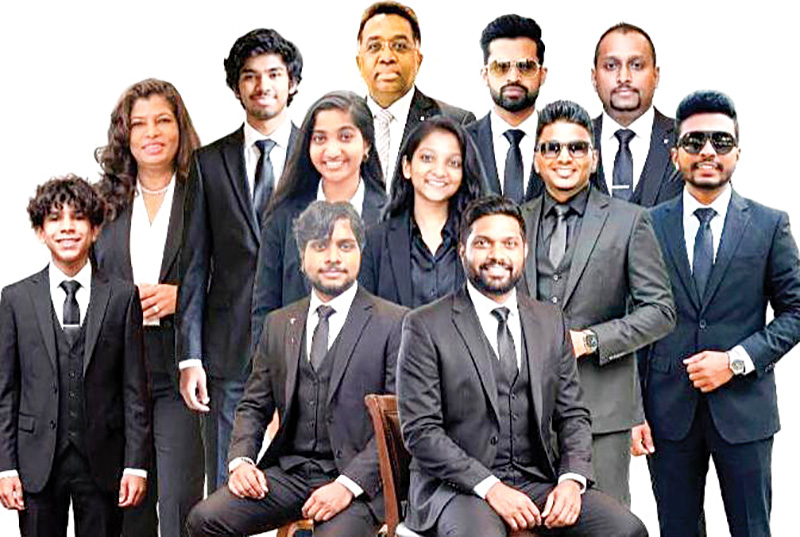
 While Sri Lankan music lovers, in Dubai, are eagerly looking forward to being a part of the action on Saturday, 25th July, with Rajiv Sebastian in the limelight, Sri Lankans, in Toronto, Canada, are equally excited and are anxiously awaiting the arrival of Sri Lanka’s famous singer/entertainer Sohan Weerasinghe.
Having done the needful with The X-Periments, the legendary performer has now embarked on an exciting new chapter – a solo career – and Toronto, Canada, will see him do the needful, on Friday, 31st July, 2026, from 8.00 pm to 12.00 am, at the Angus Glen Golf Club.

Sohan Weerasinghe: In Canada, and ready to do the needful on 31st July
Reports indicate that it’s a ‘sold out’ event – naturally with Sohan in the spotlight.

Gamini Hemalal: Creating all the excitement for Sri Lankans in Toronto
Having built his reputation through years of unforgettable performances, and hits that became part of our musical fabric, Sohan is ready to bring his own vision, sound, and stories directly to the audience, in Toronto, Canada, backed by the phenomenal Toronto Ceymphony Live Band.
Says Gamini Hemalal, who has been instrumental in reviving the Sri Lankan entertainment scene, in that part of the world:
“The countdown begins for the most exclusive musical event of the summer! Join us for a premium night of incredible music, elite hospitality, and a lavish buffet as the legendary Sohan Weerasinghe takes the stage live in Toronto!
“This is a high-end event, designed for those who appreciate exceptional entertainment and great food.”
Gamini, who is also a member of the Toronto Ceymphony Live Band, mentioned that it’s going to be an intimate musical evening with the celebrated Sohan Weerasinghe.
From packed auditoriums to intimate shows, Sohan continues to prove why he remains one of Sri Lanka’s most beloved entertainers.
For decades, Sohan Weerasinghe has been a household name in Sri Lankan entertainment.
Known for his captivating smooth voice and charismatic stage presence, Canada will experience it all on Friday, 31st July.
Next on the list of events, Gamini Hemal is working on, is Halloween night and he says “what we plan to do will be very interesting and unique … with a surprise guest star, as well!”

Charted Computer Institute of Sri Lanka to be established
Drug Dependent Persons (Treatment and Rehabilitation) Act No 54 of 2007 to be amendmend
Mrs. O. T. M. I. Thilakarathne appointed to the Post of Surveyor General
Purchase of 600 buses for intercity / long distance services of the Sri Lanka Transport Board
Protection of Historical, Cultural, and Traditional Intellectual Property related to the Kandy Esala Perahera
Development of roads which are not under the Road Development Authority

‘Dates have the highest sugar content to fight Coronavirus’

Sunday Island 27 December – Headlines

#SundayIsland 17th December – Headlines

Sunday Island – 28th March

Sunday Island Headlines – 21 March

Sunday Island – 21st February – Headlines
-

 Business3 days ago
‘Giving up was never an option’: The fisherman who fought back after losing millions in SL
-

 Features3 days ago
Two memorable excerpts from a former SLAF commander’s memoir
-

 Latest News3 days ago
Davis cup Asia/Oceania Group IV 2026 to be held in Colombo from 20th to 25th July
-

 Features3 days ago
Erdoğan’s New Republic
-
 Life style3 days ago
Taste of the Swiss Alps comes to Colombo
-
 Features7 days ago
Dirty Money
-

 News4 days ago
Dengue outbreak gallops ahead: Infections surpasses 73,455, leaving 50 dead
-
 News4 days ago
Evidence recorded in money laundering case against Yoshitha Rajapaksa