
News
Environment Ministry finally bans manufacture of six plastic based products from today

By Ifham Nizam
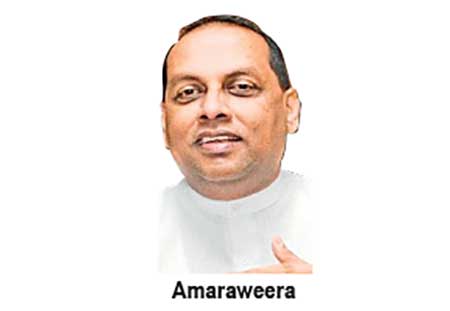
The Environment Ministry would ban six plastic-based products from today(31), subject Minister Mahinda Amaraweera said yesterday, adding that the present government had taken steps to tighten laws on materials that cause environmental and health-related problems.
The Minister said that disposable polythene and plastic, PET bottles (Polyethylene Terepthalate), lunch sheets, less than 20 microns, sachets (non-food and non-pharmaceutical), and air-filled plastic toys were the six items that would be banned from production.
Amaraweera, however, said that considering the requests made by several companies, the relevant products which had already been manufactured would be given a short period of three months to be marketed and no restrictions had been imposed on the export of those products.
According to the Environment Minister, the companies were entirely local and some industrialists were aware of the ban but had even imported and installed new equipment to manufacture such items.
One of the companies had decided to send the newly imported equipment back to the country from where it was imported, he added.
Production here will be banned of those six products from today and the items which are currently on sale in the shops could be sold at the earliest.
No such sales outlets would be subjected to inspection. However, the Central Environmental Authority (CEA) would conduct periodic factory inspections to determine whether the banned items were continuing to be manufactured for local use. About 5.9 percent of urban solid waste collected daily is polythene and plastic, a senior official said.
“We collect about 400 tonnes of plastic and polythene daily in the country. The use of PET bottles is estimated to be around 1,250 tons per month. Of this, only 250 tons is recycled,” Amaraweera added.
However, total plastic recycling in the country is about 15-20 percent of the total plastic waste.
An Environment Ministry study indicated the amount of plastic waste incinerated per day was 232 tons. Some 300,000 tons of plastic raw materials were imported into the country and a large quantity of finished goods were also imported. About 30 percent of plastic is re-exported as finished goods. About 24 percent of total imports are recycled.



Coal power generation falls by 27 GWh
A sharp decline in coal-fired electricity generation in April 2026, compared to the corresponding month last year, may have cost Sri Lanka more than Rs. 4.5 billion, as the country was compelled to rely on significantly more expensive diesel-powered generation to make up the shortfall, according to power sector data.
The coal-based electricity generation, in April 2026, was 27 GWh lower than in April 2025, a development that has sparked concern among energy experts and economists over the mounting financial burden on the country’s already strained power sector.
Industry calculations reveal that generating the lost 27 GWh through diesel-fired power plants would require approximately 8.1 million litres of fuel, based on a standard consumption rate of 0.3 litres per kilowatt-hour.
With fuel costs estimated at around USD 286 per barrel, or roughly USD 1.80 per litre, the replacement power would have cost approximately USD 14.57 million. At the prevailing exchange rate of about Rs. 315 to the US dollar, the bill exceeds Rs. 4.5 billion for April alone.
Energy sector analysts say the figure highlights the enormous economic value of maintaining high availability at coal-fired power plants, particularly at a time when Sri Lanka is seeking to reduce electricity costs and strengthen energy security.
“The financial impact of losing low-cost coal generation is substantial. Every unit not generated by coal has to be replaced by a much more expensive source, usually diesel or fuel oil, which ultimately affects the finances of the power sector and the wider economy,” a senior energy analyst said.
Even under a more conservative calculation, based on the average electricity generation cost of around Rs. 72 per unit recorded in 2025, the loss remains significant. The 27 million units not generated from coal would translate into an additional cost burden of nearly Rs. 2 billion.
The decline in coal generation comes at a critical juncture for Sri Lanka’s energy sector.
The government has repeatedly emphasised the need to maintain affordable electricity tariffs, while reducing dependence on imported fossil fuels and expanding renewable energy capacity.
Experts warn that any sustained reduction in low-cost baseload generation could undermine these objectives, increasing the need for costly thermal power and placing additional pressure on foreign exchange reserves.
The latest figures are expected to intensify scrutiny of generation planning, fuel procurement strategies and the operational performance of major power plants. They also underscore the importance of ensuring uninterrupted operation of coal-fired facilities until sufficient renewable and storage capacity is available to replace them reliably.
With the country striving to maintain economic stability and energy affordability, analysts argue that avoiding such generation shortfalls must remain a top priority for policymakers and power sector planners.
By Ifham Nizam
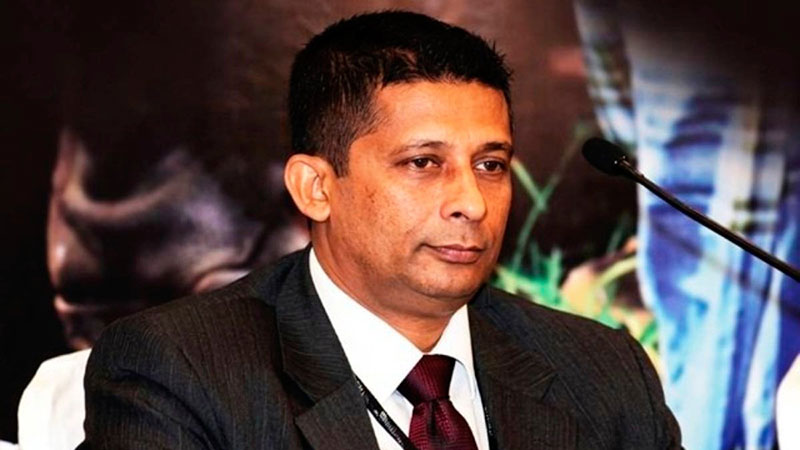
Asith Siriwardena Counsel for former Director of State Intelligence Service, Major General (Retd.) Suresh Sallay, detained under the Prevention of Terrorism Act (PTA) over the 2019 Easter Sunday attacks, has called upion the Director of the CID, SSP G. S. Abeysekara, to transfer his client either to a private or government hospital to receive urgently needed teatment.
Sallay was on a hunger strike, claiming mistreatment by the CID, his wife said, after visting him, yesterday.
Siriwardena wrote to the CID Director yesterday (07) after Sallay was visited by his wife, son and brother.
The text of the letter: “The family observed that Mr. Sallay’s physical condition has deteriorated to an alarming and critical level.
“He is reportedly unable to attend the visitation without the physical assistance of two officers. During the visit, he informed his family that he had refused medication, saline, food, and water. He further expressed a belief that his death is imminent and requested that arrangements be made for the donation of his eyes. He also requested an immediate visit from his Attorney for the purpose of executing his last will and other related legal documentation.
“These statements, and circumstances, demonstrate a grave deterioration in his physical and psychological condition. It is apparent that he is no longer capable of making rational decisions concerning his own welfare, health, and survival.
The prolonged conditions, under which he is presently being held have, at the very least, created a serious and immediate risk to his life.
“The State assumes a non-delegable duty of care toward every person held in its custody. Once an individual is deprived of liberty, the responsibility for safeguarding that person’s life, health, and wellbeing rests squarely upon the authorities exercising control over that individual. Any failure to discharge that duty in the face of a known and imminent medical emergency is a matter of the utmost legal seriousness.
“You are hereby formally notified that Mr. Sallay requires immediate medical intervention by qualified independent medical professionals and urgent transfer to an appropriate hospital facility capable of providing comprehensive assessment and treatment. Any delay, refusal, or failure to act despite clear knowledge of his precarious condition may give rise to personal and institutional liability under the criminal and civil law of Sri Lanka
“Should General Sallay suffer irreversible injury or death while remaining in the present conditions despite this explicit warning, it will be open to the relevant authorities, courts, and investigative bodies to examine whether such conduct amounts to a deliberate disregard of a known and foreseeable risk to life. Those responsible for decisions concerning his continued detention and medical care may be required to account personally for their actions and omissions.
“Accordingly, I demand that:
1. Mr. Sallay be transferred forthwith to a government or private hospital equipped to provide urgent medical treatment;
2. He be examined immediately by independent medical specialists, including psychiatric professionals if necessary; His legal representatives and family be granted reasonable access to him;
3. A written update on his medical status and the measures taken for his protection be provided without delay. This letter constitutes formal notice. Any further failure to act despite knowledge of the circumstances set out herein will be relied upon in any future judicial, criminal, constitutional, or international proceedings arising from harm suffered by my client.”

The Opposition says the NPP government should explain why the funds received by Rebuilding Sri Lanka haven’t been utilised to provide relief to those affected by Ditwah cyclone in late November last year.
The failure on the part of the government to utilise as much as Rs 10 bn, received from local and foreign donors, came to light when the National Audit Office (NAO) appeared before the Public Finance Commission recently.
The NAO told the House Committee that no statutory fund currently existed under the name “Rebuilding Sri Lanka” and the programme operated through an account maintained under the Deputy Secretary to the Treasury.
The NAO declared that no payments had been made through this account to date.
Former SLPP MP Sanjeewa Edirimanne said that until the disclosure made by the NAO the country had been led to believe the Rebuilding Sri Lanka fund provided post-Ditwah relief. Pointing out that JVP General Secretary Tilvin Silva’s declaration in Jaffna that funds allocated to hold Provincial Council polls
had been utilised to assist Ditwah victims, Edirimanne said such blatant lies were propagated while the government held on to Rs 10 bn meant for the disaster victims.SJB MP Mujibur Rahman questioned the rationale behind keeping funds received specifically for Ditwah victims still living under extremely difficult conditions. (SF)

T20 World Cup: Heavyweights, hopefuls and a debutant headline Group 1

Showers in the Western, Sabaragamuwa and North-western provinces and in Galle, Matara, Kandy and Nuwara-Eliya districts

Diesel replacement costs up to Rs. 4.5 bn in April

Sallay on hunger strike: Counsel warns CID

Opp. questions why Rs 10 bn meant for Ditwah victims held in Treasury account

‘Samurdhi Bank operates without dedicated audit framework’

‘Dates have the highest sugar content to fight Coronavirus’

Sunday Island 27 December – Headlines

#SundayIsland 17th December – Headlines

Sunday Island – 28th March

Sunday Island Headlines – 21 March

Sunday Island – 21st February – Headlines
-

 News6 days ago
Lankan duo emerge winners in Latin dance championship held in Blackpool, UK
-
 Latest News4 days ago
Kusal Mendis, Pathum Nissanka, bowlers put Sri Lanka 1-0 up
-
 News4 days ago
New US tariffs proposed on 60 countries, including Sri Lanka
-
 Features3 days ago
Power crept into the Sangha and is now tearing it apart
-

 News6 days ago
Sri Lankan teen killed in Chennai clash; three arrested
-
 Features3 days ago
Kondachchi wind farm and battery storage project to boost energy security, says Power Ministry Secretary
-

 News2 days ago
Asst. Manager, security officer arrested over Rs 30 mn snatch at Horana PB branch
-

 Features3 days ago
Saudi Arabia sets new benchmark in Hajj management as 1.7 million pilgrims complete sacred journey