
Business
Hour of reckoning comes for SL’s power sector


By Ifham Nizam
A long-delayed reckoning in Sri Lanka’s power sector is finally beginning to take shape—driven less by choice and more by necessity.
At a time when the country’s fragile economic recovery hinges on stability, the electricity sector—long plagued by inefficiency, political interference, and costly dependence on imported fuel—has re-emerged as both a risk and an opportunity.
It is within this context that The Institution of Engineers, Sri Lanka will host a timely and potentially consequential forum on April 2 at the Wimalasurendra Auditorium, focusing on a “Pragmatic Approach to Electricity Sector Reforms in Sri Lanka and the Way Forward.”
This is not just another technical discussion. It is, in many respects, a reality check.
The keynote address by Eng. Pubudu Niroshan—who stood at the centre of recent reform efforts as Director General of the Power Sector Reforms Secretariat—comes at a moment when the gap between policy ambition and execution has become impossible to ignore.
For over three decades, Sri Lanka has spoken the language of reform. Yet, time and again, progress has been derailed by institutional resistance, political hesitation, and an entrenched reluctance to dismantle inefficient structures.
The result is a sector that continues to bleed financially while passing the burden onto consumers and the broader economy.
High electricity tariffs, supply vulnerabilities, and operational inefficiencies are no longer isolated technical issues—they are macroeconomic threats. Industries struggle to remain competitive, investors remain cautious, and households continue to bear rising costs. The over-reliance on imported fossil fuels has only deepened this vulnerability, exposing the country to global price shocks and geopolitical disruptions.
The economic crisis of 2022 briefly forced a shift in thinking. Under severe fiscal pressure, reform was no longer optional. The passage of the Sri Lanka Electricity Act, No. 36 of 2024 was seen as a breakthrough—an acknowledgment that structural change could no longer be postponed.
But legislation alone does not transform systems.
What has followed is a more grounded, outcome-driven approach—one that attempts to move beyond policy rhetoric. Within a relatively short span, the first phase of restructuring has been pushed through, including the repeal of the decades-old CEB Act, No. 17 of 1969, and the unbundling of the monolithic utility into six state-owned entities.
This is, by any measure, a significant structural shift.
Yet, the real test lies ahead.
Unbundling without genuine market discipline risks becoming another cosmetic exercise.
The promise of a competitive National Electricity Market—long discussed but never realized—will depend heavily on regulatory strength, transparency, and political consistency. Without these, the same inefficiencies could simply be replicated across multiple entities.
Moreover, reform cannot succeed in isolation.
Sri Lanka’s energy transition must be anchored in a broader economic strategy—one that aligns power sector reforms with industrial growth, environmental sustainability, and investment policy.
The proposed “Energy Transition Act,” now under consideration, will be a critical piece of this puzzle. If executed with clarity and discipline, it could provide the legal backbone for a coherent and forward-looking energy framework.
The reference to an Integrated Economic Development Framework (IEDF) in the 2026 Budget underscores this necessity. Energy is not a standalone sector—it is the foundation upon which economic recovery will either stand or falter.
What makes this moment different is the absence of alternatives.
Sri Lanka can no longer afford half-measures or delayed decisions. The cost of inaction is too high, and the margin for error too narrow. Reform, in this sense, is no longer a policy preference—it is an economic imperative.
The upcoming forum at The Institution of Engineers, Sri Lanka is therefore more than a professEng. Pubudu Niroshanional gathering. It is a critical platform where technical expertise must confront political reality, and where long-standing assumptions must be challenged.
For years, Sri Lanka’s electricity sector has been caught in a cycle of discussion without delivery. The shift toward a pragmatic approach signals an understanding that outcomes—not intentions—will define success.
The question now is whether that realization will finally translate into sustained, irreversible change.
Because this time, failure is not just an option—it is a risk the country simply cannot afford.


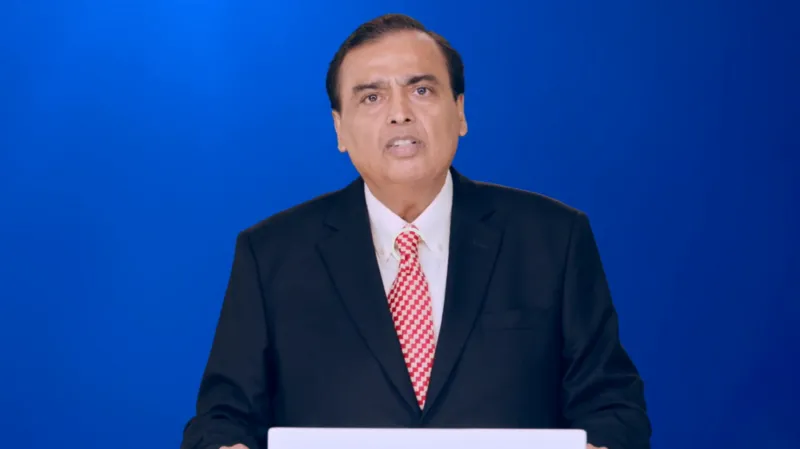
Jio Platforms, the telecom unit of billionaire Mukesh Ambani’s Reliance Industries, has announced what analysts say could be one of India’s biggest share sales.
The company’s board has approved a draft prospectus for the initial public offering (IPO), Ambani said at Reliance’s annual shareholder meeting on Friday.
India’s largest telecom operator, which has more than 500 million subscribers, is expected to raise around $4bn (£3.02bn), according to media reports.
Investors will be watching the listing closely as a test of appetite for new offerings after months of volatility in the country’s stock markets.
“The proposed listing of Jio will demonstrate to the world that India can build technology companies of global scale, global capability, and global value,” Ambani, one of the world’s richest men, said.
Launched in 2016, Jio shook up India’s telecom sector with low-cost mobile data plans, soon racking up millions of users. The company has since expanded into areas including cloud computing, enterprise services and artificial intelligence.
Last year, Jio and rival Bharti Airtel signed separate deals with Elon Musk’s SpaceX to bring the Starlink internet service to India.
The IPO comes after a year-long wait for Jio to go public. Last year, Ambani had said the company would be listed in the first half of 2026.
Unlike the secondary markets, where investors buy and sell existing stocks of companies, IPOs are used by privately held firms to sell their shares to investors for the first time, and debut on the public markets.
The Jio IPO was announced a day after the National Stock Exchange (NSE) filed papers for its long-awaited market debut, adding momentum to India’s capital markets.
While details of the offer price and valuation have not yet been disclosed, media reports have estimated that the NSE IPO could raise around more than $3bn.
Together, the Jio and NSE listings would be among India’s largest IPOs in recent years, rivalling Hyundai Motor India’s $3.3bn blockbuster share sale two years ago.
Jio’s listing is especially a close watch for investors and analysts who say a successful offering could boost sentiments in India’s IPO market after a recent slowdown in new listings.

In recent years, Jio has expanded its ambitions beyond telecommunications into artificial intelligence and digital infrastructure.
Earlier this month, Meta announced it would lease capacity at an AI enabled data center being built by Reliance in the western state of Gujarat. The facility is expected to have a capacity of 168 megawatts.
The agreement builds on a partnership that began in 2020, when Meta invested $5.7bn in Jio.
Since then, the companies have broadened their collaboration, including initiatives aimed at making Meta’s open-source AI models more accessible to Indian businesses and developers.
Investment bank Jefferies estimated in November that Jio was worth around $180bn, potentially making it one of the world’s most valuable telecoms companies.
The listing would also be a landmark moment for the Reliance group, marking the first major public offering by one of its businesses since Reliance Petroleum was listed in 2006.
[BBC]

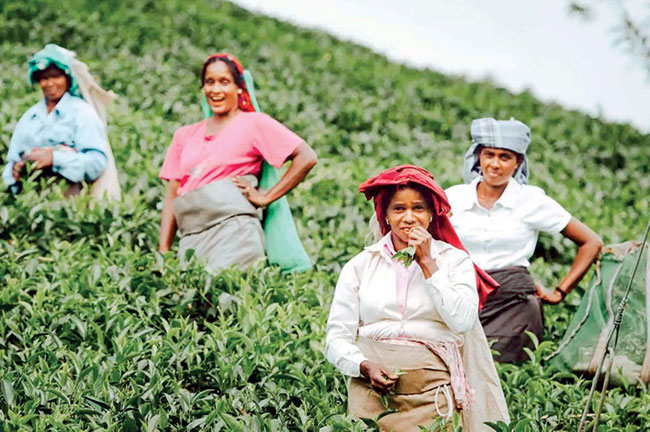
The weekly Colombo Tea Auction concluded with offerings increasing to 6.5 million kilogrammes, a marginal rise from the previous week’s 6.4 million kilogrammes. However, the market witnessed a significant pullback from key international buyers, leading to a subdued trading atmosphere and declining prices across several categories.
Industry sources reported a noticeable lack of interest from shippers to the traditional markets of the United Kingdom and the European continent. While shippers to the Commonwealth of Independent States (CIS) and the Middle East maintained a presence, their participation was described as selective and at lower price levels. Buyers from Japan and China also operated at reduced levels, with South African shippers showing minimal engagement.
This cautious stance from the shipping community cast a shadow over the Ex-Estate sector, which offered 1.0 million kilogrammes. The overall quality of teas in this category was described as relatively uninteresting, leading to a weakening of prices. In the Western High Grown category, prices for the best available BOP/BOPF grades declined by Rs. 20 to 40 per kilogramme, while the plainer varieties saw a drop of about Rs. 20 per kilogramme. A fair quantity of these teas remained unsold due to a lack of suitable bids.
Nuwara Eliya teas attracted little to no interest, with the majority of offerings remaining unsold. Uda Pussellawa BOPs weakened further by up to Rs. 50 per kilogramme, while the corresponding BOPFs struggled to maintain their previous price levels. In the Uva region, BOPs saw prices fall by Rs. 50 per kilogramme, though the BOPF varieties were relatively more stable. The High and Medium Grown CTC teas continued to be a weak feature, with many lots unsold and those that were sold recording a price drop of Rs. 20 to 40 per kilogramme. Off-grades and dust grades also experienced a sluggish market, with fair volumes remaining unsold.
In contrast to the gloom in the High Growns, the Low Grown sector, which totalled approximately 2.7 million kilogrammes, met with more encouraging demand. The Leafy and Semi-Leafy categories saw fair demand, while the Tippy and Premium categories were met with good interest. While some well-made varieties in the Leafy catalogues remained firm, many other grades experienced easier prices. However, the Tippy catalogue saw high-priced FBOPs holding firm and the FF1s generally becoming dearer. The Premium catalogue, featuring tippy teas, also met with good demand and saw prices appreciate overall.
Based on Forbes & Walker Tea Brokers comments
By Sanath Nanayakkare

The Asian Development Bank (ADB) has formally entered into its first partnership with the International Committee of the Red Cross (ICRC), marking a significant step towards integrating humanitarian action with long-term development efforts in fragile and conflict-affected regions across Asia and the Pacific.
A Letter of Intent establishing the collaboration was signed on June 10 by ADB Vice-President for Sectors and Themes Fatima Yasmin and ICRC Director-General Pierre Krähenbühl. The agreement provides a framework for coordinating programmes, exchanging knowledge on emerging humanitarian challenges, promoting innovation and sharing best practices through joint events and publications.
The partnership brings together ADB’s development expertise and financing capabilities with the ICRC’s operational experience and access to communities affected by conflict and violence.
Highlighting the significance of the initiative, ADB President Masato Kanda wrote on X on June 17 that the partnership would help strengthen resilience in fragile and conflict-affected areas.
“By bringing together ADB’s longer-term development perspective with ICRC’s humanitarian field presence and operational experience, we can better support people affected by conflict and violence,” Kanda said.
Speaking at the signing ceremony, Yasmin said today’s interconnected challenges require development institutions to move beyond traditional approaches.
“The ICRC brings trusted access to affected communities and credibility in environments that ADB alone cannot easily reach,” she said.
Krähenbühl described the agreement as an important step towards bridging humanitarian assistance and long-term development, adding that it could create opportunities for joint responses in fragile settings across the region.
A Sri Lankan socio-economist told The Island Financial Review that the partnership reflects a growing recognition among development institutions that conflict, fragility and climate-related shocks are becoming major constraints on economic progress.
“Traditionally, development banks focused on long-term infrastructure and economic projects while humanitarian agencies addressed immediate crises. This partnership seeks to connect those two worlds by reducing vulnerability before crises deepen,” he said.

Asia’s richest man Ambani announces what could be India’s biggest share sale

Educational equipment Provided to University Students through the President’s Fund

Fears for US-Iran deal as talks delayed by Israeli strikes on Lebanon

BCCI secretary hints at early start to IPL 2027

Cricket journalist and broadcast legend Qamar Ahmed dies aged 88

Stafanie Taylor, spinners help West Indies overcome Scotland threat

‘Dates have the highest sugar content to fight Coronavirus’

Sunday Island 27 December – Headlines

#SundayIsland 17th December – Headlines

Sunday Island – 28th March

Sunday Island Headlines – 21 March

Sunday Island – 21st February – Headlines
-

 News5 days ago
Release of 2025 O/L results likely to be delayed
-

 Sports5 days ago
Tharanga set for high-profile javelin clash in Ostrava
-

 Features6 days ago
Politics of protected species
-

 News4 days ago
Beijing Capital Airlines to resume flights to Colombo signalling boost to tourism
-

 News5 days ago
Theft of USD 2.5 mn from Treasury: CoPF accused of complicity in NPP cover-up
-

 News7 days ago
Commonwealth lawyers urge Lanka to uphold rule of law
-

 Opinion5 days ago
Decoding Trump’s 12.5% “Forced Labor Tariff” on Sri Lanka
-
 Features3 days ago
Killing of Colombo’s ancient trees — a warning on UN’s World Desertification Day – 17 June