
Features
Trincomalee Oil Farm and Energy Hub: Sri Lanka’s Missed Opportunity Returns


The Trincomalee Oil Tank Farm stands today as one of the most strategically significant yet historically underutilized energy assets in South Asia. Located off the deep natural harbour of Trincomalee, the facility embodies a convergence of history, geopolitics, and economic potential. In the current global context—marked by energy insecurity, shifting geopolitical alliances, and regional competition—the Trincomalee oil farm offers Sri Lanka a renewed opportunity to transform itself into a regional energy hub. However, this transformation demands clarity of vision, political consistency, and strategic partnerships.
Origins and construction
The origins of the Trincomalee oil tank farm date back to the era of World War II, when the British Empire recognized the strategic importance of Trincomalee as a naval base in the Indian Ocean. Construction of the oil storage facility on 600 acres of land began in 1924 and continued into the late 1930s. The project was designed to support British naval operations in the Eastern theatre, particularly as Japanese expansion threatened Allied supply lines.
The facility originally comprised 101 large storage tanks, each constructed with a robust one inch thick steel sheet and surrounded by thick one foot thick concrete walls for protection against aerial attacks. These tanks were ingeniously built into the natural contours of the terrain, often partially buried, enhancing both structural stability and camouflage. Each tank had an approximate capacity of around 12,000 metric tons of fuel, giving the entire complex a total storage capacity of nearly 1.2 million metric tons—an immense reserve by regional standards even today. This dwarfs the Ceylon Petroleum Corporation’s (CPC) existing storage facility and even the new storage complex, built by the Chinese at Muthurajawela which has a capacity of 220,000 metric tons.
The fate of two oil tanks
Out of the 101 tanks, one was destroyed when a Royal Ceylon Air Force plane crashed in the early 1960’s. But the most famous is the destroyed tank number 91 lying on the far edge of the forest. During World War II, the strategic significance of Trincomalee attracted enemy attention. In April 1942, Japanese forces launched air raids on the harbour in what became part of the broader Indian Ocean campaign. One of the oil tanks—commonly referred to as Tank 91—was hit during these attacks and destroyed. This incident underscored both the vulnerability and the importance of the facility. While most of the tanks survived the bombardment, the destruction of Tank 91 remains a historical reminder of the oil farm’s wartime role.
Strategic location and infrastructure
The inclusion of China Bay within Trincomalee Harbour complex was not incidental. China Bay offered deep-water access, allowing large oil tankers to dock safely. The harbour itself is one of the finest natural deep-water harbours in the world, capable of accommodating large naval and commercial vessels with minimal dredging.
A sophisticated pipeline system was constructed to facilitate the transfer of oil from ships directly to the storage tanks. This network of pipelines minimized handling time and reduced vulnerability during wartime operations. The integration of maritime access with inland storage infrastructure made Trincomalee a logistical asset of immense value, capable of supporting sustained naval operations across the Indian Ocean.
Post-Independence neglect
Following Sri Lanka’s independence in 1948, the Trincomalee oil tank farm gradually fell into neglect. Successive governments failed to recognize or capitalize on its strategic and economic potential. The facility was largely abandoned, with many tanks left unused and the surrounding area overgrown with dense shrub jungle. Infrastructure deteriorated, pipelines corroded, and the once-critical installation became a symbol of missed opportunity.
This neglect was not merely administrative but also strategic. At a time when global energy demand was rising and regional economies were expanding, Sri Lanka failed to leverage a ready-made asset that could have positioned it as a key player in the Indian Ocean energy network.
It may be argued that if newly Independent Ceylon, hosting two British bases at Trincomalee and Katunayake, seized the opportunity of encouraging Western investment to optimize utilization to the existing tank farm asset, companies like Shell, Stanvac and Caltex already in the profitable oil distribution business here, would have looked positively of making Sri Lanka a regional oil hub – something Singapore enjoys today.
Early attempts at revitalization
In the late 1970s and early 1980s, President J. R. Jayewardene recognized the potential of the Trincomalee oil tank farm and proposed its development. However, these efforts were complicated by geopolitical considerations, particularly concerns from India regarding foreign involvement in a strategically sensitive location so close to its southern coastline.
As a result, the project faced diplomatic resistance and was ultimately abandoned. This marked another missed opportunity, driven by a combination of external pressure and internal indecision.
The Indo-Sri Lanka Accord and aftermath
The signing of the Indo-Sri Lanka Accord in 1987 brought renewed attention to Trincomalee. The accord included provisions recognizing Trincomalee’s strategic importance and implicitly acknowledged India’s security concerns regarding its use.
During the years of civil conflict in Sri Lanka, the oil tank farm remained largely inactive. Security concerns, lack of investment, and the broader instability of the region prevented any meaningful development. Even after the end of the war in 2009, progress remained slow.
The role of Trinco Petroleum Terminal – 2022
A significant development occurred in 2022 with the establishment of Trinco Petroleum Terminal (Pvt) Ltd (TPTL), a joint venture between the Ceylon Petroleum Corporation (CPC) and the Indian Oil Corporation (IOC), through its subsidiary Lanka Indian Oil Corporation (LIOC), which had been operating in Sri Lanka since 2003. Under this arrangement, CPC holds a 51% stake, while LIOC holds 49%, reflecting a collaborative approach to developing the Trincomalee Oil Tank Farm.
As part of the agreement, a portion of the oil storage tanks was leased to the Indian partner, while the remaining tanks came under Sri Lankan control, earmarked for phased renovation and redevelopment by TPTL, LIOC, and potential international partners. LIOC has since been utilizing approximately 14–15 tanks, primarily for fuel storage and distribution within Sri Lanka.
Although these steps marked meaningful progress, the majority of the tanks have remained underutilized, and the full strategic and commercial potential of the Trincomalee Oil Tank Farm continues to be unrealized.
Political opposition and geopolitical concerns
Efforts to expand Indian involvement in the development of the oil tank farm were met with strong resistance from nationalist political groups, particularly the Janatha Vimukthi Peramuna (JVP). The opposition was rooted in concerns over sovereignty, national security, and perceived over-reliance on India. This political wrangling delayed decision-making and discouraged investment. The Trincomalee oil tank farm became entangled in broader debates about foreign policy and economic strategy, rather than being treated as a national asset requiring pragmatic management.
From geopolitics to geoeconomics
In recent years, there has been a shift in perspective—from viewing Trincomalee primarily through a geopolitical lens to recognizing its geoeconomic potential. The global energy landscape is changing, with increased emphasis on supply chain resilience, regional storage hubs, and diversification of energy sources.
Sri Lanka’s strategic location along major shipping routes in the Indian Ocean positions it ideally to serve as a regional energy hub. Trincomalee, with its natural harbour and existing infrastructure, is central to this vision.
The Tripartite Agreement- 2025
A major breakthrough came in 2025 with the signing of a tripartite agreement involving Sri Lanka, India, and the United Arab Emirates. This agreement aims to jointly develop the Trincomalee oil tank farm, combining Sri Lanka’s strategic location with India’s regional influence and the UAE’s financial and technical expertise. The activation of this agreement marks a turning point. It reflects a pragmatic approach that balances national interests with the need for foreign investment and collaboration.
Importance in the current global context
The importance of the Trincomalee oil tank farm has been heightened by recent global developments, including tensions and conflicts in the Middle East. Disruptions in oil supply chains have underscored the need for strategic reserves and regional storage facilities.
For Sri Lanka, expanding the storage capacity at Trincomalee could provide energy security by maintaining reserves sufficient for up to 60 days of consumption which at present is sufficient only for 30 days. Renovation of the existing tanks, along with modernization of infrastructure, would significantly enhance the country’s resilience to external shocks.
Moreover, the facility could serve as a storage and redistribution hub for other countries in the region, generating revenue and strengthening Sri Lanka’s economic position.
Vision for Trincomalee as a comprehensive energy hub
The transformation of Trincomalee into a dynamic and sustainable energy hub represents one of the most significant strategic opportunities for Sri Lanka in the coming decades. Anchored by its historic oil tank farm at China Bay and supported by one of the finest natural harbour’s in the world, Trincomalee possesses the rare combination of geography, infrastructure, and strategic location necessary to evolve into a major energy centre in the Indian Ocean region. However, realizing this potential requires a shift from a narrow focus on storage toward a broader, integrated, and forward-looking energy ecosystem.
At the heart of this vision lies the expansion and modernization of petroleum storage and distribution. The refurbishment of the existing oil tanks—many of which date back to the Second World War—along with the construction of new, technologically advanced facilities, will significantly enhance storage capacity, efficiency, and safety. With modern monitoring systems and international-standard operational practices, Trincomalee can function as a reliable regional energy reserve, capable of meeting domestic needs while also serving international markets.
Beyond storage, the development of refining and value-addition industries is essential. Establishing a modern refinery would reduce dependence on imported refined petroleum products and create opportunities for producing lubricants, petrochemicals, and other high-value derivatives. These downstream industries would stimulate industrial growth, generate employment, and encourage the emergence of ancillary sectors, thereby contributing to broader economic development.
Trincomalee’s geographic advantages also extend to the aviation sector. Its proximity to China Bay Airport provides an opportunity to develop a dedicated aviation fuel supply chain, catering to both civilian and military requirements. This would enable the region to function as a refuelling and logistics hub within the Indian Ocean network, strengthening connectivity and enhancing operational efficiency for regional air traffic.
Equally significant is the potential of Trincomalee Harbour to emerge as a major centre for maritime services. Located along key east–west shipping routes, the harbour is ideally positioned to provide bunkering, maintenance, and logistical support to passing vessels. Developing competitive bunkering facilities would increase port revenues and enhance Sri Lanka’s standing in global maritime trade, while integrating energy services with port operations.
In keeping with global trends, the integration of renewable energy sources must form a key component of this vision. Trincomalee’s climatic conditions are conducive to both solar and wind energy generation, allowing for the development of hybrid energy systems that complement traditional fossil fuel infrastructure. Incorporating renewable energy will not only reduce carbon emissions but also align with international sustainability goals, ensuring that the hub remains relevant in a rapidly evolving global energy landscape.
Another dimension that warrants reflection in the development of Trincomalee as an energy hub is the story of Sampur—an example of both missed opportunity and emerging renewal. Strategically located in close proximity to China Bay, Sampur was once envisaged as a key site for a coal power project, later evolving into proposals for a liquefied natural gas (LNG) facility. However, a combination of political opposition, environmental concerns, and shifting policy priorities led to the abandonment of these initiatives. This not only delayed potential gains in energy generation and regional development but also underscored the need for policy consistency and long-term planning in national energy strategy.
Yet, Sampur’s relevance has not diminished. Its transformation into a ground mounted solar power facility, commissioned in 2025, marks a significant shift towards sustainable energy development. While its contribution to the national grid when fully operational may be modest (120 MW in two phases) compared to the scale of earlier proposals, it represents an important step in diversifying Sri Lanka’s energy mix and reducing dependence on fossil fuels. More importantly, Sampur’s evolution highlights the potential for integrating renewable energy into the broader vision for Trincomalee. As the energy hub concept matures, Sampur could serve as a model for balancing economic ambition with environmental responsibility, reinforcing Trincomalee’s role in a resilient and forward-looking energy future.
The realization of the energy hub vision depends heavily on robust infrastructure development and enhanced connectivity. Modernizing port facilities, expanding pipeline networks, and improving road and rail links to the rest of the country are essential steps. In addition, ambitious proposals such as undersea pipelines linking Trincomalee with regional partners could further strengthen its role as a critical node in South Asia’s energy network, facilitating cross-border energy trade and cooperation.
Strategic partnerships will play a crucial role in this transformation. Given the scale of investment and technical expertise required, collaboration with international stakeholders is both necessary and beneficial. However, such partnerships must be carefully structured to ensure transparency, equitable benefit-sharing, and the protection of national interests. Drawing on global best practices while maintaining sovereignty over strategic assets will be key to long-term success.
Equally important is the establishment of a stable and consistent policy environment. Investor confidence depends on clear, predictable policies governing taxation, pricing, and operations. A well-defined national energy policy, supported by a strong regulatory framework, will provide the foundation for sustained investment and long-term planning. Regulations must also ensure strict adherence to environmental standards, safeguarding the ecological integrity of the Trincomalee region while enabling responsible development.
Human resource development is another critical pillar. The successful operation of a modern energy hub requires a skilled and knowledgeable workforce. Investment in education, technical training, and capacity-building programs will be essential to equip local professionals with the expertise needed to manage advanced infrastructure and complex operations.
Finally, regional integration offers a powerful pathway for growth. By strengthening energy and economic ties with neighbouring countries, Trincomalee can position itself as a reliable and efficient hub within the wider Indian Ocean region. This will not only enhance energy security but also elevate Sri Lanka’s role in regional and global energy networks.
In essence, the vision for Trincomalee is one of transformation—from a historically significant but underutilized asset into a vibrant, multifaceted energy hub that drives national development, fosters regional cooperation, and secures a sustainable energy future
Lessons from past failures
Sri Lanka’s history with the Trincomalee oil tank farm and the projects in Sampur for power generation is marked by missed opportunities, often due to political indecision, opposition by nationalist political parties and short-term thinking. Repeated changes in policy, lack of continuity, and politicization of strategic assets have hindered progress.
To avoid repeating these mistakes, there must be a clear, long-term national strategy agreed by the parties concerned. Transparent governance, professional management, and accountability are essential.
Conclusion
In conclusion, the future of Trincomalee stands at a decisive crossroads, shaped by both its historic legacy and its untapped potential. What was once conceived as a strategic wartime asset now presents itself as an opportunity of national significance especially during a time of energy crisis in the world brought about by the present war in the Middle East. The convergence of geography, infrastructure, and global energy demand places Trincomalee in a uniquely advantageous position within the Indian Ocean region.
Realizing this vision demands more than ambition—it calls for disciplined planning, policy consistency, and a commitment to national interest above short-term considerations. Investment in modern infrastructure, technological advancement, and human capital must proceed alongside transparent governance and environmental responsibility. Equally important is the cultivation of strategic partnerships that enhance capacity while preserving sovereignty.
If approached with foresight and unity, Trincomalee can evolve into a resilient, multifaceted energy hub that not only secures Sri Lanka’s energy future but also stimulates trade, industry, and regional collaboration. It is an opportunity to convert past delays and failures into present momentum and future success.
The time has come to act decisively. The foundations are already in place; what is needed now is the will to build upon them.
Trincomalee Oil Farm and Energy Hub: A Strategic Asset Sri Lanka Can No Longer Ignore
At a time when Sri Lanka continues to grapple with energy insecurity, volatile global oil prices, and the economic aftershocks of recent crises, one national asset stands out—vast, historic, and still underused. The Trincomalee Oil Tank Farm, located within the deep natural harbour of Trincomalee, is no longer merely a relic of the past. It has re-emerged as a critical national asset with the potential to reshape Sri Lanka’s energy security and economic future. In the context of an ongoing global energy crisis, the question is not whether Trincomalee matters, but whether Sri Lanka is finally prepared to act decisively.
The origins of the Trincomalee oil tank farm date back to the strategic imperatives of the British Empire during the Second World War. Recognising the unmatched value of Trincomalee’s harbour—one of the finest natural deep-water harbours in the world—the British constructed a vast oil storage complex across approximately 600 acres at China Bay. Built between the 1920s and late 1930s, the facility comprised 101 massive storage tanks, each capable of holding around 12,000 metric tons of fuel. With a total capacity of nearly 1.2 million metric tons, the complex was designed to support sustained naval operations in the Indian Ocean theatre. The tanks were ingeniously embedded into the natural contours of the terrain and reinforced with thick concrete, offering both protection and structural stability. A sophisticated pipeline network enabled the efficient transfer of oil from ships directly into storage, making Trincomalee a logistical asset of exceptional value.
Despite this remarkable beginning, the decades following independence in 1948 saw the gradual neglect of the facility. Successive governments failed to incorporate the oil tank farm into a coherent national energy strategy. As global demand for energy expanded and regional economies strengthened, Sri Lanka allowed one of its most valuable assets to deteriorate. Infrastructure decayed, pipelines corroded, and many of the tanks fell into disuse, eventually becoming overgrown by jungle. What should have been a cornerstone of national energy security instead became a symbol of indecision and missed opportunity.
There were intermittent attempts to revive interest in Trincomalee. In the late 1970s, President J. R. Jayewardene recognised the strategic and economic potential of the facility and proposed its development. However, these efforts were constrained by geopolitical realities, particularly concerns from India regarding foreign involvement in a strategically sensitive location close to its southern coastline. The Indo-Sri Lanka Accord once again highlighted Trincomalee’s strategic importance, but the ensuing years of civil conflict and persistent policy inconsistency prevented any meaningful progress. Even after the end of the war in 2009, development remained slow and fragmented.
A more structured effort emerged in 2022 with the establishment of the Trinco Petroleum Terminal (Pvt) Ltd, a joint venture between the Ceylon Petroleum Corporation and the Indian Oil Corporation. Under this arrangement, Sri Lanka retained a 51 percent stake, while the Indian partner held 49 percent. A number of tanks were allocated for immediate use, while others were designated for phased development. Although this marked a positive step forward, the majority of the facility remains underutilised. Political opposition, particularly from groups such as the Janatha Vimukthi Peramuna, continued to slow progress, often framing the issue in terms of sovereignty rather than economic necessity.
The urgency of developing Trincomalee has been amplified by the current global energy crisis, driven in part by instability in the Middle East and disruptions to global supply chains. These developments have exposed the vulnerability of countries with limited strategic reserves. Sri Lanka, at present, maintains fuel reserves sufficient for roughly 30 days. With full development of the Trincomalee oil tank farm, this capacity could be extended to 60 days or more, providing a vital buffer against external shocks. Such an expansion would not only enhance national energy security but also reduce the risk of recurring fuel shortages and economic instability.
A significant breakthrough came in 2025 with the signing of a tripartite agreement involving Sri Lanka, India, and the United Arab Emirates. This partnership represents a pragmatic alignment of interests, combining Sri Lanka’s strategic location with India’s regional presence and the UAE’s financial and technical capabilities. More importantly, it reflects a shift in thinking—from viewing Trincomalee purely through a geopolitical lens to recognising its broader geoeconomic potential. In an era where energy infrastructure and regional cooperation are increasingly interconnected, Trincomalee has the capacity to emerge as a key node in the Indian Ocean energy network.
However, the true potential of Trincomalee extends far beyond oil storage. To fully realise its value, Sri Lanka must adopt a more integrated and forward-looking approach, transforming the region into a comprehensive energy hub. This would involve modernising storage facilities, expanding distribution networks, and developing refining capacity to reduce dependence on imported petroleum products. The establishment of petrochemical industries could further enhance value addition and create new avenues for export and employment.
Trincomalee’s geographic advantages also position it well for the development of aviation fuel supply chains, particularly given its proximity to China Bay. In addition, the harbour’s location along major east–west shipping routes offers significant potential for bunkering and maritime services. By integrating energy infrastructure with port operations, Sri Lanka could enhance its role in global maritime trade while generating substantial revenue.
Equally important is the integration of renewable energy into this vision. The nearby area of Sampur, once the site of abandoned coal and LNG projects, has now been repurposed as a solar power facility commissioned in 2025, with a planned capacity of 120 MW. While modest in scale, this development represents a meaningful shift towards sustainability and highlights the potential for combining traditional and renewable energy sources within a unified framework. Sampur’s evolution serves as both a lesson in missed opportunity and a model for a more balanced and forward-looking energy strategy.
The transformation of Trincomalee into a functioning energy hub will depend on several critical factors. Foremost among these is the need for policy consistency and long-term planning. Investor confidence cannot be sustained in an environment of shifting regulations and political uncertainty. Transparent governance, clear regulatory frameworks, and a commitment to protecting national interests are essential. At the same time, strategic partnerships with international stakeholders must be carefully managed to ensure that Sri Lanka benefits fully from its assets while maintaining sovereignty.
Infrastructure development will also play a central role. Upgrading port facilities, expanding pipeline networks, and improving road and rail connectivity are necessary to support increased activity. Investment in human capital is equally important, as the operation of a modern energy hub requires a skilled and technically proficient workforce.
Sri Lanka’s experience with the Trincomalee oil tank farm and related projects, including those in Sampur, underscores a recurring pattern of missed opportunities driven by political indecision and short-term thinking. To break this cycle, there must be a clear national consensus on the strategic importance of Trincomalee, supported by consistent policy and professional management.
In conclusion, the future of Trincomalee stands at a decisive crossroads. What was once conceived as a strategic wartime asset now represents an opportunity of immense national importance, particularly in the context of a global energy crisis. The convergence of geography, infrastructure, and rising global demand places Trincomalee in a uniquely advantageous position within the Indian Ocean region. Realising this potential will require disciplined planning, sustained commitment, and a willingness to act in the national interest. If approached with foresight and unity, Trincomalee can evolve into a resilient and dynamic energy hub, securing Sri Lanka’s energy future while driving economic growth and regional cooperation. The foundations are already in place; what is needed now is the resolve to build upon them.
(Dr. Gamini Goonetilleke, FRCS, is a senior consultant surgeon in Sri Lanka with over four decades of distinguished service, including extensive work in conflict-affected regions during the civil war, where he managed complex trauma cases. He is the author of three acclaimed books—In the Line of Duty, The Extra Mile, and The Healing Cut. Transitioning from medicine to intellectual inquiry, he is now a researcher, writer, and commentator on national issues. In this article, he brings a critical perspective to Sri Lanka’s energy challenges, highlighting missed opportunities and the urgent need for strategic vision.)
by Gamini Goonetilleke



 Going forward, it is hoped that a reported ceasefire agreement between the US and Iran would provide a basis for a degree of stability in the Middle East and pave the way for substantive peace talks between the powers concerned. The world is compelled to fall back on hope because there is never knowing when President Donald Trump would change his mind and plans on matters of the first importance. So erratic has he been.
Yet, confusion abounds on who has agreed to what. The US President is on record that a number of conditions put forward by him to Iran to deescalate tensions have been accepted by the latter, whereas Iran is yet to state unambiguously that this is so. For instance, the US side claims that Iran has come clear on the point that it would not work towards acquiring a nuclear weapons capability, but there is no official confirmation by Iran that this is so. The same goes for the rest of the conditions.
Accordingly, the peace process between the US and Iran, if such a thing solidly exists, could be said to be mired in uncertainty. Nevertheless, the wider publics of the world are bound to welcome the prospects of some sort of ceasing of hostilities because it would have the effect of improving their economic and material well being which is today under a cloud.
However, questions of the first magnitude would continue to bedevil international politics and provide the breeding ground for continued tensions between East and West. Iran-US hostilities helped highlight some of these divisive issues and a deescalation of these tensions would not inevitably translate into even a temporary resolution of these questions. The world community would have no choice but to take them up and work towards comprehending them better and managing them more effectively.
For example, there are thorny questions arising from the Treaty on the Non-Proliferation of Nuclear Weapons (NPT). Essentially, this treaty bans the processing and use of nuclear weapons by states but some of the foremost powers are not signatories to it.
Moreover, the NPT does not provide for the destroying of nuclear arsenals by those signatory states which are already in possession of these WMDs. Consequently, there would be a glaring power imbalance between the latter nuclear-armed states and others which possess only conventional weapons.
Such a situation has grave implications for Iran’s security, for instance. The latter could argue, in view of the NPT restrictions, that the US poses a security threat to it but that it is debarred by the Treaty from developing a nuclear arms capability of its own to enable it to match the nuclear capability of the US. Moreover, its regional rival Israel is believed to possess a nuclear weapons capability.
Accordingly, a case could be made that the NPT is inherently unfair. The US would need to help resolve this vexatious matter going forward. But if it remains, US-Iran tensions would not prove easy to resolve. The same goes for Iran-Israeli tensions. Consequently, the Middle East would remain the proverbial ‘powder keg’.
Besides the above issues, the world has ample evidence that it could no longer speak in terms of a united NATO or West. Apparently, there could be no guarantee that US-NATO relations would remain untroubled in future, even if the current Iran-US standoff is peacefully resolved. US-NATO ties almost reached breaking point in the current crisis when the US President called on its NATO partners, particularly Britain, to help keep open the Hormuz Straits for easy navigation by commercial vessels, militarily, on seeing that such help was not forthcoming. Such questions are bound to remain sore points in intra-Western ties.
In other words, it would be imperative for the US’ NATO partners to help pull the US’ ‘chestnuts out of the fire’ going ahead. The question is, would NATO be willing to thus toe the US line even at the cost of its best interests.
For the West, these fractious issues are coming to the fore at a most unpropitious moment. The reality that could faze the West at present is the strong opposition shown to its efforts to bolster its power and influence by China and Russia. Right through the present crisis, the latter have stood by Iran, materially and morally. For instance, the most recent Security Council resolution spearheaded by the US which was strongly critical of Iran, was vetoed by China and Russia.
Accordingly, we have in the latter developments some marked polarities in international politics that could stand in the way of the West advancing its interests unchallenged. They point to progressively intensifying East-West tensions in international relations in the absence of consensuality.
It is only to be expected that given the substance of international politics that the West would be opposed by the East, read China and Russia, in any of the former’s efforts to advance its self interests unilaterally in ways that could be seen as illegitimate, but what is sorely needed at present is consensuality among the foremost powers if the world is to be ‘a less dangerous place to live in.’ Minus a focus on the latter, it would be a ‘no-win’ situation for all concerned.
It would be central to world stability for International Law to be upheld by all states and international actors. Military intervention by major powers in the internal affairs of other countries remains a principal cause of international mayhem. Both East and West are obliged to abide scrupulously with this principle.
From the latter viewpoint, not only did the West err in recent times, but the East did so as well. Iran, for instance, acted in gross violation of International Law when it attacked neighbouring Gulf states which are seen as US allies. Neither Iran nor the US-Israel combine have helped in advancing international law and order by thus taking the law into their own hands.
Unfortunately, the UN has been a passive spectator to these disruptive developments. It needs to play a more robust role in promoting world peace and in furthering consensual understanding among the principal powers in particular. The need is also urgent to advance UN reform and render the UN a vital instrument in furthering world peace. The East and West need to think alike and quickly on this urgent undertaking.
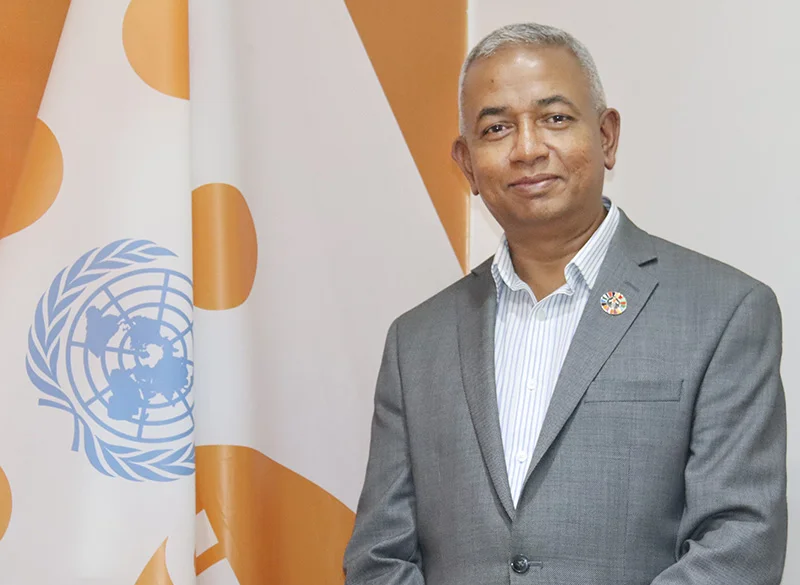
Marking World Health Day on April 7, health experts have called for a stronger commitment to science-based decision-making to address increasingly complex and evolving health challenges in Sri Lanka and beyond.
Dr. Dayanath Ranatunga, Assistant Representative of the United Nations Population Fund, stressed that health is no longer confined to hospitals or traditional medical systems, but is shaped by a broad spectrum of social, environmental, and technological factors.
“This year’s theme, ‘Together for Health. Stand with Science,’ reminds us that science is not only for laboratories or policymakers. It is a way of thinking and a tool that shapes everyday decisions,” he said.
Dr. Ranatunga noted that modern health challenges are increasingly interconnected, ranging from infectious diseases such as COVID-19 to climate-related risks, demographic shifts, and emerging forms of online violence.
He warned that maternal and newborn health continues to demand urgent attention despite progress. Globally, an estimated 260,000 women died from pregnancy and childbirth-related causes in 2023 alone—many of them preventable through timely, science-based interventions.
“In countries like Sri Lanka, where fertility rates are declining and survival rates improving, every pregnancy carries greater significance—not just for families, but for the future of communities and economies,” he said.
The UNFPA official also highlighted the growing threat of Technology Facilitated Gender-Based Violence (TFGBV), including cyber harassment and online abuse, noting that these forms of violence can have deep psychological consequences despite lacking visible physical harm.
He emphasised the need for multidisciplinary, science-informed approaches that integrate mental health, digital safety, and survivor-centered care.
Turning to demographic trends, Dr. Ranatunga pointed out that increasing life expectancy is bringing new challenges, particularly the rise of non-communicable diseases such as diabetes, cardiovascular illnesses, and cancers.
In Sri Lanka, nearly 13.9% of mothers develop diabetes during pregnancy, a trend attributed to obesity and unhealthy lifestyles, underscoring the urgent need for preventive healthcare strategies.
“Are we investing enough in prevention?” he asked, noting that early intervention and healthier lifestyles could significantly reduce long-term healthcare costs, especially in a country with a free public healthcare system.
He underscored the importance of data-driven policymaking, stating that scientific research and analytics enable governments to identify gaps, anticipate future needs, and allocate resources more effectively.
The UNFPA, he said, is already leveraging tools such as Geographic Information Systems (GIS) to improve access to maternal healthcare, including mapping travel times for pregnant women to reach health facilities.
Digital innovation is also transforming healthcare delivery, from telemedicine to real-time data systems, improving efficiency and ensuring continuity of care even during emergencies.
In Sri Lanka, partnerships between the government and development agencies are helping to modernise training institutions, including facilities in Batticaloa, equipping healthcare workers with both clinical and digital skills.
However, Dr. Ranatunga cautioned that technology alone is not a solution.
“It must be guided by evidence and grounded in equity,” he said, pointing out that women’s health remains significantly underfunded, with only about 7% of global healthcare research focusing on conditions specific to women.
He also drew attention to the growing health impacts of climate change, including extreme weather, food insecurity, and displacement, describing it as an emerging public health crisis.
“Health does not begin in hospitals. It is shaped by the environments we live in, the choices we make, and the systems we build,” he said.
Calling for renewed commitment, Dr. Ranatunga urged stakeholders to invest in prevention, embrace innovation, and ensure that science remains central to policy and practice.
“Science is not just about knowledge—it is about ensuring that everyone has the opportunity to live healthy, dignified lives, and that no one is left behind,” he added.
By Ifham Nizam

 Melantha Perera is well known as a very versatile musician.
He was involved with the band Mirage, as their keyboardist/vocalist, and was also seen in action with other outfits, as well, before embarking on a trip to Australia, as a solo artiste.
I now hear that he has plans to operate as a trio.
However, what has got many talking about Melantha, these days, is his awesome work with the visually impaired Bright Light Band.
They have worked out a special song for the Sinhala and Tamil New Year, aptly titled ‘Awurudu Kaale.’
Says Melantha: “This song has been created to celebrate the spirit of the Sinhala and Tamil New Year and to share the joy of the Awurudu season with all Sri Lankans”.
Yes, of course, Melantha composed the song, with the lyrics written collaboratively by Melantha, Badra, and the parents of the talented performers, whose creative input brought the song to life during moments of inspiration.

Melantha Perera: Awesome work with Bright Light Band
This meaningful collaboration reflects the strong community behind the Bright Light Band.
According to Melantha, accompaning the song is a vibrant video production that also features the involvement of the parents, highlighting unity, joy, and togetherness.
Beyond showcasing their musical talents, the visually impaired members of Bright Light Band deliver a powerful message, through this project, that their abilities extend beyond singing, as they also express themselves through movement and dance.
Melantha expressed his satisfaction with the outcome of the project and looks forward to sharing it with audiences across the country during this festive season.
He went on to say that Bright Light Band extends its sincere gratitude to Bcert Australia for their generous Mian sponsorship, the CEO of the company, Samath Fernando, for his continuous support in making such initiatives possible, and Rukshan Perera for his personal support and encouragement in bringing this project to completion.
The band also acknowledges Udara Fernando for his invaluable contribution, generously providing studio space and accommodating extended recording sessions to suit the children’s availability.
Appreciation is warmly extended to the parents, whose unwavering commitment from ensuring attendance at rehearsals to supporting the video production has been instrumental in the success of this project.
Through ‘Awurudu Kaale’, Bright Light Band hopes to spread festive cheer and inspire audiences, proving that passion and talent know no boundaries.

BCCI curbs movement of benched IPL players in latest rules

Prasidh trumps Miller in last-ball finish as Gujarat Titans clinch thriller

Greece to ban social media for under-15s from next year

Showers will occur at a few places in the Western, Sabaragamuwa and North-western provinces and in Galle, Matara, Kandy, Nuwara-Eliya and Mannar districts after 2.00 p.m.

Sun directly overhead Chilaw, Bingiriya, Halmillawewa, Panduwasnuwara, Gokarella, Kawudupelella, Koppaveli and Kirankulam about 12:12 noon. today (09)

Heat Index at Caution Level in the Western, Sabaragamuwa, Southern, Eastern, North-western, Northern and North-central provinces and in Monaragala district

‘Dates have the highest sugar content to fight Coronavirus’

Sunday Island 27 December – Headlines

#SundayIsland 17th December – Headlines

Sunday Island – 28th March

Sunday Island Headlines – 21 March

Sunday Island – 21st February – Headlines
-

 Features4 days ago
Ranjith Siyambalapitiya turns custodian of a rare living collection
-

 News4 days ago
Global ‘Walk for Peace’ to be held in Lanka
-

 News2 days ago
Lankan-origin actress Subashini found dead in India
-

 Opinion6 days ago
Hidden truth of Sri Lanka’s debt story: The untold narrative behind the report
-

 Features4 days ago
Beyond the Blue Skies: A Tribute to Captain Elmo Jayawardena
-

 Features4 days ago
Aspects of Ceylon/Sri Lanka Foreign Relations – 1948 to 1976
-
 Features6 days ago
The Ramadan War
-

 Editorial5 days ago
Brouhaha over a book