
News
Endurance, not speed, may decide Iran conflict: analyst

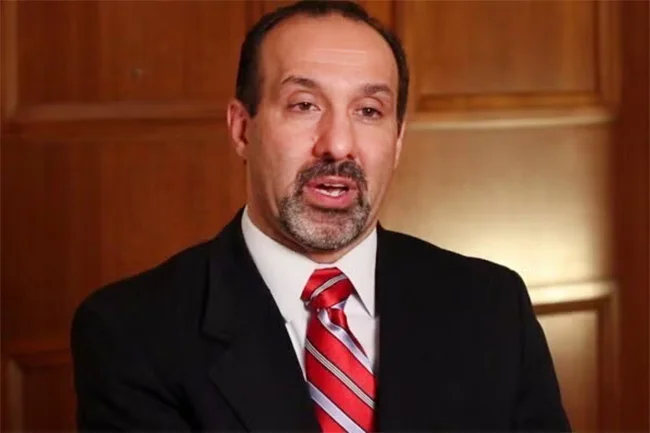
The conflict involving Iran, the United States and Israel is increasingly being shaped by two sharply different strategic assumptions about what “victory” means, according to Middle East scholar Mehran Kamrava of Georgetown University in Qatar.
Kamrava, who was interviewed by Euro News yesterday, said the crisis escalated after diplomatic efforts between Tehran and Washington faltered, while political calculations in both capitals pushed the situation toward confrontation.
“A couple of things went wrong diplomatically,” Kamrava said, pointing to tensions between the administration of Donald Trump and Iran’s leadership, as well as the strategic calculations of Israeli Prime Minister Benjamin Netanyahu.
According to Kamrava, the Israeli leadership had long treated the earlier phase of the confrontation as unfinished business, while negotiations between Tehran and Washington failed to bridge fundamental differences. Washington sought direct talks and a swift resolution to concerns over Iran’s nuclear activities, while Tehran insisted on negotiating on its own terms and at a slower pace.
That mismatch, Kamrava suggested, combined with what he described as the unpredictability of decision-making in the Trump White House, ultimately contributed to the escalation now unfolding.
Kamrava said the United States and Israel appear to have entered the confrontation expecting a rapid and decisive outcome, where large-scale strikes and the ‘showy’ destruction of military assets would quickly weaken Iran.
“But Iran has a very different assumption about the war, ” he said.
For Tehran, he explained, the ability to withstand pressure and continue functioning politically and militarily may itself constitute victory. Rather than seeking a swift battlefield decision, Iran’s strategy may be to prolong the conflict and increase the costs for its adversaries over time.
“If they drag it out,” Kamrava said, Iran could aim to grind down American and Israeli resolve while gradually increasing the pressure on them.
“So, what we see are two very different approaches to the war,” Kamrava said. “At this point, the question is: who is going to blink first?”
The conflict has also unfolded against the backdrop of uncertainty within Iran’s political leadership.
Following reports of the death of Iran’s long-time Supreme Leader Ali Khamenei, attention has turned to the role of his son, Mojtaba Khamenei, who has largely disappeared from public view.
Kamrava argued, however, that Iran’s political system was deliberately designed to maintain operational continuity even during leadership crises.
Military decisions, he said, continue to be made by institutional structures, including the powerful Islamic Revolutionary Guard Corps and the regular armed forces.
Even the death of senior figures such as Ali Larijani, who had headed Iran’s Supreme National Security Council, would not necessarily disrupt decision-making.
“The system continues to function,” Kamrava said, noting that operational authority in wartime is distributed across several institutions rather than concentrated solely in one individual.
Meanwhile, the conflict is beginning to reverberate inside the United States. The decision by the Trump administration to launch strikes against Tehran in support of Israel’s efforts to weaken the Islamic Republic has exposed divisions within the president’s political base.
The resignation of former top counter-terrorism official Joe Kent has added to those tensions, highlighting growing debate among Trump’s supporters about the risks of deeper American involvement in another Middle Eastern conflict.
For now, analysts say the trajectory of the conflict remains uncertain.
If the United States and Israel continue to pursue rapid military gains while Iran focuses on endurance and gradual escalation, the confrontation could evolve into a prolonged geopolitical contest rather than a short war.
In that scenario, Kamrava suggested, the outcome may hinge less on battlefield victories and more on political will.
Ultimately, Kamrava said, the defining question may be simple: which side blinks first.
By Sanath Nanayakkare

Latest News
Payment of Compensation to the people who have lost their cultivable lands in implementing the Uma Oya Multipurpose Development Project

Approval has been granted at the Cabinet meeting held on 27-06-2012 to provide cultivable agricultural lands from the lower Uma Oya valley to 276 farming families in Hali-Ela, Walimada, and Uva Paranagama Divisional Secretariat Divisions who have lost their cultivable lands due to the acquisition of lands for the
Uma Oya Multipurpose Development Project.
However, the aforementioned proposal could not be implemented due to the encroachment of a large portion of the identified lands by unauthorized persons, heavy forest cover, the threats posed by wild elephants, remoteness from their original settlements, and difficulties in adapting to other environmental conditions and social anomalies.
Accordingly, the Cabinet of Ministers has approved the resolution furnished by the Minister of Agriculture, Livestock, Land, and Irrigation to pay an estimated compensation of Rs. 12 lakhs for each of these 276 farming families, based on the
recommendations submitted by the Cabinet Sub-Committee appointed to provide solutions for the issues arising in the implementation of the Uma Oya Multipurpose Development Project.
Policy approval was granted at the Cabinet meeting held on 07.04.2025 to prepare a draft bill to establish the Chartered Institute of Media Professionals of Sri Lanka in order to accomplish the requirement of a training institution to carry out studies in order to create chartered media professionals and mould intelligent media personalities with skills in order to enhance the quality and standard of the media society.
Clearance of the Attorney General has been received for the final draft prepared by the Legal Draftsman for the purpose.
Accordingly, the Cabinet of Ministers granted approval to the resolution furnished by the Minister of Health and Mass Media to publish the draft bill of Chartered Institute of Media Professionals of Sri Lanka in the Government Gazette Notification and thereafter submit the same for the concurrence of the House.
The Telecommunication Levy Act No. 21 of 2011 has enabled provisions to impose telecommunication levy. The budget 2026 has proposed to introduce amendments for the act including changes imposed from time to time regarding the telecommunication levy.
Accordingly, the Legal Draftsman has formulated a draft bill for
amending the Telecommunication Levy Act No. 21 of 2011 including provisions to extend applicable to envisage all the tax amounts applicable from the year 2015 along with the telecommunication levy existing at present, applicable of taxes on unrecovered revenue (bad debts) and to extend the provisions of that act to cater the telecommunication suppliers.
The Cabinet of Ministers approved the resolution furnished by the President in his capacity as the Minister of Finance, Planning and Economic Development to publish the said draft bill in the Government Gazette Notification and subsequently to submit the same for the concurrence of the House.

Payment of Compensation to the people who have lost their cultivable lands in implementing the Uma Oya Multipurpose Development Project
Draft Bill of the Chartered Institute of Media Professionals of Sri Lanka to be Gazzated
Telecommunication Levy Act No. 21 of 2011 to be amended
Management of State Expenditure during the Energy Crisis
Vesak week from 27 May to 02 June
Free Tourist Visas for Passport Holders of 39 Countries

‘Dates have the highest sugar content to fight Coronavirus’

Sunday Island 27 December – Headlines

#SundayIsland 17th December – Headlines

Sunday Island – 28th March

Sunday Island Headlines – 21 March

Sunday Island – 21st February – Headlines
-

 News7 days ago
Senior citizens above 70 years to receive March allowances on Thursday (26)
-

 Features4 days ago
A World Order in Crisis: War, Power, and Resistance
-

 News5 days ago
Energy Minister indicted on corruption charges ahead of no-faith motion against him
-

 News6 days ago
US dodges question on AKD’s claim SL denied permission for military aircraft to land
-

 Business6 days ago
Dialog Unveils Dialog Play Mini with Netflix and Apple TV
-

 News7 days ago
CEB Engineers warn public to be prepared for power cuts after New Year
-

 Sports5 days ago
SLC to hold EGM in April
-
 Latest News5 days ago
A strong Technical and Vocational Education and Training (TVET) system equips individuals with practical, relevant, and future-oriented skills helping to innovate responsibly towards a greener and sustainable future – PM