
Foreign News
‘Gruesome’ war bets fuel calls for crackdown on prediction markets

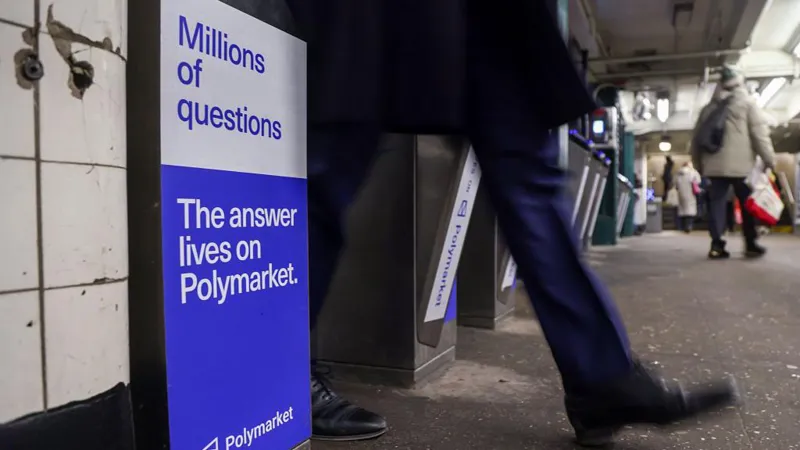
Stew, a 35-year-old from Montana, has enjoyed dabbling in sports bets since he downloaded the Kalshi app about 18 months ago.
But just a few weeks ago, after spotting reports of elevated pizza deliveries around the Pentagon during some late-night scrolling, he made a different kind of bet – wagering $10 (£7.50) on the odds that Iran’s Ayatollah Ali Khamenei would be “out” by 1 March.
It was a trade that tested the limits of the kinds of bets Americans are allowed to make.
So-called predictions markets – overseen by firms such as Kalshi – have exploded in popularity over the last year, hosting more than $44bn in trades.
They are rapidly transforming the betting landscape in the US, where sports betting was largely illegal until 2018 and gambling on elections had been off-limits for years until 2024.
While much of the activity on the platforms revolves around sporting matches, users can speculate on any number of questions, including local elections, whether the US central bank will cut interest rates and the year of Jesus Christ’s return.
The apps caught fire during America’s 2024 presidential campaign, after a legal victory cleared the way for them to accept election bets and they showed the odds tilting toward Donald Trump.
But it is more grisly wagers tied to military action involving Iran, Venezuela and Israel that have drawn attention lately.
In theory, such bets run afoul of US financial rules, which bar trading on contracts involving war, terrorism, assassination, gaming or other illegal activities.
But that hasn’t stopped firms from taking in millions of trades.
Critics have seized on the activity, calling for a crackdown on the apps, which they say are facilitating unseemly, and potentially illegal, war profiteering, generating national security risks and enabling opportunities for insider trading and corruption.
“You have now opened up gambling basically on almost anything and it has turned into this very, very gruesome type of thing on the death of a head of state,” said Craig Holman, government affairs lobbyist at the Public Citizen advocacy group, which recently filed a complaint this week over the bets.
Polymarket alone has hosted what Bloomberg estimated as more than $500m in bets related to the Iran war, at one point offering an opportunity to play the odds on the chance of nuclear detonation.
The company, which is headquartered in New York but operates on a limited basis in the US, eventually removed that market after it drew scrutiny on social media but users can still submit bets on questions like when US forces will enter Iran. It did not respond to the BBC’s request for comment.
Kalshi also ended up cancelling the Khamenei market, which had drawn $54m in trades, noting that US-regulated entities are barred from “having a market directly settling on someone’s death”.
The company, which did not respond to a request for comment for this article, has said the war bets are happening on unregulated exchanges outside the US.
Concerns about the war bets have collided with a bigger battle over how prediction market firms should be regulated.
Unlike traditional gaming firms, in which the odds are set by the company, prediction market companies function more like a stock exchange, allowing users to bet against each other on the outcome of future events using “event contracts”.
That design has allowed national financial regulators at the Commodities Futures Trading Commission (CFTC) to claim oversight.
But critics say they are sports betting and gambling operations trying to dress up as financial exchanges in a bid to avoid stricter rules and taxes faced by traditional gaming firms, which are regulated by the states.
Disagreement over who should be policing the apps has sparked dozens of legal battles across the US, as states start to assert their right to regulate the companies like other gaming firms, rather than leave oversight up to the CFTC.
Even some Republicans have voiced concerns, as traditional gaming firms have also stepped up their lobbying, enlisting a savvy former Trump official, Mick Mulvaney, to plead their case in Washington.
“Nobody is saying that gambling shouldn’t be allowed,” says Ben Schiffrin, director of securities policy at Better Markets, which advocates for financial reforms. “What the states are saying and other advocates are saying is things that are gambling should be regulated as gambling.”
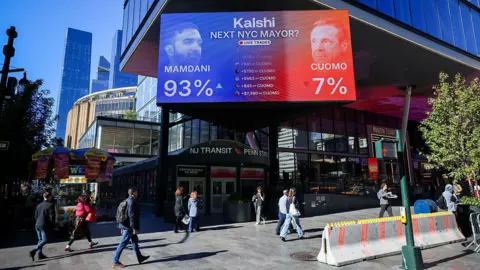
Suspiciously timed bets related to military operations involving Israel, Venezuela and Iran have added fodder to those calls.
In recent weeks, Democrats have introduced legislation to bar federal officials from trading event contracts, pointing to incidents such as when a gambler new to Polymarket made nearly half a million dollars on the capture of Venezuela’s president just before it was officially announced.
They have also issued alerts to consumers about the risks of insider trading and written to the administration urging it to more clearly enforce the rules against wagering on war.
But the odds of a crackdown remain long.
Though the Biden administration had taken a hard line on the sector, proposing to ban sports and politics-related event contracts, that regulatory drive stalled after a court defeat and the 2024 election of Donald Trump, who came to power promising a lighter hand.
Last month, the CFTC said it would withdraw the proposed ban on sports and election related contracts.
It has also taken the side of prediction market firms in the legal fights they are facing in the states, which Michael Selig, Trump’s chairman of the Commodity Futures Trading Commission, condemned in a recent opinion piece as “overzealous”.
He argued that event contracts served “legitimate economic functions”, allowing businesses to hedge against risks triggered by events.
“It’s clear that Americans like the product and want to participate,” he said, while also emphasising that platforms must still follow rules.
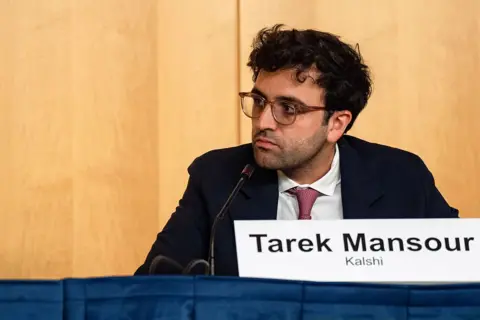
As the pressure mounts, Polymarket has announced steps to more formally police suspicious activity, while Kalshi, which advertises its status as a “regulated exchange”, has become more vocal about what it is doing to combat insider trading.
It recently announced punishments in two cases of insider trading and disclosed that it had opened up 200 investigations over the last year.
The company also ultimately cancelled the $54m market around Khamenei’s ouster.
In series of statements explaining the decision, the firm said it did not “list markets directly tied to death”, noting that its terms had included that carve-out.
It promised to make the terms more clear from the get-go, saying it had “learned a lot” from the incident.
But in an indication of growing pains, the decision still sparked outrage among users, including Stew, who said the firm had initially “buried” those rules and its explanation seemed disingenuous, given that there were “only a handful of realistic methods” for Khamenei to go.
Stew, who received a refund, said he wasn’t sure regulation was the answer, but he was sympathetic to the idea that the debate seemed to be stumbling around semantics.
“They call it contract trading, which I guess technically speaking, that’s what it is. But if we’re all being honest here, it’s still betting,” he said.
[BBC]

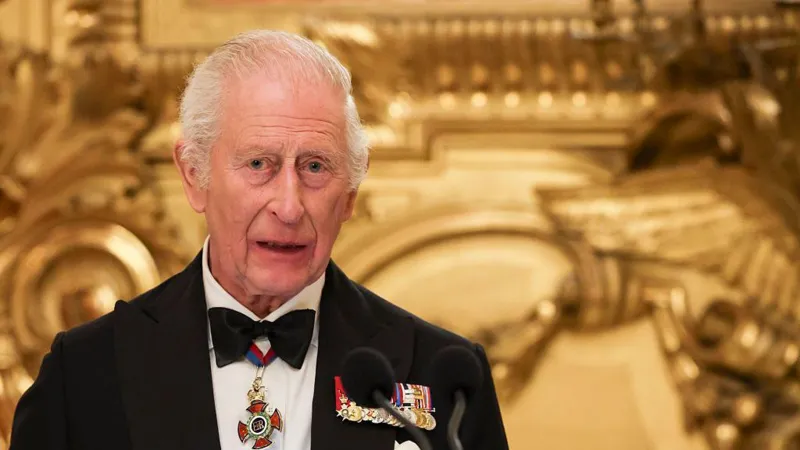
The United States declared independence from the British crown 250 years ago – but this week, it could not get enough of it.
From the minute King Charles and Queen Camilla stepped onto the White House South Lawn, US networks dumped their standard diet of political warfare and breaking news for something rare: pure pageantry.
In a country that seems to agree on almost nothing, the British royals managed something close to a clean sweep – drawing warm receptions from both sides of a political spectrum where neutral ground is rare.
The visit came at a fraught time in US-British relations, with the White House and Downing Street at odds over the war in Iran, straining a relationship both governments insist remains unshakeable.
The reviews following the King’s appearances at the White House, in Congress and in New York were warm across the political divide.
A commentator in the conservative Washington Examiner wrote that the UK needed more than conventional diplomacy – and that King Charles delivered.
“His Majesty’s Government under scandal-plagued Labour Prime Minister Keir Starmer needed the monarchy to do what only the king could do,” the editorial said.
The King’s comments in Congress and at the White House’s lavish banquet on Tuesday – mixing humour with history and a call for unity – also were widely praised.
Some saw them as a subtle rebuke of President Trump.
“Sometimes it takes an outside perspective to see what’s really going on,” an opinion writer wrote in the Arizona Republic. “It’s striking to have a king remind us of what democracy is all about.”
For months, Donald Trump – a committed Anglophile and avid fan of the Royals – repeatedly told reporters that he was excited for the King’s visit. That excitement was on full display throughout the King’s visit to Washington, in which the world saw a warmer version of a president not shy to make his feelings known.
Uncharacteristically, Trump largely stuck to a script, making no mention of policy disagreements with Downing Street and lauding the long ties between the US and Britain.
“Before we ever proclaimed our independence, Americans carried within us the rare gifts of moral courage,” he said. “And it came from a small but mighty kingdom from across the sea.”
On Capitol Hill, where the King became only the second British monarch to address a joint session of Congress, Charles received a standing ovation – though some in the room heard something more pointed in his words.
“As opposed to Keir Starmer, who is looked at…as a leftist weenie, we saw in King Charles – someone who is proud of Britain,” Washington Republican Representative Michael Baumgartner told the BBC. “I think that was good.”
The warm welcome on Capitol Hill was not lost on President Trump.
“He got the Democrats to stand, I’ve never been able to do that. I couldn’t believe it,” Trump said at the banquet a few hours later. “They liked him more than they’ve ever liked any Republican or Democrat, actually.”
Elizabeth Holmes, an expert on the Royal Family and author, told the BBC that many members of the American public are broadly interested in the family, even as that interest has ebbed and flowed over the years.
“I think the fascination is rooted in a combination of novelty and distance,” she said. “It’s not something we have here.”
The King and Queen traveled to New York City on Wednesday where they made a few stops, including one at the 9/11 Memorial. Jacob Knutton, who manages a British-themed restaurant and store in New York, says business has been “a lot busier” around the King’s visit.
“There’s definitely been a lot of people talking about it,” said Knutton, who grew up in London and Australia. “Americans are talking about it and trying to get our opinions on it.”
But not every American is as enthused.
While recent statistics are hard to come by, a YouGov poll conducted in 2024 found that only 42% of Americans held a favourable view of King Charles.
In comparison, his mother, Queen Elizabeth, garnered a 67% approval rating. Over three quarters of those polled – 76% – held a favourable view of the King’s ex-wife, Princess Diana, who died in 1997.
According to Holmes, in the eyes of some Americans, Charles had a “far less compelling” narrative than his mother, who became Queen at a young age.
US feelings about King Charles are further complicated by his complex relationship with son Prince Harry, Holmes added.
Data from Google Trends suggests that US-based searches for the King during the visit spiked by 20 to 25 times over normal, and by 50 times during his speech to Congress.
Others who haven’t followed the royal visit closely, still are excited. “I think it’s cool that he’s here,” said Harry James, 21, who works in a fish and chips shop in New York. “It’s cool we can keep these traditions going.”
Holmes believes the visit already has improved US perceptions of the King. “Trump is such a polarising figure, and I think people were very eager to see their interactions,” she said.
His dinner comments, in particular, have “really taken off”.
“I think people are delighted to see British wit on display,” she added.
Near the White House on Tuesday, some of those who turned out to watch the King’s motorcade pass said they felt hopeful.
“It’s natural for human beings to disagree,” said Maribeth Massie, of Maine, who watched the King’s motorcade near the White House on Monday. “Hopefully they’ll lay some common ground together and move forward.”
Knutton also hopes the visit helps – in part for his business’ sake. His store imports nearly all of its goods from the UK, and feels the pinch of Trump’s tariffs, he said.
“I’m sure it will have an effect,” he said. “But I’m not expecting magical wand-waving.”
[BBC]

A plane has crashed on the outskirts of South Sudan’s capital, Juba, killing all 13 passengers and the pilot.
The country’s civil aviation authority said on Monday that initial reports indicate the aircraft may have crashed due to bad weather conditions that caused low visibility.
The Cessna 208 Caravan, which was operated by CityLink Aviation, lost communication while flying from Yei to Juba International Airport, it added in a statement.
Among those onboard were two Kenyan nationals, while the rest were South Sudanese.
A team has been sent to the site to gather information and support emergency services, the aviation authority said.
Videos of the crash site, located some 20km (12 miles) outside of Juba, showed the remains of the aircraft in flames.


Gunmen have raided an orphanage and kidnapped at least 23 children, authorities in Nigeria report.
The gang took the children late on Sunday from an unregistered facility called the Dahallukitab Group of Schools, located in an “isolated area” in Kogi State’s capital, Lokoja, Kogi Information Commissioner Kingsley Fanwo said in a statement on Monday.
Mass kidnappings have become a common way for gangs and armed groups to make quick money in Africa’s most populous country, especially in rural areas with little government presence.
Fanwo said the “prompt and coordinated response” of security agencies led to the rescue of 15 children but eight are still missing.
The wife of the proprietor of the orphanage was also abducted, according to the statement.
“Intensive operations are ongoing to secure the safe return of the remaining eight victims and apprehend the perpetrators,” the official said.
[Aljazeera]

“Let’s move forward together in unity to build a country where all labour is valued, rights are protected, and equality prevails” -PM

Violence in Australian town after arrest of man over girl’s murder

Holder, Rashid and Arshad give Gujarat Titans NRR-boosting win

Showers or thundershowers will occur in most parts of the island after 1.00 pm.

Heat Index at Caution Level at some places in the Northern, North-central, Eastern, Sabaragamuwa and North-western provinces and in Monaragala district during the day time

USD 2.5 mn fraud probe: Interdicted MoF official found dead at home

‘Dates have the highest sugar content to fight Coronavirus’

Sunday Island 27 December – Headlines

#SundayIsland 17th December – Headlines

Sunday Island – 28th March

Sunday Island Headlines – 21 March

Sunday Island – 21st February – Headlines
-
 News2 days ago
Treasury chief’s citizenship details sought from Australia
-

 News4 days ago
BIA drug bust: 25 monks including three masterminds arrested
-

 Business5 days ago
Nestlé Lanka Announces Change in Leadership
-

 News4 days ago
Banks alert customers to phishing attacks
-
 News5 days ago
Hackers steal $3.2 Mn from Finance Ministry
-
 News3 days ago
Govt. assures UN of readiness to introduce ‘vetting process’ for troops on overseas missions
-
 Business3 days ago
ADB-backed grid upgrade tender signals next phase of Sri Lanka’s energy transition
-

 News1 day ago
Rooftop Solar at Crossroads as Sri Lanka Shifts to Distributed Energy Future