
Latest News
Iran postpones Khamenei funeral as US-Israeli bombardment continues

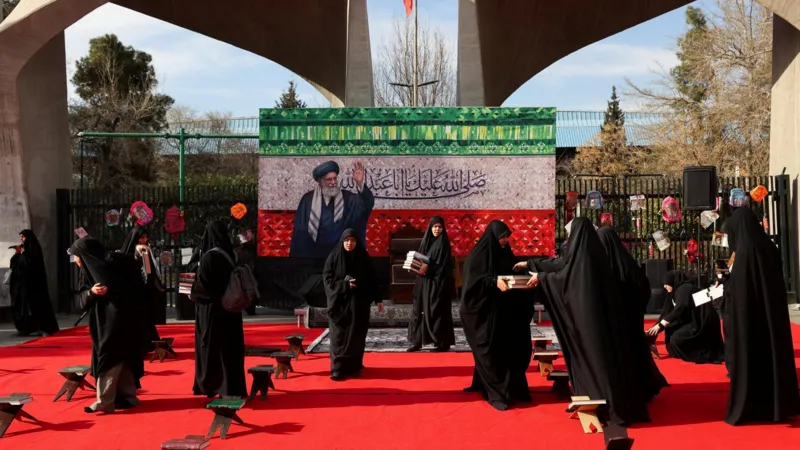
Authorities in Iran have postponed the funeral ceremony for the late Supreme Leader, Ayatollah Ali Khamenei, as US and Israeli forces continue intense strikes across the country.
An official said there had been many requests from people wanting to attend the three-day event at a Tehran prayer complex and that infrastructure needed to be prepared. It had been due to begin on Wednesday night.
A member of the Assembly of Experts meanwhile said the clerical body was “close” to choosing a successor to Khamenei, who was killed in a strike at the start of the US and Israeli assault on Saturday.
Iran has responded by launching missiles and drones at Israel and Gulf states with US bases.
Kuwait’s health ministry said overnight that a girl had been killed by shrapnel that fell on a residential area during an Iranian attack.
Meanwhile, US Secretary of Defence Pete Hegseth said a US submarine sank anIranian navy frigate in the Indian Ocean off the coast of Sri Lanka.
“The warship thought it was safe in international waters. Instead, it was sunk by a torpedo. Quiet death,” he told reporters.
Sri Lanka’s Defence Secretary Air Vice Marshal Sampath Thuyyakontha said the bodies of 80 people on board the Iris Dena had been recovered.
Another 32 people have been rescued, while dozens more are missing.
Hegseth also said that US and Israeli forces would have total aerial superiority over Iran within days and would “soon” control the country.
“This was never meant to be a fair fight, and it is not a fair fight. We are punching them while they’re down,” he declared.
The secretary of Iran’s Supreme National Security Council, Ali Larijani, said US President Donald Trump had “dragged the American people into an unjust war”.
Khamenei – who was Iran’s spiritual leader and its highest authority – was killed at his compound in Tehran in the first wave of US and Israeli strikes, along with his wife, one of their adult sons, and several top officials.
The three-day funeral ceremony for the 86-year-old cleric had been due to start at 22:00 local time (18:30 GMT) on Wednesday, with mourners invited to pay their respects as he lay in state at the capital’s Grand Mosalla prayer complex.
But on Wednesday morning, the head of the Islamic Propaganda Co-ordination Council of Tehran province told the hardline Tasnim news agency that it had been decided to postpone the ceremony until “a more appropriate time”.
Seyyed Mohsen Mahmoudi said this was because of “the high volume of requests to attend this ceremony and the need to provide appropriate facilities to host the people”.
Following Khamenei’s assassination, state media showed crowds of the Islamic Republic’s supporters protesting in Tehran against the US and Israeli attacks. But social media videos also showed opponents celebrating on the streets in the capital and other cities.
Khamenei became supreme leader in 1989 after the death of the Islamic Republic’s founding father, Ayatollah Ruhollah Khomeini. He maintained a firm grip on Iran’s politics and its armed forces, and suppressed challenges to the ruling system, sometimes violently.
Many people called for his overthrow or his death during nationwide protests in late December and early January. Security forces under his command crushed the uprising with unprecedented force, killing at least 6,480 people, according to human rights groups.
Iran’s new supreme leader is supposed to be chosen by the Assembly of Experts. The clerical body’s 88 members are elected by Iranians every eight years, but Khamenei ensured they were conservatives who would follow his guidance on picking a successor.
One member, Ayatollah Ahmad Khatami, told state TV that the candidates had already been identified but did not name them.
“The supreme leader will be identified in the closest opportunity, we are close to a conclusion. However, the situation in the country is a war situation,” he said.
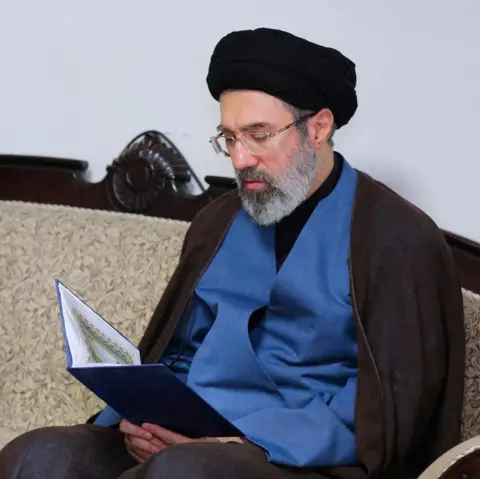
Two Iranian sources told news agency Reuters that another of Khamenei’s sons, Mojtaba, was considered the front-runner to succeed him.
Mojtaba, a 56-year-old cleric, is a shadowy figure said to have amassed significant power and wealth under his father’s rule. He is close to conservatives and the powerful Islamic Revolutionary Guard Corps (IRGC), which is tasked with defending the country’s Islamic system.
Israel’s defence minister said any successor who continued to threaten Israel and the US would be “an unequivocal target for elimination”.
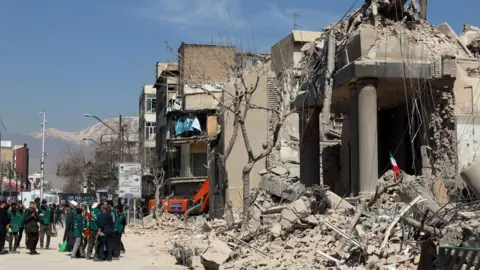
The Israel Defense Forces (IDF) meanwhile announced that its had carried out several waves of strikes across Iran on Wednesday.
A military official said more than 100 Israeli fighter jets had dropped about 250 munitions on a military compound containing multiple command centres in eastern Tehran.
The IDF also said it had struck ballistic missile arrays and air defence systems, as well as a missile storage and production facility, and “defence and detection systems” at Tehran’s Mehrabad airport.
It added that an Israeli F-35 fighter jet shot down an Iranian Yak-130 over Tehran, describing it as “the first shoot down in history of a manned fighter aircraft by an F-35”.
There was no immediate comment from Iranian authorities.
On Tuesday night, the head of the US military’s Central Command, Adm Brad Cooper, said the US-Israeli campaign was “ahead of our game plan”.
“In simple terms, we’re focused on shooting things that can shoot us,” he added.
Iran’s state news agency Irna reported on Wednesday that US and Israeli strikes had killed 1,045 military personnel and civilians since the start of the conflict.
It was not immediately possible to verify the figures, but the US-based Human Rights Activists News Agency (HRNA) said overnight that the number of reported civilian deaths had reached 1,097, including 181 children under the age of 10.
Iran’s armed forces have responded to the strikes by launching hundreds of missiles and drones at Israel and neighbouring Arab states that host US military installations.
Iranian President Masoud Pezeshkian told neighbouring states that the US-Israeli attack had “left us no choice but to defend ourselves” after diplomacy had failed.
“We respect your sovereignty and believe the region’s security and stability has to be achieved through the collective efforts of its states.”
It came after Qatar’s Prime Minister, Sheikh Mohammed bin Abdul Rahman Al Thani, told Iranian Foreign Minister Abbas Araghchi in a phone call that Iran was seeking to harm its neighbours and draw them into a war “that is not theirs”, according to the Qatari government.
Thani also “categorically rejected” Araghchi’s assertion that the missiles were directed solely at US interests, citing the strikes on civilian infrastructure and residential areas.
Early on Wednesday, Kuwait’s health ministry said an 11-year-old girl, who was a resident of the country, had died after being hit by falling shrapnel.
Nine other people – six US service personnel, two Kuwaiti army soldiers, and one other civilian – have been killed in Kuwait since the start of the conflict.
Authorities in Saudi Arabia said there had been an attempted drone attack on its largest oil refinery, Ras Tanura, on the Gulf coast. No damage or disruption had been reported, it added.
On Monday, the refinery was forced to halt some operations after a drone attack caused a fire.
Turkey’s defence ministry also said an Iranian missile heading towards its airspace had been intercepted by Nato air and missile defence systems in the Eastern Mediterranean.
And in Qatar, the State Security Service announced the arrest of 10 members of two cells allegedly linked to the IRGC, which it said had been tasked with spying on infrastructure and carrying out “sabotage operations”.
The IDF also said its defence systems had operated to intercept more salvos of Iranian missiles. There were no immediate reports of any casualties.
A total of 10 people have been killed in missile strikes in Israel over the past five days.
[BBC]

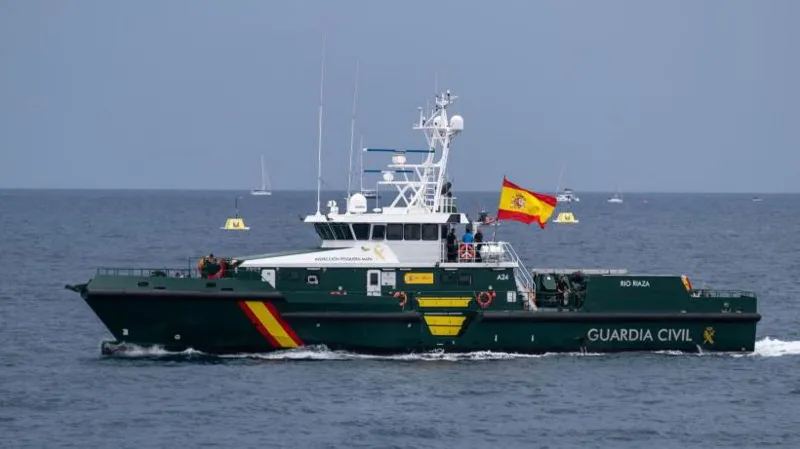
Spanish police have seized what is thought to be a national record haul of cocaine from a ship in the Atlantic Ocean.
Between 30,000 to 45,000kg were found when the Civil Guard intercepted a freighter in international waters, the body’s main union, the AUGC, announced. It called the move a “historic blow to drug trafficking”.
The vessel was intercepted off Spain’s Canary Islands on Friday and around 20 people were arrested, the AUGC told the AFP news agency. It had travelled from Sierra Leona and was on its way to Libya.
The Civil Guard has declined to give details of the investigation for legal reasons.
Interior Minister Fernando Grande-Marlaska told reporters in Madrid that the seizure was “one of the biggest, not only nationally but internationally”.
The Civil Guard shared a photograph on X showing the drugs stuffed into the hold of the intercepted vessel.
“Today history is being written in the Maritime Service of the Civil Guard,” it wrote.
“Intercepted in international waters the largest known seizure: between 30,000 and 45,000 kg of cocaine on board a freighter.”
While the boat was headed to Libya, AFP reported that the pattern of previous operations suggests that it was due to offload the drugs onto smaller vessels for distribution in Europe.
In January, Spanish authorities made its biggest seizure of cocaine at sea from a ship that was carrying almost 10 tonnes.
[BBC]

Three people have died and a UK national is seriously ill in hospital after a suspected hantavirus outbreak on a small cruise ship in the Atlantic Ocean.
The operator of the MV Hondius ship, tour company Oceanwide Expeditions, said a Dutch husband and wife, as well as a German national, had died but the cause has not yet been established.
However, the Dutch company said hantavirus has been confirmed in the case of the 69-year-old UK national who is in intensive care in Johannesburg, South Africa.
Hantavirus is usually passed to humans from rodents via their faeces, saliva or urine. It can cause severe respiratory illness. Rarely, it can be transmitted between people.
The MV Hondius vessel is currently off the coast of Cape Verde and has 149 people onboard.
Oceanwide Expeditions said there were also two crew members on board “with acute respiratory symptoms, one mild and one severe”.
They were of British and Dutch nationality and both required urgent medical care, it said. It said it had not been established that hantavirus had been confirmed in the pair. And it added that no other persons with symptoms had been identified.
Negotiations are in progress with local authorities following what Oceanwide Expeditions described as “a serious medical situation”.
Dr Aaron Motsoaledi, South Africa’s minister of health, said of the British patient that he was critical and had been admitted to a private facility.
“He’s being taken care of. As you know, hantavirus, like all viruses, don’t have any specific treatment, so they are giving symptomatic treatment and support as much as they could.”
He said health workers and anyone who had contact with the patient would now be traced and tested.
Outlining a timeline, the company said a passenger had become unwell while onboard and died on 11 April.
His cause of death could not be determined, and his body was taken off the ship after it docked at St Helena on 24 April.
The passenger’s wife also disembarked on St Helena and the firm said it was told she had become unwell during the return journey and later died.
“At this time, it has not been confirmed that these two deaths are connected to the current medical situation on board,” it added.
On 27 April, the firm said, another passenger – the British national – became seriously ill and was “medically evacuated” to South Africa.
The 69-year-old remains in a critical but stable condition in Johannesburg after it was confirmed a variant of hantavirus had been identified.
The firm added that on Saturday, a third passenger onboard MV Hondius died.
The cause of death has not been established, Oceanwide Expeditions said. It confirmed the passenger was German.
Oceanwide Expeditions said the cause of the deaths were being investigated.
“The disembarkation of passengers, medical evacuation and medical screening require permission from, and co-ordination with, the local health authorities,” it said. “Local health authorities have visited the vessel and assessed the situation.
“The medical transfer of the two ill persons on board has not yet taken place.”
It added that the option of sailing on to Las Palmas or Tenerife was being considered “to be the gateway for disembarkation, where further medical screening and handling could take place”.
The World Health Organization (WHO) said it was “acting with urgency” to support the MV Hondius, and thanked South African authorities for taking care of the British patient.
WHO’s regional director for Europe, Dr Hans Henri P Kluge, said: “I am in close contact with our teams to ensure a co-ordinated, science-based response.
“Hantavirus infections are uncommon and usually linked to exposure to infected rodents.
“While severe in some cases, it is not easily transmitted between people. The risk to the wider public remains low. There is no need for panic or travel restrictions.”
According to the South African government, MV Hondius departed from Ushuaia in southern Argentina about three weeks ago, before it completed its journey to Cape Verde, where it is anchored outside the capital, Praia.
It is described as a 107.6m (353ft) polar cruise ship, with space for 170 passengers in 80 cabins, along with 57 crew members, 13 guides and one doctor.
One passenger onboard the MV Hondius, who asked to remain anonymous, told the BBC: “The latest word is that a plane is on its way and once it gets here three people will be evacuated from the ship and flown straight to Europe.
“Then the rest of us will almost certainly sail to the Canary Islands.
“The Cape Verde authorities clearly want nothing to do with us. This is what we’re hearing from the captain and staff. From what I can see the mood (on the ship) is pretty good.
“Only one person has been tested (the one now in South Africa) and he tested positive for hantavirus. So, we don’t actually know yet if the other cases are that or something unrelated.
“If they are all hantavirus then the transmission is a bit mysterious. We’ve been informed that there are no rodents on board, and person-to-person transmission is difficult/rare.
“Hopefully the other patients on board will be tested soon and then we’ll know better what’s going on.”
President of the Cape Verdean Public Health Institute, Maria Da Luz, said passengers would not be disembarking in Cape Verde in order to protect the local population, Cape Verde’s media outlet A Nacao reports.
Oceanwide Expeditions said strict precautionary measures were in process on board, including isolation measures, hygiene protocols and medical monitoring.
“All passengers have been informed and are being supported,” it said.
“Oceanwide Expeditions is in close contact with those directly involved and their families, and is providing support where possible.”
Microbiologist Siouxsie Wiles told the BBC the time between people being exposed to hantavirus and showing symptoms could be anywhere from one to eight weeks.
“With this incubation period are we going to see more people coming down with the disease in the next days and weeks?”
The UK Foreign Office told the BBC it was monitoring reports, and ready to support British nationals.
Hantavirus was in the headlines last year after the wife of Oscar-winning actor Gene Hackman died from a respiratory illness linked to hantavirus in March 2025.
[BBC]
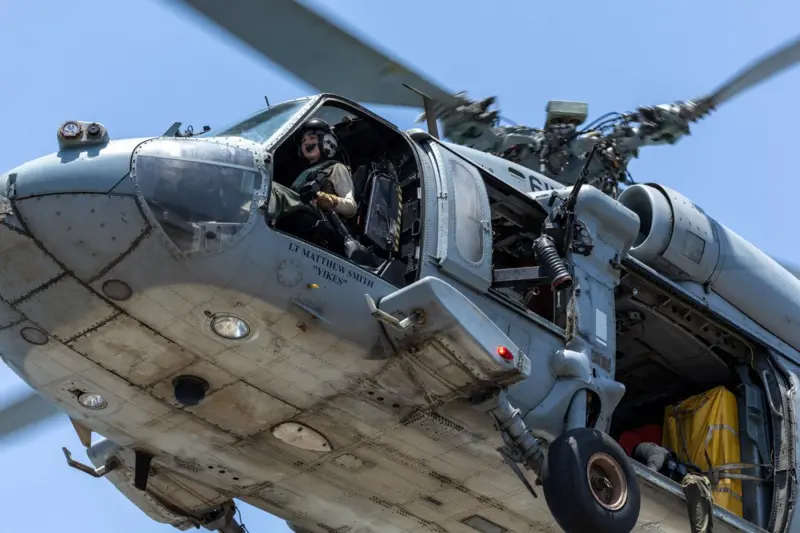
President Donald Trump says the US struck seven Iranian “fast boats” after vowing to help stranded vessels out of the Strait of Hormuz.
US Central Command (Centcom) says it has used helicopters to destroy Iranian small boats. “Earlier today, Sea Hawk and U.S. Army AH-64 Apache helicopters were used to eliminate Iranian small boats threatening commercial shipping”, Centcom writes in a social media update.
Iran’s military said it fired warning shots at American warships. The US Central Command denies a claim in Iranian state media that Iranian missiles hit a US destroyer.
Meanwhile, the US says Navy destroyers and US-flagged merchant ships have sailed through the waterway, with Iran claiming this is “entirely false”.
Shipping company Maersk has told the BBC that one of its US-flagged commercial vessels has successfully exited the Strait of Hormuz under US military protection.
In a statement, Maersk says the transit was “completed without incident, and all crew members are safe and unharmed”.
The ‘Alliance Fairfax’, it says, had been unable to leave the Gulf since February 2026, when conflict between Iran and the US began. Maersk says it was contacted by the US military and offered support. After the “development of a comprehensive security plan”, the vessel was cleared to leave, according to the statement.
The shipping company says the ship then exited the Gulf “accompanied by US military assets” and thanks them for their “professionalism and effective coordination” in making the operation possible.
Elsewhere, the UAE says it is defending itself against “missile and drone attacks originating from Iran” – Tehran has yet to comment
[BBC]

Spain seizes record amount of cocaine in Atlantic Ocean, authorities say

Three dead in suspected virus outbreak on Atlantic cruise ship

US strikes seven Iranian boats, Trump says, as tensions spike in Strait of Hormuz

Rohit and Rickelton power Mumbai Indians to crucial win over rock-bottom Lucknow Super Giants

Heat Index at Caution Level in the Northern, North-central, North-western and Eastern provinces and in Hambantota and Monaragala districts during the day time

Maldivian President plants a sapling to mark 60 years of Sri Lanka–Maldives Diplomatic Relations

‘Dates have the highest sugar content to fight Coronavirus’

Sunday Island 27 December – Headlines

#SundayIsland 17th December – Headlines

Sunday Island – 28th March

Sunday Island Headlines – 21 March

Sunday Island – 21st February – Headlines
-

 News6 days ago
Treasury chief’s citizenship details sought from Australia
-

 News5 days ago
Rooftop Solar at Crossroads as Sri Lanka Shifts to Distributed Energy Future
-
 News4 days ago
“Three-in-one blood pressure pill can significantly reduce risk of recurrent strokes”
-
 News7 days ago
Govt. assures UN of readiness to introduce ‘vetting process’ for troops on overseas missions
-

 Business7 days ago
ADB-backed grid upgrade tender signals next phase of Sri Lanka’s energy transition
-

 News6 days ago
Central Province one before last in AL results
-

 Sports6 days ago
Well done AKD!
-

 Business7 days ago
Update on independent forensic review