
Midweek Review
Saga of the arrest of retired intelligence chief

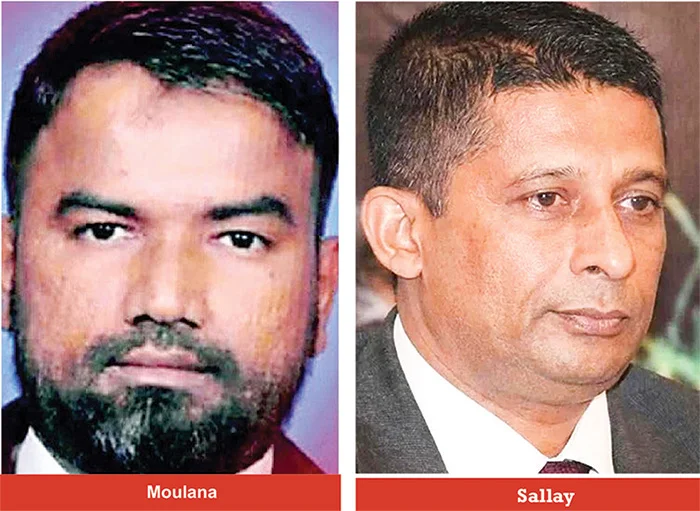
Retired Maj. Gen. Suresh Sallay’s recent arrest attracted internatiattention. His long-expected arrest took place ahead of the seventh anniversary of the bombings. Multiple blasts claimed the lives of nearly 280 people, including 45 foreigners. State-owned international news television network, based in Paris, France 24, declared that arrest was made on the basis of information provided by a whistleblower. The French channel was referring to Hanzeer Azad Moulana, who earlier sought political asylum in the West and one-time close associate of State Minister Sivanesathurai Chandrakanthan aka Pilleyan. May be the fiction he wove against Pilleyan and others may have been to strengthen his asylum claim there. Moulana is on record as having told the British Channel 4 that Sallay allowed the attack to proceed with the intention of influencing the 2019 presidential election. The French news agency quoted an investigating officer as having said: “He was arrested for conspiracy and aiding and abetting the Easter Sunday attacks. He has been in touch with people involved in the attacks, even recently.”
****
Suresh Sallay of the Directorate of Military Intelligence (DMI) received the wrath of Yahapalana Prime Minister Ranil Wickremesinghe, in 2016, over the reportage of what the media called the Chavakachcheri explosives detection made on March 30, 2016. Premier Wickremesinghe found fault with Sallay for the coverage, particularly in The Island. Police arrested ex-LTTE child combatant Edward Julian, alias Ramesh, after the detection of one suicide jacket, four claymore mines, three parcels containing about 12 kilos of explosives, to battery packs and several rounds of 9mm ammunition, from his house, situated at Vallakulam Pillaiyar Kovil Street. Chavakachcheri police made the detection, thanks to information provided by the second wife of Ramesh. Investigations revealed that the deadly cache had been brought by Ramesh from Mannar (Detection of LTTE suicide jacket, mines jolts government: Fleeing Tiger apprehended at checkpoint, The Island, March 31, 2016).
The then Jaffna Security Forces Commander, Maj. Gen. Mahesh Senanayake, told the writer that a thorough inquiry was required to ascertain the apprehended LTTE cadre’s intention. The Chavakachcheri detection received the DMI’s attention. The country’s premier intelligence organisation meticulously dealt with the issue against the backdrop of an alleged aborted bid to revive the LTTE in April 2014. Of those who had been involved in the fresh terror project, three were killed in the Nedunkerny jungles. There hadn’t been any other incidents since the Nedunkerny skirmish, until the Chavakachcheri detection.
Piqued by the media coverage of the Chavakachcheri detection, the Sirisena-Wickremesinghe administration tried to silence the genuine Opposition. As the SLFP had, contrary to the expectations of those who voted for the party at the August 2015 parliamentary elections, formed a treacherous coalition with the UNP, the Joint Opposition (JO) spearheaded the parliamentary opposition.
The Criminal Investigation Department (CID) questioned former External Affairs Minister and top JO spokesman, Prof. G.L. Peiris, over a statement made by him regarding the Chavakachcheri detection. The former law professor questioned the legality of the CID’s move against the backdrop of police declining to furnish him a certified copy of the then acting IGP S.M. Wickremesinghe’s directive that he be summoned to record a statement as regards the Chavakachcheri lethal detection.
One-time LTTE propagandist Velayutham Dayanidhi, a.k.a. Daya Master, raised with President Maithripala Sirisena the spate of arrests made by law enforcement authorities, in the wake of the Chavakachcheri detection. Daya Master took advantage of a meeting called by Sirisena, on 28 April, 2016, at the President’s House, with the proprietors of media organisations and journalists, to raise the issue. The writer having been among the journalists present on that occasion, inquired from the ex-LETTer whom he represented there. Daya Master had been there on behalf of DAN TV, Tamil language satellite TV, based in Jaffna. Among those who had been detained was Subramaniam Sivakaran, at that time Youth Wing leader of the Illankai Thamil Arasu Kadchi (ITAK), the main constituent of the now defunct Tamil National Alliance. In addition to Sivakaran, the police apprehended several hardcore ex-LTTE cadres (LTTE revival bid confirmed: TNA youth leader arrested, The Island April 20, 2016).
Ranil hits out at media
Subsequent inquiries revealed the role played by Sivakaran in some of those wanted in connection with the Chavakachcheri detection taking refuge in India. When the writer sought an explanation from the then TNA lawmaker, M.A. Sumanthiran, regarding Sivakaran’s arrest, the lawyer disowned the Youth Wing leader. Sumanthiran emphasised that the party suspended Sivakumaran and Northern Provincial Council member Ananthi Sasitharan for publicly condemning the TNA’s decision to endorse Maithripala Sirisena’s candidature at the 2015 presidential election (Chava explosives: Key suspects flee to India, The Island, May 2, 2016).
Premier Wickremesinghe went ballistic on May 30, 2016. Addressing the 20th anniversary event of the Sri Lanka Muslim Media Forum, at the Sports Ministry auditorium, the UNP leader castigated the DMI. Alleging that the DMI had been pursuing an agenda meant to undermine the Yahapalana administration, Wickremesinghe, in order to make his bogus claim look genuine, repeatedly named the writer as part of that plot. Only Wickremesinghe knows the identity of the idiot who influenced him to make such unsubstantiated allegations. The top UNPer went on to allege that The Island, and its sister paper Divaina, were working overtime to bring back Dutugemunu, a reference to war-winning President Mahinda Rajapaksa. A few days later, sleuths from the Colombo Crime Detection Bureau (CCD) visited The Island editorial to question the writer where lengthy statements were recorded. The police were acting on the instructions of the then Premier, who earlier publicly threatened to send police to question the writer.
In response to police queries about Sallay passing information to the media regarding the Chavakachcheri detection and subsequent related articles, the writer pointed out that the reportage was based on response of the then ASP Ruwan Gunasekera, AAL and Sumanthiran, as had been reported.
Wickremesinghe alleged, at the Muslim media event, that a section of the media manipulated coverage of certain incidents, ahead of the May Day celebrations.
In early May 2016 Wickremesinghe disclosed that he received assurances from the police, and the DMI, that as the LTTE had been wiped out the group couldn’t stage a comeback. The declaration was made at the Lakshman Kadirgamar Institute for International Relations and Strategic Studies (LKIIRIS) on 3 May 2016. Wickremesinghe said that he sought clarifications from the police and the DMI in the wake of the reportage of the Chavakachcheri detection and related developments (PM: LTTE threat no longer exists, The Island, May 5, 2016).
The LTTE couldn’t stage a comeback as a result of measures taken by the then government. It would be a grave mistake, on our part, to believe that the eradication of the LTTE’s conventional military capacity automatically influenced them to give up arms. The successful rehabilitation project, that had been undertaken by the Rajapaksa government and continued by successive governments, ensured that those who once took up arms weren’t interested in returning to the same deadly path.
In spite of the TNA and others shedding crocodile tears for the defeated Tigers, while making a desperate effort to mobilise public opinion against the government, the public never wanted the violence to return. Some interested parties propagated the lie that regardless of the crushing defeat suffered in the hands of the military, the LTTE could resume guerilla-type operations, paving the way for a new conflict. But by the end of 2014, and in the run-up to the presidential election in January following year, the situation seemed under control, especially with Western countries not wanting to upset things here with a pliant administration in the immediate horizon. Soon after the presidential election, the government targeted the armed forces. Remember Sumanthiran’s declaration that the ITAK Youth Wing leader Sivakaran had been opposed to the TNA backing Sirisena at the presidential poll.
The US-led accountability resolution had been co-sponsored by the Sirisena-Wickremesinghe duo to appease the TNA and Tamil Diaspora. The Oct. 01, 2016, resolution delivered a knockout blow to the war-winning armed forces. The UNP pursued an agenda severely inimical to national interests. It would be pertinent to mention that those who now represent the main Opposition, Samagi Jana Balawegaya (SJB), were part of the treacherous UNP.
Suresh moved to Malaysia
 The Yahapalana leadership resented Sallay’s work. They wanted him out of the country at a time a new threat was emerging. The government attacked the then Justice Minister Dr. Wijeyadasa Rajapakshe, PC, who warned of the emerging threat from foreign-manipulated local Islamic fanatics on 11 Nov. 2016, in Parliament. Rajapakshe didn’t mince his words when he underscored the threat posed by some Sri Lanka Muslim families taking refuge in Syria where ISIS was running the show. The then government, of which he was part o,f ridiculed their own Justice Minister. Both Sirisena and Wickremesinghe feared action against extremism may cause erosion of Muslim support. By then Sallay, who had been investigating the deadly plot, was out of the country. The Yahapalana government believed that the best way to deal with Sallay was to grant him a diplomatic posting. Sally ended up in Malaysia, a country where the DMI played a significant role in the repatriation of Kumaran Pathmanathan, alias KP, after his arrest there.
Having served the military for over three cadres, Sallay retired in 2024 in the rank of Major General. Against the backdrop of his recent arrest, in connection with the ongoing investigation into the 2019 Easter Sunday carnage, The Island felt the need to examine the circumstances Sallay ended up in Malaysia at the time. Now, remanded in terms of the Prevention of terrorism Act (PTA), he is being accused of directing the Easter Sunday operation from Malaysia.
Pivithuru Hela Urumaya leader and former Minister Udaya Gammanpila has alleged that Sallay was apprehended in a bid to divert attention away from the deepening coal scam. Having campaigned on an anti-corruption platformm in the run up to the previous presidential election, in September 2024, the Parliament election, in November of the same year, and local government polls last year, the incumbent dispensation is struggling to cope up with massive corruption issues, particularly the coal scam, which has not only implicated the Energy Minister but the entire Cabinet of Ministers as well.
The crux of the matter is whether Sallay actually met would-be suicide bombers, in February 2018, in an estate, in the Puttalam district, as alleged by the UK’s Channel 4 television, like the BBC is, quite famous for doing hatchet jobs for the West. This is the primary issue at hand. Did Sallay clandestinely leave Malaysia to meet suicide bombers in the presence of Hanzeer Azad Moulana, one-time close associate of State Minister Sivanesathurai Chandrakanthan, aka Pilleyan, former LTTE member?
The British channel raised this issue with Sallay, in 2023, at the time he served as Director, State Intelligence (SIS). Sallay is on record as having told Channel 4 Television that he was not in Sri Lanka the whole of 2018 as he was in Malaysia serving in the Sri Lankan Embassy there as Minister Counsellor.
Therefore, the accusation that he met several members of the National Thowheeth Jamaath (NTJ), including Mohamed Hashim Mohamed Zahran, in Karadipuval, Puttalam, in Feb. 2018, was baseless, he has said.
The intelligence officer has asked the British television station to verify his claim with the Malaysian authorities.
Responding to another query, Sallay had told Channel 4 that on April 21, 2019, the day of the Easter Sunday blasts, he was in India, where he was accommodated at the National Defence College (NDC). That could be verified with the Indian authorities, Sallay has said, strongly denying Channel 4’s claim that he contacted one of Pilleyan’s cadres, over, the phone and directed him to pick a person outside Hotel Taj Samudra.
According to Sallay, during his entire assignment in Malaysia, from Dec. 2016 to Dec. 2018, he had been to Colombo only once, for one week, in Dec. 2017, to assist in an official inquiry.
Having returned to Colombo, Sallay had left for NDC, in late Dec. 2018, and returned only after the conclusion of the course, in November 2019.
Sallay has said so in response to questions posed by Ben de Pear, founder, Basement Films, tasked with producing a film for Channel 4 on the Easter Sunday bombings.
The producer has offered Sallay an opportunity to address the issues in terms of Broadcasting Code while inquiring into fresh evidence regarding the officer’s alleged involvement in the Easter Sunday conspiracy.
The producer sought Sallay’s response, in August 2023, in the wake of political upheaval following the ouster of Gotabaya Rajapaksa, elected at the November 2019 presidential election.
At the time, the Yahapalana government granted a diplomatic appointment to Sallay, he had been head of the Directorate of Military Intelligence (DMI). After the 2019 presidential election, President Gotabaya Rajapaksa named him the Head of SIS.
The Basement Films has posed several questions to Sallay on the basis of accusations made by Hanzeer Azad Moulana.
In response to the film producer’s query regarding Sallay’s alleged secret meeting with six NTJ cadres who blasted themselves a year later, Sallay has questioned the very basis of the so called new evidence as he was not even in the country during the period the clandestine meeting is alleged to have taken place.
Contradictory stands
Following Sajith Premadasa’s anticipated defeat at the 2019 presidential election, Harin Fernando accused the Catholic Church of facilitating Gotabaya Rajapaksa’s victory. Fernando, who is also on record as having disclosed that his father knew of the impending Easter Sunday attacks, pointed finger at the Archbishop of Colombo, Rt. Rev Malcolm Cardinal Ranjith, for ensuring Gotabaya Rajapaksa’s victory.
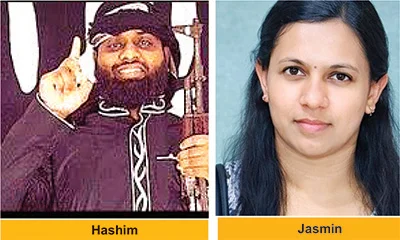
Former President Maithripala Sirisena, as well as JVP frontliner Dr. Nalinda Jayathissa, accused India of masterminding the Easter Sunday bombings. Then there were claims of Sara Jasmin, wife of Katuwapitiya suicide bomber Mohammed Hastun, being an Indian agent who was secretly removed after the Army assaulted extremists’ hideout at Sainthamaruthu in the East. What really had happened to Sara Jasmin who, some believe, is key to the Easter Sunday puzzle.
Then there was huge controversy over the arrest of Attorney-at-Law Hejaaz Hizbullah over his alleged links with the Easter Sunday bombers. Hizbullah, who had been arrested in April 2020, served as lawyer to the extremely wealthy spice trader Mohamed Yusuf Ibrahim’s family that had been deeply involved in the Easter Sunday plot. Mohamed Yusuf Ibrahim had been on the JVP’s National List at the 2015 parliamentary elections. The lawyer received bail after two years. Two of the spice trader’s sons launched suicide attacks, whereas his daughter-in-law triggered a suicide blast when police raided their Dematagoda mansion, several hours after the Easter Sunday blasts.
Investigations also revealed that the suicide vests had been assembled at a factory owned by the family and the project was funded by them. It would be pertinent to mention that President Gotabaya Rajapaksa’s government never really bothered to conduct a comprehensive investigation to identify the Easter Sunday terror project. Perhaps, their biggest failure had been to act on the Presidential Commission of Inquiry (PCoI) recommendations. Instead, President Rajapaksa appointed a six-member committee, headed by his elder brother, Chamal Rajapaksa, to examine the recommendations, probably in a foolish attempt to improve estranged relations with the influential Muslim community. That move caused irreparable damage and influenced the Church to initiate a campaign against the government. The Catholic Church played quite a significant role in the India- and US-backed 2022 Aragalaya that forced President Rajapaksa to flee the country.
Interested parties exploited the deterioration of the national economy, leading to unprecedented declaration of the bankruptcy of the country in April 2022, to mobilie public anger that was used to achieve political change.



In September 1939, as Europe descended once more into catastrophe, E. H. Carr published The Twenty Years’ Crisis. Twenty years had separated the two great wars—twenty years to reflect, to reconstruct, to restrain. Yet reflection proved fragile. Carr wrote with unsentimental clarity: once the enemy is crushed, the “thereafter” rarely arrives. The illusion that power can come first and morality will follow is as dangerous as the belief that morality alone can command power. Between those illusions, nations lose themselves.
His warning hovers over the present war in Iran.
The “thereafter” has long haunted American interventions—after Afghanistan, after Iraq, after Libya. The enemy can be dismantled with precision; the aftermath resists precision. Iran is not a small theater. It is a civilization-state with a geography three times larger than Iraq. At its southern edge lies the Strait of Hormuz, narrow in width yet immense in consequence. Geography does not argue; it compels.
Long before Carr, in the quiet anxiety of the eighteenth century, James Madison, principal architect of the Constitution, warned that war was the “true nurse of executive aggrandizement.” War concentrates authority in the name of urgency. Madison insisted that the power to declare war must rest with Congress, not the president—so that deliberation might restrain impulse. Republics persuade themselves that emergency powers are temporary. History rarely agrees.
Then, at 2:30 a.m., the abstraction becomes decision.
Donald Trump declares war on Iran. The announcement crosses continents before markets open in Asia. Within twenty-four hours, Ali Khamenei, who ruled for thirty-seven years, is killed. The President calls him one of history’s most evil figures and presents his death as an opening for the Iranian people.
In exile, Reza Pahlavi hails the moment as liberation. In less than forty-eight hours, the Islamic Revolutionary Guard Corps collapses under overwhelming air power. A regime that endured decades falls swiftly. Military efficiency appears absolute. Yet efficiency does not resolve legitimacy.
The joint strike with Israel is framed as necessary and pre-emptive. Retaliation follows across the Gulf. The architecture of energy trade becomes fragile. Shipping routes are recalculated. Markets respond before diplomacy finds its language.
It is measured in the price of petrol in Colombo. In the bus fare in Karachi. In the rising cost of cooking gas in Dhaka. It is heard in the anxious voice of a migrant worker in Doha calling home to Kandy, asking whether contracts will be renewed, whether flights will continue, whether wages will be delayed. It is calculated in foreign reserves already strained, in currencies that tremble at rumor, in budgets forced to choose between subsidy and solvency.
Zaara was the breadwinner of her house in Sri Lanka. Her husband had been unemployed for years. At last, he secured an opportunity to travel to Israel as a foreign worker—like many Sri Lankans who depend on employment in the Middle East. It was to be their turning point: a small house repaired, debts reduced, dignity restored.
Now she lowers her eyes when she speaks. For Zaara, geopolitics is not theory. It is fear measured in distance—between a construction site abroad and a village waiting at home.
The war in Iran has shattered calculations that once felt practical. Nations like Sri Lanka now require strategic foresight to navigate unfolding realities. Reactive responses—whether to natural disasters or external shocks like this conflict—can cripple economies far faster than gradual pressures. Disruptions to energy imports, migrant remittances, and foreign reserves show how distant wars ripple into daily lives.
War among great powers is debated in think tanks. Its consequences are lived in markets—and in quiet kitchens where uncertainty sits heavier than hunger.
The conflict does not unfold in isolation. It enters the strategic calculus of China and Russia, both attentive to precedent. Power projected beyond the Western hemisphere reshapes perceptions in the Eastern theater. Iran’s transformation intersects directly with broader alignments. In 2021, Beijing and Tehran signed a twenty-five-year strategic agreement. By 2025, China was purchasing the majority of Iran’s exported oil at discounted rates. Energy underwrote strategy. That continuity has been disrupted. Yet strategic relationships do not vanish; they adjust.
In Winds of Change, my new book, I reproduce Nicholas Spykman’s 1944 two-theater confrontation map—Europe and the Pacific during the Second World War. Spykman distinguished maritime power from amphibian projection. Control of the Rimland determined balance. Then, the United States fought across two vast theaters. Today, Europe remains unsettled through Ukraine, the Pacific simmers over Taiwan and the South China Sea, Latin America remains sensitive, and the Middle East has been abruptly transformed. The architecture of multi-theater tension reappears.
At this juncture, the reflections of Marwan Bishara acquire weight. America’s ultimate power, he argues, resides in deterrence, not in the habitual use of force. Power, especially when shared, stabilizes. Force, when used with disregard for international law, breeds instability and humiliation. Arrogance creates enemies and narrows judgment. It is no surprise that many Americans themselves believe the United States should not act alone.
America’s strength does not rest solely in its military reach. Its economy constitutes roughly one-third of global output and generates close to 40 percent of the world’s research and development. Structural power—economic, technological, institutional—has historically underwritten deterrence. When force becomes the primary instrument, influence risks becoming coercion.
The United States now confronts simultaneous pressures across continents. The Second World War demonstrated the capacity to sustain multi-theater engagement; the post-9/11 wars revealed the exhaustion that follows prolonged intervention. Iran, larger and geopolitically deeper, presents a scale that cannot be resolved by air power alone.
Carr’s “thereafter” waits patiently. Military victory may be swift; political reconstruction is slow. Bishara reminds us that deterrence sustains stability, while force risks unraveling it.
At the edge of a potential world war, the decisive question is not who strikes first, but who restrains longest.
History watches. And in places far from the battlefield, mothers wait for phone calls that may not come.
Asanga Abeyagoonasekera is a Senior Research Fellow at the Millennium Project, Washington, D.C., and the author of Winds of Change: Geopolitics at the Crossroads of South and Southeast Asia, published by World Scientific

Live coals of decades-long hate,
Are bursting into all-consuming flames,
In lands where ‘Black Gold’ is abundant,
And it’s a matter to be thought about,
If humans anywhere would be safe now,
Unless these enmities dying hard,
With roots in imperialist exploits,
And identity-based, tribal violence,
Are set aside and laid finally to rest,
By an enthronement of the principle,
Of the Equal Dignity of Humans.
By Lynn Ockersz
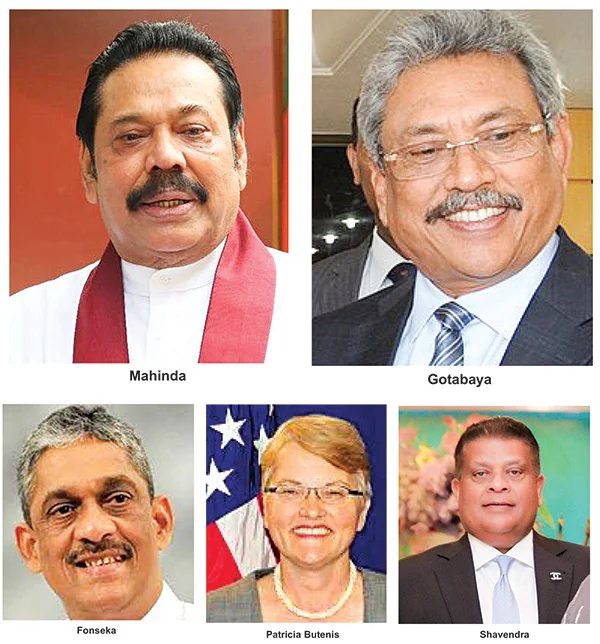
With Sri Lanka’s 17th annual war victory over separatist Tamil terrorism just months away, warwinning Army Chief, Field Marshal Sarath Fonseka (Dec. 06, 2005, to July 15, 2009) has significantly changed his war narrative pertaining to the final phase of the offensive that was brought to an end on May 18, 2009.
The armed forces declared the conclusion of ground operations on that day after the entire northern region was brought back under their control. LTTE leader Velupillai Prabhakaran, hiding within the secured area, was killed on the following day. His body was recovered from the banks of the Nanthikadal lagoon.
With the war a foregone conclusion, with nothing to save the increasingly hedged in Tigers taking refuge among hapless Tamil civilians, Fonseka left for Beijing on May 11, and returned to Colombo, around midnight, on May 17, 2009. The LTTE, in its last desperate bid to facilitate Prabhakatan’s escape, breached one flank of the 53 Division, around 2.30 am, on May 18. But they failed to bring the assault to a successful conclusion and by noon the following day those fanatical followers of Tiger Supremo, who had been trapped within the territory, under military control, died in confrontations.
During Fonseka’s absence, the celebrated 58 Division (formerly Task Force 1), commanded by the then Maj. Gen. Shavendra Silva, advanced 31/2 to 4 kms and was appropriately positioned with Maj. Gen. Kamal Gunaratne’s 53 Division. The LTTE never had an opportunity to save its leader by breaching several lines held by frontline troops on the Vanni east front. There couldn’t have been any other option than surrendering to the Army.
The Sinha Regiment veteran, who had repeatedly accused the Rajapaksas of war crimes, and betraying the war effort by providing USD 2 mn, ahead of the 2005 presidential election, to the LTTE, in return for ordering the polls boycott that enabled Mahinda Rajapaksa’s victory, last week made noteworthy changes to his much disputed narrative.
GR’s call to Shavendra What did the former Army Commander say?
* The Rajapaksas wanted to sabotage the war effort, beginning January 2008.
* In January 2008, Mahinda Rajapaksa, Defence Secretary Gotabaya Rajapaksa and Navy Commander VA Wasantha Karannagoda, proposed to the National Security Council that the Army should advance from Vavuniya to Mullithivu, on a straight line, to rapidly bring the war to a successful conclusion. They asserted that Fonseka’s strategy (fighting the enemy on multiple fronts) caused a lot of casualties.
* They tried to discourage the then Lt. Gen. Fonseka
* Fonseka produced purported video evidence to prove decisive intervention made by Defence Secretary Gotabaya Rajapaksa on the afternoon of May 17. The ex-Army Chief’s assertion was based on a telephone call received by Maj. Gen. Shavendra Silva from Gotabaya Rajapaksa. That conversation had been captured on video by Swarnavahini’s Shanaka de Silva who now resides in the US. He had been one of the few persons, from the media, authorised by the Army Headquarters and the Defence Ministry to be with the Army leadership on the battlefield. Fonseka claimed that the videographer fled the country to escape death in the hands of the Rajapaksas. It was somewhat reminiscent of Maithripala Sirisena’s claim that if Rajapaksas win the 2015 Presidential election against him he would be killed by them.
* Shanaka captured Shavendra Silva disclosing three conditions laid down by the LTTE to surrender namely (a) Their casualties should be evacuated to Colombo by road (b) They were ready to exchange six captured Army personnel with those in military custody and (c) and the rest were ready to surrender.
* Then Fonseka received a call from Gotabaya Rajapaksa, on a CDMA phone. The Defence Secretary issued specific instructions to the effect that if the LTTE was to surrender that should be to the military and definitely not to the ICRC or any other third party. Gotabaya Rajapaksa, one-time Commanding Officer of the 1st battalion of the Gajaba Regiment, ordered that irrespective of any new developments and talks with the international community, offensive action shouldn’t be halted. That declaration directly contradicted Fonseka’s claim that the Rajapaksas conspired to throw a lifeline to the LTTE.
Fonseka declared that the Rajapaksa brothers, in consultation with the ICRC, and Amnesty International, offered an opportunity for the LTTE leadership to surrender, whereas his order was to annihilate the LTTE. The overall plan was to eliminate all, Fonseka declared, alleging that the Rajapaksa initiated talks with the LTTE and other parties to save those who had been trapped by ground forces in a 400 m x 400 m area by the night of May 16, among a Tamil civilian human shield held by force.
If the LTTE had agreed to surrender to the Army, Mahinda Rajapaksa would have saved their lives. If that happened Velupillai Prabhakaran would have ended up as the Chief Minister of the Northern Province, he said. Fonseka shocked everyone when he declared that he never accused the 58 Division of executing prisoners of war (white flag killings) but the issue was created by those media people embedded with the military leadership. Fonseka declared that accusations regarding white flag killings never happened. That story, according to Fonseka, had been developed on the basis of the Rajapaksas’ failed bid to save the lives of the LTTE leaders.
Before we discuss the issues at hand, and various assertions, claims and allegations made by Fonseka, it would be pertinent to remind readers of wartime US Defence Advisor in Colombo Lt. Col. Lawrence Smith’s June 2011 denial of white flag killings. The US State Department promptly declared that the officer hadn’t spoken at the inaugural Colombo seminar on behalf of the US. Smith’s declaration, made two years after the end of the war, and within months after the release of the Darusman report, dealt a massive blow to false war crimes allegations.
UN Secretary-General Ban Ki-moon, in 2010, appointed a three-member Panel of Experts, more like a kangaroo court, consisting of Marzuki Darusman, Yasmin Sooka, and Steven Ratner, to investigate war crimes accusations.
Now Fonseka has confirmed what Smith revealed at the defence seminar in response to a query posed by Maj. General (retd.) Ashok Metha of the IPKF to Shavendra Silva, who had been No 02 in our UN mission, in New York, at that time.
White flag allegations
‘White flag’ allegations cannot be discussed in isolation. Fonseka made that claim as the common presidential candidate backed by the UNP-JVP-TNA combine. The shocking declaration was made in an interview with The Sunday Leader Editor Frederica Jansz published on Dec. 13, 2009 under ‘Gota ordered them to be shot – General Sarath Fonseka.’
The ‘white flag’ story had been sensationally figured in a leaked confidential US Embassy cable, during Patricia Butenis tenure as the US Ambassador here. Butenis had authored that cable at 1.50 pm on Dec. 13, 2009, the day after the now defunct The Sunday Leader exclusive. Butenis had lunch with Fonseka in the company of the then UNP Deputy Leader Karu Jayasuriya, according to the cable. But for the writer the most interesting part had been Butenis declaration that Fonseka’s advisors, namely the late Mangala Samaraweera, Anura Kumara Dissanayake (incumbent President) and Vijitha Herath (current Foreign Minister) wanted him to retract part of the story attributed to him.
Frederica Jansz fiercely stood by her explosive story. She reiterated the accuracy of the story, published on Dec. 13, 2009, during the ‘white flag’ hearing when the writer spoke to her. There is absolutely no reason to suspect Frederica Jansz misinterpreted Fonseka’s response to her queries.
Subsequently, Fonseka repeated the ‘white flag’ allegation at a public rally held in support of his candidature. Many an eyebrow was raised at The Sunday Leader’s almost blind support for Fonseka, against the backdrop of persistent allegations directed at the Army over Lasantha Wickrematunga’s killing. Wickrematunga, an Attorney-at-Law by profession and one-time Private Secretary to Opposition Leader Sirimavo Bandaranaike, was killed on the Attidiya Road, Ratmalana in early January 2009.
The Darusman report, too, dealt withthe ‘white flag’ killings and were central to unsubstantiated Western accusations directed at the Sri Lankan military. Regardless of the political environment in which the ‘white flag’ accusations were made, the issue received global attention for obvious reasons. The accuser had been the war-winning Army Commander who defeated the LTTE at its own game. But, Fonseka insisted, during his meeting with Butenis, as well as the recent public statement that the Rajapaksas had worked behind his back with some members of the international community.
Fresh inquiry needed
Fonseka’s latest declaration that the Rajapaksas wanted to save the LTTE leadership came close on the heels of Deputy British Prime Minister David Lammy’s whistle-stop visit here. The UK, as the leader of the Core Group on Sri Lanka at the Geneva-based United Nations Human Rights Council, spearheads the campaign targeting Sri Lanka.
Lammy was on his way to New Delhi for the AI Impact Summit. The Labour campaigner pushed for action against Sri Lanka during the last UK general election. In fact, taking punitive action against the Sri Lankan military had been a key campaign slogan meant to attract Tamil voters of Sri Lankan origin. His campaign contributed to the declaration of sanctions in March 2025 against Admiral of the Fleet Wasantha Karannagoda, General (retd) Shavendra Silva, General (retd) Jagath Jayasuriya and ex-LTTE commander Karuna, who rebelled against Prabhakaran. Defending Shavendra Silva, Fonseka, about a week after the imposition of the UK sanctions, declared that the British action was unfair.
But Fonseka’s declaration last week had cleared the Rajapaksas of war crimes. Instead, they had been portrayed as traitors. That declaration may undermine the continuous post-war propaganda campaign meant to demonise the Rajapaksas and top ground commanders.
Canada, then a part of the Western clique that blindly towed the US line, declared Sri Lanka perpetrated genocide and also sanctioned ex-Presidents Mahinda Rajapaksa and Gotabaya Rajapaksa. Other countries resorted to action, though such measures weren’t formally announced. General (retd) Jagath Dias and Maj. Gen (retd) Chagie Gallage were two of those targeted.
Against the backdrop of Fonseka’s latest claims, in respect of accountability issues, the urgent need to review action taken against Sri Lanka cannot be delayed. Although the US denied visa when Fonseka was to accompany President Maithripala Sirisena to the UN, in Sept. 2016, he hadn’t been formally accused of war crimes by the western powers, obviously because he served their interests.
On the basis of unsubstantiated allegations that hadn’t been subjected to judicial proceedings, Geneva initiated actions. The US, Canada and UK acted on those accusations. The US sanctioned General Shavendra Silva in Feb. 2020 and Admiral Karannagoda in April 2023.
What compelled Fonseka to change his narrative, 18 years after his Army ended the war? Did Fonseka base his latest version solely on Shanaka de Silva video? Fonseka is on record as claiming that he got that video, via a third party, thereby Shanaka de Silva had nothing to do with his actions.
DNA and formation of DP
Having realised that he couldn’t, under any circumstances, reach a consensus with the UNP to pursue a political career with that party, Fonseka teamed up with the JVP, one of the parties in the coalition that backed his presidential bid in 2010. Fonseka’s current efforts to reach an understanding with the JVP/NPP (President Anura Kumara Dissanayake is the leader of both registered political parties) should be examined against the backdrop of their 2010 alliance.
Under Fonseka’s leadership, the JVP, and a couple of other parties/groups, contested, under the symbol of the Democratic National Alliance (DNA) that had been formed on 22 Nov. 2009. but the grouping pathetically failed to live up to their own expectations. The results of the parliamentary polls, conducted in April 2010, had been devastating and utterly demoralising. Fonseka, who polled about 40% of the national vote at the January 2010 presidential election, ended up with just over 5% of the vote, and the DNA only managed to secure seven seats, including two on the National List. The DNA group consisted of Fonseka, ex-national cricket captain Arjuna Ranatunga, businessman Tiran Alles and four JVPers. Anura Kumara Dissanayake was among the four.
Having been arrested on February 8, 2010, soon after the presidential election, Fonseka was in prison. He was court-martialed for committing “military offences”. He was convicted of corrupt military supply deals and sentenced to three years in prison. Fonseka vacated his seat on 7 Oct .2010. Following a failed legal battle to protect his MP status, Fonseka was replaced by DNA member Jayantha Ketagoda on 8 March 2011. But President Mahinda Rajapaksa released Fonseka in May 2012 following heavy US pressure. The US went to the extent of issuing a warning to the then SLFP General Secretary Maithripala Sirisena that unless President Rajapaksa freed Fonseka he would have to face the consequences (The then Health Minister Sirisena disclosed the US intervention when the writer met him at the Jealth Ministry, as advised by President Rajapaksa)
By then, Fonseka and the JVP had drifted apart and both parties were irrelevant. Somawansa Amarasinghe had been the leader at the time the party decided to join the UNP-led alliance that included the TNA, and the SLMC. The controversial 2010 project had the backing of the US as disclosed by leaked secret diplomatic cables during Patricia Butenis tenure as the US Ambassador here.
In spite of arranging the JVP-led coalition to bring an end to the Rajapaksa rule, Butenis, in a cable dated 15 January 2010, explained the crisis situation here. Butenis said: “There are no examples we know of a regime undertaking wholesale investigations of its own troops or senior officials for war crimes while that regime or government remained in power. In Sri Lanka this is further complicated by the fact that responsibility for many of the alleged crimes rests with the country’s senior civilian and military leadership, including President Rajapaksa and his brothers and opposition candidate General Fonseka.”
Then Fonseka scored a major victory when Election Commissioner Mahinda Deshapriya on 1 April, 2013, recognised his Democratic Party (DNA was registered as DP) with ‘burning flame’ as its symbol. There hadn’t been a previous instance of any service commander registering a political party. While Fonseka received the leadership, ex-Army officer Senaka de Silva, husband of Diana Gamage ((later SJB MP who lost her National List seat over citizenship issue) functioned as the Deputy Leader.
Having covered Fonseka’s political journey, beginning with the day he handed over command to Lt. Gen. Jagath Jayasuriya, in July, 2009, at the old Army Headquarters that was later demolished to pave the way for the Shangri-La hotel complex, the writer covered the hastily arranged media briefing at the Solis reception hall, Pitakotte, on 2 April, 2023. Claiming that his DP was the only alternative to what he called corrupt Mahinda Rajapaksa’s government and bankrupt Ranil Wickremesinghe-led Opposition, a jubilant Fonseka declared himself as the only alternative (‘I am the only alternative,’ with strapline ‘SF alleges Opposition is as bad as govt’. The Island, April 3, 2013).
Fonseka had been overconfident to such an extent, he appealed to members of the government parliamentary group, as well as the Opposition (UNP), to switch allegiance to him. As usual Fonseka was cocky and never realised that 40% of the national vote he received, at the presidential election, belonged to the UNP, TNA and the JVP. Fonseka also disregarded the fact that he no longer had the JVP’s support. He was on his own. The DP never bothered to examine the devastating impact his 2010 relationship with the TNA had on the party. The 2015 general election results devastated Fonseka and underscored that there was absolutely no opportunity for a new party. The result also proved that his role in Sri Lanka’s triumph over the LTTE hadn’t been a decisive factor.
RW comes to SF’s rescue
Fonseka’s DP suffered a humiliating defeat at the August 2015 parliamentary polls. The outcome had been so bad that the DP was left without at least a National List slot. Fonseka was back to square one. If not for UNP leader and Prime Minister Ranil Wickremesinghe, Fonseka could have been left in the cold. Wickremesinghe accommodated Fonseka on their National List, in place of SLFPer M.K.D.S. Gunawardene, who played a critical role in an influential section of the party and the electorate shifting support to Maithripala Sirisena. Gunawardena passed away on 19 January, 2016. Wickremesinghe and Fonseka signed an agreement at Temple Trees on 3 February, 2016. Fonseka received appointment as National List MP on 9 February, 2016, and served as Minister of Regional Development and, thereafter, as Minister of Wildlife and Sustainable Development, till Oct. 2018. Fonseka lost his Ministry when President Sirisena treacherously sacked Wickremesinghe’s government to pave the way for a new partnership with the Rajapaksas. The Supreme Court discarded that arrangement and brought back the Yahapalana administration but Sirisena, who appointed Fonseka to the lifetime rank of Field Marshal, in recognition of his contribution to the defeat of terrorism, refused to accommodate him in Wickremesinghe’s Cabinet. The President also left out Wasantha Karannagoda and Roshan Goonetilleke. Sirisena appointed them Admiral of the Fleet and Marshal of Air Force, respectively, on 19, Sept. 2019, in the wake of him failing to secure the required backing to contest the Nov. 2019 presidential election.
Wickremesinghe’s UNP repeatedly appealed on behalf of Fonseka in vain to Sirisena. At the 2020 general election, Fonseka switched his allegiance to Sajith Premadasa and contested under the SJB’s ‘telephone’ symbol and was elected from the Gampaha district. Later, following a damaging row with Sajith Premadasa, he quit the SJB as its Chairman and, at the last presidential election, joined the fray as an independent candidate. Having secured just 22,407 votes, Fonseka was placed in distant 9th position. Obviously, Fonseka never received any benefits from support extended to the 2022 Aragalaya and his defeat at the last presidential election seems to have placed him in an extremely difficult position, politically.
Let’s end this piece by reminding that Fonseka gave up the party leadership in early 2024 ahead of the presidential election. Senaka de Silva succeeded Fonseka as DP leader, whereas Dr. Asosha Fernando received appointment as its Chairman. The DP has aligned itself with the NPP. The rest is history.
By Shamindra Ferdinando

AKD warns of far reaching economic consequences of Middle East war

Pope invited to visit Sri Lanka

New Tourism Act to strengthen legal action against visa violators

Court of Appeal grants interim relief, allows foreigners to drive three-wheelers

War in Middle East sends shockwaves through Sri Lanka’s export sector

Semi-final showdowns set stage for Gujarat coronation

‘Dates have the highest sugar content to fight Coronavirus’

Sunday Island 27 December – Headlines

#SundayIsland 17th December – Headlines

Sunday Island – 28th March

Sunday Island Headlines – 21 March

Sunday Island – 21st February – Headlines
-
 Opinion5 days ago
Jamming and re-setting the world: What is the role of Donald Trump?
-
 Features5 days ago
An innocent bystander or a passive onlooker?
-

 Features2 days ago
Brilliant Navy officer no more
-
 Features6 days ago
Ratmalana Airport: The Truth, The Whole Truth, And Nothing But The Truth
-

 Opinion2 days ago
Sri Lanka – world’s worst facilities for cricket fans
-
 Business6 days ago
IRCSL transforms Sri Lanka’s insurance industry with first-ever Centralized Insurance Data Repository
-

 Business5 days ago
An efficacious strategy to boost exports of Sri Lanka in medium term
-
 Features3 days ago
Overseas visits to drum up foreign assistance for Sri Lanka