
News
Three legends honoured with lifetime achievement awards


Sarath Chandradeewa, Lal Hegoda and Nihal Fernando
The State Visual Arts Festival 2025 was held in February 2026 owing to postponement caused by cyclone Ditwah.It was held under the patronage of Dr Hiniduma Sunil Senevi, Minister of Buddhasasana, Religious & Cultural Affairs at Suhurupaya, Battaramulla on February 18, 2026.
Organised by the Ministry of Buddhasasana, Religious & Cultural Affairs, the Department of Cultural Affairs, the Arts Council of Sri Lanka and the State Panel of Visual Arts, it celebrated eminent visual artists who have dedicated their creativity to the advancement and brilliance of the Sri Lankan Visual Arts Sector.
Winners of the 2025 State Visual Arts Festival were presented with awards and Professor Sarath Chandrajeewa (b.1955), Lal Hegoda (b.1947) and Nihal Fernando (1927-2015) were honoured with Lifetime Achievement Awards.
Sarath Chandrajeewa (b.1955)
Educated at Ragala Sinhala Maha Vidyalaya and Karawita Central College, he obtained his first degree in Sculpture from the Institute of Aesthetic Studies, University of Kelaniya in 1978. He obtained a Postgraduate Diploma in Bronze Sculpture Casting at the Royal Academy of Arts, a Master’s Degree in Sculpture at the Moscow State Academic Arts Institute and his Doctor of Philosophy Degree at the Moscow State Institute of Art Research.
Starting his career as a Youth Services Officer in 1979 at the National Youth Services Council, his appointments at various times included Lecturer-University of Kelaniya, Director-Institute of Aesthetic Studies, Professor -University of Visual & Performing Arts where he went on to become the Dean.
His solo exhibitions are many and he has emerged as an internationally renowned sculptor. He is the only Sri Lankan artist to be represented in the British Museum’s Portrait Gallery for his bronze portrait of Sir Christopher Ondaatje.
A recipient of numerous awards, he is also an author and editor, compiling many academic books and research articles on visual arts. Having accomplished much of his mission, he is a rare figure who is still an active sculptor who is also engaged in academic research works.” (Adapted from the Catalogue of the State Visual Arts Festival 2025)
Lal Hegoda (b.1947)
“Lal Hegoda was never one to follow the usual path. Rather than simply capturing photographs, he has explored the world itself, shaping ideas, objects, and moments with creativity, and bringing them to life through the lens. His work first reached the public in 1971, with the remarkable series ‘Freud’s Daughter,’ a work that show he was never just a photographer, but an artist deeply attuned to society and human experience.
Growing up with his father, the pioneering photographer Wilson Hegoda, Lal learned early the language of images, the discipline of craft, and the joy of seeing the world with fresh eyes. Yet he has always walked his own path, guided by an inner vision. Beyond photography, he has explored poetry, blending visual and verbal expression with sensitivity and respect for the very essence of his subjects.
As a scholar, teacher, and author of influential works like ‘Photography and Art’ and the ‘Seven Controls of the Camera,’ Lal Hegoda has enriched Sri Lankan art with both knowledge and imagination. His mastery of visual language, his expressive touch, and his ability to communicate meaning through images have left an indelible mark on our culture.
Today, in recognition of his lifetime of creativity, insight, and dedication, the Sri Lanka Arts Council, the Visual Arts Sub-Council, and the Department of Cultural Affairs proudly present Mr Lal Hegoda with the Lifetime Achievement Award, honouring his enduring contribution to art and culture in Sri Lanka.” (Catalogue of the Exhibition of Photography, State Visual Arts Festival 2025, 17-19 February 2026, Lionel Wendt Art Centre)
Nihal Fernando (1927-2015)
“Nihal Fernando often described himself simply as ‘a photographer,’ yet his life’s work profoundly shaped Sri Lanka’s visual, cultural, and environmental consciousness. Beginning as a schoolboy photographer and later transforming Studio Times Pvt Ltd into a national institution, he used photography not merely as a profession but as a means of understanding and revealing Sri Lanka to itself and the world. Through exhibitions, press features, public lectures, and influential publications such as the ‘Handbook for the Ceylon Traveller’ and landmark photographic volumes, he inspired generations to appreciate the island’s landscapes, heritage, and people.
Beyond photography, Fernando was a mentor to young artists, a custodian of Sri Lanka’s artistic legacy, and a passionate advocate for conservation and sustainable agriculture. His leadership in environmental activism, most notably the historic opposition to the Eppawela phosphate mining project, left a lasting legal and moral legacy. Widely known as ‘The Man who Framed Sri Lanka,’ Nihal Fernando was a visionary whose work consistently served the common good and enriched the nation’s cultural soul.” (Catalogue of the Exhibition of Photography, State Visual Arts Festival 2025, 17-19 February 2026, Lionel Wendt Art Centre)


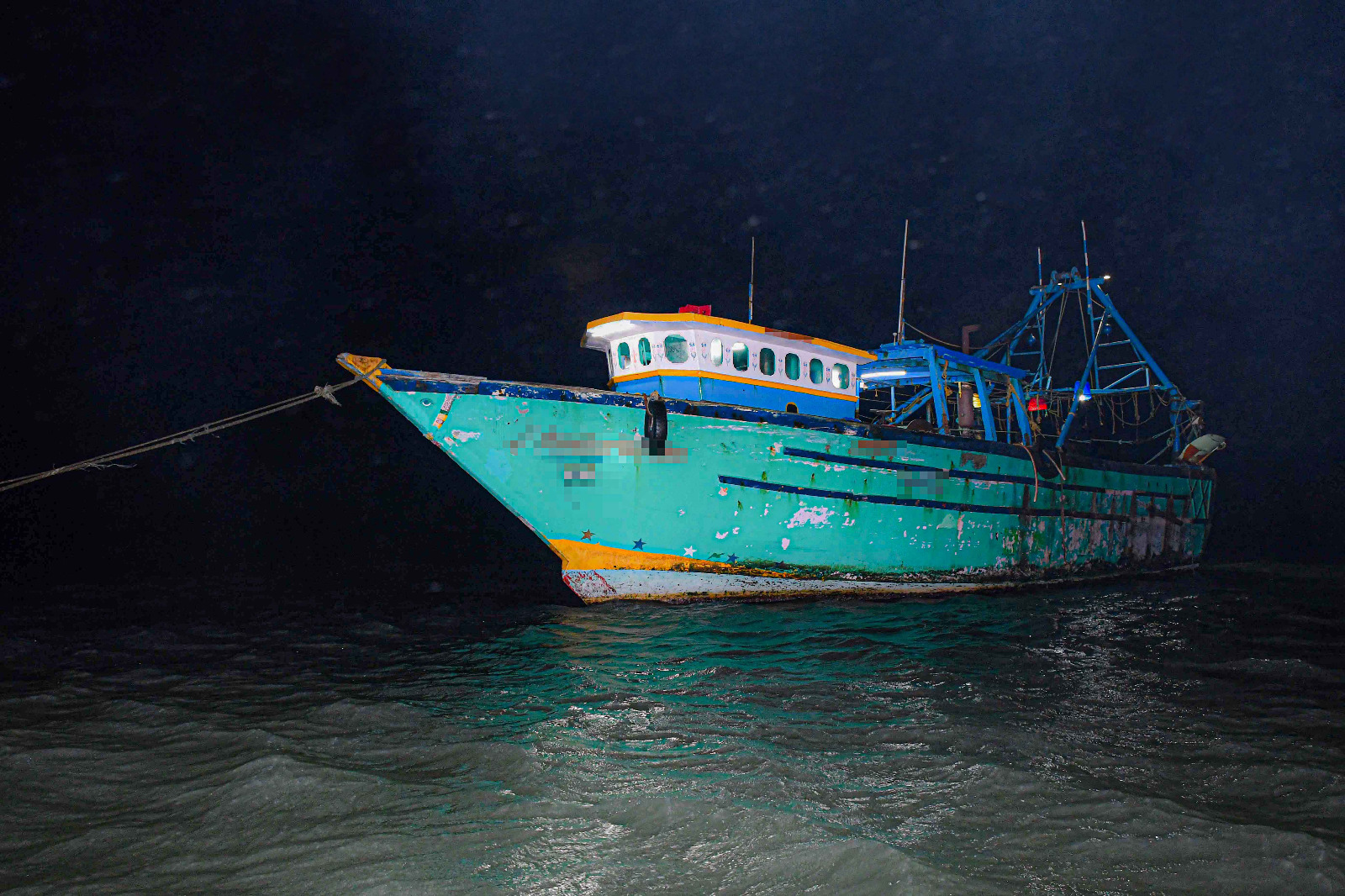
The Sri Lanka Navy seized an Indian fishing trawler and apprehended nine Indian fishermen whilst engaged in illegal fishing having crossed the International Maritime Boundary Line (IMBL) in Sri Lankan waters North of Talaimannar on Wednesday (22 July 2026). evening.
Over 50 Indian fishing trawlers had trespassed into the Sri Lankan waters South of Iranativu engaging in illegal fishing. During the operation, one Indian fishing trawler was seized, while nine Indian fishermen on board were taken into custody
The apprehended fishermen and the seized trawler were handed over to the Fisheries Inspector of Mannar for onward legal proceedings.

By Saman Indrajith
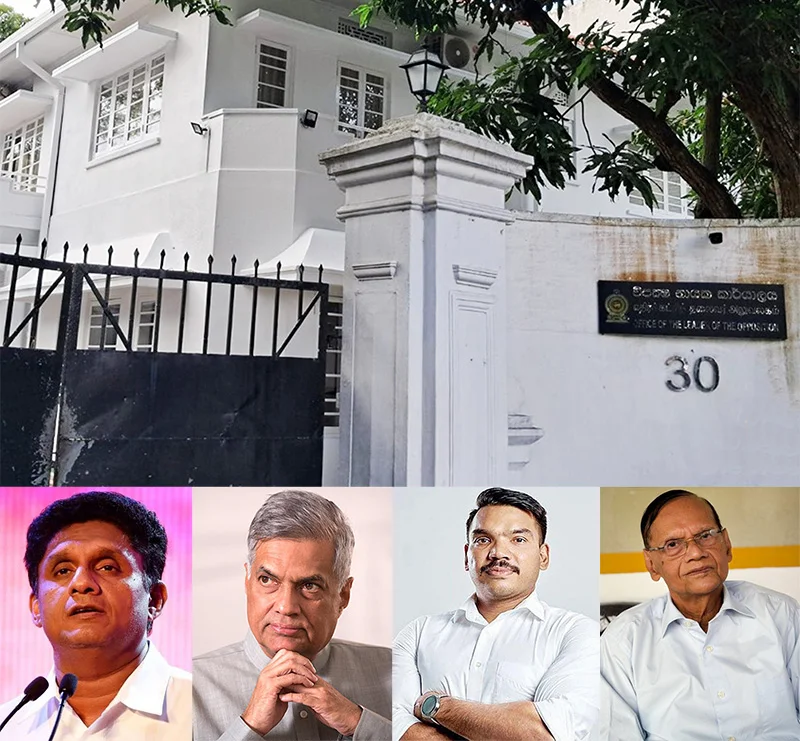
Leaders of all Opposition parties are scheduled to meet today (23) at the Opposition Leader’s Office, on Sir Marcus Fernando Mawatha, Colombo, to discuss future action against the proposed extension of the retirement age of superior court judges, which, they describe, as growing threats to judicial independence.
The special meeting has been convened by Opposition and SJB Leader Sajith Premadasa amid escalating tensions between the government and the Opposition over issues relating to the judiciary.
According to the Opposition Leader’s Office, the meeting is intended to formulate a collective response to, what it termed, a crisis facing the judicial system, alleging that arbitrary actions by the government have posed a serious challenge to the proper functioning and independence of the judiciary.
Former President Ranil Wickremesinghe, former President Maithripala Sirisena, former Prime Minister Dinesh Gunawardena, Sri Lanka Podujana Peramuna National Organiser and MP Namal Rajapaksa, Joint Opposition Convener Prof. G.L. Peiris, and leaders and representatives of all Opposition parties, are expected to attend.
The Opposition Leader’s Office noted that the meeting will mark the first occasion on which Wickremesinghe will visit the Opposition Leader’s Office, since Premadasa assumed office as the Opposition Leader.
The development follows an urgent meeting of Opposition MPs, chaired by Premadasa, at the Opposition Leader’s Office in Parliament yesterday after the government declined to permit a parliamentary debate on matters relating to the judiciary.
Opposition sources said that at the previous Party Leaders’ Meeting, Opposition parties had requested a debate, based on democratic principles, the tripartite system of government, comprising the Legislature, Executive and Judiciary, the separation of powers, and the system of checks and balances. However, the government had not agreed to allocate time for such a discussion.
Opposition MPs argued that issues affecting judicial independence should be openly debated in Parliament and warned that preventing such discussion could undermine democratic governance and accountability.
Addressing the meeting, Premadasa said the refusal to allow a debate on judicial matters was a setback to democratic principles and discussed with MPs the parliamentary and political measures to be pursued in response.
Among those present at yesterday’s meeting were MPs Rohini Wijeratna, Chithral Fernando, V. Radhakrishnan, Chaminda Wijesiri, Gayantha Karunathilaka, J.C. Alawathuwala, Sujith Sanjaya Perera, Kavinda Jayawardana, Chathura Galappaththi, Kabir Hashim, Ravi Karunanayake, M.S.A. Wazeed, Rohana Bandara, W.H.M. Dharmasena, B. Ariyawansa, Dayasiri Jayasekara, Anuradha Jayaratne, Harsha de Silva, Rishad Bathiudeen, Rauff Hakeem, Archchuna Ramanathan, Nizam Kariapper, M.S. Uthumalebbe, Chanaka Madugoda, Suranga Ratnayake and Selvam Adaikkalanathan.
The Opposition meeting today is expected to decide on a coordinated strategy, both inside and outside Parliament, regarding the proposed extension of judges’ retirement age and broader concerns over the independence of the judiciary.
By Saman Indrajith
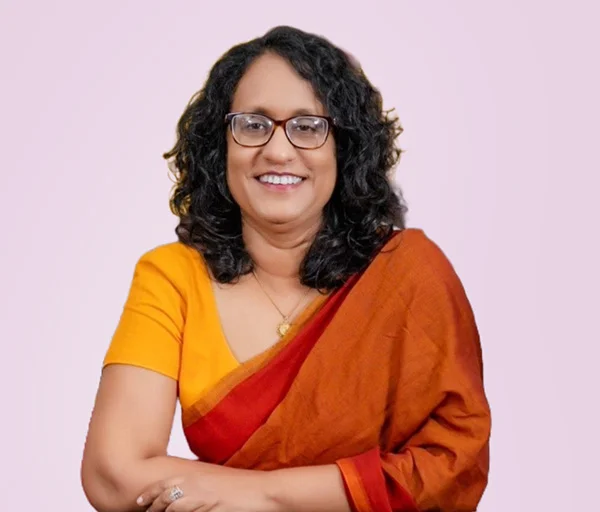
Prime Minister Dr. Harini Amarasuriya yesterday told Parliament that the government was considering commercially viable uses for seven Presidential Houses across the country, while continuing to bear the cost of maintaining the properties until such plans are implemented.
Responding to a question raised by Badulla District SJB MP Chaminda Wijesiri, the Prime Minister said Sri Lanka currently has seven Presidential Houses located in Colombo, Kandy, Nuwara Eliya, Kataragama, Anuradhapura, Mahiyangana and Bentota.
She identified the properties as the President’s House on Janadhipathi Mawatha, Colombo 1 and the ones located at Hill Street, Kandy; on Kandy Road, Nuwara Eliya; Kirivehera Road, Kataragama; in Old Town, Anuradhapura; in Mahiyanganaya; and in Bentota.
Providing details of maintenance and repair expenditure incurred on the properties from 2018 to date, Dr. Amarasuriya said the Government had spent Rs. 125 million in 2018, Rs. 77.2 million in 2019, Rs. 34.7 million in 2020, Rs. 28.8 million in 2021, Rs. 25.6 million in 2022, Rs. 37.4 million in 2023, Rs. 24.4 million in 2024 and Rs. 10.5 million in 2025.
Expenditure for the first six months of 2026 amounted to Rs. 3.04 million, she said.
The Prime Minister said a committee had been appointed in terms of a Cabinet paper submitted by the Ministry of Public Administration, Provincial Councils and Local Government and a subsequent Cabinet decision to examine options for the future use of the properties.
She said the committee had already submitted its recommendations, which include converting the premises into commercially viable ventures.
According to the Prime Minister, some former Presidential residences have already been converted into courthouses, while others are expected to be used for economically productive purposes.
“The government has to spend funds to maintain Presidential palaces until they are put to economically viable use,” Dr. Amarasuriya told Parliament.

Navy seize Indian fishing trawler, nine fishermen poaching in Sri Lankan waters

Sri Lanka edge Qatar in Davis Cup opener

Dambulla Sixers hand Galle Gallants first defeat in LPL 2026

Jaffna Kings beat Colombo Kaps by five runs

Showers will occur in the Western and North-western provinces and Galle, Batticaloa, Ampara and Monaragala districts

United Opposition moves to halt interference with judicial independence

‘Dates have the highest sugar content to fight Coronavirus’

Sunday Island 27 December – Headlines

#SundayIsland 17th December – Headlines

Sunday Island – 28th March

Sunday Island Headlines – 21 March

Sunday Island – 21st February – Headlines
-
 Features4 days ago
Two memorable excerpts from a former SLAF commander’s memoir
-
 Business4 days ago
‘Giving up was never an option’: The fisherman who fought back after losing millions in SL
-
 Latest News5 days ago
Davis cup Asia/Oceania Group IV 2026 to be held in Colombo from 20th to 25th July
-
 Features4 days ago
Erdoğan’s New Republic
-
 Life style4 days ago
Taste of the Swiss Alps comes to Colombo
-
 News5 days ago
Evidence recorded in money laundering case against Yoshitha Rajapaksa
-
 News5 days ago
Dengue outbreak gallops ahead: Infections surpasses 73,455, leaving 50 dead
-
 Midweek Review1 day ago
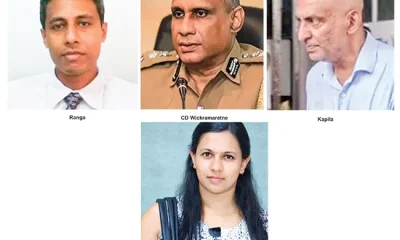
Three high-profile alleged suicides shaping key investigations