
Latest News
Australia on brink as Sri Lanka eye Super Eights spot

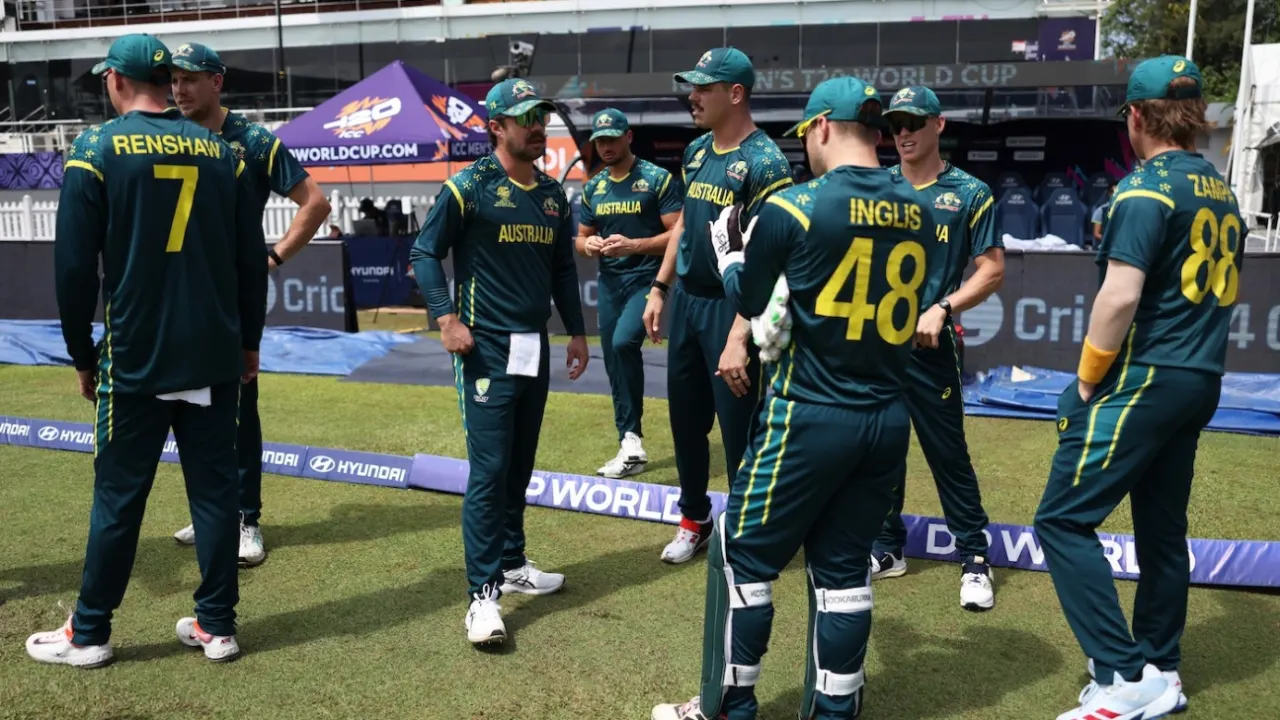
Australia have no room for error now. Mathematically they won’t be eliminated with a defeat against ri Lanka, but it would leave them needing something close to a miracle. For Sri Lanka, the stakes aren’t quite as high, but with a confident Zimbabwe as their last opposition in the group stage they would ideally not want to leave their fate uncertain. A win would lock them into the Super Eights.
T20 World Cups hold an odd position in Australia men’s cricket. Poor ones, of which there have been a few over the years, don’t really lead to calls for wholesale changes that defeats in marquee Tests can do or underperforming ODI World Cup campaigns (as rare as they are). But it’s fair to say, more people are now engaged with Australia’s fortunes following the ;oss to Zimbabwe. A group stage exit would be a significant failure.
The initial fallout to that loss has raised questions about both the batting and bowling. Only taking two wickets has shone a light on a lack of strike power, particularly when Adam Zampa is kept quiet, but in truth Australia should still have been able to chase 170 given their whole T20 philosophy over the last 18 months has been the depth and power of the order. With form questions over a few players coming in, and lack of cricket for others, the injury to Mitchell Marsh was especially untimely.
Sri Lanka had enough to get past Ireland (aided by the latter’s fielding) and were comfortably too strong for Oman. That contest was a nice ego boost for the batting with Kusal Mendis, Pavan Rathnayake and the under-pressure captain Dasun Shanka flaying half-centuries. In their opening game, Kamindu Mendis had produced an eye-catching display. They certainly have the tools to cause Australia’s undermanned attack problems.
These two sides have not played each other in a T20I since the 2022 World Cup when Marcus Stoinis hunted down the target with an 18-ball 59. And while no one is really an unknown in international cricket these days given the franchise game and accessibility of footage, it is worth noting Australia have never faced Matheesha Pathirana, this generation’s slinger, although in all T20s only Marsh from a potential top order has been dismissed by him. Glenn Maxwell has 26 runs off ten balls against him, Tim David 21 off 12.
Left-arm spin-bowling allrounder Sunith Wellalage has yet to play a T20I against Australia, but in ODIs he has had quite the time of it with 16 wickets at 20.12 from eight matches which included making his debut as a 19-year-old in 2022. Eleven of those wickets have come at the Premadasa, in five matches, compared to four in two games at Pallekele, but Australia have not always combated left-arm spin well. He has started the tournament with tidy figures of 1 for 28 and 1 for 17. He shapes as even more important given the tournament ending injury to Wanidu Hasaranga and the uncertain form of Dushan Hemantha who went for 45 against Oman.
Tim David’s elevation up the order was a key part of Australia’s planning for this tournament during 2025 when their T20 game clicked nicely. But the hamstring injury he picked up on Boxing Day for Hobart Hurricanes put a spanner in works because it has left David short of match time. He wasn’t ready for the series in Pakistan and was left out against Ireland. Facing Zimbabwe, he picked out short fine leg second ball as part of the powerplay collapse. If Australia are to go deep in this tournament, David will need to fire.
Sri Lanka have a couple of issues to ponder. One is whether they stick with Hemantha or bring in an extra seamer, Pramod Madushan. Another option would be to alter the balance of the side and include Charith Asalanka as a spin-bowling allrounder. Kamil Mishara’s spot could be under pressure after a couple of low scores with Kusal Perera an alternative.
Sri Lanka (possible) Pathum Nissanka, Kamil Mishara, Kusal Mendis (wk), Pavan Rathnayake, Dasun Shanaka (capt), Kamindu Mendis, Dunith Wellalage, Dushan Hemantha/Charith Asalanka, Dushmantha Chameera, Maheesh Theekshana, Matheesha Pathirana
The word from the Australia camp is that Marsh has improved and could come into contention but he will have to get through training on Sunday. Stoinis has avoided serious injury after the blow to the hand while bowling against Zimbabwe. Steven Smith is now with the squad but has not been officially added, although there is still time before facing Sri Lanka. If Marsh is fit, a big call will need to be made on who misses out given Matt Renshaw has impressed. It could come down to between Glenn Maxwell and Cameron Green unless the selectors opt for just three specialist bowlers.
Australia (possible) Mitchell Marsh (capt), Travis Head, Josh Inglis (wk), Tim David, Matt Renshaw, Marcus Stoinis, Glenn Maxwell, Xavier Bartlett, Nathan Ellis, Adam Zampa, Matt Kuhnemann
[Cricinfo]

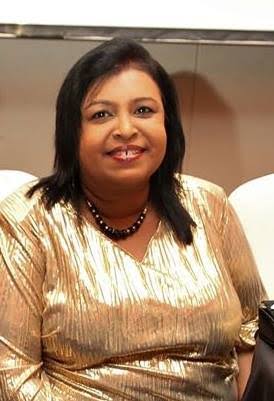
It has been reported quoting family sources that veteran singer Mariazelle Goonetilleke has passed away this morning (10) at the age of 68
She had been receiving treatment at the Kalubowila Teaching Hospital.
The US and Iran again traded strikes in exchanges that continued into Thursday, as observers reported a “dramatic” drop in the number of ships travelling through the Strait of Hormuz.
The US says it hit 90 military targets, some near the Strait. Iran says 14 people have been killed in the past two days.
State media also reported that targets near the Bushehr nuclear power plant were hit, citing the deputy governor of the province. The US has not commented on the latest strikes.
Iran said it targeted US assets in Kuwait, Bahrain and Qatar in response. Later on Thursday, Tehran launched more strikes on sites in Kuwait, Jordan and Iraq, state-linked media reported.
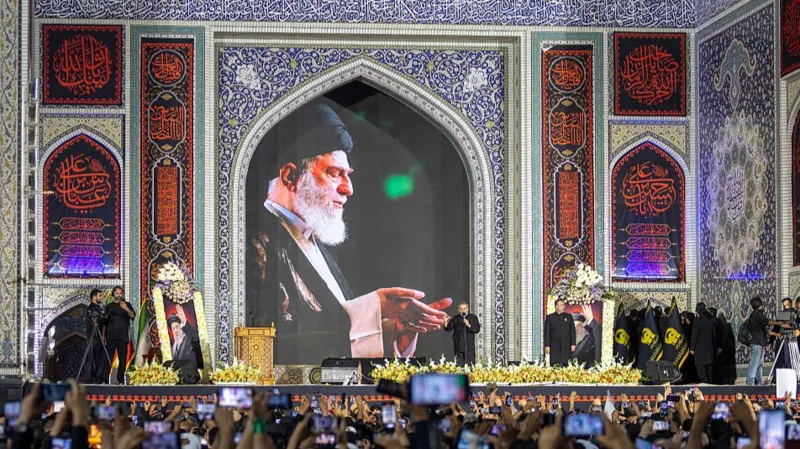
Separately, huge crowds gathered as Iran’s late supreme leader, Ayatollah Ali Khamenei, was buried after six days of funeral events.
Crowds massed on the streets of Mashhad in north-eastern Iran waving Iranian flags, while some were pictured holding signs carrying death threats directed at US President Donald Trump.
Khamenei was killed on 28 February during the first hours of US and Israeli strikes against Iran.
Iran’s foreign ministry denounced the latest US strikes as a “grave war crime”, describing the US administration as “evil and psychopathic”
Bridges and a railway route connecting Tehran to the city of Mashhad, where the late supreme leader’s funeral is being held, were also damaged, the foreign ministry said.
Iran’s health ministry said 14 people had been killed and 78 people injured across five provinces.
Gulf nations reported Iranian attacks following the US strikes, with explosions in Bahrain’s capital Manama, Kuwait intercepting missiles and drones, and Qatar issuing a security alert.
Later on Thursday, explosions were heard in Iran’s southern port of Konarak, with a local official telling Iran’s official news agency a navy site was attacked by an “enemy”.
However a US defence official told the BBC it had not carried out any strikes in Iran in recent hours.
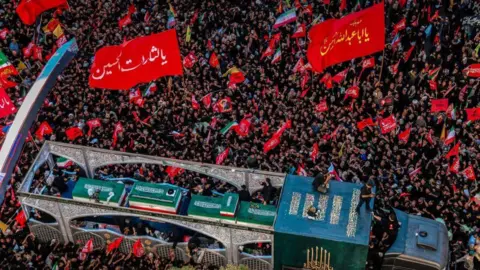
The funeral of Iran’s late supreme leader Ali Khamenei is being held in the city of Mashhad [BBC]
Iran’s parliamentary speaker Mohammad Bagher Ghalibaf, who is also the country’s chief negotiator with the US, said on X that America “still hasn’t learned that bullying and breaking promises are no longer cost-free”.
“Let me put it plainly: if you strike, you’ll get hit,” he wrote, adding that the Strait of Hormuz will only open under Iranian arrangements – not “American threats”.
US Central Command (Centcom) said the most recent round of strikes was carried out to “further degrade Iran’s ability to attack commercial shipping and innocent civilian mariners” in the vital waterway.
In a statement, it said it had struck 90 Iranian military targets, which included air defense systems and military logistics infrastructure along Iran’s coastline.
“The latest strikes follow successful execution of offensive strikes in Iran the night before,” Centcom added.
Phil Belcher, marine director at Intertanko, an international organisation for independent tanker owners, said the number of ships travelling through the Strait via the southern route closer to Oman was now in “single figures” following the step up in hostilities.
Belcher added that the overall daily figure of about 30 ships was down from about 70 a week ago and well below the normal number of 130 ships that was seen before the Iran war began earlier this year.
He told BBC Radio 4’s Today programme that there had been an “exuberance of optimism” around shipping in the region following the signing of the SMemorandum Of Understanding between Iran and the US last month, but now the mood has changed.
“This cycle of violence, this cycle of up-and-down, positive-negative news, it’s having an enormous impact both on business and on the seafarers themselves,” he said.
On Wednesday night Iranian state TV reported eight explosions in Bandar Abbas, and said two missiles had hit the ports of both Sirik and Jask – also in southern Iran.
It added that two projectiles had hit the island of Abu Musa, which has been the subject of a longstanding ownership dispute between Iran and the United Arab Emirates.
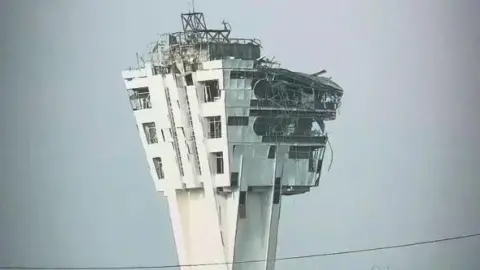
The extent of damage from the US strikes is not yet known, but Iranian media have reported power cuts in Chabahar and a fire at an Islamic Revolutionary Guard Corps (IRGC) barracks in Bushehr. Images on social media showed damage to a marine control tower in Chabahar.
Earlier on Wednesday, Centcom wrote in a statement that it held Iran accountable for “recent unjustified aggression against commercial shipping and civilian crews freely navigating a vital international waterway.”
President Trump said late on Wednesday that Iran had “called a little while ago” and wanted to make a deal “so badly”.
Trump added: “I just don’t know if they’re worthy of making a deal – I don’t know that they’re going to honour the deal, that’s the problem.”
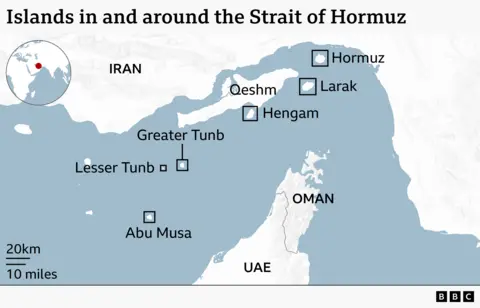
The current flare up has been the worst exchange of strikes between the US and Iran since the deal – known as a memorandum of understanding (MoU) – was signed on 17 June.
Trump said the ceasefire agreement signed last month with Iran was now “over”. He told reporters: “I don’t want to deal with them anymore, they’re scum. You know what scum is? They’re scum. They’re sick people.”
In response, Iran’s Foreign Minister Abbas Araghchi said in a post on X: “We do not answer vulgarity with vulgarity, but with action: fearlessly and with great valour.”
The deal between the US and Iran included 14 points, among them a 60-day period for a ceasefire during which negotiations should continue, the safe passage of vessels through the Strait of Hormuz and the US lifting sanctions on Iran.
The 60-day period for negotiations is not yet up, but Trump said he saw further talks as “a waste of time”.
[BBC]
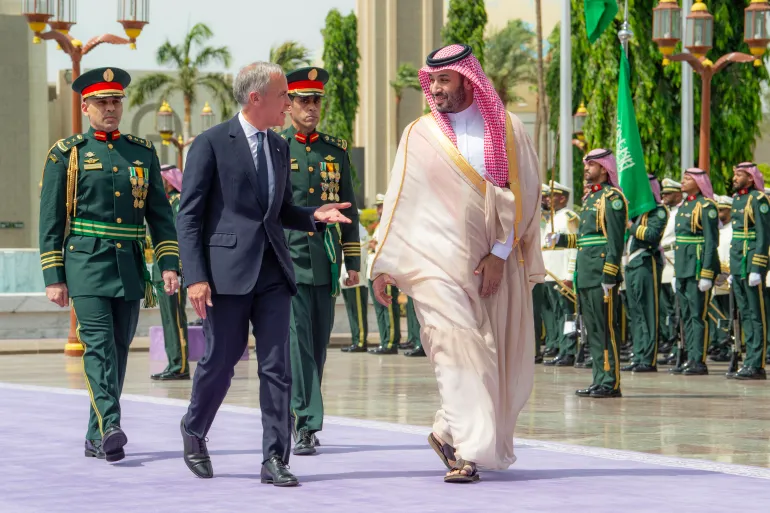
Canadian Prime Minister Mark Carney paid a visit to Saudi Arabia, marking the first state visit in more than a quarter-century as Ottawa and Riyadh explore deeper mining and energy ties.
Carney visited on Thursday, on the heels of the NATO summit in Turkiye, doubling down on calls to diversify trade relationships as United States President Donald Trump imposed tariffs that have weighed on the Canadian economy. The visit included agreements covering mining, energy and artificial intelligence, which Carney’s office said would be finalised next year.
The two countries signed 13 new agreements and memorandums of understanding (MoUs) covering areas including health and defence. The agreements are worth $1bn. Among the deals are agreements that would help Canadian companies develop mining and clean energy projects in Saudi Arabia.
During his visit, Carney also met with Amin Nasser, head of state oil giant Saudi Aramco. On energy, Carney’s office said the two countries are working together on agreements related to liquefied natural gas, hydrogen and carbon capture and storage.
Carney’s office also said he would lead “a delegation of Canada’s pension funds” as part of efforts to invest in Saudi Arabia’s energy and AI sectors.
In talks with Saudi Crown Prince Mohammed bin Salman, Carney signed agreements aimed at expanding several key partnerships between the two nations following years of strained relations under former Prime Minister Justin Trudeau.
Trudeau, Carney’s predecessor, had been critical of Saudi Arabia’s treatment of human rights activists, including Saudi writer Raif Badawi and his sister, Samar. In response, Saudi Arabia expelled the Canadian ambassador and cut trade and investment ties in 2018.
Ottawa and Riyadh began restoring diplomatic ties in 2023.
Carney was asked by reporters about the decision to re-engage with Saudi Arabia, to which he responded:
“Engaging with the country doesn’t mean that we agree with everything that a country is doing.”
“We are actively engaging with key partners around the world,” Carney said.
“Lecturing countries from afar is an ineffective strategy. It’s satisfying, but it’s ineffective.”
Carney was also asked about ongoing negotiations with the United States. Reporters pressed him on whether there had been any progress in trade negotiations with Trump amid tensions surrounding the North American Free Trade Agreement. “I’ll keep you posted,” Carney said.
[Aljazeera]

Sri Lankan singer Mariazelle Goonetilleke passes away at the age of 68

Tensions erupt in Indian state after 11-year-old raped and murdered

US and Iran trade attacks as Khamenei is buried

Several spells of showers will occur in the Western, Sabaragamuwa and North-western provinces and in Galle, Matara, Kandy and Nuwara-Eliya districts

Canadian PM visits Saudi Arabia to strengthen energy, mining partnerships

Mbappe and Dembele net as France beat Morocco to reach World Cup semifinal

‘Dates have the highest sugar content to fight Coronavirus’

Sunday Island 27 December – Headlines

#SundayIsland 17th December – Headlines

Sunday Island – 28th March

Sunday Island Headlines – 21 March

Sunday Island – 21st February – Headlines
-

 News5 days ago
Singapore-based Buddhist monk marks nearly four decades of humanitarian service
-

 News6 days ago
Freedom 250: US Embassy celebrates America’s 250th Independence Day through magic of American cinema
-

 News4 days ago
AI concerned over proposed SL military deployment in Haiti
-

 Midweek Review2 days ago
Unexpected focus on ‘pieces of tin’ worn by military men
-

 Features5 days ago
The NPP’s New Challenge: Balancing Easter Lawfare and Economic Welfare
-
 Latest News3 days ago
Nyamhuri and Ngarava stun Bangladesh by defending 141
-

 Latest News6 days ago
Ukrainian suspect hunted by police after Monaco bomb attack was ‘disguised as a man’
-

 News1 day ago
Negombo Prison riot: Ensuring protection of prisoners fundamental responsibility of the state – UN