
Latest News
Namibia look to make a splash with India battling injury and illness

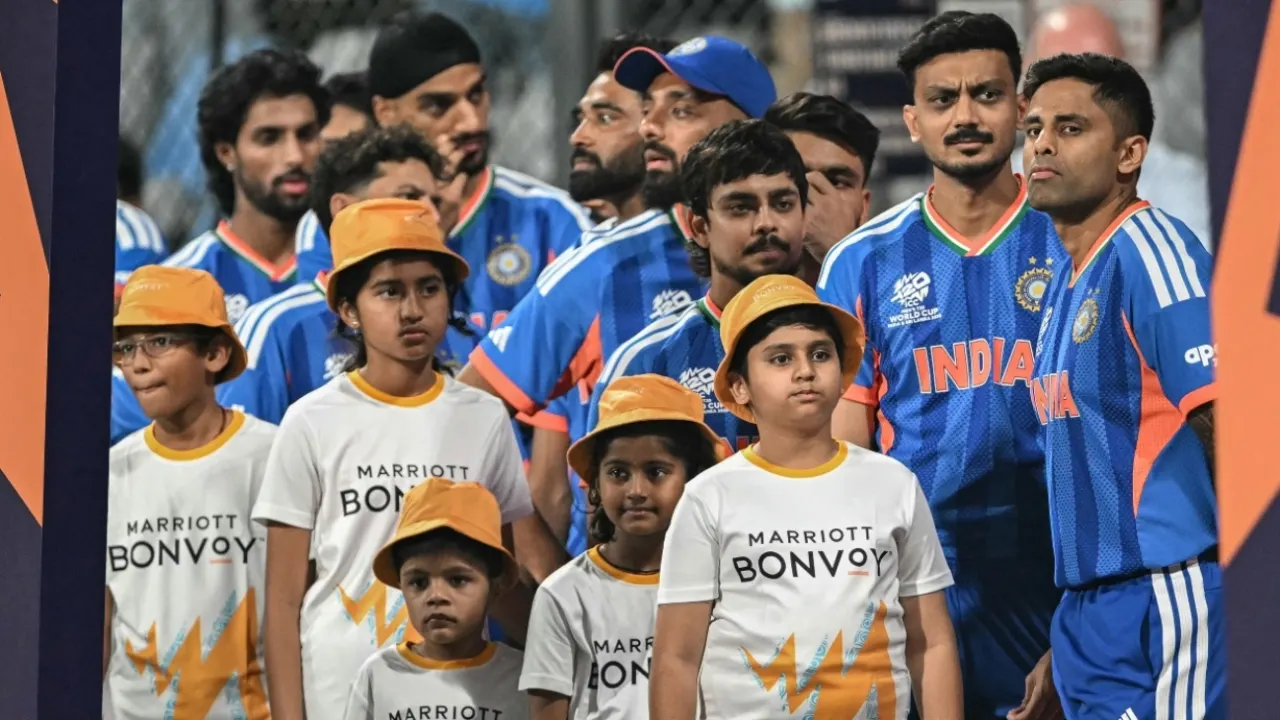
February is usually a wonderful time in Delhi, when winter starts giving way to spring, but people are already complaining of a missed spring with temperatures hitting the late 20s as early as the second week of February. Even amid the climate change of the last decade or so, there has been one pattern: a late hailstorm typically brings back another week of chilly weather. An Indian Winter, if you will, Delhi’s response to Indian Summer, which is the term the English give to a late spell of hot weather when it should be autumn.
The fans, who will sell out the Feroz Shah Kotla even with schools turning down offers for free tickets for students to non-India matches because of looming board exams, will hope for a similar storm of sixes after a dry run in India’s tournament-opener. The anticipation for 300 in the Indian media has come in for some mockery, with the pitches not turning out as flat as they are in bilaterals, but at a venue with small boundaries that has turned high-scoring in recent IPL seasons, India will hope to get back to big-scoring ways after navigating a banana peel against USA on a gripping Wankhede surface.
Against them are Namibia who managed just 156 in Delhi against Netherlands and lost quite comfortably. They might still sense a chance as India struggle with fitness and health issues around Jasprit Bumrah, Abhishek Sharama and Washington Sundar, and will themselves be gunning to go big with the bat in a World Cup. What an opportunity for Namibia to make a name for themselves by stretching the strongest-ever contenders for a T20 World Cup.
When India were struggling against USA in the unfamiliar conditions laid out by Mumbai, it was Suryakumar Yadav’s blinder that gave them a match-winning score. That wretched year of 2025, during which he didn’t score a single fifty, seems well and truly behind him now. Suryakumar now has more match awards for India than anyone, having gone past Virat Kohli’s 16.
Namibia, another Associate side that like to open the bowling with a spinner, will hope Bernard Scholtz can repeat what he did against Netherlands. In defence of a paltry 156, the left-arm spinner took out opener Max O’Dowd and conceded just 27 in his four overs.
Washington has joined the Indian squad, but they have other health troubles in the side. Bumrah missed their first match with illness, and while he seems to have recovered and bowled full-tilt at the nets on Tueday, Abhishek has been struggling with a stomach issue. He reportedly played in Mumbai with fever, and it turned worse by the time the team reached Delhi, where he was hospitalised. Tilak Varma said on Wednesday that he has been discharged, but India will take a call on his availability on the day of the match. India might want to take their time with the big names, and in the process give some game time to the reserves.
India (probable): Abhishek Sharma/Sanju Samson, Ishan Kishan (wk), Tilak Varma, Suryakumar Yadav (capt), Hardik Pandya, Rinku Singh, Shivam Dube, Axar Patel, Arshdeep Singh, Jasprit Bumrah/ Mohammed Siraj, Varun Chakravarthy.
Seventeen-year-old fast bowler Max Heingo bowled only two overs and went for 22 against Netherlands. Namibia could replace him with the more experienced Ben Shikongo.
Namibia (possible): Louren Steenkamp, Jan Frylinck, Jan Nicol Loftie-Eaton, Gerhard Erasmus (capt), JJ Smit, Zane Green (wk), Dylan Leicher, Willem Myburgh, Ruben Trumpelmann, Bernard Scholtz, Ben Shikongo.
[Cricinfo]

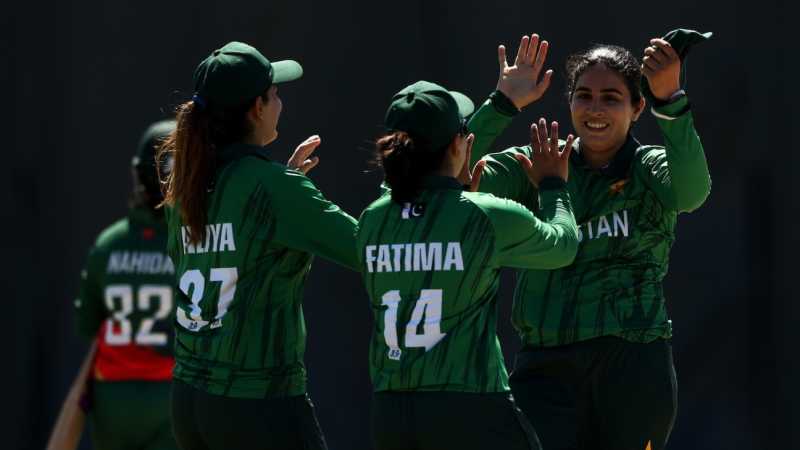
At 67 for 5 in the 12th over, Pakistan were under the cosh against Bqngladesh in their bronze-medal playoff at the Asian Games women’s competition. That’s when Fatima Sana walked out, slammed 45 in 30 balls, and gave Pakistan 145, which was 31 too many for Bangladesh, especially after Umm-e-Hani picked up three top- and middle-order wickets to end with 3 for 10 from her four overs.
Bangladesh’s big concern, of late and in general, has been the number of dot balls they play out in a typical T20 innings. In this game, it was a marginal improvement from the loss to India in the semi-final – they had 43 dot balls here compared to 61 in that game. But it was still fewer than the 48 they bowled to Pakistan in the first half. The difference was Sana, who scored at 150.00 to change the complexion of the contest.
Pakistan’s start had been decent, thanks to Gull Feroza, after they won the toss and opted to bat. Feroza and Shawaal Zulfiqar added 46 in 41 balls before being separated in the seventh over. The one to be dismissed was Feroza, who had scored 31 in 23 balls. Zulfiqar batted on before becoming the third batter to fall, having struggled to 17 off 27 balls. And the wickets kept falling, Shorna Akter picking up two of them to leave Pakistan in a mess with five batters gone.
Sana had a solid stand for the sixth wicket with Aliya Riyaz, who scored 25 in 22 balls and added 67 with Sana in just 43 balls. The control Bangladesh had was gone with the two hitting five sixes between them.
The target for Bangladesh, which looked like it might be in the region of 100, was suddenly closer to 150. And the chase never took off. Umm-e-Hani struck in the third over, then in the fifth over, and again in the 16th over. By then, Bangladesh were floundering: 77 for 5 with under five overs to go.
The resistance came from senior pro Sharmin Akther, who scored an unbeaten 46 in 45 balls, but there was nothing around her, and Pakistan ran out comfortable, 31-run victors.
Scores:
Pakistan women 145 for 8 in 20 overs (Shawaal Zulfiqar 17, Fatima Sana 45, Gull Feroza 31, Aliya Riyaz 25; Sanija Akter Meghla 1-28, Nahida Akter 2-21, Shorna Akter 2-16, Ritu Moni 2-27) beat Bangladesh women 114 for 7 in 20 overs (Dilara Akter 12, Nigar Sultana 25, Sharmin Akhter 46*, Nahida Akter 10*; Tasmia Rubab 1-25, Fatima Sana 1-25, Umm-e-Hani 3-10, Nashra Sandhu 1-19, Ayesha Zafar 1-10) by 31 runs
(Cricinfo)

India Women won the toss and chose to bat first in the Asian Games women’s cricket final in Nishin, Japan.
India: Smriti Mandhana, Shafali Verma, G Kamalini, Harmanpreet Kaur (capt), Richa Ghosh (wk), Bharti Fulmali, Deepti Sharma, Shreyanka Patil, Kranti Gaud, N Shree Charani, Nandani Sharma
Sri Lanka: Imesha Dulani, Chamari Athapaththu (capt), Hasini Perera, Kavisha Dilhari, Harshitha Samarawickrama, Hansima Karunaratne, Kaushini Nuthyangana (wk), Kawya Kavindi, Mithali Ayodhya, Chamudi Praboda, Sugandika Kumari
(Cricinfo)

The National Business Facilitation Centre (NBFC), which is being established under the Presidential Secretariat with the aim of removing administrative and regulatory barriers that exist among government institutions in relation to investment and industry and expediting these processes, will be opened tomorrow (22).
The centre is being established on the President’s initiative with the aim of bringing about a positive transformation in the industrial sector. The centre will provide solutions to issues that arise in dealing with the government machinery when starting and operating a business, while also coordinating with the relevant government institutions to provide the necessary facilities.
The “ViYASA” National Business Facilitation Centre (NBFC) has been established at Building C-80, Hector Kobbekaduwa Mawatha, Colombo 07, and is headed by Senior Additional( Secretary to the President, Seevali Arukgoda.
The centre will be opened under the patronage of Minister of Labour and Deputy Minister of Finance and Planning Dr Anil Jayantha Fernando and Minister of Industry and Entrepreneurship Development Sunil Handunnetti, with the participation of Secretary to the President Dr Nandika Sanath Kumanayake.
The website https://nbfc.presidentsoffice.gov.lk is also scheduled to be officially launched on the occasion.
President’s Media Division)

Fatima Sana and Umm-e-Hani secure bronze for Pakistan in Asian Games

India bat first in Asian games womens cricket final

Showers about 100mm will occur in the Western, Sabaragamuwa, Central and North-western provinces and in Galle and Matara Districts

Govt. confident of 2/3 majority despite NPP split speculation

Justice Corea appointed Acting President of the Court of Appeal

Protest against setting up of cement factory in highly populated area near BIA

‘Dates have the highest sugar content to fight Coronavirus’

Sunday Island 27 December – Headlines

#SundayIsland 17th December – Headlines

Sunday Island – 28th March

Sunday Island Headlines – 21 March

Sunday Island – 21st February – Headlines
-

 News6 days ago
US embassy won’t comment on IGP’s probe into joint drug raid
-

 News5 days ago
Bid for Basil’s extradition nears final stage: Police
-

 News4 days ago
Shanakiyan urges urgent action over reported death sentence for Lankan in Saudi Arabia
-

 Business6 days ago
All-new Bolero MaXX unveiled in Sri Lanka
-

 News3 days ago
Namal Rajapaksa Buddhist gambit fails, bail denied
-
 Opinion6 days ago
A journalist who wrote across the divide
-

 Editorial7 days ago
More fuel price shocks shrouded in secrecy
-
 Sports7 days ago
MAS Holdings, official clothing sponsor of Sri Lanka team at Aichi–Nagoya 2026 Asian Games