
Business
From Gut Feel to GPS: Why Sri Lankan brands must own their AI intelligence


By Ifham Nizam
Sri Lankan brands are standing at a strategic inflection point. Digital budgets have surged, social platforms have multiplied, and artificial intelligence has moved from novelty to necessity. Yet, despite unprecedented access to data, many organisations remain trapped in reactive decision-making—looking backwards rather than anticipating what lies ahead.
That contradiction was sharply articulated at a industry forum on Tuesday night bringing together global platform experts and local practitioners, where the central question was not whether Sri Lankan brands should adopt AI-powered intelligence, but whether they are prepared to own it.
Angel Calinisan, a global social intelligence leader working across emerging markets from Southeast Asia to South Asia, offered a compelling metaphor that framed the discussion.
“Brands are no longer using social intelligence as a rear-view mirror,” Calinisan said.
“They are starting to use it as a GPS. A rear-view mirror tells you what has already happened. A GPS tells you where you are headed—and warns you before you take the wrong turn.”
According to Calinisan, the most advanced brands are deploying AI-driven listening tools to spot anomalies in real time—early signals that indicate shifts in consumer behaviour, emerging reputational risks, or nascent trends before they peak.
“These anomalies could be negative sentiment during a brewing crisis, or they could be the first signs of a behavioural change,” he explained. “AI does what humans cannot do at scale—monitor conversations 24/7, identify what has changed, where it is happening, and who is driving it.”
Crucially, Calinisan stressed that prediction—not reporting—is where competitive advantage now lies. “You need to know whether a trend is just a fad or whether it has velocity and longevity. That predictive layer is what separates leaders from followers.”
For Sri Lankan companies operating in volatile economic and reputational environments, this ability to anticipate rather than react could be the difference between resilience and decline.
One of the most striking insights from Calinisan was her assertion that data is no longer the currency—time is.
“If you read about an issue in the newspaper or see it trending publicly on social media, you are already late,” he warned. “Conversations move across platforms at incredible speed. The brands that survive are the ones that detect signals early and buy themselves time to respond.”
This shift has significant business implications. Early detection allows organisations to protect brand equity, manage crises proactively, and even capitalise on emerging opportunities before competitors are aware they exist.
Calinisan pointed to metrics increasingly used by global brands, such as share of voice, which he said is “highly correlated with market share,” and net sentiment, a measure closely linked to digital brand equity. “These metrics are no longer for reporting decks—they are guiding business decisions.”
Beyond vanity metrics to boardroom relevance
That evolution from surface-level engagement to boardroom relevance was echoed by Anubhav Khanduja, who works closely with enterprise clients across India, South Asia, APEC and global markets.
“Likes and shares are no longer what boards care about,” Khanduja said. “Leadership teams want to see intent and revenue. They want to know how social media contributes to the funnel—from intent creation to conversion and attribution.”
According to Khanduja, enterprise measurement frameworks are rapidly shifting toward metrics that can be directly linked to business outcomes. “Attribution is critical. If you can connect intent and conversion back to your social platforms, that’s when digital earns its seat at the board table.”
This shift reflects a broader maturation of digital marketing—from a communications function to a revenue and growth driver.
As brands juggle five to seven platforms simultaneously, another challenge has emerged: how to centralise operations without flattening the unique culture of each platform.
Khanduja cautioned against the old model of pushing uniform content everywhere. “Content creation has become easy—anyone can do it. What matters now is not missing the essence of what each platform is built for.”
He argued that AI should be used to improve marketer productivity, not replace human judgment. “You can centralise research, workflows and optimisation, while keeping the authentic voice intact and respecting platform-specific nuances.”
The goal, he said, is “doing more with less—without losing relevance.”
A recurring theme throughout the discussion was the danger of outsourcing intelligence entirely to agencies and consultancies.
Calinisan was blunt: “The brands pulling ahead are bringing these capabilities in-house. They have management support, clear KPIs, and training programmes that allow teams to experiment, fail, learn and iterate.”
This internalisation of intelligence allows organisations to respond faster, protect institutional knowledge, and build long-term strategic muscle—rather than “renting insight” on a project-by-project basis.
Khanduja reinforced this view, noting that as trust deficits grow in an age of AI-generated content and saturated advertising, credibility increasingly comes from authentic voices—especially employees.
“Employees are becoming central to brand amplification,” he said. “People trust people more than ads. When organisations activate employees responsibly, they gain reach, credibility and resilience—especially during times of change or crisis.”
For Sri Lanka’s corporate sector, the message was clear. Digital transformation is no longer about spending more on ads or adopting the latest tool. It is about owning intelligence, embedding predictive thinking into decision-making, and aligning technology with culture.
As Calinisan summed it up: “It’s not about having more data. It’s about knowing sooner than everyone else—and having the time to act.”
In an increasingly competitive and uncertain environment, that early insight may well become Sri Lankan brands’ most valuable asset.
By Ifham Nizam

Business
HNB Assurance delivers industry leading 42% revenue (GWP) growth and 28% rise in profits (PAT)


HNB Assurance PLC reported an outstanding financial performance for the year ended 31st December 2025, delivering a 42% year-on-year growth in Life Insurance Gross Written Premium (GWP), this along with the growth rate in Renewals are the highest in the industry.
Life GWP reached Rs. 19.49 Bn compared to Rs. 13.71 Bn in 2024, reflecting strong New Business generation and Renewal Collection. Net Written Premium grew even faster at 43% to Rs. 18.44 Bn, highlighting the quality and sustainability of the Company’s topline expansion.
Commenting on the results, Chairman Stuart Chapman stated, “The year under review was marked by gradual macroeconomic stabilisation, improved investor sentiment and a more predictable policy environment. Although the economy continues to recover from prior volatility, we are beginning to see renewed financial confidence among individuals and businesses. Against this backdrop, HNB Assurance has delivered strong growth in both revenue and profits, while maintaining robust capital adequacy and prudent risk management. Our improvement in top line, profitability and balance sheet strength demonstrates the resilience of our business model and our ability to navigate changing economic conditions which are reflected in an ROE which increased to 18.5% from 16.9% a year earlier.”
Profit Before Tax increased by 28% to Rs. 3.03 Bn from Rs. 2.36 Bn in the previous year, while Profit After Tax (including Life Surplus Transfer) rose by 28% to Rs. 2.12 Bn compared to Rs. 1.66 Bn in 2024. Earnings Per Share improved by 28% to Rs. 14.15 from Rs. 11.04, reinforcing the Company’s ability to consistently translate business growth into enhanced shareholder value. In line with this strong performance, the Board of Directors has proposed a first and final dividend of Rs. 5.00 per share for 2025, representing a 28% increase over the Rs. 3.90 per share declared in the previous year.
Executive Director and Chief Executive Officer Lasitha Wimalaratne highlighted the consistency of the Company’s upward trajectory. “Our 2025 performance reflects a sustained pattern of high growth and disciplined execution over the past four years. During this period, we have consistently strengthened our distribution reach, enhanced advisor productivity, invested in digital enablement and sharpened our customer centric value proposition. Each year we have built on the previous year’s gains, and the 42% growth in Life GWP in 2025 is the strongest affirmation yet of that strategy. Importantly, we have achieved this while maintaining underwriting discipline, expanding our Life Fund and delivering a 28% increase in PAT.”
The strength of the Company’s balance sheet continued to improve during the year. Total Assets grew by 28% to Rs. 68.44 Bn from Rs. 53.40 Bn, while financial investments increased by 29% to Rs. 62.49 Bn from Rs. 48.49 Bn in 2024, reflecting disciplined asset accumulation and prudent investment management. Total Equity rose to Rs. 12.19 Bn from Rs. 10.81 Bn, supported by Retained Earnings which grew by 18% to Rs. 10.23 Bn.
The Life Insurance Fund recorded a significant expansion of 27%, increasing to Rs. 48.87 Bn from Rs. 38.34 Bn in the previous year. During the year, the Company paid Rs. 4.40 Bn in Net Insurance Benefits and Claims, honouring its commitments to policyholders and their families while further strengthening long term reserves. Investment Income remained a key contributor to performance, with interest and dividend income rising by 10% to Rs. 7.49 Bn.
The Market Capitalisation as at the end of the year stood at Rs. 17.21 Bn up 43% from a year ago when it was Rs. 12.02 Bn, while trading for year ended at Rs. 114.75 per share increasing by 43% from Rs. 81.10 a year ago.
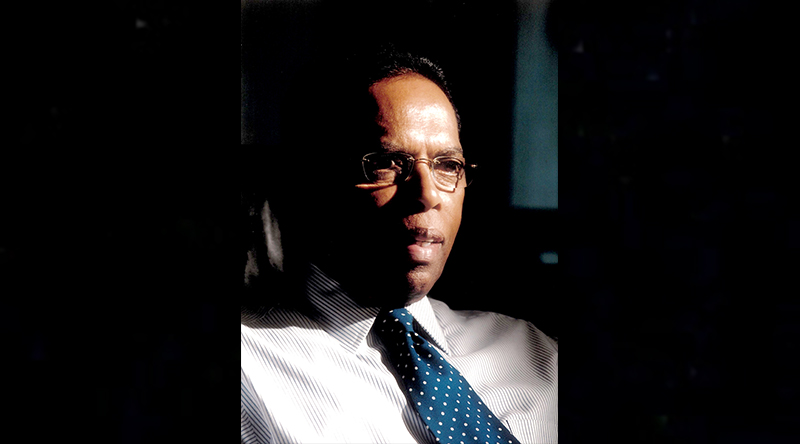
Standout year with international award show wins at LIA, One Asia, Clio, AdFest, Spikes Asia & The Work
Phoenix Ogilvy has been named 2025 Sri Lanka Agency of the Year after topping The Campaign Brief Asia’s Creative Rankings as the most internationally awarded agency in the country, an agency news release said..
The agency’s ranking also marks Sri Lanka’s return to the list in 2025, following the country’s absence from it the previous year.
The Campaign Brief Asia Creative Rankings annually evaluate the top 100 most awarded creative agencies in Asia, based on their achievements across leading international award shows.
The rankings are widely regarded as one of Asia’s most credible measures of creative excellence. Agencies accumulate points purely from award wins across major international creative shows, making it one of the longest-running and most respected benchmarks of creative performance in the region.
Phoenix Ogilvy secured the top spot in the national table, amassing an impressive 295 Creative Ranking points after standout wins across six major international creative award shows, including London International Awards (LIA), One Asia Awards, Clio Awards, AdFest, Spikes Asia, and Campaign Brief’s The Work.
Being ranked at the top not only signals national creative leadership for Phoenix Ogilvy but also exhibits the agency’s talent strength. In a testament to this creative calibre, the agency’s talent dominated the Campaign Brief Asia’s Individual Creative Rankings in Sri Lanka.
Leading this list is Nadeera Warawita with 250 Creative Ranking points, followed by Sakuna Ranasinghe at No. 2 with 220 points, and Samitha Kaushalya at No. 3 with 150 points. Meanwhile ranked jointly at No. 4, are Dilshi Aberaja, Dilshard Ahamed, Harsha Kumara, Kasun Wadumestri, Keshan Silva, and Suresh Kumar. At no. 10 is Dilshi Thathsarani.
Speaking on these achievements, Irvin Weerackody, Chairman of the Ogilvy Group Sri Lanka, said, “Creativity has always been our lifeblood, and it is encouraging to see that commitment recognised on the world stage. The real test of an agency is not the trophies, but the courage to create with integrity, especially today. These achievements not only reflect the capability of our talent, but importantly their discipline, their cultural instinct and their refusal to take the easy way out. I am proud of our teams, who continue to push themselves year after year to raise the bar and uphold the standards we believe in.”
For five decades, Phoenix Ogilvy has been a defining pillar of the country’s marketing landscape and an influential creative powerhouse. From its earliest days, the agency has challenged convention and advocated brave thinking, producing work that commands attention, both locally and internationally.
Renowned as a formidable training ground for Sri Lankan advertising talent, the agency has also played a pivotal role in shaping generations of trailblazing creatives, strategic thinkers, and industry leaders who continue to leave their mark across the region and beyond.
Strengthened by the global Ogilvy network, the agency enjoys a rare blend of global creative rigour and deep local intelligence. Over the years, it has diversified across multiple disciplines and today stands as a talent hub for 290 industry specialists spanning creative, strategy, digital, media, public relations and integrated communications in Sri Lanka.
At its core, the agency remains true to the principles it was built on: that great ideas come from disciplined minds, uncompromising craft, and the refusal to settle for the ordinary.

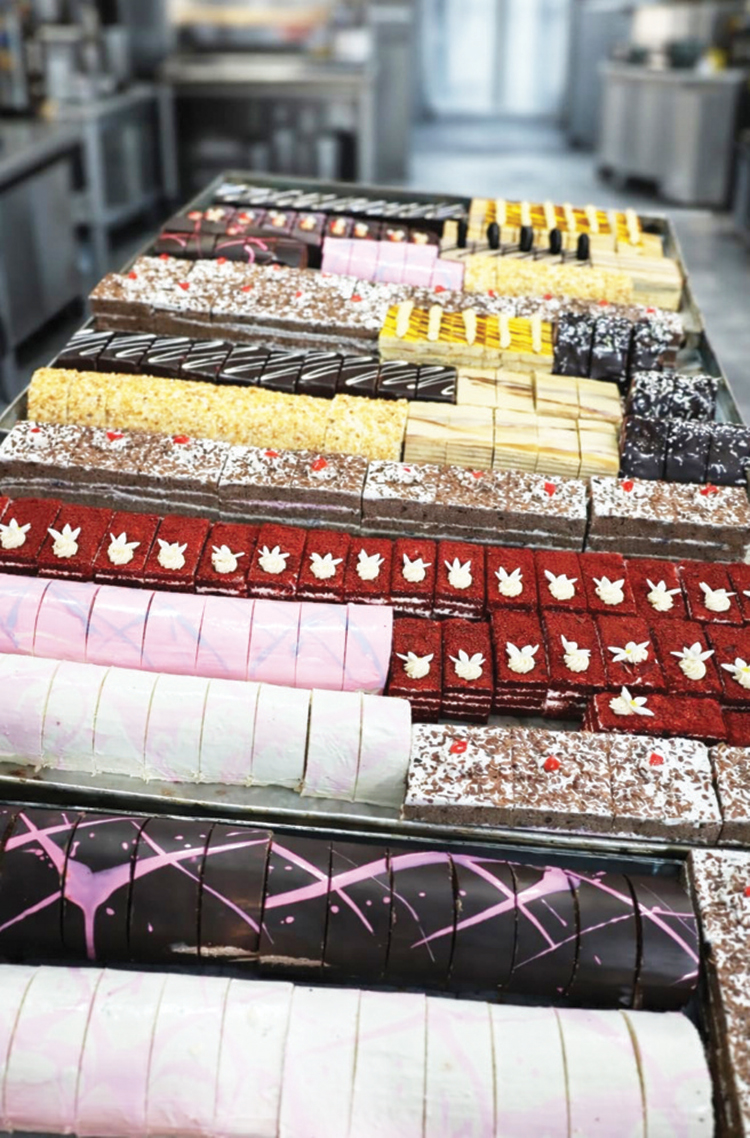
In the intricate world of pastry and bakery arts, R.S. Weerakoon has emerged as a visionary creator, known for his extraordinary ability to transform any concept into a stunning cake masterpiece. Currently serving as the Head Chef (Pastry & Bakery) at the Oak Ray Group in Kandy, Weerakoon’s journey is a blend of local talent and international expertise.
An alumnus of Udispattuwa Maha Vidyalaya, Weerakoon holds an NVQ Level 04 qualification from NAITA and is a distinguished member of the Chefs’ Guild of Sri Lanka. With over 14 years of experience in the industry, including valuable tenures in Kuwait and Oman, he has successfully integrated Middle Eastern culinary trends with local flavors.
One of his most significant contributions to the industry is the introduction of 118 unique products to the Oak Ray Group. Remarkably, all these creations are made without the use of any artificial food colorings, prioritizing the health and well-being of consumers.
Speaking about this talented professional, the Chairman of the Oak Ray Group, Mr. Sujeewa Palliyaguruge, stated that his vision is to provide a creative platform for such skilled young individuals.
“Our goal is to allow talented creators like Weerakoon the freedom to innovate and bring their unique visions to life, which ultimately benefits the entire culinary industry in Sri Lanka,” he said.
Weerakoon’s dedication to natural ingredients and his mastery of cake architecture continue to set new benchmarks for the next generation of chefs in the hill capital.
-
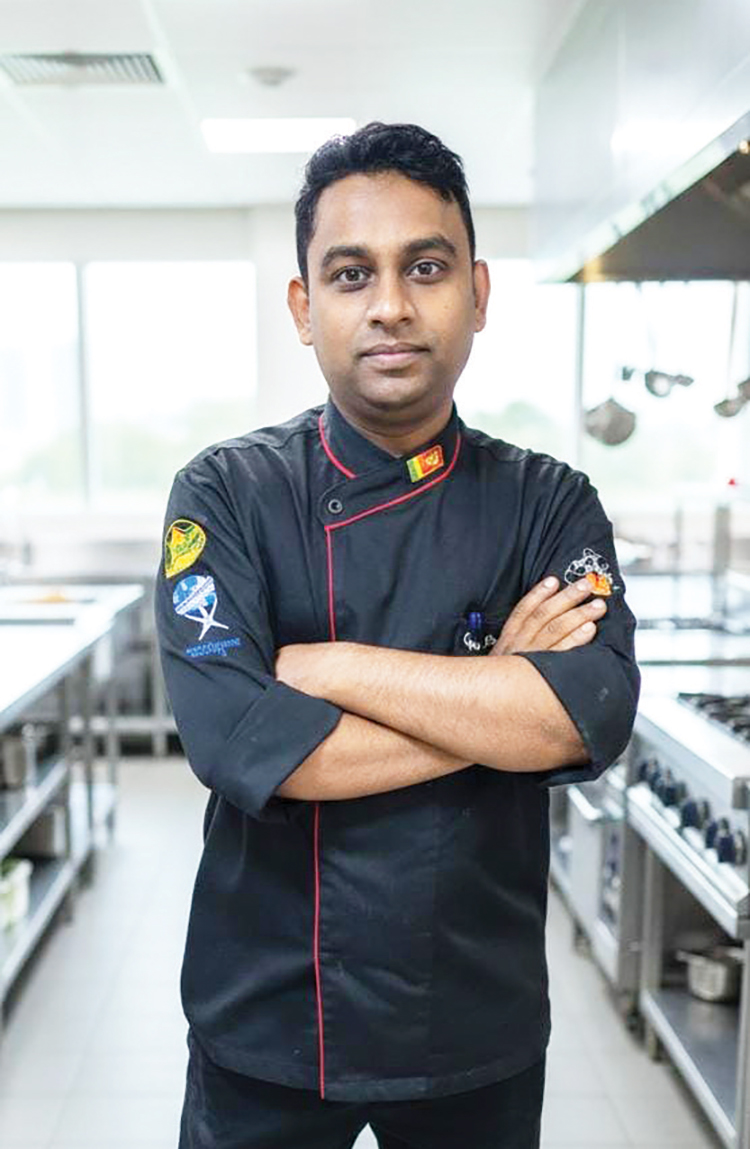
- R.S. Weerakoon
By S.K. Samaranayake
Pix by Razik Jabbar

South Africa go into semis unbeaten despite Raza’s heroics

One killed and 11 injured at Dubai and Abu Dhabi airports as Iran strikes region

Unchanged India opt to bowl; Hosein replaces King for West Indies

Healy plunders 158 off 98 balls in final ODI as Australia secure huge win

Zimbabwe elect to bat

Iran begins 40-day mourning after Khamenei killed in US-Israeli attack

‘Dates have the highest sugar content to fight Coronavirus’

Sunday Island 27 December – Headlines

#SundayIsland 17th December – Headlines

Sunday Island – 28th March

Sunday Island Headlines – 21 March

Sunday Island – 21st February – Headlines
-

 Features7 days ago
LOVEABLE BUT LETHAL: When four-legged stars remind us of a silent killer
-

 Business7 days ago
Bathiya & Santhush make a strategic bet on Colombo
-
 Business7 days ago
Seeing is believing – the silent scale behind SriLankan’s ground operation
-

 Features7 days ago
Protection of Occupants Bill: Good, Bad and Ugly
-

 News6 days ago
Prime Minister Attends the 40th Anniversary of the Sri Lanka Nippon Educational and Cultural Centre
-

 News7 days ago
Coal ash surge at N’cholai power plant raises fresh environmental concerns
-
 Business7 days ago
Huawei unveils Top 10 Smart PV & ESS Trends for 2026
-

 Opinion3 days ago
Jamming and re-setting the world: What is the role of Donald Trump?