
Features
Stop fighting,start loving

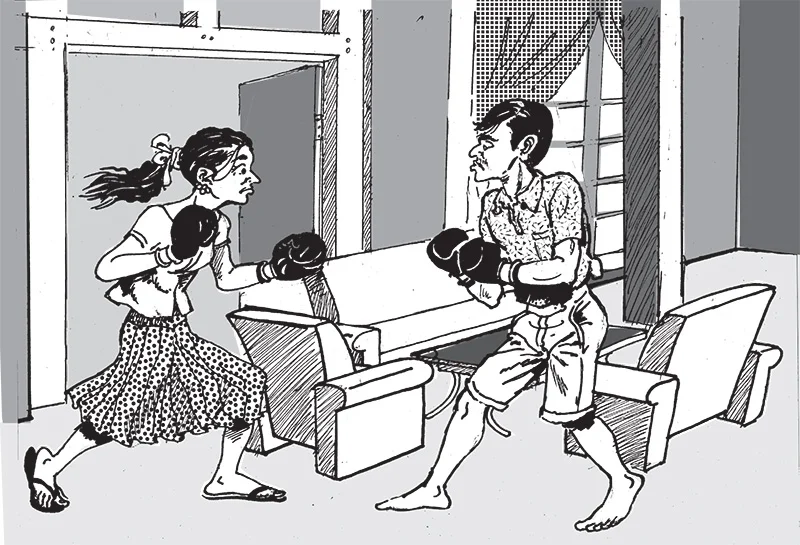
When we are in love we usually do not fight with our partners. After marriage, however, differences emerge and spouses begin to fight. In many marriages spouses keep on arguing about the same issues. Take heart, there are ways to break that vicious cycle and make the husband and wife feel like winners.
Arguments may start over something very trivial. A wife may accuse her husband for always being indecisive and a hopeless spendthrift. The exchange will end up with one spouse leaving the house. After some time, both of them will feel that they had misunderstood each other. You have to consider why you keep getting into the same argument over and over again. Psychologists who study the ways married couples communicate with each other have shed some light on this problem.
In the first place, each spouse gets into arguments in order to save face or safeguard his or her image. Nobody wants to accept defeat. Then the problem begins. Sometimes you know that you are at fault, but you are not willing to accept it. Very often any attack on your self-esteem can be unbearable. Both spouses forget that they had vowed to settle their problems amicably when they got married.
Patterns of conflict
In some families, spouses recycle fights. They tend to read meanings to each other’s charges that may be true or imaginary. Patterns of conflict are rooted in the way you treat your spouse. On the other hand, the real cause of the argument is seldom the discontent. Some couples regularly fight by nagging each other. This has to be avoided.
A wife who knew that her husband was an ardent cricket fan stopped arguing with him when she came to know that he had neglected many social events because of cricket. She also knew that he had very good qualities as a husband. Sometime later the husband too realised that he was neglecting the home front and decided to help his wife. Thereafter their marriage took a different turn.
Among all the communication skills listening is the most basic. It is the easiest to learn and help build trust and respect. On the other hand, if you wish to have a perfect relationship, do not believe in marriage myths. One major myth is that marriage is a meeting of minds. Nobody can understand another person’s mind clearly because we view the world in different ways. Although it is good to respect each other’s views, men and women are wired differently.
Difficult task
Being in love is not like falling in love. When you are in love for some time your intense feelings will undergo drastic changes. When this happens you have to move into the next stage of love by improving your commitment and deepening your affection. This may be a difficult task at the beginning, but it can be done.
However much you love your partner, you cannot solve all the household problems. Marriage is somewhat like running a country. No head of state will be able to solve all the problems of his countrymen. In a marriage we have to accept defeat or sacrifice our beliefs. In this respect healthy couples always agree to disagree.
You cannot avoid bitter arguments in a marriage all the time. In fact, arguments are necessary to release your tension. What is more critical is how you argue. Most couples argue with each other because their daily life is not stimulating enough. Some people believe that spouses argue because they are not sexually satisfied. This is another myth. Sex comprises about 10 per cent of what is important in a marriage. However, if there is no sexual satisfaction, it may turn out to be a big issue. According to psychologists, there should be a sexual bond to make you feel that you are more than friends. You are mates – soul mates!
Exchange compliments
If married couples are constantly fighting, they can focus on what is good. Most couples in troubled relationships notice only the bad things in life. According to a noted marriage counsellor, you should swap compliments for at least five minutes every day. Such a practice will go a long way to strengthen the marriage bond. After marriage do not dig into each other’s past. Past romantic escapades are dead and gone. There is no need to discuss them when you are in a partnership.
While staying in a house as a paying guest, a young man noticed the landlady’s disturbing traits and her persistent criticism of her husband. She apparently loved him but in relationships peevishness often directs itself to what is closest at hand. Her digs included, “Rex, you’re so antisocial. You’re a fixture in front of the idiot box. Sometimes he pretended to ignore her tirades or would growl, “Oh, Mary for God’s sake, cut it out.” One day Mary told her paying guest that her husband never listened to her. Their shouting and arguments continued confirming the old saying, “Conditioned patterns die hard.”
In any relationship the feeling of rejection, of being unaccepted or discarded can be the most painful version of not getting what you want from the other partner. You may be rejected for a variety of reasons. Some rejections are bigger than others. They can range from a simple no to a snub or a betrayal. Psychologists advise people to think of rejection as God’s protection. Try to find the meaning of a rejection in a wider context.
Marital battleground
What really happens in the marital battleground cannot be predicted accurately. Emotional wear and tear in a relationship usually takes its biological toll. Marital conflicts can occur at any stage of the marriage. Daniel Goleman in ‘Social Intelligence’ says that when husbands withdrew in anger during disagreements, wives’ stress hormones zoomed upwards. On the other hand, wives whose husbands displayed kindness and empathy during the disagreement reflected their relief in lower levels of the same hormones. Research suggests that wives are more vulnerable to suffer the health costs of a rocky marriage than their husbands.
Another factor is that wives spend far more time than their husbands ruminating about upsetting encounters. Troubles in a close relationship such as marriage drive adverse biological reactions in wives more strongly than in husbands. Much of the tension in a marriage can be lessened by touching the body of your spouse passionately. When you do so, oxytocin releases making the body to undergo a host of healthy changes. Even your blood pressure will lower as you slide into a relaxed mode of parasympathetic activity.
Although arguments, counter arguments and conflicts are inevitable in any marriage, husbands and wives should be able to cope with them and lead a happy married life.
By R. S. Karunaratne

Features
Ranked 134th in Happiness: Rethinking Sri Lanka’s development through happiness, youth wellbeing and resilience


In recent years, Sri Lanka has experienced a succession of overlapping challenges that have tested its resilience. Cyclone Ditwah struck Sri Lanka in November last year, significantly disrupting the normal lives of its citizens. The infrastructure damage is much more serious than the tsunami. According to World Bank reports and preliminary estimates, the losses amounted to approximately US$ 4.1 billion, nearly 4 per cent of the country’s Gross Domestic Product. Before taking a break from that, the emerging crisis in the Middle East has once again raised concerns about potential economic repercussions. In particular, those already affected by disasters such as Cyclone Ditwah risk falling “from the frying pan into the fire,” facing multiple hardships simultaneously. Currently, we see fuel prices rising, four-day workweeks, a higher cost of living, increased pressure on household incomes, and a reduction in the overall standard of living for ordinary citizens. It would certainly affect people’s happiness. As human beings, we naturally aspire to live happy and fulfilling lives. At a time when the world is increasingly talking about happiness and wellbeing, the World Happiness Report provides a useful way of looking at how countries are doing. The World Happiness Report discusses global well-being and offers strategies to improve it. The report is produced annually with contributions from the University of Oxford’s Wellbeing Research Centre, Gallup, the UN Sustainable Development Solutions Network, and other stakeholders. There are many variables taken into consideration for the index, including the core measure (Cantril Ladder) and six explanatory variables (GDP per Capita ,Social Support,Healthy Life Expectancy,Freedom to Make Life Choices,Generosity,Perceptions of Corruption), with a final comparison.
According to the recently published World Happiness Report 2026, Sri Lanka ranks 134th out of 147 nations. As per the report, this is the first time that Sri Lanka has suffered such a decline. Sri Lanka currently trails behind most of its South Asian neighbours in the happiness index. The World Happiness Report 2026 attributes Sri Lanka’s low ranking (134th) to a combination of persistent economic struggles, social challenges, and modern pressures on younger generations. The 2026 report specifically noted that excessive social media use is a growing factor contributing to declining life satisfaction among young people globally, including in Sri Lanka. This calls for greater vigilance and careful reflection. These concerns should be examined alongside key observations, particularly in the context of education reforms in Sri Lanka, which must look beyond their immediate scope and engage more meaningfully with the country’s future.
In recent years, a series of events has triggered political upheaval in countries such as Nepal, characterised by widespread protests, government collapse, and the emergence of interim administration. Most reports and news outlets described this as “Gen Z protests.” First, we need to understand what Generation Z is and its key attributes. Born between 1997 and 2012, Generation Z represents the first truly “digital native” generation—raised not just with the internet, but immersed in it. Their lives revolve around digital ecosystems: TikTok sets cultural trends, Instagram fuels discovery, YouTube delivers learning, and WhatsApp sustains peer communities. This constant, feed-driven engagement shapes not only how they consume content but how they think, act, and spend. Tech-savvy and socially aware, Gen Z holds brands to a higher standard. For them, authenticity, transparency, and accountability—especially on environmental and ethical issues—aren’t marketing tools; they’re baseline expectations. We can also observe instances of them becoming unnecessarily arrogant in making quick decisions and becoming tools of some harmful anti-social ideological groups. However, we must understand that any generation should have proper education about certain aspects of the normal world, such as respecting others, listening to others, and living well. More interestingly, a global survey by the McKinsey Health Institute, covering 42,083 people across 26 countries, finds that Gen Z reports poorer mental health than older cohorts and is more likely to perceive social media as harmful.
Youth health behaviour in Sri Lanka reveals growing concerns in mental health and wellbeing. Around 18% of youth (here, school-going adolescents aged 13-17) experience depression, 22.4% feel lonely, and 11.9% struggle with sleep due to worry, with issues rising alongside digital exposure. Suicide-related risks are significant, with notable proportions reporting thoughts, plans, and attempts, particularly among females. Bullying remains a significant concern, particularly among males, with cyberbullying emerging as a notable issue. At the same time, substance use is increasing, including tobacco, smokeless tobacco, and e-cigarettes. These trends highlight the urgent need for targeted interventions to support youth mental health, resilience, and healthier behavioural outcomes in Sri Lanka. We need to create a forum in Sri Lanka to keep young people informed about this. Sri Lanka can designate a date (like April 25th) as a National Youth Empowerment Day to strengthen youth mental health and suicide prevention efforts. This should be supported by a comprehensive, multi-sectoral strategy aligned with basic global guidelines. Key priorities include school-based emotional learning, counselling services, and mental health training for teachers and parents. Strengthening data systems, reducing access to harmful means, and promoting responsible media reporting are essential. Empowering families and communities through awareness and digital tools will ensure this day becomes a meaningful national call to action.
As discussed earlier, Sri Lanka must carefully understand and respond to the challenges arising from its ongoing changes. Sri Lanka should establish an immediate task force comprising responsible stakeholders to engage in discussions on ongoing concerns. Recognising that it is not a comprehensive solution, the World Happiness Index can nevertheless act as an important indicator in guiding a paradigm shift in how we approach education and economic development. For a country seeking to reposition itself globally, Sri Lanka must adopt stronger, more effective strategies across multiple sectors. Building a resilient and prosperous future requires sound policymaking and clear strategic direction.
(The writer is a Professor in Management Studies at the Open University of Sri Lanka. You can reach Professor Abeysekera via nabey@ou.ac.lk)
by Prof. Nalin Abeysekera
Features
Hidden diversity in Sri Lanka’s killifish revealed: New study reshapes understanding of island’s freshwater biodiversity
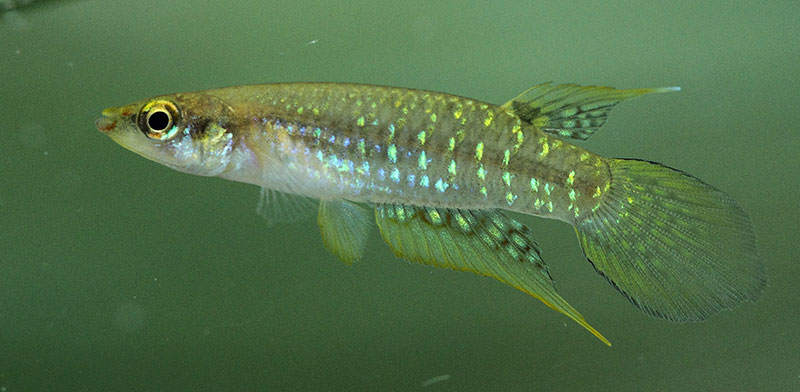
A groundbreaking new study led by an international team of scientists, including Sri Lankan researcher Tharindu Ranasinghe, has uncovered striking genetic distinctions in two closely related killifish species—reshaping long-standing assumptions about freshwater biodiversity shared between Sri Lanka and India.
Published recently in Zootaxa, the research brings together leading ichthyologists such as Hiranya Sudasinghe, Madhava Meegaskumbura, Neelesh Dahanukar and Rajeev Raghavan, alongside other regional experts, highlighting a growing South Asian collaboration in biodiversity science.
For decades, scientists debated whether Aplocheilus blockii and Aplocheilus parvus were in fact the same species. But the new genetic analysis confirms they are “distinct, reciprocally monophyletic sister species,” providing long-awaited clarity to their taxonomic identity.
Speaking to The Island, Ranasinghe said the findings underscore the hidden complexity of Sri Lanka’s freshwater ecosystems.
“What appears superficially similar can be genetically very different,” he noted. “Our study shows that even widespread, common-looking species can hold deep evolutionary histories that we are only now beginning to understand.”
A tale of two fishes
The study reveals that Aplocheilus blockii is restricted to peninsular India, while Aplocheilus parvus occurs both in southern India and across Sri Lanka’s lowland wetlands.
Despite their close relationship, the two species show clear genetic separation, with a measurable “genetic gap” distinguishing them. Subtle physical differences—such as the pattern of iridescent scales—also help scientists tell them apart.
Co-author Sudasinghe, who has led several landmark studies on Sri Lankan freshwater fishes, noted that such integrative approaches combining genetics and morphology are redefining taxonomy in the region.
Echoes of ancient land bridges
The findings also shed light on the ancient biogeographic links between Sri Lanka and India.
Scientists believe that during periods of low sea levels in the past, the two landmasses were connected by the now-submerged Palk Isthmus, allowing freshwater species to move between them.
Later, rising seas severed this connection, isolating populations and driving genetic divergence.
“These fishes likely dispersed between India and Sri Lanka when the land bridge existed,” Ranasinghe said. “Subsequent isolation has resulted in the patterns of genetic structure we see today.”
Meegaskumbura emphasised that such patterns are increasingly being observed across multiple freshwater fish groups in Sri Lanka, pointing to a shared evolutionary history shaped by geography and climate.
A deeper genetic divide
One of the study’s most striking findings is that Sri Lankan populations of A. parvus are genetically distinct from those in India, with no shared haplotypes between the two regions.
Dahanukar explained that this level of differentiation, despite relatively recent geological separation, highlights how quickly freshwater species can diverge when isolated.
Meanwhile, Raghavan pointed out that these findings reinforce the importance of conserving habitats across both countries, as each region harbours unique genetic diversity.
Implications for conservation
The study carries important implications for conservation, particularly in a country like Sri Lanka where freshwater ecosystems are under increasing pressure from development, pollution, and climate change.
Ranasinghe stressed that understanding genetic diversity is key to protecting species effectively.
“If we treat all populations as identical, we risk losing unique genetic lineages,” he warned. “Conservation planning must recognise these hidden differences.”
Sri Lanka is already recognised as a global biodiversity hotspot, but studies like this suggest that its biological richness may be even greater than previously thought.
A broader scientific shift
The research also contributes to a growing body of work by scientists such as Sudasinghe and Meegaskumbura, challenging traditional assumptions about species distributions in the region.
Earlier studies often assumed that many freshwater fish species were shared uniformly between India and Sri Lanka. However, modern genetic tools are revealing a far more complex picture—one shaped by ancient geography, climatic shifts, and evolutionary processes.
“We are moving from a simplistic view of biodiversity to a much more nuanced understanding,” Ranasinghe said. “And Sri Lanka is proving to be a fascinating natural laboratory for this kind of research.”
Looking ahead
The researchers emphasise that much remains to be explored, with several freshwater fish groups in Sri Lanka still poorly understood at the genetic level.
For Sri Lanka, the message is clear: beneath its rivers, tanks, and wetlands lies a largely untapped reservoir of evolutionary history.
As Ranasinghe puts it:
“Every stream could hold a story of millions of years in the making. We are only just beginning to read them.”
By Ifham Nizam
Features
A nation that forgets its past risks losing its future: Why Sri Lanka must teach its history
History as the Foundation of National Identity and Citizenship
A nation’s future is shaped not only by its economic policies or technological progress, but by the historical consciousness of its people—especially its younger generation. Education is the most powerful means through which a society transmits its collective memory, values, and sense of purpose. Within this process, history occupies a singular and irreplaceable role. It is history that tells a child who they are, where they come from, what their forebears endured, and what responsibilities they inherit as citizens.
For Sri Lanka—a country blessed with a documented and continuous history spanning over 2,500 years—the teaching of national history to schoolchildren is not merely an academic exercise. It is a strategic national investment. Yet, alarmingly, despite this unparalleled historical inheritance, there is a perceptible weakening of patriotism, national pride, and collective consciousness among sections of the present generation. This is not without consequence. A generation disconnected from its history becomes vulnerable to confusion, fragmentation, and external manipulation.
Childhood and adolescence are formative periods during which identity, values, and attitudes toward society take shape. If historical awareness is absent at this stage, it is rarely acquired later with depth or conviction. Teaching history to schoolchildren instils a sense of belonging to something larger than oneself, respect for sacrifice and sovereignty, moral clarity drawn from past struggles, and critical thinking through an understanding of cause and consequence. More importantly, history teaches that the freedoms and institutions children inherit were hard-won, not accidental. When young minds fail to grasp this truth, complacency sets in—and complacency is the precursor to national decline.
History must therefore be taught purposefully, rigorously, and meaningfully in schools—not to glorify the past uncritically, but to draw inspiration, wisdom, and cautionary lessons essential for building a confident nation: cohesive, inclusive, multi-faith, multilingual, multicultural, multi-ethnic, and resilient—above all, united.
Global Lessons: How Nations Have Used History to Build Unity and Strength
World history is replete with compelling examples that demonstrate how national consciousness and patriotism, cultivated through shared historical understanding, have served as decisive forces in nation-building and national development.
Post-apartheid South Africa stands as a powerful illustration. The nation’s transition from institutionalised racial division to a democratic state was made possible not merely through political negotiation, but through a deliberate engagement with history—acknowledging injustice, honouring struggle, and forging a collective identity that transcended past divisions and oppression.
Similarly, the Indian Independence Movement, led by figures such as Mahatma Gandhi and Jawaharlal Nehru, was sustained by a deep awareness of India’s civilisational past and moral traditions. Recent archaeological discoveries and carbon dating of sites such as Keeladi and Korkai in Tamil Nadu further reinforce pride in India’s ancient civilisation. History served as both inspiration and guide, enabling millions to unite across linguistic, religious, and regional differences in pursuit of freedom.
Post–World War II Germany embraced universal franchise and equality for all citizens regardless of race, religion, or ethnicity. Inclusive values were taught from early childhood through schools. Historical accounts were utilised as anchors to build a more just society, supported by law and institutions. National consciousness evolved around equality, responsibility, and accountability.
In post–World War II Japan, history informed national policy in order to become a peaceful and prosperous nation. Excessive military expenditure was redirected toward education, public health, innovation, and industrial development. Traditional values were integrated into collaborative work ethics and modernisation efforts. Learning from historical failure enabled Japan to transition from concentrated family control of the economy to a more democratic capitalist system.
In many advanced nations today, history occupies a central place in school curricula. In the United Kingdom, British history is compulsory at key stages of education to instil civic responsibility and national awareness. The errors and horrors of colonialism are openly discussed in classrooms to discourage exploitation and human injustice. In France, national history is inseparable from citizenship education and republican values. The lessons of tyranny and the dividends of liberty remain central to French historical consciousness.
China invests heavily in historical education to reinforce continuity, unity, and national purpose. These countries recognise that history is not merely about the past; it is about shaping informed, disciplined, and socially responsible citizens for the future.
Singapore and Switzerland also learned carefully from history. Singapore adopted English as a common language while recognising Malay, Mandarin, and Tamil as official languages to bridge ethnic diversity. Switzerland enshrined four national languages—German, French, Italian, and Romansh—within its legal system, ensuring equality and coexistence. In both countries, historical lessons shaped national cohesion and governance. Sri Lanka’s experience is no less deserving of such seriousness and commitment. The nation can learn not only from its own past but also from the histories of others.
Sri Lanka’s Civilisational Legacy: Wisdom in Governance, Public Purpose, and Sustainability
Sri Lanka’s history is not a footnote in world civilisation; it is a chapter of enduring relevance and exemplary governance. From Anuradhapura to Polonnaruwa, the island nurtured a civilisation marked by administrative sophistication, ethical leadership, and ecological intelligence.
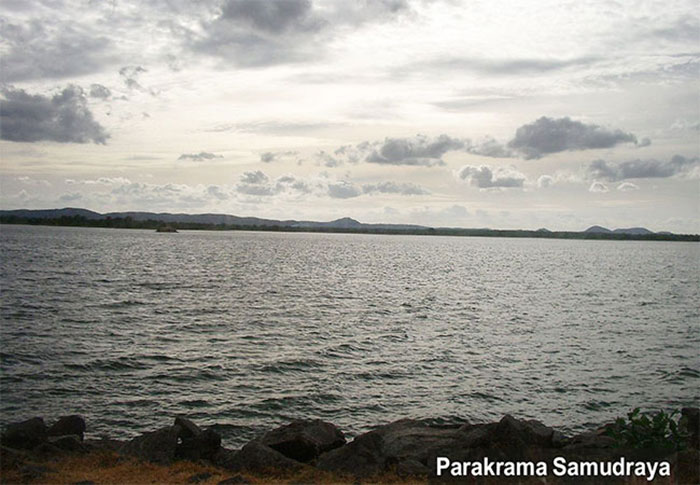
The hydraulic civilisation of Sri Lanka remains one of the most remarkable achievements of the ancient world. Kings such as Dhatusena, builder of the Kala Wewa, understood water not merely as a resource but as a public trust essential for survival and prosperity. His works laid the foundation for centuries of agricultural stability and abundance of drinking water.
This tradition reached its zenith under King Parakramabahu the Great, whose famous adage—“Let not even a drop of water flow into the ocean without being made useful for the benefit of all on Earth”—encapsulates a philosophy of sustainable development that modern societies are only now rediscovering. Teaching such history instils pride in indigenous knowledge systems and counters the notion that wisdom must always come from elsewhere.
Sri Lanka’s past also offers enduring lessons in leadership and justice. King Dutugemunu symbolises unity, courage, and devotion to the nation. His respect for King Elara—an adversary remembered for unwavering justice, even toward animals—demonstrates that ethical governance and rule of law are deeply rooted in Sri Lanka’s historical identity.
Sri Lanka also pioneered public healthcare. King Pandukabhaya established the first known hospital in the 4th century BCE and introduced the concept of a “clean city.” King Buddhadasa, the physician-king of the 3rd century CE, advanced surgery and specialised care. Sri Lankan kings invited medical practitioners from abroad, including Greco-Arab Unani traditions, showing early international collaboration.
Through such narratives, children encounter models of principled leadership, ethical governance, and social responsibility—qualities vital for future citizens and leaders.
Moral Traditions, Freedom Struggles, and the Shaping of National Values
The arrival of Buddhism in the third century BCE through Arahant Mahinda Thero marked a civilisational transformation. Buddhism shaped governance, education, conflict resolution, and social harmony, nurturing values of compassion, tolerance, and moderation essential for a plural society.
Sri Lanka’s resistance to colonial domination forms another defining chapter. Madduma Bandara, Weera Keppetipola, Wariyapola Sri Sumangala Thero, and even a Muslim woman from Uva Paranagama who sacrificed her life protecting King Rajasingha II exemplified extraordinary courage and patriotism.
Teaching these stories ensures that independence is understood not as a gift but as an achievement forged through suffering and resolve. A generation ignorant of these lessons and struggles risks undervaluing the freedom; and may fail to defend it.
The Dangers of Historical Amnesia in a Globalised World
A bitter quarter-century of ethnic conflict taught Sri Lanka the importance of peace, inclusiveness, empathy, and unity as children of one Mother Lanka.
The 2004 tsunami united all communities in collective recovery. The same spirit was witnessed during recent natural disasters. Such experiences demonstrate resilience, social capital, and compassion—lessons invaluable for shaping emotionally mature and socially responsible citizens.
The absence of historical awareness has far-reaching and potentially disastrous consequences. A society disconnected from its past becomes vulnerable to distorted narratives, erosion of values, and weakening national cohesion. In a globalised world saturated with external influences, history education serves as both a formative and protective force. Teaching history in Sri Lankan schools is therefore not optional — it is urgent and indispensable. History shapes identity; identity shapes values; and values shape national destiny.
Concluding Reflection
History is not merely a subject of the past; it is the conscience of a nation and the compass of its future. A people who forget their story will soon lose their direction. Sri Lanka stands today at a decisive moment when global forces, cultural erosion, and historical amnesia threaten to weaken the foundations of national unity and identity. To teach our children their history is therefore not an academic luxury but a patriotic duty. It is through history that young minds learn the meaning of sacrifice, the value of freedom, and the responsibility of citizenship. If we fail in this duty, we risk raising a generation unanchored to its roots and indifferent to its destiny. But if history is taught with honesty, depth, and pride, we shall nurture citizens who are resilient in crisis, ethical in conduct, and steadfast in their love for the nation. The classroom thus becomes the first line of defence of sovereignty and values.
History must be taught, treasured, and transmitted to safeguard our heritage of Metta, Karuna, Muditha, and Upekkha, and to build a flourishing Sri Lanka that is united and inclusive of all its citizens irrespective of caste, creed, ethnicity, religion, language, or political ideology. To safeguard Sri Lanka’s future, we must first safeguard its memory—by ensuring that history is preserved and passed on to every child as the living inheritance of a proud and enduring civilisation.
by Emeritus Professor Ranjith Senaratne
Former Vice-Chancellor, University of Ruhuna and former Chairman, National Science Foundation
AND Naushard Cader, Chartered Accountant
Former Co-Chairman, Harvard University Alumni Association – Continuing Education Committee

John Keells Foundation marks its 21st anniversary with a redesigned website and new Volunteer App

Sun overhead until 15 April; heat index to reach caution level

Dhaka releases six Lankan fishermen in goodwill gesture

Preparations underway for Nuwara Eliya Spring Festival

Ranked 134th in Happiness: Rethinking Sri Lanka’s development through happiness, youth wellbeing and resilience

Pathfinder Foundation and JAIN University jointly organised the International Roundtable on Migration in Bangalore

‘Dates have the highest sugar content to fight Coronavirus’

Sunday Island 27 December – Headlines

#SundayIsland 17th December – Headlines

Sunday Island – 28th March

Sunday Island Headlines – 21 March

Sunday Island – 21st February – Headlines
-

 News4 days ago
2025 GCE AL: 62% qualify for Uni entrance; results of 111 suspended
-

 News6 days ago
Tariff shock from 01 April as power costs climb across the board
-

 News7 days ago
Inquiry into female employee’s complaint: Retired HC Judge’s recommendations ignored
-

 Business5 days ago
Hour of reckoning comes for SL’s power sector
-

 Features7 days ago
New arithmetic of conflict: How the drone revolution is inverting economics of war
-

 Editorial4 days ago
Search for Easter Sunday terror mastermind
-

 Features6 days ago
Seychelles … here we come
-

 Opinion6 days ago
Sri Lanka has policy, but where is the data?