
Editorial
When docs down stethoscopes

Saturday 24th Junuary, 2026
Doctors launched a 48-hour token strike yesterday in protest against what they have described as the government’s failure to implement a six-point agreement reached between the Government Medical Officers’ Association (GMOA) and the Ministry of Health. They are demanding that their allowances be increased and a separate service minute be introduced for the state sector doctors, among other things. The government has claimed that the doctors’ demands are unreasonable, and the strike did not cripple the state health institutions. It is sounding just like its predecessors.
The government is either misinformed or believing in its own propaganda lies. Doctors’ strikes always have a crippling impact on the state-run hospitals and cause unbearable suffering to patients who are dependent on free healthcare. The government should stop making false claims, and face reality.
Ideally, doctors should not strike at the expense of the sick, but there arise situations where they are compelled to flex their trade unions muscles to jolt governments into heeding their grievances. The incumbent government led by the JVP, which used strikes as part of its strategy to capture state power, has failed to be different from the previous administrations which mismanaged labour issues and provoked workers into trade union action, causing much inconvenience to the public. State workers and their trade unions backed the JVP-led NPP to the hilt, enabling its meteoric rise to power, and after winning the 2024 general election, the NPP declared that there would be no need for strikes thereafter because the new government would resolve all trade union disputes amicably without leaving any room for work stoppages. That pledge has gone unfulfilled.
Opinion may be divided on the striking doctors’ demands, but if the government has agreed to grant them, it must fulfil its pledge or have another round of negotiations and arrive at a compromise formula. It will be a mistake for the government to play a game of chicken with the GMOA or try to intimidate doctors with the help of its propaganda hitmen and front activists who stage protests against strikers, posing as patients and concerned citizens and calling for action to crush trade union struggles. Such tactics are counterproductive.
The warring doctors must also be flexible. Although the government, in its wisdom, has boasted that the state coffers are overflowing and it is free from pecuniary woes due to its proper economic management and its successful battle against corruption, the economic situation is not that rosy. Recent natural disasters have taken a heavy toll on the economy, and rebuilding and relief programmes will cost a great deal of state funds. So, the GMOA should factor in this harsh reality and act accordingly for the sake of the ordinary people who cannot afford to pay for healthcare. It is the interests of the public that must prevail.
The GMOA has threatened to stage a continuous strike unless the government grants its demands without delay. If the history of health sector strikes is anything to go by, the doctors are very likely to carry out their threat. The government should stop letting the grass grow under its feet and bring the GMOA to the negotiating table, and have a serious discussion. An assurance from President Anura Kumara Dissanayake himself that the government’s promises to the doctors will not go unfulfilled may help defuse tension and prevent a crippling health sector strike. A confrontational approach is bound to aggravate the situation.



Monday 27th April, 2026
US President Donald Trump would have the world believe that Saturday evening’s shooting incident during the annual White House Correspondents’ dinner, at the Washington Hilton, was part of a plot to assassinate him. The event had just got underway when shots were heard in a lobby adjoining the ballroom. President Trump, his wife, Vice President J. D. Vance and other government politicians were rushed off the stage unhurt and escorted out of the hotel. Others ran for cover. Fortunately, no one was hurt. The gunman was arrested and identified as Tomas Allen, a 31-year-old from California.
President Trump lost no time in taking to Truth Social, calling the assailant a ‘very sick person’. One cannot but agree with him on this score. Nobody in his proper senses would ever have sought to harm a group of unarmed persons or penetrate a thick security cordon, carrying only a gun and knives, to assassinate the President of the United States. Just like the Californian man now in custody, those who carry out assassinations or order them are ‘very sick people’.
Ironically, President Trump, who ran away on Saturday, fearing a gunman, never misses an opportunity to brag that he had a foreign leader assassinated—Ayatollah Ali Khamenei of Iran. It is ‘very sick people’ who have civilian centres, especially hospitals and schools, bombed in the name of war. During the opening hours of the US-Israeli attacks on Iran, on 28 February, a missile struck a girls’ school, killing more than 170 people, most of whom were schoolgirls. There are also videos of brave Iranian doctors and nurses risking their lives to save babies in neonatal intensive care units during airstrikes on hospitals. Only ‘very sick people’ order such attacks, and try to justify them.
President Trump has said that on Saturday evening the assailant was taken down by “brave” Secret Service members, confirming that one officer was shot from a “very close” distance with a “very powerful” gun, but was saved by his bulletproof vest. Thankfully, the incident ended without bloodshed, and the Secret Service members no doubt acted bravely. But there was a serious lapse on their part; the gunman gained access to the Hilton lobby, without being detected, like in a Hollywood political action thriller.
Answering a question about why some people hoped to take his life, President Trump told the media at the White House that while he did not want to say he felt “honored” by having his life threatened, he knew people did not go after those who sat around and did nothing. He added that America was a strong country that was no longer the “laughing stock” of the world. Thus, he has tried to use Saturday’s shooting incident to boost his image, with the midterm elections drawing nearer.
Trump survived an assassination attempt during his re-election campaign in 2024, and that incident stood him in good stead; he made the most of the bullet that grazed his right ear to gain political mileage. Theatrics and rhetoric help gain popular support to win elections. Saturday’s shooting incident also seems to have benefited Trump politically, for it eclipsed a protest by those seeking justice for the victims of the Epstein sex scandal and legal action against all paedophiles who were in league with Epstein. The protesters were projecting images of Trump with Jeffrey Epstein onto the Washington Hilton, when the evening was shattered by gunfire. But for that incident, the protest and the images projected on the hotel would have received much publicity in the US and across the world. Today, the media is full of reports on the shooting incident and Trump’s braggadocio at a subsequent media briefing.
However, the Epstein files will not go away. Conflict in West Asia and promises to make America great again will not help make the damning files disappear. They will continue to dog Trump and there will be no escape for him.

Corruption scandals and blunders of successive governments have bled the state coffers for decades. The Treasury has lost USD 2.5 million again owing to a compromised payment process, and its bigwigs and their political masters are all out to muddy the water. The Opposition is out for their scalps. It never rains but it pours. Scandals have been cropping up in quick succession under the current dispensation.
The JVP-NPP government is in the same predicament as a cantankerous, all-knowing backseat driver suddenly thrust behind the wheel on a treacherous road. Having talked the talk, it now has to walk the walk. Less than two years into office, it has many problems to contend with. The last few weeks have been particularly bad. It must be a fate worse than death for the JVP/NPP leaders, who came to power, condemning previous governments and promising good governance, to be accused of corruption by their political opponents who are known to be utterly corrupt.
The government was reeling from a coal procurement scam that led to the resignation of Energy Minister Kumara Jayakody and Energy Ministry Secretary Udayanga Hemapala, when an NPP propaganda stunt, aimed at boosting the images of the President and the Prime Minister as simple leaders, backfired, with a minister’s palatial house and unexplained assets coming to light. It has now been revealed that the JVP leaders who claimed that their lot was no better than that of the ordinary people are politicians of substantial means. Then, HSBC CEO Georges Elhedery dropped a bombshell. He revealed that Sri Lanka had paid the highest premium for oil in the world, recently. The government had to admit that it purchased diesel at USD 286 a barrel, to replenish stocks, thereby admitting, albeit unwittingly, that the substandard coal imports had led to a shortfall in electricity generation at Norochcholai, and diesel had to be imported at exorbitant prices to keep oil-fired power plants running to prevent power cuts. Now, it is under fire over the transfer of USD 2.5 million from the Treasury to a fake account.
The government has attributed the misdirected Treasury payment to a hacking scheme. But cyber security experts have dismissed this claim as a tall tale. The diversion at issue could not be a simple “hack” and it was rather a case of a compromised payment process, where weak verification layers, email-based instructions, and insufficient system segregation left room for fraud, a fintech expert has told The Island. The government has a penchant for obfuscating issues, but in doing so it only makes matters worse for itself. There is no way it can justify the inordinate delay in reporting the Treasury fraud to the police.
Treasury Chief Dr. Harshana Suriyapperuma has claimed that the government kept the payment scandal under wraps lest the hackers should cover their tracks. The government seems to have a very low opinion of the intelligence of the public. Cyber criminals wipe out all traces of their illegal operations immediately after committing an offence, as is public knowledge. The government should have called in the CID immediately after realising that a misdirected payment had been made and maintained transparency in investigations. Instead, it ordered an internal inquiry. It is only natural that pressure is mounting on the Treasury Chief to step down. Fund transfers go through a layered authorisation process at the Treasury, and a few junior officials must not be scapegoated for the loss at issue. All senior officials who authorised the misdirected payment must be brought to book.
President Anura Kumara Dissanayake, who is also the Minister of Finance, claims to have information about all illegal transactions carried out by his predecessors, but he could not prevent a fraud in the Treasury under him.
It is doubtful that the government has taken cyber security seriously. It seems to think the task of preventing cybercrimes is as easy as carrying out social media attacks on its political opponents. The Opposition claims that the Treasury has suffered a huge loss because the officials who handled the fund transfers are not experienced and competent enough to perform such tasks. This allegation must not go uninvestigated. It is imperative that Parliament conduct a special probe into the Treasury fraud, and open it to the media. The public has a right to know what happened to their money, how the fraud happened, who is actually responsible, and what action will be taken to ensure the safety of state funds. It is hoped that President Anura Kumara Dissanayake will not appoint a presidential commission to investigate all misdirected payments by state institutions since Independence.
Saturday 25th April, 2026
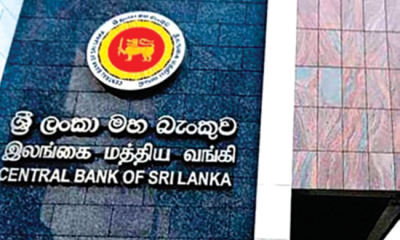
Another scandal has come to light and made international headlines. The illegal diversion of Treasury funds amounting to USD 2.5 million, meant for bilateral debt repayment to Australia, to a third party, could not have come at a worse time. It has happened close on the heels of the launch of the National QR Payment Adoption Programme to transform Sri Lanka into a cash-lite economy. Although the two payment systems are vastly different, and risks are much lower where the QR-based payment is concerned, the fraudulent diversion of Treasury funds is likely to erode public confidence in online fund transfers, if posts being shared via social media are any indication. The digital payment scheme is the way forward for the country, and it behoves the government to take action to clear doubts being created in the minds of the public. A misinformation campaign is already underway, and it needs to be countered.
Opposition Leader Sajith Premadasa has accused government politicians of making contradictory statements about the theft of Treasury funds. As he has rightly pointed out, it is clear from their claims that the government is still at sea, and instead of getting to the bottom of the fraud, it is trying to manage the political fallout from the incident. Some of them have even gone to the extent of bashing the Opposition. They ought to study the issue properly and speak with one voice. One need not be surprised even if the government propagandists concoct a conspiracy theory that the political rivals of the JVP/NPP masterminded the diversion of Treasury funds.
What one gathers from the government politicians’ different claims is that cyber criminals gained unauthorised access to the computer system of the External Resources Department (ERD) within the Finance Ministry through emails. They altered payment instructions, redirecting the funds to unauthorised accounts. There has been no system level hacking, according to cyber security experts. It defies comprehension why the ERD officials have not been trained to handle situations of this nature, which are not uncommon in the digital space. Even ordinary people double-check account details before transferring funds. A telephone call to the Australian creditor that was to receive funds from the Sri Lanka Treasury would have helped save USD 2.5 million.
The Opposition politicians are no better. They are also making various claims that are contradictory, and some of them have betrayed their ignorance of the issue. Most of them do not seem to know the difference between the functions of the Treasury and those of the Central Bank. They are only making the public even more confused by expressing opinions and making allegations to gain political mileage. Among them are lawmakers. They ought to be educated on the duties and functions of the Finance Ministry/Treasury and the Central Bank. What they will come out with in case of a parliamentary debate being held on the Treasury payment scam is anyone’s guess.
What needs to be done now is to ensure that the illegal fund diversion is probed thoroughly and the stolen money recovered forthwith while action is taken to prevent the repetition of such incidents. Political battles will not serve the country’s interests.

Police officers donate LKR 9,687,462 from day’s salary to ‘Rebuilding Sri Lanka’ Fund

Iran’s top diplomat in Russia as Tehran intensifies efforts to end the war

Rinku, Narine win Kolkata Knight Riders error-strewn Super Over game

Rabada and Sudharsan crush Chennai Super Kings

Showers or thundershowers will occur at several places in most parts of the island after 1.00 pm

Heat Index at Caution Level in the Northern, North-central, North-western, Western, Sabaragamuwa, Southern, and Eastern provinces and in Monaragala district during the day time

‘Dates have the highest sugar content to fight Coronavirus’

Sunday Island 27 December – Headlines

#SundayIsland 17th December – Headlines

Sunday Island – 28th March

Sunday Island Headlines – 21 March

Sunday Island – 21st February – Headlines
-
 News7 days ago
Rs 13 bn NDB fraud: Int’l forensic audit ordered
-

 News5 days ago
Lanka faces crisis of conscience over fate of animals: Call for compassion, law reform, and ethical responsibility
-
 News4 days ago
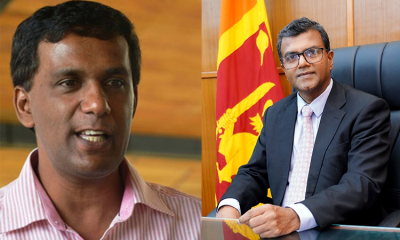
Whistleblowers ask Treasury Chief to resign over theft of USD 2.5 mn
-

 News4 days ago
No cyber hack: Fintech expert exposes shocking legacy flaws that led to $2.5 million theft
-

 News17 hours ago
BIA drug bust: 25 monks including three masterminds arrested
-

 News5 days ago
USD 2 mn bribe: CID ordered to arrest Shasheendra R, warrant issued against ex-SriLankan CEO’s wife
-

 Business2 days ago
Nestlé Lanka Announces Change in Leadership
-
 News2 days ago
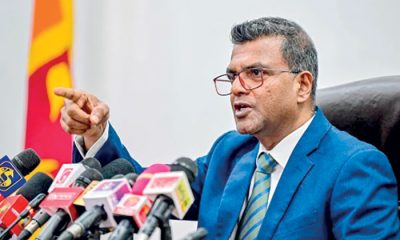
Hackers steal $3.2 Mn from Finance Ministry