
Latest News
U – 19 World Cup: Why a slow chase was better than a fast one for Pakistan against Zimbabwe

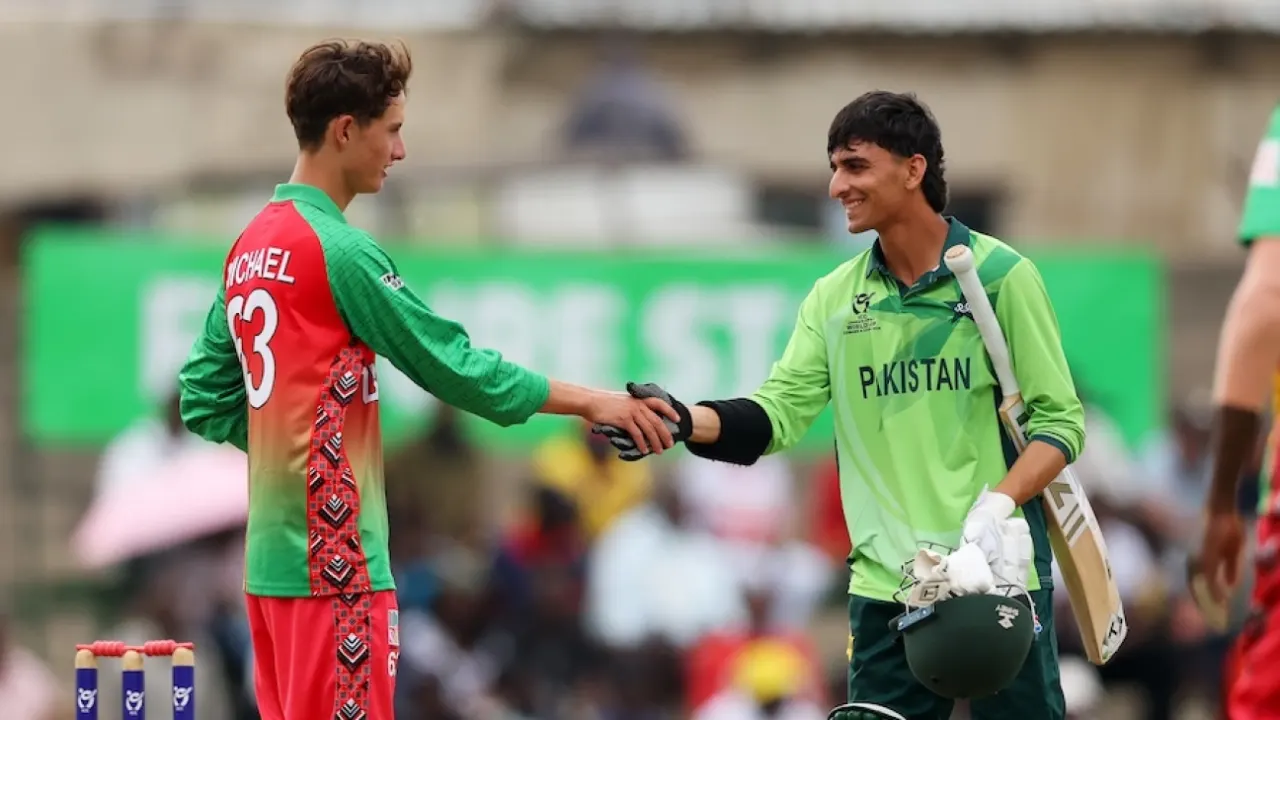
Pakistan beat Zimbabwe in their final group game of the 2026 Under 19World Cup in Harare, but did so in a manner that also endured Zimbabwe’s qualification to the Super Six, taking advantage of the tournament rules to give themselves the best net run rate possible in the next stage of the competition.
Zimbabwe’s qualification on net run rate, along with Pakistan in Group C, came at the expense of Scotland, who looked poised to qualify at the midway point of Pakistan’s chase of the target of 129. However, Pakistan slowed down significantly from the end of the 14th over onwards and ultimately got to the target in 26.2 overs: had they won before 25.2 overs, Scotland, not Zimbabwe, would have qualified for the Super Sixes.
Pakistan gained a significant net run rate advantage with Zimbabwe qualifying ahead of Scotland owing to the format of the Under-19 World Cup. The tournament rules stipulate that points and net run rate are carried forward from the group stage to the Super Sixes, but only from the matches between the sides that qualify from the group. Pakistan progressed with a better net run rate because they had beaten Zimbabwe by a bigger margin than they beat Scotland.
Former international Andy Flower, who was commentating on the game, defended Pakistan’s “cunning tactics” in the way they paced their run chase against Zimbabwe.
“I thought it was a justifiable tactic on their part,” Flower told ESPNcricinfo. “When they go through to the Super Sixes, they will take their net run rate, which will include the Zimbabwe game but doesn’t include the Scotland game. That means their net run rate is better than if Scotland went through.
“They needed to first establish they weren’t going to lose the game, and then they just slowed down to make sure Zimbabwe got through. Some people may question the ethics of that, but I personally don’t.”
Pakistan had beaten Scotland with 6.5 overs to spare. However, they were poised to get a much larger win against Zimbabwe, one that would not have benefitted them in the Super Six stage if Zimbabwe were eliminated from the group. With Pakistan taking the game to the 27th over, they took the advantage of carrying their net run rate forward for a win achieved with 23.4 overs remaining, rather than one with 6.5 overs to spare. Moreover, they also deprived England, who topped group C, of the net run rate boost they got by beating Scotland by 252 runs in the group stage.
If Pakistan’s attempt to pace their chase in that manner was deemed as deliberate, that could conceivably constitute a breach of the ICC laws. Law 2.11 states that “any attempt to manipulate an international match for inappropriate strategic or tactical reasons” is a Level 2 Code of Conduct offence. However, proving that the slowdown was deliberate could be extremely difficult.
By the end of the 14th over against Zimbabwe, Pakistan had sped along to 84 in pursuit of 129, needing just 45 in 11.2 overs. However, from that point onwards, Sameer Minhas and Ahmed Hussain slowed down, their attacking intent visibly disappearing. They scored only 36 in the next 12 overs, with 89 balls going by without a boundary.
Flower, who was on commentary during the latter stages of Pakistan’s chase, suggested they were aware of the net run rate calculations. “The last ten overs or so, Pakistan have played a cunning game,” he said. “The way Pakistan are going about business, they are probably aware of the fact that if they qualify for the super six along with Zimbabwe, they carry through a better net run rate as opposed to with Scotland.
Pakistan’s attacking intent returned as soon as Zimbabwe’s place in the Super Sixes was secured. With nine required to win, Minhas, the Player of the Match for his unbeaten 74, clobbered Michael Blignaut for two successive sixes over long-on to finish off the game.
As qualification slipped out of Scotland’s grasp, Flower said on air that it “must be hard for Scotland to be watching this”.
However, he defended Pakistan’s strategy of giving themselves the biggest advantage in the next round. “I think it was a fair tactic and didn’t bring the game into disrepute,” he told ESPNcricinfo.
During the 1999 ODI World Cup, Steve Waugh had attempted a similar strategy during Australia’s chase against West Indies at Old Trafford, to gain the advantage of carrying forward points into the Super Six round.
[Cricinfo]

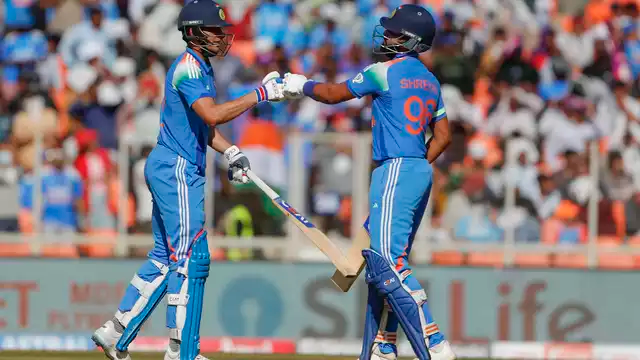
Squad for the first three ODIs: Shubman Gill [C], Rohit Sharma, Virat Kohli, Shreyas Iyer [VC], KL Rahul [WK], Nitish Kumar Reddy, Axar Patel, Naman Dhir, Anshul Kamboj, Gurnoor Brar, Ruturaj Gaikwad, Arshdeep Singh, Ishan Kishan [WK], Mohammed Siraj, Prasidh Krishna*, Kuldeep Yadav
Squad for fourth and fifth ODIs: Shreyas Iyer [C], Rohit Sharma, Virat Kohli, Tilak Varma, Ishan Kishan [WK, VC], Nitish Kumar Reddy, Axar Patel, Naman Dhir, Auqib Nabi, Gurnoor Brar, Ruturaj Gaikwad, Arshdeep Singh, Kumar Kushagra [WK], Mohammed Siraj, Yash Thakur, Kuldeep Yadav
[Cricbuzz]
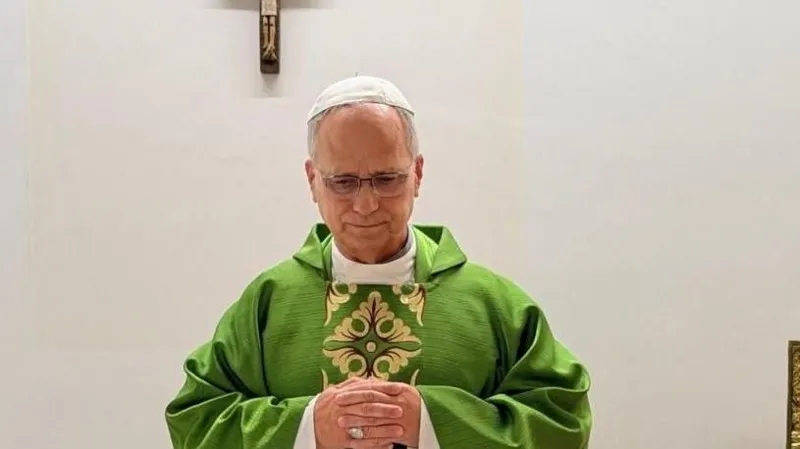
Pope Leo XIV has been pictured celebrating Mass from hospital, in the first images of him released by the Vatican since he underwent lung surgery.
The 71-year-old pontiff was diagnosed with lung cancer after the surgery at Rome’s Gemelli Hospital on Tuesday afternoon, which the Vatican said had been “successful” and proceeded without complications.
The images shared on Friday showed the Chicago-born Pope wearing a green robe while standing behind a makeshift altar on the tenth floor of the hospital.
Pope Leo “celebrated with the medical and nursing staff” and thanked workers for their service, the Vatican press office said.
On Friday, the Pope’s doctors said tests had shown “a steady improvement in his general condition” since his procedure.
His doctors said that a chest X-ray indicated “good recovery of the operated lung”.
The whole lower lobe of the Pope’s right lung was removed “to ensure the procedure was radical”, the Vatican said following the surgery.
“After the operation, the Pope awoke normally and returned after a brief period of observation to his room,” it said earlier, before he spent a “peaceful night” at the hospital.

Pope Leo first announced that he would be having the operation during his weekly Sunday prayers, telling the crowd in St Peter’s Square that doctors had found a “well-contained” nodule on his lung “at an early stage” and advised him to have it removed.
Nodules are quite common and not necessarily cancerous, but after it was examined the medical team confirmed it was, “as suspected by pre-operative tests”, the Vatican said. He was diagnosed with lung adenocarcinoma.
The Vatican has stressed that the Pope had shown no symptoms of infection or illness prior to the procedure.
[BBC]
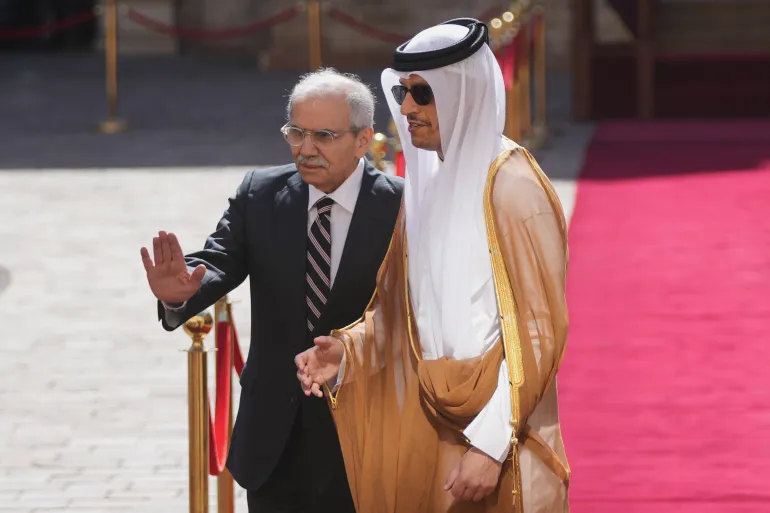
Qatar’s prime minister has announced plans to set up what he described as a “massive” solar plant in Lebanon to help ease its energy crisis.
Sheikh Mohammed bin Abdulrahman bin Jassim Al Thani made the announcement during his visit to Beirut on Friday, after meeting his Lebanese counterpart, Nawaf Salam.
“We have agreed to establish a comprehensive framework for cooperation in the energy sector and to present viable solutions,” Sheikh Mohammed said.
QatarEnergy has reached an agreement with French company TotalEnergies to jointly develop a solar power plant in Lebanon as an initial project.
The aim is to develop a major investment project “that would benefit the Lebanese economy, as well as the Qatari companies and entities participating in it”, he added.
Prime Minister Salam said he would put the plans for Lebanon’s electricity sector to the Lebanese Cabinet soon.
“The Qatari side will fund, implement and activate the project without any cost on the Lebanese state,” Lebanon’s leader said, adding that such a move is important because of the country’s financial crisis.
Lebanon’s state electricity company is one of the biggest sources of debt, haemorrhaging about $40bn over past decades with a bloated workforce and outdated infrastructure. The company provides only a few hours of electricity a day and the state, until a year ago, took advances from the Central Bank when diesel fuel ran out.
Sheikh Mohammed said Doha stands in “solidarity with the Lebanese people” and the entire region “in this dire hour”. Lebanon has been struggling with multiple energy crises in recent years and the situation has been compounded by the country’s financial collapse and Israel’s ongoing assault.
Earlier in the day, the Qatari PM also met Lebanon’s president and parliament speaker.
Among the topics discussed was the situation in southern Lebanon, where Israel continues its assault, capturing dozens of towns and villages.
Sheikh Mohammed said “Israeli violations within the Lebanese territories” were a large part of his talks.
He said that Israel should withdraw from Lebanon and cease its attacks, adding that Qatar is working in coordination with the United States to help lay the groundwork for future reconstruction in southern Lebanon to allow displaced people to return to their homes.
Israeli attacks on southern Lebanon have continued despite a ceasefire agreed in June. Under the agreement brokered by the US, the Lebanese government is to disarm Iran-backed Hezbollah. In return, Israeli forces will gradually withdraw from southern areas that they occupy. However, Hezbollah is not part of the agreement and has refused to disarm until Israel withdraws from the country.
Lebanese authorities say Israeli attacks have killed more than 4,300 people in the country since March. About 1.2 million people were also displaced in Lebanon at the height of the war.
Although most have returned home since the June ceasefire, more than 300,000 people remain displaced, according to the International Organization for Migration.
Lebanon’s PM Salam thanked Qatar for its “continuous” support during some of Lebanon’s “darkest hours”.
[A;jazeera]

Labour shortages are pushing Plantation Companies towards machines, data and a different kind of worker

Lanka confident of avoiding third FATF grey-listing, says CBSL Governor

Parliament opens first Translation Unit

Lanka, Azerbaijan oil giant discuss energy cooperation

US donates Rs. 330 million worth of cancer drugs to Lanka

Sastralian Premier League to boost school cricket in Matugama

‘Dates have the highest sugar content to fight Coronavirus’

Sunday Island 27 December – Headlines

#SundayIsland 17th December – Headlines

Sunday Island – 28th March

Sunday Island Headlines – 21 March

Sunday Island – 21st February – Headlines
-

 News6 days ago
Sri Lanka escalates anti-graft drive with Shiranthi’s jailing
-

 News7 days ago
NPP govt. reminded of its responsibilities as US warship leaves Colombo
-

 Latest News5 days ago
Farhan and Sadaqat help Pakistan seal series in style
-

 News6 days ago
Iranian ships stranded, Lanka fears US sanctions
-

 Latest News4 days ago
Nissanka’s return headlines Sri Lanka’s Test squad against Pakistan
-
 Features5 days ago
Intake 16: 45 years of duty and honour
-
 News5 days ago
Malwathu Chapter issues statement on talks with President over Gnanasara Thera’s robes
-

 Editorial7 days ago
Another motion of no-confidence