
News
Tehran protests hijacked, says Iranian Embassy

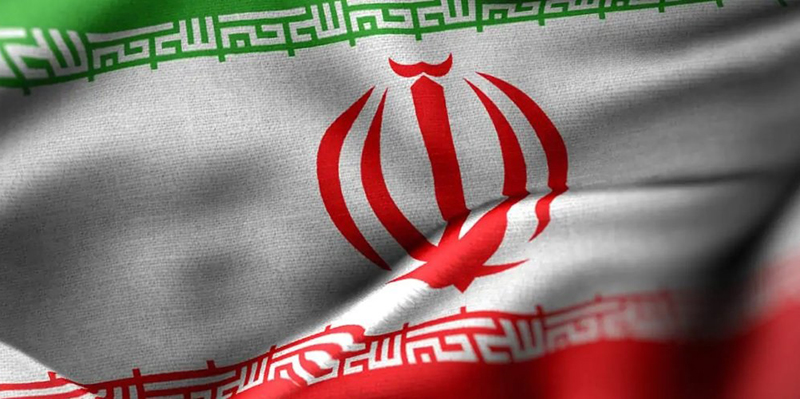
The Iranian Embassy in Colombo has defended the Iranian government’s handling of recent unrest, claiming that initially peaceful economic protests were later hijacked by violent groups with alleged foreign links.
In a statement titled ‘Unrest in Iran: From Reality to Distortion,’ issued by the Embassy’s Public Diplomacy Division yesterday, the Embassy said public dissent, including protests, is a normal feature of democratic societies and a legitimate means for citizens to convey concerns to authorities.
According to the statement, Iran has faced years of what it described as unlawful and unjust sanctions, which have placed economic pressure on the population. These conditions, it said, led to protests by merchants in Tehran between December 28 and 31, aimed at raising concerns over economic policies.
Full text of the statement: In democratic societies, governments continuously seek to receive the opinions of the public regarding their policies and decisions. These opinions are regularly communicated to authorities through parliamentary representatives and, at times, through political parties, media outlets, surveys, and even protest gatherings. In fact, in societies where public protests are absent, the democratic and popular nature of such governments should be seriously questioned.
The Islamic Republic of Iran, over the past years, has faced various unlawful, illegitimate and unjust sanctions, primarily because Iran refused to allow its national destiny to be dictated by the United States or other self-proclaimed great powers. As a result, the Iranian people have endured significant economic pressures while steadfastly upholding their principles and ideals.
This situation has led to certain criticisms and protests regarding economic policies. From December 28 to 31, Tehran’s merchants staged demonstrations, attempting to directly convey their grievances to the country’s economic authorities. Immediately, the President of the Islamic Republic of Iran, through official directives, acknowledged the merchants’ protests and issued orders for the establishment of specialized committees to address these issues.
Simultaneously, as these meetings and specialized committees began their work, the peaceful, professional protests of the merchants were gradually diverted by certain elements. From January 1 to 7, these protests, which had remained entirely peaceful until that point, began to escalate into violence. At this stage, specific elements infiltrated the ranks of ordinary citizens, attempting to damage urban infrastructure during the demonstrations.
According to documented reports, from January 8 onward, the violent actions of these specific groups escalated into outright acts of terrorism, as they opened fire on police forces and ordinary citizens using firearms. Their objective was to increase the number of casualties and injuries, regardless of whether the victims were law enforcement personnel or civilians.
Concurrently, media outlets affiliated with the Zionist regime, by distorting reports and statistics, engaged in relentless efforts to shape the perceptions of international observers against the Islamic Republic of Iran and the country’s national security. In this context, the President of the United States, employing highly undiplomatic language, openly threatened Iran and promised military action by both the U.S. and the Zionist regime.
As a result, two entirely distinct fronts emerged within the country: the terrorists and rioters, who had no goal other than destruction, killing, and chaos, and the general populace, alongside law enforcement, who sought peace and aimed to confront opportunists.
On Monday, January 12, citizens across all Iranian cities took to the streets in large numbers to express their strong condemnation of the terrorist groups that had destroyed mosques, schools, banks, subway systems, ambulances, and other urban infrastructure. They called on national authorities to take decisive action against these rioters.
At present, the government of the Islamic Republic of Iran possesses sufficient documentation and evidence proving the links of these rioters with certain intelligence services, including Mossad. This information, along with the severe threats made by the U.S. President to attack Iran, has been submitted to the United Nations and to the Secretary-General of the organization.
The Islamic Republic of Iran expects impartial media outlets, rather than repeating baseless claims propagated by news agencies affiliated with the Zionist regime, to align themselves with the Iranian people and accurately reflect the facts.
It is important to recall that, following the brutal massacres in Gaza, the Zionist regime, during a twelve-day series of attacks on Iranian cities in June 2025, killed more than one thousand Iranian citizens, with the United States regime complicit in these crimes.



Opposition and SJB Leader Sajith Premadasa has called for the appointment of a Parliamentary Select Committee (PSC) to investigate the illegal diversion of Treasury funds, amounting to US$2.5 million to a third-party account.
Premadasa has said both the chairmanship and a majority of the Committee’s membership should be held by the Opposition to ensure impartiality.
The government has not only failed to account for the loss of US$2.5 million but also deliberately withheld information from Parliament, the Committee on Public Finance (COPF) and the public, Premadasa has told the media, accusing the ruling party of seeking to deflect responsibility by initiating an internal departmental inquiry, which he describes as a biased process designed to justify predetermined conclusions.
The Opposition Leader has said only a transparent and independent probe could establish the facts, adding that such an investigation could be effectively carried out through a Parliamentary Select Committee led by the Opposition.
He has also warned that the alleged failure to inform Parliament about the missing funds amounted to a serious breach of accountability.

A land distribution programme benefiting families displaced by disaster in the Kandy District was held on April 24 at the Kandy District Secretariat, with 44 affected households receiving plots in the Hanthana area.
The initiative targeted residents of the Gangawata Korale Divisional Secretariat division whose homes were completely destroyed in a recent disaster, leaving them without permanent shelter.
The event was presided over by Minister of Agriculture, Lands, Livestock and Irrigation K. D. Lalkantha, who said arrangements had been made to provide each beneficiary with Rs. 5 million in instalments through the Pathahewaheta Divisional Secretariat to support the construction of new homes.
He noted that the land parcels had been identified from an estate in the Hanthana area and subsequently subdivided into demarcated plots for distribution among the recipients.
Members of Parliament representing the Kandy District from the NPP, along with Kandy District Secretary Indika Udawatta and Gangawata Korale Divisional Secretary Amila Navaratne, were among those present. Government officials and beneficiaries also attended the event.
The programme forms part of ongoing efforts to provide permanent housing solutions and restore livelihoods for families affected by natural disasters in the region.
Text and Pic by SK Samaranayake
Text and Pic by Nishendra Silva
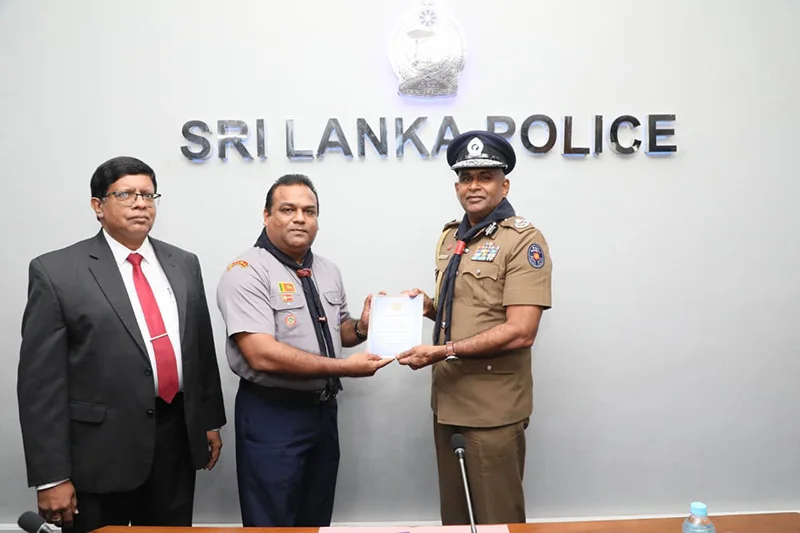
The Sri Lanka Police Scout Division was officially inaugurated at a ceremony held recently at Police Headquarters, marking a significant step towards integrating scouting principles within the police service.
The event was presided over by IGP Priyantha Weerasuriya and Chief Scout Commissioner of the Sri Lanka Scout Association Manoj Nanayakkara. The initiative to establish the new division was conceptualised by Nanayakkara as part of efforts to promote leadership, discipline and community engagement within the police force.
A high-level delegation from the Sri Lanka Scout Association was present, including its President Ransiri Perera, National Training Commissioner Padmalal Perera, and National Programme Commissioner Geeth Ramesh. Assistant Chief Commissioners Chandrani Fernando, Deshan Milinda and Sampath Kariyawasam were also in attendance, along with Training Directors Indrajith Ramanayake and Tilakman Pathmasiri.
Representing the Sri Lanka Police were several senior officials, including Senior DIG (Administration) Sanjeewa Dharmaratne, Senior DIG (Western Province) Sajeewa Medawatta, and Senior DIG (Support Services) Rajitha Sri Daminda.
Senior DIG (Training and Higher Training) Sampath Kumara Liyanage, who has been appointed to head the newly formed Police Scout Division, was also present. He is expected to oversee the launch and ongoing operations of police scouting activities, supported by other senior officers tasked with implementing the initiative.

Showers or thundershowers will occur at several places in most parts of the island after 1.00 pm

Opposition asks for PSC to probe Treasury theft

Hanthana land plots given to 44 disaster-hit families

Police launch Scout Division to boost leadership and community ties

New Zealand edge Tuskers in Racecourse arm-wrestle

BIA drug bust: 25 monks including three masterminds arrested

‘Dates have the highest sugar content to fight Coronavirus’

Sunday Island 27 December – Headlines

#SundayIsland 17th December – Headlines

Sunday Island – 28th March

Sunday Island Headlines – 21 March

Sunday Island – 21st February – Headlines
-
 News6 days ago
Rs 13 bn NDB fraud: Int’l forensic audit ordered
-

 News4 days ago
Lanka faces crisis of conscience over fate of animals: Call for compassion, law reform, and ethical responsibility
-
 News3 days ago
Whistleblowers ask Treasury Chief to resign over theft of USD 2.5 mn
-

 News3 days ago
No cyber hack: Fintech expert exposes shocking legacy flaws that led to $2.5 million theft
-

 News4 days ago
USD 2 mn bribe: CID ordered to arrest Shasheendra R, warrant issued against ex-SriLankan CEO’s wife
-
 News4 days ago
Parliament urged to probe questionable payment of USD 2.5 mn from Treasury
-

 Opinion6 days ago
Ministerial resignation and new political culture
-
 Midweek Review5 days ago
Squeaky clean image of JVP in tatters