
Features
Reading our unfinished economic story through Bandula Gunawardena’s ‘IMF Prakeerna Visadum’


Book Review
Why Sri Lanka’s Return to the IMF Demands Deeper Reflection
By mid-2022, the term “economic crisis” ceased to be an abstract concept for most Sri Lankans. It was no longer confined to academic papers, policy briefings, or statistical tables. Instead, it became a lived and deeply personal experience. Fuel queues stretched for kilometres under the burning sun. Cooking gas vanished from household shelves. Essential medicines became difficult—sometimes impossible—to find. Food prices rose relentlessly, pushing basic nutrition beyond the reach of many families, while real incomes steadily eroded.
What had long existed as graphs, ratios, and warning signals in economic reports suddenly entered daily life with unforgiving force. The crisis was no longer something discussed on television panels or debated in Parliament; it was something felt at the kitchen table, at the bus stop, and in hospital corridors.
Amid this social and economic turmoil came another announcement—less dramatic in appearance, but far more consequential in its implications. Sri Lanka would once again seek assistance from the International Monetary Fund (IMF).
The announcement immediately divided public opinion. For some, the IMF represented an unavoidable lifeline—a last resort to stabilise a collapsing economy. For others, it symbolised a loss of economic sovereignty and a painful surrender to external control. Emotions ran high. Debates became polarised. Public discourse quickly hardened into slogans, accusations, and ideological posturing.
Yet beneath the noise, anger, and fear lay a more fundamental question—one that demanded calm reflection rather than emotional reaction:
Why did Sri Lanka have to return to the IMF at all?
This question does not lend itself to simple or comforting answers. It cannot be explained by a single policy mistake, a single government, or a single external shock. Instead, it requires an honest examination of decades of economic decision-making, institutional weaknesses, policy inconsistency, and political avoidance. It requires looking beyond the immediate crisis and asking how Sri Lanka repeatedly reached a point where IMF assistance became the only viable option.
Few recent works attempt this difficult task as seriously and thoughtfully as Dr. Bandula Gunawardena’s IMF Prakeerna Visadum. Rather than offering slogans or seeking easy culprits, the book situates Sri Lanka’s IMF engagement within a broader historical and structural narrative. In doing so, it shifts the debate away from blame and toward understanding—a necessary first step if the country is to ensure that this crisis does not become yet another chapter in a familiar and painful cycle.
Returning to the IMF: Accident or Inevitability?
The central argument of IMF Prakeerna Visadum is at once simple and deeply unsettling. It challenges a comforting narrative that has gained popularity in times of crisis and replaces it with a far more demanding truth:
Sri Lanka’s economic crisis was not created by the IMF.
IMF intervention became inevitable because Sri Lanka avoided structural reform for far too long.
This framing fundamentally alters the terms of the national debate. It shifts attention away from external blame and towards internal responsibility. Instead of asking whether the IMF is good or bad, Dr. Gunawardena asks a more difficult and more important question: what kind of economy repeatedly drives itself to a point where IMF assistance becomes unavoidable?
The book refuses the two easy positions that dominate public discussion. It neither defends the IMF uncritically as a benevolent saviour nor demonises it as the architect of Sri Lanka’s suffering. Instead, IMF intervention is placed within a broader historical and structural context—one shaped primarily by domestic policy choices, institutional weaknesses, and political avoidance.
Public discourse often portrays IMF programmes as the starting point of economic hardship. Dr. Gunawardena corrects this misconception by restoring the correct chronology—an essential step for any honest assessment of the crisis.
The IMF did not arrive at the beginning of Sri Lanka’s collapse.
It arrived after the collapse had already begun.
By the time negotiations commenced, Sri Lanka had exhausted its foreign exchange reserves, lost access to international capital markets, officially defaulted on its external debt, and entered a phase of runaway inflation and acute shortages.
Fuel queues, shortages of essential medicines, and scarcities of basic food items were not the product of IMF conditionality. They were the direct outcome of prolonged foreign-exchange depletion combined with years of policy mismanagement. Import restrictions were imposed not because the IMF demanded them, but because the country simply could not pay its bills.
From this perspective, the IMF programme did not introduce austerity into a functioning economy. It formalised an adjustment that had already become unavoidable. The economy was already contracting, consumption was already constrained, and living standards were already falling. The IMF framework sought to impose order, sequencing, and credibility on a collapse that was already under way.
Seen through this lens, the return to the IMF was not a freely chosen policy option, but the end result of years of postponed decisions and missed opportunities.
A Long IMF Relationship, Short National Memory
Sri Lanka’s engagement with the IMF is neither new nor exceptional. For decades, governments of all political persuasions have turned to the Fund whenever balance-of-payments pressures became acute. Each engagement was presented as a temporary rescue—an extraordinary response to an unusual storm.
Yet, as Dr. Gunawardena meticulously documents, the storms were not unusual. What was striking was not the frequency of crises, but the remarkable consistency of their underlying causes.
Fiscal indiscipline persisted even during periods of growth. Government revenue remained structurally weak. Public debt expanded rapidly, often financing recurrent expenditure rather than productive investment. Meanwhile, the external sector failed to generate sufficient foreign exchange to sustain a consumption-led growth model.
IMF programmes brought temporary stability. Inflation eased. Reserves stabilised. Growth resumed. But once external pressure diminished, reform momentum faded. Political priorities shifted. Structural weaknesses quietly re-emerged.
This recurring pattern—crisis, adjustment, partial compliance, and relapse—became a defining feature of Sri Lanka’s economic management. The most recent crisis differed only in scale. This time, there was no room left to postpone adjustment.
Fiscal Fragility: The Core of the Crisis
A central focus of IMF Prakeerna Visadum is Sri Lanka’s chronically weak fiscal structure. Despite relatively strong social indicators and a capable administrative state, government revenue as a share of GDP remained exceptionally low.
Frequent tax changes, politically motivated exemptions, and weak enforcement steadily eroded the tax base. Instead of building a stable revenue system, governments relied increasingly on borrowing—both domestic and external.
Much of this borrowing financed subsidies, transfers, and public sector wages rather than productivity-enhancing investment. Over time, debt servicing crowded out development spending, shrinking fiscal space.
Fiscal reform failed not because it was technically impossible, Dr. Gunawardena argues, but because it was politically inconvenient. The costs were immediate and visible; the benefits long-term and diffuse. The eventual debt default was therefore not a surprise, but a delayed consequence.
The External Sector Trap
Sri Lanka’s narrow export base—apparel, tea, tourism, and remittances—generated foreign exchange but masked deeper weaknesses. Export diversification stagnated. Industrial upgrading lagged. Integration into global value chains remained limited.
Meanwhile, import-intensive consumption expanded. When external shocks arrived—global crises, pandemics, commodity price spikes—the economy had little resilience.
Exchange-rate flexibility alone cannot generate exports. Trade liberalisation without an industrial strategy redistributes pain rather than creates growth.
Monetary Policy and the Cost of Lost Credibility
Prolonged monetary accommodation, often driven by political pressure, fuelled inflation, depleted reserves, and eroded confidence. Once credibility was lost, restoring it required painful adjustment.
Macroeconomic credibility, Dr. Gunawardena reminds us, is a national asset. Once squandered, it is extraordinarily expensive to rebuild.
IMF Conditionality: Stabilisation Without Development?
IMF programmes stabilise economies, but they do not automatically deliver inclusive growth. In Sri Lanka, adjustment raised living costs and reduced real incomes. Social safety nets expanded, but gaps persisted.
This raises a critical question: can stabilisation succeed politically if it fails socially?
Political Economy: The Missing Middle
Reforms collided repeatedly with electoral incentives and patronage networks. IMF programmes exposed contradictions but could not resolve them. Without domestic ownership, reform risks becoming compliance rather than transformation.
Beyond Blame: A Diagnostic Moment
The book’s greatest strength lies in its refusal to engage in blame politics. IMF intervention is treated as a diagnostic signal, not a cause—a warning light illuminating unresolved structural failures.
The real challenge is not exiting an IMF programme, but exiting the cycle that makes IMF programmes inevitable.
A Strong Public Appeal: Why This Book Must Be Read
This is not an anti-IMF book.
It is not a pro-IMF book.
It is a pro-Sri Lanka book.
Published by Sarasaviya Publishers, IMF Prakeerna Visadum equips readers not with anger, but with clarity—offering history, evidence, and honest reflection when the country needs them most.
Conclusion: Will We Learn This Time?
The IMF can stabilise an economy.
It cannot build institutions.
It cannot create competitiveness.
It cannot deliver inclusive development.
Those responsibilities remain domestic.
The question before Sri Lanka is simple but profound:
Will we repeat the cycle, or finally learn the lesson?
The answer does not lie in Washington.
It lies with us.
By Professor Ranjith Bandara
Emeritus Professor, University of Colombo


(Part III in a series on Sri Lanka’s tourism stagnation.)
 Every SLTDA (Sri Lanka Tourism Development Authority) press release now leads with the same headline: India is Sri Lanka’s “star market.” The numbers seem to prove it, 531,511 Indian arrivals in 2025, representing 22.5% of all tourists. Officials celebrate the “half-million milestone” and set targets for 600,000, 700,000, more.
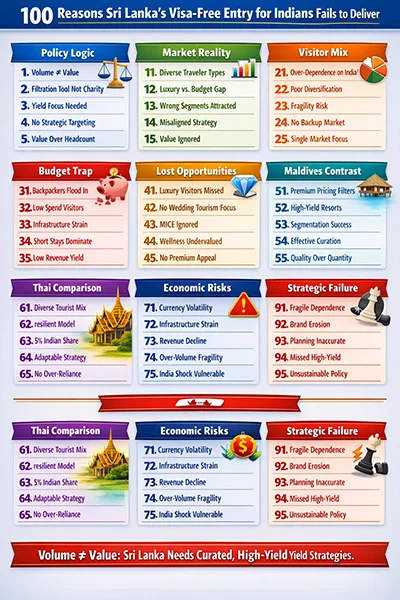
But follow the money instead of the headcount, and a different picture emerges. We are building our tourism recovery on a low-spending, short-stay, operationally challenging segment, without any serious strategy to transform it into a high-value market. We have confused market size with market quality, and the confusion is costing us billions.
Per-day spending: While SLTDA does not publish market-specific daily expenditure data, industry operators and informal analyses consistently report Indian tourists in the $100-140 per day range, compared to $180-250 for Western European and North American markets.
The math is brutal and unavoidable: one Western European tourist generates the revenue of 3-4 Indian tourists. Building tourism recovery primarily on the low-yield segment is strategically incoherent, unless the goal is arrivals theater rather than economic contribution.
Comparative Analysis: How Competitors Handle Indian Outbound Tourism
India is not unique to Sri Lanka. Indian outbound tourism reached 30.23 million departures in 2024, an 8.4% year-on-year increase, driven by a growing middle class with disposable income. Every competitor destination is courting this market.
This is not diversification. It is concentration risk dressed up as growth.
How did we end up here? Through a combination of policy laziness, proximity bias, and refusal to confront yield trade-offs.
1. Proximity as Strategy Substitute
India is next door. Flights are short (1.5-3 hours), frequent, and cheap. This makes India the easiest market to attract, low promotional cost, high visibility, strong cultural and linguistic overlap. But easiest is not the same as best.
Tourism strategy should optimize for yield-adjusted effort. Yes, attracting Europeans requires longer promotional cycles, higher marketing spend, and sustained brand-building. But if each European generates 3x the revenue of an Indian tourist, the return on investment is self-evident.
We have chosen ease over effectiveness, proximity over profitability.
2. Visa Policy as Blunt Instrument
3. Failure to Develop High-Value Products for Indian Market

There are segments of Indian outbound tourism that spend heavily:
* Wedding tourism: Indian destination weddings can generate $50,000-200,000+ per event
* Wellness/Ayurveda tourism: High-net-worth Indians seek authentic wellness experiences and will pay premium rates
* MICE tourism: Corporate events, conferences, incentive travel
Sri Lanka has these assets—coastal venues for weddings, Ayurvedic heritage, colonial hotels suitable for corporate events. But we have not systematically developed and marketed these products to high-yield Indian segments.
For the first time in 2025, Sri Lanka conducted multi-city roadshows across India to promote wedding tourism. This is welcome—but it is 25 years late. The Maldives and Mauritius have been curating Indian wedding and MICE tourism for decades, building specialised infrastructure, training staff, and integrating these products into marketing.
We are entering a mature market with no track record, no specialised infrastructure, and no price positioning that signals premium quality.
4. Operational Challenges and Quality Perceptions
Indian tourists, particularly budget segments, present operational challenges:
* Shorter stays mean higher turnover, more check-ins, more logistical overhead per dollar of revenue
* Price sensitivity leads to aggressive bargaining, complaints over perceived overcharging
* Large groups (families, wedding parties) require specialised handling
None of these are insurmountable, but they require investment in training, systems, and service design. Sri Lanka has not made these investments systematically. The result: operators report higher operational costs per Indian guest while generating lower revenue, a toxic margin squeeze.
Additionally, Sri Lanka’s positioning as a “budget-friendly” destination reinforces price expectations. Indians comparing Sri Lanka to Thailand or Malaysia see Sri Lanka as cheaper, not better. We compete on price, not value, a race to the bottom.
The Strategic Error: Mistaking Market Size for Market Fit
India’s outbound tourism market is massive, 30 million+ and growing. But scale is not the same as fit.
Market size ≠ market value: The UAE attracts 7.5 million Indians, but as a high-yield segment (business, luxury shopping, upscale hospitality). Saudi Arabia attracts 3.3 million—but for religious pilgrimage with high per-capita spending and long stays.
Thailand attracts 1.8 million Indians as part of a diversified 35-million-tourist base. Indians represent 5% of Thailand’s mix. Sri Lanka has made Indians 22.5% of our mix, 4.5 times Thailand’s concentration, while generating a fraction of Thailand’s revenue.
This reveals the error. We have prioritised volume from a market segment without ensuring the segment aligns with our value proposition.
These needs are misaligned. Indians seek budget value; Sri Lanka needs yield. Indians want short trips; Sri Lanka needs extended stays. Indians are price-sensitive; Sri Lanka needs premium segments to fund infrastructure.
We have attracted a market that does not match our strategic needs—and then celebrated the mismatch as success.
The Way Forward: From Dependency to Diversification
Fixing the Indian market trap requires three shifts: curation, diversification, and premium positioning.
First
 , segment the Indian market and target high-value niches explicitly:
* Wedding tourism: Develop specialised wedding venues, train planners, create integrated packages ($50k+ per event)
* Wellness tourism: Position Sri Lanka as authentic Ayurveda destination for high-net-worth health seekers
* MICE tourism: Target Indian corporate incentive travel and conferences
* Spiritual/religious tourism: Leverage Buddhist and Hindu heritage sites with premium positioning
Market these high-value niches aggressively. Let budget segments self-select out through pricing signals.
Second
, rebalance market mix toward high-yield segments:
* Increase marketing spend on Western Europe, North America, and East Asian premium segments
* Develop products (luxury eco-lodges, boutique heritage hotels, adventure tourism) that appeal to high-yield travelers
* Use visa policy strategically, maintain visa-free for premium markets, consider tiered visa fees or curated visa schemes for volume markets
Third
, stop benchmarking success by Indian arrival volumes. Track:
* Revenue per Indian visitor
* Indian market share of total revenue (not arrivals)
* Yield gap: Indian revenue vs. other major markets
If Indians are 22.5% of arrivals but only 15% of revenue, we have a problem. If the gap widens, we are deepening dependency on a low-yield segment.
Fourth
, invest in Indian market quality rather than quantity:
* Train staff on Indian high-end expectations (luxury service standards, dietary needs)
* Develop bilingual guides and materials (Hindi, Tamil)
* Build partnerships with premium Indian travel agents, not budget consolidators
We should aim to attract 300,000 Indians generating $1,500 per trip (through wedding, wellness, MICE targeting), not 700,000 generating $600 per trip. The former produces $450 million; the latter produces $420 million, while requiring more than twice the operational overhead and infrastructure load.
Fifth
, accept the hard truth: India cannot and should not be 30-40% of our market mix. The structural yield constraints make that model non-viable. Cap Indian arrivals at 15-20% of total mix and aggressively diversify into higher-yield markets.
This will require political courage, saying “no” to easy volume in favour of harder-won value. But that is what strategy means: choosing what not to do.
The Dependency Trap

Every market concentration creates path dependency. The more we optimize for Indian tourists, visa schemes, marketing, infrastructure, pricing, the harder it becomes to attract high-yield markets that expect different value propositions.
Hotels that compete on price for Indian segments cannot simultaneously position as luxury for European segments. Destinations known for “affordability” struggle to pivot to premium. Guides trained for high-turnover, short-stay groups do not develop the deep knowledge required for extended cultural tours.
We are locking in a low-yield equilibrium. Each incremental Indian arrival strengthens the positioning as a “budget-friendly” destination, which repels high-yield segments, which forces further volume-chasing in price-sensitive markets. The cycle reinforces itself.
Breaking the cycle requires accepting short-term pain—lower arrival numbers—for long-term gain—higher revenue, stronger positioning, sustainable margins.
The Hard Question
Is Sri Lanka willing to attract two million tourists generating $5 billion, or three million tourists generating $4 billion?
The current trajectory is toward the latter, more arrivals, less revenue, thinner margins, greater fragility. We are optimizing for metrics that impress press releases but erode economic contribution.
The Indian market is not the problem. The problem is building tourism recovery primarily on a low-yield segment without strategies to either transform that segment to high-yield or balance it with high-yield markets.
We are building on sand. The foundation will not hold.
(The writer, a senior Chartered Accountant and professional banker, is Professor at SLIIT, Malabe. The views and opinions expressed in this article are personal.)
Understanding Sri Lanka through the India AI Impact Summit 2026
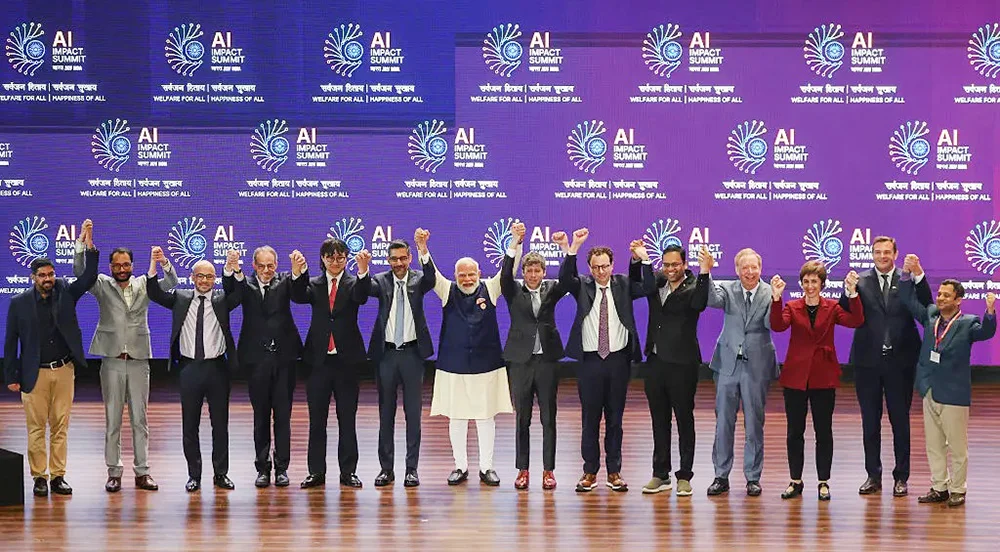
Artificial Intelligence (AI) has rapidly moved from being a specialised technological field into a major social force that shapes economies, cultures, governance, and everyday human life. The India AI Impact Summit 2026, held in New Delhi, symbolised a significant moment for the Global South, especially South Asia, because it demonstrated that artificial intelligence is no longer limited to advanced Western economies but can also become a development tool for emerging societies. The summit gathered governments, researchers, technology companies, and international organisations to discuss how AI can support social welfare, public services, and economic growth. Its central message was that artificial intelligence should be human centred and socially useful. Instead of focusing only on powerful computing systems, the summit emphasised affordable technologies, open collaboration, and ethical responsibility so that ordinary citizens can benefit from digital transformation. For South Asia, where large populations live in rural areas and resources are unevenly distributed, this idea is particularly important.
People friendly AI
One of the most important concepts promoted at the summit was the idea of “people friendly AI.” This means that artificial intelligence should be accessible, understandable, and helpful in daily activities. In South Asia, language diversity and economic inequality often prevent people from using advanced technology. Therefore, systems designed for local languages, and smartphones, play a crucial role. When a farmer can speak to a digital assistant in Sinhala, Tamil, or Hindi and receive advice about weather patterns or crop diseases, technology becomes practical rather than distant. Similarly, voice based interfaces allow elderly people and individuals with limited literacy to use digital services. Affordable mobile based AI tools reduce the digital divide between urban and rural populations. As a result, artificial intelligence stops being an elite instrument and becomes a social assistant that supports ordinary life.
Transformation in education sector
The influence of this transformation is visible in education. AI based learning platforms can analyse student performance and provide personalised lessons. Instead of all students following the same pace, weaker learners receive additional practice while advanced learners explore deeper material. Teachers are able to focus on mentoring and explanation rather than repetitive instruction. In many South Asian societies, including Sri Lanka, education has long depended on memorisation and private tuition classes. AI tutoring systems could reduce educational inequality by giving rural students access to learning resources, similar to those available in cities. A student who struggles with mathematics, for example, can practice step by step exercises automatically generated according to individual mistakes. This reduces pressure, improves confidence, and gradually changes the educational culture from rote learning toward understanding and problem solving.
Healthcare is another area where AI is becoming people friendly. Many rural communities face shortages of doctors and medical facilities. AI-assisted diagnostic tools can analyse symptoms, or medical images, and provide early warnings about diseases. Patients can receive preliminary advice through mobile applications, which helps them decide whether hospital visits are necessary. This reduces overcrowding in hospitals and saves travel costs. Public health authorities can also analyse large datasets to monitor disease outbreaks and allocate resources efficiently. In this way, artificial intelligence supports not only individual patients but also the entire health system.
Agriculture, which remains a primary livelihood for millions in South Asia, is also undergoing transformation. Farmers traditionally rely on seasonal experience, but climate change has made weather patterns unpredictable. AI systems that analyse rainfall data, soil conditions, and satellite images can predict crop performance and recommend irrigation schedules. Early detection of plant diseases prevents large-scale crop losses. For a small farmer, accurate information can mean the difference between profit and debt. Thus, AI directly influences economic stability at the household level.
Employment and communication reshaped
Artificial intelligence is also reshaping employment and communication. Routine clerical and repetitive tasks are increasingly automated, while demand grows for digital skills, such as data management, programming, and online services. Many young people in South Asia are beginning to participate in remote work, freelancing, and digital entrepreneurship. AI translation tools allow communication across languages, enabling businesses to reach international customers. Knowledge becomes more accessible because information can be summarised, translated, and explained instantly. This leads to a broader sociological shift: authority moves from tradition and hierarchy toward information and analytical reasoning. Individuals rely more on data when making decisions about education, finance, and career planning.
Impact on Sri Lanka
The impact on Sri Lanka is especially significant because the country shares many social and economic conditions with India and often adopts regional technological innovations. Sri Lanka has already begun integrating artificial intelligence into education, agriculture, and public administration. In schools and universities, AI learning tools may reduce the heavy dependence on private tuition and help students in rural districts receive equal academic support. In agriculture, predictive analytics can help farmers manage climate variability, improving productivity and food security. In public administration, digital systems can speed up document processing, licensing, and public service delivery. Smart transportation systems may reduce congestion in urban areas, saving time and fuel.
Economic opportunities are also expanding. Sri Lanka’s service based economy and IT outsourcing sector can benefit from increased global demand for digital skills. AI-assisted software development, data annotation, and online service platforms can create new employment pathways, especially for educated youth. Small and medium entrepreneurs can use AI tools to design products, manage finances, and market services internationally at low cost. In tourism, personalised digital assistants and recommendation systems can improve visitor experiences and help small businesses connect with travellers directly.
Digital inequality
However, the integration of artificial intelligence also raises serious concerns. Digital inequality may widen if only educated urban populations gain access to technological skills. Some routine jobs may disappear, requiring workers to retrain. There are also risks of misinformation, surveillance, and misuse of personal data. Ethical regulation and transparency are, therefore, essential. Governments must develop policies that protect privacy, ensure accountability, and encourage responsible innovation. Public awareness and digital literacy programmes are necessary so that citizens understand both the benefits and limitations of AI systems.
Beyond economics and services, AI is gradually influencing social relationships and cultural patterns. South Asian societies have traditionally relied on hierarchy and personal authority, but data-driven decision making changes this structure. Agricultural planning may depend on predictive models rather than ancestral practice, and educational evaluation may rely on learning analytics instead of examination rankings alone. This does not eliminate human judgment, but it alters its basis. Societies increasingly value analytical thinking, creativity, and adaptability. Educational systems must, therefore, move beyond memorisation toward critical thinking and interdisciplinary learning.
AI contribution to national development
In Sri Lanka, these changes may contribute to national development if implemented carefully. AI-supported financial monitoring can improve transparency and reduce corruption. Smart infrastructure systems can help manage transportation and urban planning. Communication technologies can support interaction among Sinhala, Tamil, and English speakers, promoting social inclusion in a multilingual society. Assistive technologies can improve accessibility for persons with disabilities, enabling broader participation in education and employment. These developments show that artificial intelligence is not merely a technological innovation but a social instrument capable of strengthening equality when guided by ethical policy.
Symbolic shift
Ultimately, the India AI Impact Summit 2026 represents a symbolic shift in the global technological landscape. It indicates that developing nations are beginning to shape the future of artificial intelligence according to their own social needs rather than passively importing technology. For South Asia and Sri Lanka, the challenge is not whether AI will arrive but how it will be used. If education systems prepare citizens, if governments establish responsible regulations, and if access remains inclusive, AI can become a partner in development rather than a source of inequality. The future will likely involve close collaboration between humans and intelligent systems, where machines assist decision making while human values guide outcomes. In this sense, artificial intelligence does not replace human society, but transforms it, offering Sri Lanka an opportunity to build a more knowledge based, efficient, and equitable social order in the decades ahead.
by Milinda Mayadunna
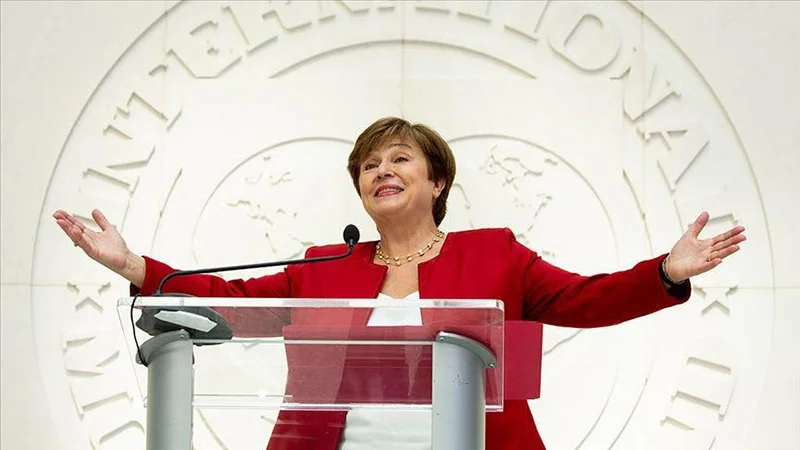
The visit by IMF Managing Director Kristalina Georgieva to Sri Lanka was widely described as a success for the government. She was fulsome in her praise of the country and its developmental potential. The grounds for this success and collaborative spirit go back to the inception of the agreement signed in March 2023 in the aftermath of Sri Lanka’s declaration of international bankruptcy. The IMF came in to fulfil its role as lender of last resort. The government of the day bit the bullet. It imposed unpopular policies on the people, most notably significant tax increases. At a moment when the country had run out of foreign exchange, defaulted on its debt, and faced shortages of fuel, medicine and food, the IMF programme restored a measure of confidence both within the country and internationally.
Since 1965 Sri Lanka has entered into agreements with the IMF on 16 occasions none of which were taken to their full term. The present agreement is the 17th agreement . IMF agreements have traditionally been focused on economic restructuring. Invariably the terms of agreement have been harsh on the people, with priority being given to ensure the debtor country pays its loans back to the IMF. Fiscal consolidation, tax increases, subsidy reductions and structural reforms have been the recurring features. The social and political costs have often been high. Governments have lost popularity and sometimes fallen before programmes were completed. The IMF has learned from experience across the world that macroeconomic reform without social protection can generate backlash, instability and policy reversals.
The experience of countries such as Greece, Ireland and Portugal in dealing with the IMF during the eurozone crisis demonstrated the political and social costs of austerity, even though those economies later stabilised and returned to growth. The evolution of IMF policies has ensured that there are two special features in the present agreement. The first is that the IMF has included a safety net of social welfare spending to mitigate the impact of the austerity measures on the poorest sections of the population. No country can hope to grow at 7 or 8 percent per annum when a third of its people are struggling to survive. Poverty alleviation measures in the Aswesuma programme, developed with the agreement of the IMF, are key to mitigating the worst impacts of the rising cost of living and limited opportunities for employment.
Governance Included
The second important feature of the IMF agreement is the inclusion of governance criteria to be implemented alongside the economic reforms. It goes to the heart of why Sri Lanka has had to return to the IMF repeatedly. Economic mismanagement did not take place in a vacuum. It was enabled by weak institutions, politicised decision making, non-transparent procurement, and the erosion of checks and balances. In its economic reform process, the IMF has included an assessment of governance related issues to accompany the economic restructuring process. At the top of this list is tackling the problem of corruption by means of publicising contracts, ensuring open solicitation of tenders, and strengthening financial accountability mechanisms.
The IMF also encouraged a civil society diagnostic study and engaged with civil society organisations regularly. The civil society analysis of governance issues which was promoted by Verite Research and facilitated by Transparency International was wider in scope than those identified in the IMF’s own diagnostic. It pointed to systemic weaknesses that go beyond narrow fiscal concerns. The civil society diagnostic study included issues of social justice such as the inequitable impact of targeting EPF and ETF funds of workers for restructuring and the need to repeal abuse prone laws such as the Prevention of Terrorism Act and the Online Safety Act. When workers see their retirement savings restructured without adequate consultation, confidence in policy making erodes. When laws are perceived to be instruments of arbitrary power, social cohesion weakens.
During a meeting between the IMF Managing Director Georgeiva and civil society members last week, there was discussion on the implementation of those governance measures in which she spoke in a manner that was not alien to the civil society representatives. Significantly, the civil society diagnostic report also referred to the ethnic conflict and the breakdown of interethnic relations that led to three decades of deadly war, causing severe economic losses to the country. This was also discussed at the meeting. Governance is not only about accounting standards and procurement rules. It is about social justice, equality before the law, and political representation. On this issue the government has more to do. Ethnic and religious minorities find themselves inadequately represented in high level government committees. The provincial council system that ensured ethnic and minority representation at the provincial level continues to be in abeyance.
Beyond IMF
The significance of addressing governance issues is not only relevant to the IMF agreement. It is also important in accessing tariff concessions from the European Union. The GSP Plus tariff concession given by the EU enables Sri Lankan exports to be sold at lower prices and win markets in Europe. For an export dependent economy, this is critical. Loss of such concessions would directly affect employment in key sectors such as apparel. The government needs to address longstanding EU concerns about the protection of human rights and labour rights in the country. The EU has, for several years, linked the continuation of GSP Plus to compliance with international conventions. This includes the condition that the Prevention of Terrorism Act (PTA) be brought into line with international standards. The government’s alternative in the form of the draft Protection of the State from Terrorism Act (PTSA) is less abusive on paper but is wider in scope and retains the core features of the PTA.
Governance and social justice factors cannot be ignored or downplayed in the pursuit of economic development. If Sri Lanka is to break out of its cycle of crisis and bailout, it must internalise the fact that good governance which promotes social justice and more fairly distributes the costs and fruits of development is the foundation on which durable economic growth is built. Without it, stabilisation will remain fragile, poverty will remain high, and the promise of 7 to 8 percent growth will remain elusive. The implementation of governance reforms will also have a positive effect through the creative mechanism of governance linked bonds, an innovation of the present IMF agreement.
The Sri Lankan think tank Verité Research played an important role in the development of governance linked bonds. They reduce the rate of interest payable by the government on outstanding debt on the basis that better governance leads to a reduction in risk for those who have lent their money to Sri Lanka. This is a direct financial reward for governance reform. The present IMF programme offers an opportunity not only to stabilise the economy but to strengthen the institutions that underpin it. That opportunity needs to be taken. Without it, the country cannot attract investment, expand exports and move towards shared prosperity and to a 7-8 percent growth rate that can lift the country out of its debt trap.
by Jehan Perera

Fair weather except for a few showers in the Southern province and in Rathnapura and Monaragala districts after 2.00 p.m

X-Press Pearl disaster fuels global call to classify plastic pellets as hazardous

Foreign Minister Herath decries deadlock in global disarmament

CoPF orders officials to establish legal framework for Rs. 200 for estate workers daily attendance allowance

Colombo drives nearly half of Lanka’s TB cases: Officials

Fonseka clears Rajapaksas of committing war crimes he himself once accused them of

‘Dates have the highest sugar content to fight Coronavirus’

Sunday Island 27 December – Headlines

#SundayIsland 17th December – Headlines

Sunday Island – 28th March

Sunday Island Headlines – 21 March

Sunday Island – 21st February – Headlines
-
 Features4 days ago
Why does the state threaten Its people with yet another anti-terror law?
-
 Features4 days ago
Reconciliation, Mood of the Nation and the NPP Government
-

 Features4 days ago
Victor Melder turns 90: Railwayman and bibliophile extraordinary
-

 Features3 days ago
LOVEABLE BUT LETHAL: When four-legged stars remind us of a silent killer
-
 Features4 days ago
Victor, the Friend of the Foreign Press
-

 Latest News5 days ago
New Zealand meet familiar opponents Pakistan at spin-friendly Premadasa
-

 Latest News5 days ago
Tariffs ruling is major blow to Trump’s second-term agenda
-

 Latest News5 days ago
ECB push back at Pakistan ‘shadow-ban’ reports ahead of Hundred auction