
News
UNHRC resolution against SL disappointing as no recommendation to refer to ICC for criminal accountability – Labor MP


by Sujeewa Nivunhella in London
Labor MP Siobhain McDonagh (Mitcham and Morden) said the UNHRC resolution against Sri Lanka disappointingly falls short as there is no recommendation to pursue criminal accountability by referral to the International Criminal Court.
“I could barely believe my eyes reading the Government’s reasoning, citing “insufficient…Security Council support”. Who are we to cast the veto for China or Russia before they have done so themselves? Our role on the international stage must be to send the loudest message that impunity will not be tolerated, not to preempt the inaction of other nations”, she said during the House of Commons debate on UK’s commitment to Reconciliation, Accountability and Human Rights in Sri Lanka, on March 18.
“Why have we not applied sanctions against those credibly accused of gross human rights violations? The US has designated General Silva and his immediate family over his role in extrajudicial killing of Tamils. It is an immediate step that we could take and the Minister cannot point to a veto as an excuse for our inaction. We must ensure a coherent approach to aid, trade and diplomatic and military engagement with Sri Lanka, consistent with the international obligations to human rights. That is long overdue”, he said.
She further said that human rights are under attack in Sri Lanka again, with President Rajapaksa waging a campaign of war. Many of those who face serious wartime abuse allegations have been appointed to senior Government positions. Members of the Rajapaksa family hold nine ministerial roles, including seven Cabinet posts, and manage almost a quarter of the budget. It is total control. President Rajapaksa even pardoned one of the few members of the security forces to be convicted of human rights violations, Sergeant Sunil Ratnayake. That was unsurprising, given his stated determination to protect so-called war heroes during the presidential campaign.
McDonagh said this House notes with concern the reports of a systematic attack in Sri Lanka on democratic governance, the rule of law and human rights including renewed discrimination against the Tamil and Muslim communities; is profoundly concerned that the Sri Lankan Government has refused to investigate accusations of war crimes including by key members of the current government and has withdrawn from the UN Human Rights Council Resolution 30/1; welcomes the significant leadership role played by successive UK Governments at the Human Rights Council and urges the Government to provide clear policy direction and leadership to ensure a new substantive resolution is passed at the upcoming Council session in March 2021 that will enable continued monitoring by the Office of the High Commissioner for Human Rights and mandate a mechanism to gather, preserve and analyse evidence of violations for future investigations and prosecutions; and calls upon the Government to develop a consistent and coherent policy to assist the Sri Lankan people through its trade, investment and aid programs, and in its diplomatic and military relations.
The current Prime Minister, Mahinda Rajapaksa, was President and his brother Gotabaya, the current President, was Defence Secretary. They are the present-day link to the atrocities of the past. The bombing of the Government-designated no-fire zone, where Tamil civilians took refuge, is as utterly horrifying today as it was 12 years ago, as are the findings of experts that Government forces even systematically shelled hospitals, she alleged.
The pursuit of justice must now move decisively forward with more sincerity from the international community. The Human Rights Council meeting happening now provides the perfect opportunity. Before turning to today’s resolution, it is important to consider the resolution that came before. Passed in 2015, with the consensus of Sri Lanka, it promised the establishment of a process of justice, accountability, reform and reconciliation, but six years on, Sri Lanka has made it clear that it has absolutely no intention of pursuing prosecutions or legal redress for war crimes. Its withdrawal from the process altogether could not have spelled this out more clearly, the MP noted.
The little progress made has been rolled right back. The ongoing Human Rights Council meeting is our chance to finally secure progress, making it clear that a country cannot fail to fulfill international commitments. To do so risks undermining the credibility of the council as a mechanism of accountability, she continued.
“This is not just about the human rights of Tamils: the Rajapaksa Government even insisted on the forced cremation of those who died from coronavirus, thereby disregarding the religious beliefs of the Christian and Muslim communities in the country. The ongoing attack on human rights is undeniable. As we are a penholder to the UN resolution, the world will watch closely the strength of our response”, he added.
Elliot Colburn (Carshalton and Wallington) (Con) [V] said the recent infringements on human rights have been on the rise. Those have included the forced cremations of covid-19 victims, regardless of their religious beliefs, causing grief and anguish to Sri Lankan Christians, Muslims and others. The police criminal investigation department has been repeatedly visiting members of advocacy groups on the island who are campaigning for justice following the disappearance of their family members during the war.
“We must act now, before the conclusion of the UNHRC session at the end of the month, to ensure that there is a true international accountability mechanism in place. Only then can we hope to bring about truth, justice, reconciliation and accountability for all in Sri Lanka, as well as for the Tamil diaspora—not just in Carshalton and Wallington, but across the world”, the MP said.
Dr Matthew Offord (Hendon) (Con) [V) urged the Sri Lankan Government to engage in a process that has the confidence of all on the island. But it would be remiss to state that the current Sri Lankan Government have failed to act. The Office on Missing Persons and the Office for Reparations are to be retained and strengthened, so that communities may build trust. It will be good to see reform of the Prevention of Terrorism Act and progress on the release of political prisoners.
The Minister for Asia (Nigel Adams) said human rights in Sri Lanka are an important issue and a long-standing priority both for the UK Government and for many fellow Members. This debate is timely, coming during the 46th session of the UN Human Rights Council, which began on 22 February. The human rights situation in Sri Lanka and the limited progress on reconciliation and accountability raised by many Members are deeply concerning, he said.
The Sri Lankan Government announced a domestic mechanism on accountability. As with previous domestic initiatives, however, meaningful progress has yet to be delivered. There have also been a number of setbacks on accountability, including the appointment into Government positions of military figures accused of war crimes.
As the Member for East Ham (Stephen Timms) pointed out, they also include the presidential pardon of former army sergeant, Sunil Ratnayake, one of the few perpetrators of war crime atrocities to have been convicted in Sri Lanka, the Minister noted.
Other worrying human rights developments include the continued harassment and surveillance of minorities and civil society groups, he added.
MPs Robert Halfon (Harlow) (Con) [V], Theresa Villiers (Chipping Barnet) (Con),
Tanmanjeet Singh Dhesi (Slough) (Lab), Bob Blackman (Harrow East) (Con) [V],
Chris Grayling (Epsom and Ewell) (Con) Sam Tarry (Ilford South) (Lab),
Anthony Mangnall (Totnes) (Con) and Stephen Kinnock (Aberavon) (Lab) also spoke during the hours-long debate.

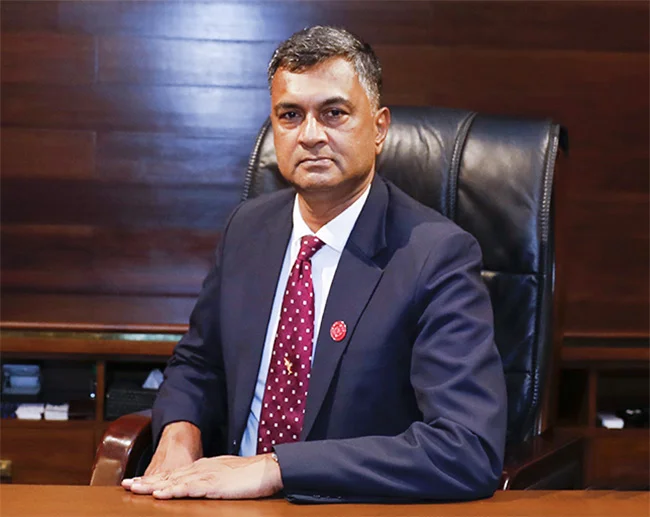
Defence Secretary (retd.) Air Marshal Sampath Thuyakontha has discussed with UN officials in New York the deployment of Sri Lankan troops in Haiti, under a new UN authorised force, tasked with tackling heavily armed gangs operating in the violence ravaged country.
The UN is in the process of building up a force comprising approximately 5,500 officers and men for deployment in Haiti.
The Sri Lankan delegation included Sri Lanka’s Permanent Representative to the UN, former Chief Justice Jayantha Jayasuriya. The UN has tagged the deployment Gang Suppression Force (GSF).
According to the Defence Ministry, Sri Lanka negotiated a Memorandum of Understanding (MoU) regarding the GSF. Although Sri Lanka has contributed to UN-led missions, the proposed deployment differed due to the nature of the operation, sources told The Island.
The delegation has assured that all personnel, assigned for UN missions, including the proposed GSF deployment in Haiti, would be subjected to a comprehensive screening process, in line with UN standards. War-winning Sri Lanka has declared, in New York, that the country was in the process of developing, what the Defence Ministry here called, National Human Rights Vetting Mechanism in consultation with the UN Resident Coordinator in Colombo.
The US has backed the deployment of Sri Lankan troops under UN command. Various interested parties, over the years, protested against the deployment of Sri Lankan troops on the basis of unsubstantiated war crimes allegations.
Thuyakontha has assured that troops would maintain highest standards of discipline during overseas missions. Sri Lanka brought the war here to a successful conclusion in May 2009 against predictions of contrary outcome by so-called experts.
The US and Panama proposed the GSF to replace a Kenya-led multinational force undermined by a lack of funding. Its strength hovered around 1,000, rather than the desired 2,500. The U.N. Security Council authorised the 5,500 strong force on September 30, 2025, with the new power to arrest gang members.
By Shamindra Ferdinando
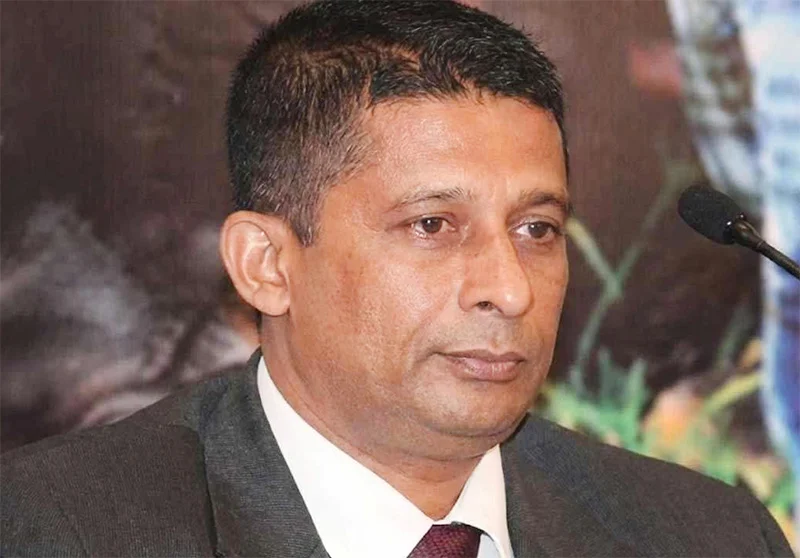
Sallay’s case:
Attorney-at-law Udaya Gammanpila yesterday (27) said a lawyer could not be deprived of his or her right to represent a client.
The former Minister and leader of Pivuthuru Hela Urumaya (PHU) Gammanpila said so addressing the media at the party headoffice at Pita Kotte. Gammanpila was responding to recent media reports that he had been prohibited from representing retired State Intelligence Service (SIS) Chief Maj. Gen. Suresh Sallay. Therefore, there was absolutely no basis for claims that he had been barred from meeting the retired officer, now named the third suspect in the Easter Sunday case, the ex-parliamentarian said.
Gammanpila emphasised that in terms of the Constitution a suspect’s right to be represented by a lawyer was recognised as a fundamental right. The Criminal procedure Code, too, guaranteed the suspect’s right to consult a lawyer, the ex-lawmaker said, pointing out that the Judicial Organisation Act underscored the same.
Declaring that the retired officer’s wife had named him as Sallay’s lawyer in a letter addressed to Director, CID, Gammanpila said that the courts, police and the Attorney General’s Department couldn’t under any circumstances interfere with his right to represent Sallay.
The CID arrested Sallay on 25 February and detained him under Prevention of Terrorism Act (PTA) for a period of 90 days. Sallay has filed a writ petition before the Court of Appeal through his lawyers, challenging his arrest and detention by the CID under the PTA.
Former Minister Gammanpila said that even if a Magistrate had the power to prohibit a lawyer from representing a particular suspect, such a course of action couldn’t be resorted to without giving the lawyer concern an opportunity to explain his/her actions.
Declaring that in case of misconduct on the part of a lawyer only the Supreme Court could take disciplinary action, the PHU leader said, adding that he sought a certified copy of the proceedings of the day when a section of the media reported the Magistrate’s declaration of the purported ban. Gammapila said that he was really keen to know what happened during the proceedings on that day.
Sallay served as Director, Directorate of Military Intelligence (DMI) from 2012 to 2016 and received the appointment as head of SIS following the 2019 presidential election. Sallay held that appointment till early October, 2024.
Gammanpila said that he couldn’t be barred for speaking to the media after meeting Sallay, currently held under PTA, or for authoring a book on the 2019 Easter Sunday carnage. According to Gammanpila as long as the suspect had no objections to his lawyer sharing some information with the media it shouldn’t be an issue for Additional Solicitor General Dileepa Peiris.
By Shamindra Ferdinando
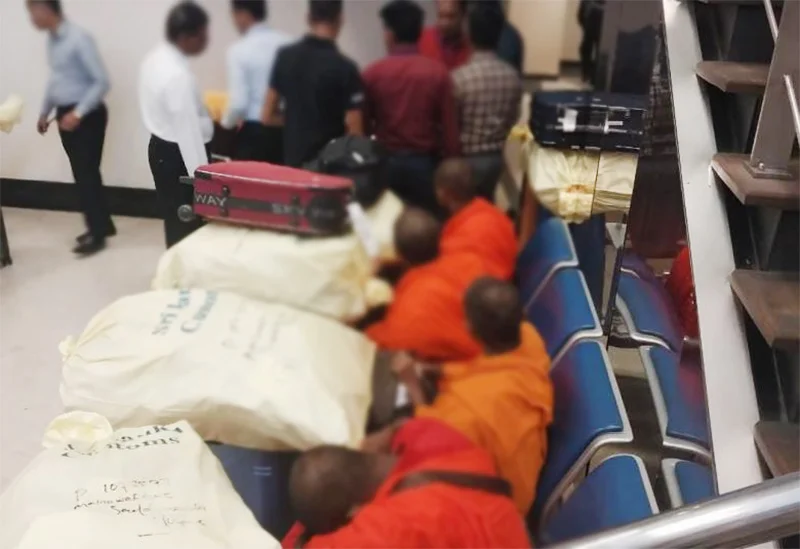
Police investigating the thwarted a bid made by 22 Buddhist monks to smuggle in narcotics, with a street value of Rs 660 mn via BIA, from Thailand, over the weekend, believe the monks who organised the clandestine operation had sent groups of monks to Thailand before.
Sources said that they had brought in narcotics on earlier occasions.
Police have seized the mobile phones used by the suspects and sought INTERPOL assistance.
Earlier, the Negombo Magistrate’s Court remanded those 22 monks, arrested in connection with the largest drug bust in the airport’s history.
The monks were produced before the Negombo Magistrate’s Court and ordered to be held in custody until 02 May, as investigations continue into the alleged smuggling operation and any wider networks involved.
However, other sources said that more than 110 kilogrammes of suspected Kush and Hashish, with an estimated street value exceeding Rs 1.1 billion, had been found, concealed in false-bottoms of their suitcases. The bags reportedly packed with school supplies and sweets are said to have contained over five kilogrammes of narcotics per individual.
The arrests followed a raid by the Police Narcotics Bureau on Saturday night. Investigators have also recovered mobile phone evidence indicating that the group had travelled to Bangkok on 22 April using airline tickets allegedly given by a sponsor. Authorities allege that the suspects were photographed in civilian clothing, while overseas, engaging in activities deemed suspicious.
Police say this marks the first reported instance of a large-scale narcotics operation via the airport involving Buddhist monks. The suspects are young monks from different parts of the country.
By Norman Palihawadana

Plane crashes near South Sudan’s Juba, killing all 14 on board

Gunmen kidnap 23 children from Nigerian orphanage

US press gala shooting suspect charged with attempting to kill Trump

Showers above 75 mm are likely at some places in the Western, Sabaragamuwa, Central, North-western, North-central and Southern provinces and in Mannar district

Hazlewood and Bhuvneshwar lead rout of Delhi Capitals

Govt. assures UN of readiness to introduce ‘vetting process’ for troops on overseas missions

‘Dates have the highest sugar content to fight Coronavirus’

Sunday Island 27 December – Headlines

#SundayIsland 17th December – Headlines

Sunday Island – 28th March

Sunday Island Headlines – 21 March

Sunday Island – 21st February – Headlines
-

 News5 days ago
Lanka faces crisis of conscience over fate of animals: Call for compassion, law reform, and ethical responsibility
-
 News4 days ago
Whistleblowers ask Treasury Chief to resign over theft of USD 2.5 mn
-

 News4 days ago
No cyber hack: Fintech expert exposes shocking legacy flaws that led to $2.5 million theft
-

 News1 day ago
BIA drug bust: 25 monks including three masterminds arrested
-
 Business2 days ago
Nestlé Lanka Announces Change in Leadership
-

 News1 day ago
Banks alert customers to phishing attacks
-
 News2 days ago
Hackers steal $3.2 Mn from Finance Ministry
-
 News5 days ago
USD 2 mn bribe: CID ordered to arrest Shasheendra R, warrant issued against ex-SriLankan CEO’s wife