
News
CEB demands 11.57 percent power tariff hike in first quarter


The Ceylon Electricity Board (CEB) has submitted a proposal to the Public Utilities Commission of Sri Lanka (PUCSL) seeking an 11.57 percent increase in electricity tariffs for the first quarter of 2026, citing an estimated revenue shortfall and additional financial pressures, including cyclone-related damages.
According to documents issued by the PUCSL, the proposed tariff revision would apply to electricity consumption from January to March 2026 and includes changes to both energy charges and fixed monthly charges across all consumer categories, including domestic, religious, industrial, commercial and other users.
Under the proposal, domestic electricity consumers would face increases in unit rates as well as fixed monthly charges across all consumption blocks.
The CEB has estimated a deficit of Rs. 13,094 million for the first quarter of 2026, which it says necessitates the proposed 11.57 per cent tariff hike. The utility has noted that any deviation from this estimate whether a surplus or a shortfall will be adjusted through the Bulk Supply Tariff Adjustment (BSTA) mechanism and taken into account in the next tariff revision.
In its submission, the CEB said the proposed revision is aimed at ensuring the financial and operational stability of the power sector and mitigating potential risks to the reliability of electricity supply. The board-approved tariff structure for the first quarter of 2026 has been submitted to the PUCSL for approval and subsequent implementation, as outlined in Annex II of the proposal.
The CEB has also highlighted the financial impact of Cyclone Ditwah, which it said caused extensive damage to electricity infrastructure, with total losses estimated at around Rs. 20 billion. Of this amount, Rs. 7,016.52 million has been attributed to the first quarter of 2026, which the utility said has a direct bearing on electricity tariffs.
The CEB warned that if external funding is not secured to cover the cyclone-related expenditure, the costs incurred would need to be recovered through electricity tariffs in the second-quarter revision of 2026.
Meanwhile, the PUCSL has said that a decision on whether to approve the proposed tariff increase will be made only after following due regulatory procedures and holding discussions on the matter.
By Sujeewa Thathsara ✍️





Latest News
Landslide Earyly Warnings issued to the districts of Kalutara, Nuwara Eliya and Ratnapura


The Landslide Early Warning Centre of the National Building Research Organisation (NBRO) has issued early warnings to the Districts of Kalutara, Nuwara Eliya and Ratnapura from 1600hrs on 13th June 2026 till 1600hrs on 14th June 2026.
Accordingly,
LEVEL I (YELLOW) landslide early warnings have been issued to the Divisional Secretaries Divisions and surounding areas of Palindanuwara and Agalawatta in the Kalutara district, Ambagamuwa in the Nuwara Eliya and Ayagama, Pelmadulla,
Godakawela, Elapatha, Kalawana, Ratnapura and Nivithigala in the Ratnapura district.

The Indian Naval Ship (INS) ‘Sharda’ departed the island today (13 Jun 26), concluding her replenishment purposes.
On departure the vessel was accorded a traditional naval farewell by the Sri Lanka Navy at the Port of Colombo.
The visit also paved the way for vibrant personnel interactions, fostering camaraderie and goodwill. The crew of INS Sharda and personnel from the Sri Lanka Navy participated in a
friendly volleyball match and a joint yoga session. A
dditionally, Sri Lanka Navy personnel had the opportunity to visit the Indian naval vessel, while the visiting crew took time to explore several culturally significant landmarks across the island.
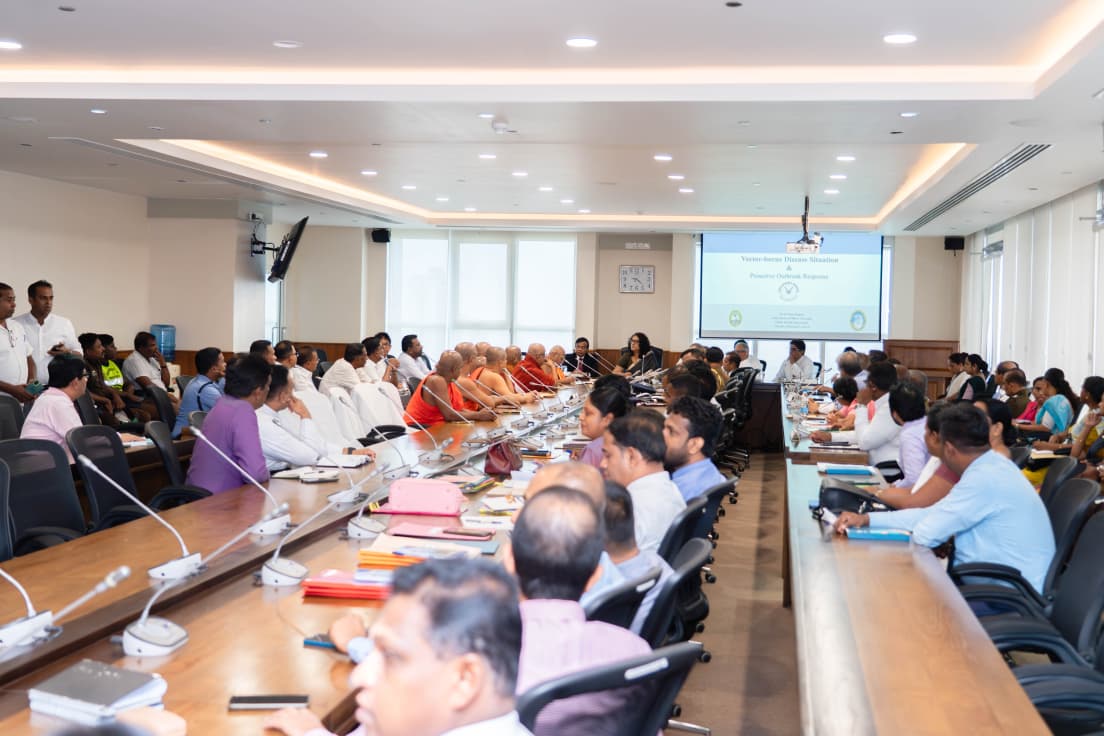
A decision has been taken to declare a Special Dengue Prevention Week from 15 to 21 of June by the Colombo District Dengue Control Committee to curb the spread of the disease in the Colombo District.
This decision was taken at the meeting of the Colombo District Dengue Control Committee held on Friday (12) at the Colombo District Secretariat under the patronage of Prime Minister Dr. Harini Amarasuriya.
Compared to last year, the number of dengue cases reported this year has increased significantly. According to the National Dengue Control Unit, approximately 39,100 dengue cases have been reported island wide to date, of which 25.8% have been recorded in the Colombo District. Following this situation, the Colombo District has been identified as a high-risk district.
Health authorities informed that the increasing spread of the disease has been influenced not only by the nature of circulating virus but also to the lack of sufficient immunity among the population. They further noted that the recent period of heavy rainfall has aggravated the spread of Dengue.
It was also identified that the current outbreak is being reported more frequently from public places such as government institutions, private establishments, schools, and religious venues rather than from residential premises. Observations have identified improperly managed solid waste and drainage systems in offices and other public locations as major breeding grounds for mosquitoes.
Accordingly, during the Dengue Prevention Week from 15 to 21 June, a series of measures will be implemented, including, organising community clean-up campaigns in government and private institutions, schools, residential areas, and other public spaces; Conducting inspections of high-risk premises by Divisional Secretariats and taking legal action, where necessary, followed by awareness programmes; Distributing informational leaflets, displaying banners, and carrying out public awareness campaigns through the media. Health authorities also requested school administrations not to involve students below Grade 10 in school cleaning programmes and to immediately notify the relevant Medical Officer of Health (MOH) office if a student is diagnosed with dengue.
The programme is expected to receive the active support and participation of the district’s political leadership, religious leaders of all faiths, public officials, local government institutions, the tri-forces, the police, and the general public.
The event was attended by the Chairperson of the District Coordination Committee, Members of Parliament, representatives of local government authorities, government secretaries, police officers, and officials representing the education and health sectors, among others.
[Prime Minister’s Media Division]

Landslide Earyly Warnings issued to the districts of Kalutara, Nuwara Eliya and Ratnapura

INS Sharda departs Colombo concluding replenishment visit

Special Dengue Prevention Week declared in Colombo District from June 15 to 21

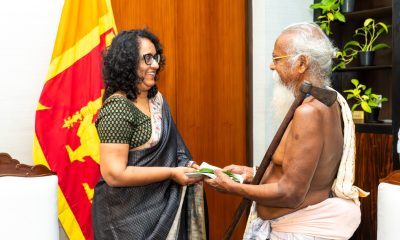
The leader of the indigenous Vedda community Uru Warige Wannila Aththo Meets Prime Minister Dr. Harini Amarasuriya

SpaceX IPO debuts in US markets, Musk becomes world’s first trillionaire

Fans on concourses instead of in seats, claims FIFA

‘Dates have the highest sugar content to fight Coronavirus’

Sunday Island 27 December – Headlines

#SundayIsland 17th December – Headlines

Sunday Island – 28th March

Sunday Island Headlines – 21 March

Sunday Island – 21st February – Headlines
-

 News7 days ago
Women’s T20 World Cup 2026 warm-up: Chamari Athapaththu’s 94 helps Sri Lanka beat Pakistan
-

 News7 days ago
Lankan-Canadian inducted to Toronto Sports Hall of Fame
-

 Editorial6 days ago
Probe Sallay’s complaint
-
 News4 days ago
Local firms move millions of dollars overseas for phantom imports: Govt.
-
 News2 days ago
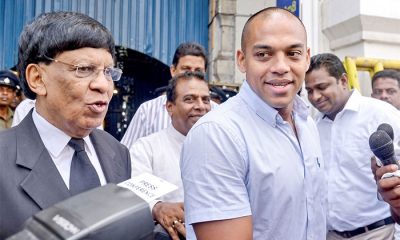
CIABOC summons Yoshitha over his participation in British Navy training programme
-

 Editorial7 days ago
Prez in the dock
-

 Features7 days ago
Entering MIT for my Ph.D program, coping with harsh Boston winter and breasting the tape
-
 Midweek Review4 days ago
July 09: An inexcusable overall security failure and exceptional contingency plan