
Latest News
Foreign warships commended for their assistance during weather disaster in Sri Lanka

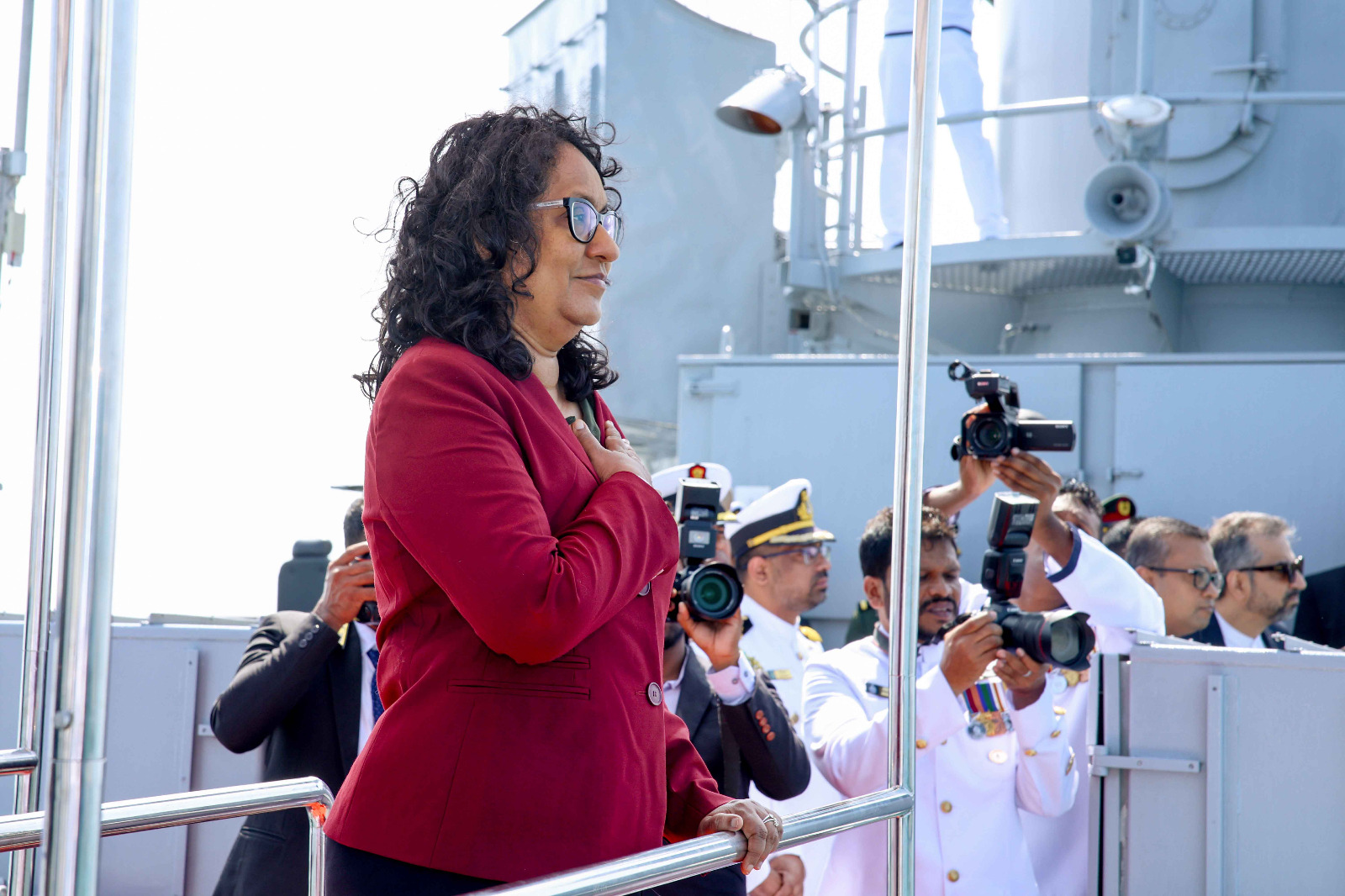
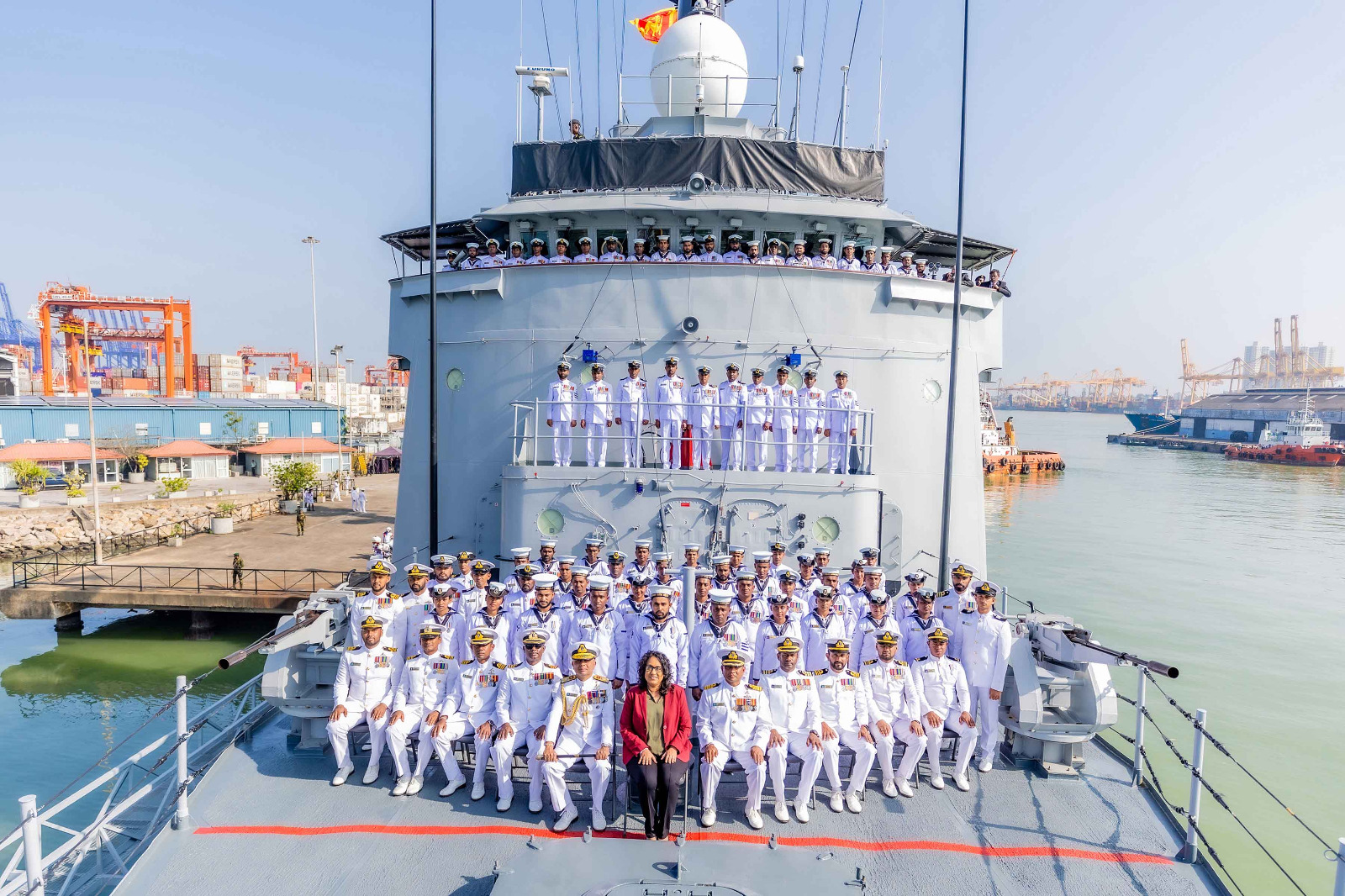
Highlighting the spirit of global and regional cooperation, the Sri Lanka Navy acknowledged the invaluable support by foreign warships, which had arrived to take part in the International Fleet Review (IFR) 2025, extending much-needed Humanitarian Assistance and Disaster Relief (HADR) operations, during the recent weather disaster in Sri Lanka.
The IFR 2025 was held off the Galle Face seas, marking the milestone 75th anniversary celebrations of the Sri Lanka Navy.
Representing the Government of Sri Lanka, Prime Minister Dr. Harini Amarasuriya graced the event and received the traditional naval salute from onboard SLNS Gajabahu, as the participating foreign warships paid their honours.
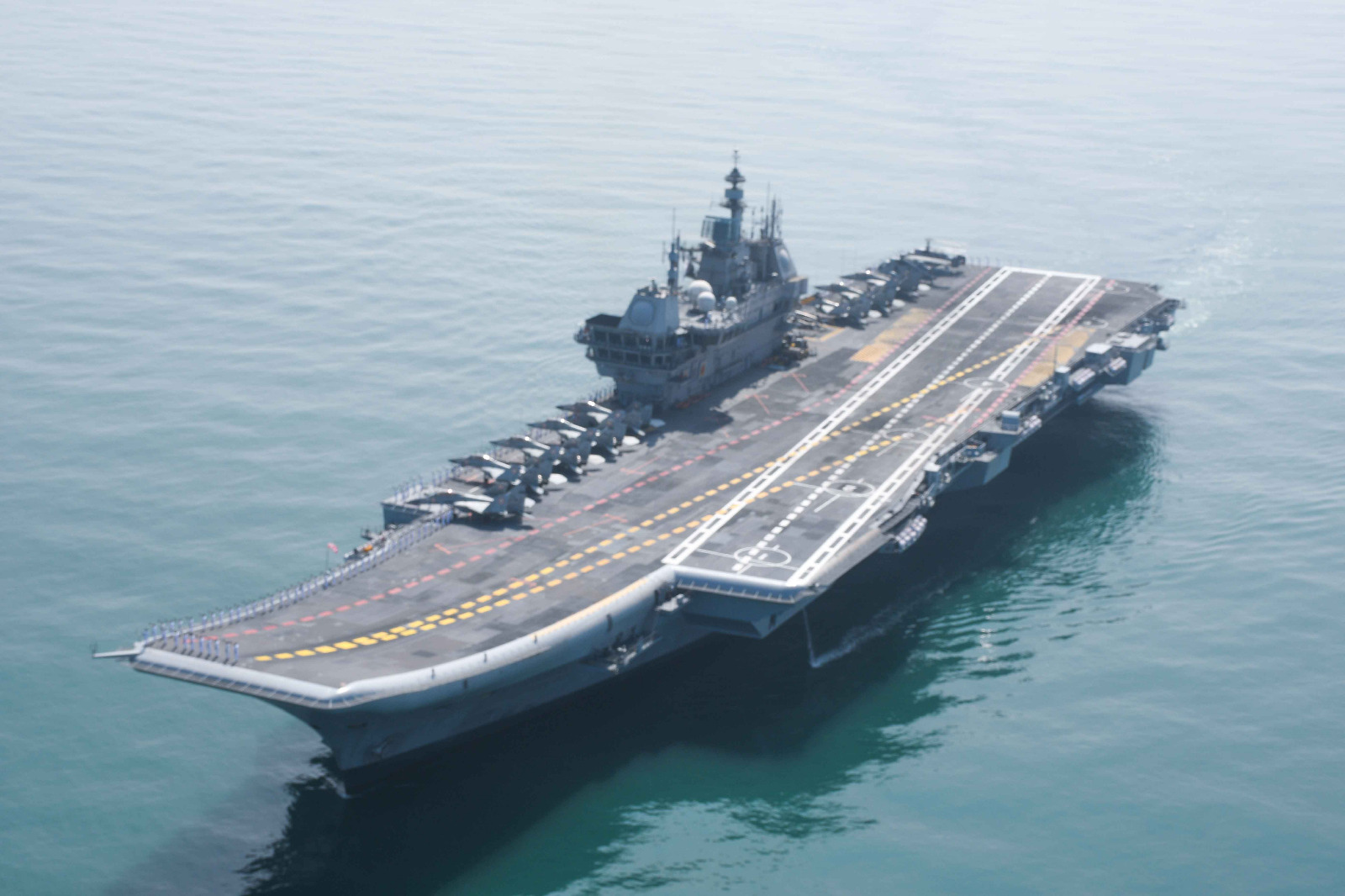
Eight (08) foreign naval warships arrived in Sri Lanka by 27 November to take part in the IFR under the theme “Sailing Strong – Together”. The participating warships included the Bangladesh Navy’s BNS PROTTOY, the Indian Navy’s aircraft carrier INS VIKRANT and INS UDAYGIRI, Iran Navy’s IRIS NAGHDI, the Maldivian Coast Guard’s CGS HURAVEE, the Royal Malaysian Navy’s KD TERENGGANU, Pakistan Navy’s PNS SAIF and Russian Navy’s GREMYASCHCHY.
Due to the disaster-situation triggered by severe weather conditions across the island, foreign warships that arrived for the event were promptly redirected to support humanitarian efforts. Particularly, helicopters deployed from the Indian Navy’s aircraft carrier INS VIKRANT and Pakistan Navy’s PNS SAIF played a praiseworthy role in search and rescue missions for affected communities.
Accordingly, the warships representing each nation joined the IFR, honouring proud maritime traditions and in acknowledgement of Sri Lanka and its Navy. Their participation also reinforced collective cooperation and partnership needed to address non-traditional maritime threats in the region, as well as natural disasters driven by climate change.
The Prime Minister expressed gratitude to a group of diplomatic officials, present on this occasion, for their support in the disaster relief operations. The officials, who were present on the occasion, represented the High Commissions and Embassies of Bangladesh, India, Iran, Maldives, Malaysia, Pakistan, and Russia in Sri Lanka.






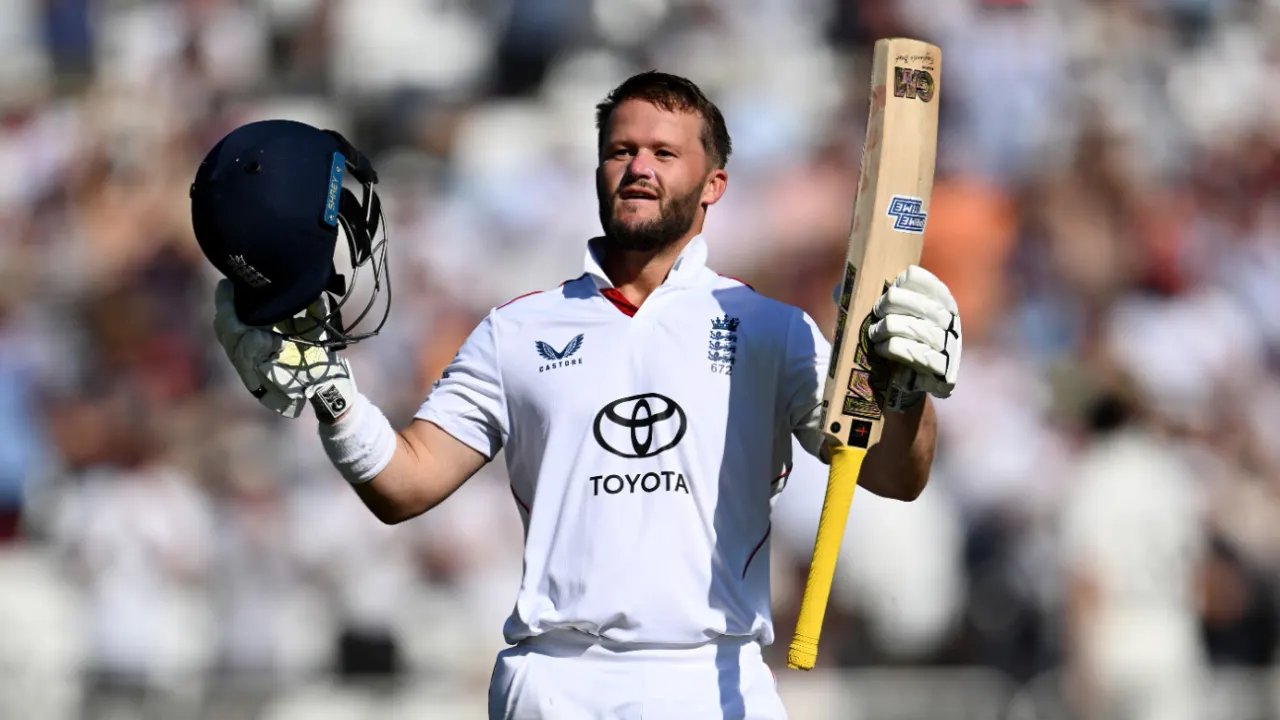
As well as things had gone for New Zealand on day one at Trent Bridge, they went badly on day two. England, led by a four-wicket haul from Ben Stokes, completed their turnaround with the ball to cap the visitors at 438 – having been 317 for 0 – and Ben Duckett then rattled off his first international hundred in more than a year to launch the reply.
Duckett was given a life on 8, dropped in the slips by Henry Nicholls, but went on to form a second-wicket partnership worth 179 at exactly a run a ball with Jacob Bethell, who was eyeing a hundred of his own by the close of another scorching day in Nottingham.
New Zealand’s problems were compounded by a concussion suffered by Blair Tickner, who was struck on the side of the helmet by Jofra Archer while batting and, despite initially being cleared to continue and delivering a three-over spell before tea, did not emerge for the evening session. He was eventually replaced by Zak Foulkes.
With Tickner, Mitchell Santner and Ben Sears – the three changes from New Zealand’s victorious XI at The Oval – all leaking runs at upwards of five an over, things began to unravel for the tourists. When Duckett brought up an 88-ball hundred midway through the evening session, the game had almost completely flipped in trajectory from 24 hours earlier, when Tom Latham and Devon Conway were amassing 150s during their triple-century opening stand.
Having taken two wickets with the last two balls on day one, England continued their fightback on the second morning. Stokes claimed three in the session during an eight-over spell, as New Zealand’s middle order struggled to build on the foundation laid for them, before two in an over from Shoaib Bashir helped wrap the innings up.
It meant New Zealand had suffered a collapse of 10 for 121 and their total of 438, while respectable, was nevertheless the third-lowest in Test history for any innings featuring a 300-run partnership – behind England’s 407 against India at Edgbaston last summer, and the 431 made by West Indies at Sabina Park in 1999 – and the lowest when those runs had been scored by the openers.
England’s momentum was briefly checked when Will O’Rourke had Emilio Gay caught down the leg side for a five-ball duck in the second over. They should have been 8 for 2 when Nathan Smith found Duckett’s outside edge, only for Nicholls to make a hash of the catch at third slip.
Duckett, who had twice drilled Smith for fours in his opening over, was in the mood to make New Zealand pay for such generosity. His next ball also disappeared through the covers, and he used the knowledge of his home ground to good effect, cutting, pulling and clipping his way to ten boundaries in a 40-ball fifty.
With Bethell recovering from a scratchy start against O’Rourke and the probing Smith, England went on to make New Zealand sweat in the field in much the same way they had through two-and-a-half sessions on day one.
Runs flowed in the passage after tea. Santner wasn’t allowed to settle, picked off for five boundaries in his first four overs by Duckett – although one of those, a thick outside edge, might have been held by Daryl Mitchell at slip had he not been stood so wide. From the other end, Sears was pulled and driven by Bethell, leaking 23 runs from three overs as England raced into three figures.
Latham was forced to go back to O’Rourke and, while Santner began to find some rhythm in his first Test appearance in ten months, Bethell worked him leg side for a single to bring up his first half-century in a home Test – and first such score in the first innings, having made all of his previous four in the second dig.
Duckett was by now in the 90s and quickly homed in on the milestone, his seventh hundred in Tests and first since the India series last year – ending a barren run of 22 innings in which he had only passed 50 three times. It was also his fourth 50-plus score in four innings at his home ground and although he was bowled shortly after, dragging on against Smith, Joe Root joined Bethell to steer England to the close two down.
New Zealand had added 77 to their overnight 361 for 4, Blundell’s 30 the only score of note as they fell well short of 500 – a total that looked all but inevitable when Latham and Conway were cashing in after opting to bat in baking conditions. Their frustration at being pegged back perhaps added to a sense of grievance around the dismissals of Mitchell and Santner, with both given out by the third umpire, Adrian Holdstock, after reviews.
The mercury was still rising on the second morning, with temperatures in the mid-30s C again forecast. New Zealand made a largely circumspect start in the knowledge that another long day in the field for England would only strengthen their hand in this deciding Test – only for Stokes to once again wrest the game his way during a tenacious spell with the ball.
O’Rourke, the nightwatcher, provided the main impetus for New Zealand inside the first hour as he advanced to his highest score in first-class cricket – beating the 17 not out he had made for Canterbury against Otago in March 2023. He managed boundaries off Archer, Josh Tongue and Stokes, comfortably eclipsing his previous Test best of 5 not out – and England then fluffed their first chance of a breakthrough as Jamie Smith dived across first slip in pursuit of a thick outside edge, but only managed to fingertip the ball out of Root’s grasp.
Stokes, already a shade of beetroot, threw his arms up in anger but bent himself to the task and extracted Mitchell an over later. Umpire Nitin Menon did not initially grant the appeal as Stokes nipped one past the bat, but UltraEdge detected a feather of an outside edge; Mitchell, however, seemed to think the sound was his bat hitting his front pad as he pushed forward.
O’Rourke was dismissed after the drinks break without having added to his score, and Stokes then chipped out his third of the session, and 250th in Tests, when Santner ducked into a bouncer and ballooned a catch to Bethell in the gully. Santner reviewed, gesturing that the ball had struck him on the arm guard. But Holdstock, in the TV umpire seat, took barely 30 seconds to examine one front-on replay before concluding that there was also contact with the strap of his glove, and upholding the on-field call.
After lunch, Bashir bounced back from dropping Blundell at deep backward square leg – a tough chance off Archer, but one he should have held having made up the ground. Archer’s chagrin appeared to extend to not joining the huddle to celebrate Bashir’s breakthrough a few balls later, when Smith drilled a return catch back – at least until Stokes made a point of calling the fast bowler up from fine leg.
Bashir made it two in four balls when Blundell missed a reverse-hoick at a delivery from round the wicket, which ball-tracking showed had pitched in line on review. With Nos. 10 and 11 at the crease, Archer had Tickner ducking and diving before delivering a full, straight one to pin Sears in front of leg stump first ball.
Scores:
England 223 for 2 in 45 overs (Ben Duckett 113, Jacob Bethell 74*) trail New Zealand 438 in 114.5 overs (Tom Latham 151, Devon Conway 157; Ben Stokes 4-70) by 215 runs
[Cricinfo]

A new earthquake has been detected off the northern coast of Venezuela, registering as magnitude 4.9 on the Richter scale.
The tremor on Friday comes days after a pair of powerful earthquakes struck the country on Wednesday evening, killing at least 920 people and leaving parts of the capital of Caracas devastated.
The earthquake tracker organisation EMSC said in a social media post that the latest earthquake took place 61 kilometres (36 miles) northwest of Maracay in northern Venezuela.
Additional details are not yet known, but the news service Reuters reported that tremors from Friday’s earthquake were felt in Maracay and Caracas, citing local witnesses.
The South American nation is still reeling from the two earthquakes on Wednesday, one which registered 7.2 and the other 7.5 on the nine-point Richter scale.
The death toll is expected to climb, with the US Geological Survey estimating that the number of casualties could exceed 10,000.
At least 3,360 people have been reported injured, and more than 172 people remain trapped beneath the rubble. The number of missing has surpassed 50,000, according to the Venezuelan government.
On Friday, Interior Minister Diosdado Cabello announced that there would be restricted access to some of the areas hardest hit by the earthquake in the state of La Guaira.
Residents have been organising to collect supplies and search for survivors. Some have even used their vehicles as improvised ambulances.
The Venezuelan government, meanwhile, has loosened restrictions on social media platforms like X, which were blocked in the wake of the disputed 2024 presidential election.
That, in turn, has allowed community members to share information about missing loved ones.
“It’s the community that has managed to get people out alive,” said 25-year-old Jennifer Palacios, whose six-year-old son is buried beneath the rubble along with five relatives. “We need them to bring cranes to move the slabs. There are still people trapped.”
[Aljazeera]

The United States has renewed its attacks against Iran in response to an incident a day earlier when a cargo vessel was struck by an Iranian drone.
On Friday, the US Central Command, which oversees military operations in the Middle East, said it had issued a “powerful response to yesterday’s attack”.
“US aircraft struck Iranian missile and drone storage locations and coastal radar sites,” CENTCOM said in a statement.
“Iran’s dangerous behavior undermined freedom of navigation as commerce increasingly flows through the vital international trade corridor.”
US strikes were reported near the southern Iranian port of Sirik after the announcement.
Afterwards, Iran’s Islamic Revolutionary Guard Corps (IRGC) said it responded with attacks against US military installations in the region.
In a statement to the government news service IRNA, the IRGC warned, “In the event of repeated aggression, our response will be more extensive than this.”
The exchange of fire has left questions swirling over whether a June 17 memorandum of understanding (MoU) signed between the US and Iran will hold.
Each side has accused the other of violating the deal, which included a ceasefire.
The document called for a “permanent” end to “military operations on all fronts, including in Lebanon”, effectively pausing the war the US and Israel had launched against Iran on February 28.
The memorandum was not final but was rather framed as a precursor to further negotiations, including over traffic through the Strait of Hormuz, a vital waterway for global trade.
[Aljazeera]

Maliban Biscuits and Peoples Leasing PLC qualify for CDB-MCA T10 Tier B final

Focus on developing the Coconut and Food & Beverage export industries into a USD 3 billion economy within the next two years

Another 1,132 Sri Lankan Personnel to be deployed for United Nations Peacekeeping Missions

Ben Stokes four-for, Ben Duckett hundred as England roar back

Venezuela shaken by magnitude 4.9 tremor days after major earthquakes

US strikes Iran in response to drone strike on commercial ship

‘Dates have the highest sugar content to fight Coronavirus’

Sunday Island 27 December – Headlines

#SundayIsland 17th December – Headlines

Sunday Island – 28th March

Sunday Island Headlines – 21 March

Sunday Island – 21st February – Headlines
-

 Features6 days ago
Nanda Pethiyagoda Wanasundara as three generations of family saw her
-

 Features5 days ago
Sri Lanka developing independent hydrographic capabilities
-
 Opinion4 days ago
Ranasinghe Premadasa: The man who would not take ‘No’ for an answer
-

 Editorial6 days ago
Fuel crisis: Beyond price debate
-

 Latest News6 days ago
Sooryavanshi thumps fastest List A fifty as India A win tri-series
-

 News4 days ago
US Assistant Secretary of State for South and Central Asian Affairs meets President
-

 Features6 days ago
The Sirisena – Ranil conflict and events leading to MR’s return as PM
-

 Business5 days ago
University of West London opens Sri Lanka’s first full UK university branch campus