
News
UN Global Compact Network Sri Lanka appoints Talawakelle Tea Estates PLC as Climate Emergency Task Force Patron


UN Global Compact Network Sri Lanka has appointed Talawakelle Tea Estates PLC (TTE PLC) as Patron of its Climate Emergency Task Force, citing the company’s long-standing engagement in climate resilience, sustainability and low-carbon transformation within the plantation sector.
The appointment comes amid growing climate-related challenges facing Sri Lanka’s tea industry, including rising temperatures, erratic rainfall, soil degradation and increased incidence of floods and droughts. These impacts have begun to affect productivity, infrastructure and community wellbeing across both high-grown and low-country estates.
TTE PLC, one of the country’s leading plantation companies, has implemented a range of adaptation and mitigation measures in response. According to the company, erratic rainfall in highland estates has led to soil erosion, damage to estate roads and factory infrastructure, and reduced soil moisture, while southern low-country estates have experienced heat stress among workers, flash floods and heightened risks of vector-borne diseases.
In response, the company has expanded initiatives focused on reforestation, soil and water conservation, rainwater harvesting and watershed protection. These measures aim to strengthen sustainable tea cultivation while improving regional water security and community resilience.
UN Global Compact Network Sri Lanka said the Patron role recognises TTE PLC’s sustained investment in renewable energy, carbon management, water stewardship, biodiversity conservation and social development. As Patron, the company is expected to support the Task Force’s efforts to promote coordinated private-sector action on climate change.
TTE PLC reports that its renewable energy generation exceeded 30,800 gigajoules in 2024 and 2025, reducing reliance on fossil fuels. Micro-hydro projects across several estates generated approximately 7,975 megawatt-hours of electricity during the 2024/25 period, supplemented by rooftop solar installations at factories. The company also maintains an externally assured greenhouse gas inventory, recording 23,431 tonnes of carbon dioxide equivalent in its most recent reporting cycle, a year-on-year reduction of about seven per cent.
The company has stated that it is the first Sri Lankan plantation entity to assure climate disclosures under the SLFRS S1 and S2 standards. In addition, more than Rs. 58 million was invested during 2024 and 2025 in projects related to reforestation, water security and energy efficiency, alongside waste management initiatives that reduced estate waste volumes.
Community engagement forms a central component of TTE PLC’s approach. Estate families are involved in the design of rainwater harvesting systems, community nurseries supply seedlings for reforestation programmes, and home gardening initiatives aim to improve household food security. Digital platforms are also used to promote awareness on waste management and resource conservation.
UN Global Compact Network Sri Lanka said the appointment highlights the role of the plantation sector in advancing national climate goals. TTE PLC’s climate roadmap includes targets to ensure year-round water availability by 2030, fully integrate regenerative agriculture practices by 2035, and achieve net-zero emissions by 2050.


The NPP government has not taken a final decision regarding filling of the vacancies in the judiciary.
A group of Opposition MPs, led by SJB leader Sajith Premadasa, on 12 June, requested Speaker Dr. Jagath Wickremeratne to take up the issue of judicial vacancies with President Dissanayake. Opposition sources said that there were four vacancies, each in the Court of Appeal and the Supreme Court, and the inordinate delay had adversely affected the judiciary.
Government sources indicated that there was no change in the status quo as regards filling of vacancies. Referring to the government proposal to extend the retirement age of judges, authoritative sources said that no final decision had been taken yet.
SJB lawmaker Dayasiri Jayasekera told The Island that they would raise the issue in Parliament this week.
He said that the deliberate delay in making appointments to superior courts and the move to extend the retirement age couldn’t be taken separately.
The MP noted that the Bar Association of Sri Lanka, the Lawyers’ Collective, the Colombo High Court Lawyers’ Association, Colombo Magistrate’s Court Lawyers’ Association and the Bar Association of Badulla had opposed the government move.
There hadn’t been any public statements in support of the government move, MP Jayasekera said, urging the government to end uncertainty in the judiciary.
by Shamindra Ferdinando
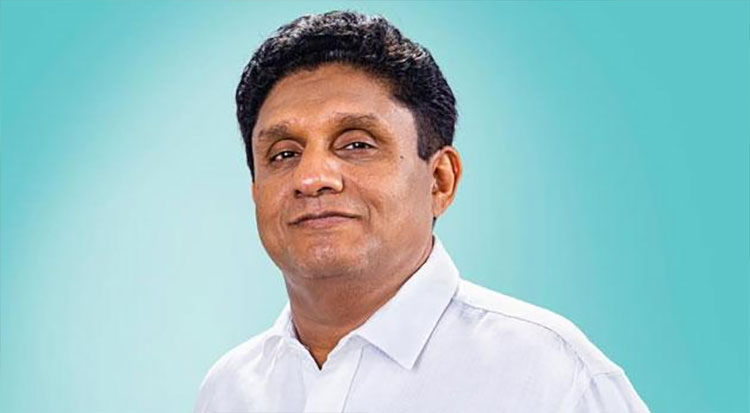
SJB leader Sajith Premadasa has invited the UNP and other political parties to join his party. Premadasa, who is also the leader of the Opposition, has emphasised that the UNP and the SJB could reach a consensus on policies but his party wouldn’t, under any circumstances, accept whatever formula to share positions. Premadasa said so, speaking to the media over the weekend, after meeting the Mahanayaka Thera of the Malwatta Chapter of the Siyam Nikaya Most Venerable Thibbatuwawe Sri Siddhartha Sumangala Thera.
A statement issued by the Opposition Leader’s Office quoted MP Premadasa as having extended an invitation to all political parties to give up extremist policies and join the SJB.
The SJB leader alleged that the NPP government feared facing elections and that was the reason for the inordinate delay in holding Provincial Council polls. PC polls were last held in 2012, 2013 and 2014, on a staggered basis. Premadasa said that if PC polls were held his party would definitely win the majority of PCs.Premadasa also urged the government to reduce electricity tariffs and fuel prices.
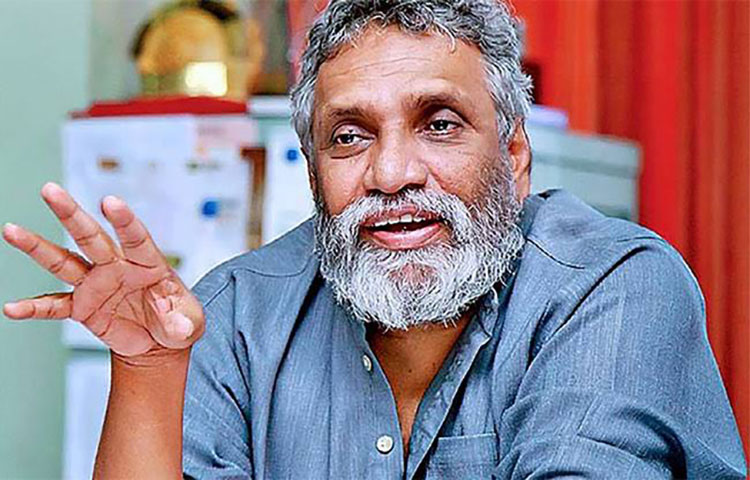
Former Chairman of the Election Commission, Mahinda Deshapriya, on Saturday, strongly criticised the continued postponement of local government elections, declaring that every day without elections constitutes a violation of both the Constitution and democratic principles.
Speaking during an interview with journalist Bhanuka Rajapaksa, on Hiru TV, on Saturday, Deshapriya described the current administration of local government institutions by unelected officials as fundamentally undemocratic and contrary to the spirit of representative governance.
Deshapriya said local authorities, across the country, are presently being managed by secretaries and bureaucrats rather than elected representatives, depriving citizens of their democratic right to be governed by individuals, chosen through the electoral process.
“If the Constitution recognises and provides for local government institutions, then it is the responsibility of the State to ensure that elections are held and that these bodies are administered by representatives, elected by the people,” he said.
Deshapriya rejected attempts to justify the prolonged delay, arguing that responsibility for the situation rests with the government.
He noted that while various political parties have publicly stated their readiness to face elections, the ruling administration possesses the authority to resolve any issues relating to the electoral system.
The former Election Commission chief pointed out that the government enjoyed a two-thirds majority in Parliament, enabling it to enact any legislative amendments required to facilitate the conduct of elections. Instead, he said, successive committees and review processes had been used to postpone a final decision.
He also referred to efforts by opposition legislators who have moved motions seeking to address concerns relating to the electoral framework and expedite the holding of local government polls.
Deshapriya warned that any attempt to appoint a fresh delimitation committee could further delay the electoral process, making it unlikely that local government elections would be held within the current year.
He also dismissed claims that financial constraints have prevented the conduct of elections. Expressing surprise at such assertions, he questioned how funding shortages could be cited as a reason for postponement while expenditure continues in other sectors.
According to Deshapriya, the existence of laws establishing local government institutions imposes an obligation on the State to ensure that those institutions are populated through democratic means.
“The legal framework exists. If elected representatives are not appointed through elections and institutions continue to function under unelected administrators, that is a failure of the State,” he said.

Largest ever cocaine bust in Australia after police raid underground bunker

Mohamed Salah scores as Egypt beat New Zealand for first World Cup win

Lamine Yamal scores first World Cup goal as Spain thrash Saudi Arabia

Shahidi sanctioned for running on the pitch during Chennai ODI

Kapp’s 81* seals South Africa’s come-from-behind win against India

Belgium see red in goalless World Cup draw with Iran in Los Angeles

‘Dates have the highest sugar content to fight Coronavirus’

Sunday Island 27 December – Headlines

#SundayIsland 17th December – Headlines

Sunday Island – 28th March

Sunday Island Headlines – 21 March

Sunday Island – 21st February – Headlines
-

 News6 days ago
Beijing Capital Airlines to resume flights to Colombo signalling boost to tourism
-
 Features5 days ago
Killing of Colombo’s ancient trees — a warning on UN’s World Desertification Day – 17 June
-

 News3 days ago
Creditor receives USD 2.5 mn as Lankan public bears loss from theft of Treasury funds
-

 News2 days ago
Creditor not yet paid
-
 News2 days ago
Consumers bearing 22% tax burden despite 18% VAT claim: Dr. Harsha de Silva
-

 Opinion4 days ago
Beyond diagnosis: A strategic design for 7% growth by 2029 (Part I)
-

 Opinion6 days ago
Fifty years after Soweto uprising
-
 News5 days ago
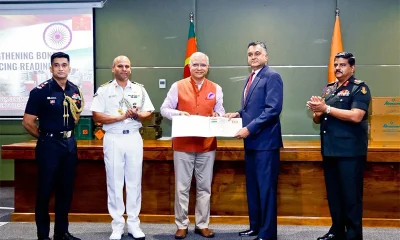
India provides military stores worth USD 5.5 mn to SL