
Latest News
The full speech delivered by President Anura Kumara Dissanayake in Parliament (2025-12-19)


“Today, we have presented to Parliament the largest supplementary estimate submitted in recent history. On the 5th of this month, following a lengthy debate, this Parliament approved the Budget required for the year 2026. However, within a very short period, we have been compelled to present a supplementary estimate amounting to Rs. 500 billion.
This Parliament acknowledges that such a supplementary estimate is necessary both to restore normal life following the prevailing disaster situation and to revive our economy. However, I am aware that there is a discussion within Parliament and outside it suggesting that, as a result of this Rs. 500 billion, the economy will collapse by April.
I wish to provide some clarification regarding claims that the economy will face a serious threat as a result of presenting such a large sum through a supplementary estimate.
We are a government that has worked with strong fiscal discipline and clear targets. If we consider the year 2025, we have achieved success across a number of important economic indicators this year.
As you know, for a long period the Treasury account operated under a bank overdraft. At times, interest rates of 33% or 36% were paid on these overdrafts.
In 2018, the bank overdraft stood at Rs. 180 billion. In 2019, it increased to Rs. 274 billion; in 2020 to Rs. 575 billion; and in 2021 to Rs. 821 billion. In other words, the government’s bank account was overdrawn by Rs. 821 billion.
However, by November 2025, the balance of the government’s Treasury account had reached Rs. 1,202 billion. That represents an increase of Rs. 2 trillion compared to 2021. This is a very significant development for our country’s economy.
Had such a reserve not existed, we would not have been able to allocate this Rs. 500 billion today. In that case, we would have had to identify several alternative strategies to raise this amount. Secondly, in terms of revenue, Sri Lanka has recorded the highest level of government revenue since 2007 in the year 2025, at 15.9%. Thirdly, the lowest budget deficit since 1977 has been recorded, at 4.5%.
Moreover, this year has become the year in our history in which revenue targets were exceeded. This year, we expected revenue of Rs. 4,960 billion; by 15 December 2025, we had already generated Rs. 5,125 billion in revenue. At the same time, we were able to refrain from increasing the debt ceiling.
When presenting the 2026 Budget, we stated that we expected a debt ceiling of Rs. 3,800 billion. However, through our budget proposals, we reduced this by a further Rs. 60 billion and are maintaining a debt ceiling of Rs. 3,740 billion.
We are utilising this additional Rs. 500 billion without increasing our debt ceiling. This is extremely important. As a result, after a long period, we have been able to remain within the debt limits anticipated in the Budget.
Furthermore, since 1950, a surplus in our primary account has been recorded on only about six occasions. Over a period of 74 years, a positive primary balance has been recorded only six times, and on all six occasions it was below 1%. However, for the first time in history, the primary surplus this year is being reported at 3.8%.
This year, Sri Lanka is receiving the highest level of foreign remittances in its history. Tourism earnings amounted to approximately USD 3.8 billion in 2018, and we expect to surpass that figure. We expect our export earnings from goods and services to reach close to USD 18 billion.
These figures demonstrate that this success has been achieved as a result of strong financial management and disciplined, target-oriented governance.
However, we did not have an economy capable of withstanding major shocks. What we had was an economy in which even a small or misguided decision could result in severe destruction. Therefore, over the past 14 to 15 months, we have acted with extreme caution, avoiding mistakes and carefully examining even the most delicate aspects and have brought the economy to a position of stability.
No one can deny this. However, it is within such a context of economic stability that we have faced this shock. Had we not been in a position of economic stability and strength, we would not have been able to confront this situation.
It is the economic stability we have achieved so far that has created the courage and confidence necessary for us to face this challenge. However, we are also aware that the economy had not yet grown to a level capable of fully absorbing such a shock. This shock was inflicted on our economy at a time when we were rebuilding a collapsed country step by step.
Therefore, the economy must be managed through careful and finely calibrated interventions required to absorb and mitigate this shock. However, an economy is not about hoarding wealth like a miser and accumulating everything in one place. An economy means that if any benefit is derived from it, that benefit must in turn flow back to the people.
Otherwise, there is no benefit to the people merely in having trillions of rupees in surplus in the Treasury. Therefore, if we achieve even a small victory in the economy, that victory must be allowed to flow through to the people.
Accordingly, in this disaster situation, the reserves amounting to Rs. 1.2 trillion that we possess must be utilised to provide relief to the people. We will not refrain from doing so.
Our country has a history in which those in power shared benefits among themselves using large ladles. Was it just that compensation was paid to ministers after houses were set on fire?
There has always been a precedent in this country of those in power allocating themselves a large share, while distributing to the people with small ladles.
We did not form a National People’s Power government in order to distribute benefits to the government using large ladles. Our intention is to provide fair benefits to the people. Therefore, we have intervened to support the people fairly in overcoming this crisis.
Our policy approach is centred on how we intervene to enable people to restart their livelihoods and lead more stable lives once again. It is for this purpose that we are seeking Rs. 500 billion. Accordingly, we have allocated total provisions exceeding Rs. 700 billion for this purpose.
A report containing a preliminary assessment conducted by the World Bank on this matter is scheduled to be provided to us next Monday. The total extent of the damage can be ascertained from that report. However, there are several key matters to which we are paying close attention.
We are taking into account the potential inflationary impact of an additional Rs. 500 billion entering the market. Accordingly, efficiency in the production of goods and services must be enhanced.
A significant portion of the funds we allocate must therefore be spent on achieving growth in the production of goods and services. When approximately Rs. 500 billion is injected into the market, there is a likelihood of a corresponding increase in demand for US dollars. This is a reality we must clearly recognize.
Accordingly, it is essential to generate additional foreign exchange earnings in dollars, over and above the anticipated inflows. Failing to do so would exert pressure on the exchange rate. To mitigate this risk, we are seeking immediate financial assistance of USD 200 million from the International Monetary Fund. The IMF Executive Board is scheduled to meet, and we are confident that a fair and positive decision will be taken. In parallel, we are also expecting support from the World Bank and the Asian Development Bank. Therefore, beyond the dollar inflows projected under the 2026 plan, it is necessary to mobilize at least an additional USD 500 million.
Our focus is to carefully manage inflation and contain any adverse impact on the exchange rate. In this regard, a structured plan has been developed for the allocation of these funds. Accordingly, I will present the full framework of the proposed relief package in due course.
Once the emergency disaster situation has subsided, a payment of Rs. 25,000 is being provided to affected families to support the cleaning and restoration of their homes. This allowance is applicable to all eligible households. I am aware, however, that certain practical challenges arise in the implementation process. The determination of eligibility is carried out by public officials, including Grama Niladhari. Politicians neither distribute these funds nor make eligibility decisions. That said, if any individual has been treated unfairly, or if a deserving beneficiary has not received the payment, the political authority will intervene to review and address the issue.
This is the established and proper procedure. Claims suggesting that signatures from political committees are required are entirely false and misleading. A clear, structured mechanism has been established and is being implemented strictly through the state administrative system. Given the diversity of circumstances on the ground, some delays in the selection and verification process are inevitable and should be understood as natural. This is a reality we all recognize. The allowance is being distributed without discrimination. According to current reports, nearly 65% of eligible beneficiaries have already received the payment, while in some districts, distribution has reached 90% to 100% completion.
In addition, a further Rs. 50,000 allowance will be provided. This payment is intended to support families whose homes have been damaged or whose household furniture has been affected, enabling them to replace essential kitchen items. Every affected household will be eligible for this allowance. No previous government has implemented assistance of this nature in such a manner, this initiative is being carried out strictly based on a clear policy framework and guiding principles. According to the latest reported data, there are 6,228 fully damaged houses, 4,543 partially damaged houses deemed unsafe by the NBRO and 6,877 houses with no visible damage but not approved for occupancy by the NBRO. This brings the total number of affected houses to 17,648.
As a first step, all 17,648 households will receive a monthly allowance of Rs. 50,000 for a period of three months, commencing in January. We are also fully aware of the severe hardships faced by families living in displacement camps. Therefore, our objective is to relocate them from these facilities as quickly as possible and provide a housing rental allowance of Rs. 25,000, in accordance with the three categories previously outlined, to enable them to return to normal living arrangements. This allowance will be provided even if the affected families are temporarily residing with relatives.
In parallel, we have decided to expedite the resumption of agricultural activities. A large number of reservoirs under the Irrigation Department, Provincial Irrigation Departments and the Department of Agrarian Development have sustained damage. Steps are being taken to restore these facilities at the earliest possible time to ensure the availability of water for the upcoming Maha season. To this end, district-level discussions have been conducted across the country and the necessary assistance and concessions required for cultivation have already been extended to the farming community.
Accordingly, it has been decided to provide Rs. 150,000 per hectare to farmers who have cultivated paddy, maize, groundnuts and other cereal crops. Even where the extent of damage is relatively limited, it is essential to support farmers in rebuilding their livelihoods. We understand the deep personal and emotional loss experienced when cultivated land is destroyed. A farmer’s daily routine, walking to the field each morning, observing the crop and taking pride in its growth is closely tied to their sense of purpose. The psychological distress caused by the loss of such a harvest is fully recognised. Arrangements have been made for the Department of Agrarian Development to credit the relevant compensation amounts to the bank accounts of all farmers who received fertiliser subsidies by the course of next week.
In addition, farmers engaged in the cultivation of chillies, onions, papaya and banana will be classified under the vegetable crop category and will receive Rs. 200,000 per hectare as assistance. A number of proposals were received from the export agriculture sector. Accordingly, a decision has been taken to provide compensation for pepper, cardamom and coffee cultivations. All the necessary data required for this purpose have been provided. Based on those data, it has been decided to pay Rs. 250 per pepper plant. The Department of Export Agriculture has also agreed to provide new plants.
The livestock sector was the next major issue we were required to address. For paddy cultivation, the unit of measurement is a hectare. For vegetable cultivation, it is an acre. However, there is no such fixed unit of measurement for livestock farming. How many animals are there? There is a wide variety of animals. Even within the same species, animals vary in size. Therefore, the diversity is considerable.
So the question is how we ensure fairness in the face of this diversity. In addition, livestock farmers must be registered with the veterinary office. We need to consider unregistered livestock farming separately. As a first step, we have prepared plans for registered livestock farms. Accordingly, compensation of Rs. 200,000 will be provided for each hybrid cow lost, up to a maximum of ten cows, amounting to a maximum of Rs. 2 million.
For a non-hybrid indigenous cow, compensation of Rs. 50,000 will be provided per animal, up to a maximum of twenty cows, amounting to Rs. 1 million. The primary responsibility of every livestock farmer must be to register with the veterinary office. At the very least, farmers must report the number of animals they own every six months. If veterinary services are provided to an unregistered farm, a fee will have to be charged.
From this point onwards, services cannot be provided free of charge. Unregistered farmers will not be permitted to transport cattle from one province to another. Therefore, registration is essential. However, if a pig, goat or sheep has been lost, compensation of Rs. 20,000 per animal will be paid, up to a maximum of twenty animals. Accordingly, such plans have been prepared to revive the livestock sector.
Next, in the poultry sector, there are several different categories. For each layer chicken that has died, compensation of Rs. 500 will be provided, up to a maximum of 2,000 birds. Accordingly, if 2,000 birds have been lost, compensation of Rs. 1 million will be received.
For broiler chickens, compensation of Rs. 250 per bird will be paid, up to a maximum of 4,000 birds. There are many backyard poultry farms to which birds were provided to encourage farmers. We have decided to provide them as well with a grant of Rs. 10,000. Chicks can also be obtained free of charge again through the Provincial Council.
There are several issues within the fisheries sector. Those engaged in marine fishing cannot operate without insuring their boats. The Ministry of Fisheries issues fishing licences only if the boats are insured.
Everyone engaged in ocean fishing has insurance. However, although compensation is received through insurance, that amount is insufficient to purchase a new boat. We therefore decided that the insurance compensation should be paid to the Cey-Nor Foundation, which will then provide a new boat. A voucher worth Rs. 100,000 will be provided for fishing nets and gear. Once that voucher is submitted to the Cey-Nor Foundation, fishing nets and equipment can be obtained.
Our objective is to rejuvenate the fisheries industry. In addition, boats that have suffered minor damage will be repaired free of charge by the Cey-Nor Foundation and returned. Similarly, for a canoe used in inland fisheries, Rs. 100,000 will be provided, along with up to five nets through the fisheries society, at Rs. 15,000 per net, totalling Rs. 75,000.
In some tanks, approximately 35% of the fish fingerlings have been washed away. In some tanks, all of them have been washed away. The Ministry of Fisheries will provide fingerlings to damaged reservoirs on two occasions.
Schoolchildren affected by the disaster will receive Rs. 10,000 from the President’s Fund and Rs. 15,000 from the Treasury. We will make every effort to provide this assistance to schoolchildren before the new school term begins.”


Minister of Power and Energy Kumara Jayakody and Ministry Secretary Prof. Udayanga Hemapala have resigned from their respective positions today (17)

Rwanda will host the inaugural Women’s Challenge Trophy, which starts on April 18 in Kigali with Rwanda taking on Italy, in the first game and Nepal facing USA in the second game later in the day. The tournament, which will run till May 1, also features Vanuatu, and has a total of 20 games over ten match days.
The tournament is a new one in the ICC’s calendar, organised to provide match exposure to the second rung of Associate women’s teams. The eight-team Emerging Nations Trophy, introduced last year, featured the highest-placed teams from the ICC’s five regions, and this one pits the next-highest-placed teams. The teams were confirmed based on their positions at the regional T20 World Cup qualifiers last year.
“A double round-robin format assures maximum match exposure for teams, so that participants are better prepared to play stronger opposition in the years to come,” the ICC said in a statement. “This falls in line with the ICC’s commitment to deliver competitive cricket with context for all its members as it moves to continuously grow the women’s game.”
The matches will be played at Gahanga Cricket Stadium, a facility that has two adjoining grounds which host international cricket – Gahanga Cricket Stadium Main Oval and Gahanga Cricket Stadium Oval B.
“This tournament is a testament to the growth of Rwandan cricket and would not be possible without the unwavering support of our stakeholders, partners, and the ministry of sports,” president of Rwanda Cricket Association Stephen Musaale said. “To our incredible fans: we call on you to fill the stands at Gahanga with your energy and passion. Let us show the world the warmth of Rwandan hospitality as we cheer on our team in this historic chapter of our sporting journey.”
Schedule of matches
April 18: Rwanda vs Italy and Nepal vs USA
April 19: Rwanda vs Vanuatu and Italy vs Nepal
April 21: Rwanda vs USA and Vanuatu vs Italy
April 22: Rwanda vs Nepal and USA vs Vanuatu
April 24: Nepal vs Vanuatu and Italy vs USA
April 26: Rwanda vs Vanuatu and USA vs Nepal
April 27: Rwanda vs Italy and USA vs Vanuatu
April 28: Rwanda vs Nepal and Italy vs Vanuatu
April 30: Italy vs USA and Nepal vs Vanuatu
May 1: Rwanda vs USA and Italy vs Nepal
(The first matches will start at 9am local time and the second at 1pm local time)
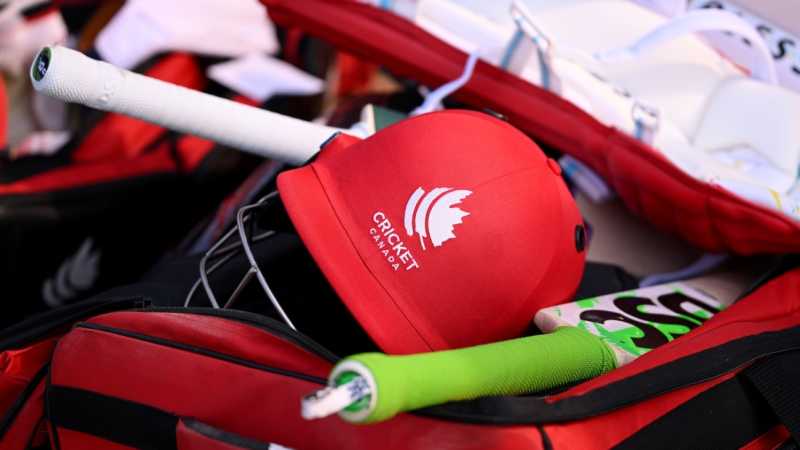
The ICC’s Anti-Corruption Unit (ACU) is investigating allegations of corruption involving Cricket Canada, one of which focuses on a game involving Canada from the recent men’s T20 World Cup in India and Sri Lanka.
ESPNcricinfo understands the ACU has two active investigations that span elements of Cricket Canada and allegations of breaches of the ICC’s anti-corruption code at international and domestic level as well. The existence of the allegations emerged in a documentary ‘Corruption, Crime and Cricket’, produced by the fifth estate, a Canadian investigative documentary programme. The 43-minute film, aired by the public broadcaster CBC (Canadian Broadcasting Corporation) on Friday, makes wide-ranging accusations of corruption and governance at Canada Cricket.
According to the documentary the claim of corruption at the World Cup comes from Canada’s game against New Zealand. Under scrutiny is the fifth over of New Zealand’s chase when the captain Dilpreet Bajwa came on to bowl. Bajwa, then 22, was appoi ted captain three weeks before the tournament began.
Primarily a batting allrounder who bowls offspin, Bajwa took the ball with New Zealand 35 for 2. Canada had opened the bowling with pace in Jaskaran Singh and Dilon Heyliger, but in a poor start they conceded 15 and 14 runs respectively. They switched to spin as early as the third over, when Saad bin Zafar came on and bowled a wicket maiden. Heyliger took a wicket in the next over – the fourth – and then Bajwa came on. He began the over with a no-ball, bowled a wide down the leg side and ended up conceding 15 off the over.
The other investigation stems from a recording of a telephone call involving then Canada coach Khurram Chohan, in which he claims that senior (now former) Cricket Canada board members put pressure on him to select certain players to the national side. The audio was leaked last year and has been under ACU investigation since. The recording also contains claims of attempts to fix in matches, though those involve challenges in corroborating with actionable evidence.
“The ACU is aware of the programme broadcast by CBC,” Andrew Ephgrave, interim General Manager of the ICC’s Integrity Unit, said in a statement to ESPNcricinfo. “Consistent with its established operating procedures, the ACU is not in a position to comment on the substance of any allegations contained within it.
“Governance matters in relation to ICC Members are considered by the ICC, where they fall under its jurisdiction, in accordance with the ICC’s standard constitutional processes.
“The ICC’s Anti-Corruption Unit operates across three core functions: intelligence, prevention and education, and investigation. These functions operate concurrently and are applied wherever there is a credible basis to believe the integrity of the sport may be at risk.”
The documentary also interviews another former coach, Pubudu Dassanayake, who makes a similar claim on undue influence being applied on him in squad selections, in his case for the 2024 T20 World Cup. The fifth estate said the board tried “to force” Dassanayake to select certain players and when he didn’t, he was told his contract would be terminated. Dassanayake is suing Cricket Canada for wrongful dismissal.
Canada’s players faced delayed payment of prize money due to them from the 2024 T20 World Cup and the documentary claims that national players were uncontracted from July 2025 and then put on small retainers for four months leading up to this year’s T20 World Cup.
The documentary also explores the links of organised crime after a former player claimed he was threatened. That investigation, Ephgrave told the fifth estate is beyond the ACU’s remit. “I am aware of some allegations. That very much is a domestic matter for whenever that is taking place. And very much a law enforcement responsibility,” Ephgrave said in the documentary.
(Cricinfo)

Minister of Power and Energy and Ministry Secretary resign from posts

Rwanda to host inaugural ICC Women’s Challenge Trophy from April 18

Canada T20 World Cup match under ICC corruption investigation

No date set for US-Iran talks, as Pakistan pushes to keep diplomacy alive

Arshdeep and Prabhsimran star as Punjab Kings hammer Mumbai Indians

Showers expected in the Western, Sabaragamuwa, Southern and Uva provinces and in Kandy and Nuwara-Eliya districts after 1.00 pm

‘Dates have the highest sugar content to fight Coronavirus’

Sunday Island 27 December – Headlines

#SundayIsland 17th December – Headlines

Sunday Island – 28th March

Sunday Island Headlines – 21 March

Sunday Island – 21st February – Headlines
-

 News6 days ago
CEB orders temporary shutdown of large rooftop solar systems
-
 Features6 days ago
From Royal College Platoon to National Cadet Corps: 145 years of discipline, leadership, and modern challenges
-

 Latest News5 days ago
PNS TAIMUR & ASLAT arrive in Colombo
-

 News7 days ago
Anura Solomons passes away
-

 Features6 days ago
CIA’s hidden weapon in Iran
-

 Latest News4 days ago
Prasidh, Buttler set up comfortable win for Gujarat Titans
-

 News2 days ago
PNS TAIMUR & ASLAT set sail from Colombo
-

 Business7 days ago
SL’s economic outlook for 2026 being shaped by M-E conflict