
Opinion
Presidential authority in times of emergency: A contemporary appraisal – II


Keynote Address Delivered at the International Research Conference of the Faculty of Law, University of Colombo, on 12 December 2025.
(Continued from yesterday)
V. Usage Down the Ages
Empirical evidence during all epochs of history, and in a vast array of legal cultures, establishes without doubt the need for far-reaching executive powers during times of crisis.
The legal acumen of the Roman Republic did not recoil from conferment of even dictatorial powers on its principal executive officials—the two consuls—during periods of breakdown. They wielded life and death powers over Roman citizens, but the right balance was struck. Extraordinary authority was limited to the brief span of six months, and the appointing official could not select himself. Checks and balances assured success of the system: although 90 dictators were appointed under the Roman Republic during a period of 300 years, not one dictator attempted to perpetuate the system at the end of his tenure.
The English common law is certainly no exception to this tradition. The essence of the English doctrine is that the Executive has “an inherent constitutional authority to proclaim martial law when it deems there to be a public emergency, a proclamation that entitles the Executive to act as it sees fit to respond to the emergency” (Dyzenhaus).This power has been applied by the United Kingdom to her colonies, including Ceylon, where Governor Sir Robert Chalmers, for example, made ruthless use of it during the Sinhala-Muslim riots under the cloud of World War I.
In the United States, Congress has passed no fewer than 470 statutes granting authority to the President to use extraordinary powers during a declared state of national emergency. An egregious instance is Executive Order 9066 issued by President Roosevelt just two months after the Japanese attack on Pearl Harbour. This resulted in the mass incarceration of approximately 120,000 Japanese Americans from the western United States, over 70,000 of whom were American citizens(Amanda Tyler).
In the aftermath of 9/11, one of the gravest global emergencies in our time, American and British courts, for compelling reasons, showed marked solicitude for executive authority. A plurality of the Supreme Court of the United States held that the Congressional Resolution, Authorization for Use of Military Force, permitted the detention of enemy combatants, such power being recognized as “fundamental” and “a necessary and appropriate use of force” (Hamdi v. Rumsfeld). In the United Kingdom, in the first decision after 9/11, the House of Lords, grounding its decision in the separation of powers, held that it is for the Executive to decide what is in the interest of national security (The Belmarsh case).In doing so, the House of Lords had no hesitation in overruling the decision to the contrary by an administrative tribunal, the Special Immigration Appeals Commission.
VI. Imaginative Features of the Evolving Law
The limits of judicial review in this setting emerge clearly from impeccable precedents across the world. Legitimacy of the Proclamation of Emergency issued in Sri Lanka by the Acting President on 17 July 2022, assessed in light of these precedents, admits of no doubt.
The dominant test is that based on proportionality. The salient requirement is that the impugned measure should clearly realize or advance its underlying purpose, that “the use of such means would rationally lead to realization of the law’s purpose”(A. Barak). In terms of a comparative assessment of the harm inflicted on constitutional rights and the benefit accruing to the public interest, intervention by the Executive should come down heavily on the side of the latter, as opposed to the former(A.P. Brady).
The basis of justification is that the risk of harm sought to be averted should be very high, an overriding public interest being placed at stake in a situation where the outcome is perilously uncertain (J. Zander).Gravity of the risk and the extent of impending harm are the governing factors.
Evaluated against these criteria, the Sri Lankan Emergency Proclamation of 17 July 2022 passes the test with ease. In the backdrop of the nerve centres of the Executive Administration having fallen to the control of a violent mob, and the attempted extension of their initiative to the precincts of Parliament, where a crucial vote was scheduled within a matter of days for the election of the President of the Republic, in keeping with constitutional procedure, the Proclamation clearly served the purpose of ensuring unimpeded access to Parliament for legislators to perform their constitutional duty. Prevention of this by unlawful force would have presaged nothing less than the collapse of constitutionalism and the descent of the country into anarchy.
While recourse to the proportionality test would inevitably yield this result, it is worth noting a further refinement in the developing law. This has taken the form of modifying the criterion of proportionality by the application of a “precautionary principle” in suitable contexts.
The effect of this principle, now fortified by reliable antecedents, is “to favour the governmental objective (to mitigate or avert a crisis) over fundamental rights” (Ondrejek and Horak). This approach, militating against the postulate, in dubio pro libertate, has been described as “a rational and prudent response in the face of uncertainty”(Renn).
The precautionary principle, as a feature of contemporary jurisprudence, has its origin in international environmental law. Its substance is captured in the Rio Declaration on Environment and Development, 1992, which states: “In order to protect the environment, the precautionary approach shall be widely applied by States according to their capabilities. Where there are threats of serious or irreversible damage, lack of full scientific certainty shall not be used as a reason for postponing cost-effective measures to prevent environmental degradation”. Lack of epistemic certainty, then, must not forestall preventive action against grave damage. This principle has currently received acceptance outside the domain of environmental law as the anchor of a pragmatic mediating technique, of particular value in our time.
Applied to the Sri Lankan situation, it should conclusively govern the outcome, in that pre-emptive action in the face of impending disruption of a crucial meeting of Parliament is obviously a measure of prudence.
VII. A Realistic Assessment
The ratio decidendi of the majority decision of the Supreme Court is that, even after the President had reached a proper conclusion about the existence of a state of public emergency, he is still compulsorily required to consider whether other options are available to deal adequately with the crisis. This finding is demonstrably at variance with established authority.
The view has been persuasively taken that “There is usually more than one decision compatible with the complainant’s rights,
and it is for the public body rather than the court to choose between them”(T. R. S. Allen). Thus, “when there is scope for different answers or approaches, it is right that the court accept the solution favoured by the public authority”. Sir Thomas Bingham (as he then was) has referred in this context to “the range of options open to a reasonable decision maker”(R v. Ministry of Defence, ex parte Smith).Accordingly, there should not be “too narrow a space for the discretion of the primary decision maker”(Ondrejek and Horak).
The Supreme Court of the United States has declared: “It is no part of the function of a court to determine which one of two modes was likely to be the most effective for the protection of the public”(Jacobson v. Massachusetts). The Court spelt out the rationale for its ruling: the contrary decision could well lead to “disorder and anarchy”.
In a well-known ruling in 2018, in a case involving a travel ban imposed by President Trump, the Supreme Court observed: “Whether the President’s chosen method of addressing perceived risks is justified from a policy perspective, is irrelevant”(Trump v. Hawaii).The Court therefore refused the plaintiffs’ request for “a searching inquiry” on the ground of “the deference traditionally accorded to the President in the sphere of national security”.
This approach has cogency, for at least four compelling reasons.
First, the need for expeditious intervention is paramount. This is tied to the essential “reassurance function” of the Executive. “The government must act visibly and decisively to demonstrate to its terrorized citizens that the breach was only temporary, and that it is taking aggressive action to contain the crisis”(Ackerman).Speedy action on the spur of the moment, in an atmosphere far removed from one conducive to meticulous weighing of alternatives ex post facto, in a relaxed and unhurried setting, is the critical need.
Second, the consequences of delay should be evaluated against the prudence of prompt action. The reflection by Obeyesekere J. carries conviction: “In the event the Acting President did not take decisive steps, and further elected representatives were murdered, or Parliament was stormed, this Court may have had to consider whether there was a dereliction of duty in failing to act on the advice of pivotal officers responsible for maintaining law and order”. This was a situation in which the Minister of Public Security, the Secretary to the Ministry of Defence, and the Inspector General of Police had all recommended to the Acting President the declaration of a State of Emergency.
Third, in this instance, the effect of Presidential intervention was required only for a strikingly brief duration—until Parliament met within two days. Professor Bruce Ackerman of Yale University has offered the sapient comment: “The Executive should be given the power to act unilaterally only for the briefest period—long enough for the Legislature to convene and consider the matter, but no longer”.
Fourth, the rigidly circumscribed scope of judicial review in this setting is indicated by the narrow window for application of the Wednesbury test of reasonableness. In the evolving law, the impugned action is no longer required to be “suitable”, as a matter of judicial proof. All that is required is that it should “not be manifestly unsuitable”. This involves, from a practical standpoint, shifting of the burden of proof from the decision maker to those assailing the decision; and the threshold of proof is dauntingly exacting. The preferred principle in modern law is that “the courts should not quash or declare illegal any emergency measure or decision unless it is very likely(based on the already available data and evidence) that it cannot contribute to the legitimate aim in any way”(Ondrejek and Horak).
The Supreme Court of India has determined that there is no warrant for judicial intervention unless it is clear from the material on record that there is “absolutely no justification” for the Proclamation (Bhagvati J in Minerva Mills).Stringency of the test for availability of judicial review is laid bare by the example given by Bhagwati J—the Chief Minister of the state in question being below five feet in height(State of Rajasthan v. Union of India).This bears comparison with the famous illustration of the red-headed schoolteacher in the Wednesbury case. The trend, then, is unmistakably hostile to expansion of judicial review on this ground.
In our own country, this predisposition is reinforced by a firmly entrenched constitutional norm. A foundational principle of our public law is the vesting of judicial power, not in the courts but in Parliament, which exercises judicial power through the instrument of the courts. This is made explicit by Article 4(c) of the Constitution which provides: “The judicial power of the People shall be exercised by Parliament through courts, tribunals and institutions created and established, or recognized by the Constitution, or created and established by law, except in regard to matters relating to the privileges, immunities and powers of Parliament and of its members, wherein the judicial power of the People may be exercised directly by Parliament according to law”.
VIII. Conclusion
One of the most influential academic contributions to this subject in our time is the paper recently published in the University of Queensland Journal by Richard Ekins, Associate Professor of Law in the University of Oxford, and Graham Gee, Professor of Public Law in the University of Sheffield. The view is there articulated with exceptional force that there is reason to entertain deep suspicion regarding “a vague freewheeling judicial power”, which is seen at bottom as “antithetical to the rule of law”. This has been trenchantly denounced as “a lawless grab for power, unrooted in our constitutional tradition”.
The overarching problem is one of legitimacy. It should certainly give us pause that “this dangerous stretch of legal technique” carries with it the risk of displacing the proper exercise of political accountability and, in doing so, compromising basic constitutional principle.
This kind of judicial overreach has many undesirable consequences beyond the crisp question of the legality of the declaration of a state of emergency in 2022, including:
a) Traducing constitutional tradition;
b) Subverting the specific model of separation of powers reflected in our Constitution;
c) Undermining the established rule of interpretation that the courts construe the law from the face of the statutory and/or constitutional text, including due respect for ouster clauses;
d) Eroding established principles of public law in respect of the legality of executive or administrative actions; and
e) Inappropriately invoking doctrines such as those relating to ‘public trust’ and ‘just and equitable’ remedies to justify judicial overreach when those doctrines are there to ensure the common good and institutional role morality.
By Professor G. L. Peiris ✍️
D. Phil. (Oxford), Ph. D. (Sri Lanka);
Rhodes Scholar, Quondam Visiting Fellow of the Universities of Oxford, Cambridge and London;
Former Vice-Chancellor and Emeritus Professor of Law of the University of Colombo.


By Chula Goonasekera,
on behalf of the LEADS Forum
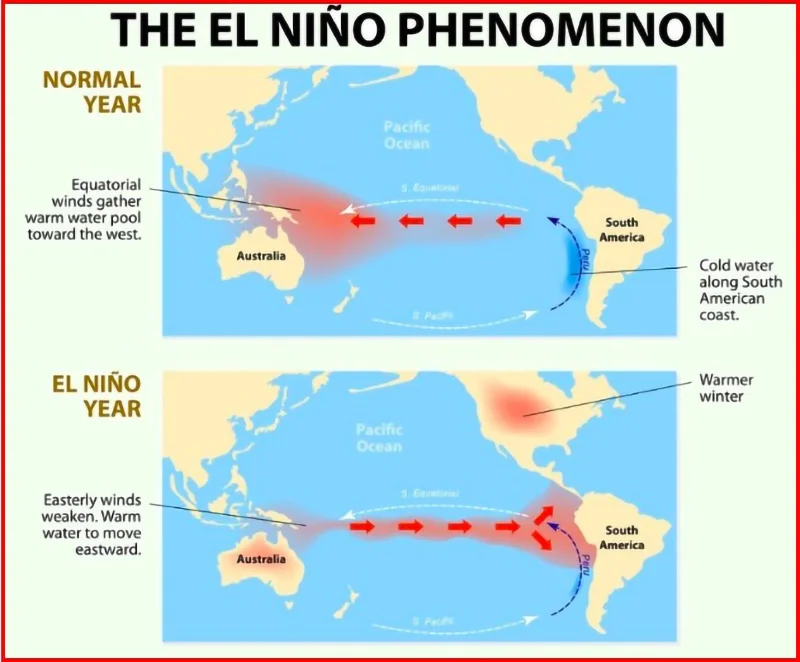
Based on discussions with Ajith Wijemanna, Director General of the Department of Meteorology, and Kithsiri Abayasinghe, former Director of the Department of Meteorology
Sri Lanka may be facing another major natural challenge. Unlike many disasters, however, the warning signs are already visible, giving the country an opportunity to prepare before the situation becomes critical.
A recent discussion with two of Sri Lanka’s most experienced meteorologists highlighted concerns about the developing El Niño phenomenon and its potential consequences for the country. While no scientist can predict with certainty exactly how El Niño will evolve, current indications suggest the possibility of above-normal rainfall later this year, followed by reduced rainfall and potentially severe drought conditions in early 2027.
This is a warning Sri Lanka cannot afford to ignore.
Most Sri Lankans still remember the devastation caused by the Indian Ocean tsunami in December 2004. El Niño is fundamentally different. It does not arrive as a single catastrophic event. Instead, its effects can develop over many months, potentially bringing drought, water shortages, crop failures, extreme heat, wildfires, flooding and food insecurity.
The critical difference is that, unlike a tsunami, El Niño gives us time to prepare.
Sri Lanka therefore has a choice: act on the warnings now or pay a far greater price later.
We Must Not Wait for Disaster
The 2004 tsunami exposed Sri Lanka’s vulnerability to large-scale disasters and demonstrated the immense human and economic costs of inadequate preparedness.
El Niño cannot be prevented. However, many of its potentially damaging consequences can be reduced through early planning, effective coordination, public awareness and practical risk-reduction measures.
The purpose of this article is not to predict exactly what will happen. Rather, it is to ask a more important question:
Are we prepared for what could happen?
Depending on the intensity and evolution of El Niño, Sri Lanka could face:
· severe drought and prolonged dry spells;
· water shortages affecting households, agriculture and industry;
· reduced agricultural production and increased food insecurity;
· increased risks of forest and grassland fires;
· heatwaves and heat-related illness; and
· localised flooding caused by unusually heavy rainfall.
One threat deserves particular attention: wildfires.
During prolonged dry periods, fires can spread rapidly through forests and grasslands, destroying ecosystems, wildlife habitats, agricultural land, livelihoods and critical infrastructure, while placing enormous pressure on emergency services.
The lesson is straightforward: understanding potential worst-case scenarios before they occur greatly improves our ability to prevent them from becoming national catastrophes.
A Crucial Role for Disaster Management
We understand that Sri Lanka’s Disaster Management Centre (DMC) is already engaged in preparing the country for the potential impacts of a stronger El Niño event. Its focus must remain on helping communities prepare before emergencies arise, while ensuring that essential services continue to function during periods of crisis.
Disaster response and recovery come at a high cost to the public through government expenditure and taxpayer-funded resources. Investing in preparedness is therefore not only a humanitarian responsibility but also a sound economic strategy—particularly at a time when Sri Lanka continues to face considerable fiscal constraints and limited capacity to absorb another major shock.
The principle is clear:
Prevention is invariably less costly than recovery.
Every rupee invested in preparedness today can help prevent far greater social and economic losses tomorrow.
Listen to the Scientists
The public should pay close attention to forecasts and guidance issued by the Department of Meteorology.
At the same time, it is important to recognise that long-range forecasting is inherently complex. Climate systems involve countless interacting variables, many of which cannot be measured or predicted with complete accuracy months in advance.
When a forecast subsequently changes, this should not automatically be regarded as a failure of science. Forecasting is, by its nature, an assessment of probabilities and risks based on the best available evidence at a particular point in time.
The appropriate response is not to dismiss forecasts because they contain uncertainty, but to use them as tools for informed preparation.
What Should the Government Do?
The Government and relevant public institutions should urgently review Sri Lanka’s preparedness for drought, flooding, wildfires and extreme heat.
Key priorities should include:
· strengthening climate monitoring and early-warning systems;
· improving weather forecasting and public communication;
· developing comprehensive drought, flood and wildfire preparedness plans;
· enhancing reservoir, catchment and water-resource management;
· maintaining drainage infrastructure to reduce urban flooding;
· strengthening wildfire prevention, detection and response capabilities;
· investing in climate-resilient infrastructure; and
· establishing clear lines of responsibility and coordination among government agencies.
Coordination is particularly important. During a national emergency, citizens should never be left wondering which institution is responsible for taking action.
Water Security Must Be a National Priority
If prolonged dry conditions materialise, water security could become one of Sri Lanka’s most pressing challenges.
The country should strengthen groundwater protection, support the rehabilitation and maintenance of wells, and implement long-term water-security strategies in drought-prone regions. Such measures are important not only for human communities but also for agriculture, livestock and the natural ecosystems that sustain the country’s biodiversity.
Reservoirs and catchments must be managed carefully, while water conservation should be actively promoted among households, businesses, industries and farmers.
The key question is simple:
How much water will Sri Lanka require if the dry season lasts significantly longer than expected?
That question is far easier to answer before reservoirs begin to run dry.
Protecting Agriculture and Food Security
Agriculture remains highly vulnerable to drought and irregular rainfall. Significant disruption could result in rising food prices, reduced farm incomes and increased pressure on vulnerable households.
Sri Lanka should accelerate the adoption of drought-resistant crops, climate-smart farming techniques and efficient irrigation systems, including drip irrigation. Measures should also be taken to secure water and feed supplies for livestock, maintain strategic food reserves and strengthen weather-based advisory services for farmers.
Food security must be regarded not merely as an agricultural concern but as a matter of national resilience.
Preparing for Wildfires
Prolonged dry conditions can significantly increase wildfire risks. Sri Lanka must strengthen its capacity to prevent, detect and respond to fires before they escalate.
An effective strategy should rest on four pillars:
Prevention. Preparedness. Early detection. Rapid response.
Seasonal climate forecasts should be used to identify periods of heightened risk. Vegetation dryness, weather conditions and fire-prone regions should be monitored systematically, with modern technologies used wherever feasible.
Firebreaks should be established and maintained around vulnerable communities, forests and critical infrastructure. Dry vegetation and other combustible materials should be appropriately managed. Where environmentally and scientifically justified, carefully regulated controlled burning could also form part of an integrated fire-management strategy.
Human activity is responsible for many wildfires. During high-risk periods, open burning should therefore be restricted and unsafe land-clearing practices rigorously controlled. Public education campaigns should reinforce these measures.
Firefighting resources should be pre-positioned in high-risk areas before peak fire seasons begin. Adequate equipment and water supplies should be secured, and coordination strengthened among local authorities, fire services, forestry officials, disaster-management agencies and, where necessary, the armed forces.
Where practical and affordable, aerial firefighting capabilities should also be considered.
The guiding principle is straightforward:
Fight fires when they are small, rather than after they become uncontrollable.
Protecting Sri Lanka’s Natural Ecosystems
Healthy ecosystems are among the country’s most effective natural defences against climate stress.
Sri Lanka should protect wetlands and other water-retaining ecosystems, conserve forests, prevent unnecessary land clearing and fragmentation, and safeguard wildlife habitats from fire and degradation.
Forest conservation is not simply an environmental issue. It is central to water security, food security, biodiversity protection, public health and long-term national resilience.
Citizens Also Have a Responsibility
Preparedness cannot be the responsibility of government alone.
During dry periods, households should conserve water and avoid unnecessary waste. Communities should ensure that wells are cleaned, maintained and restored where necessary, particularly if prolonged disruptions to piped water supplies occur.
During periods of extreme heat, people should remain hydrated, avoid unnecessary outdoor activity and follow public health advice.
Families should maintain basic emergency plans and supplies. Communities in fire-prone areas should know evacuation routes and designated safe assembly points. Citizens should also avoid activities that could inadvertently start fires and remain alert to official warnings.
Particular attention should be given to vulnerable groups, including older people, people with disabilities and those with limited mobility. Communities should also be prepared for the health effects of wildfire smoke and deteriorating air quality.
From Response to Preparedness
Sri Lanka’s greatest challenge is not responding when disaster strikes. It is ensuring that natural hazards do not develop into national catastrophes.
This requires a fundamental shift from a culture of reaction to a culture of preparedness.
Government agencies, scientists, farmers, businesses, schools, community organisations and individual citizens all have important roles to play. A coordinated approach combining climate forecasting, land management, public education, community preparedness, early-warning systems and rapid emergency response can significantly reduce the risks posed by El Niño and other climate-related threats.
Even if severe drought conditions do not materialise, investments in preparedness will strengthen Sri Lanka’s resilience against future disasters. If severe conditions do occur, early preparation could save lives, protect livelihoods, reduce economic losses and prevent a difficult situation from escalating into a national crisis.
Sri Lanka has already learned, at enormous cost, the consequences of being unprepared. We should not wait for another disaster to teach us the same lesson.
The warning signs are present. The scientists are speaking. The risks are increasingly clear.
What remains is the political will and public commitment to act.
Preparation today will always cost less than recovery tomorrow.

After nearly 77 years of wildlife conservation, Sri Lanka must strengthen the institutions, professional leadership and political will needed to safeguard its natural heritage for generations to come.
By Dilum Alagiyawanna
Sri Lanka has a long and proud history of protecting its natural heritage. Generations of wildlife officers, forest officers, scientists, researchers, field staff and conservationists have worked, often under difficult circumstances, to protect our forests, wildlife and ecosystems. Their contribution deserves recognition and respect.
One important milestone in this journey came in October 1949, when the Wildlife department was established as a separate institution, following the Fauna and Flora Protection Ordinance of 1937 and the expansion of the country’s wildlife reserves. The creation of a dedicated department reflected an important recognition of the time: wildlife conservation required specialised institutional attention.
Today, nearly 77 years after its establishment, Sri Lanka has an opportunity not simply to reflect on that institutional journey, but to consider what kind of institutions and leadership we need for the next 75 years.
This is not an argument about the individuals currently holding positions in our conservation institutions. Nor is it intended to question the commitment, professionalism or sacrifices of the many public servants who have served these institutions over the years.
It is a broader institutional question.
What kind of leadership does Sri Lanka need to protect its natural heritage in the 21st century?
The issue is not who occupies a particular position today. It is whether our system of identifying, developing and appointing leaders is designed to meet the conservation challenges of tomorrow
A Changing conservation landscape
When many of our major conservation institutions were established, the principal challenges were relatively straightforward: establish protected areas, prevent poaching, enforce wildlife legislation and protect forests and wildlife from direct exploitation.
Those responsibilities remain fundamental.
But conservation today is considerably more complex.
Habitat fragmentation, expanding infrastructure, human-elephant conflict, climate change, invasive species, pollution, wildlife disease, road mortality, unplanned tourism and competing demands for land and water are placing increasing pressures on ecosystems.
Conservation can no longer be treated as an isolated environmental concern.
A highway can fragment a wildlife habitat. An irrigation project can alter an ecosystem. Poorly planned tourism can degrade a protected landscape. Agricultural expansion can affect wildlife movement. Climate change can alter species distributions, water availability and ecosystem resilience.
Conservation therefore intersects with agriculture, irrigation, energy, transport, tourism, disaster management, climate policy, land-use planning and national economic development.
It has become a multidisciplinary national policy challenge.
Beyond administration: What conservation leadership requires
There is nothing inherently wrong with a career public service.
Sri Lanka needs a professional, impartial and experienced public administration. Administrative knowledge, institutional memory and an understanding of government procedures are indispensable to the functioning of the State.
The question is whether administrative experience and seniority alone should be the principal criteria for leading institutions entrusted with complex living ecosystems and irreplaceable natural capital.
I believe they should not.
Leadership of major natural-resource institutions should combine administrative competence with scientific and technical understanding, field experience, strategic thinking, integrity, sound judgement and a demonstrated commitment to conservation outcomes.
This is not an argument for automatically replacing administrators with scientists. Nor is personal passion for nature, by itself, sufficient.
What Sri Lanka needs is mission-driven professional leadership.
A person leading a conservation institution should understand not only how to administer a government department, but also why that institution exists, what ecological outcomes it is expected to achieve and what may happen if those outcomes are not achieved.
Dr P. E. P. Deraniyagala: A legacy of scientific leadership
Sri Lanka’s own history provides a remarkable example of what can happen when scientific expertise, intellectual curiosity and institutional leadership come together.
Dr P. E. P. Deraniyagala was a zoologist, palaeontologist and naturalist whose contribution to Sri Lanka’s natural heritage extended far beyond the formal responsibilities of a government position.
He was appointed Director of the Colombo Museum in 1939 and, following the reorganisation of the museums, became the first Director of the Department of National Museums, a position he held until his retirement in 1963. His scientific work ranged from Sri Lanka’s living fauna to fossil elephants and other extinct prehistoric mammals.
It lies in what he brought to that position.
He brought scientific curiosity, intellectual independence, research capability and a lifelong commitment to understanding Sri Lanka’s natural heritage.
He did not simply administer an institution concerned with heritage. He contributed to the body of knowledge upon which our understanding of that heritage depended.
That is an important lesson for today.
Our conservation institutions must not merely administer conservation programmes. They must increasingly become knowledge-driven institutions capable of generating, interpreting and applying scientific evidence to management decisions.
From institutional continuity to institutional renewal
After nearly 77 years of experience, the appropriate response is not to criticise or dismantle the institutions that have served the country.
It is to ask how we can make them stronger, more scientifically capable, technologically advanced and better equipped for the next 75 years.
The challenges of 2026 are vastly different from those of 1949.
Satellite remote sensing, GIS, GPS telemetry, camera trapping, drones, genetic analysis, artificial intelligence and ecological modelling can transform how wildlife and ecosystems are understood and managed.
But technology alone cannot transform conservation.
Institutions need the scientific capacity to interpret information, the field capacity to collect reliable data and, above all, leadership capable of turning evidence into timely decisions.
A capable leader, however, also needs an institution with adequate resources, professional autonomy, scientific capacity and the authority to act. Leadership reform therefore cannot be reduced simply to changing individuals. It must also strengthen the institutional environment in which those individuals operate.
From species management to ecosystem stewardship
Sri Lanka must also move beyond a narrow concept of wildlife management.
An elephant is not simply an animal to be managed when it enters a village.
A leopard is not simply a species to be protected when a conflict occurs.
A forest is not simply a designated area on a map.
Each exists within a larger ecological system.
Effective conservation therefore requires landscape-level thinking: protecting habitats, maintaining ecological connectivity, securing watersheds, managing human activity and ensuring that development decisions properly account for ecological consequences.
Conservation expertise must therefore be incorporated into national development planning before decisions are made, rather than being brought into the process after environmental conflicts have already emerged.
Preventing conservation conflicts before they reach the courts
There is another reality that cannot be ignored.
For decades, conservationists, environmental organisations, researchers, professionals and concerned citizens have repeatedly found themselves having to seek administrative, political and sometimes judicial intervention when environmental concerns have not been adequately resolved through normal institutional processes.
The courts have consequently become an important safeguard for environmental protection.
But this should make us ask a deeper question.
Why should citizens repeatedly have to go to court to protect a forest, wildlife habitat, wetland or other environmentally sensitive area when the State already has institutions, laws, scientists and regulatory mechanisms designed to address these matters?
Judicial intervention is an essential component of a democratic system and an important safeguard for the public interest. But courts should not have to become the primary mechanism through which conservation policy is resolved, case by case.
A judicial determination necessarily operates within the legal and evidentiary framework before the court. It cannot substitute for a scientifically informed conservation policy or a strong institutional mechanism capable of identifying and resolving environmental risks at an early stage.
The objective should therefore be to build institutions strong enough to prevent many of these disputes from reaching the courtroom in the first place.
Conservationists and environmental organisations should ideally be able to engage with government institutions early in the decision-making process, supported by credible scientific evidence and transparent procedures, rather than being forced into the role of permanent opponents of the State.
Leadership that gets decisions right
This is precisely why Sri Lanka needs conservation leadership with the knowledge, independence, judgement and courage to make the right decisions at the right time.
Good conservation leadership is not simply about enforcing the law after a conflict has emerged.
It is about anticipating problems, understanding ecological consequences, identifying risks early and taking scientifically sound decisions before an issue becomes a political, social or legal dispute.
Sometimes the right decision may require saying no.
Sometimes it may require proposing a better alternative.
And sometimes it may require bringing scientists, communities, development agencies and political decision-makers together early enough to find a solution that protects both the public interest and the environment.
This is not about confrontation with governments or development.
It is about preventing unnecessary confrontation by getting the decision right in the first place.
The right leader can prevent a conservation problem from becoming an administrative problem, an administrative problem from becoming a political problem, and a political problem from ultimately becoming a legal dispute.
The best conservation decision is often the one that prevents the conflict from arising in the first place.
Conservation requires political will
Strong professional leadership, however, is not enough.
Conservation also requires political leadership with the vision, commitment and political will to support the right decisions, particularly when they may be difficult or politically inconvenient.
India’s Project Tiger, launched in 1973, provides a compelling example. The Government of India established the programme in response to the serious decline of tiger populations, creating a national conservation initiative that combined scientific management, protected areas and strong political commitment.
Indira Gandhi’s interest in environmental protection and her government’s support helped create the political conditions for major conservation initiatives during that period.
The lesson is not that political leaders should run conservation institutions.
It is the opposite.
Political leadership must create the space, authority and support for professional conservation institutions to do their job properly.
A scientifically sound decision made by a conservation institution can achieve little if political leadership is unwilling to stand behind it. Conversely, political will, working together with scientific and professional leadership, can turn a good conservation idea into a transformative national programme.
Sri Lanka needs both sides of this equation:
professional conservation leadership capable of making the right decisions, and political leadership with the will to support those decisions in the national interest.
The ideal relationship is not political interference in conservation.
It is political commitment to evidence-based conservation.
Natural Heritage Is National Capital
Sri Lanka’s natural resources should also be recognised as national capital.
Forests support water security.
Wetlands provide natural flood protection.
Healthy watersheds support agriculture and hydropower.
Biodiversity supports tourism.
Marine ecosystems support fisheries.
Intact landscapes provide resilience against climate-related disasters.
When these systems are degraded, the country incurs an economic cost.
The question should therefore not simply be:
How much will conservation cost?
It should also be:
How much will it cost Sri Lanka if we fail to conserve its natural capital?
This is why conservation expertise must be integrated into national development decision-making from the beginning.
Choosing the leaders for tomorrow
Sri Lanka does not lack people with knowledge, experience and commitment.
Our universities, research institutions, wildlife and forest services, professional organisations and civil society contain scientists, researchers, field practitioners and conservationists with considerable expertise.
What is needed is a system that allows this expertise to contribute more effectively to institutional leadership.
Future appointments to senior positions in natural-resource institutions should therefore consider more than administrative seniority.
They should consider:
Scientific and technical competence
Conservation and field experience
Strategic leadership
Institutional management capability
Integrity and independence
Understanding of communities and stakeholders
A demonstrated record of achieving meaningful outcomes
Such a system would not weaken the public service.
It would strengthen it by bringing administrative excellence and conservation excellence together.
The Wildlife Department is a useful lens through which to examine this broader question, but the issue extends far beyond wildlife. It concerns every institution entrusted with Sri Lanka’s forests, biodiversity, wetlands, coastal ecosystems, marine resources and other forms of natural capital.
What should Sri Lanka’s conservation institutions look like for the next 75 years?
Sri Lanka should be proud of the conservation institutions it has built since the middle of the last century.
But institutional pride should never become institutional complacency.
The establishment of the Wildlife Department in 1949 was itself an example of institutional adaptation. The country recognised that wildlife conservation had become sufficiently important and specialised to require a dedicated institution.
The same principle applies today.
The conservation challenges of 2026 are vastly different from those of 1949.
The answer is not to abandon what was built.
It is to evolve it.
We need conservation institutions that are stronger, more scientific, more innovative and better equipped to influence national development decisions.
We need leadership selection systems that recognise conservation as a specialised professional responsibility.
We need a public service in which administrative excellence is complemented by scientific expertise, field experience and a genuine commitment to conservation outcomes.
And we need political leadership with the vision and will to recognise that protecting natural capital is not an obstacle to national development, but an essential condition for sustainable national prosperity.
This is not about replacing individuals.
It is about building a better system for the future.
It is not about weakening existing institutions.
It is about strengthening them for the challenges ahead.
And it is not about choosing between development and conservation.
It is about ensuring that development does not destroy the natural capital upon which Sri Lanka’s long-term prosperity depends.
After nearly 77 years of dedicated wildlife conservation, perhaps this is the right moment to ask a fundamental question:
What should Sri Lanka’s conservation institutions look like for the next 75 years?
The answer should not reject the past.
It should be an ambitious evolution of it.
Because when the next generation looks back at our time, they will not judge us simply by how well we administered the institutions we inherited.
They will judge us by what forests remained standing, what species survived, what ecosystems remained intact, and whether we had the wisdom and courage to pass on Sri Lanka’s extraordinary natural heritage in better condition than we received it.
Author: Dilum Alagiyawanna is a telecommunications engineer turned environmental and wildlife conservationist, citizen scientist and wildlife documentary filmmaker. His work bridges science, public policy and sustainable development, with particular emphasis on the long-term conservation of Sri Lanka’s elephants and other threatened species.
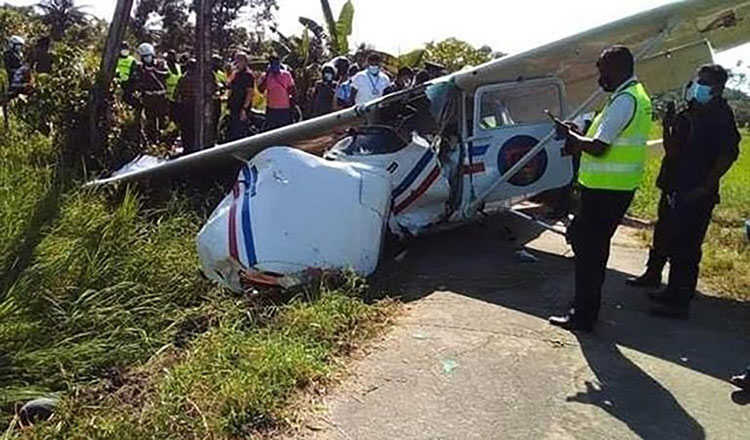
On Monday 27 December 2021, according to a Flight Safety Foundation narrative, “Cessna 172L 4R-GAF (ex 4R-HDC) of Sakurai Aviation crash landed in a paddy field in Paththayam Watta, Kimbulapitiya, Negombo in the Gampaha district close to Bandaranaike International Airport (VCBI) after the aircraft suffered an engine RPM fluctuation and subsequent engine failure. Three of the four occupants were injured. The charter flight was on its way to Koggala Airport (VCCK) from Sigiriya Airport (VCCS) when the problems started to occur. It had initially taken off from Ratmalana Airport (VCCC) and was supposed to land there after departing Koggala Airport (VCCK). The flight was going to make an emergency landing at Bandaranaike International Airport (VCBI) but while the aircraft was descending the pilot in command informed the controller that he had no control over the engine power. During the final approach to runway 22 the pilot in command then declared a “MAYDAY” call and the aircraft crash landed soon after.”
The touchdown itself at the paddy field was safe but due to a concrete road, which was not visible from to air at low level and running across the field, the nose wheel hit it and broke off creating the destruction and injury.
With the economic recovery, the present government has started reconstructing the highways and expressways that were suspended in the recent past. In countries like the United States of America (USA) there are straight stretches of expressways and highways, at regular intervals, where light to medium size aircraft could safely land in an emergency unlike the accident described above. Not only that, that particular stretch of road is maintained by the local Regulating Authority like the Federal Aviation Administration (FAA) in the case of the USA.
A Safe Landing on an Expressway in India.
The Sri Lanka National Aviation Policy of 2017 also recommends that there should be helipads at regular intervals along the expressways/ highways to facilitate medical evacuation in case of motor accidents. It should be noted that the Minister in Charge of Aviation and Highways is one and the same
Will the Government spare a thought for safer multimodal transport especially when there is a push to make Domestic Aviation available for tourism? Or will it be just another pipe dream?
Capt. G A Fernando
Former member of the Accident Investigation Team, Civil Aviation Authority, Sri Lanka.(CAASL)
Immediate past President of Aircraft Owners and Operators Association, Sri Lanka. (AOAOA)

Cabinet aporives recruitment of Nursing Instructors for Nursing Schools under the Ministry of Health and Mass Media on Contract Basis
Signing agreement for the establishment of BIMSTEC Technology Transfer Facility in Sri Lanka
The cabinet approves agreement on mutual legal cooperation in criminal matters between the Republic of Sri Lanka and the Republic of Korea

Misbah-ul-Haq resigns as Pakistan selector after Test squad upheaval
Amendment of the Quarantine and Prevention of Diseases Ordinance No. 3 of 1897
Cabinet approves donation of USD One Million to the Government of Nepal

‘Dates have the highest sugar content to fight Coronavirus’

Sunday Island 27 December – Headlines

#SundayIsland 17th December – Headlines

Sunday Island – 28th March

Sunday Island Headlines – 21 March

Sunday Island – 21st February – Headlines
-

 News5 days ago
Eight politicians in drug kingpin probe
-

 Features3 days ago
“Wrap Me Up in My Blazer”— A Gentlemanly Bradby Reminiscence
-

 Business5 days ago
Sri Lanka opens up: A new season of direct connectivity
-
 Features7 days ago
Insights from Chieftains of Uva: Genealogy of two Kandyan Families – Part II
-

 Features5 days ago
Redefining ageing in Sri Lanka
-
 Latest News6 days ago
Nepal-Tibet floods: What happened, what caused them and who is missing?
-

 Editorial7 days ago
Warning of power cuts: El Niño and corruption
-

 Features7 days ago
Export diversification: Missing the wood for the trees – Part I