Connect with us

Sports

Wrong time for musical chairs in cricket

Published

on

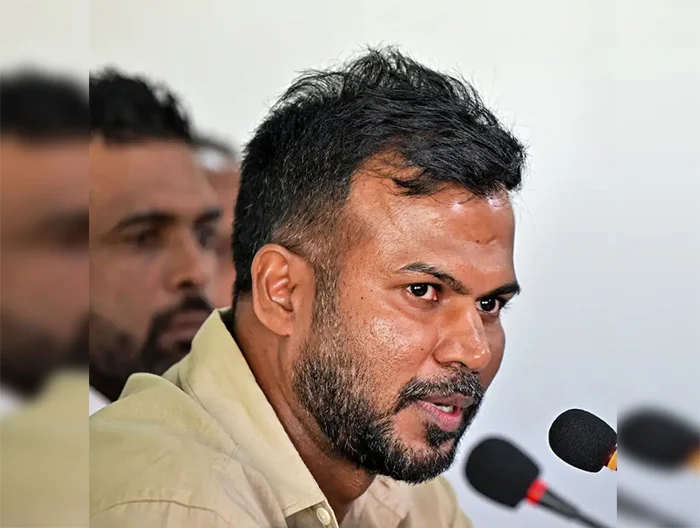
Moves are underway to replace former opening batter Upul Tharanga as Chairman of Selectors, the latest in a series of shake-ups that have gathered pace alarmingly close to the showpiece event.

With just six weeks to go for the World Cup that Sri Lanka will co-host, the ground appears to be shifting under the selectors’ feet. Moves are underway to replace former opening batter Upul Tharanga as Chairman of Selectors, the latest in a series of shake-ups that have gathered pace alarmingly close to the showpiece event.

First came the reshuffling of the coaching staff. Then there were strong signals that captain Charith Asalanka could be moved aside. Now the selection panel itself is set for an overhaul. One is tempted to ask whether all this chopping and changing is really necessary with the tournament looming large on the horizon.

It is true that the selectors’ term will expire by the book, a new panel must take guard. But with less than two months left before the World Cup, common sense would suggest to let the status quo remain.

Tharanga’s panel has not been flawless, but it has hardly been a basket case either. Recent weeks have produced some sobering results, including a 3-0 ODI whitewash in Pakistan and an embarrassing T20 loss to Zimbabwe. Yet the team showed resilience, regrouped and fought their way into the finals, where they eventually went down to Pakistan.

There were tangible gains too. Sri Lanka climbed to fourth in the ODI rankings and even pulled off a Test victory over England. The wheels came off mainly in the T20 format, where they failed to progress beyond the first round of the last World Cup — a shortcoming that cannot be pinned on selection alone.

If there must be a changing of the guard, logic dictates that it should wait until after the World Cup. Midstream changes at the top rarely help steady a ship already sailing in choppy waters.

What is more troubling is the prospect of a familiar face returning to the hot seat — someone under whose watch Sri Lanka endured disastrous returns. During that previous tenure, selections were muddled and knee-jerk. A poor series often meant wholesale culling, with players axed almost as soon as they were drafted in, leaving no room for continuity or confidence.

There were baffling calls too: Maheesh Theekshana fast-tracked into Test cricket on the strength of his white-ball exploits, while Dunith Wellalage was handed a Test debut before even playing a T20 International. Such horses-for-courses thinking, taken to extremes, left Sri Lanka without a clear road map.

The end result was grim. Sri Lanka finished ninth at the 2023 World Cup, failed to qualify for the Champions Trophy and for the first time in their history, missed out on an ICC event altogether.

Sri Lanka Cricket’s deeper problem is a lack of willing candidates. Few former players are keen to step into the firing line of selection, a role that guarantees brickbats regardless of results. Cornered, the board has repeatedly turned to recycled hands — men who have done the job before, with precious little to show for it.

With the World Cup just around the bend, Sri Lanka can ill afford to keep moving the goalposts. Stability, not another roll of the dice, may yet be their best play.

by Rex Clementine



Continue Reading
Click to comment

Leave a Reply

Your email address will not be published. Required fields are marked *

Latest News

High stakes for a rare West Indies-Zimbabwe clash

Published

on

By

Shimron Hetmyer gets out the slog sweep [Cricinfo]

Two years ago, Zimbabwe failed to qualify for the T20 World Cup. Not only did they make the competition this time, they entered the Super Eights unbeaten.

First, it was Blessing Muzarabani who shut Australia down on a slow pitch in Colombo. Then their top four silenced the Khettarama crowd by chasing down 189 against Sri Lanka. The common factor in those wins were also Brian Bennett’s fifties and Sikandar Raza’s quick cameos. Muzarabani and Brad Evans are also among the top ten wicket takers in the tournament.

With contributions from several players, Zimbabwe could prove a handful for West Indies in Mumbai. They will have to make a quick adjustment, though, having played all their group matches in Sri Lanka, while West Indies have already played twice at the Wankhede.

These two sides have faced each other only four times in T20 internationals. When lined up player-against-player, West Indies – also undefeated – look stronger with bat, with an in-form Shai Hope, a rejuvenated Shimron Hetmyer at No. 3, and a solid finisher in Sherfaine Rutherford.

Having as many as three allrounders – with Romario Shepherd in line to return after injury – gives them the option of playing three fast bowlers and three spinners. It’s an ideal mix in Mumbai, where the quicks (35 wickets) and spinners (34) have been equally effective, averaging 26.28 and 26.25 respectively this tournament.

It’s a big game for both sides, with matches against India and South Africa to follow next. Who will get on the points table first?

Blessing Muzarabani is an early wicket-taker and a serial wicket-taker. He has height, pace and discipline on lengths that can be threatening, especially with the new ball. He also bowls at the death where he generally goes on the shorter side peppered in with the odd slower ball. That’s as all-conditions as it gets in T20s, and form is on his side too.

West Indies have a clear batting approach outlined by regular boundary hitting, and Shai Hope is the initiator and the glue as he sets up and builds innings. He has the virtues of an upgraded anchor who doesn’t have to shut down when the team is on the back foot. He is coming off two fifties, the second of which against Nepal saw him power through even as wickets fell at the other end.

Shepherd is fit again. He had strapping on his right leg as he bowled and batted for a while on Saturday. He hit one over the roof, but wasn’t as comfortable while bowling. If fit, he could replace  Matthew Forde.

Zimbabwe haven’t tinkered with their squad much and that’s likely to remain the case. They could bring back Richard Ngarava for Graeme Cremer if they feel the need for pace.

West Indies (probable):  Brandon King, Shai Hope (capt & wk), Shimron Hetmyer, Roston Chase, Rovman Powell, Sherfane Rutherford, Jason Holder, Romario Shepherd/Matthew Forde, Akeal Hosain,  Shamar Joseph,  Gudakesh Motie.

Zimbabwe (probable): Brian Bennett, Tadiwanashe Marumani (wk), Dion Myers, Sikandar Raza (capt),  Ryan Burl, Tony Munyonga Tashinga Musekiwa,  Brad Evans, Wellington Masakadza,  Graeme Cremer/Richard Ngarava,  Blessing Muzarabani

[Cricinfo]

Continue Reading

Latest News

All-round South Africa hammer India in Ahmedabad

Published

on

By

Stop press. India’s victory streak in T20 World Cups was halted at 12 by the side they stole one from in the final of the last World Cup. After a surprise call to bat first, South Africa recovered from 20 for 3 to post 187 and then launched just about the perfect defence both with tactics and execution in significant dew to secure a 76-run win, which could have significant net-run-rate implications as well.

David Miller and Dewald Brevis started the comeback with some special hitting to balance Jasprit Bumrah’s 3 for 15 with analysis of 4-0-47-1 for Varun Chakravarthy. Even though they lost muscle just before the death overs, Tristan Stubbs took 20 to give South Africa something to work with.

Given the dew and the improvement in batting conditions after the first four overs, 187 seemed light, but almost everything they tried with the ball worked.Aiden Markram bowled the first over and had an India opener out for a duck, Ishan Kishan this time. Marco Jansen had a wicket first ball, Lungi Ngidi was unhittable with his slower balls, Keshav Maharaj produced three boundary catches in one over, the catching was sensational, and the biggest partnership they allowed was 35.

Bumrah, Arshdeep hurt South Africa

It feels like a long time ago, but South Africa’s decision to bat first didn’t look good when Bumrah and Arshdeep Singh ran through the top order. Bumrah was spot on, getting Quinton de Kock with a ball that seamed back in to hit top of leg and bowling a bewitching slower offcutter with the new ball to get rid of Ryan Rickelton. With Arshdeep Singh getting Aiden Markram for the seventh time in the last 51 balls he has bowled at him, India looked unstoppable.

Miller, Brevis show class

Coming in at 20 for 3, it would have been easy for Miller to play the scoreboard and not the conditions. It is a skill we can’t even fathom the enormity of to judge that the conditions are improving and that they need to go for a big score and then to be able to execute it.

Miller, at his home ground in the IPL, used all his experience of the conditions to aim straight, go after spin more than pace, and pull South Africa out of the hole. Before Brevis could join his party, Miller had already raced away to 32 off 17, including a step-hit six and a four off Varun, which does suggest a bit of overpitching thanks to his proficiency off the back foot. Brevis announced him with a no-look six off Varun in the same over.

There was a point when the first seven overs of seam had gone for 3 for 37 as against 3-0-39-0 from spin. This is when India’s sloppiness turned up. That last ball to make it seven overs was a no-ball from Hardik Pandya. Miller hit the free hit for a six. Soon Shivam Dube offered him another free hit, which he again hit for a six to get to fifty.

Between those two free hits, Brevis showed glimpses of his genius, putting paid to Dube’s wide lines with two sixes and a four. Dube had his own back with another Brevis dismissal on the pull for 45 off 29, but followed it up with that no-ball.

Stubbs provides the finish

Varun was headed for his worst analysis in T20Is when he managed to have Miller caught at long-off for 63 off 35, staying seven short of the most he has conceded. The wicket came just before the death overs, allowing Bumrah to bowl at new batters. Bumrah returned two overs for eight runs and the wicket of Corbin Bosch, but Stubbs took toll of the only slightly soft over he could get at the death. Facing all six balls from Pandya in the last over, he hit two sixes off the last two balls to end up with 44 off 24.

Dream start for South Africa

It had been telegraphed, emailed and faxed that Markram would take the new ball against the three left-hand batters at the top. This time Kishan played two balls normally for dots, then tried to go over mid-on, but nearly fell prey to the low bounce of the black-soil pitch. Then he tried to slog across the line, Markram got this ball to grip, and India had lost an opener for a duck in four of their five matches.

India didn’t separate the left-hand batters with Suryakumar Yadav sticking to his comfort zone of No. 4. Varma didn’t quite wait for offspin to do damage as he charged at Jansen first ball and edged a lifting delivery.

The field sets against Abhishek Sharma, who got on the board in World Cup with a four off Markram and then a six and four off Rabada, but South Africa tied him down with clever fields and bowling. In his 12-ball stay, Abhishek played seven false shots. When he connected, there was a deep point and a deep cover in place. The final false shot was a product of that field set and a knuckle ball from Jansen. Abhishek must have thought even half a hit would be good enough with no one out on the leg side, but the knuckle ball stood up off his bat, and Bosch took a sensational catch despite a collision with Maharaj.

Bosch can do now wrong

India promoted Washington Sundar, who played ahead of Axar Patel because of South Africa’s left-hand batters but bowled only two overs for 17. He found himself stuck before edging the first ball he faced from Borch through to the keeper. Soon a length ball down the leg side took the cue end of Suryakumar’s bat for a catch to short midwicket. Surya scored 18 off 22. The asking rate had gone past two a ball four balls he was dismissed.

Strange last quarter

A perplexing sixth-wicket stand followed when Pandya and Dube seemed happy with 30 off 23 balls leading into the drinks break, suggesting they might be taking the MS Dhoni route of narrowing the gap and salvaging the net run rate. However, immediately after drinks everybody wanted to hit a six off every ball, and we had three c Stubbs b Maharaj dismissals in the 15th over.

With no batting left, Dube could do only so much although Miller did drop Dube once to impart the only little blemish on South Africa’s night. It didn’t hurt them much.

Brief scores:
South Africa 187 for 7 in 20 overs (David Miller 63, Dewald Brevis 45, Tristan Stubbs 44; Arshdeep Singh 2-28, Jasprit  Bumrah 3-15, Varun Chakravarthy 1-47, Shivam Dube 1-32) beat India 111 in 18.5 overs  (Abhishek Sharma 15, Suryakumar Yadav 18, Washington Sundar 11, Shivam Dube 42, Hrdik Pandya 18; Aiden Markram 1-05, Marco Jansen 4-22, Keshav Maharaj 3-24, Corbin Bosch 2-12) by 76 runs

[Cricinfo]

Continue Reading

Latest News

Will Jacks stars again as England dismantle Sri Lanka

Published

on

By

Will Jacks took back-to-back wickets

England have jumped to the top of Group 2 of the Super Eight with a dominant, Net Run Rate-boosting 51-run win over Sri Lanka in Pallekele.

In pursuit of what should have been a manageable target of 147, the hosts were snuffed out for 95 in an error-strewn innings that continued a grim 12-match losing streak to England, who lead Pakistan and New Zealand by a point after their washout on Saturday.

Yet again, Will Jacks  came to the fore – only this time with the ball. After England had posted what looked an under-par 146 for 9  PhilSalt’s 62 the lone score of note in response to Dunith Wellalage’s 3 for 26 – Jacks bowled four of the first eight overs of the run chase, pocketing 3 for 22 without breaking a sweat.

Just as Wellalage had done in taking out three big English names – Jos Buttler, Harry Brook and Salt – Jacks’ trio capped Sri Lanka’s ambition. Kusal Mendis’s push back to the off-spinner was quickly followed by Pavan Rathnayake launching high to Jacob Bethell at cover, before Wellalage failed to clear Jamie Overton at mid on.

Coupled with Jofra Archer’s 2 for 20, which included star man Pathum Nissanka flicking to Overton at deep midwicket, Sri Lanka exited the powerplay on 34 for 5 and devoid of any real hope.

It made England’s 37 for 2 in their first six overs look far more measured, when in fact it was a patchy start typified by a labored 7 off 14 from Buttler, before he was trapped lbw to Wellalage.

Sri Lanka’s decision to bowl first after winning the toss – predicated on their comprehensive take down of Australia at this venue in the Group Stages – looked vindicated, even as Salt battled humid conditions to reach his first half-century of this World Cup – and second in all T20I editions – from 36 deliveries. That Jacks’ 21 was England’s second-highest score spoke to the awkwardness of the innings.

Dasun Shanaka marshaled his attack well, helped by the consistent threat of Dilshan Madushanka (2 for 25) and Maheesh Theekshana (2 for 21). But Sri Lanka’s captain was brought back down to earth when he found himself in the middle with a ball left of the sixth over.

Having thumped two sixes on his way to 30, an attempt at a third was brilliantly relayed on the midwicket fence to leave Sri Lanka 82 for 8, with all their full-time batters now back in the hutch. Naturally, Jacks was a key figure in that dismissal, taking the catch before casually lobbing it back into play, straight to Tom Banton.

Dushan Hemantha had already trimmed his own bails with his bat in comical fashion, before Dushmantha Chameera and Madushanka, the final two batters, were both bowled slogging, in keeping with a cavalier approach when sensible heads were required. Even with the all out attack, Sri Lanka could only muster 95 in 100 legal deliveries.

You should never travel without insurance, and in Jacks England have the ideal safety blanket for a subcontinental T20 World Cup. And like insurance – in principle at least – Jacks has saved the team when they’ve least expected it.

For all the admiration for Jacks’ talents, as evidenced by his selection for the Ashes at the start of this winter, few would have predicted this emergence as a talismanic figure for England’s World Cup hopes.

You could argue the opportunities Jacks has taken should not have presented themselves in the first place. Nevertheless, the team have leaned on him against Nepal (39*), Scotland (16*) and Italy (53*), all unbeaten knocks from the defacto No.7 that pulled them out of sticky situations.

Now an established threat, he loomed in the background as England’s top order stumbled to 68 for 4 after 10 overs, before Sam Curran’s dismissal brought Jacks to the crease at 94 for 5 at the start of the 14th.

His 21 off 17 was the slowest of his four double-figure scores at this tournament, and Sri Lanka did well to cap his work, removing him with seven balls to go. Unfortunately for them, Jacks took that personally.

“He always tells me he bowls better when he’s angry,” said Brook after the match. Jacks channelled that rage into a good length from around the wicket, both to right- and left-handers. A leading edge from Mendis and a horrid hack from Rathnayake got him back-to-back rewards, before Wellalage’s gifted him a third in his final over.

That he bowled the first four from one end speaks to the amount of trust now placed on Jacks and how well he is responding to it. He now has three player-of-the-match awards at this World Cup.

Buttler said he would not curb his attacking intent in search for better form at this T20 World Cup, and he was true to his word. A length delivery from Wellalage was met with an attempted reverse sweep, Buttler upright looking to access behind point, where there was empty (patchy) green to exploit.

Unfortunately, Buttler’s bat could not have been further from the ball as it clattered into his knee, in front of middle stump. That he even had the conversation with Salt about reviewing was galling; surely he knew he was plumb? The desperation for reassurance from his opening partner was misguided, and Salt had little to offer. Buttler turned on his heels and marched off as quickly as he could.

That, arguably, was the soundest judgement he showed on Sunday. Taking a review back to the dressing room would have made the innings worse.

The four dot balls in the previous over off Madushanka were painful to watch. England’s greatest white-ball batter is clearly out of sync with his movements, even his trigger, turned inside out by the left-arm quick’s movement across him, which almost cost him his off stump.

Buttler is now averaging 12 in this World Cup. This innings – his third single-figure score in succession – is his 12th without a half-century. How far off are England from having a conversation about the former captain?

A long way given how much credit Buttler has in the bank and Brendon McCullum’s ethos of backing your headline acts to the hilt. “He’s a powerhouse of world cricket,” said Brook defiantly. “He’s arguably the greatest white-ball player to ever play the game”

But 35-year-old Buttler is struggling badly. Badly enough that his dismissal was, ultimately, a good thing for the team.

At the halfway stage, Wellalage was probably sitting back, admiring the part he had played in another Sri Lanka win. Until he was rudely jolted out of his chair by the start of a terminal top-order collapse.

The left-arm spinner found himself back out there 3.4 overs into the second innings, the pressure he had put on England now being shoved right back at him, his exceptional 3 for 26 split across three phases of the game on its way to being deemed obsolete.

Despite the result, Wellagage’s ability to knit together not just his own overs, but those of the bowlers around him, was a silver lining. And a reminder of the maturity he possesses at the age of just 23.

The injuries Sri Lanka have suffered in their bowling stocks means he has been tasked with being that much more consistent. And he did right by his captain, first showing immense control during his two powerplay overs (1 for 16) before bravery in overs 10 and 15 brought him the wickets of Brook and Salt.

With the limits of the outfield sodden after heavy overnight rains, the sponge was brought in, reducing the size of the boundaries. With an enticing hit back over his head, Wellagage was unperturbed when slowing the pace down, which allowed him to sneak one into the pad of Brook. A bit of loop then did for Salt, whose tired thump down the ground fell into the hands of Dushan Hemantha at long off.

Wellagage’s spell would have been the jumping off point for a celebration of a well-rounded attack. In the end, it is nothing more than a footnote in a catastrophic defeat that already has Sri Lanka up against it to qualify for the semi-finals.

Brief scores:
England 146 for 9 in 20 overs (Phil Salt 62, Harry Brook 14, Sam Curran 11, Will Jacks 21, Jamie Overton 10*; Dilshan Madushanka 2-25, Dunith Wellalage 3-26, Maheesh Theekshana 2-21, Dushmantha Chameera 1-34) beat Sri Lanka 95 in 16.4 overs  (Dunith Wellalage 10, Kamindu Mendis 13, Dasun Shanaka 30, Maheesh Theekshana 10*; Jofra Archer 2-20, Will Jacks 3-22, Liam Dawson 2-27, Adil Rashid 2-13, Jamie Overton 1-13 ) by 51 runs

[Cricinfo]

Continue Reading

Trending