
Foreign News
Austria bans headscarves in schools for under-14s

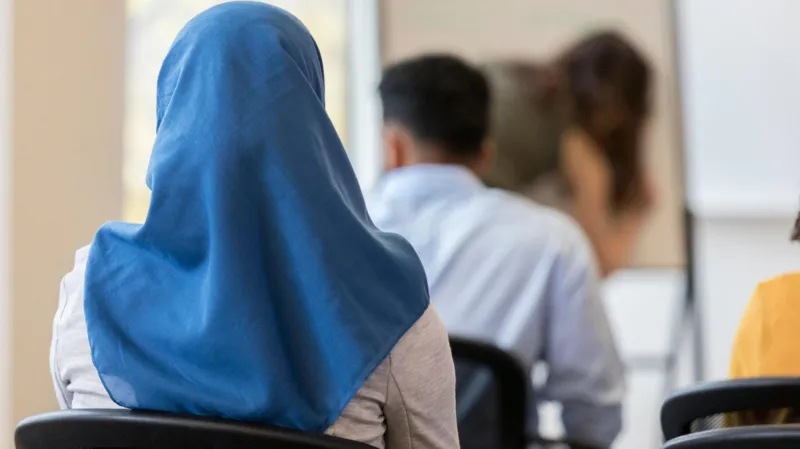
Austria has passed a law banning headscarves in schools for girls under the age of 14.
The conservative-led coalition of three centrist parties, the ÖVP, the SPÖ and the Neos, says the law is a “clear commitment to gender equality”, but critics say it will fuel anti-Muslim feeling in the country and could be unconstitutional.
The measure will apply to girls in both public and private schools.
In 2020, a similar headscarf ban for girls under 10 was struck down by the Constitutional Court, because it specifically targeted Muslims.
The terms of the new law mean girls under 14 will be forbidden from wearing “traditional Muslim” head coverings such as hijabs or burkas.
If a student violates the ban, they must have a series of discussions with school authorities and their legal guardians. If there are repeated violations, the child and youth welfare agency must be notified.
As a last resort, families or guardians could be fined up to €800 (£700).
Members of the government say this is about empowering young girls, arguing it is to protect them “from oppression”.
Speaking ahead of the vote, the parliamentary leader of the liberal Neos party, Yannick Shetty said it was “not a measure against a religion. It is a measure to protect the freedom of girls in this country,” and added that the ban would affect about 12,000 children.
The opposition far-right Freedom Party of Austria, the FPÖ, which voted in favour of the ban, said it did not go far enough.
It described the ban as “a first step”, which should be widened to include all pupils and school staff.
“There needs to be a general ban on headscarves in schools; political Islam has no place here”, the FPÖ’s spokesperson on families Ricarda Berger said.
Sigrid Maurer from the opposition Greens called the new law “clearly unconstitutional”.
The official Islamic Community in Austria, the IGGÖ, said the ban violated fundamental rights and would split society.
In a statement on its website, it said “instead of empowering children, they will be stigmatised and marginalised.”
The IGGÖ said it would review “the constitutionality of the law and take all necessary steps.”
“The Constitutional Court already ruled unequivocally in 2020 that such a ban is unconstitutional, as it specifically targets a religious minority and violates the principle of equality,” the IGGÖ said.
The government says it has tried to avoid that.
“Will it pass muster with the Constitutional Court? I don’t know. We have done our best,” Shetty said.
An awareness-raising trial period will start in February 2026, with the ban fully going into force next September – the beginning of the new school year.
[BBC]


Two-and-a-half years after Indian Prime Minister Narendra Modi inaugurated a grand temple to Hindu god Ram, the shrine is embroiled in an unsavoury row over allegations that donations from devotees worth tens of millions of rupees have been embezzled.
The temple in the once-flashpoint city of Ayodhya in the northern state of Uttar Pradesh replaced a 16th-Century mosque torn down by Hindu mobs in 1992, sparking riots in which nearly 2,000 people died.
Since its inauguration in January 2024, the three-storey temple spread over 2.7 acres has become one of India’s most important pilgrimage centres, attracting an estimated 50 million visitors annually.
But in recent weeks, questions over the handling of cash, valuable jewellery, gold and silver offered by devotees have triggered a political controversy and petitions have been filed in the Supreme Court seeking a court-monitored investigation by the federal police.
The Shri Ram Janmabhoomi Teerth Kshetra Trust – an independent trust which manages the shrine – has denied any wrongdoing. The state government has set up a three-member Special Investigation Team (SIT) to inquire into the allegations.
Following an interim report from SIT, Ayodhya police registered a case of alleged embezzlement on Thursday, naming eight people.
All eight are in custody and being questioned, senior police officer Gaurav Grover told BBC Hindi. They are expected to be produced before a magistrate within a day or two, he added.
The temple complex, which also includes six smaller shrines, draws 70,000 to 80,000 devotees daily, with crowds tripling on weekends and festivals. Most leave offerings in about 35 donation boxes around the site.
The trust – which collects, sorts and counts the offerings – recorded an annual income of 3.27bn rupees ($35m; £26m) in the financial year 2024-25, making it one of India’s largest temples in terms of earnings, the Hindustan Times reported.
A former city legislator has alleged more than 70m rupees ($739,550; £560,420) have gone missing.
The temple trust rejected claims that donations or offerings were improperly handled.
In a video statement on Facebook, its general secretary Champat Rai said the trust’s activities, including the process used to count donations and even the counting room, were routinely audited by their trustees and workers along with some State Bank of India employees.
“This work continues for several days. This is what is happening nowadays. No-one has noticed any discrepancy yet,” he added.
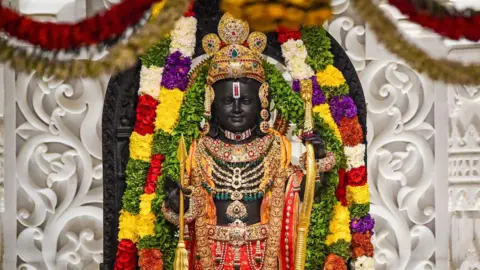
The allegations of embezzlement at what is considered one of India’s most consequential religious sites has made headlines in India. The temple stands on a site that has been at the centre of one of India’s most consequential religious, political and legal disputes for decades.
Many Hindus believe Ayodhya to be the birthplace of deity Ram. A vigorous nation-wide campaign spearheaded by Bharatiya Janata Party (BJP) to reclaim the land led to the demolition of the Babri mosque by Hindu activists in 1992.
After a long legal battle, the Supreme Court in 2019 awarded the disputed land for the construction of a temple and ordered that alternative land be provided for a mosque.
The dispute shaped Indian politics for decades and became closely associated with the rise of the BJP in the 1990s in a country where 80% of the population is Hindu.
The construction of the temple was one of the main election promises of the BJP and its opening in January 2024 is believed to have contributed to Modi’s win in the general election held a few months later.
So even though the temple is managed by an independent trust, opposition parties are demanding answers from Modi and his BJP – which is also in power in the state.
The alleged irregularities in the handling of donations and offerings made by devotees were first made by Mahipal Singh, who previously supervised the trust’s accounts team and is now being called the “whistleblower”.
Singh has publicly claimed that he was replaced after he raised concerns internally about the handling of cash offerings and precious metals received as gifts. When contacted by BBC Hindi, Singh refused to talk citing threat to his life.
“I have received death threats. I am under immense pressure and stress. I am not in a position to say anything. Whatever I have said in public so far, please accept it as my word,” he said.
The concerns raised by Singh have not been independently verified, but the issue gained political attention on 7 June when former state chief minister and Samajwadi Party chief Akhilesh Yadav raised questions about the alleged siphoning off of donations and called for an investigation.
In a series of social media posts, he demanded explanations from those managing donations and questioned what he described as a lack of clarity over the matter.
His party colleague Ayodhya MP Awadhesh Prasad said the matter should be investigated by a court-monitored team. He also called for trust members to be suspended from their positions while any inquiry is under way.
Several other politicians – from the opposition as well as the BJP – also raised questions about the alleged financial irregularities.
Local BJP leader Rajneesh Singh sought an investigation into issues linked to donations and the people involved in managing them.
Meanwhile, the long-time residents of Ayodhya told BBC Hindi that they were shocked by the allegations of corruption at the temple.
“The offerings are meant for the temple’s upkeep and for the welfare of pilgrims. It’s not meant for people to take home,” said Vijay Lakshmi.
Santosh Puri called the allegations “a fatal blow to our religion”.
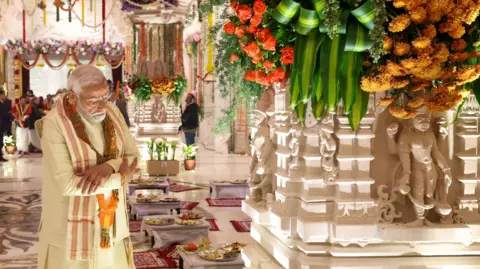
Talking about the claims, Ajay Kumar Varma described Ayodhya as “god’s abode” and said such things should not happen here. “The people being blamed have been involved with the temple for a long time, so it’s hard to believe that they could do this,” he said.
BP Pandey called the allegations “a stain” on the government and the trust. “The government must ensure that there is no repeat of this sort of thing.”
Meanwhile, the SIT has sought more time to complete the inquiry. Chief Minister Yogi Adityanath has urged anyone with evidence to submit it to investigators. He said the inquiry would establish the facts and appealed to devotees not to prejudge the outcome.
Adityanath added that people who had waited centuries for the construction of the Ram temple could wait a few more days for the SIT to complete its work.
But there’s a growing clamour to hand over the investigation to the federal police as it’s a matter involving one of India’s most prominent religious institutions.
A number of petitions have been filed in the state high court and the Supreme Court asking for a police complaint to be registered and judges to supervise the investigation.
A top court lawyer has also written a letter to the prime minister, the state chief minister and chief justice, seeking an investigation by the Central Bureau of Investigation “to restore the faith of the devotees”.
“These were not ordinary commercial receipts, but sacred offering,” he wrote. “Any diversion or embezzlement of funds constitutes a profound betrayal of the faith reposed by millions of devotees in one of the most sacred institutions of Hindu faith.”
[BBC]
Foreign News
Zambia ex-president’s family wins latest legal battle over what should happen to his body
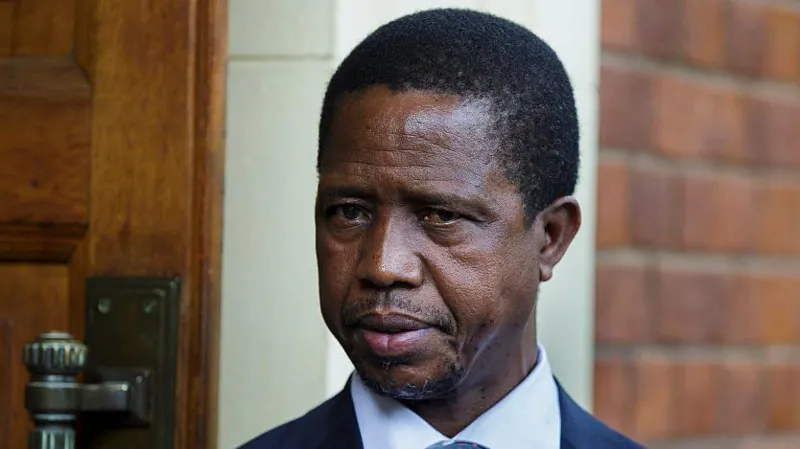
More than a year after the death of Zambia’s former President Edgar Lungu, his family have won their appeal to have his body buried in South Africa where he died – overturning a high court ruling that allowed the Zambian government to repatriate the corpse.
Tuesday’s Supreme Court of Appeal judgement finally puts to rest the legal battle over what should happen to his remains following a long-standing feud between Lungu and his successor, President Hakainde Hichilema.
The Zambian government has said while it disagrees with the ruling it will “not be taking the matter any further”.
It had long argued that, as a former head of state, Lungu should be honoured in the country.
The Zambian government wished to see him laid to rest alongside his predecessors in the special presidential burial ground in the capital, Lusaka.
But Lungu’s family wanted a private burial after negotiations with the government over the funeral arrangements broke down.
“The very ritual intended to bring closure has, instead, pitted family against the state in a hard-fought legal dispute far from the protagonists’ home,” said Justice Raylene May Keightley in Tuesday’s judgement.
Last August, the South African high court in Pretoria ruled that Zambia’s govrnment could repatrite the body and give him a state funeral – an outcome that left Lungu’s relatives visibly distraught in the courtroom.
The family appealed against the decision but, in a surprise announcement in April Zambia’s government said Lungu’s remains had been “formally transferred” to the state by the South African court.
But just a few hours later, the same South African court ordered the Zambian government to return the body until the matter went to court again.
The former president died of an undisclosed illness aged 68 at a clinic in Pretoria. Chaos ensued following his death, with mourners receiving conflicting information from the government and Lungu’s political party, the Patriotic Front (PF).
Two separate mourning periods were announced and at one point there were competing condolence books.
Lungu, who led Zambia from 2015 until 2021, had numerous rows with Hichilema, who was the opposition leader for many years before finally unseating his bitter rival.
After Lungu’s death, his family said the ex-president did not want Hichilema to be at his funeral or “anywhere near” his body.
In this latest ruling at the Supreme Court of Appeal, the judges said it was clear that the former president “viewed himself to be persona non grata in his own country” of Zambia and “felt that he would not be afforded a dignified send-off” if his successor was present.
[BBC]

More than 5,300 people remain trapped in online scam centres in Myanmar near the Thai border, despite a multinational crackdown in the region last year, a human rights group says.
The Thai-based Civil Society Network for Human Trafficking Victim Assistance (CSNHTV) sent a letter to Thai police urging them to take action. It said many of those trapped were foreign nationals held at four locations inside areas controlled by the Myanmar Democratic Karen Buddhist Army militia.
According to the CSNHTV, an estimated 1,600 people trapped are Chinese nationals, and about 200 are people of Myanmar, along with people from the Philippines, Taiwan, Malaysia, Brazil, Russia, Kenya, Uganda, Rwanda, and Zimbabwe.
“Many of these compounds have yet to be dismantled or subjected to rescue operations to free all remaining victims,” it said.
“As a result, these syndicates continue to engage in online fraud and human trafficking, causing harm to victims around the world, particularly in the United States and Europe.”
Scam centres in Southeast Asia, including those in Myanmar and Cambodia, run illegal online schemes that are designed to defraud people worldwide.
The centres grew significantly during the COVID-19 pandemic in the region, and were initially tied to poorly run casinos and online gambling. They have now become a multibillion-dollar industry, according to the United Nations.
A UN report in February said the facilities are mostly staffed by foreign nationals who have been trafficked by criminal gangs and subjected to abuse.
It found instances of “torture and other ill-treatment, sexual abuse and exploitation, forced abortions, food deprivation, solitary confinement, among other grave human rights abuses”.
“The litany of abuse is staggering and at the same time heart-breaking,” UN Human Rights chief Volker Turk said.
“Yet, rather than receiving protection, care and rehabilitation as well as the pathways to justice and redress to which they are entitled, victims too often face disbelief, stigmatisation and even further punishment.”
[Aljazeera]

Maliban Biscuits and Peoples Leasing PLC qualify for CDB-MCA T10 Tier B final

Focus on developing the Coconut and Food & Beverage export industries into a USD 3 billion economy within the next two years

Another 1,132 Sri Lankan Personnel to be deployed for United Nations Peacekeeping Missions

Ben Stokes four-for, Ben Duckett hundred as England roar back

Venezuela shaken by magnitude 4.9 tremor days after major earthquakes

US strikes Iran in response to drone strike on commercial ship

‘Dates have the highest sugar content to fight Coronavirus’

Sunday Island 27 December – Headlines

#SundayIsland 17th December – Headlines

Sunday Island – 28th March

Sunday Island Headlines – 21 March

Sunday Island – 21st February – Headlines
-

 Features7 days ago
Nanda Pethiyagoda Wanasundara as three generations of family saw her
-

 Features6 days ago
Sri Lanka developing independent hydrographic capabilities
-
 Opinion5 days ago
Ranasinghe Premadasa: The man who would not take ‘No’ for an answer
-

 Editorial7 days ago
Fuel crisis: Beyond price debate
-

 Latest News6 days ago
Sooryavanshi thumps fastest List A fifty as India A win tri-series
-

 News4 days ago
US Assistant Secretary of State for South and Central Asian Affairs meets President
-

 Opinion4 days ago
Sri Lanka’s national security: Justice, reconciliation, and forward-looking vigilance
-

 Features7 days ago
The Sirisena – Ranil conflict and events leading to MR’s return as PM