
News
Showers expected in the Northern, North-Central, Eastern and Uva provinces and Batticaloa and Ampara districts


WEATHER FORECAST FOR 08 DECEMBER 2025
Issued at 05.30 a.m. on 08 December 2025 by the Department of Meteorology
The Northeast monsoon conditions are gradually establishing over the island. Showery weather condition is expected to enhance over the Northern, North-central and Eastern provinces from tonight.
Misty conditions can be expected at some places in the Western, Sabaragamuwa, Central and Uva provinces during the early hours of the morning.
Showers will occur at times in the Northern, North-Central, Eastern and Uva provinces. Fairly heavy showers above 50 mm are likely at some places in the Batticaloa and Ampara districts.
Showers or thundershowers may occur at several places in other areas of the island after 1.00 p.m.
The general public is kindly requested to take adequate precautions to minimize damages caused by temporary localized strong winds and lightning during thundershowers.

News
Joint programme between President’s Fund and Janashakthi Foundation to expand healthcare facilities for children
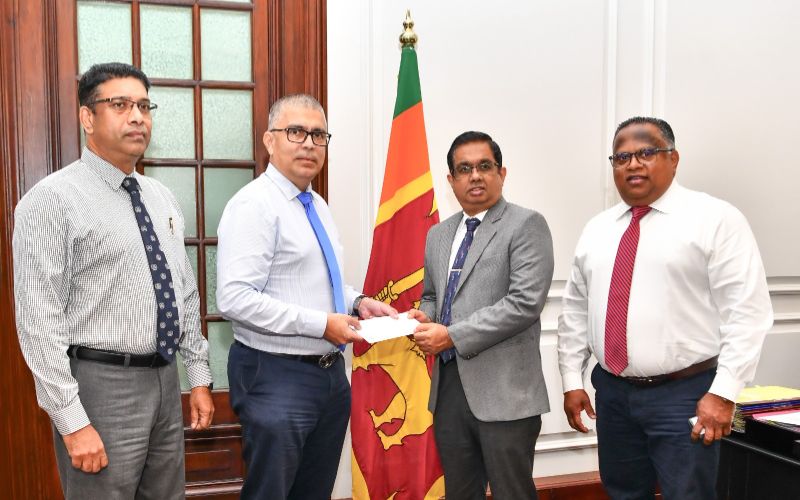
A special collaboration between the Presidents’s Fund and the Janashakthi Foundation, aimed at expanding healthcare facilities available to children under the age of 18, was launched on Wednesday (06) morning.
Implemented under the theme “Building a Healthier Today for a Winning Tomorrow”, this national initiative has been introduced through the joint efforts of the President’s Fund and the Janashakthi Foundation with the objective of reducing the financial barriers associated with children’s healthcare.
Under the President’s Fund, only a portion of the medical expenses incurred by a patient is generally covered. However, under this new collaboration, the Janashakthi Foundation will provide either an equivalent amount or the remaining balance of the treatment cost, whichever is lower.
Speaking on the occasion, Secretary to the President’s Fund and Senior Additional Secretary to the President, Roshan Gamage, stated that the present Government had taken steps to decentralise and digitalise the operations of the President’s Fund, thereby transforming it into a truly people-centric fund. He noted that this had reinforced public confidence in the Fund’s transparency, accountability and effectiveness and added that the collaboration with the Janashakthi Foundation had further strengthened this process.
Gamage further stated that close and meaningful coordination with the private sector would help enhance healthcare assistance provided to children and minimise the gap between the financial aid available and the actual cost of essential medical treatment.
Also addressing the gathering, Managing Director and Group Chief Executive Officer of the Janashakthi Group, Ramesh Schaffter, stated that difficulties in accessing medical treatment constitute a major obstacle preventing children from progressing towards a better future.
He further stated that the collaboration seeks to reduce that obstacle by extending support to children who are in urgent need of assistance, thereby laying the foundation for future generations to face tomorrow with greater confidence.
Under this programme, applicants seeking additional financial assistance are required, when applying to the President’s Fund, to duly complete and submit a consent form authorising the secure sharing of their information with the Janashakthi Foundation.
The identification of children requiring financial assistance, verification of their information and approval of funds will continue to be carried out by the President’s Fund.
Under this initiative, payments will generally be made to the guardians of children following the completion of treatment. However, in cases involving emergency treatment and treatment conducted overseas, payments will be made in advance.
Applicants submitting medical assistance applications to the President’s Fund from 15 May 2026 onwards will be eligible to apply for additional funding from the Janashakthi Foundation.
The event, held at the Hilton Colombo, was attended by J.M. Wijebandara, Director General of Legal Affairs at the Presidential Secretariat and Advisor to the President (Legal Affairs); C.T.A. Schaffter, Founder and Chairman Emeritus of the Janashakthi Group; Gamika De Silva, Group Chief Marketing Officer; Dilshan Wirasekara, Deputy Chief Executive Officer of the Janashakthi Group; as well as officials of the President’s Fund and the Janashakthi Foundation.
President’s Media Division (PMD)
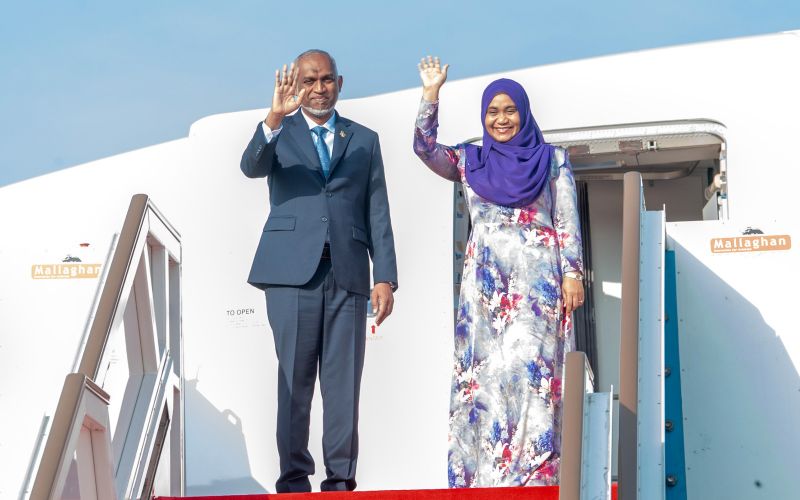
The President of the Republic of Maldives, Dr. Mohamed Muizzu, departed Sri Lanka on Wednesday morning (06) from the Bandaranaike International Airport, Katunayake, concluding a successful state visit to the country.
The visit by the Maldivian President and his delegation further strengthened the longstanding friendship and cooperation between the Maldives and Sri Lanka, while delivering a range of mutual benefits to the peoples of both nations.
This marked President Muizzu’s first state visit to Sri Lanka, during which several mutually beneficial areas of cooperation were agreed upon, underscoring the success of the visit.
Minister of Science and Technology, Krishantha Abeysena, Minister of Youth Affairs and Sports , Sunil Kumara Gamage, Member of Parliament Oshani Umanga, along with senior officials of the Ministry of Foreign Affairs, were present at the airport to bid farewell to the Maldivian President, the First Lady and the accompanying delegation.
(President’s Media Division)

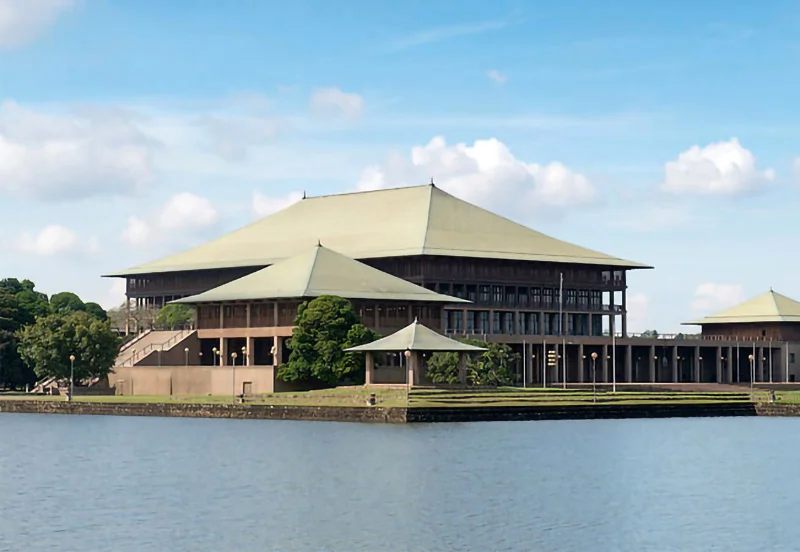
Close on the heels of the USD 2.5 mn theft from the Treasury, the Welfare Benefits Board has reported payment of nearly Rs 500 mn in excess to Aswesuma beneficiaries.
Public action group ‘Free Lawyers’ has raised the latest fiasco to come to light with Speaker Dr. Jagath Wickramaratne, while requesting that the Parliament, in line with its constitutional obligations, initiate an inquiry.
The letter, dated 06 May, signed by Maithree Gunaratne, PC, Attorney-at-Law Athula de Silva, and Rajith Keerthi Tennakoon, on behalf of ‘Free Lawyers’, has alleged that some of the Aswesuma beneficiaries have been paid twice while others received the additional/extra payment.
Responding to The Island queries, Tennakoon said that sheer negligence on the part of those responsible for public finance was shocking.
Alleging that the NPP government seemed to be operating outside basic rules and regulations pertaining to public finances, the former Governor asked the Speaker whether the wrongful Aswesuma payments had been made due to political appointments made at the expense of the experienced and competent staff. (SF)

Hantavirus-hit cruise ship on way to Canary Islands after three evacuated

Joint programme between President’s Fund and Janashakthi Foundation to expand healthcare facilities for children

Maldivian President concludes state visit to Sri Lanka

India to host Zimbabwe for maiden women’s bilateral series

Showers above 75 mm are likely at some places in the Sabaragamuwa, Central, Uva, Southern and North-central provinces

Govt. draws flak over Rs. 500 mn excess Aswesuma payments

‘Dates have the highest sugar content to fight Coronavirus’

Sunday Island 27 December – Headlines

#SundayIsland 17th December – Headlines

Sunday Island – 28th March

Sunday Island Headlines – 21 March

Sunday Island – 21st February – Headlines
-
 News3 days ago
CJ urged to inquire into AKD’s remarks on May 25 court verdict
-
 News7 days ago
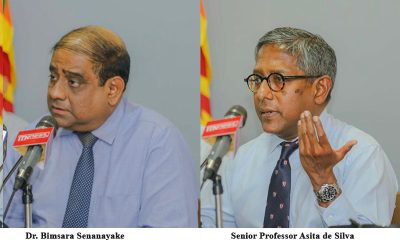
“Three-in-one blood pressure pill can significantly reduce risk of recurrent strokes”
-

 News4 days ago
USD 3.7 bn H’tota refinery: China won’t launch project without bigger local market share
-

 News7 days ago
Alarm raised over plan to share Lanka’s biometric data with blacklisted Indian firm
-
 News5 days ago
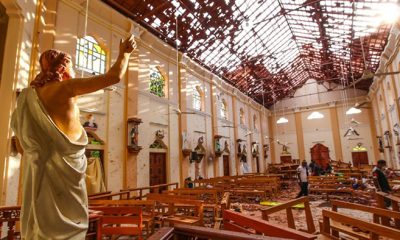
Easter Sunday Case: Ex-SIS Chief concealed intel, former Defence Secy tells court
-
 News6 days ago
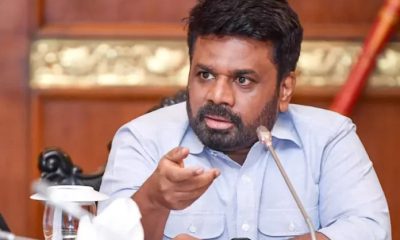
Ten corruption cases set for court in May, verdict ordered in one case – President
-

 News7 days ago
USD 2.5 mn fraud probe: Interdicted MoF official found dead at home
-

 Editorial4 days ago
Deliver or perish