
News
Media slams govt.’s bid to use Emergency to silence critics


Media organisations have denounced Deputy Minister of Public Security and Parliamentary Affairs Sunil Watagala after he urged law enforcement authorities to use emergency regulations to take action against those posting allegedly defamatory content about the President and senior ministers on social media.
The Sri Lanka Working Journalists Association (SLWJA) yesterday issued a strongly worded statement condemning Watagala’s remarks, warning that they posed a direct threat to freedom of expression and media rights, particularly at a time when the country is struggling through a national disaster.
Watagala made the controversial comments on 2 December during a meeting at the Malabe Divisional Secretariat attended by government officials and Deputy Media Minister Dr. Kaushalya Ariyarathna. During the discussion, the Deputy Minister claimed that a coordinated effort was underway to spread distorted or false information about the disaster situation through physical means, social media, and even AI-generated content. He also alleged that individuals based overseas were contributing to such activity.
According to the SLWJA, Watagala went further, directing police officers present at the meeting to treat those posting such content “not merely as suspects but as offenders” and to take action against them under emergency regulations currently in force.
The SLWJA accused the government of abandoning the democratic principles it once campaigned on, noting that individuals who publicly championed free speech in the past were now attempting to clamp down on it. The association said this was not an isolated incident but part of a pattern of growing state pressure on journalists and media platforms over the past year.
It warned that attempts to criminalise commentary through emergency powers especially during a disaster constituted a grave violation of constitutional rights. The union urged the government to respect democratic freedoms and refrain from using disaster-related powers to silence criticism.
In a separate statement, Internet Media Action (IMA) also expressed “strong objection” to Watagala’s comments, describing them as a “serious threat to freedom of expression”, which it said is a fundamental right guaranteed to all Sri Lankan citizens.
The IMA said Watagala’s assertion that “malicious character assassination attacks” were being carried out against the President and others through social media or other media channels, and that such acts should attract severe punishment under emergency law, represented “an abuse of power”. The organisation also criticised the Deputy Minister’s claim that false opinions or misrepresentations whether physical, online, or generated by AI could not be permitted.
Using emergency regulations imposed for disaster management to suppress political criticism amounted to “theft of fundamental rights”, the statement said, adding that the move was aimed at deliberately restricting dissent and instilling fear among social media users.
“Criticism is not a crime,” the IMA said, warning that such rhetoric could lead to widespread intimidation and self-censorship among digital activists and ordinary citizens.
The group demanded that Watagala withdraw his statement unconditionally and insisted that freedom of expression cannot be curtailed under emergency laws or any other legal framework. It also called on the government to clarify its stance on the protection of fundamental rights amid increasing concerns from civil society.

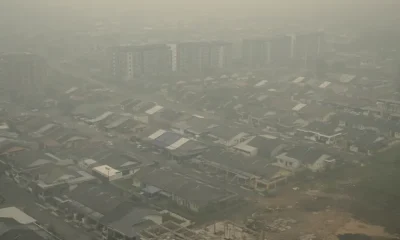


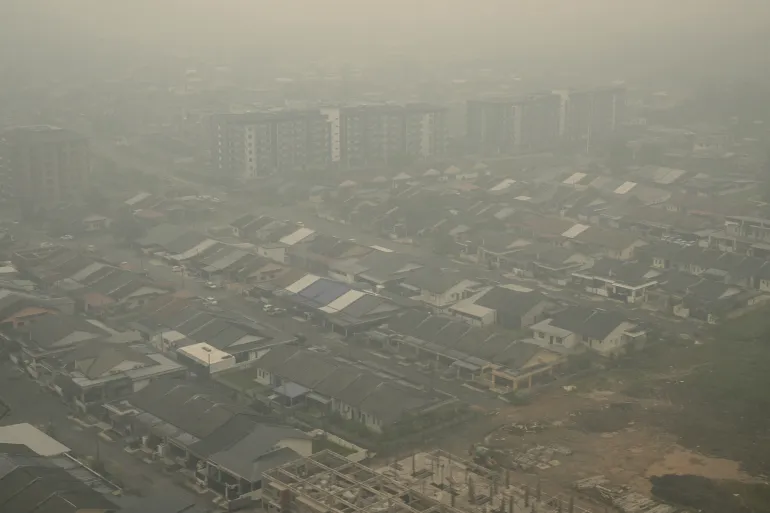
Malaysia has declared a state of emergency in a district in Sarawak state after haze caused by wildfires in neighbouring Indonesia increased air pollution to “hazardous” levels.
King Sultan Ibrahim “has consented to the declaration of emergency throughout Serian Division, Sarawak, following haze conditions that have reached air pollution levels hazardous to public health and safety”, Prime Minister Anwar Ibrahim’s office said in a statement on Thursday.
The declaration followed a formal request from the Sarawak Disaster Management Committee after the region’s Air Pollutant Index reached levels warranting consideration of a local emergency.
Under the order, 647 schools in Serian will close from Monday until at least the end of next week, alongside government and private offices, plantations, construction sites and quarries, with only essential services continuing to operate.
The state’s disaster management authorities said a three-day cloud-seeding operation launched on Thursday would be extended to at least Monday, citing forecasts of “more conducive cloud formations” during that period.
Sarawak State Disaster Management Committee chairman Douglas Uggah Embas, speaking at a news conference in Kuching, stressed that the emergency applied only to Serian, not the entire state, but urged residents there to take the situation seriously.
“Please minimise outdoor activities and avoid strenuous activities outdoors,” he said.
Sarawak, in the northern part of Borneo island, has been heavily affected by haze for weeks, as have the neighbouring states of Sabah and Peninsular Malaysia.
(Aljazeera)
Latest News
Sun directly overhead Moratuwa, Kesbewa, Handapangoda, Idalgashinna, Yudhaganawa, Kotiyagala and Panama about 12.08 noon today (05)


The sun is going to be directly over the latitudes of Sri Lanka from 28th of August to 07th of September due to its apparent southward relative motion.
The nearest places of Sri Lanka over which the sun is
overhead today (05) are Moratuwa, Kesbewa, Handapangoda, Idalgashinna, Yudhaganawa, Kotiyagala and Panama about 12.08 noon
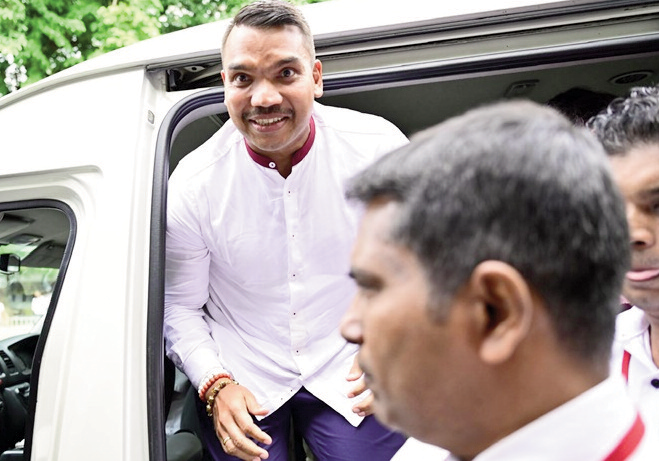
Sri Lanka Podujana Peramuna (SLPP) National Organiser and Parliamentarian Namal Rajapaksa was yesterday remanded until September 18 by the Colombo Chief Magistrate’s Court following his arrest by the Commission to Investigate Allegations of Bribery or Corruption (CIABOC) in connection with an investigation into the controversial SriLankan Airlines Airbus aircraft transaction.
Rajapaksa appeared before the CIABOC at around 9.15 am yesterday to record a statement after being summoned over the transaction. He was taken into custody following several hours of questioning and subsequently produced before the Colombo Chief Magistrate.
The investigation centres on allegations surrounding the acquisition of six Airbus A330 and eight A350 aircraft by SriLankan Airlines in 2013, in connection with an alleged USD 2 million bribe.
Former SriLankan Airlines Chief Executive Officer Kapila Chandrasena and his wife, Priyanka Niyomali Wijenayake, had previously been named in connection with the alleged bribery.
Chandrasena was arrested on March 12 as part of an investigation launched by the CIABOC under the Anti-Corruption Act and was subsequently released on bail. He was later found dead on May 8 while on bail, with police suspecting that his death was a suicide.
Open warrants have been issued for the arrest of Wijenayake, who is named as the second suspect, and Shamindra Rajapaksa, named as the third suspect, in the case pending before the Fort Magistrate’s Court in connection with the Airbus transaction.
The investigation has also received assistance from Airbus, with a delegation from the company’s parent group in France visiting Sri Lanka during the first week of August. The delegation provided statements and other assistance to the CIABOC as part of the ongoing inquiry.
Rajapaksa’s arrest and remand yesterday mark a further development in the widening investigation into the controversial aircraft deal.

Malaysia declares emergency in Sarawak as haze from Indonesia worsens

UAE keep semi-final hopes alive after convincing win over Indonesia

Sun directly overhead Moratuwa, Kesbewa, Handapangoda, Idalgashinna, Yudhaganawa, Kotiyagala and Panama about 12.08 noon today (05)

Showers above 75 mm are likely at some places in the Uva, Central and Eastern provinces and in Polonnaruwa and Mullaittivu districts after 2.00 p.m

Namal remanded until Sept. 18 over Airbus deal investigation

Dengue cases surpass 96,000 this year

‘Dates have the highest sugar content to fight Coronavirus’

Sunday Island 27 December – Headlines

#SundayIsland 17th December – Headlines

Sunday Island – 28th March

Sunday Island Headlines – 21 March

Sunday Island – 21st February – Headlines
-

 Features7 days ago
“Wrap Me Up in My Blazer”— A Gentlemanly Bradby Reminiscence
-

 Features6 days ago
When Sri Lankan stories find their own voice
-
 Features7 days ago
JVP/NPP government as seen from outside by Lionel Bopage now domiciled in Australia
-
 News6 days ago
BASL takes exception to Justice Ganepola being denied a place in SC
-
 Features7 days ago
Prof. Savitri Goonesekere: What has she done?
-

 News3 days ago
Denied of promotion to SC despite vacancies, justice Gurusinghe retires
-

 Latest News4 days ago
Grade 5 scholarship exam results released
-

 News3 days ago
22A: SC urged to suspend hearing, appoint full bench