
Latest News
Pakistan to tour Sri Lanka for three T20Is in January 2026

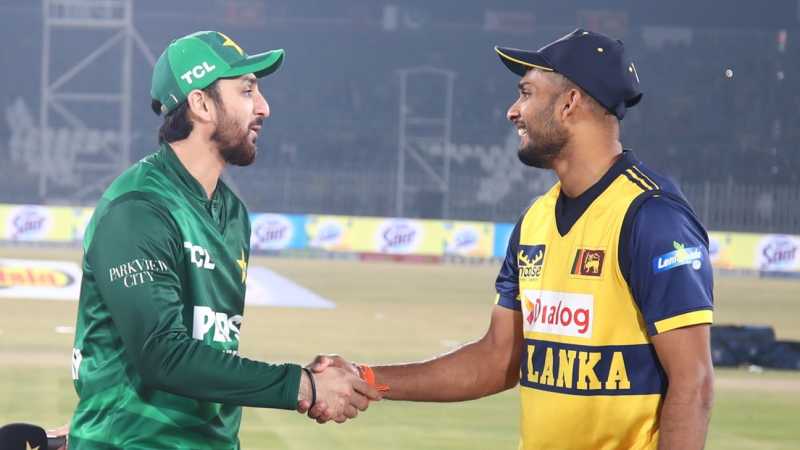
Pakistan will begin their build-up to the 2026 T20I World Cup with a three-match T20I series in Sri Lanka next year, during early January. The Salman Agha-led side will travel to Dambulla in Sri Lanka, where all three matches will be played on January 7, 9 and 11.
The short tour is Pakistan’s first white-ball assignment of the new year, and the PCB said it “will provide the side with valuable match practice ahead of next year’s global event”. Pakistan are playing all their World Cup games in Sri Lanka.
Over the past six months, the PCB has heavily prioritised fielding the national team for as much T20I cricket as possible. Since the end of the PSL in May 2025, Pakistan have played home and away series against Bangladesh, a series in West Indies, two tri-series, the Asia Cup, and a home series against South Africa. They were victorious in all but the away series in Bangladesh and the Asia Cup, where they lost the final to India.
Sri Lanka have just concluded a three-week tour of Pakistan too, which saw them play three ODIs and a tri-series, with the latter also featuring Zimbabwe.
Aside from the T20Is in Sri Lanka, Pakistan also have a three-match home series against Australia in the final week of January, before they return to Sri Lanka for the World Cup, which begins on February 7. Pakistan have been placed in Group A for the World Cup and their group fixtures, played in Colombo, will be against India, Namibia, Netherlands and United States.
(Cricinfo)

Bangladesh cruised to a seven wicket victory to close out their group stage, with a three-for from Iqbal Hossain Emon, and an 82-ball 64 from captain Azizul Hakim leading the way against USA.
Batting first, USA lost opener Amrinder Gill and No. 3 Arjun Mahesh by the end of the third over. But a more applied approach from Sahil Garg and Utkarsh Srivastava took them out of the powerplay to the relative safety of 33 for 2.
The scoring rate was slow throughout their innings, with Bangladesh’s Al Fahad, Shariar Ahmed and Rizan Hossan all taking two wickets, and keeping the scoring rate around a touch below four. When Adnit Jhamb walked out at No. 7 in the 30th over, he kicked into a higher gear. He hit just three boundaries and a six during his knock of 68, but rotated the strike much better than any other USA batter on the day. Alongside the lower order, Jhamb dragged their total up to a respectable 199.
Bangladesh, however, remained in cruise control during the chase. Opener Zawad Abrar was particularly brutal, hitting five fours and three sixes as he raced away to a 42-ball 47. He fell to a caught-and-bowled effort off Garg, but by that point, Bangladesh were 78 for 1, and more than a third of the way to their target.
Another big partnership followed after his dismissal: Hakim hit the sole half-century of the match, stitching together an 88-run partnership with Kalam Siddiki. By the time he was the third batter to be dismissed, the result was a foregone conclusion.
Rizan Hossan hit two sixes in back-to-back overs in the company of Siddiki. The second one closed out the match, giving Bangladesh their first win of the tournament, and pushing USA out of contention for the Super Sixes
Brief scores:
Bangladesh Under 19s 201 for 3 in 41.3 overs (Azizul Hakim 64, Zawad Abrar 47; Rifat Beg 30, Kalam Siddiki 30*; Ritvik Appidi 1-27) beat USA Under 19s 199 in 50 overs (Adnit Jhamb 68*, Utkarsh Srivastava 39; Iqbal Hossain Emon 3-41, Al Fahad 2-38, Shahriar Ahmed 2-32, Rizan Hossan 2-27) by seven wickets
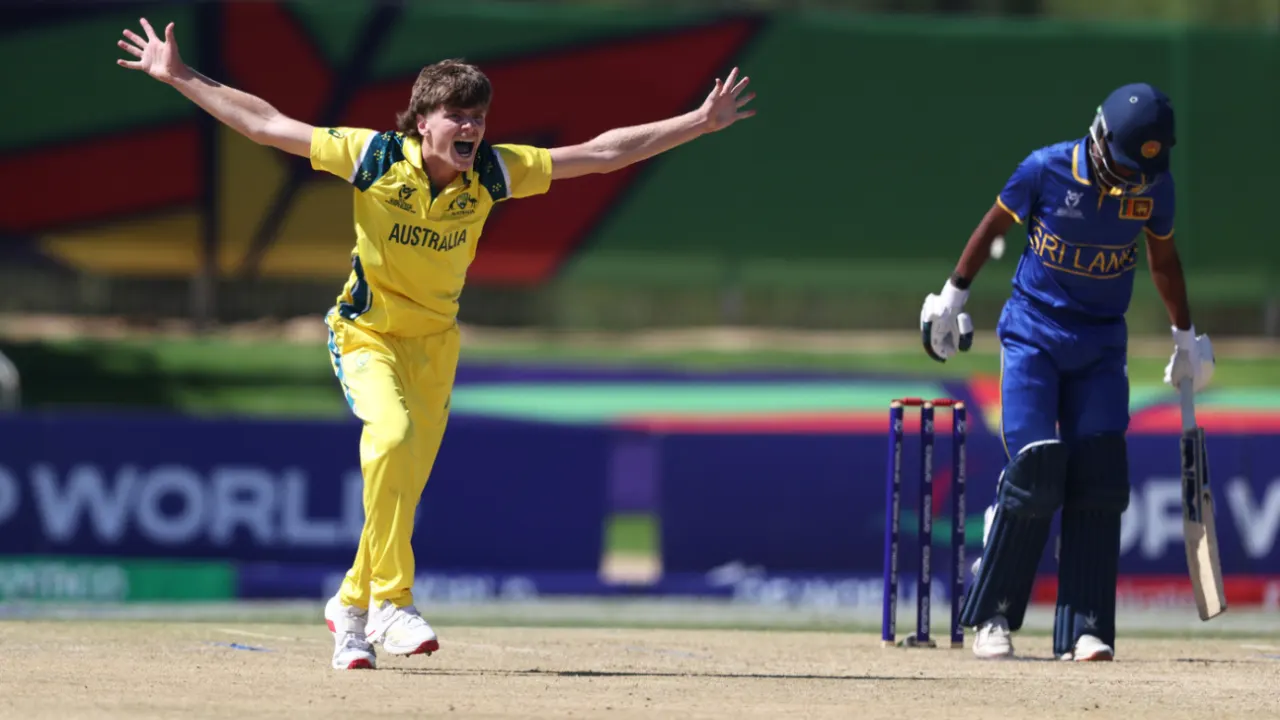
A five-wicket haul from Will Byrom helped Australia top Group A of the Under 19 men’s World Cup after they skittled Sri Lanka for 58. Byrom and Charles Lachmund ripped through Sri Lanka in the first powerplay, reducing them to 31 for 6 at the ten-over mark.
In the third over, Lachmund had yorked out Viran Chamuditha right in front of the stumps, while Dimantha Mahavithana edged one to slip. From there, the procession never stopped. The two tall pacers extracted movement and bounce off a pitch that had plenty in it for those who bowled it quick. Most Sri Lanka batters were either caught in the slip cordon or stuck in front of the crease, unable to counter the movement, and often late on their feet.
Hayden Schiller and Kasey Barton slipped into the attack once the powerplay was done, and immediately took over the same lines and lengths. The highlight of Barton’s own spell was his wicket of Sethmika Seneviratne. He dropped it on a full length and fizzed it back into the off stump, trimming Seneviratne’s bails and breaching through Sri Lanka’s last recognised batter.
Sri Lanka’s bowling defence began with Rasith Nimsara extracting similar movement off the pitch. However, both his bowling, and Kugathas Mathulan’s from the other end, were plagued by inconsistent lines that often drifted down leg. Sri Lanka ended up conceding 11 extras, which included nine wides. After Will Malajczuk fell early, Nitesh Samuel was a little circumspect. But Steven Hogan ensured to finish the run chase with little fuss, just as time before rain drifted in towards the ground.
Brief scores:
Australia Under 19s 61 for 1 in 12 overs (Steven Hogan 28*; Rasith Nimsara 1-20) beat Sri Lanka Under 19s 58 in 18.5 overs (Chamika Heenetigala 14; Will Byrom 5-14, Charles Lachmund 2-19, Kasey Barton 2-13) by nine wickets
[Cricinfo]
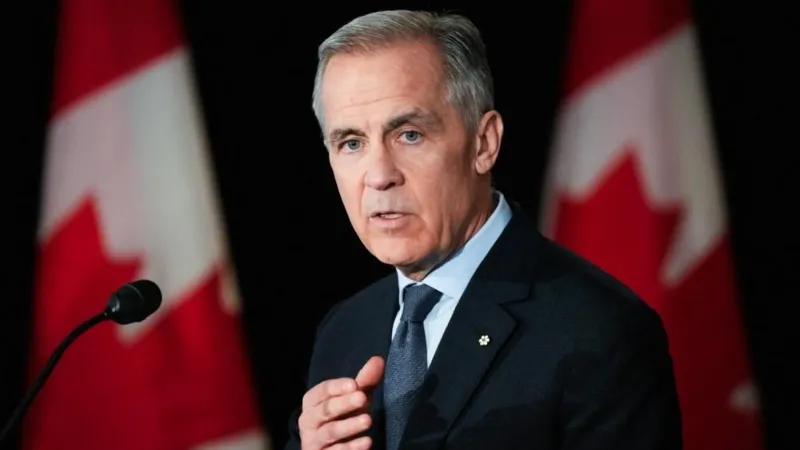
US President Donald Trump has withdrawn an invite for Canada to join his newly constituted Board of Peace, in the latest spat between the North American neighbours.
“Please let this Letter serve to represent that the Board of Peace is withdrawing its invitation to you regarding Canada’s joining,” Trump said on Truth Social in a post addressed to Prime Minister Mark Carney.
Carney made headlines this week warning of a “rupture” in the US-led global order. Ottawa also said it would not pay to join Trump’s new body.
The board, which gives Trump wide decision-making powers as chairman, is being billed by the US as a new international organisation for resolving conflicts.
Trump did not give a reason in Thursday evening’s post as to why he had decided to revoke Canada’s offer.
Carney’s office did not immediately respond. The prime minster had indicated last week he would accept Trump’s invite on principle.
But Ottawa had indicated in recent days that it would not pay the $1bn (£740m) membership fee which Trump has said permanent members will be asked to pay to help fund the board.
His Board of Peace was originally thought to be aimed at helping end the two-year war between Israel and Hamas in Gaza and oversee reconstruction.
[BBC]

Tanzid Hasan’s ton, Binura Fernando’s four-for power Rajshahi Warriors to BPL title

U – 19 World Cup: Bangladesh ease past USA

U – 19 World Cup: Australia top Group A after bowling SL out for 58

Alleged drug kingpin and ex-Olympian Ryan Wedding arrested after years on the run

Showers above 50 mm are likely at some places in the Northern, North-central, and North-western provinces and in Trincomalee district

Karu argues against scrapping MPs’ pension as many less fortunate members entered Parliament after ’56

‘Dates have the highest sugar content to fight Coronavirus’

Sunday Island 27 December – Headlines

#SundayIsland 17th December – Headlines

Sunday Island – 28th March

Sunday Island Headlines – 21 March

Sunday Island – 21st February – Headlines
-

 Editorial6 days ago
Illusory rule of law
-
 Features6 days ago
Daydreams on a winter’s day
-
 Features6 days ago
Surprise move of both the Minister and myself from Agriculture to Education
-

 Features5 days ago
Extended mind thesis:A Buddhist perspective
-
 Features6 days ago
The Story of Furniture in Sri Lanka
-
 Opinion4 days ago
American rulers’ hatred for Venezuela and its leaders
-
 Features6 days ago
Writing a Sunday Column for the Island in the Sun
-
 Business2 days ago
CORALL Conservation Trust Fund – a historic first for SL